About this episode
Get every episode summarized
Each time Clare FM publishes, we email you a written briefing from the transcript — the topics, who appeared, and any specific claims, with the ad reads skipped.
Email me new episodesFree for 3 shows. No card needed.
Hosts & guests

Transcript ready
168 searchable segments. Every word is indexed and playable.
Full transcript
Clare FM — In The Garden: Wildlife Pond. Machine-transcribed; use the interactive transcript above to jump the player to any line.
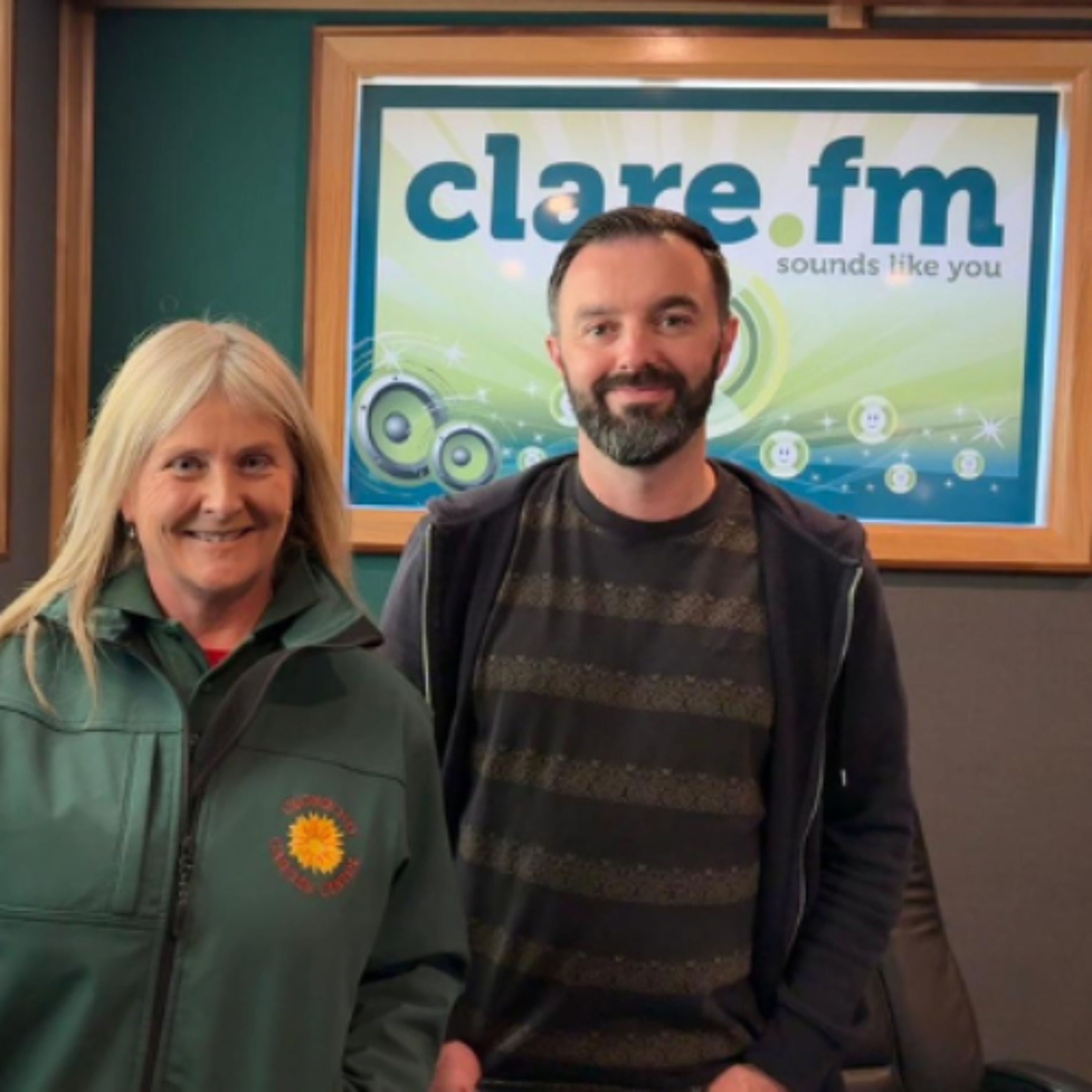
And we are joined by Judy Beck from said Clon Road Garden Center. Good morning to you, Judy. Good morning, Alan. How are you today? Very well. Thanks very much for being with us. The topic you want to focus on this week with a bit of hints, tips and advice for our gardening listeners is to do with a wild life pond. Tell us a little bit about why you have chosen this particular topic. I think I've become really interested in wildlife ponds. Especially since I built my own pond just over a year ago now, and I can see all the benefits it brings to the garden. It's just such an additional feature. And you can no matter how small your garden is, you can always have a little pond. And we can go through that more in a minute.
But I suppose if you are thinking about building a pond in the garden, the first thing you would consider is the location of where you're going to put it. And what I mean by that is that it's best not to go in full shade and best not to go in full sun. So if you can pick up an area of the garden where it gets some sun during the day and also gets some shade during the day, that's ideal. Okay, so pick the right spot. Once you've chosen the right location in your garden for the wildlife pond, Judy, I guess you need to look at how big is this thing going to be? Yeah, absolutely. And I suppose one more thing before we get to said, very important when you're choosing the location not to put it under heavy tree cover because you don't want loads of leaves falling in your pond. Now, the bigger the better, you can never be too big a pond. You know, if you have a huge garden, if you can build a big pond, that's great. But ideally you would have a minimum of about one and a half meters by one and a half meters.
And the depth, if you can go two feet or even a little bit deeper right in the middle. Now, the important thing about a pond is that it has all different levels. Most of your wildlife activity will actually come from the most shallow of those levels. And that's where most of you, where you'll see most action happening. And it really does give a huge amount of enjoyment looking at the action around a pond. And the wildlife comes in so quickly after you build it. Not just the birds coming to drink, but such a variety of insects. And you know, there's gorgeous blue dragonflies. That's one of my favourite things about the pond is seeing them arrive in the summer to drink. And to lay their larvae and they have a whole life cycle that evolves around the pond. And it's just fantastic to watch. Okay, so a lot of action around the wildlife pond. And lovely from a visual perspective then. In terms of lining it, what do you need to do in terms of construction to make this wildlife pond the best it can be?
So of course, the most important thing with the pond is that it holds water. Now some people say I have a really boggy area of the garden. Would that be the best place to put a pond? But it isn't for a pond liner. It isn't because the water will be good pushing the pond liner up from underneath. So you want to reasonably dry area of the garden. And most people would use what we call a bootle liner. It's like a rubbery substance, quite a heavy thick one. But underneath that liner to protect it. After you dig the pond, you can. Best of all, you would put a layer of sand and then you can get an underlay to protect the liner. So if there's any rocks or sharp stones, you don't put a hole in your liner. So. If there is a possibility of doing it from clay, but it's. It's not really practical in a lot of ways. So using a liner is probably the way to go. And if you do it properly and I suppose as Roy Keane says,
a preparation is everything, isn't it? So if you if you prepare the base properly, you can have your pond liner will stay good for many, many, many years. So great investment. Okay. And what about filling your pond? I was about to say, what are you filling it with? But at the risk of you just saying water, I'm sure there's more to it than that. Well, and yeah, I mean, you can use your hose to fill the pond. But ideally you would use rainwater because actually tap water has quite a lot of nutrients in it. And one thing you want to do with your pond is putting a lot of nutrients into the water because you get that algae cover. And we've all heard of, you know, the lakes when they've too much nutrients and. They grow all this greenie algae. And that's not good for your pond really. It's you want to try and keep it as clear as possible. So you can use tap water, but ideally you would use rainwater. Now you can either let it fill naturally rainwater.
And at the moment, I would say that absolutely no problem whatsoever filling it. But in the dryer months, you might have to use hose water. And if you do, it's not the worst thing in the world. But while we're talking about nutrients, too much nutrients, you're putting in pond plants into your pond. You have to use a particular type of compost. It's what we use, a particular compost for a aquatic compost. I could remember the word there, a aquatic compost for a pond. And you get the baskets, you fill it with this aquatic compost and you put your pond plant into the basket. And that pond plants is a whole new thing. Rather than not the regular plants you would use in your garden, they have to be plants that enjoy living in water. Okay, what else do people need to know in terms of plants and that will be good in the pond and also the benefits of it? Yes, so we've gone big into this now in the garden center probably because I have such a great interest in it.
But you know, water lilies, huge variety, then you can get many water lilies. And then if you've big pond, you can get big water lilies, big water lilies, big flowers. And you can get oxygenating plants that keeps the water nice and clean. Plants are really important for keeping the water clean. You know, you don't need to use expensive filters, expensive pumps. You can keep the water clean just by purely using the right plants. And of course, the plants you should be native plants. There are a lot of invasive water plants that can cause a lot of damage to the environment. So make sure you're getting the plants from an knowledgeable source. So you're not bringing any and the nasties. Of course, if you put the wrong plants in as well, they can kind of take over your pond if you just drop them in. So one of the beauty of using the baskets is that the basket contains the plant. So it can't get out of control in your pond. But you can get gorgeous plants with lovely flowers, not just water lilies, but there's marsh marigolds and lots of different plants.
For getting the knots with blue flowers. So as you can see, I'm reading. I'm so into wildlife. We were sensing the enthusiasm just before we get to the jobs for the week. Can you just very briefly tell us about some of the benefits of a wildlife pond? Yeah, well, from your own point of view, it's just so method of just to watch the insects around the pond and hoping that frogs will come and lay frogs born. Great for kids. Of course, we have to keep it to account safety. Just means, you know, if there are small children, grandchildren that coming to visit just to keep that in mind. But also before I forget to say it's not to put fish into the pond. Because fish and wildlife ponds don't really go together because the fish will just eat the insects that arrive. So if you want to do a fish pond, maybe do a separate pond, but keep one without fish. And of course, yeah, as I was saying, attracting frogs. And frogs, of course, are brilliant for eating lots of slugs and things that you don't want in your garden.
So a big benefit there as well. Brilliant, jobs for the week, Judy. Sure. Now is the time to start thinking about sewing a wildflower garden. So march into April when the weather clears up a bit. You can buy the wildflower seed. And St. Patrick is a tomorrow traditionally the time for sewing your new bedators. And they're all available in the shops now. Lovely new seed bedators. I mean, you don't have to do tomorrow. It's traditional St. Patrick's Day. And if you want to encourage earthworms into your soil, remember to put down some farm yard manure. Really good for earthworms and earthworms. Of course, really good for aeration your soil. And probably we'll be talking about loans quite a bit in the coming month or a couple of months. And really good time now, March, April for putting down a new lawn and putting down a lawn seed. Because it might be looking a bit patchy after the winter. Okay, brilliant. Just time for one or two questions, Judy. First from the one and only Kay and Kerrfin who says good morning, Alan and Judy.
Judy, I was asked to ask you what could be wrong with rhubarb? It's only four years old. The leaves are brown and limp. It's growing up against a wall. Should it be moved? We are on behalf of somebody else. Okay, it might have gone a bit woody in the center. So it might be good idea to dig it up and split us and take out the woody bit and replant the crowns. And the cut off the good bits around the woody bit and replant those. But don't pick it this year, okay? Okay, and a question here from more than says good morning, Alan and Judy. My daffodils are they're blooming lovely at the moment. That sounds like a blooming lovely. However, they are a bit crowded. How should I prepare to relocate some of them to a different spot to bloom their next year? Wonders mora. So if you just let them die back naturally, mora, which will take a few months. And when they've died back into the ground, then you can dig them up, dry them off and replant them in September. Just as if you were buying new bulbs from the shop. So you can take your old bulbs, the extra ones and replant them around the garden.
Brilliant stuff, Judy. Thank you so much for doing that and wrenching yourself away from your wildlife pond. We'll let you get back to relaxing in front of us. My thanks to Judy back from Clown Road Garden Center.
More episodes
More from Clare FM

Hopes Clare Golf Tourism Can Reap Reward Of 'Generational' Walker Cup Opportunit...
Clare FM
Clare Auctioneer Says "No Telling" If Forthcoming Housing Supply Will Improve Re...
Clare FM

Sports Preview – 4th of September 2026
Clare FM

Traffic Advice Ahead Of Walker Cup In Lahinch
Clare FM