About this episode
Lydia DePillis, New York Times reporter covering the American economy, talks about how the war with Iran could affect the economy at home, as issues with oil prices, supply chains and the massive cost of the war begin to pile up.
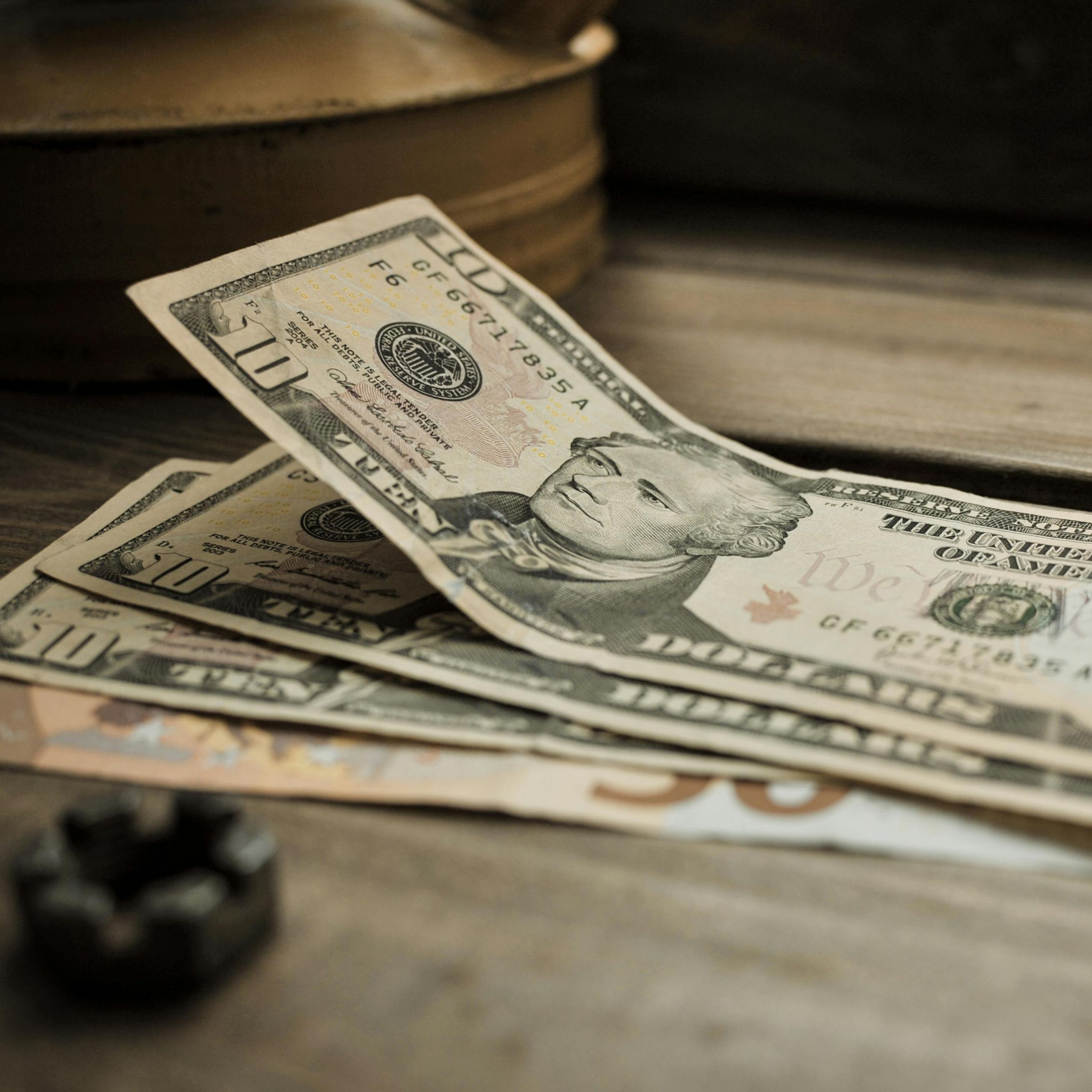
Photo credit: Natasha Chebanoo on Pexels.
Hosted by Simplecast, an AdsWizz company. See pcm.adswizz.com for information about our collection and use of personal data for advertising.
Get every episode summarized
Each time The Brian Lehrer Show publishes, we email you a written briefing from the transcript — the topics, who appeared, and any specific claims, with the ad reads skipped.
Email me new episodesFree for 3 shows. No card needed.
Hosts & guests
Transcript ready
582 searchable segments. Every word is indexed and playable.
Full transcript
The Brian Lehrer Show — How War With Iran Could Affect the US Economy. Machine-transcribed; use the interactive transcript above to jump the player to any line.
WNYC Studios is supported by Odoo. When you buy business software from lots of vendors, the cost's at up and it gets complicated and confusing. Odoo solves this. It's a single company that sells a suite of enterprise apps that handles everything from accounting to inventory to sales. Odoo is all connected on a single platform in a simple and affordable way. You can save money without missing out on the features you need. Check out Odoo at odo.com. That's odo.com. Few things are as uplifting as the greatest moments in sports. And nothing brings us together quite like Team USA at the Olympic Winter Games. From NBC Universal's iconic storytelling to the innovative technology across Exfinity and Peacock, Comcast brings the Olympic Games home to America, sharing every moment with millions. When Team USA steps onto the world stage, we're not just watching. We're cheering together. This winter, we're all on the same team. Comcast, proud partner of Team USA.
It's the Bryan Lair Show on WNYC. I'm Amina Serna, a producer for the Bryan Lair Show filling in for Bryan today. Coming up on today's show, we're going to talk about the growth of data centers in New York and Governor Kathy Hockel's proposal for who should pay for the massive amount of energy they use. In recent elections, these data centers have become a hot topic as voters blame them for the increase in their energy bills. So we'll take a closer look at what Governor Hockel is proposing and how it could affect your bills. Plus, Caitlin Dickerson from The Atlantic will be my guest later in the show. She's a Pulitzer Prize-winning immigration reporter. We'll get her take on the news that President Trump has fired, Department of Homeland Security Secretary Kristi Nome, and her most recent story is about a New York family with mixed immigration status that decided to move to Mexico. Where one member of the family was from, rather than deal with the stress of President Trump's deportation campaign, they self-deported basically.
And we'll wrap today's show with a conversation about Ramadan. We're going to talk about the diversity of the Muslim community in the United States and for our Muslim listeners, we're going to invite you to share your traditions during this holy month. But first, as the war with Iran continues to intensify, we begin with the cost of war. First, the human cost mostly felt in the Middle East. Since the United States and Israel launched their coordinated attacks on Iran on Saturday, at least six American service members have been killed, all of them were killed Sunday in an attack on a port in Kuwait. And more than 1,000 civilians have been killed in the first five days of the U.S. Israeli bombings of Iran, including 181 children under the age of 10 that's according to the U.S.-based human rights activists' news agency. But the price of war could be paid by Americans as well.
U.S. oil prices traded up to $82 a barrel Thursday afternoon after United Kingdom maritime monitors reported that oil tankers were being attacked in the strait with one leaking oil, thus according to Politico. All of this coming in ahead of the midterm elections, of course, and until recently oil prices have been a bright spot for the Trump administration, registering declines as President Trump took office. Joining us now to discuss how the war in Iran has impacted and might continue to impact the affordability crisis here in the United States is Lydia DePilis, New York Times reporter covering the American economy. Her latest for the Times has titled how war in the Persian Gulf could spill into the U.S. economy. Lydia, welcome back to WNYC. Good to be here. And listeners, we know oil prices impact us not only individually at the pump, but also in so many different consumer industries. If you felt the impact in any way this week,
call and tell us your stories. 212433WNYC, that's 2124339692. And as we'll discuss gas prices also rose back under the Biden administration in 2022. Maybe you want to reflect on your lifestyle or industry and how it was impacted back then. And what you're bracing for now. Or any comments or questions you may have for our gas New York Times economy reporter Lydia DePilis, 212433WNYC, that's 2124339692. You can also text that number. All right, Catherine Rampell from the Bullwork wrote in her newsletter yesterday, Trump's quote, warflation has just begun. And that's because a lot of the world's oil passes through the Iranian controlled straight-of-hormuz. So Lydia, what can you tell us about the immediate impact on that shipping route when the war began? Yeah, so that shipping route is completely closed.
And that matters because about 20 or 25% of the world's oil does need to transit through it to get from refiners and producers in the Persian Gulf. That's Kuwait and Qatar and Iran to the rest of the world. And so because Iran has said, and in fact yesterday did, instead of ship on fire, that they will not allow any ships to transit through there safely. And also, I mean, the reason that boats are not even trying it is that because they can no longer get insurance, which they need in order to sail, basically, that chunk of the world's oil supply has been totally cut off. And so oil prices are still rising. I guess they hit $90 a barrel today. I don't know if they'll settle there. But the impact of this is just beginning because so much of the world is still really dependent on oil and that is going to be the primary channel through which it impacts the US economy, but there may be others in the coming weeks as well.
And how quickly were those impacts felt by American consumers maybe at the pump first? Right away. I mean, even though a gallon of oil from the Persian Gulf takes a while to get to your gas stations, it's not like that one gallon is more expensive and it'll trickle through. This is a global market, and so it depends on futures prices, right? This is what investors think that it'll cost over this sort of medium term. So those prices translate fairly quickly. So gas buddy, which tracks these prices at the pump nationwide, it's found that I think they're averaging $3.32 today, which is as high as it's been in a year and a half. So people are going to feel it right away. As you write in your piece, the United States is a net energy exporter. So why is all of this a problem? So this is a difference from the reaction
that we would have seen in the early 1990s when there was also war in the Gulf, or even 10 or 15 years ago, because there has been this emergence of the shale gas industry in the US. And the important thing though, is that the energy market is pretty complicated and I'm not like a total expert on it, but just because we export more energy than we import doesn't mean that we're completely insulated because there's different types of energy, right? Natural gas goes into a whole bunch of other energy uses besides cars. And what we put in our cars is actually a mix of different types of oils, so we still need to import some of it. But it does mean that the energy costs aren't going to flow over into some of these other uses, like gas that we use to heat our homes or power electricity that is used in industrial facilities
as much. As it is in Europe, for example, Europe, which already have been trying to wean itself off gas and oil from Russia and depend more on energy from the Middle East is now facing challenges on both of those fronts. So the energy price shock is going to be quite a bit larger over there. In the US, we have our own supplies and also our own companies are these big producers. So you'll see American companies benefit whether that ends up meaning they hire more people as yet to be seen, but they have been waiting for higher prices per barrel in order to start pumping more. I mean the price for the moderate for a while now. And so they are taking advantage of this. And so that will add more supplies come online that will limit the increase. But the folks who study this stuff like an investment banks
are expecting that prices will remain elevated through the rest of the year because of that cutoff and supply and the Persian Gulf, even if it does return to normal soonish because inventories will be so depleted. And of course we do not know if it will return to normal. Well, I want to get your take on the response coming from the White House on this. So yesterday, press secretary Caroline Levitt seemed to deny that the war in Iran was impacting oil prices or the economy. So let's take a listen to a bit of that. It is the president's belief and his economic team's belief that the economy continues to be very strong. It's robust and we'll be able to weather any of the temporary impacts of operation at the theory. And on Tuesday, Trump acknowledged the price hike. But he said it would come down eventually. If we have a little high oil prices for a little while, but as soon as this ends, those prices are going to drop, I believe lower than even before.
So as the White House navigates its messaging, can you fact check that statement from the president for us in what scenario might the prices actually drop? And does that look likely? Well, I think that his justification is that if the US or more friendly nations to us control the street of Hormuz going forward, that could mean that it is less subject to interventions by Iran. Iran has not before this restricted tinkers from going back and forth. I mean, it is how they make their money. So it turned for me to see how that would lead to free or low of oil in the future. One way in which that could be true is if American producers scale up and have more pumping at the end of all this, and so inventories are higher.
And so gas prices are lower than they were originally. But again, this stuff does take a while to sort itself out if supplies are interrupted for a serious period of time. And the other justification he has offered is they are going to be protecting boats, like if necessary, the US Navy will escort ships in and out and offer insurance, which I mentioned before, at competitive rates. That might keep oil flowing, but it will be costly to US consumers. So it just sort of depends on where you see the cost coming through. And one more thing that the President made you is the US has a strategic petroleum reserve that is used in emergency times to keep prices under control
President Biden also used this when prices spiked very high in 2022 to keep them from going even higher. So it's not an unprecedented use, but it does come at the cost of the taxpayer ultimately. We are getting a few texts and calls. Listeners, we can take a few more. Maybe you want to report on the ground what you're experiencing with heating prices. Maybe you filled up your gas tank at the pump this morning. What are you seeing? 212-433-W on my C. That's 212-433-9692. And here is a text. The cost to heat my house with propane went up 30 cents a gallon in one day. From 239 to 269.
I had to lock into the higher price for a year because I wasn't expecting it. And let's go to call. Craig in Morganville. You're on WMIC. Hi, Craig. How you doing? I don't know if I'm sure your guest is very knowledgeable, but oil is one of the few commodities that even when you buy barrels or however big your order is, while it's in transit, that price fluctuates until it gets to the destination. It's not like you buy a bushel of corn and then it's done and you pay for it. That's another issue with oil. So that's a big problem when even prices are low. You're really handcuffed to the market even more so. And the other thing is a lot of news agencies still don't report that. Half of Europe is still buying natural gas from Russia. And everyone fails to realize that. And that's kind of the bad thing also. Thank you. Craig, thank you so much. So Lydia, two points in there. You did talk about oil being a futures commodity.
So maybe going to what Craig was saying, it's a commodity that, you know, the price goes up while it's in transit. And as we saw that text reporting, heating for propane oil going up. So and having to be locked in for the year. Yeah. So what do you want to comment on that? Sure. So well, as context, it is true that energy costs outside of gasoline have been rising, especially for electricity. And that's because of a number of things. I mean, demand has been increasing marketly because of new data centers that, and which I believe I guess if you're going to talk about later in the show. So that's already a rising cost to consumers. And it is interesting to hear that from that text message that residential gas heating is already jumping. And I know what Craig said. It is true that the oil price fluctuates all day. But how big companies handle this is they can buy contracts
that lock in their price for a few months to a year. They can also buy hedges. So if the price goes up, that means that they get a financial benefit to the other side to try to keep their costs stable. But, you know, as those contracts renew, they have to buy new ones, their costs will go at just a matter of who has to weather the volatility. And like a general rule of thumb is if the smaller you are, whether you are a business or a consumer, the more subject to that volatility you are, which is really difficult if you're trying to plan your expenses for the coming months. You read about how this isn't the 1970s, when turmoil in the Middle East led to fuel shortages that sent inflation skyrocketing and created lines at gas stations. So a lot of our listeners might have experienced that surge back then, but for those of us who haven't, can you explain what happened
and how the American consumer experienced it? Yeah, so in the 70s, we're a time of a lot of political tumult in the Persian Gulf and in Iran, specifically with the revolution, and there was an embargo. And at that time, I believe, like most of our oils did come from that region. And that has changed over the years, you know, because the U.S. has become a big producer but other regions of the world as well. And so our unit of oil per outgrowth of gross domestic product, right? So the energy intensity of the economy has gone down a lot for a couple of reasons. One, the U.S. has become more dependent on services, right? We now, most of our jobs are in offices as opposed to goods, right?
We don't need as much energy to, like, make as many cars as we used to. You know, that has its downsides. But it does mean that we're not as subject to fluctuations in the oil prices. I mean, the thing is that we have also brought a lot of renewable energy online. I mean, California and Texas have huge amounts of solar and wind. And so those are, that's domestic homegrown energy as well. So this is something we are thankfully more insulated from. And I mean, just so quick to remember, like the 1970s oil embargo led to an inflation spike that is still the largest we've seen in American recent history. And that's sort of for a lot of reasons. It became so much of a problem that inflation built on itself. And people demanded wage increases because they expected prices to keep going up. Those wage increases themselves drove up the price of the products
and those people were making. So it created this spiral that resulted in, you know, 14, 15% inflation that the Federal Reserve had a really hard time bringing under control. So that didn't happen even in this, like, latest big inflation spike in 2022. And I don't think it's going to happen this time around. But it is real money that people are going to have to factor into their budget. And you write most impacted are going to be small businesses and consumers with low incomes. Now, you know that this depends on just how long the war in Iran lasts. But let's take that one at a time. How might this hurt small businesses? So yeah, as I mentioned, small businesses typically aren't buying financial instruments to hedge their downside risk and they're not locking in long-term contracts for energy prices. So they, you are a small delivery business. And you have little trucks that consume diesel. And diesel is now up to $4 a gallon.
So you're going to have to pay that extra money. Let's think of other energy intensive businesses. I don't know. Say you like a run of bakery and have to run your ovens all day. So that's a meaningful expense for you now. And then on the consumer side, yeah. So low income folks spend a greater share of their incomes, which are lower, on getting from place to place. And so this is also, I mean, it's going to be less for folks who live in big cities like New York. We're fortunate to have a subway to get us around. And more for people in rural and suburban areas who need to drive everywhere. And so, you know, a data company I talked to had broken this down to try to see which retailers will be most impacted by their customers having to spend more on gasoline. And it's a little bit illustrative. It's companies like Boot Barn and Taco Bell, like where their customers are the most impacted by gasoline price hikes.
And also are in these suburban areas where you cannot walk or take a subway to get there. You have to drive. Listener writes, the cost of food and goods is killing us. Now add the increase in transportation costs due to this completely avoidable situation in Iran. You also rate with the personal savings rate at its lowest point in more than three years. And delinquency rates on credit cards and auto loans rising to levels. Not seen since the great recession. There's not a lot of cushion left. So pretty direct impact even just gas prices at the pump, right? I mean, you know, there's never a great time to invade a country and spike gas prices. But this is perhaps more difficult time. And we just got new jobs numbers in this morning that show a really stagnant labor market. And now wages on average are still rising at a healthy pace. That again, on average are a head of inflation.
But we've seen this emergence of a wedge in the US economy where high income consumers, especially those whose earnings have been boosted by a really healthy stock market, are propping up spending and those on the lower end have really been suffering. And so that savings rate means basically the difference between your income and how much you're spending. People are putting more of their expenses on credit cards where interest rates are still, you know, higher than they had been before the pandemic. So a lot of folks are really under strain and rent have gone up a lot. And especially for low income renters, that has meant a real term. They are earning less than they did, you know, four or five years ago. So this is a period where folks are really stretched. And that's why it's concerning. You know, on the low end, there may not be that much that people can pull back on spending.
You still need to buy food to feed your family. And folks will also know, like this month, new work requirements picked in for snap benefits. And in the coming year, that's going to happen for Medicaid. And so there's a, you know, hopefully people will see some healthier tax refunds because of the big tax cut that went into effect last year. That is something that economists think could help to sustain spending. But right now, a lot of folks are really struggling to try to put the pieces together. It's a Brian Lear Show on WNYC. I'm Amina Serna filling in for Brian today. My guest is Lydia DePilis, who is a New York Times reporter covering the American economy. We're going to take a quick break. When we come back, we can take a few more of your calls to one, two, four, three, three, WNYC. That's two, one, two, four, three, three, nine, six, nine, two.
Stay with us. It's the Brian Lear Show on WNYC. I'm Amina Serna filling in for Brian today. Lydia DePilis, New York Times reporter covering the American economy joins us now. Lydia Politico reports that the administration is, quote, scrambling for solutions. It's apparently considering a temporary holiday on the gasoline tax. Are you familiar with that proposal or what that can mean? I haven't replicated that reporting myself. I don't doubt that they are thinking about how to blunt the impact here. Of course, of all the costs that people face, gasoline is one of the most salient. It's literally posted on gas stations all around the city and on highways. People keep track. You also might track the price of milk or eggs.
But this is something that people have to deal with every day, unlike buying a car, which is a very infrequent purchase. It's very politically salient. I am sure they are trying to figure out what to do. The gas tax holiday, I am not sure if they could do that through executive order. That seems like something they require Congress. And of course, gasoline prices are also determined by state gas taxes. So it wouldn't necessarily decrease prices that much, although it is a meaningful amount. I think it's like 18 cents a gallon. Don't quote me on that. I believe it's also been reported again that they are considering releasing oil from the strategic petroleum reserve. There are plenty of things you could do. And the Trump administration has not shied away from increasing the control of the economy. This is something that traditional conservatives would have found pretty distasteful,
but I don't doubt that this administration has shown its willingness to intervene before. You mentioned already Trump's announcement that the U.S. Development Finance Corporation will provide political risk insurance for crude carriers and cargo ships operating in and around the Persian Gulf. And you also mentioned that he said the Navy will begin escorting tankers through the straight of Hormuz, if necessary. So is any of that feasible? Or feasible? I mean, the government provides insurance for all kinds of things. Think of the flood insurance program, for example, which is a government program that is taking the place, is in place because the private sector does not want to provide that product is too risky and not profitable. So it is something that we subsidize. So totally possible, but the question is, will shippers send their ships through a street that is still very dangerous? Like getting an insurance payment if your boat gets sunk is helpful, but your boat is still sunk,
and your crew is probably dead. So it still might be the kind of risk that they don't want to take even if they have insurance. And yeah, okay, being escorted back to it. But does the U.S. Navy have the capacity to escort everything with oil tanker? Or when the Navy and other services are very stretched now, right? We have military ventures in lots of parts of the world at the moment. So there's sort of really a question of whether they could keep that up for very long. Our color Craig earlier had mentioned Europe and drawing some parallels there. Before the full-scale Russian invasion of Ukraine began in February of 2022, Europe had relied heavily on oil from Russia. Now, a lot of countries have shifted to the Middle East. Any lessons from Europe that you see for the U.S.? Well, Europe is in just a much worse position.
And one of the reasons they pulled back from some of their climate commitments, just because as costs have risen, they need to maintain access to those fossil fuel sources. But it is a politically difficult position to be in, but it is short-sighted. It had Europe been able to shift more towards renewable sources. You know, in the three years since Ukraine was invaded, they might have been more insulated from this new shock. But again, it's just very difficult when you're sort of had your back up against a wall. It's not the only one that will be affected, though, right? Other emerging countries, economies also rely on oil from the Middle East. So India is one of those that it could really be in a tough spot. I did read that the U.S., which had been pressuring India to stop buying oil from Russia,
has relinquished that pressure. And so one of the beneficiaries here may be Russia as the U.S. tries to mitigate the impact on the rest of the world of the war that it is waging with Israel. Right. Good point, because I was also hearing yesterday that China relies very heavily on Iranian oil, something between 11 to 13%. And they already took a hit. I mean, it's been two months since the U.S. attack on Venezuela, where Russia also was receiving oil from. So it remains to be seen what that country will do next. This is a little bit outside of what you wrote about very recently, but I wonder if you have been following this part of the story as well. Food systems expert and University of Texas professor Raj Patel wrote in a sub-stack that fertilizer prices are already spiking, causing a panic among American farmers
who are beginning their planting season for the year. So he writes that consumers may see, quote, higher prices for bread within six to ten weeks, eggs within a few months and pork and broiler chicken within six months. So that's very specific from this food systems expert. But I wonder if you're generally following the farming story. Yeah. So I haven't done it in as much depth, but I do know that, you know, that street of hormones is a channel for not just oil, but other petrochemical products of which fertilizer is one. So I mean, would you get a lot of fertilizer from Canada? I believe in some of this has become more expensive because of tariffs already. So this is sort of like cost on top of cost. So it's interesting to know that that could feed through into food prices that quickly. Yeah, I would not be surprised to see that. So other petrochemical products that come out of there go into, you know, U.S. refineries that make things like plastic. So those are products that could also start to see increases in price.
And I mean, again, like if we can't import, like inputs into our farming sector and our other manufacturing sector at reasonable prices, we typically would turn to import those final products. Like those food products or this plastic thing. But those are now terror, right? So there's many fronts on which the trip administration is raising costs. And so it does start to accumulate pretty quickly. Listener asks, how can Trump promise to ensure oil tankers? Wouldn't Congress have to designate funds for something like that? And promising a Navy escort doesn't that just put more Americans in harms? Way, why wouldn't Iran just attack both ships? Yeah, I mean, I'm not like an expert in military deployment. But I would say that surely the Iranians capacity is being rapidly eroded, right?
So a question is how long they can continue to send drones and missiles against all of these targets. Once on the question of whether Congress would need to appropriate money, Trump administration has moved a lot of money around it. And the channel through which they try to do this or trying to do this is the development finance corporation, which is sort of like semi-private. It's got income streams of its own. So I don't think that it would need to go to Congress for that. So a big picture here, it didn't go unnoticed. The Trump administration a few months ago said that it wanted to raise the budget for the Pentagon to $1.5 trillion, which is a 50% increase over the current sort of average annual budget. So it is imagining a much bigger scope. And I kind of doubt that Congress will allow for that.
But the cost to the treasury of war is high. We know this from conflicts past, from Iraq to Afghanistan to Syria. And that's the kind of thing that can leave the US with debts that don't get repaid for years. Like the aggregate accumulated national debt is now around 120% of GDP. And if you don't pay that down, it just sort of keeps going up, especially as interest rates are high. So debt service just keeps piling on top. So this is the kind of thing where the bill can get racked up pretty quickly. So we've been talking about how Americans are paying for this war in Iran. But you also talked about the political costs. So let's get into that as we wrap up the segment. I use the term affordability crisis in my intro to the segment.
But the last time we heard about the cost of living crisis, affordability crisis was during the Biden administration and the 2022 midterms when gasoline prices spiked because of Russia's war in Ukraine. Republicans hammered gas prices in those midterm attacks as someone who covers the American economy. You want to give us your take on just how big of a deal oil prices are politically or could potentially be this year? Yeah, they're super critical. And so I think that the Trump administration is hoping that the midterms are still a ways away. But, you know, Trump's approval ratings are already at a fairly low eb and specifically on the economy, which had been one of his best issues. They're underwater. And it's not like Democrats are seen as being more competent on the economy, but, you know, they're not in charge at the moment. So it's a real vulnerability and, you know, the White House had seen some decent numbers on inflation recently.
Like the consumer price index came in pretty soft at the last reading that we got. But, you know, I think consumers know that it is not back to, quote, normal. It's not back to where the federal reserve hopes to get it to. And the reason for that is tariffs. Like, absent those tariffs, price increases would probably be back around 2%, which is, like, manageable with the wage increases that people get. And I think people know that. And, you know, even when the president had a big setback at the Supreme Court, which negated rules illegal, his most potent tariff tool, he came back around and used another authority to try to get those tariffs back as high as he could as quickly as possible. So I think that kind of thing has made news. And I think people realize that, you know, their costs could be lower, but for White House policy.
We'll have to leave it there for today. I guess has been Lydia DePilis, New York Times reporter covering the American economy. Lydia, thank you so much for taking this big global story and driving at home for us today. Happy to do it. WNYC Studios is supported by Odoo. When you buy business software from lots of vendors, the costs add up and it gets complicated and confusing. Odoo solves this. It's a single company that sells a suite of enterprise apps that handles everything from accounting to inventory to sales. Odoo is all connected on a single platform in a simple and affordable way. You can save money without missing out on the features you need. Check out Odoo at ODOO.com. That's ODOO.com. Since WNYC's first broadcast in 1924, we've been dedicated to creating the kind of content we know the world needs. Since then, New York Public Radio's rigorous journalism has gone on to win a Peabody Award and a Dupont Columbia Award among others.
In addition to this award-winning reporting, your sponsorship also supports inspiring storytelling and extraordinary music that is free and accessible to all. To get in touch and find out more, visit sponsorship.wnyc.org
More episodes
More from The Brian Lehrer Show

Tuesday Morning Politics: State of Iran War; Home Stretch to Midterms
The Brian Lehrer Show

The CDC and Measles Deaths
The Brian Lehrer Show

History of the War on Terror
The Brian Lehrer Show

Labor Day: Working Class; White Collar Unions; Supermarkets; Summer Songs
The Brian Lehrer Show