
History's Greatest Philosophers Got Away With Murder | Replay
About this episode
In today’s episode, Seth Gruber tears into the dangerous ideas that shaped the modern culture of death. Drawing from Ten Books That Screwed Up the World, he exposes how thinkers like Machiavelli and Descartes didn’t just influence culture—they unleashed devastating consequences that still claim victims today. Seth breaks down how bad ideas spread, why they matter, and how Christians must confront and dismantle them to rebuild a culture rooted in truth, goodness, and life.
Shop EveryLife, the ONLY diaper company rooted in pro-life values! Use code “Seth10” to get 10% off. https://everylife.com/discount/SETH10
Give Your Children Values-Driven Books You Can Trust — Shop BRAVE Books! https://bravebooks.us/
Join the Movement at The Last Stand — Get Your Tickets Now! https://thelaststand.com/
Get Your Gruber Wear! https://gruber-wear.printify.me/
FOLLOW Seth’s Rumble channel in case he gets kicked off YouTube: https://rumble.com/c/sethgruber
HOST A SCREENING of Seth's documentary "The 1916 Project". This film exposes the hidden history of the secular moral revolution, and the architects of our current culture of death. Sign up your church to join the hundreds of churches screening this powerful film! https://the1916project.com/
Tune in to The Seth Gruber Show every Tuesday and Thursday. Understand not only the things happening in our culture but also how they became realized. Now streaming on all podcast platforms!
To help Seth educate and expose culture to the evil of abortion so that every person has a right to be born, become an ALLY of The White Rose Resistance at https://thewhiterose.life
Get every episode summarized
Each time The Seth Gruber Show publishes, we email you a written briefing from the transcript — the topics, who appeared, and any specific claims, with the ad reads skipped.
Email me new episodesFree for 3 shows. No card needed.
Hosts & guests
Transcript ready
919 searchable segments. Every word is indexed and playable.
Full transcript
The Seth Gruber Show — History's Greatest Philosophers Got Away With Murder | Replay. Machine-transcribed; use the interactive transcript above to jump the player to any line.
The feminists were like a woman needs a man, like a fish needs a bicycle. She doesn't need a man. That actually was a very popular phrase. The dude should not be able to go into the woman's locker room at shower at the YMCA, or the poor high school or the college. Most of the creeds of liberalism provide the seed, which has grown the weeds or the tree of leftism, if you will. Some of these books, going back to the 1500s, this is where we find the seeds of liberalism today, that have created our entangled roots. I've said it before, and I'll say it again and again and again. Ideas have consequences, and bad ideas have victims. Ideas have consequences, and bad ideas have a lot of victims, okay? We are doing a really cool thing at the White Rose Resistance.
It's a books in the Barracks Book Club for all of our supporters at $70 a month or more. We call that air support. It's just, it's fun things that we do to pour into our supporters, because we believe that the church is the resistance, that the church is a solution to all of the insanity happening in our culture, and we need to awaken, mobilize, and release the blood-bought bride of Christ to do the works of the ministry, to be the people of God. And so this is one of the things that we do at the White Rose Resistance for our air support, $70 a month, supporters and donors, and we meet about every other month, and we talk through a book that we're reading. And we do questions, and we hang out, and it's super fun. We're going to just do a little teaser and scratch the surface today on this book. Here on the Seth Gruber Show, because this show is about exposing evil ideas, okay? Promoting the good, the true, and the beautiful.
Explaining how this culture of death was created so that we can oppose it. We can tear it down, and we can rebuild a culture of life. So go to the White Rose Dot Life, join it $70 a month, and welcome today to the Seth Gruber Show. So what are the 10 books that screwed up the world, and the five others that didn't help? This book was written by Benjamin Wiker in 2008. And here, who's who we're talking about? We're talking about Marx and Engels, Mill, Darwin, Nietzsche, Lenin, Sanger, Hitler, Freud, Mead and Kinsey, okay? And actually, there's a dishonorable mention of Betty Friedan, actually, as well, Betty Friedan. 10 books that screwed up the world, and five others that did not help. We are going through this book and our Books and the Barracks book club, but really, what I think I want to do with you today on the show is talk about where liberalism came from. And we had a great question from a donor the other day.
And I thought it was such a good question that I wanted to address it with you on the show today as well. I was asked recently, Seth, why do you use the phrase liberalism and leftism interchangeably? You use them kind of as the same thing. And it was a fair question, because this person was saying, liberalism is different, right? Like classical liberalism, like free speech. You know, I mean, even like second amendment, you know? And in the belief in American exceptionalism, like I know a lot of old school liberals that are all about that stuff, and they hate the radical left. But they're not conservatives, they're still liberals. And so why do you go after liberalism? Isn't that a lot better than leftism? In fact, aren't they often opposed? And so maybe we should have a little bit more nuance around these definitions instead of using them interchangeably. And here was my answer. I said, I'm grateful for liberals today
who are in opposition to the radical left and they don't want to go that route. However, however, I think if we think deeply enough and we're able to think not just in bits and pieces, but in totalities, what am I talking about? I'm talking about to think in a worldview. If you have worldview categories for what's happening today, right? And you understand the ideas, the ideologies, the assumptions, right? That have created or animated our culture today. If we can think a little bit larger in totalities, I think it becomes clear quite quickly that leftism in most respects is the inevitable and logically consistent conclusion of liberalism. Most of the creeds of liberalism
provide the seed which has grown the weeds or the tree of leftism, if you will. Here's sort of another example to illustrate this point. And this is where we find the seeds of liberalism today is really in some of these books going back to the 1500s that have created our insane culture today. Here's another analogy. The feminists and the transgender cult, right? I think of J.K. Rowling, for example, right? The author of the Harry Potter books who is like an old school feminist, meaning she believes, ready? Wait, wait, wait, wait. She believes women exist and that we can know what they are. And so because we can know what they are, we know that a man is not a woman. Oh, my gosh. And so because we know that, we know that a man can't turn into a woman. And so because we know that, we know that we should recognize and actually respect women's privacy in spaces.
So the dude should not be able to go into the woman's locker room and shower at the YMCA or the pool or the high school or the college, okay? That's wrong, okay. So like J.K. Rowling is a feminist. And I believe she said that openly like she identifies as a feminist. And so she hates the trans cult, right? And that most of the people who played the Harry Potter kids in the films have all come out against her as like some bigot or something. Like she made them rich and now they hate her because she's not far left enough. Anyways, what's my point? There are feminists today who don't want to follow feminism all the way to transgenderism. However, my contention is that transgenderism is the necessary and logical conclusion of feminism, even if the feminists don't want to adopt the conclusions of their own ideology. That's what I mean. I'm saying that leftism is the inevitable conclusion of liberalism, even if the old school liberals don't want to adopt the final conclusions of their own political philosophy. That's what I'm trying to argue and say.
So for example, feminism said what? Feminism said, a woman needs a man like a fish needs a bicycle. That actually was a very popular phrase from the feminists. Woodstock, free the nipple, that old movement, right? Like the 60s. The feminists were like a woman needs a man like a fish needs a bicycle, which is to say what? She doesn't need a man. And so there's nothing unique that a female brings to a relationship that a male cannot bring. And vice versa, there's nothing that a man brings to a relationship that a woman can't also bring. So feminism was sort of this creed of equality. And by equality, of course, we don't mean like equal and rights. Of course, we're equal and rights. The equality that accompanies feminism is actually like no distinctions, right?
That basically men and women are superfluous. That's a better way to articulate what I'm saying. That equality and feminism is to say that men and women are superfluous. They don't need one another. And they don't bring anything unique to the table, right? So societal gender roles don't come from anything objective. They don't come from anything biological. Like there's nothing about a biology that provides any clues to our identity or our roles in society. So it's just a coincidence of nature that she has breasts and he doesn't. That's just a random coincidence of nature, because otherwise we're identical, except for the physical attributes which are different, which I guess, I don't know, that's what Darwin decided or the electrified sludge that happened to arrange itself into what we now call consciousness. That's just a random co-inkering of nature. But otherwise, societally, like socially, culturally,
men and women are identical. And any roles that have become normalized, the feminist argued, were just an example of the patriarchy and the chauvinist males keeping women under their thumb. None of it flows from biological distinctions or natural orderings. So if that's what feminism says, then what would be the next sort of logical conclusion or next step? Well, then we have to legalize gay marriage. That would be the next step. If men and women are superfluous, and what did the same sex marriage advocate say, leading up to and for years before a burger fell? A burger fell is the Supreme Court decision that found a fictional constitutional right to gay marriage, whatever that means. They said, any two will do. Do you remember this phrase?
I actually remember these things, but these phrases sometimes go in and out of popularity and people forget about them. This was very popular. Any two will do became sort of the rallying cry with the equals sign, right? The equals, meaning gay marriage equality. We have to have the right to marry each other to have true equality. And the phrase that accompanied this revolution was the phrase any two will do. Well, what did they mean by that? Two mommies is the same as a mommy and a daddy. And two daddies are the same as a mommy and a daddy because men and women are superfluous. So if that's the seed of feminism, if that's the orthodoxy of feminism, then obviously you have to legalize gay marriage because any two will do. It's all socially contrived anyways. So a man and a man, a woman and a woman, it's all the same anyways. And so the argument became that children
fair just as well with two mommies. Some lips would say better even than a mommy and a daddy. Okay, well, if that's where feminism took us, then where does it go next? Then a man can become a woman. Why not? Right? And by the way, we're gonna find all of the seeds of this and some of the books right now that we're jumping into on this F.C.U.B.R. show today, on this book, 10 books that screwed up the world and five others that didn't help as a little teaser for you of some of the cool stuff that we do at the White Rose Resistance with our donors. But you'll find all the seeds of these belief systems that leads to liberalism, that leads to modernity, and that eventually becomes today what we call the radical left, or leftism. But first, have you seen like these pornographic books and trans madness in kid sections, in libraries?
I'm seeing it more and more. That's disgusting. I am sick and tired of the secular plots and shows, making fun of doofus dads and praising boss bay bombs and transiting the kids. This is why we needed brave books. And I think why you need it too. They create stories that kids actually want to read. But unlike the junk coming out of Hollywood and our culture, these stories are designed to build biblical conviction, courage, moral clarity from young ages, they reinforce timeless truths, like the sanctity of life and God given identity and the fruits of the spirit. And with engaging stories and like, there's fun hands on activities and scripture in every book. And so when you join Brave Book Club, a new book is delivered to your door every month. And you also get free access to Brave Plus, which is super cool. It's their streaming platform and filled exclusively with parent-approved content that actually supports the biblical worldview. We think that this is a must for all families. You know by now that if we don't disciple our children
the culture gladly will. So just for my listeners, you can get 20% off your first order today by going to bravebooks.com forward slash Seth and use code Seth. Again, that's bravebooks.com forward slash Seth and use code Seth. Okay. So if we have to have gay marriage because men and women are superfluous and there's nothing unique between a man and a woman, then why can't a man just be a woman? Why can't we just like swap? Like why can't we just be interchangeable? That's what the feminists taught us anyways that were basically interchangeable. And if if by the way, if Renee Descartes was right that our body is like a prison for the real self, the real person, then the thing that we call a body is just a pound of flesh anyways. It's not the real person. So your pound of flesh might have two breasts and your pound of flesh might not and you might have male chromosomes
and you might have female chromosomes, but it's just random. That's not who you really are anyways. So go ahead, okay, go ahead, Bruce, Bruce, and liberate your womanhood from the biological prison of your male pound of flesh. Like transgenderism is the inevitable and final conclusion of feminism. The same is true with liberalism and leftism. That's what this book begins to help us to understand. So I just wanted to do a flyover on some of these books because I think Benjamin Wiker does a better job of this than almost anyone else I've ever read. So where does he begin to trace all of this? Well, before I tell you where, I want to remind all of us how true that phrase is. Ideas have consequences and bad ideas have victims.
Benjamin Wiker in the introduction to his book, 10 books that screwed up the world, says that many have come to not believe that ideas have consequences. He says Thomas Carlyle, the eminent Scottish essayist and sometimes philosopher, was once scolded at a dinner party for endlessly chattering about books. Ideas, Mr. Carlyle, someone said, ideas, it's nothing, nothing but ideas. To which Thomas Carlyle replied, there was once a man called Rousseau who wrote a book containing nothing but ideas. The second edition was bound in the skins of those who laughed at the first. Carlyle was right, Jean Jacques Rousseau wrote a book that inspired the ruthlessness of the French revolution. It's a little vignette to remind us
of the power that ideas have. We might mock those ideas. We might laugh and scoff at those ideas and we may be right to do so, but don't discount or forget the danger of bad ideas. And those ideas are very welcome today in a certain institution called our universities. And those ideas are forming the moral conscience or the immoral conscience of the next generation who will be your future voters. Ideas have consequences. Have you ever heard of Nicolo Machiavelli? You've probably heard of Machiavellianism. That refers to Machiavelli who lived between 1469 and 1527. And he wrote a book in 1513 called The Prince. That's the name of the book, The Prince. In the Thessaurous, Machiavellian stands with such ignoble adjectives
as double-toned, two-faced, false, hypocritical, cunning, scheming, willy, dishonest, and treacherous. And today, this has come to be known as Machiavellianism. This book, The Prince, written in 1513, in many ways, is the defining ideological transformational book that would define the next 500 years of Western history. And it's really important to understand where bad ideas come from. If we're going to successfully make a case against them and convince the public of a better way to approach the culture. Machiavellian, Wiker writes in this book, meant to start a revolution in his reader's soul. And his only weapon of revolt were his words. He stated boldly what others had dared only to whisper and then whispered what others had not dared even to think.
Machiavellian contribution to liberalism as we know it today was to use mercy or the appearance of mercy or the appearance of compassion or the appearance of Christian virtue as a tool to win the hearts of the people. But if you actually believed in the Christian virtues, Machiavellian thought that this was dangerous and harmful, but the best way for the prince or the royalty or those aspiring to political power, the best way for them to live would be to appear to exercise religion as merely a utilitarian tool. This is leftism as we know it. Today, here's what he says, he says, and so one might ask, should a ruler be merciful, faithful, humane, honest and religious? No, Machiavellian says it is not necessary for a prince
to have all of these above-mentioned qualities. But it is indeed necessary to appear to have them. He says, nay, I dare say this, that by having them and always observing them, they are harmful. And by appearing to have them, they're useful. It's better to appear merciful, faithful, humane, honest and religious. It's better to fake having morality and virtue than to actually have it. Where would we see this ideas? Written in 1513 in a book called The Prince by Machiavellian, where would we see these ideas resurface and be really imbibed by radical liberals and sexual revolutionaries that would launch a full-scale assault against Christianity and Western civilization? The Frankfurt School, the Frankfurt School,
which is set up in Frankfurt, Germany, and then its leaders flee Germany because they feared Hitler, and they move the Frankfurt School to Columbia University, and they become the fathers of the radical hippie movement and the radical hippie movement. And they later became tenured professors at American universities. The Frankfurt School is where we get critical theory and critical race theory, CRT. One of the early members of the Frankfurt School was Herbert Marcusa. Herbert Marcusa would then mentor Angela Davis, a critical race theorist and anti-white racist, who's still alive today. Angela Davis then mentored the co-founders of BLM Incorporated, Black Lives Matter Incorporated, and she also mentored Nicole Hannah Jones, who in 2019, with The New York Times released the 1619 project, which said everything is racist. And so then summer of 2020, they call those riots the 1619 riots,
and then the radical left goes to Planned Parenthood and says your founder, Margaret Sanger, was a racist and you should cancel her, because the revolution always eats its own. Anyways, Herbert Marcusa, one of the fathers of the free love movement, along with Wilhelm Reich, would really live out Machiavellianism. Herbert Marcusa helped form and mainstream and popularize a concept that came from the Frankfurt School. It's called enforced coercive toleration. Enforced coercive toleration. What is that? Well, the cultural Marxists and the Frankfurt School Disciples wrote about this. Enforced coercive toleration is when you use mercy or the appearance of mercy to win the hearts of the people. This was well understood by Vladimir Karchov,
who was one of Joseph Stalin's henchmen. And in 1922 and 1923 of Vladimir Karchov, banned all charitable activities in Soviet Russia. So food banks, hospitals, counseling services, anything considered charitable had to be taken over by the state. Because why? The state can tolerate no rivals for the hearts of the people. Take them all over by the state and run all of the formerly Christian ministries of mercy as a tool of the state. The idea was that to win the culture, you had to win the hearts of the people. But Vladimir Karchov got this idea from Antonio Gramsky or Gramsci, who's the Italian communist who went afoul of Mussolini
and spent the rest of his life in prison. And Gramsky is today kind of understood as kind of the father of the Frankfurt School. And his prison letters provided sort of the basis for the creation and the genesis of the Frankfurt School. And Antonio Gramsky called it the strategy of the robes to win all of the culturally formative institutions of power and use them to change the culture forever. But what's interesting is a lot of these people liked Vladimir Karchov and liked Joseph Stalin who were really living out in forced coercive toleration. They had studied in the seminaries or in Christian education. They knew the stories of the Bible, right? They would have studied the Gospels. They knew the stories of Luke 22, right? In Luke 22, Jesus says, and he said to them, the kings of the Gentiles exercised Lordship over them, right? They lured it over the people and those in authority over them call themselves benefactors.
But Jesus says, but not so with you, let the greatest among you become as the youngest and the leader is the one who serves. So what is Jesus saying? He's saying the kings of the Gentiles, they lured their power over the people, but they call themselves benefactors. Guys, that's Machiavellianism. Do you understand? These are the seeds of liberalism right here. Pretend to have mercy and compassion. Appeared to have them as a political tool to win the hearts of the people, which then gets sort of repopularized by Herbert Marcusa in the Frankfurt School with this concept of enforced coercive toleration. Do you understand the strategy? But first, we want to thank our sponsor of the Seth Gruber Show, every life diaper company, every life diaper company. I say it every episode because I couldn't have imagined a better soul sponsor of the Seth Gruber Show than every life diaper company, a pro-life diaper company
that's trying to defund and bankrupt the abortion-loving baby brands who rhetorically or financially support the killing of their clientele base. Doesn't make sense. Right, exactly. We gotta fight with our wallet, guys. We gotta be stewards of the money God's given us. One of the ways we do that is in so far as we can, we shop in alignment with our values and with people who want to build a culture of life. So go to everylife.com, everylife.com, and use promo code Seth10, Seth10 for 10% off your first order and let them know that we sent you every life diapers for your wipes, your diapers. I think you get a discount if you put it on auto too. If you got lots of babies, lots of poop, okay? You put it on auto and you save some promo code Seth10 for 10% off your first order. Go to everylife.com, support a pro-life diaper company and support the white rose resistance and help rebuild a culture of life. Thank you, every life diaper.
The strategy is to co-opt or to manufacture biblical themes and use them for wickedness. This is how the cultural Marxists have been able to win the culture by stealing and counter-fitting a biblical idea. When Jesus says the kings of the Gentiles Lord it over them. It's a word that means they tyrannize the people. Why? Because they pose as the benefactors, right? They're the ones that read the stimulus checks. They're the ones who, if you're on Medicaid, you get your free COVID shot. They're the ones who take care of you in times of crisis. And we see a lot of the modern liberal strategies of creating crises to consolidate control and power all the way back in Machiavelli's book, The Prince, written in 1513.
In other words, you create the problem, you create the crisis, you create the pain, and then you brutally destroy the problem, thus satisfying the people while simultaneously scaring them into obedience. We see this in Machiavelli's book, The Prince in 1513. Benjamin Wiker in his book, 10 Books of Scoot of the World, tells a really interesting story that I think you'll see as a key aspect of liberalism or leftism today in the culture. This is sort of disgusting and fascinating. Machiavelli tells the story in his book, The Prince, of a wicked man named Sissari Borgia, whom Machiavelli knew personally. He had been named a cardel in the Catholic church but resigned so he could pursue political glory. Borgia was a man without conscience. He had no anxiety whatsoever about inflicting great cruelties to secure and maintain power. Of course, this gave him a bad reputation
with his conquered subjects, creating the kind of bitterness that soon leads to rebellion. In chapter seven, Machiavelli sets before his readers an interesting practical lesson on Sissari Borgia's method of dealing with this problem. He tells a story, one of the areas Borgia snatched up was Ramania, which Machiavelli notes was a province quite full of robberies, quarrels, and every other kind of insolence. Of course, Borgia wanted to reduce it to peace and obedience because it is hard to rule the unruly. But if he brought them into line himself, the people would hate him and hatred breeds rebellion. So what did Borgia do? He sent in his henchmen, Romero de Orco, a cruel and ready man to whom he gave the fullest power. Romero did the dirty work, but of course this got him dirty. The people hated Romero for his attempts to crush their rebellious and lawless spirit and make them obedient subjects.
But as Romero was obviously working as Borgia's lieutenant, Borgia would be hated by the people too. So what was he to do? Borgia was an inventive man. He knew that he needed to fool the people into believing that if any cruelty had been committed, this had not come from Borgia, but from the harsh nature of his minister, Romero. And so Borgia had Romero placed one morning in the public square and cut into two pieces with a piece of wood and a bloody knife. The ferocity of this spectacle left the people at once satisfied and stupified. The angry people of Romania were happy to see the agent of Borgia's cruelty suddenly appear one sunny morning, hewn in half in the town square. Borgia himself had satisfied their desire for revenge. But at the same time, they were numbed into obedience by a completely unexpected spectacle of ingenious brutality. So what's my point? What's Machiavelli's point in telling this story
in the Prince? Create a problem, create a crisis, create pain, then brutally, brutally destroy the point of pain, the satisfying the people and their anger, but simultaneously scaring them into obedience by an overtly extravagant, overwhelming solution, fearful solution to the problem reminding them who has power and that those people will be ready to use that power if you step out of line. This is one of the key aspects of liberalism. Today, this, along with the strategy of appearing to be virtuous, appearing to have morality and religion as a tool of power and to win the hearts of the people is all of the most standard aspects
and features of liberalism today. And this goes back to 1513 in a book written by Machiavelli that came to be sort of the orthodoxy of liberalism today. I want to touch on one other sort of seed, if you will, right, that's what we're saying. What are, today we're saying, what are the seeds of liberalism? If leftism is the inevitable conclusion of liberalism, then what is the seed of liberalism and how do we understand the political philosophy and strategies of those who seem to be hell-bent on ruining America, freedoms, liberties, and Christianity as we know it in America? Today, the second, probably most important aspect to touch on before we wrap up the show today. And then hopefully if you want to dive into Jean-Jacques Rousseau and if you want to dive into Thomas Hobbes
and if you want to dive into Marx and Angles and John Stuart Mill and Charles Darwin and Nietzsche and Lenin and Margaret Sanger and Margaret Mead and Adolf Hitler and even Betty Friedan join our book club, our books in the barracks book club by becoming an air support donor at $70 a month by going to the whiterose.life, the whiterose.life and joining us. And then we hang out with yours truly on Zoom and we answer questions and we talk about these books to help you better understand what we're dealing with and what we're up against. Guys, the last stand tickets are going fast. Watch this epic video. I believe there are certain moments in our history where it is our moment, where it is time for us to ride. Civilizations are not guaranteed to last. And not just this one. And I just can't stop thinking about this with America's 250th year.
How you live in this moment matters a lot more than in other moments in history. Why are some pastors always punching to the right and allowing things on the left to go unchallenged? Don't you love your neighbor enough to contend at a school board meeting? Where's the church? America is a Christian nation. America makes no sense without Christianity. What made the ideas of our nation different and unique? It came from the Bible. We are here to announce. A revolution of courage. We are here to reignite. A revolution of faith. And we are here to reignite. A revolution of Christianity. So like what better way to celebrate America's 250th birthday than to reclaim Christendom and save the West at the last stand festival, June 5th and 6th at Brave Church in Anglewood, Colorado. And we have an incredible speaker lineup this year, guys. Allie Bestuckie, Dr. Frank Turek, Steve Deice,
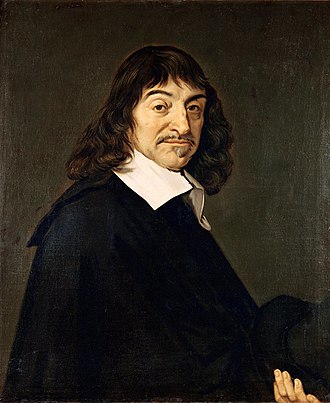
Victor Marks, Andrew Sedra, Dr. Abby Johnson. And this two day festival, what's this, will end with the world red carpet premiere of my next film, The Last Stand. So come here, the best speakers in the movement. Worship alongside thousands of like-minded believers and watch The Last Stand film with me, my team, and my family. It's gonna be a great weekend in Anglewood, Colorado. Get your tickets now at thelaststand.com, and use code, Seth, for 20% off your ticket. I'll see you in Colorado on June 5th and 6th. But the second book I wanna touch on briefly is by Renee Descartes, right? You've heard of Renee Descartes. He wrote many books. His perhaps more damaging book, according to Benjamin Wiker in this book is called Discourse on Method, written in 1637. You know Renee Descartes today, even if you don't know the name.
And the way that you know him is from his most famous and popular phrase. I think, therefore I am. You've heard that, right? I think, therefore I am. And this has been taken as a very sort of succinct and persuasive explanation for, I guess, human exceptionalism. Like, what makes humans unique? Well, we're rational creatures. We have language. We can think. We have a moral nature. We have moral accountability. And why do we have moral accountability? Because we know the difference between eating a hamburger and eating a hairl burger. And the reason we can know these differences is because of our ability to think and rationalize. And so in my younger days, I was sort of taken with or persuaded by this phrase,
I think, therefore I am. And on the surface, it seems to make sense. But Descartes phrase and his views on what it means to be human have perhaps done more damage to the Western mind and to American culture, as we know it today, than very few others, actually. I think, therefore I am, has a lot more ugly, trash, and baggage with it than I think most people understand. How exactly formative was Renee Descartes on the Western mind? Well, when the great Frenchman Alexis de Tocqueville visited America in the first half of the 19th century, he said that America is one of the countries where the precepts of Descartes are least studied but best applied.
That's, by the way, how you know, how consequential your ideas have become. That they're the least studied but the most applied. That's the danger in assumed ideas, in assumed premises. When you assume an idea and then you operate and make decisions off of those ideas, but you don't actually understand those ideas, that's the most dangerous thing of all because we all function off of a worldview. We all function off of lenses that help us make sense of the world that we live in. But if you don't even know the lenses that you're wearing and how you're interpreting things that are happening, that's even more dangerous because you're functioning off of an assumed worldview that you can't even identify or name. So Descartes today is probably best known for his contribution to what we have called dualism or Cartesian dualism or body self dualism.
What does Descartes say? What does he mean by this? And how does this contribute to the left's obsession and normalization of same-sex marriage, abortion, homosexuality, transgenderism, transhumanism? He said, from this I knew that I was a substance, the whole essence or nature of which was merely to think and which in order to exist needed no place and dependent on no material thing. He says, I could pretend that I had nobody and that there was no world nor any place where I was, but I could not pretend that I did not exist. So what does he mean? In other words, I think therefore I am that human identity and personhood is found in the mind alone. Your thinking action is all that you are. You're not according to Descartes, a union of body and soul.
You are a mind which is to say, not a brain. Do you understand what I'm saying? When I say a mind, I mean like your consciousness and your self-awareness. I don't mean the actual physical thing up here called a brain. Descartes would say, you are a mind and that mind is a consciousness, it's personality, it's self-awareness. That's the person. I think therefore I am. Human identity, the I amness of me, is purely my mind alone. And so the body becomes sort of this like meat puppet. It becomes a meat puppet that the real human identity or the real person merely animates or lives in sort of like a vessel. And so Descartes gave us sort of this concept of like a man drives a body like a soldier drives a chariot.
Your body becomes the chariot or the vessel that you, the human identity or consciousness animates and drives. So there becomes a dualism, a duality between the body and the self. Today we find this in modern movements of on liberalism and leftism today, like same sex marriage. What does same sex marriage say? Says, why should my biology or my genitals or the way that my physical body is created and exists have any influence on my moral choices? What do I mean by that? Well, if you're in a same sex relationship and those two things don't go together, if you know what I mean. Well, why not define nature? Why should the fact that we, that two gay guys have two male genitals, right? Two, two, two phallus, phalluses.
Why should that inform our sexual or moral choices? Biology and my physical body has nothing to do with who I am. And so there becomes almost this demeaning and dismissive approach to the body. It's a very demeaning approach to the body. It says, your body means nothing. It's just random stuff, man. And it should have nothing to do with your desires, your moral and physical choices. Dismiss the body. It's irrelevant and you live in accordance to whatever feels good. And of course, the most blatant example of this today would be transgenderism. Transgender activists literally use the language of Cartesian dualism when they say, I am not my body or when they say, I'm born in the wrong body. I want you to think about that phrase. I am not my body. So whatever I am, whatever I am, it is not the body
because I am is different from my body. They're dualistically opposed to one of another. And so why not liberate my gender identity from the biological prison of my physical body and identify as the opposite sex? What I'm telling you is that all of this came from Renee Descartes. This is called Cartesian dualism or body self dualism. No one contributed more to modern dualism than Renee Descartes. Benjamin Wiker, author of the book that we can continue to dive deeper into if you join our book club, Books in the Barrett's and become a air support $70 a month donor of the White Rose Resistance. Benjamin Wiker calls this a walking philosophical bipolar disorder. He says Descartes, the father of modern dualism. And what does dualism itself be get? A walking philosophical bipolar disorder, a creature who is not at home in creation,
a creature who dwells in dual extremes, either as wholly a ghost or entirely a robot. If you are merely your thinking and your mental faculties, then the body God gave you and the body God created becomes a, becomes like clay in the hands of the potter. And so why not redefine human nature and the body itself? You know, if your body is like a vessel and it's like a man stepping into a chariot or a corvette, then why not take your corvette to the body shop and give it a makeover to make the outside feel more like the inside. And now we're at the front door of transgenderism. So these are just two of the 10 authors whose books and ideas have screwed up the world really badly. We've only scratched the surface.
I thought it would be fun to sort of answer the beginning of the question, what are the roots of liberalism or leftism as we know it today? Where did those ideas that animate liberalism come from? How far back? And what were the nature and qualities of those ideas that have really rotted the Western mind? We want to do more of this on the Seth Gruber Show looking at ideas because they have consequences, debunking and discrediting bad ideas because they have victims and equipping you to think a little deeper, to level up and to be able to diagnose like a philosophical doctor, the ideas that are destroying the country and culture so you can provide a better view of human flourishing, you can articulate a better picture for what America could look like
and no better institution to do this than the institution that used to do that all along. The Capitol Sea Church, the bride of Christ in America. The institution that we hear at the White Rose Resistance are committed to waking up, to mobilizing, to discipling and to releasing the church to be the church once again in America and stand for pure and undefiled religion for the full council of God and those ideas that don't just save souls, but they also help provide freedom and liberty for your children and grandchildren who may not be here yet so that you can be faithful to steward but God has given you as a American in a self-governing republic in these evil, evil wicked days. Go to the White Rose Dot Life, become a $70 air support donor to the ministry, you'll get your battle box in the mail, you'll join our circle digital community that's private and it's just for donors and then you'll join the books in the barracks book club
as we meet about every month, every six weeks, sometimes every eight weeks, depending on how long the book is to give you a chance to really actually finish it. Go to iTunes, Spotify, YouTube, give the show rating and review, let us know what you think. It really helps us. The Seth Gruber Show, we'll see you next week. I'm Seth Gruber and this is the Seth Gruber Show.
More episodes
More from The Seth Gruber Show

The Bolshevik Playbook Is Being Used On America | Jack Posobiec
The Seth Gruber Show
The Lindsay Clancy Relationship Test | John Lovell
The Seth Gruber Show
They’re Killing Christians—And The Church Barely Notices | Alex Barbir
The Seth Gruber Show
He Proved The Most Influential Atheist WRONG | Larry Taunton
The Seth Gruber Show