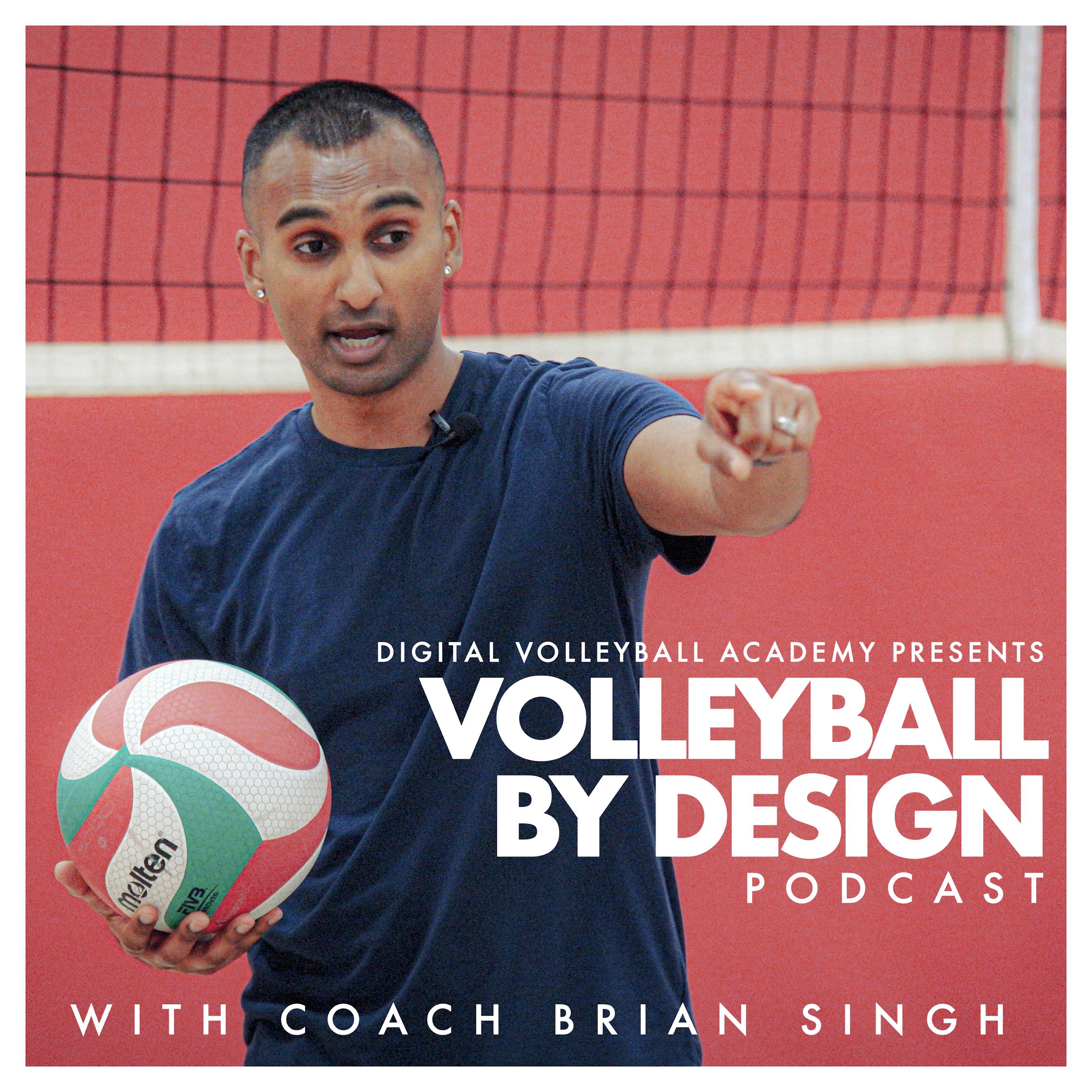
From Knowing Nothing About Volleyball to Building a Coaching Career — Lessons Every Coach Should Hear
About this episode
In this episode, I share my journey from knowing very little about volleyball to building a career coaching at the high school, club, and college as well as eventually working alongside some of the best coaches and athletes in the game.
Along the way, I share some of the biggest lessons I’ve learned about becoming a better coach and building a successful volleyball program.
In this episode, we discuss:
- How I went from basketball player to volleyball coach
- The biggest mistakes I made early in my coaching career
- Why finding a mentor can accelerate your development
- The importance of having a plan for your volleyball program
- Why coaches need to be lifelong learners
- Building culture, identity, and systems within a program
- What I learned from working with elite coaches
- Why player development should go beyond simply teaching positions
- How to build a championship-level volleyball program
- Why coaching education is so important for the future of volleyball
If you're interested in growing as a volleyball coach, I'd love to have you in my community - www.digitalvolleyballacademy.com
Click here for my workshop - http://volleyballworkshop.com
Reach out via Instagram @BrianSingh_CoachB
Get every episode summarized
Each time The Volleyball By Design Podcast publishes, we email you a written briefing from the transcript — the topics, who appeared, and any specific claims, with the ad reads skipped.
Email me new episodesFree for 3 shows. No card needed.
Hosts & guests
Transcript ready
1,776 searchable segments. Every word is indexed and playable.
Full transcript
The Volleyball By Design Podcast — From Knowing Nothing About Volleyball to Building a Coaching Career — Lessons Every Coach Should Hear. Machine-transcribed; use the interactive transcript above to jump the player to any line.
You're listening to the volleyball by design podcast today. I got a great episode for you. A little bit of a different one though. This is one where I'm actually getting interviewed instead of me doing the episode. So I've done one like this before where I was on the Win by 2 podcast with Jesse Saty. Well, I had the privilege of being on the Bumpset Chat podcast with Barry. And this Bumpset Chat podcast has gotten, I mean, he's interviewed some of the biggest names in volleyball. It's really incredible from some of the best coaches in the world to the best players. And just a wealth of guests that were on there. So I'm really privileged that Barry invited me on there. Barry is a host of the podcast. And we talked a lot of great, we talked about a lot of great, you know, conversation about volleyball coaching. We talked about culture. We talked about player development. We talked about how coaches can grow and things like that. So really great conversation. Some of it you probably already heard on the podcast because it's stuff that I preach. But it might be a little nicer here in a different lens.
And I may talk about a couple of different things based on the questions that yes, so really, really great conversation. So I wanted to bring to the podcast and share with you guys as well. So this is an episode you definitely don't want to miss. Stay tuned. Hi, I'm coach Brian Singh. And after a number of years, coaching competitive volleyball. And as the head coach of the biggest college in Canada, I've become obsessed with helping coaches improve their knowledge and skills of the game by teaching them how to coach efficiently and effectively to ultimately reach their volleyball goals. I created the volleyball by design podcast to give you simple, actionable, step-by-step strategies so you can get clarity and apply what you learn right away. This is the volleyball by design podcast. And so I'm Brian Singh. Welcome. Thanks so much for having me. Very appreciated. Yeah, really happy to be able to come on. And the way we start things off was to do a few random questions. So you ready? Let's do it. All right, it's Tim Horton's overrated.
Me, yes, my wife will say no. All right. You walk into your room, walk into the room, and what movie or TV shows on that you'll just stop and you have to watch suits. Oh, OK. All right. And best thing about being a dad. Ooh, best thing about being a dad. Getting a chance to experience the things that I experience as a kid with my kids now and seeing it from a different lens, like going through all those, like that whole emotional roller coaster and seeing them and what they love doing. And I used to love doing that and then seeing them be great at certain things. Like that's what it is. That's all right. All right. So welcome to the pod. And let's go to the beginning. Where are you from and what's your background? Yeah. So I'm from Toronto. I actually currently live in Pickering, but just my volleyball background is very, very strange. I'll try to keep it short. But I was never a player growing up. I never coach. I never played college. I never played club. What happened was my, I was a basketball player growing up,
but I had never had a future in basketball as 5'7, you know, Ronnie kid, not happening. And my brother really was getting into volleyball. And they didn't have a coach at his elementary school. I'm like, oh, volleyball, bumps that spike. No problem. This is easy. I could do this. Yeah. So I started. So during that time, I made my high school volleyball team. And again, this is like no player would ever do this. But I said, you know what? I actually don't want to play this game. I want to coach this game. Like what high school kid says that? They said, like normally they're like, I'm going to train. I want to be the best. I want to enjoy my experience. I'm like, no, you know what? I think I like it on the sidelines as opposed to on the court. So I started coaching my brother as elementary school team. And I knew nothing about volleyball. I just said you knew nothing about volleyball, but you're going to coach these kids. I'm going to coach these kids. I'm going to watch some YouTube videos. I'm going to figure it out. And I started figuring it out slow and steady. And one thing about me is when I get fixed on something, I'm going to go all in it. Like I'm going to research. I'm going to figure out how to,
and I'm a competitive guy. It's just part of sports. And then I figured out how to coach elementary. And I learned that I learned to learn. And I got, you know, I got pretty good, you know, for a couple of years. And then the high school opportunity came up because they didn't have a high school coach down in Canada is different than the US. In the US, high school coaches get paid. They get paid in an anirrarium or they get paid something. I think that's a good, that's a good, hired. And Canada has worked that way. You don't get hired to be a volleyball coach. What happens is if you're a teacher and you would like to volunteer your time to coach, then that's how you coach. And the way that our system works is it's predicated on volunteers. If we don't have any volunteers to coach in high school, high school sports don't exist. Oh, wow. Yeah, I know. And us Canadians are, I don't want to say stupid, but we've now embodied this volunteer culture of coaching. And it kind of, not degrades the coaching profession, but it doesn't help it to grow. It's a great growth. Anyway, long story short, I was volunteering at our local high school. I did that. And again, I started getting, you know, okay, at the game,
I started learning more. Eventually, club called my way at a coach said, hey, you should coach club. And by then I was coaching for maybe five or six years. And I was like, you know what, yeah, let's do this club thing. Continue to learn. I ended up being very privileged to coach one of the best middles in the country, dating Kofi Jema. And I learned a lot during that year. And now the one thing I will say that I was good at was building a culture, understanding what that means, building that really that brotherhood, sisterhood kind of family-oriented environment. And I got that from the basketball side because that was a big part of basketball culture. I wanted to bring that to the volleyball side. Yeah. And I got pretty good there. And I kept learning and growing and stuff like that. And then the biggest college in Canada, funny enough, had a position. And I didn't apply because I was nowhere qualified to coach the biggest college in the game. Not happening. All my background is what, 10 years of coaching, you know, club high school and stuff like that. But I guess whoever they interview, they didn't like, they went through this whole interview process for months
and they never found a candidate. And then I actually had coached one of the players on the team and they said, hey, there's a guy I know that I think would be great for it. And they reached out to me. And I'll never forget it. When they reached out to me, I actually told them, I got to not qualify for this job. I'm very privileged. I'm really privileged. Like, thank you so much, but I'm not qualified. Anyways, they're like, you don't want to just apply anyways. OK. I applied. I had a one hour long interview where I had to present to them how I would run the program. Yeah. And I did exactly what I'd known to do. And then they're like, that's what they wanted to hear. And I got a call by the time I got home saying, you got the job. Oh my god. And then almost a decade later, I mean, yeah, almost a decade, you're later. I did that. Then unfortunately, they moved to a place called King City, which is like, you know, an hour away from me. And I just couldn't do it anymore. So I just stepped away from there. And that opened more doors to working with the national team here in Canada. I'm actually going to be in their gym next week. I got a chance to work with Dan Lewis, who's our senior men's national team coach. And I got, and during this time, I got to work with John Spraw. He's been a great friend of mine as well in a mentor. And now I'm, you know, 20 plus years in it,
working with some of the best athletes in the world, as well as working back with that same local high school. Oh, no, right. And I volunteer back in the day is I'm three years in. Now I'm back there again, volunteering, because I know it was like to be at that school. And I'm like, you know, what I want to, I want to bring a championship program to that to those kids, because those kids really deserve it. Oh, it's fantastic. There's my story. All right. So, you know, coming from, so you weren't a high level player, but what, what grabbed you to the coaching, you know, the coaching side of the, you know, the house? You know, I just, so I really like the, I like the exes of the nose. I like to take something that is not where it is. Yeah. Build it, train it, make it into something special to where it's going to be later. Like I love that process. And then I'm also competitive. So I love the fact that I'm going to battle against other people and it's going to be like, okay, well, who, that's a chess match or how are we going to win? And just that element of that, that, that, I think the definition of coaching in itself really excites me.
All right. And that's, and yeah, and I love, I can, I still play basketball and I still, you know, I still play sports. And I love that side of it to do a game. You're on, but man, there's something about coaching and the, and the impact, like I can, you can't make that back as a player versus what you can as a coach. I impact, you know, so many players every year that, oh, it's just, it's, it's very, it's very rewarding and it's a great, it's a great feeling to have, I think. Yeah, absolutely. And, you know, why volleyball? What is the hook volleyball has over you versus jumping into the coaching side of basketball? So at that time, basketball was very like not, not saturated, but it was, it's a, it's a very, man, it's a dirty business. Like it's, it's, it's basketball is a grind and it's so competitive and there is, man, I just, and I didn't want to deal with the parents at the time. It's like, there's so much more outside of basketball than coaching basketball itself. Back when I started coaching volleyball, it wasn't as political. It wasn't, not that it wanted it, not what it is now is ridiculous, but it wasn't as much of a political climate.
It was like, let's coach, let's work. And I liked, I liked volleyball in terms of the sport itself. It was so exciting. Like the way that I used to pitch into the players was, when you attack the ball, that's like dunking every single time. Right. And I love it was like, Bumset and I love that it's so simple, but yet it's not at the same time. Yep. So that really intrigued me by understanding what high level of volleyball is. And I was like, this is really cool. And, but you know, funny enough though, Barry, I was really naive thinking that when I started coaching volleyball, I was like, this is easy. Anybody can do this. I will be the best volleyball coach, no problem. And then when I started, you know, five years in, I'm like, oh my goodness. And then I had an aha moment when I went to Sparajim for the first time. Yes, it was back in, it must have been 2016. I went to Sparajim and I was like, I know nothing about volleyball. And I was coaching, but probably 10 years at that point. And I was like, I knew nothing. I was like, this is, so it's just, you know, it's a cool sport.
And now, you know, fun fact about Spraw. I don't, I'm sure maybe Kofi told you about this one that when Kofi went for his first music deal interview, or he was there. Spraw was there with him. I was like, I don't know. Kofi's like, I don't know any other volleyball coach that sat in on a meal, like on a meeting like that. I was like, yep, that's pretty cool. No, 100% yeah. But and he's brilliant. You're like, like John is a very, he's, he's, he's not just a volleyball mind. He's an intellect. Yep. And then he thinks about the game and life in general is pretty cool. Yeah. And now, you know, from a boys volleyball standpoint up there in Toronto or on Terry or even Canada, where does it rank compared to the other sports? And as an example, here in Connecticut, boys, volleyball is slowly getting bigger, but they're not drawing the, you know, the, the better athletes, the better athletes are still looking at basketball, baseball, football. And here, I think volleyball, boys volleyball still has a stigmatism as it's a girl's sport. Oh, yeah, absolutely. Even here too, like it's, it's, it's growing sure. But basketball hockey are the big ones over here.
Football, not as much as the US football is huge. The ball isn't as big, you know, in Canada as much as as in the US. So we, the boys are predominantly going into, you know, baseball, basketball, hockey, hockey basketball, like those are the big, big ones. And again, like volleyball is growing just like it is all over the world. It's just nowhere near what it is on the girls side. You're not even close. Yeah, absolutely. That's what it is. And now, when did you realize that you wanted to do coaching professionally? Was there an aha moment or just, you know, you're going to ride this out? You're liking what you're doing going from, you know, club to high school and now this college taste of it? Yeah, I don't know. It just, I never, you know what? I never, ever saw myself making money from coaching volleyball. I saw myself as, I just, I love a competitive guy. I love to, you know, I love to take a team from where they are and take them to where they're going to be. And in Canada, there's not a lot of money to be made with volleyball as it is in the US.
Yeah. Like to put things into perspective, I would probably, there's probably less than 20 full-time volleyball university coaching positions, you know, like, we don't have as many, we don't like, like, there is what over 900 Division 1 schools in the US, then you talk Division 2, then you talk Division 3, then you talk Juco, like, we don't, we don't have that. I mean, just in Ontario is the biggest, has the most teams across Canada. And I want to say 20 teams are in Ontario and then it gets smaller as you go out. Put that in the perspective. We're talking 15 teams in total. Like, there's not many jobs. So it may, there's probably more than 20 now. I'm thinking about it. But there's not many, you can't really make a living off of volleyball unless you are a big time club and you're a club director, maybe full-time coach, or you're lucky enough to get a university high coaching job, whatever community college is a part time, not full time. Yeah. So I never thought that would make money from volleyball. It's just a little bit of luck and some passion and I do have a little bit of a business background.
So that kind of helped me a little bit there. Yeah. And now the platform that I've created, you know, going into the so long is my passion now is transition to coaching education. Yeah. That is where I really want to help the sport grow because unfortunately, not like, you know, you want to be a plumber, you go to, you want to be in the literature, you go to trade school, you want to be a teacher. Yeah. You want to be a good volleyball coach. Where do you go? Right. It doesn't exist. It still doesn't exist except not to say I'm the only solution, but that's what I created because it doesn't exist. There's lots of places you can go get resources and stuff like that. No one can go to my symposiums, things like that. But yeah, which are great, but right. But you're not being the full everything. Yeah. So I don't know how I got to that, but that's, that's where coaching, that's where I see myself now. I see myself as an ambassador for the game. I want to help grow the game and my impact is going to be to help coaches because if I have one coach, that one coach can turn out to 14 athletes if not more. Absolutely. That's where my passion is going to be.
All right. And over the years, was there a particular coach, athlete or an experience that influenced the way you approach coaching? Oh, good question. Was there, okay, my basketball coach and when I was younger, definitely influenced the way that I coach in the beginning of my career without a doubt. So I'll go through my mentors. So he was my first mentor. John Spraw has influenced the way that I coach. Dan Lewis has influenced the way that I coach. And then the other ones are more so I look, I love looking at like behind the scenes, basketball practices and football practices, like those things to see how. So I've taken a little bit from other sports, like other coaches and other sports and I've kind of crafted my own style and my own system of how I approach the game. So my motivation inspiration has come from so many different, like for any coach listening to his podcast, honestly, the way that you grow as a coach is to find people who have done it
before you and learn from them. Yeah. And if you can find that mentor, then you're like, like yours ahead. Yeah, absolutely. And two things to pull off that. You know, earlier today, I was just talking to Brian Rosen, coach at Craten. And he was talking about, you know, he just had a whole bunch of high school coaches in his gym and he has no problem with them coming in and watching it. And his advice to other coaches is reach out to coaches, go and learn because you know, if you're the, if you think you're the one that knows the most in the room, you got to find another room to go to and find that out and learn. And then the other aspect, you were talking about the behind the scenes aspect that this past June, I had the opportunity to go up and watch the women's VNL and Juvani, what I did, coach from Teen Canada invited us over to watch his practice. And dude, that was my highlight. Just seeing how he runs a practice was just like, this is the best. That's right. And that's exactly how I was when I when I went into Spraws Gym. Yeah. I was like, I know nothing about volleyball, the way that he, how efficient he was and how methodical
and how everything was like thought it was just, I went back, I went back to my college gym. And I was like, guys, we're going to revamp every how we train. Yeah, it was unbelievable. And today, how would you describe coach B's philosophy? Wow, what a question. Okay, so my philosophy of coaching is a combination of these things, your culture. So every coach has to figure out who, who are you? What is your identity? Like, and when you can figure out who you are as a coach and what your identity is, that's what your team identity is going to be in some way, shape, or form. Because every team is a reflection of the coach, whether you want to believe it or not. If a team is, you know, if they have poor behavior and they're, they're that one team that you know, all those guys are disrespectful or whatever, I'm sorry, but that's a reflection of the coach. If they, you know, you can look and you always know and I was telling the coaches, when you lose, nobody gets, no, the players don't get fired. You do. Right. When you win, when you win, the players get all the accolade.
You don't. You're supposed to do that. So we have a tough job. So you need to figure out who you are as a coach, what's your identity? And then I always have coaches and my philosophy is this is create a volleyball manual of exactly what those pillars are and how what what your values are going to be and then go into your policies and procedures of your team and outline everything. This is who we are as a team. This is what the expectation for all the athletes are. This is what it is. So your your identity is number one. Two, as the other thing too is you are not coaching volleyball. You are building a volleyball program. Those are two different things. Yep. coaching volleyball is like here is how you bump here is how you set here is how you spike and all that stuff. Which is that's great. But that's just a part of it. You are building a volleyball program. So what does that mean? That means culture. What is a training camp look like? You know, what is your player development model look like? Yeah. What is your strength training look like? What what about your practices? Are you planning?
Are you thinking about it? What is your seasonal plan look like? What is your how are you tracking and monitoring the players over the course of a season and making sure that they're you know they're improving like what does that look like? Yeah. Do you have help? What about technology? You know, what kind of software you guys you? There is so much that goes involving and running a program. And that's where a lot of younger coaches don't understand is because they don't know it's not their fault. But so you're running a volleyball program. So identity, you're running a volleyball program culture. Okay. And then the third, I'm sorry, the last thing I would say when you when you couple that all about, it's systems. Yeah. Now what are your what are your systems look like? And do you understand how to do that? And that comes with it. The systems conversation comes with training the mechanics. And this is a big ask for coaches. By the way, I say it all the time. There are six skills in volleyball, right? There's surf pass, dig, block, attack, and setting. Those are the six major skills in volleyball. You as a coach are responsible for training the mechanics of all six skills to your athletes. If you can't do that, you have to go learn how to do that.
Yeah. It's once they understand the mechanics and you can see that they're developing these skill. They're acquiring the skill, right? Then you can take those mechanics and put it into a system. And this is where the volleyball conversation comes into. How well can you do that? Yeah. And that's going to depend on your team. Every team is different. Yeah. And when you combine all of that, that is my volleyball philosophy. It's all of that together. And that's how you that's what leads to championship culture. Yeah. Excellent. Hold on, make sense. And then from a high school standpoint, what do you think coaching high school players, you've learned that you couldn't have learned by playing? What do I learned from high school players coaching that I couldn't have learned from? Yeah. If you were a player and you stepped in the coaching, you have this knowledge coming across. But not being a player and coming into coaching high school kids, what do you think you, what was that benefit? Okay. So when I say not a player, I never played like college, but I did play volleyball for fun. Okay. So I still have an idea of how to play.
Like I still went to open runs and stuff like that and played with my friends. So I know what it feels like to play under duress. Yeah. I know what it feels like to do certain things. Now to the level that I'm coaching now, not a chance, right? Right. So how can I look at high school kids? Well, you know, I look at great pop-efficient, all the greats that never played the highest level. Right. You can, as long as you have a certain fundamental understanding of what they're, what they're feeling, what they're supposed to do. And then you, you, you couple that with what you know. Yeah. Okay. You know, this is where they're supposed to be at this point of the season. You know, this is where they're, how they're feeling based on, you know, you want you to know what to look for? The rest is, X is fun. It's not as technical. You can teach yourself that stuff. Yeah. And then, and then you also need to learn to listen to your athletes too, right? Like, I get, I'm, I'm a firm believer that even though I've been doing this for a long time, I'm a, I'm a learner. I'm still learning. I'm, every year, I try to get better in some way, shape, or form for my athletes for the coaches. So that, I think right there is the fact that I've understood that I have a lot more to learn
about the game. I think that's why I can still coach the way that I coach. Yeah. Why just because I wasn't playing at the highest level, I can still be effective. Absolutely. And now, you know, something that I find unique is, and I don't think a lot of the club kids appreciate this is, you know, when, you know, you, the kids go back to high school, play high school they're not playing with all the kids that have that same love for volleyball as the club side. But what you gain with that high school volleyball team is you're playing for your town, your school, the gym is packed full of people versus club, right? You're playing in match and it's, you know, half of the parents are there to watch you and that's it. And I think a lot of kids just like can't wait for high school season to be over so they can go to club, but you need to embrace that high school volleyball. I 100% agree. Like playing exactly what you described. Being able to, you know, play in that environment and get that and be able to, like, when you play for a club, you're, you're really just playing for the 12 athletes and you know, you may be playing to for the club, but when you play for a school, you're playing for the school.
The school has history. Right. You know, you walk down like there's so much more impact when you step on that floor, you play you playing for everyone that came before you, people that are going to come after you, the town, this is like the city that you said it. If you win that championship, you're not just winning it for your school, you can be winning for the city, you can be winning for so many people versus a club is, yeah, the impact is out the same. I agree. And you know, today there's a lot of pressure on, and you know, the kids in volleyball today, you know, you know, parents recruiting, ranking, scholarships. What do you think coaches sometimes lose sight of? Exactly what you just said. They lose sight of the fact that what's the goal? There's two, there's two things, okay? You have to figure out as a coach, what are you trying to do? Are you just trying to win? Is that your goal, your goal is just to win? Because if it is, it might look different than if your goal was to develop, your athletes to be the best that they can be, and then winning is a byproduct of that. So there's two different philosophies. Now I will say, when you're at the 17, 18 level, okay, you have to win.
Yes, 100% winning needs to be a priority without a doubt. That should not jeopardize your player development though. It's still like when I look at high school and club volleyball at 18 you, and I look at even the best of the best and I watch their mechanics, I'm like, they got a long way to go. They're going to, by year three university maybe, by year two maybe. So that to me, and again, I'm not saying it's the coach's fault. I'm not saying that, but I'm saying that we need to put more emphasis on developing the athlete and developing the full athlete. Even though you're in 18, you middle, you need to know how to set a volleyball. You need to know how to dig out of five, out of six potentially. Maybe you're going to be an opposite by year three and whatever university go. Do you know how to tack on the pins? Like we cannot, we can't pigeonhole at when I coach Danin, Kofi, when he was 18 you, yes, you see the best one of the best medals? Absolutely. But he swung back row for us and played defense out of the back row and passed out of the back row. I never liberate him off. Yeah. Because I didn't want to pigeonhole an athlete in a player like that into just being a middle blocker.
No. No, we had him swinging pipe. We had him swinging C ball. We had him passing in three rotations. So to me, and I don't like, you know, I know everyone's different, but that if coaches are listening, you have to prioritize player development. It doesn't stop at 18, you were 17, you know, we have to continue pushing the pushing the mechanics and having a system in place to develop the players. Yeah. Yeah, volleyball is a lifelong sport. You are, you're constantly learning in the sport 100%. And then, you know, the other, you know, other interesting take is, you know, here in the US, you know, those, your tall, you're going into the middle. You were just talking about, you know, being a six positional player, you know, over in Europe, it is, they're learning all the skills, you know, and I'm curious up in Canada, are you, are they following sort of the US mentality or the European mentality? So it depends on the part, it depends on the coach. Yeah. So we in Canada, we do have certain rules that prevent stuff like that from happening. Like, for example, when you are 12, you, you're playing four on four on a smaller court. Right? So that's okay.
So we can act the might, yeah. So when you're at 12, you and under, it's a small, it's seven by seven. The court is not nine by nine at seven by seven. And it's four on four. So we met just like the European race. Yeah. Right? So we met. So we maximize the touches for the athlete in addition to that. And this is a, this is a controversial take depending on what side you're on. We play the system called triple ball. You're familiar with triple ball? No. So the way that it works at 12 you and under is triple ball is like this. The problem in youth in 13 you and under is that if a team has a good serve, the game is over 25 nothing 25 ways. Right. So we're involved. The way the kids learn anything and the kids are learning things. So we do with three ball sequence. So they serve whoever wins the rally done. Then some coach or a parent tosses a free ball in to the other side. Yeah. We rally it out done. Then another free ball goes in to the serving side. We rally it out done. That's your triple ball sequence. Now it's the other team to serve. Yeah. They serve now. Rally done. Free ball goes in one way.
Free ball goes in the other way done. So there's three balls three balls here. Three balls there. Then we rotate. Oh my god. That is awesome. Yeah. Everyone gets a chance to touch the ball. There's way more rallies. There's way more fun. Now do I get it? I get the controversial. Well, that's not real volleyball. It's serving Pat. I get that. But honestly at 12 you and under it's not going to prevent their development. If they don't serve and pass every single ball because the reality is that what you said, the game is over. If you have a good serving team at a bad pat, it's not fun. They're all getting touches. Right. So that's a huge part of that. And then also you can't have a libero until you're 15, you were 16, you know, I think I can't remember what it is. So at middles got to play. You got to play in the back right. And then in the US, there's like unlimited substitutions or 16. There's a lot. Yes. There's six. Oh, shoot. And you can only go in once and go out. So there's no true DS. You know, the DS comes in all around. So if you're a middle and you're younger and you're not there's no libero.
Guess what? You're playing in the back row. You're not getting subbed out because the coach can only sub you out once because once you get subbed out, you go back in. That's it. You're not coming out just like the rest of the world. That's how the rest of the world works. So we do understand that there is a development that has to take place. And I will give Ontario and Canada credit because they've gotten a lot of criticism from people over here about this model. But I understand the rationale behind it because you don't want a 25 to game. By some person just serving. Yeah. Or not developing the athlete like we just mentioned, that could be an opposite or left side of the university when they can never get out of the middle. You know, things like that. So X 17 H and U is real volleyball. It's actually even 16 17 H and U. It's real volleyball with the exception of the amount of subs that you guys do. We still have big subs. And now, you know, that's it. Nice. And now you've been coaching for almost 20 years. Is that a little over time? All right. Yeah, a little over time. If you could sit down with Brian Singh, who was coaching his first team, what would you tell him?
If I could say I'm a Brian Singh coaching his first team, I would tell him, you know absolutely nothing about volleyball. Like you don't know anything. So you're going to learn. You're going to go and you're going to find a mentor. Go and find anyone who's been coaching this game for longer than you have. That's willing to share and willing to hear you out. And you're going to learn everything you can from that person. And you're going to talk to that person. You're not going to go and try to do it yourself. I did it myself for so long. And I, I'll never again, working with John Sproul, I learned more. I learned more in three weeks. And I did it in the previous three years. It was ridiculous. So that's first thing I would tell myself is that's what you're going to do. The second thing I would tell myself is, okay, now that you understand that, how are we going to build a program? Like we're not just going to walk into a gym and say, okay, today we're going to pass. Today we're going to, what is the plan? The best coaches in the world are always, there were the best planners. It's unbelievable how much they plan. And they, like Sproul had a 90 day plan. You know, Dan has amazing plans that I see him do.
All these coaches that I got a chance to work with and I'm very, very lucky to be able to talk to you. Their planning is amazing. So mentor, plan, lifelong learner. These are the three things that I, if I wish, I knew when I first started coaching, I would have saved me years. Years of all the mistakes that I made. Yep. And you're speaking of planning and whatnot. Can a coach get too complicated with their plans and the other programs? Oh, absolutely. I don't over plan like this. I mean, when I say plan two, I mean, like, it doesn't have to be, like everything changes based on the, every week, like things could happen. Yeah. What I'm saying is you have to have a general idea of how you're going to periodize your season. Like, what does it look like? You know, be, be, so like, when I say plan here, what I mean, I mean, understand that, okay, let's start from the back. It's, we call it, I call the backwards down design plan. Start where, when is your championship game? Right? Then when is the playoffs? When is the tournaments and work your way backwards? Figure out how many practices you have. Take out the holidays and this and that and jump.
Figure that out. Then you're going to know, okay, I have 50 practices in a season. Okay, now, what does that, what are those practices look like? Well, the first 10, we're going to be developing and we're going to, you know, I'm going to do this. Then the next 10, see, that's planning. Yeah. I'm not going super in depth, but I'm telling you, just by doing that simple exercise versus not doing it, like, you're going to, you're going to see really quickly. Wow, this, this is, I don't have a lot of time. And, and, and, and you know, what does that look like? So when I say plan, I'm saying, think about how you're going to run this program. What about, what is your, your strength training look like? Are you going to do that? How are you going to implement it when you have practice? How many practices do you have a week, you know? Do you have a, did you design a system for your player development? Do you have all your athletes on some kind of sheet or something? And are we tracking and monitor progress? Like, that's planning, you know, it doesn't have to be, you know, day one and day 365. We're going to do this, this, no, no, no, no, that's not what I'm talking about. We're talking about understanding how, from a macro perspective, what is your season look like? And then break that down and have a plan in place for when this,
you know, in the beginning of the season to come, this is what we're going to do. And then based on how we do, we're going to do this. And, you know, and you go from there, that's what, if you do that, if any coach does that, they are like 80% better than like the coaches out there. Yeah, they don't do that. Absolutely. I cannot, I get to travel across North America all the time. And I've been in thousands of gyms. I've talked thousands of coaches. And I kid you not. Probably a little over 80% of them do not plan the way I'm describing. Like, they don't even plan it. They'll, they'll plan their practice. Yep. Five minutes as they're walking to the gym. And the majority of coaches, and I'm not calling coaches on us. Don't get it wrong. I'm just saying like, be a little better. Yeah. Absolutely. And you've had some great opportunities to work with some great coaches. Like you were just talking about Dan Lewis, team Canada, John Spraw. What are some of the big things you learned from them by being around them and in their gyms? You know what? Not just how I get broken record, but, you know, the planning is the big one.
Yeah. They plan a lot. Efficiency. They are so there's no wasted time in those guys gyms. Yeah. There's no like, because they plan, they have it on a whiteboard in the gym or they have it on a plan, players already know what they're doing. There's no like, hey, okay, you know, CJ, you're going to go to here. You're going to, like, they're not spending 20 minutes organizing. Yeah. It's, it's there. It's done. They're efficient. And then they're very like metric driven too. I learned that. I'm, I preach that too now is you can't grow what you can't measure. Yeah. You know, like, how are you going to know that your, your players are improving their passing, unless you're, you're measuring it. The I test can only take you so far, especially with a skill like that. So that was another big thing is, you know, they're, like, they have their metric driven. They know what they know exactly how their players are performing. They know what the performance indicators are. And then they go. And then just the, the efficiency of their drills too, like, understanding what I was doing passing drills, for example,
I was wasting so many valuable time versus seeing them do a passing drill. It's nothing different. And they're not reinventing the wheel with passing drill. It's still served to pass the target. Nothing crazy. But it was more intentional. It was no wasted. They were the amount of, you know, reps per minute was much better than what I was doing. Yeah. So those were the big, oh, and the last one I'll say for both coaches, the standard of excellence in their gym. They have, and they had a high standard of excellence. So what that means is, is when you're in that gym, there's a certain standard that's in place that if you do not meet that standard, you do not play. And everyone is going to know that you are not meeting that standard. And that's not a, that's not a skill-based standard. It's an effort-based. It's a, are you doing what you're supposed to do? Are you, you know, like, it's the little things like that. And then yes, just skill have something to do with it to a degree absolutely. But this is what we're talking about is, can you, like, can you keep that standard of excellence?
And start not to go into tangent here, but for coaches, listen to this, this is another one. When I go in travel across the, across North America, and I go in these gyms, a big part of the reason why players aren't developing the way they should is because that standard of excellence isn't there. So for example, if a play, you know, like, let's say you're doing a serve in pastoral, right? And a player passes the ball, passes the ball, and then one ball comes, and it just drops, and he's like, you know what, I'll get the next one. It's okay. That, that type of mentality, right? Or they're in a six on six, and the ball gets, oh, Bob, and no one goes in chases. This is okay. We'll get the next one. Yeah. That doesn't exist in these gyms. The standard is so high. If someone does that, it's a big consequence on a problem. So players know they're there to work, and they're there to maximize their opportunity to touch a ball every single time to get better. And that's where I see a big coach. And again, not to, it's not coaches false. They don't know what they don't know. Right. Yeah. When I go in their gyms, I'm like, there's no high standard of excellence here. Has nothing to do with skill, but has everything to do with keeping that bar
where it's supposed to be. So if coaches can take something, wherever they want to listen to this, coaches, your player development will increase significantly just by making that change. Yep. Yeah, I had, and you know, when I was talking to Giovanni, he calls it, they have a similar thing in Valkybank. It is the one ball. Oh, coach, that was just one ball. In practice, you know, their best player, end of it like a five minute drill, she shanked one, oh, it's just one ball. But no, that is not allowed. You know, it's a high level expectation. And, you know, and it's just as simple for players, you know what, practice starts at 7 p.m. That doesn't mean you're walking in the gym at 6.55 and let's go. You, you know, you got to be ready to go warmed up a little bit of sweat and then practice starts at 7. And that's the easy things that players can do. That's great. And you know, it's funny. So when I talk to coaches, you're like, I get this, I get this from many coaches right now. This generation is different. Like, these aren't the same athletes that we had when we were growing up. And I said, listen, hold on. That is, that is a fallacy.
And I'll tell people that are listening to this. Okay, yes, this generation is different. But it all depends on the environment that you create in your gym. Yeah. So, and I, and I coach high school, college, etc. I've been working on all these athletes. And if you're, if you have a certain expectation as standard, that's what you're going to get. That's, it's, it's that simple. And I'll tell you. So unfortunately, there's no really, really big programs in Canada for eight-year-olds and seven-year-olds, right? Yeah. So I'm coaching my daughter right now. However, as anyone listening to this, and I want to coach, please do, because I want to be a parent. But I coach my, I've coached my daughter for the last three or four years because there's nothing that is this. So here's something for your listeners. There's eight-year-old girls. If you walk into our gym, the standard of excellence is high. Anyway, say, well, they're eight-year-old. They're, they're going to get distracted. They're going to, you know, they're going to chat. And it's like, when I blow that whistle, they're in and they're listening. No one talks when I talk. And I'm not a drill sergeant. I'm not, I'm not, yeah. It's just an expectation. When coach talks, we listen. Right. Because that's respectful. And they understand that.
When they're doing their drill, they're not chatting. They're focused. And they're doing that. And then when there's, when there's downtime, 100% have that. And this is eight-year-old girls from all different backgrounds and different areas and whatever. So it's all what you set in your gym. And they know it. And I tell all my players. So this is a funny one. So we have this talk at the beginning of every session that I run about allergies. And like, listen, guys, everybody here has allergies, not allergies or whatever. I have an allergy that you have to be aware of. I'm allergic to disrespect. And they're, and well, okay. And so I always get parents telling me, oh, my kid told me you're allergic. Yeah, I am. This is one of my pillars. Respect is one of my six pillars in my programming. Yeah. And I expect that from all the ads, whether you're four-years-old, five-years-old, six-year-old. And I know parents that are listening to probably like, stop it. If you're four-years-old, I'm telling you, it's your environment. And you go from there. So anyways, I ran to there for a bit, but that's, uh, no, that's good. And now, you know, moving on to, you know, at what point or at some point, you became deeply involved in, you know,
vertical jump training. Where did that passion come from? I, you know, what? I don't know. Like, so a long time ago, vertical jump wasn't a thing. Like, there wasn't a lot of vertical jump programs out there and things like that. And as I was getting into that, I was very fascinated by it. So this was, this is pre-volubal. Like, I was so fascinated. And I, um, I did a lot of research on like the science behind vertical jump and things like that. And one thing about me is that, again, like, when I'm fixed on something, I'm gonna really, really take it in and go at it. And I'm always, um, what's that saying? Um, there's a saying about taking action. Like, in order to do that, you have to take action. You got to take action. So I'm a very take action kind of person. Even if I need to, even if it's too early, I'm like, whatever. So I created this vertical jump program for my athletes and I'm like, okay, this is what we're gonna do. And it was, some of your, it was okay. It wasn't, but I tweaked it. I modified it. I did all these things. I, I was, I learned. Yeah. I learned that the science behind it and how the body moves and did it up.
And then eventually I figured it out. And it, the form of the worth. And I'm like, all my athletes that were going through my vertical jump program were increasing their vertical jump. And I was like, amazing. And then I was like, well, I want to share this with the world. So this was before like, you know, now you could sell content and all this stuff. So I packaged it together and I put it online. And I was like, if anybody wants my vertical jump right here, it is like, it was really cheap. I got like 75 bucks at the time. Yeah. And then, um, people started buying it. And it started working, it was working for them too. And I'm like, amazing. So for your listeners, just, vertical jump is very simple. This is what it is. It's a combination of three things. Okay. Mm-hmm. The combination of technique. So technique is how do you use your body to jump higher? How do you manipulate your speed, your posture, your breathing, all that stuff? Okay. That's one. Two is plyometrics. Plyometrics is jumping exercises. How do you use jumping exercises in a strategic way to, you know, to jump higher? And then number three is strength training. Yep. How do you, you have to be in the weight room. You have to have, read some kind of resistance.
So your muscles can grow and get faster and things like that. And you combine those three in a, in a way where it's calculated, which is what I figured out, you, you increase, it's inevitable. You're going to increase your vertical jump. You will increase your vertical jump just by the technical session alone if you've never known how to jump before. Um, and that's the formula for anyone that's out there. That's your formula. You can probably put that in a chat, a B T and you'll give you a program that you could, that you could do an increase your vertical jump. Yep. Absolutely. And, you know, what do you, you know, have you, in all of your years of training, you know, kids had a jump, you know, is there something? Is there one thing the volleyball players commonly get wrong when they try to increase their vertical? They try to push too much effort on weights or this or that? Yeah. Okay, so the body is different when it comes to vertical jump. We are, we're training the fast twitch fibers, not the slow twitch fibers, right? Yeah. So the biggest mistake is that players and coaches think that they need to do a lot of strength training and apply a lot of it. Like maybe like we're going to do vertical jump training four out of the seven days a week.
No, no, no, no, that is too much. Yeah. So when I, I remember I was working with Dane in at the time. And we would go on to the gym and we would spend five minutes and I would say we're done for today. Yeah. And here's, here's what I'm talking about. So for coaches and players listening to this, we are training the fast twitch fibers. What that means is it's shorter. It's not long. So when you go into the gym and you train, you need to be explosive. And the minute you stop being explosive, you start getting into the slow twitch fiber range. So that's when you have to stop because you've exhausted that fast twitch fiber and the muscle needs to grow. We need to, we, it needs to, once it's broken down, we need to let it recover so that it grows and it's stronger, faster, etc. So as an athlete and a coach, sometimes you may go into the way you're able to do a session, but your body isn't ready for that session yet. It's still in recovery mode. And you have to listen to it and say, okay, we're not doing it today. We're going to let you recover. And when your body's ready, we're going to do it. That's the, that's a secret right there to increase your vertical jump. It's understanding that.
So I'll go into the way you're sometimes with Danin and I'll be like, I see him, you know, let's say we're doing squats. You know, he does three. I'm like, hmm, you're not as explosive. Yeah, I'm sore. Okay, let's try another set. Nope. I didn't like the way that looked. You're not being as explosive as I know you can be. We're not training the fast twitch fiber. Because the fast twitch fibers are already broken down right now. It's not working. We're going to go, we're going home. Taking a break. When you're rested, we're going to come back and do it again. Yep. At right there, if you understand that principle alone, you're, you're golden. All right, excellent. It's speaking of Kofi, you know, when he was on, he had so many nice things to say about you. I know. And he was, you know, like, you'd go out of your way to help him, you know, bring him so he can get weight training, you know, at your house and things like that. And he's, you know, he said he asked me to ask you one thing is why you woke his team up during a training camp at 3 a.m. 3 a.m. To push a car around the parking lot. Yeah, it's so crazy. I didn't think I could ever do that again nowadays.
But, um, yeah, so we did, uh, what did we do? We, I was, I was tough on that team. That team had potential. I was not, I was making sure that they were like, and I was a young coach at that time. Yeah. And I was like, we're going to, if, if we were, if we lose our, our focus for any second, during this is during training camp. Yeah. So we lose it during training camp. There was going to be a consequence. And there was a moment where they did something. And I was not pleased with them. And I'm like, okay, they're going to understand what focus means. And then 3 a.m. We woke everybody up, like outside. And they pushed our strength training coach's car with him in it. Oh, up, up, up a little, it wasn't. It wasn't a big hill. Yeah. Up a small hotel parking lot. And I said, listen, well, you're feeling right now. And I had a whole speech behind my whole thing at that time. And I know, I know, I coached a little pilot. You're crazy. You cannot do that nowadays. When I do that now, I don't know. But I had the right voice at the time. Yeah. And they got it. And let me tell you something with that team. You think about, you think about how mentally strong that team would have been for them to be able to wake up
at 3 a.m. push a car, do that, not complained. Like, this is who we are. We are that team that you throw anything at us. We are going to persevere and we're going to do it. And for the rest of that season, I was like, anytime we face it very soon, I was like, guys, you woke up at 3 a.m. and pushed coaches car up this cliff. Like, what are we talking about? And they're like, yeah. Like they were like, what are you 100? And nothing fazed that team. Yeah. And it was great. We were, we were the, we lost to the team who ended up winning the whole thing. And that team that won the whole thing was one of the most special teams we've ever seen in the last 20 years. Oh, wow. And they had like, three Canadian, three national team players and they had a guy named Shlone Vernon Evans, who you by no, they had him on that team. They had, they had a bunch of guys that were like, their entire starting lineup was like, junior national. Oh my god. We were not, I had one. I had, they had like everybody. So lots of them, they were like, we're going to coming third and winning bronze and lots of this to me. So that was that team. Nothing was going to beat that team.
Yeah. Well, he said you guys love it. And but he said in all seriously, in his opinion, your greatest gift is the ability to build culture. And he's never seen anyone build culture like you. He's very nice to say that. I really appreciate it. He's such a good kid. But that was the one thing that I, for some, I don't know why. You know how everybody has that one, maybe that gift if you want to call that or that they're like, there's something about culture that I just, I understand the importance of it. And I understand what, well, we don't have number one. Why it's important and how to implement it in a program. And I honestly think, actually, I don't even think it's a special gift. I think anybody can really do it. It's just, I understand the importance of it. So I make sure it's a focal point in any program I run. Nice. All right. And you've traveled internationally to work with volleyball players and coaches all over the world. What have you learned from volleyball cultures outside of North America? Oh, man. So I love European volleyball culture. They just kind of like what we talked about earlier.
Any, until you're at, when you up to 12 years old, you're playing four on four volleyball. Yeah. Unspoiler courts. Like all those things, I also learn too, we work with other coaches is they train a lot more than we do in the mechanics. Yeah. Like we as a culture in North America, we're a very game and tournament driven. Everything's about we got to get more tournaments. We've got to get more play. And I understand that there's a 100% importance there. But in Europe, they are training the mechanics. Oh, if you don't pass 500 balls today, you didn't do your job. Yeah. Like they don't, they get it. And that's probably the biggest, biggest takeaway. And then, yeah, the culture piece of volleyball is a bigger culture over there. Like in certain countries, like you're born, here's a volleyball. That's what we do. Yeah. And that was, that was like, yeah. And then, you know, also too, in these small, like Finland, for example, and all these smaller areas, man, the passion for volleyball is out there. Like there's so much love for the game.
And I love going into these cities, like, and these small towns too. And when I go down, I get a chance to, it's crazy. When I go coach, when I do these guest coaching sessions, the entire town comes out. And to see the passion that these guys have and how much they're willing to learn and make it is really special. So for me, it's the passion. The passion is there out around the world. These coaches are so passionate about the game. And then the second thing is they understand how important training the mechanics is. Like you look at Japan. Oh, yes. Goodness. Like you talk about that culture. We can't, I would love to implement that culture in North America, but I don't know if parents would, parents wouldn't pay for that. They would want that. Kids won't want that. They'd be bored out of their mind. 100%. And then they're like, but then these guys understand that's the culture. That's what it is. Yeah. So here we got to find a mix of that. And yeah, so that's what that's my biggest take. That's right. Yeah. On paper, Japan should not want to match on that international
level. But I've had players from here that play professionally over there. And they talk about their practices. Two hours in the morning is just passing. Nobody's jumping. It is just passing. And it is a different mindset over there. And then you watch them play. And it's like, nothing hits the floor. They're getting a hand on everything. And yeah, it's just, it's perfection is what, you know, when you watch them play. And they know exactly where they need to be in any given situation in a variable window. And they're all on the same page. It's so incredible. If there's anyone listening here, if you haven't watched a pamphlet, you need to go watch them play. Yeah. You will learn something just by watching a match. Yeah. Absolutely. And now, after 20 years of, you know, coaching involved about what keeps you excited about coaching? Every team is different. Every year is different challenges. You know, it's like it's like any other sport. What keeps me exciting is, you know, where we're last year and how are we going to be better this year? And I love the new challenges. The new face is coming in the beginning of the season.
The impact that we're going to have this year versus last year, like all of that. It's why it's why we coach to begin with is that impact and seeing the growth in your athletes and the program and things like that. So all those things get me excited every year. And I think, and this is a huge part too, is everybody needs a break. Yes. You need to, you need a break. You need to get away from the game, whatever, because you're going to come back stronger. So one thing, I know this is a little irrelevant here, but one thing that I always have with athletes is sometimes athletes will go, they'll have a period of time where they're in a slump. I go really big stuff. They're not hitting their potential. They're, you know, making a lot of errors and stuff like that. And sometimes they need to stop playing. And forever how long that could be, they need to, whether it's a weekend off or a week off or whatever they need to stop. So when we have like, when I used to coach college and we had, you know, the Christmas break, for example, right? Yeah. A lot of teams go out and compete during Christmas. They'll do, they'll go, I never did. I think we need that break. You need to go be with your families. Don't touch a ball. Yeah.
When they came back, they never skipped it. They were so much more ready to go and, you know, all things like that. So I do think there's a, there's a break that's needed. Absolutely. Yeah. We see it in the high school level. You know, the girls start volleyball end of July. They roll up until, you know, in America, college or high school volleyball ends November. And then, picks up and then club the national championships are like the last weekend of June, rolls in July, then start, you know, then the, the camps start or if you're going off to call it's, there's no break for these kids. Yeah. And that's, that's why you see injury so high sometimes. Yeah. That's why you see kids quit too because it's so much. Right. And then they lose the joy for the game. And if you have a minute, sometimes you have a bad experience. It's, you start a question name because that's what I want to do. Right. And it's the same thing with basketball and so many other sports too. There's no break. And I say you got to give, and I talked a lot of high level coaches as well. And they're all in the same page. They need a, they need a break. Do not touch a ball for at least two to three weeks, at least two weeks.
And you're going to see the difference you get coming back. Absolutely. I'm 100% with that. And for you, what is the most rewarding aspect of coaching that you get? Is it the relationships that's seen the personal growth of these kids? What, you know, at the end of the day, like, yeah, this is, this is why it's, you know, do it. The, the impact. It's, it's the overall impact. It's the growth of the athletes. It's the fact that men, I, if I, I have so many stories I could tell you were where I'm sure many coaches can relate where we've saved kids lives. Yeah. Like we legit saved kids lives by providing them an opportunity to play this game. And then whether they went to play it onward, like they went to play post secondary, or they took what they learned, the values, the skills. And went and, and all of a sudden figured out this is what I want to do with my life. Like, it's just the impact. And that's why, again, and as much as, you know, we should get paid more than what we do, the reason why the profession is the way it is. And we still do what we do is because of the impact. Yeah.
Because at the end of the day, it's not about us. It's about the kids and the athletes and things like that. And once you, once you realize it's, it's not about you. It's about the athletes. That's, that's where everything else is. Yeah. And the fact is the, it's the big one for me. Yeah. And then it's joy. Yeah. And speaking of the impact, you know, going back to Kofi again, he said he's, you know, 95% of why he is where he is today is because of you. And when did you, you know, how did you, how did your past cross? Yeah, weird. So he played, um, so the club that I ended up getting recruited to coach, um, he played on, he was playing on a 14 new team. When I took over a 17 new team and you can't really take over brand new 17 new team. It's never going to really work that way unless it's in the, unless you're praying, it's about a super team. So then he was playing at 14 you and they didn't have a coach and a parent was coaching and she did the absolute best she could. And then at 15 you, I took over that team. So I just fell into my life and that's when again, I have a video of him at 15 you,
you guys, people say, oh, he was born with jumping high. I think you should see him at 15 you did not know how to jump high at all. He was in grade nine. It was like it was grade two is grade nine. Yeah. Teenage could not jump at all. Um, he was, he wasn't even a top player on the team, you know, and then that's how he kind of fell into it. That's how we, we crop cross paths and then from there it was the rest of his history. We took that, took that team on and then we ended up being there in the province and so forth. And what made Kofi different from the other athletes you work with? So great question. I am, I love an athlete who wants it as much as I do. I always tell players, if you want it as much as I do, because I, when I, when I coach, I coach, yeah, when you wanted as much as I do, you are going to be great. And everybody likes, oh, yeah, I want as much to do, but the reality is you're going to get only one or two kids in a program that want as much as you do. Yeah. He was one of them. And when I, when I see a kid that is like, you know, messaging me and want to go over
a film, want to go over that, that excites me. Yeah. And like, if you were already like that and at 15 you, you're going to be a great player. Yeah. So that to me, I saw that in him and I'm like, okay, if you want it, let's go. And he would, you know, skateboard to our, to my house and we would watch film. We would lift. I would start lifting with him together. And again, this was not just because of Dana. I opened it to everyone. Everyone on the team, you guys can do this too. But he's the only one that was like, oh, my goodness, coach is going to love it. Like allow us to do this. Like, I'm there. And when I saw that, I was like, we have a star all, I thought of it in my mind was if he can get to be above six, four, six, five, he would play professionally. And he got above six, eight. Yeah. And I'm like, okay, so the height, because you can't teach height. Nope. Once you get the height, I'll take care of everything else. And then that's the rest of the three. And was there a particular moment where you saw a major breakthrough in his development?
Like, also. I knew it was that it was at 16, 17, you year. Yeah. It was when it was that year when he kind of grew, he grew a little bit. And he started, I think he was like, probably hitting around six, three and stuff like that. I was like, okay, now you can, now you have the height. Now I have to, we have to continue to build a mechanics. And again, with the drive and everything. And he was hitting the weight room. He was working on strength training. All that. So that period there, I was like, okay, he's going to be, he's, he's going to be a problem. And I'm like, and I also knew. And you know what? This is, okay, a tangent here, but you know now in youth sports and university sports, it's so common to change teams. Like everyone's always looking for the next best situation and stuff like that. And this goes back to culture. Because, and I don't know, and I don't know if I should say this because I don't want to call cultures out or put this out there. But basically, I do believe that if you have a really good culture where players can't
imagine playing anywhere else because they're having such a blast on your team and you're improving. They're seeing results. It's hard to see a kid will leave that because then you're leaving your second family. Right. Now, I could still be naive and think that way and say no matter what, the kids are going to go, but I had the best arguably the best middle in the country. And he, not even for a second, said, hmm, let me go try it out over there because it's better. It was, he couldn't even, he didn't even come to his mind. So I'm always thinking like, if coaches could just really understand how to build a culture, there won't be this. I'm going to go try it here. I'm going to go try it there because it's almost like, how are you going to leave your family? Yeah. So that, that, and that to me, I give him credit for that too. Like, for never ever because when he was, because remember, I was a young coach at that time. I didn't have, I didn't have the background. I have now. Now, yeah, okay, you can say coach, but he knows what he's talking about. Back then, you had no accolades. Yeah. Nothing. And everyone was telling him, go to this program.
They have an Olympian who's the coach, go to this program. He's three time national champion coach, go to this program. Yeah. And everyone was like, this guy's like, but he stayed. Yeah. And then he went on to go to UCLA, played professionally representing Canada. And when you look where he is today, what does that mean to you? I super proud. I mean, honestly, like, which is really, really proud of what he's done. Like, the guy took a, it took four years off. He went to UCLA. After UCLA was done, he was done playing volleyball. He was going to pursue music, which was his passion. Yeah. Four years later, he fell in, he wants to play volleyball again. I'll never forget. He came in my gym and he's like, listen, I'm going to play pro in Finland. Let's work together again. That's all right. Let's come to my gym. He came to my college gym. And he worked out with us for a bit and then he had to go to Finland to get into restart because again, no pro teams had to take him. Right. And look at what he did. Finland, then France, now Poland, playing with the team.
Yeah. Like, unbelievable. So he's a special kid. And the fact, and listen, I'm so grateful the fact that he will come on to podcasts like you are and things like that and say the reason they're way he is because of me. Because, yeah, did I have an impact? Sure. And then, it was all him too. I just gave him the path and he took it. Yeah. So I'm very grateful that he's still, you know, he's still recognized as my name. I'm somebody who does that. And you know, on another tangent here, you know, the social media aspect of things, you know, creating platforms like the volleyball, digital volleyball academy and your volleyball by design podcast. What got you to, you know, jump into that aspect of things? So that's a totally different thing than coaching. I know, right? It's weird. So, I don't know if any of you are listening. There's no this, but I was, I want to say I was the original to start doing like, miking them up in the gym and stuff like that. Like, I was the first one to do that because what I noticed was this is when I started getting,
I started becoming a better coach. Yeah. I realized that, you know, there was not a lot of info out there or there wasn't a lot of social media access. I can go on YouTube and stuff like that for coaches to be mic'd up and get behind the scenes. So what's going on in a volleyball gym? It existed for basketball. It existed for football, but it didn't exist for volleyball. And I'm like, why is that? So I bought a wireless mic. I mic'd myself up. I got one of my former students or anyone who wants to volunteer after school. I'm like, here's what you do. Any time I'm teaching, just press record. Yeah. That's it. And I started just doing it to just share again, like get it. And then again, no one was doing it at that time. Now everyone does it. Right. No one was doing it at that time. And coaches started following me, players started following me, and they started realizing, oh, I can learn from this guy. And that led me to develop the podcast. And the podcast, again, it's just for coaches. It's a volleyball podcast design, just for coaches where we, you know, the best compliment I got was like a coach told me it was like attending a coaches clinic every week.
Yeah. So that's what, again, it's like, and I don't get paid to do that. It's like, you don't get paid to do this, which is great. Every week I deliver an episode where I'm just trying to help a coach get a little bit better. And what led me to DVA was, again, all these coaches, they're, you know, they're on my platform. They're listening to my podcast. They're watching my Instagram, but they don't know how to coach. Right. They're just, they're looking at YouTube videos and they're doing that. But what they needed is what I needed. I needed a specific curriculum that I could literally follow. I can say, okay, here is where I am in my coaching journey. What do I need to do to get to the next level? You're not going to find that anywhere else on the internet unless someone tells you. So I mapped out the coaches journey. I sat down for months and I thought about here is where you are as a beginner coach. Here's where you need to be here, here, here, here. Okay. Here's how you get there. And I created an academy where I'm going to show coaches how to get there. And so I created all the courses you need to know, like not, it's not all these random
videos. They're actually courses inside the academy. And the big piece is the community. And this is what actually, this is a great piece of advice for your listeners. I'll never forget that I was talking to a coach and a coach was like, you need to surround yourself with other coaches. You need to surround yourself with better coaches and do not go out this alone. I was like, okay, I make sense. But here's why you never know when that one coach might say something that triggers something in your mind. Like, that's what I was missing. That was the key or that was it. You never know where that idea is going to come from. And if you don't put yourself in those situations, you're leaving a lot on the table. And that stuck with me. So when I created DVI, I was like, I don't want this just to be a training environment. I wanted it to be a place where you can get the training, but you can get the support and the community. So we meet up twice a month on Zoom and we talk volleyball. We get, and every time I do these calls, so one call is strictly Q and A, and then one
calls the live training. Every time coaches jump on these, they get some of them, oh my goodness. Thank you for that. I got that. All right. Another coach might say something and they're like, yeah, I'm going through the same thing or this. And they leave that with maybe a solution. You know, but again, unless you do this, unless you put yourself in that environment, you don't know what you're living on the table. That stuck with me for so long. So I made sure that when I created an academy, I was going to make sure there's a big community piece to it so that coaches have a place that they can go always and share and get feedback and things like that. Yeah, that's kind of where the online space came from. Yeah. Excellent. And now away from volleyball and you can't say, you know, doing things with your kids, what is something you enjoy away from volleyball when it's just you time? Ooh, yeah, let's play basketball. That's still fun. I enjoy playing basketball. Do that play basketball one this week, sometimes twice. I'm a sucker for movies and TV. I like this. Listen, I'm a, guys, I'm a weirdo. I would love nothing but to like sit at home, order food, get a good show and binge watch
a series or watch a couple movies. Like that is, that's an amazing time. Mm-hmm. If I had nothing else to do and do that, besides having fun with my family, my kids, I love that stuff. I'm just hanging out and doing that. That's, I'm simple. And what TV shows, you got on your recommendation list right now? Well, the problem is because my life is so busy, now I don't have as much time. As much time to do that. You think I'd love to do that? I literally don't have a break these days, but like suits, suits was great. I finished that break. But you know, things like blacklist suits, the resident, good doctor. Yeah. What else? Lincoln lawyer. Like these kind of shows. Yeah, I love those kind of, either lawyer shows, sometimes doctor ones and then the, there's sports, some sports ones too. Like that are pretty good. Yeah. And then like the, like the blacklist, like the cop ones, like blacklist. Right.
All those are fun. If you haven't watched justified, you should give that one a shot. That's with Walter Goggins and oh, it's good. Writing is amazing. Oh, yeah. Absolutely. Yeah. Okay, I never heard of that. Justifying. Absolutely. Amazing. Well, Brian, hey, thank you for some of our soonest. I really appreciate coming on. Where can people find you? That's always probably Instagram. My Instagram is Brian Sting underscore coach B. Second best place is podcast every episode, every week I drop an episode. And then yeah, that's, and then I got it. My coach we train.com is the website. All right. Instagram is where I tend to live. I think that that's where I tend to meet, meet a lot of people in the coach. Yeah. Okay. All right. And before I let you leave, I look for you to recommend somebody in your volleyball circle that should come on and share their story and journey. Ooh, good one. It's someone in my volleyball circle. Ooh, who would I recommend that you haven't had on already? You know who would be a good person? This guy named Jesse Sati.
Okay. He is, he basically runs. So there's a guy named Kelly Smith who is the founder. Yeah. And Jesse Sati runs the biggest volleyball club in Canada called. Oh, okay. Maybe I heard a pack of mine. It's the biggest volleyball club in Canada. Yeah. And there are stories amazing how that club got started. And again, very similar to my beliefs in my system, but he has a lot of knowledge too. And I think he'd be a good guest for you. All right. We'll get him on. And Brian, thanks. You thank you so much for doing this. And good luck down the road. Appreciate it guys. Thanks so much. All right. Queue the music. Look, are you at the stage you want to be in your volleyball journey? How would it feel to get clarity on your training? And instead of taking months to get better, you could improve in weeks, if not days. When I was a young coach and player, I felt this way all the time. The truth is, after I got some great advice on how to be efficient, my learning curve grew exponentially. Let me show you how to be more efficient and effective in this game.
I invite you to check out coachbetraining.com for more resources that you can use to take your game to the next level. I look forward to helping you reach your volleyball goals.
More episodes
More from The Volleyball By Design Podcast
How Elite Volleyball Teams Build Culture, Systems & Winning Habits With National...
The Volleyball By Design Podcast
Team Canada: What I learned From A Week Inside The Senior Men's National Team
The Volleyball By Design Podcast
Two Simple Tools To Build More Resilient Athletes With Mental Skills Coach Paige...
The Volleyball By Design Podcast
The Art of Drill Design with Canadian Senior Men's National Team Coach Dan Lewis
The Volleyball By Design Podcast