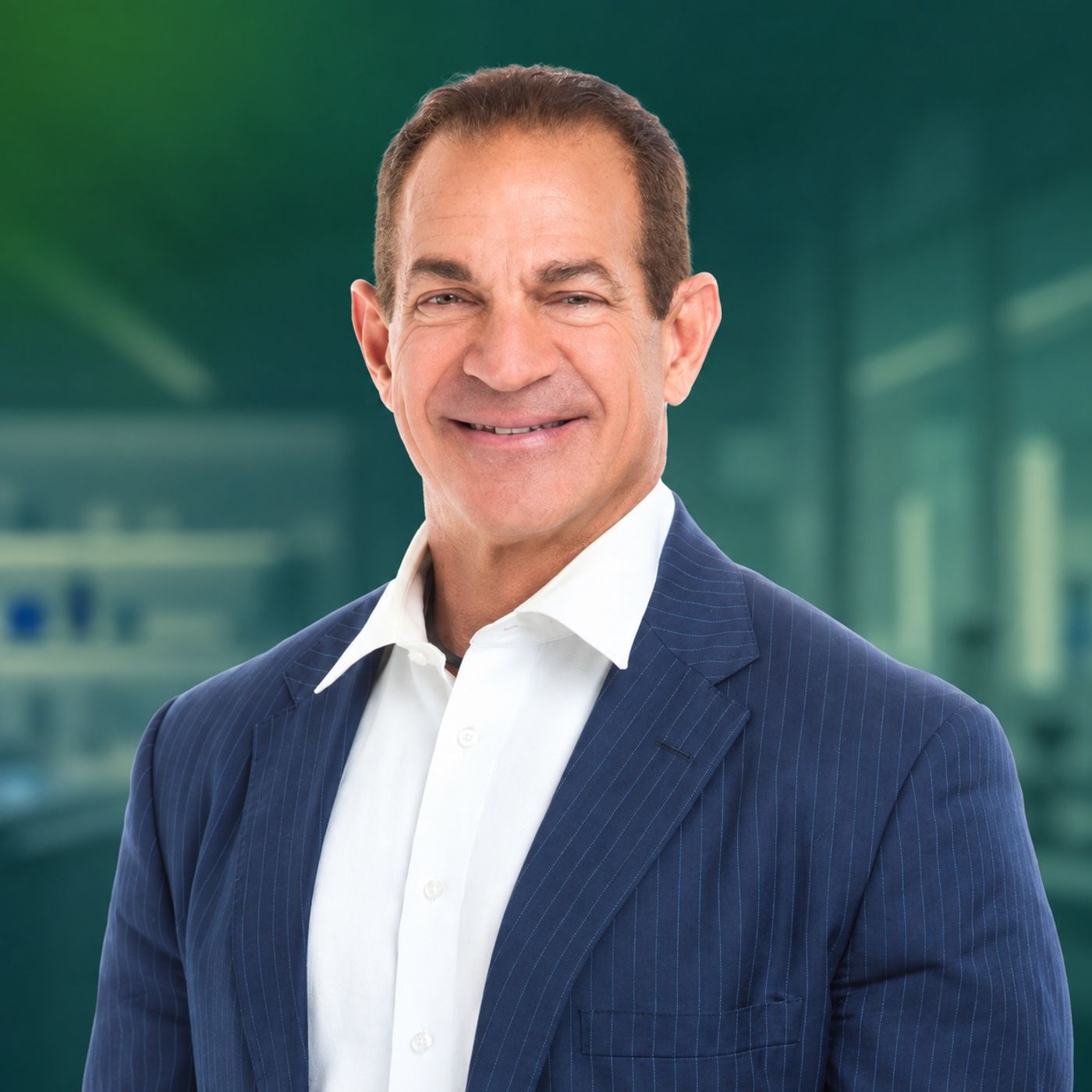
Dr. Mark Sherwood on Longevity, Biohacking & Taking Back Your Health
About this episode
Become a supporter of this podcast: https://www.spreaker.com/podcast/i-am-refocused-radio--2671113/support.
Subscribe now at YouTube.com/@RefocusedNetwork
Thank you for your time.
Get every episode summarized
Each time I Am Refocused Radio publishes, we email you a written briefing from the transcript — the topics, who appeared, and any specific claims, with the ad reads skipped.
Email me new episodesFree for 3 shows. No card needed.
Hosts & guests
Transcript ready
388 searchable segments. Every word is indexed and playable.
Full transcript
I Am Refocused Radio — Dr. Mark Sherwood on Longevity, Biohacking & Taking Back Your Health. Machine-transcribed; use the interactive transcript above to jump the player to any line.
You are listening to I Am Refocused Radio with your host, Shemaya Reed. This show is designed to inspire you to live your purpose and regain your focus. And now here's your host, Shemaya Reed. Welcome back to I Am Refocused Radio once again we are here today and we have another show lineup for y'all today. Let me ask you a question. When you think about longevity, is that like a buzzword? When you think about supplements, is that something you kind of see on your feet on social media where we have an expert today that's going to help us navigate through all that stuff that's been heavily pushed online, social media commercials. We're going to learn how do we really become healthier? What are the real tools that maybe we don't really know? Because it's easy to go Google something and understand, hmm, this looks interesting. That looks like that's healthy. Well, we have our guest today, Dr. Mark Sherworth. He is a functional medicine clinician, a author, a former SWOT leader,
and a former professional athlete who argues that longevity shouldn't simply be meaning adding more years to life. It should be how can I actually protect my strength, resilience, and the ability to live those years well. I know that was a mouthful, but we're going to unpack that right now and just welcome Dr. Mark Sherworth to the show and say, man, how you doing today, sir? I'm doing very well. Thanks for having me. I've been looking forward to this and just honored to be with you. We have amazing experts on a show and I just want to say thank you for our audience without you and your support to show what it is today. But when you think about people in the interest of healthy living, everyone is kind of like going on Google and chat GBT, all these different resources and find ways to be healthier. But what are you seeing that is more practical and actually effective versus what we kind of see online?
Yeah, that's a great question because a lot of people today are googling and searching and gravitating to influence their pushing different supplements, different modalities, different things. And that's all good. I'm not knocking that at all. But when we're talking about longevity, I am all about refocusing that instead to the idea of increasing health span, increasing independence. Because ultimately, it's not about living forever. We are going to die this thing we walk around in our physical body is going to cease to function. But my question is for people to consider, is does it have to cease to function in an elongated manner? What about increasing health span, decreasing six span, living with the idea of living through life as compared to post two dying through life? When you think about Americans in the United States, we always hear about diabetes and other health issues. What do you believe Americans are being taught in a good way to manage their disease
or where areas we can do better in teaching them how to build a better health for their lifestyle? Well, I think that we need to understand that the health of America right now is in the worst position that has ever been in the history of mankind's existence. This unpacked that. Think about that. We're in the worst health we've ever been in the history of the world. And America has led the way in what not to do. As we see the increasing westernization of the world, we're seeing increasing disease processes of things that you mentioned, type 2 diabetes, heart disease, cancers, obesity, those rates of increase are nothing short of alarming. And this may sound extreme, but it is true. If the United States government and the people that are driving the bus tell you to do something right now regarding your health, you need to question that. Because obviously it's not work very well. So we're all about going back to the basics.
What are some foundational principles that we should be doing? They're not sexy. They don't sound tick-its. They don't sell this doom day scrolling thing that we have today or the FOMO. But they do give results such as eating well, sleeping well, learning to manage stress well, and moving the body well. And those costs nothing, but they give you incredible return in your investments. And that's kind of what we need to get back to at this point in time. When you think about bus work is going out around online, social media, biohacking, everyone's thinking about health data. And it's almost like we're just obsessed with all these tools, but we don't really know where to start. For our viewers and our listeners who are overwhelmed with information, it was an actual great place to start. I mean, yes, they know your website. It was some practical steps that they can start in this machine, their own customized health care.
Well, this may sound extreme, but it is true. Stop focusing on scale weight. Scale weight means zero. It actually can get you in trouble because you can actually lose weight and get less healthy and gain weight and get more healthy. Technically speaking, that means our goals should be excess fat loss and creating a system within our bodies system of excess fat gain resistance. On the flip side, we should always be trying to maintain an even build-up muscle tissue because muscle tissue is a longevity organ. Muscle and movement is live. The lack of movement is death or rigour mortis. It's just learning how to manage body composition instead of scale weight. And so I try to tell men out there to focus about 10 to 15% body fat, depending on where you are in age. That's a good range. And most people have no idea. And then ladies, I want the ladies to focus on about 18 to 26 or 24% body fat, which
is an outstanding range. At those percentage of body fat levels, we see lower visceral fat, which is obviously tied to more opportunity for more health span slash life span. On the flip side, when we get outside of those numbers above those numbers, whatever weight may be, we see tendencies to have more disease processes, more death span or six span increased and therefore negative outcomes. So it sounds almost too good to be true, but we should not care about our weight, but we should further be assessing on a regular basis our percentage of body fat. You listen, I'll be focused ready on watching us online. Talk to our guests today. Go to his website is drmarksharowood.com. When you think about athletes, you were a former athlete yourself and you looked like you're still athletes. So when you think about a professional athlete who are high achievers, high performers,
they have a lot of pressure and stress that's added to their routine, especially in the professional world sport or what have you. What are some health warning signs that these high performers tend to ignore, not notice until the body starts to force them to pay attention? Professional sports is a business. You are the commodity athlete and so understand that it's not about you, it's about putting something on the field in order to make money. So you become a tool in that and that's great that you have the ability for that. That's professional athletes are incredibly gifted human beings, not just physically, but also mentally, which brings me to the point of caution. The excess cortisol, the excess effort, the excess adrenaline, the excess pressure put on a human being within the context of the time in which they're professional athlete. It's extraordinarily higher above that of the normal human being. So the activity level, the exercise level, the stress they put on their physical body
is just how this world. And because they have an opportunity within that window of time, it doesn't less forever, they need to maximize that misstan point of performance, yes, and also economic benefit, yes, make as much money as you can during those years. But look at it from a longer term potential. How can you stay healthy longer to enjoy the fruits of your labor longer? For example, in an FL, we see the CTEs, the chronic traumatic and cephalopathy, you know, CTEs, brain injuries. And so when we look at that, we see the decay in the human and could that have been avoided perhaps using tools like molecular hydrogen and high dose of megatreofatiasis and maybe using some exogenous ketones. So all these things should be employed right now with the intent to look forward, you know. So in other words, preparation today equals preparation for the future. Lack of preparation today equates to lack of preparation for the future.
You also spent years in law enforcement. What did watching strong discipline officers struggle with burnout and declining health teach you about the opportunities that we have versus, like you said, moments ago, if we're not preparing, we may have limited options later. Well, police officers are notorious for retiring from something, instead of retiring to something. And they look for this time of life where they can retire, collect their pensions and live the good life. But what I saw with my own eyes, experience with my own heart was watching police officers die. The average age of death still, and it's been this way for about 70 years of a 20 year male retired police officer is 66 years of age. That's completely sad to me. And a lot of people, you know, given the fact that police officers are under scrutiny more today than they ever have been because of cameras and all that stuff. I don't think cameras are bad. I think they're good because it keeps everybody accountable and it is a visual record on a good
and bad skill, right? But ultimately, no one understands what they do until you've done it. So I remember, you know, it took me about five years, quite frankly, to sit in a restaurant with my back to the door because of the internal way in which you live, you know, every encounter you have, every car stop, every call you show up on, isn't, is a time where you may die. And that's, that is an intense way to exist. And so I think that there needs to be a level of compassion there. But I saw the same thing in regard to police officers that I saw, I see in regard to professional athletes, it's the wear and tear on the daily basis for a year to year to year without thinking what you're going to do next. So it's the same problem on both ends. You're retiring from something with the intent to live a good life, but you have to have to have to do something. You have to have a purpose behind that. And police officers are notorious for never putting down the badge and the gun.
And I get that. Once you wore blue, you always bleed blue. I understand quite intimately, personally, but at the same point in time, if I can transition from one career into another without missing the idea and my purpose, which is protection and service, still to this day, even what I'm doing now, I think that gives an opportunity for both professional athletes and police officers to move into something that's, you know, even their value alive and their purpose alive and their life. We think about overall goals for people who are conscious of their health and how they want to better their journey in their health care. What is one health number that you see people obsess over that may be misleading when they only look at it by itself? Yeah, I think it's probably two things. Number one, body weight as I just mentioned earlier. But number two, and this is going to be something I want people to understand and think about.
Conventional blood work, they've been told they're fine. Conventional blood work is deceptive. It does not measure any concept of where you are on a disease pathway. For example, if you were trying to go from point A to point B and bound yourself a hundred miles off course at point C, conventional blood work does not tell you if you're off course. They just tell you if you've arrived at a destination you do or don't want to be. And that leaves a big old hole. So I watch people over the time of my career in this particular career for the last 15 years, coming to my office or we deal with them remotely, my wife and I both, and they believe they're healthy and they present to us, quote, conventional in quote, blood work. And when they do, we're able to point out holes in that. For example, like, you know, blood sugar issues is typically measured by hemoglobinate 1C completely insufficient. You miss the pattern. We should be measuring fasting insulin. Conventional blood work measures total cholesterol.
Cholesterol does not cause heart disease. So who cares if it goes up? Doesn't matter. We should be measuring particle size, which gives you the intuitive ability to understand are you building up plaques? So there's just two examples of that. So that's something people obsess over and put over here on a counter or a shelf and say, this is good. Wouldn't really it was bad. Well, it's getting less unrefocus ready and watching us online talking to our guest today, Dr. Mark Sherwood. Go to his website, Dr. Mark Sherwood.com. That's Dr. Mark Sherwood.com. And that's a question for you is how much I know is different with every person. But how much control do people really have over their biological aging through strength, nutrition, hormone, sleep, and recovery? You have more than you think in today's world we're kind of sort of caunded into believing that our genes determine our destiny. They don't. The genes simply load a gun and the environment pulls a trigger. All the things that you just mentioned are environmental inputs that we have control over.
To put it into a better example, let's look at genes like under the analogy of a gun. You put the gun into the hands of a responsible person and perhaps that gun can become protective or defensive oriented in its capabilities. You put that gun in the hands of an insane person and the gun all of a sudden becomes something offensive and murderous. What does that mean in regard to our environment? We put our genes into an offensive or insane environment, which is a staring American Western diet where we believe we have no control and we have bad results. And so the susceptibilities that our genes do show, which have changed only 2% 10,000 years I might add, our genes. Those susceptibilities do begin to appear. Now when you look at all the inputs, what we do with our body, how we move, how we have stress, how we manage sleep, what we put into it regarding food and liquid, what we manage with supplementation, peptides, hormones, we have an enormous amount of control. And my encouragement for all of our listeners today or wherever you are is to understand
that it is up to us as human beings today to take control. The ability to take control is yours. Do not depend on your doctor to take control. Do not depend on your politician to take control. Don't depend on your pastor to take control. You look yourself in the mirror and you take control of that health and don't look back because nobody is coming to help you. The mind line is taking control in your own world is the best way to go because then you can own it and learn from it and learn some more from it and pass it down to the next generation. What do you think about speaking that? When you think about younger people today, they're going to have age and parents that they're going to be taken care of soon when the parents are retired and living their good retirement life. Two part question first is what can younger people do better with their overall fitness of their night athlete and what can their parents do to maintain their strength once they've retired age? For the younger people out there, I think you can look at your parents and learn a couple
things. You can learn what to do. There's a lot of leaning to have from people being on planet earth much longer through the maturity and experience they have, the wisdom they have, but you can also learn what not to do. Look at them and look at their lives and the tendencies they have, the disease process they have, processes they have. You can learn a lot on what not to do and that's a good thing. Be motivated. When you see your parents, obviously you see the lineage genetically speaking so you can see susceptibility, tendencies and trends. Back to what I just said previously, don't let those trends become the defining force in a negative way, let them become a motivating force in the positive way. If your parents have heart disease, you work hard and not have heart disease. You see how that works. So the parents out there for the older ones out there that are nearing your retirement age, your job is to not become a dependent for your children. Your job is to stay independent of your children and from your children so that they can have
their life and you can have yours. The greatest blessing you can give your kids is a healthy life and a healthy body and a healthy mind. Therefore, maintaining your ability to pass down that wisdom, pass down that experience so that your offspring and your lineage can become better than you are. You, in effect, as an older person, then are increasing your health span, increasing your independence and thereby decreasing your sixth span. Switching gears a little bit here. When you think about some of the topics that has become more mainstream today, hormone therapy seems to be another topic that people are talking about online. Who should be cautious before assuming hormones are the answer? Well, first of all, hormones, if they're putting their proper place, they cannot cause cancer. If that were the case, broad space, 30,000-foot viewpoint, if that were the case, every little girl and every little boy reaching puberty must have cancer if hormones cause cancer.
So we know that's not true. Hormones are necessarily protective, so they're actually emails or signaling molecules. So we have to have those. What people should understand though, there's a lot of hormone like signaling molecules in our current standard American Western diet, such as the Xenoestrogens that are found in foods and liquids. Even within our produce, we have this chemical that is roundup, which contains glyphosate, which is a known estrogenic and known carcinogen with its atrogene attributes in that. So you have all this stuff going on. I think people should look at the whole picture. When you reach as a lady, the idea of parimenopause and menopause, hormones should not be added in if they're synthetic. We are not pro-synthetic hormones. We are all natural. So there's something called bioidentical, or people might say they're human identical hormones. They're all made to lab, but one hits the receptors holistically, the other hits it partially. And with men, unfortunately, men are becoming more andropausal or losing testosterone
faster today, which is probably tied to our environmental stressors and some of those chemicals, such as datendroids and such as these birth control, getting into our water supply and getting into our bodies like that. So there's a lot going on with this. Hormones should not be just broad, blanket, frowned upon. They should be really analyzed carefully for the individual person for the need. And you've got to find a clinician that knows what they're doing. You can't just think that hormones are going to solve this other border crisis in the economy. That's not the way it works. Hormones are part of the big pie that we must have to maximize health. We mentioned earlier about people working with their doctors. And the time where a lot of people, unfortunately, you haven't met trust with the health system and how it works, they're still good doctors out there. What can someone who's listening and watching this do better job with their, how I'm going
to put this, personal ownership when it comes to their health care and working with doctors and if you have to switch the doctor, which is your advice for people to do that. The next thing is the distrust I want to encourage you with this is warranted. You know, we saw what, you know, the year 2020 did to America. That was horrible in what it did to our nation. We should have always been given the free choice to do whatever, you know. But ultimately what happened in that time, it pushed an agenda upon us. And when it pushed an agenda upon us, it was the wrong agenda. And it went the wrong direction because of that we're still suffering for it. There are good doctors out there. Doctors don't go into that profession to hurt people. They go into that to help people. Now you can't go into the heart of every man or woman and they're determined, they're real motivations. But as a general rule, it's not meant to cause death in people. But the system in which the doctors are in is what creates the pattern in which they operate. The education system and the professional economic system drive the protocols.
And we need to understand that. The medical system of day, people need to hear this, is not trained to keep you out of their office. It's not trained to prevent disease processes. It's trained to manage disease processes. And I ask people all the time, do you want to become a disease manager? Or do you want to become someone that lives life free of disease for as long as possible? I think the latter is going to be a more popular question. When you're selecting a doctor to work with, vet them out, ask questions, ask them questions. If they're not able or want to or free to answer questions, then it's the wrong doctor. You should be able to call the office and actually speak to a human being. You should cruise their website. You should look at reviews. You should look at some of their patient testimonials. And it's okay to ask questions. It's okay to do an interview process of that. Look at their credentials. Look at who they have helped.
Look at how long they've been doing it to make sure they're not just a fly by night, pop up, longevity clinic or pop up hormone clinic. If they've been doing it 10 to 15 years, they probably have learned a lot of lessons over time. So you really want to find a person that looks at it holistically and not focuses just on one area. In other words, don't seek a functional medicine doctor out that just focuses on the gut. Although the gut is critical. Find someone that focuses on the entirety of the system. With desire to teach you how to stay out of that same system that you just talked about the conventional medical system. A last question before we wrap this up is for someone who finds himself as the busy professional who don't, I mean, they don't have time to breathe when they look at the calendar events. What are some better ways for them to own their health progress and journey versus trying to blame the system and blame the doctors out there? Realize that all of us get paid 1,440 minutes per day.
That's the greatest way you could ever get. How you spend that time is how you spend your money and there are no refunds. You have to make time for the things that provide the greatest return on investment. For the busy professional out there, I get it. I am too. I'm an entrepreneur. I understand that. I have to make time for what allows me to make time and make money and make a living and make a career. There is no point in spending all your life with that 1,440 minutes missing things on sleep and neglecting your health. To one day wake up and realize your money can't buy you out of a hole. I encourage you to spend that time budget carefully. Work with someone again that understands that from a clinician standpoint. Help guide you come alongside you and become your wellness coach and partner. You can watch and listen to us on your focus radio and talk to us yesterday. Dr. Mark Sherwood, go to his website. Dr.MarkSherwood.com.
Again, that's Dr. Mark Sherwood. Like always. We'll just say to you. Thank you for your time. Well, thanks for having me.
More episodes
More from I Am Refocused Radio

When Success Isn’t Enough: Karin Velicka on Stress, Nervous System Regulation &...
I Am Refocused Radio

David L. Gillespie on Leadership, Service & Imagination
I Am Refocused Radio

David Drebin on Art, Vision & Building an Iconic Brand
I Am Refocused Radio

Detroit Heroic: Dr. Olaf Kroneman on Medicine, Injustice & the Human Cost of Bei...
I Am Refocused Radio