About this episode
Radiolab is made possible by:
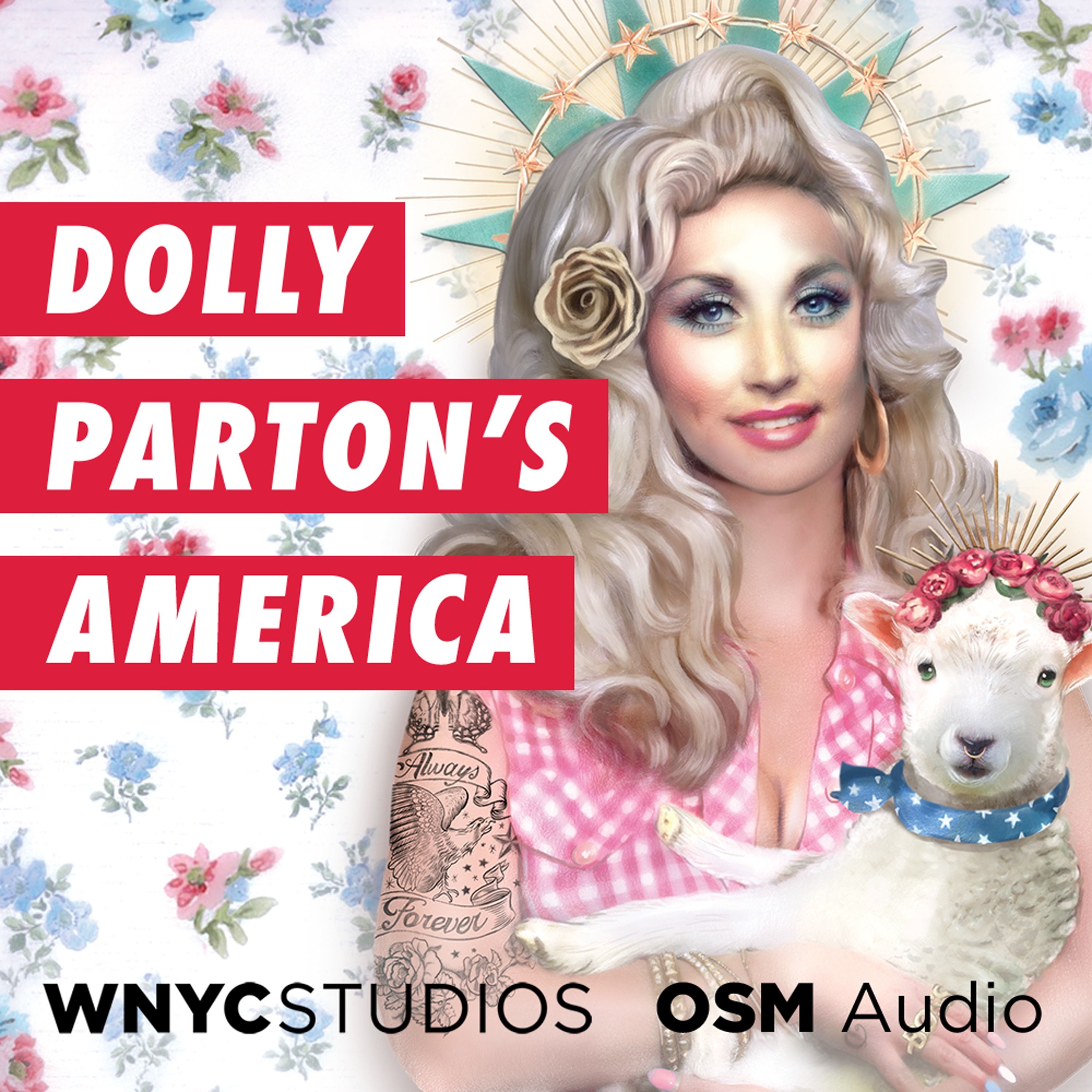
The world lost a legend recently, and we wanted in some small way to pay tribute to the great Dolly Parton. So we’re playing you an episode from a series we had a small part in back in 2017, Dolly Parton’s America.
The series kicked off with a simple question: How did the queen of the boob joke become a feminist icon? Helen Morales, author of “Pilgrimage to Dollywood,” gave us a stern directive – look at the lyrics! So we dive into Dolly’s discography, starting with the early period of what Dolly calls “sad ass songs” to find remarkably prescient words of female pain, slut-shaming, domestic violence, and women being locked away in asylums by cheating husbands. We explore how Dolly took the centuries-old tradition of the Appalachian “murder ballad”—an oral tradition of men singing songs about brutally killing women—and flipped the script, singing from the woman’s point of view. And as her career progresses, the songs expand beyond the pain to tell tales of leaving abuse behind.
How can such pro-woman lyrics come from someone who despises the word feminism? Best to let Dolly tell you herself.
EPISODE CREDITS:
Reported by - Jad Abumrad and Shima Oliaee
Produced by - Jad Abumrad
with help from - W. Harry Fortuna
Original music from - Alex Overington
Sound design contributed by - Alex Overington
and Edited by - Suzie Lechtenberg
Signup for our newsletter!! It includes short essays, recommendations, and details about other ways to interact with the show. Sign up (https://radiolab.org/newsletter)!
Radiolab is supported by listeners like you. Support Radiolab by becoming a member of The Lab (https://members.radiolab.org/) today.
Follow our show on Instagram, Twitter and Facebook @radiolab, and share your thoughts with us by emailing [email protected].
Leadership support for Radiolab’s science programming is provided by the Simons Foundation and the John Templeton Foundation. Foundational support for Radiolab was provided by the Alfred P. Sloan Foundation.
Hosted by Simplecast, an AdsWizz company. See pcm.adswizz.com for information about our collection and use of personal data for advertising.
Get every episode summarized
Each time Radiolab publishes, we email you a written briefing from the transcript — the topics, who appeared, and any specific claims, with the ad reads skipped.
Email me new episodesFree for 3 shows. No card needed.
Transcript ready
1,069 searchable segments. Every word is indexed and playable.
Full transcript
Radiolab — Dolly Parton's America: Sad Ass Songs. Machine-transcribed; use the interactive transcript above to jump the player to any line.
Radio Lab is supported by progressive insurance. Do you ever think about switching insurance companies to see if you could save some cash? Progressive makes it easy to see if you could save when you bundle your home and auto policies. Try it at Progressive.com. Progressive casualty insurance company and affiliates potential savings will vary, not available in all states. Anybody can make jeans, but you can't dupe true religions. That famous thit pockets you recognize instantly stand out stitching. They try to get the full package, but only we have the legacy. Shop the iconography capsule now at True Religion. Watching football is a sacred tradition. And Sling puts you in charge of how you want to watch it. Whether you want a quick day pass for non-stop college or pro-action, starting at just $4.99, a three day or seven day pass for GamePacked Weekends, a full monthly plan, or a full season pass, Sling gives you total control over how you watch. Get instant access to live football without paying for unwanted channels.
Sling lets you do that. Visit sling.com to learn more. You're listening to Radio Lab. Radio from WNYS. Hey, this is Radio Lab. I'm Sorn Wheeler. We here at the show like so many other people out there are thinking about Dolly Parton right now, taking this moment to look back at an incredible songwriter musician, Icon. We've told stories here at the show about all kinds of topics and ideas and people. Dolly has been sort of an interesting touchpoint for us in a lot of ways. Back in 2008, in the pop music episode, we talked about the global impact of her music. We featured a song that she wrote for our sister show, More Perfect, About the 19th Amendment. And as many of you know, our founder and original host, Jada Murad, produced a whole nine-part
series about her life, her music, and about her uniquely expansive appeal to people of all walks of life around the world. And one of the amazing things about Dolly Parton is how she was able to connect with so many millions of people in such an intimate and meaningful way. And I think we're all seeing that this week as stories come out about her and we reflect on her life. And as someone who's worked on those stories, it's impossible not to be sort of knocked on your ass by what she has done. And the example that she set as a person standing in the same world that we're all standing in and speaking out about it with a poetic clarity and honesty and resilience and dance and smile. So as you might have guessed, I wanted to play you one of the episodes from the first one, in fact. But before I get to that, I want to share one small, but maybe a very telling example of the way Dolly has impacted this show and the people who work here. Because we very recently hired a new producer on staff, Joe Strogas, and she told me a little
story about Dolly that I want to share with you here. How old are you in this picture? I was 12 and I have, I still have my braces. I have a little shock of green hair. Yeah, which I died with cool aid. It's a great way. So given the story, you were in a band? No, no, no. So my voice teacher had a band and I recorded some songs with them. One of the songs being a cover of Jo-Line. And we had this recording, which my mom didn't even tell me. But she must have found Dolly's foundation or team online, where you can just send fan mail. And she mailed them or emailed them a link to my cover. And most of said something like, my 12 year old daughter is such a big fan of you. Here's her coming to Jo-Line. Didn't she? Your mom sends off a link. She sends it behind my back. And then we get this huge piece of mail a few months later in one of those big orange envelopes.
Open it up. And there's this autographed photo of Dolly Parton. She's wearing this awesome green outfit. Her boobs look amazing. I don't think I can say that on here. And it's so funny to receive that as a 12 year old dude because I'm in this pure awkward phase and she looks like an icon and a diva. She is an icon and a diva. It's like hearing, it's like getting a letter from a god or goddess. And that's honestly what it felt like. And so then I read the letter and me. So you get a picture, a signed picture and a letter. And a letter. I get a letter from her. Can you read me the letter? Okay. So in her letter, October 13, 2014, she says, dear cannon, that was my stage name at the time, dear cannon, thanks for sending me your version of Jo-Line. You are awfully young to be singing a song like that. But your rendition is beautiful and original.
From the information, it sounds as if you also have a great soft heart. I wish you the very best. Keep chasing those dreams. One day our paths will cross. Love and then she signs it. Dolly. Yeah. Yeah. That's so amazing. Oh my god, I love it. It was so special to me. It was so beyond special. And I just think, I mean, I don't know what you were like as a 12 year old. But there's just got to be something about that little that the way your sense of self is in flux at that age. And then it can go so many different directions. And that it's so sensitive to the world around it and to what other people have to say. And what other people might think or how other people see you or especially to put yourself on stage and use your voice to do something in the world. And then just sit back and wait to see how people react and to get that feels like the
weight of it feels honestly sort of hard to. Yeah. I mean, yeah, it just feels like it could set you on a completely different emotional, spiritual cognitive trajectory as a teenager than if you hadn't gotten it. I think it was one of those things was too big to process. I mean, it made sense to me the more I learned about her, it made sense that she is the type of person that would take 10 minutes out of her day to listen to some random 12 year old cover one of her songs. It just everything aligned with that idea that she was, she was the type of person that really felt she wasn't above anyone, even though she had this gift. You would take the time for anyone that was clear. That's beautiful. So as I said, I'm going to play for you the first episode of the series of Dolly Parton's America, which was hosted by our very own Jada Murad, reported and produced by Shima
Oliyai. It's called Sad As Songs. What is Dolly Parton's America? Well, Dolly Parton's America would be the same as Dolly Parton's world. Hey, I'm Jada Murad. Let me explain how I got here to a podcast about Dolly Parton. I grew up in Tennessee, which means I grew up in... Dolly Parton's world. Dolly's world. She was everywhere. She was looking down at you from billboards, coming out of car radio, she was on commercials, she just... What is so for me? Infused the air. So as a consequence, I didn't really think about her a lot. It's a little bit like that joke. One fish says to another fish, how's the water today and the other fish says, what's water? I was that second fish. She'd created this world and I was just swimming through it. But then...
A few things happened. 2016, I'm living in New York, Dolly is on tour and she comes and does a stadium show here in Flushing Queens. And just the level of excitement of people around me was like otherworldly. You're well, Dolly! Everybody around me was like... Dolly Parton is a goddess. She's a saint. To me Dolly is a superstar, brings herself to the level of the people. I was like, whoa, I missed this. So I was sitting in my home office, I was on Twitter. writer Sarah Smarsch told me that her woe moment came around the same time when she was in Austin, online watching people live tweet that same dolly show. The people who were tweeting were all women and one woman in particular. She said that majestic bits just started playing a goddamn pan flute.
That's the best tweet. Pan flute was in all caps, which seemed important. In all this was happening, the pan flute, the tweeting, the touring. It exactly the moment when the 2016 election was turning very ugly. The races, taxes, homophobics, xenophobics. How do you lie to the FBI? Like she threw a right through all of that noise, through the general election and beyond. And I kept bumping into people who had described the experience of being at a dolly show. It's like standing in an alternate vision of America than what was unfolding on the TV. I remember just standing out in the lobby and in just people watching because it was the most diverse place I've ever been. I was seeing a multi-racial audience, you people wearing cowboy hats and boots. I was seeing people in drag, church ladies, lesbians, holding hands, little girls who were
there with their families. You had a whole audience of people who absolutely their philosophies were in opposition to each other. Co-mingling and everybody is polite to each other. So that was one thing that caught my attention. That in this very divided moment, dolly seems to maybe be a kind of unifier. And after doing a little poking around, the data does kind of bear this out. If you look at her global Q score, this is a measure of how well people think about your brand globally. What they do is a symbol of very diverse sample of people. They ask them a bunch of questions. And out of all of these different brands that are out there, all these different performers, she is in the top 10 globally in terms of everybody's favorites. But she's almost number one when it comes to lack of negatives, if that makes any sense. People have the least amount of negative things to say about dolly part than anyone besides
maybe a Dell. And by the way, this Q score data is fascinating. I haven't dug into it too much, so I can't claim to fully understand it, but Beyonce, number 52. What? Lady Gaga, number 41. Wild. Anyhow, the second thing that happened that made this series possible, I'll be honest with you guys, was a strange twist of fate. Dolly pardon suffered a few minor injuries in a car crash. The accident happened just afternoon in Nashville on Monday. 2013, Dolly gets into a minor car accident, ends up at Vanderbilt Hospital, and one of the people who ends up giving her medical advice is my dad. And they became friends. She shared this with me by the way, and was totally fine with me sharing it, but it was very unexpected. My dad is not a doctor to the star's kind of person. He's just a Lebanese guy in Tennessee, but they were friends suddenly. And so when I started getting curious about Dolly as maybe the subject of a story, I was
like, you know what, Dad? I need you to introduce me. When he did, I sat down to talk with her to ask her about this Dolly moment, how she thinks about it. Does she consider herself the grand unifier? Does that include everyone? Well, all these questions I thought maybe I would get a story out of it, or two. But what ended up happening was in simply talking with her about her life and then talking with people about her. I fell into so many different rabbit holes. I was like, you know what? I think we got to make nine. We're going to take nine trips into the Dollyverse. This is Dolly Parton's America. I'm Chad Abumrod. Let's start. I first spoke to Dolly Parton in November of 2017. My chair squeaking.
We sat down in a studio in Nashville in a squeaky chair in front of a mic that unfortunately had a little bit of a buzz in it. Dolly had just come off of her pure and simple tour. She captured the hearts of generations. That was the tour where she famously played the pan flute. Oh yeah, just for show. I'm not great at any of it, but I can make a good show. Okay. That's good. Let her take off the jewels for a hammer and mess up a good take. I'd heard you play 20-something instruments, is that right? I play Adam. I can't don't play any of Moelle. They get to our best one. But I play a lot of mountain musicians too. Delts and her. A heart. A man Joe that comes to. Can you play wind too? You play wheat. Well, that's the penny whist. So we do a little bit of an appellation thing that we just a little would win, but not
it's just the mountain sound. It's not like something you'd learn or play in an orchestra. It's just got that old mountain sound. Gotcha. Danielle. Well, you know me. You just ask and I'll just tell it. Okay. As I know it, or as I feel it, what I want you to hear. So it's decided to start the interview by playing your some stuff of hers. I'd love to play some of your early stuff. Okay. This one. Just tell me what comes to mind when you hear it. Wow. What is that first line? Oh, being born as worse as I can ever made the doctor didn't spank me. He just slapped me in the face. Well, as a writer, you want to come up with all those. You want to come up with a really good line if you're really good songwriter. Where does that come from?
It was really, really early on in those early, early days. Oh, I used to write a lot of sad ass songs. Let me explain the reason I wanted to start with the sad ass songs. Growing up in the early 80s, I mean, one of my main associations with Dolly before this project was that she was sort of a punchline or that she was her own punchline. You know, like, I remember she would go on Leno or Letterman. You looked terrific. And upstairs earlier today, we were discussing your weight. They talk about her weight for a little while. They didn't talk about how she looks. Then inevitably, they start talking about her breasts. What I would give about a year's pay to peak under that. They'd joke about her breasts, but then she would make it even better joke about her breasts. You know what's worse than a giraffe with a sore throat.
And they said, no, what? And the answer is Dolly Parton with a chest cold. Here's another example. The headline on the other major news story today, to which we intended to vote some time, is very simple. Hello, Dolly. Yes. The first cloned sheep was known as Dolly the sheep. This is Helen Morales, author of the book Pilgrimage to Dollywood. Scientists managed to clone a sale. A single memory sell from a six-year-old you. Well, and that sell was from a memory gland. So these men thought it would be a good idea to call a Dolly after Dolly Parton. To call it Dolly. I don't think I need to explain any more than that. But the sting in that story is, and characteristically, Dolly Parton, is that when she heard about this, she invited the sheep when it had served its scientific purpose to come and live at Dollywood. So when you go on these shows and they make a joke about you and you double the joke,
what is that? Part of me thinks, part of me loves that. Part of me thinks, why wouldn't you just tell these people, like, come on, I have written 5,000 songs. Asked me about my songs. So I don't know. Well, I have two songs. Well, how would I go out with my tits hanging out, showing them, pushing them out there, and not expect somebody to make some kind of a comment on it? And I know what they're thinking. So I'd rather say it before they do. And then we get that off our chest, so to speak, right up front. And that's a good pun, by the way. Yeah, no, I've said it before. But I really do like, I just think, well, you know, I mean, this is how I look. Of course, you're going to notice it. Yeah. See, I do that too for the public. I mean, it's like a little comedy thing. In that last sentence, by the way, Dali was actually referencing something she'd once told Barbara Walters, like, years ago. Show business is a money-making joke. And I've just always liked telling jokes. But do you ever feel that you're a joke?
That people make fun of you? Oh, I know you make fun of me. But actually, all these years, the people, you know, have thought the joke was on me, but it's actually been on the public. So yeah, growing up. And I think I speak for many people of my generation when I say this. At least many men. Dali Parton was seen as this kind of joke maker. This cloud of jokes always swirling around her. You know, jokes people would make about her that you would make about herself, maybe on the public. I don't know, but her persona was so big that often, it was the only thing they got noticed. But then, I'll be honest. One of the first bits of guidance that we got as we were embarking on this series, and by we, I mean myself, and producer Shima Oliai, is Shima was talking with writer Helen Morales, who you heard earlier. Helen was basically telling Shima, look, you can talk about the persona and the jokes. But it would be a pity if somewhere in your series, there was something about her
songwriting. The only thing I would say is treat her lyrics seriously in a way that Johnny Cashin's had books written about his lyrics, Hank Williams, who's been taken seriously that Dali Parton hasn't. Which brings us back to? Oh, I used to write a lot of sadder songs. That's what was really surprising. There's some darkness in those early songs. Well, you as a songwriter, and so you got to remember too, that's how I grew up. Now hardcore Dolly fans will know this, but Dolly's discography goes back all the way to 1967, and the songs on those first four albums, it's an ocean of pain. Those songs which many people don't know about, they're not the ones that have made the charts, they provide an insistent witnessing of women's lives. That's how Helen Morales puts it. Women being treated really badly by men. Let me just play you another one.
Do you remember this one? That was Daddy come and get me. That was actually a song I wrote that was based on something that really happened in our family. Really? Yes, I need help, but nothing's gone. I haven't had love this man, and he just drove her crazy. It's not my mind, it's broken. What do you do? Cheat and all that, put her in an insight. Well, I can't say who. No, no, I don't need to know who. Oh, I thought you said who. I said who. I can't call names, but it was a relative. And she would beg her. She would beg in her daddy trying to get a message to her daddy to come get her out of her insane assollum. Wait, so his husband had put her in there?
Wait, so he was cheating on her and then what happened? Well, she had an earth front out. So he just called and had her put away. This is something, by the way, that if you Google it, you will fall down a rabbit hole. Well into the 20th century, this was a common thing. Husbands would commit their wives for things like, quote, nagging, excitement, disagreeing with their husband's religious beliefs. So he wanted her out of his life. So that's, I grew up with that. And I was very impressionable. Another theme that is impossible to miss from Dolly's sad ass song period is, well, this next song pretty much captures it. This is a song that she wrote in 1967 called The Bridge. So high, the bridge, so tall, here is where it started on the bridge.
It tells the story of a woman falling in love with a man. They have their first kiss under the full moon on a bridge. He gets her pregnant, then he bolts. And month later, as she's pregnant, she returns to that bridge. And I was standing on the bridge. My heart is beating wild to think that you could leave me here with her unborn child. My feet are moving slowly, closer to the edge. It's where it started. And here is where I landed. Damn that ending. A couple of your songs in this period deal with suicide. Is that something that you've thought about ever?
Ah, years ago, I don't think I got to that place, but I understood exactly how people do. I was, this was back in the, oh, I don't know, many years ago, early 80s, I think. She was in her late 30s at this point. She just did a movie which caused her a ton of stress. And she was having health problems. I was, I'd got overweight. I was going through the change of life. I was having a lot of female problems. I had been going through a whole lot of family things. It's the stress with a heartache. There was just several things going on at that time. And I was just broken down. You know, I really was having some serious conversations with God during that time. What was this conversation? Well, I just said things like, look, this is just ridiculous. I am not happy arguing about what, you know, why we can't, when they say you shouldn't commit suicide because that's a sin you can't get forgiven for. But then it was just all, everything was just confusion to me.
And I was just angry and I was hurt and I was unhappy. And so I just said, you're going to have to give me some answers or I'm getting out of here. And then we'll both deal with it. How close did you get when you, I don't know. I don't know how close I got. She says there was a moment, sort of at the low point when she was sitting on her bed. And her dog jumped up on the bed. It felt like a sign. My little dog, Papa at that time, he jumped up on the bed. At the time I was riding my, you know, so God, G-O-D, D-O-G, G-O-D, dog, God's filled backwards. So I always thought, you know, that might have been the very thing that you were running your suicide note or. I was thinking about it all. Wow. He said heartache. I mean, was it, what was the heartache? Well, it was personal. Fair enough. We started talking about how a lot of her early songs are about women losing children.
I never lost a baby. I've never been pregnant in my life. But I've seen a lot of people that have and have had to go through that. I've seen it. I've seen the, you know, like I always say, there's two kind of women in the mountains, the kind of get married and have a lot of kids and the kind of stay single and have a lot of kids. But I would also write things about people's lives and topics that I knew that mattered. I was writing about abortion. I was writing about adoption. I was writing about all sorts of things. Back before it was when I even wrote a song called Down from Dover, about a girl that got pregnant and got sent away from home because she was pregnant because they wouldn't accept it. I know this dress somewhere and doesn't have the secret I have tried concealing. The song is written from the perspective of a young teenager who's pregnant trying to conceal it and waiting for her man to return. If he comes back in time, she basically won't be shamed by her community.
But of course, he doesn't. He's ostracized from her family and then the baby's born. Still born. I'm guessing some strange way she knew she'd never have a father's arms to hold her. And so she felt like that God had done her favor. God had taken the baby back. In my mind, the baby was better off back with God than it would have been with me. And they wouldn't play it on the radio back at that time. It's one of my best songs ever. They wouldn't play it on the radio because the kid died. That's because she got pregnant.
It was at that time. That was when I first wrote that. That was in my early days of my career and I wanted to put it out as a single and RCA wouldn't do it. Keep in mind, this song was written five years before Roe v. Wade. But I suggest there's a dolly that maybe one of the reasons RCA didn't want to put it out is that it's just too dark. Well, you as a songwriter and so you got to remember too, that's how I grew up. All those old mountain songs and all those old songs from the old world, all those old English, Irish, Scottish, Welsh, bellads about the Knoxville girl. Get killed and throw in the Knoxville River. And I was very, you know, impressionable. Okay, okay, okay. Let me just take a digression here because that song, the doll I just mentioned, sent me down another rabbit hole. In the interview, I didn't catch it when she said, but listening back, I was like, wait,
what? A Knoxville girl thrown in a river? It turns out this is a very old Appalachian ballad that is sung from the perspective of a man who goes to meet his young wife or girlfriend, I guess, and they're taking a walk along the river. And then all of a sudden, picks up the stick, beats her. She begs for mercy. This is in the song. She begs for mercy, but he keeps beating over the stick, pushes unconscious and then, drags her by her hair, and then throws her in the river. And I was like, wait, this is what she was talking about?
I grew up with that. What is this twisted song? Who's the girl? Why does the guy murder her? So I ended up calling this journalist. Can I speak to Paul, please? You're doing so, hi, J.A. His name is Paul Slade. He's a music writer based in London, and he recently wrote a book all about this. I'm prepared to die, which looks at the real murder stories behind Knoxville girl and a range of other American murder ballads. First thing he told me is that there are tons of these songs. So many, almost always about a man, killing a woman often as wife by shooting her or drowning and leaving you. Drowning her, that's a big one. But with the Knoxville girl's song, what Paul did was he traced it back from East Tennessee where Dolly would have heard it back to England. The first version of the song I've seen was 1685 or thereabouts.
We can't be precisely sure about that. The song was originally called The Bloody Miller. So I went looking for surviving copies of The Bloody Miller's ballad sheet, which now obviously there are no original recordings of the song, but he did manage to find a copy of the sheet music from the original printing 330 years ago. And at the top of that sheet music, there was like a little intro. And so this, a true and just account of one Francis Cooper of Hogsdow near Schroesbury who kept company with one and Nichols for the space of two years. And being urged by her father to marry her, he most wickedly and barbarously murdered her. Oh wow. So it lays it all out right there. Well, yeah, we've got the name of the killer, and we've got a location which is Schroesbury. Paul goes to Schroesbury. Diggs around in the archives finds a copy of a diary from a shoekeeper at the time confirms that yes, there was a murder that happened right at the time that the song was written. He visits the grave of the murder victim confirms that yes, she was a real person.
He checks the burial records to confirm that yes, her death was actually very violent. And it was the age old story. The woman and Nichols was pregnant. And the guy, Francis Cooper. He's got this girl pregnant and he doesn't want to marry her. So that's why he's killed her. She never spoke another word down, maybe her mother. As for how it ended up in a song, Paul says what likely happened is that this guy, Francis Cooper, the killer gets caught and on the day of his execution, a songwriter showed up to witness the hanging. And then immediately, documented it in song, which was a common practice at the time. Story of the sheets themselves were actually sold at public hangings while the condemned man was still swinging. There'd be people wandering around selling ballad sheets, telling the story of that particular crime. So it really was like almost journalism? Yeah, yeah, that's a big part of it. And are these songs usually sung from the perspective of the murderer?
Yeah, it's much more common to tell them in the words of the murderer. Paul says these songs were actually pretty big business. The songwriters would go to the hangings and then travel from town to town singing the songs for money. They would change the name of the song to match the town that they were in. And that's probably what happened. At some point, one of the songwriters hopped on a boat, came to East Tennessee, changed the song to Knoxville Girl. And that was the song that got sung to Lil' Dolly Parton on her porch. This one way to see Dolly's early sad-ass songs, period, is that she was taking these songs that she'd heard as a girl. You know, these pulpy ballads of men brutally killing nameless women sung almost always from the perspective of the man. And she was flipping it so that you finally heard from the victim.
Now Dolly was not the only person to do this, to sink from the victim's point of view. When we spoke with longtime journals in historian Robert Orman, he told us she got to add that caveat. It's not that she's the only one, it's that she's better than anybody else. He said she just had a knack for imagining lives that weren't being seen. Like what's it like to be that woman at the bottom of the river? Let me tell her story. There are a few finer songwriters, male or female. Mind you, she's writing all of these songs when she's 21. I'm 21 years old now and I started singing, mom said, I was falling when I was born, and I was still falling. But I started singing in church. My grandpa was preaches. And I started singing in church when I was a far back, exactly the same, but I would imagine five, six years old. I believe this is the earliest recorded interview that exists of Dolly Parton. It's 1967, Nashville, she's been interviewed by a guy named Everett Corbin from the Music
City News. Dolly, I suppose you have to help me if we just go back to the beginning. I was born, we start with when I was born, okay. I was born on January the 19th and 1946 in severe town, it's severe Tennessee, it's a little town between North Virginia and Gatlinburg, Tennessee. And you might shorten it by saying, it's pretty over the great Smoky Mountains. She talks about her family, there were 12 kids. How they grew up in this little cabin in the mountains, worked the fields, piled into the same bed at night. What kind of songs do you sing? I like ballet, real strong, beautiful, sad, crying ballet. I love sad songs and I just write about things that maybe I've seen happen or things that have been in the family. Well I have a new album out, I didn't meet you too, it's not out. This will be out, it should be out within this month, but it's called Hello on Dolly. Now there's no earth shattering information on that tape, but what I take from it, it's
just, wow that's a very different human being. Coming to us from a very different world. That interview was 52 years ago and Dolly Parton is still making music, so I think it would be a disservice to her to just focus on the sad ass songs. And one of the things you see over the next couple decades is a really interesting shift. Hello. And for this I want to bring back Helen Morales. Hi Dad. If you recall she was the one who wrote the book Pilgrimage to Dollywood, she was the one who urged us don't focus on the boob jokes, look at the lyrics, and one of the things that you do see she says, if you look at the lyrics from the sad ass songs of 67, 68, 69, 70, up until now, you see a progression that is the progression of women in America. You know, her lyrics go from songs like The only way out is to walk over me.
To prove that I love you, I'll crawl at your feet. And just to prove that I love you. I still can't believe that. That's a little BDSM actually. Well exactly. The pleasure is in being treated badly. And then she moves on to songs that really are calling men out for cheating on women for behaving badly. You don't know love from Shino Love. One of the great lyrics. You ain't worth the salt in my tears. Women are angry about whether pleasure is in leaving men or in being angry. And then in the final one she moves on to songs where men are less important and it's just about women improving their lives. What's a good example of that phase? Well, things like, you know, some of her most recent music changes.
I know you've got a world of problems, but you think you can't do anything to solve them. But I'm here to tell you you can. Something got you down, got you chained and bound, you're breaking it. You've built a wall and low it needs to fall, but shake it. Yes. Something that you know is damning up the flow. Tell the dam down, dam down, let me explain it. If you don't take the reins, it's going to stay the same. Nothing's going to change. If you don't change it. Yes, do this. So the progression is basically from these very vivid portraits of misery to fight songs
to this third phase, which is our songs that maybe they're a little more self-helpful. They're certainly not just about men and women anymore, often times when there's no men involved. And sometimes you don't get the vivid detail of the sad-ass songs, but what you get instead is a kind of relentless optimism, a relentless hope that you can't bring me down. You can joke about me all you want to, but I'm going to keep going. And partly for this reason that Helen Morales refers to Dolly's music in her book as not just music, but as a toolkit for living. I mean, her song Light of a Clear Blue Morning has really helped me out of many a blue period. What is it about that song? The lyrics just convey a sense of being very confident that things are not okay now, but they will be okay.
Can you describe a moment or the time in your life where that song served you or helped you? That's producer Shima Oliai, by the way. You want me to go back to my worst moments? Yes, please. It's very undolley part and night. That's very dolly part and night. So yeah, the weather was... Hmm. Yes, I'm not sure I want to talk about that on the screen. I'm not going to give you a specific example. I do in the book, I talk about when my sister was caught cheating at Oxford and I just played that song on a loop. I'm not sure that that's going to go down, but that didn't go down very well in the book. I'm not sure I want to talk about that on the radio. Okay, okay, yeah, fair enough. I'd be happy to read some out of the book if you wanted a snapshot of where I used a lyrics. Do you mind? I don't mind if you want that, I'm happy to do that.
Which one would you like? You mentioned your sister, so maybe that one. Okay. Okay. It's true that one of the reasons Dolly Part and Matter so much to me is that her songs have underscored special moments or heightened episodes in my life. One snapshot is of a weekend in July 1998. Newspaper journalists are laying siege outside my mother's home. One of my younger sisters has been caught cheating in her final exams at Oxford University. And because she is also president-elect of the student union on a free education for all ticket, the press is out for blood. My mother is not taking it well and insists that this scandal will devastate my brother her youngest child. My brother is sitting at the computer enthusiastically looking up famous alleged exam sheets and announcing them in thrills, tones. Jeff Riyarcher, we open the newspapers. One has a photo of our mum's house which in reality is a nice three bedroom Victorian
terrace house. The photo has the adjoining houses edited out so that it looks like a mansion. The spin in the accompanying article is how the mighty have fallen. The photograph in the next paper makes a house look like a slum. The spin in of this article is look what happens when you let Greek super immigrants into the country. Richard Branson, he yells my brother. It's not a calm summer. My mother develops agrophobia. I put light of a clear blue morning on my stereo and wear out the cassette tape, playing it over and over. I can see the light of a clear blue morning. I can see the light of a brand new day. I can see the light of a clear blue morning. Oh my god, that sounds horrible.
Oh yeah, it was. Sometimes having a song that you can play over and over is really helpful. Coming up, we meet someone who not only listen to the sad ass songs but live them and turned out to be a real life dolly doppelganger. Radio Lab is supported by Capital One. With no fees or minimum on checking accounts, it's no wonder that Capital One Bank guy is so passionate about banking with Capital One. If you were here, you wouldn't just tell you about no fees or minimums. He'd also talk about how Capital One cafes are open seven days a week to assist with
your banking needs. Yep, even on the weekends. It's pretty much all he talks about in a good way. What's in your wallet? In terms of capital one, capital one, capital one, capital one, and a member FDIC. This episode is sponsored by BetterHelp. You know something I would like to wake up tomorrow and be better at? Speaking another language. One of the things that holds me back is feeling vulnerable that I'm going to mess up my pronunciation or how I look in front of other people or getting something wrong. And so in the process, I get self-conscious and I cut myself off and I don't end up speaking the language at all. So I actually get worse, not better. Getting better at something is a feeling defined by you. And for BetterHelp, it's a BetterHelp therapist who really gets you. It's a focus on global emotional well-being, with thousands of therapists and millions of members in over 100 countries. It's progress.
Find out and get 10% off at BetterHelp.com slash radio lab. That's better, help.com slash radio lab. WNYC Studios is supported by ODO. When you buy business software from lots of vendors, the cost's at up and it gets complicated and confusing. ODO solves this. It's a single company that sells a suite of enterprise apps that handles everything from accounting to inventory to sales. ODO is all connected on a single platform in a simple and affordable way. You can save money without missing out on the features you need. Check out ODO at odo.com. That's odo.com. Anybody can make jeans, but you can't dop true religions. That famous fit pockets you recognize instantly stand out stitching. They try to get the full package, but only we have the legacy. Shop the iconography capsule now at True Religion. You know, one beautiful thing that happened to me in Nashville was one of my uber drivers
gave me a charger for my phone portable. And she had a Wonder Woman sticker on it and it was just a beautiful moment. She said, take it. I'm like, really? No. She's like, it's yours. Wow. That's Dolly Parton's America right there. Okay. This is Dolly Parton's America. I'm Jan Abingman here with producer Shima Oliai. We're at the beginning of a nine-part series where we dive into the life and music of the one and only Dolly Parton. What can she tell us about America? That's sort of the question. And we started this episode by saying that a lot of people of my generation, men mostly, tended to see Dolly Parton one way. Well, I would give about a year's pay to peek under there. And one of the reasons I wanted to do this series, and by the way, Shima is going to help me narrate this segment. Hey. Hello. So one of the reasons we wanted to do this, maybe you should just take it from here. Well, yeah, one of the big things that first got us thinking about Dolly Parton to begin with is that in the last couple of years, she seems to have gone from this thing that
you described, or from this idea you described, to mean something much deeper and much more hopeful for a new generation of women. I think Dolly Parton is an angel. I'm not going to say she's God, but she's definitely a heaven-sent. And I think that she makes the world a better place. She just exudes amazingness of... We don't deserve her. Is that I don't even know if that's a word? Dolly, for me, is like when I see her and I think of her, I feel more confident in myself. She's like the epitome of female power. She's everything. She's the greatest person on earth. I truly think that she is one of the most underrated, feminist icons of our time. So one of the big questions for us was, how do we even start to explain the shift? Well, I have a little bit of a theory. This is Sarah Smarsh. She wrote a book called Heartland and she's written a lot about Dolly, a lot about class. And just to add, Sarah has been kind of a spirit guide for us in our journeys into the Dolly
verse. Definitely. My vague theory is that she was like the OG Third Wave Feminist. Let me give some context to that. Please. First Wave Feminism, when people talk about that they usually mean the group of women in the 1800s and early 1900s, who were fighting for their rights. Second Wave Feminism. Welcome to the new wave of feminism. Welcome to each other. Welcome home. This was sort of Dolly's era. Free ourselves. It was the feminism of the 1970s and 80s. It's where you had a lot of women start rejecting traditional roles in both the workplace and the home. That's a moment when women who had her business ambitions were being encouraged to sort of downplay their own quote unquote femininity. You don't need to wear makeup. You can cut your hair short. You can put on the pants. And Sarah says that during the second wave, Dolly is one of the first to represent the future Third Wave. She went like in the opposite direction.
It was like you have a problem with my tits. Then here they are hanging out. Tits hanging out. Pushing them out there. Course a plate it up. And you can deal with it while I make you my employee. And there is something about that that is sort of like I think a more kind of millennial spirit of approach to feminism. One of the women I spoke to, Red Saga-Lo, talked about it this way. There's this idea of what feminists are supposed to look like. They're supposed to like not shave. They're supposed to like burn their bras and all this bullshit. And it's like no, Fendism can be whatever the f*** it is you want it to be as a woman. You want to have big hair and big boobs and wear rhinestones then do it. She, I believe, was the pioneer on that one. Sort of like, you know, the way that the way that evolution happens, there's at any given moment there's like some deviation. And then it takes time for that to swell and natural selection to take place.
Like, among a field of second generation flowers, she was like a third generation spirit. The way that Sarah tells it, Dolly was kind of like the mutation. One of the first special flowers in this field. And then her flower power spread to all the other flowers until the entire field was filled with third wave Dolly flowers. Yeah, brings us to present day. Sarah was curious to see what Dolly thought of this idea. So in one of our conversations, I asked her, do you think of yourself as a feminist? No, I do not. She shot that right down. I think I'm a self-feminist woman in business. I love men. And I really, because I have a dad, have all those brothers, all my uncles I love, my grandpa's I love, and I relate to them. And I write a lot of songs about women, because I am a woman. Or I just write songs at women experience. But I write a lot of songs for men. In fact, I've had hit songs, you know, by men, I write, you know,
I write songs about my dad, the dinner bucket song. Every time I hear the sound of a train coming down a railroad track, hear a big jet plane flying high. I'd like to throw my hammer down right off to some distant town, not even take the time to say goodbye. But I got to think about my babies about my, you know, my wife and my old ladies about how much she'd miss me if I was going. So I write about working men, I write about gamblers, I write about, but I write songs for men, and about men in their feelings too, because I know how they feel. I look like a woman, but I think like a man. But I think like a woman too. But the idea of of Dolly Parton, the feminist, bugs you in some way, I'm getting like... Well, that word, I guess when you say feminist, it's just when I think at the time like everybody goes to extreme sometimes. I do not like extreme things. I do believe in making a point and making it well.
I don't believe in crucifying a whole group, just because a few people have made mistakes. To me when you say just the word feminist is like, I hate all men. So did she say no or she just like was evasive? No, she like recoiled. Like which surprised me, you know, I thought, I don't know, it was like I dropped a word bomb in the room. Well, I think she knows, in a course I can't speculate, but I think that let me put it through my own experience. I had a very complicated relationship to the term feminist when I was a teenager in rural Kansas. Fox News was kind of a new phenomenon in the 90s. Feminists now apparently stand for nothing. We didn't have cable news in our farmhouse, but families are disintegrating. Men are disconnected. You know, like the culture was starting to shift. The big picture here is women do earn less in America because they choose to.
The sort of backlash that is full-throated now was like burgeoning when I was a teenager. And I could feel it. And I had absorbed that just using the word feminism, it had some kind of, I don't know, it felt vaguely negative and I was hesitant about the term. So you would now identify as a feminist? Of course. Does it bother you a tiny bit that she won't? Yeah, but I want to say like the part of me that's pissed off is the part of me that got to go to college. The thing to know about Sarah is that she grew up poor 40 miles outside of which she taught Kansas. She said one of her chores growing up was quote unquote sloping the hogs. She ultimately was able to scrape together enough money from four jobs in the scholarship to enter the University of Kansas, which was just a few hours up the road. But she told us that you can't overstate how far those two worlds feel from each other.
The world she came from, of farmers and laborers who mistrust the systems that have ultimately failed them. And the world of people who live in cities, who run those systems. And she says certain words, they have a different life in those two worlds. But there are women who as we speak are living the tenants of feminism more strongly and in a more badass manner than women who wear the word on a t-shirt and march in the marches. And yet, what do you think of that word even? I don't think that. No. No. Would not take that term on themselves. She gave the example of a grandma. I think that men and women should be paid equally. There's just a lot of things that I don't necessarily agree with. And you're going to ask me what it is and I can't tell you because I don't know.
But maybe just introduce yourself, tell me who you are. I'm grandma Betty. In talking with Sarah about this distance and about Dolly, she kept bringing up her grandma and she's like, if you met my grandma, you'd know what I mean. I'm a little nervous. Oh yeah, no, no, no, that's great. This is great. Your first time being interviewed by anybody other than me, I believe. She totally didn't want to be interviewed. She did it, I think, as a favor to Sarah and mostly because she loves Dolly. I think she seems like an angel. Love is like a butterfly, a soft engine, to live as a side. In any case, Betty was born just a few months before Dolly pardoned. I'm always born in 45, so what is this? Well, that's an oldie. She showed us pictures of her from 1967, the same year that Dolly did that interview you heard earlier. Daddy's made up my mom and that's what I wanted to do and in fact, I've made up my mom. That's me. And that's your beehive.
And in the pictures, so you look just like Dolly. My hair, dude. Oh my god, that's so lovely. Betty told us she was a really rebellious kid growing up. She skipped school a lot, she got into fights, mostly with rich kids who bullied her and her cousins. Oh yeah, I mean, that's the way that I dealt with things back then. You know, somebody give me a crack, you know, you shoot it right back, you walk away. She told us about this one time when she was 17 and she was at home and then her mom's ex-husband showed up. He was drunk, of course. They had broken up and he came to the house one night and he was drinking drunk. And I had already gone to bed and I could hear him in their arguing and he called my mother a pig. And I got out of the bed and I went in there and said, don't call my mother a pig, ever. And I went back to the bedroom and then they continued to argue and I heard him call her a pig.
Again, and I got up and went in there and said, this is it. I picked up a cast iron skillet that had grease in it and I lame, being upside the head and knocking down. But he got up and he staggered to the front porch and then he fell off the porch and that's how it happened because he called my mother a pig and I told him not to do that. Wow, that's amazing. My grandma grew up working on factory floors, waiting tables and diners on interstates and highways. And so she didn't take any lip. Sarah says that a grandma was the person that all the women in the family would come to when they had problems. Nonetheless, by the time Betty was 30 years old, she'd been married seven times. Most of those husbands had beaten her abuser, one had even shot her in the shoulder.
Sarah told us about this one time when they were together and her grandma kind of popped her jaw in and out, like clicked her jaw and then said matter of faculty. That was a gift from one of my sweet hearts. You know, it's heartbreaking to me to think about her in doing something like that. But I also kind of thought like what a bad bitch. You know, but as far as, you know, ever letting on like just by an inch that she had been hurt or had any sense of victimhood is like, no, she said that was just totally taboo. But Sarah says there was always this one moment where she'd get to see what was happening underneath. It was when they'd be driving to the groceries and a grandma would pop in a cassette tape of Dolly Parnes' coat of many colors. I just like never saw this woman crack and that song, damn. Can we play it? Sure.
Okay. We sat and listened to it in the living room. Back through the years I go one and once again. Back to the seasons of my youth. I recall a box of red that someone gave us. Coat of many colors is of course about a little girl who is so proud of this coat that her mother soes for her from scraps. That's the only way that she's going to have warmth in the winter. She's proud of the coat. It's beautiful to her and when she enters school she is shamed for it. It's about poverty yes, but it's also about a little girl who is being told to be ashamed and she's saying I refuse to be ashamed.
Thanks. Sorry guys. You didn't break back so many memories. What do you think of? I think about my grandma sewing my dresses and you know kids making fun of it. And I think that's why I became such a badass because you know it's it's hurtful when people make fun of you and my way to react was knocked out out of them you know. You're crying too.
It's my story. When grandma Betty would listen to Dolly's music, Dolly was singing the song. She didn't have the space in her life to sing. Is it healing? Oh, welcome to Kansas. It's sunny and it's healing. That means that's that means we're a month away from tornado season. And then towards the end of the interview she surprised us and told us something else. She said that after her seventh husband died Arnie. He was the one guy who treated her well by the way. After he died she decided to sell the farm and then she's packing up her stuff moving all the things out. And we had 50 gallon barrels that we burnt trash and I think it all bathtub. And I took my nylons and my tight fitting brawls and they were in the barrel and they were matched. She burned her braw. Did you really? I really did. That's legit. Time medicine that you can do that's by the book. Yeah. That's what it was. Hi Charlie.
Oh, I had a load Charlie. Charlie is Sarah's cat and she sort of walked in to be like, okay, y'all, interviews over now. And as we were walking away I kept thinking clearly the lenses we have to see each other. The words that we use to describe each other. They're just not good enough. And maybe Dolly moves in that space where those words fail. My friends call me the Dolly Mama. You know, and I'm going to write a whole book on just sayings and just how to. By the way, after our Kansas adventure we went back to Dolly one more time and I took that question that I asked her and reframed it in light of something that we had seen and that Sarah Smarsha told us that there are feminists in theory but there are also the feminists in practice. And she puts you that's me. Like it's about how you live. Yes, that's a good way to say it. And I think that's a good way of saying it.
I live it. I work it and I think there's power in it for me. By the way, the idea that feminists burn their bras, total myth, never happened. They almost did. They couldn't get the fire started, is that right? No, it was they needed a permit to light the bra on fire and they didn't have the permit. Really? And that's why they were like, oh I guess we can't do that. So they just threw the bras in the trash. Never set it on fire. Wow. Grandma Betty's the only one. Excellent. I'm going to go burn bras right now. Okay, I'm going to read the credits then. Dolly Parton's America was produced, written and edited by me and Shima Oliai. Brought to you by Osomario, that's OSM Audio and WNYC Studios.
We had production help from W. Harry Fortuna and original music from Alex Overrington. In huge thanks to the folks at Sony for allowing us to use some of Dolly's early music, thanks also to the Everett Corbin collection at the Center for Popular Music. Special thanks to Lynn Sacco, Danny Nezel, Kyle McLean, Theresa Hughes, Randy Schmidt, Pat Walters, Lulu Miller, Susie Lechtenberg, and Soren Wheeler. And a very special thanks to my dad, Najee. And of course, thank you, Chad, up and Rod. Thank you, Dolly. There are eight more episodes of this series, Dolly Parton's America. You can find them all at DollyPartonsAmerica.com or wherever you get your podcasts. I highly recommend listening to the whole thing. I'm Soren Wheeler, and we'll be back next week with more Radio Lab. Hi, I'm Eva, and I'm from Brooklyn, New York, and here are the staff credits. Radio Lab is hosted by Lulu Miller and Latif Nasser. Soren Wheeler is our executive editor.
Sarah Sandback is our executive director. Our managing editor is Pat Walters. Dylan Keefe is our director of sound design. Our staff includes Jeremy Bloom, W. Harry Fortuna, David Gable, Maria Paz Gutierrez, Sindhu Nannasam Bandam, Matt Kilti, Mona McGawker, Annie McEwan, Alex Niesen, Sarah Carrey, Natalia Ramirez, Joanna Strogots, Anisa Vita, Aryan Wack, Molly Webster, and Jessica Young. With help from Gabby Santos and Maya Applebee Millamid, our fact checkers are Nora Belblidia, Hillary Elkins, Rachel Gross, Diane Kelly, Emily Kreiger, Natalie Middleton, and Sophie Simei. Hi, I'm Aubrey, calling from Salt Lake City, Utah. Leadership support for Radio Lab Science Programming is provided by the Simon Foundation and the John Templeton Foundation.
Foundational Support for Radio Lab was provided by the Alfred P. Sloan Foundation. Radio Lab is supported by Capital One. With no fees or minimum on checking accounts, it's no wonder that Capital One Bank guy is so passionate about banking with Capital One. If you were here, you wouldn't just tell you about no fees or minimums. He'd also talk about how Capital One cafes are open seven days a week to assist with your banking needs. Yep, even on the weekends. It's pretty much all he talks about in a good way. What's in your wallet? Terms apply ccapitalone.com slash bank Capital One NA member FDIC. Every unforgettable night deserves a fragrance that leaves a lasting impression, introducing the Newer Raff's Club New York Parphone by Ralph Lauren, a bold expression of modern sophistication, an unexpected burst of blackcurrant opens the same with intensity while a witch cognac accord adds depth and sensuality. Capture the energy of Manhattan's Nightlife and discover Ralph's Club New York
Parphone, a powerful, indulgent and unforgettable scent that lasts long after the night has faded. Shop now.
More episodes


