About this episode
Get every episode summarized
Each time Today in Focus publishes, we email you a written briefing from the transcript — the topics, who appeared, and any specific claims, with the ad reads skipped.
Email me new episodesFree for 3 shows. No card needed.
Hosts & guests

Transcript ready
823 searchable segments. Every word is indexed and playable.
Full transcript
Today in Focus — Charlotte Nichols MP on her rape trial ordeal. Machine-transcribed; use the interactive transcript above to jump the player to any line.
This is the Guardian. Today, the MP Charlotte Nichols on what it's like going through a rape trial and losing. Parle du français. If you've used Babel, you would. Babel's conversation based technique teaches you useful words and phrases to get you speaking quickly about the things you actually talk about in the real world. With lessons handcrafted by the 200 language experts and voiced by real native speakers, Babel is like having a private tutor in your pocket. Start speaking with Babel today. Get up to 55% of your Babel subscription right now at babel.com slash a cast. Spelled B-A-B-B-E-O.com slash a cast. Rules and restrictions may apply.
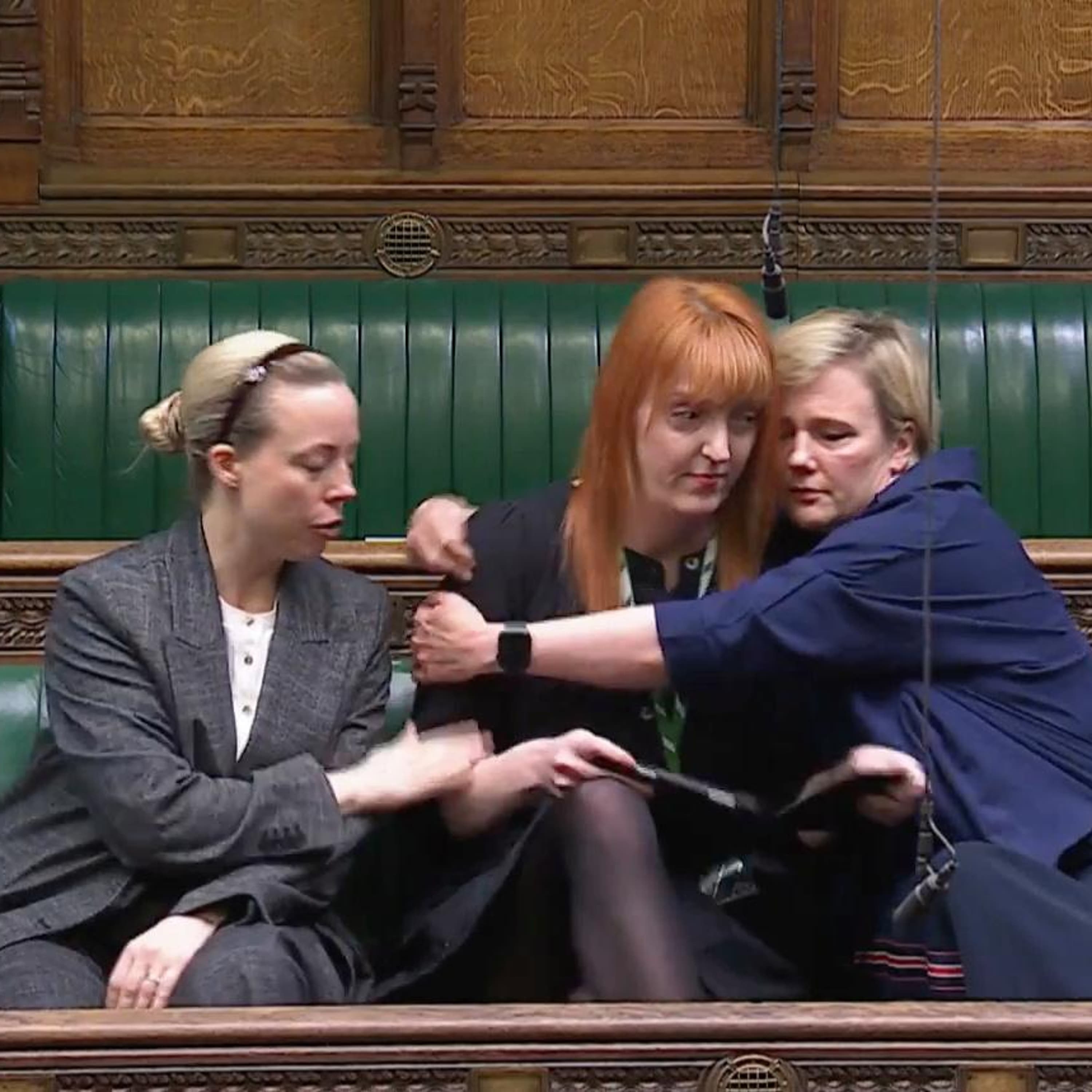
I propose to put a five minute time limit on from after the next speaker. Charlotte Nichols. I've thought very long and hard about speaking today. I'll allow honourable and right honourable learning members from the legal group. This is Charlotte Nichols, the MP for Warrington North. She's talking in Parliament during a debate about scrapping jury trials. I wanted to focus my remarks on a particular perspective that I feel has been too often ventriloquized in this debate and I hope the House will be gentle with me in doing so. As you might be able to tell, she is very nervous. I have spoken before in this place about having PTSD as the result of being the victim of a crime, but I have never specified the nature of that crime and in doing so, I'm aware that I am waving my right to anonymity and the personal consequences that come along with that. I care profoundly about rape victims facing intolerable delays for their day in court. I know only too well what that feels like, as after being raped at an event that I attended in my capacity as a member of Parliament,
I waited 1,088 days to go to court. Every single one of those days was agony, made worse by having a role in public life that meant that the mental health consequences of my trauma were played out in public with the event that led to my eventual sectioning for my own safety, still being something that I receive regular social media abuse from strangers about to this day. But here's the kitchen. When a case finally reached court, it ended with a jury unanimously acquitting the man she accused of rape. But still, she tells MPs, she does not think scrapping jury trials for lesser offences will cut the backlog in the courts. This is what the government wants to do, removing a defendant's right to opt to have their case heard by a jury if their likely sentence is under three years. That would never include rape cases. But the government has argued that it will free up space in the system so that complainants like Charlotte have their cases heard sooner. She disagrees. And ahead of a vote on the bill last week,
she decided to make her case by sharing her biggest secret. We have been told that if we have concerns about this bill, it is because we have not been raped or because we don't care enough for rape victims. The opposite is true in my case. It is because I have been raped, that I'm as passionate as I am, about what it means for a justice system to be truly victim-focused. It is because I have endured every indignity that our broken criminal justice system could meet out that I care what kind of reform will actually deliver justice for survivors and victims of crime more widely. From the Guardian, I'm Helen Pitt, today in focus. The story behind Charlotte Nichols' common speech. There are two things I want you to hear right at the top. One, this episode contains swearing and discussions of allegations of sexual assault and suicide. And secondly, this episode is not an attempt
to replay a trial that has already taken place. The man you're going to hear about today was found not guilty of all of the charges against him and we have chosen not to name him. But we think this is a story worth telling because of what it reveals about the criminal justice system in England and what it's like making a complaint of rape and taking it through the courts. We're talking the day after you took a very brave step of waving your anonymity and standing up in Parliament to talk about the rape trial that you were the complainant in back in 2024. How are you feeling right now having it all out there? In a strange way, it feels a bit like a weight has been lifted. I felt throughout the process itself silenced by not wanting to say anything that could potentially prejudice the case. But following the case, I felt silenced in a similar way because given there was an acquittal,
I worried that waving my anonymity would just be giving free reign to every stranger on the internet to call me a lying slank or what have you. But I feel it was the right thing to do. I feel better for having done it. And actually, I've been really bold over this morning by I can't keep on top of my WhatsApp and stuff with how many supportive messages are coming in emails and things. It's, I feel I've done the right thing. And what was it like standing up to make that speech? Had it been a long time coming? Yes, I know. I had signed Carl Turner's letter months ago now, expressing our misgivings about some elements of the bill. But the tone, I think, had become quite combative in recent weeks.
And there was this kind of repeated suggestion that if you were opposed to the proposals, it was because, you know, you didn't care enough about rape victims. And that, you know, we really needed to be doing this to make sure that people weren't having to wait years for their day in court. And I found that really quite kind of personally affronting. It was about a week ago, where I think I reached the point of, you know, this, this being a decision that I was then weighing up. But the, the decision to do it and actually the speech that I wrote, I wrote a few hours beforehand, almost in one kind of stream of consciousness, because I was really going back with some forwards on what it meant on a personal level to not just speak out about my own experiences, but to do that in opposition to proposals from, in my own party, my own government, a party I've been a member of since I was 16 years old. It's not a, it's not a
small decision. And how did you feel when the speaker called your name? Nervous. I had gone into the chamber about an hour before the debate. And there were two of my friends who were also MPs that I asked to be kind of sat with me at Stella Crecy and Sarah Hall. And I just was doing a lot of kind of box breathing exercises and things like that to try to get myself into the headspace where I could say what I wanted to say without either completely garbling it or just crying or bottling it at the last minute. In this debate, experiences like mine feel like they've been weaponized and are being used for this top rhetorical misdirection for what this bill actually is. The violence against women and girls sector haven't had the opportunity to come together to discuss it. And the government's framing and narrative has been to pit survivors
and defendants against each other in a way I think is deeply damaging. The incident that you talked about in Parliament, it took place back in 2021. After you attended, I think an important football match played by one of your local teams in Warrington. Can you tell me about that day? So following the match, there was a kind of meal and reception and that sort of thing at a hotel that, you know, myself as the MP, the Mayor and other people were invited to attend alongside, obviously, the club and, you know, friends family, that sort of thing. And you ended up at the hotel and to cut along story short, you ended up staying in the room of one of the players. And you told the court didn't you that you had had consensual sex with him once, but that you woke up to find him having sex with you again and biting you and that you hadn't consented to either
of those things. And he's always insisted that everything that happened in that hotel room was consensual and it was between two consenting adults. And that's what he said when he gave evidence. Ultimately, the jury did believe him because he was acquitted of raping you twice and also of sending naked photos of you to his teammates with the intent to cause you distress. And I just wanted to talk a little bit first about the photos if that's okay because, you know, I attended some of the trial and that was one of the most I thought quite startling aspects of it because he admitted taking and and sharing naked photos of you didn't he? Yes. So he told the jury that he regretted sending photos of your naked breasts to his teammates and asking, quote, anyone want to go with a crying with laughter emoji. And then one of his mates, one of the other players in the group chat replied, show us her gash. And then he sent another photo about four in the morning, which showed you for Jaina, how do you understand that not guilty verdict about the photos?
In some respects, I'll never fully understand because juries don't have to give reasons for their verdicts, but certainly in the conversations that I had with the CPS following the trial and conversations with, you know, kind of legal professionals, we think it hinged on what's called the intent provision. So obviously photos were taken. They were shared without my consent. That much he freely admitted to that that part of it is not in dispute. But at the time, there was an intent provision that said that it had to have been done with the intent to cause alarm or distress for the crime to have occurred. Yeah. He says that firstly, he never expected that I would find out. And the secondly, he, I think his defense was, you know, I don't know why
I did it. I was just being a lad. And by definition, that isn't with the intent to cause alarm or distress. That intent provision no longer exists. I do believe where the case to take place today in similar circumstances, that he could not be acquitted now for that particular aspect. Yeah. So it was not never in question that he had done it. No. And I think it's clear both from the fact that I was unconscious in the photo and therefore couldn't possibly have consented. And that that aspect of it, as I said, is not in dispute. How did you find out about those photos? I found out about those photos about three months or so after it happened because I had been to a football match at the club.
And I was speaking afterwards to the manager. So you were telling him about that night in the hotel? Yep. But then he basically said, you know, ah, this. Makes sense now because he'd seen the photos. He said that on the bus on the way back to Warrington, that one of the other players had made it known to him that these photos were in the group chat and that he and the owner at the time of the club had basically kicked him off the bus and made everyone delete those photos. And he was reassuring me that, you know, they had watched them all delete them and, you know, that they were really sorry and so on. And that was.
After that conversation, I went home. I only lived a short walk from the club. And I contemplated killing myself. I was on the phone to the Samaritans for hours. I'm sorry because I thought, well, there's photos of me now out there. I can't know how far they've gone. It made a sureances to me that, you know, they'd watched them be deleted and so on. But I had no idea how many people had seen them, how many people had been sent them where they could end up. And I felt like my life was completely over. There has been times in the kind of intervening couple of years
where every time I open my phone and I've suddenly got loads of notifications or what have you, you know, I have a panic attack thinking, I was this the day that someone's put them on Twitter or what have you? Every person that I walked past on my way home, I was wondering whether they'd seen them. It was just, it was a humiliation on top of a humiliation. Was your face visible in the pictures? In one of them, I think. So they knew the lads on the bus, knew who they were looking at. They knew they're looking at their local MP asleep and naked, right? And none of them, as far as you know, raise objections or concerns until the manager says that and the owner that they intervened. Yep.
I did attend one day of your trial, including some of your cross-examination. And a lot of that was about certain things that you said and did the morning after. And one of them was an interview that you gave from the hotel room. So the morning after. And I think it was a live interview with BBC politics. It was politics Northwest. Yeah. And the defense barrister suggested that if you'd been raped, you'd have been desperate to get out of that room as quickly as possible. And I think you told the jury that you were on autopilot. Would you be able to talk a little bit more about that? Yeah, it was a strange one because I felt kind of completely outside my own body. I think everyone kind of has an idea about how they might respond in a certain circumstance and everyone's very aware of the kind of fight or
flight response. But there's another response. I think it's officially called form, but it's this kind of once you realize that you can't get out of a situation. You just kind of do in the moment what you need to do to keep yourself safe. I had known the previous evening that I was going to have to do this interview. And I couldn't really see any way of getting out of it without kind of having to articulate what had happened. He was still there and I kind of felt, well, if I do this and kind of appear normal to him, and I don't say anything that's going to antagonise him
or, you know, make him hurt me worse than I've already been hurt, I can safely then leave. And I did and I went back home. And I remember catching sight of myself in my bathroom mirror. And I just had this totally ghosty expression like I didn't I didn't recognise the person looking back at me and I went into work the next day. I was in the chamber, you know, doing all the usual things. And it was that evening I was watching a united match with one of my friends after work and when they scored, he kind of touched my shoulder like,
you know, yeah, oh, and both because where he'd touched, I had a quite deep bite mark. So it physically hurt, but also the sensation of being kind of touched by a man. That was kind of the penny drop moment of, oh, fuck, this is what happened. It sounds really odd to explain to another person to say it took me a full 48 hours to kind of mentally accept it. Like I was so far outside myself at that time. And I was later diagnosed with post-righted stress disorder and dissociative disorder. The jury heard and saw pictures of the bruises and the bite marks.
These were photos taken both by Charlotte and her GP because she went to see her doctor just a few days after that night and told them what had happened. When the footballer gave evidence, he said he too was left with bite marks, including on his groin, but that it was all part of the consensual sex they had. He told the jury that Charlotte seemed fine when she left the following morning. And a lot was made in court about various messages that you were exchanging with your best friend the morning after and then in the days, the weeks and I think months afterwards as you were grappling with whether you were going to go to the police or not. And as you've already explained, your understanding of what had happened that night wasn't immediate. And there was a message that you sent to your best friend the day after that was made a lot of by the defence.
And that message said, got extremely pissed last night. And you said that you'd had to do an interview in the hotel room of one of the players and you ended that text with LOL, LOL. And then with the same friend, there's various messages where you're sort of disclosing to her, aren't you bit by bits that actually what happened wasn't LOL. Can you talk to me a bit about that? I think I've always had a bit of a dark sense of humour. I think I often use humour as a way of dealing with things or kind of batting it off as like, you know, my mum always gets annoyed with me because whenever I've spoken about my time in psychiatric hospital, I sort of, I'm often like, oh, when I was in the funny farm, LOL. And she's like, one, it's not the funny farm. And two, there's nothing LOL about that.
Yeah, I think part of it is again coming to terms with it. I didn't want it to be what it was. And it's almost like, oh, well, if I make a joke about this and I'm kind of har har about it, it's not that. But I think when you disclose to your best friend, did you send a picture of the bruises and the bites? I sent her a picture of the bite marks all down my back. There were others in other more kind of intimate places that I didn't share with her. I mean, it'd be really weird to send her a friend a picture of a, you know, bite mark on your beab and, you know, in a thigh and things. You've already alluded to being sectioned and suffering from PTSD. Do you mind talking a bit about that?
Yeah, so the time I spent in psychiatric hospital was in November 2021. I had some quite kind of intensive therapy and support there, including starting EMDR, which is a specific sort of formal treatment for PTSD that I've found to be sort of very effective. PTSD isn't something you can get cured of. You know, it's something that I live with now. But over time, having a better understanding of how to manage it, you know, what the things are that set me off and stuff like that, you know, it's increasingly something that I can live alongside and manage rather than it being something that, you know, as it was initially,
kind of took over my whole life. And how long were you sectioned for? It was about just 20 days, something like that. It was there for about three weeks. Was it well known in Parliament? No. So it was kept a secret? Yeah, I disclosed on coming out that that's where I'd been, because by definition, there was a lot that I'd missed during that time. I hadn't been there as I am every year at the Zenitaph in Wellington for Remembrance Sunday. I'd missed a number of key votes. This was before we had the proxy system that's in place now. You know, people rightly wanted to know why I wasn't at all of these things. And I kind of put something out that just said,
like, you know, I've been in hospital. I'm now out, and it's going to take me a little bit of time to get, you know, back to normal, kind of, you know, be gentle with me. And then so you made an official police complaint, and he was ultimately charged with two counts of rape, as well as a charge related to the making and sharing of those photos of you. And you then waited a long time for the case to reach trial. It was more than a thousand days. One thousand and 88 days. What was it like waiting all of that time? It was horrific. Your fate is completely in other people's hands.
You have no control or agency throughout the process. You're just in this kind of, this constant limbo. And then finally, in May 2024, the case reached trial. And you gave evidence in court behind a screen. What was that like? I felt completely humiliated in the experience. There was a lot of work that I'd done in therapy, because I blamed myself a lot for what had happened. And I'd spent a lot of time unpacking that, only to kind of have that all undone. It's like having a bruise, punch, and all the worst things that,
you know, you think about yourself, they're going for. There were two charges of rape. And one of the kind of contentions put to me was basically, well, why did you let him do it a second time? Why didn't you leave after the first one? And of course, you know, obviously that's something I ask myself. You want to think that you would, you know, scream and fight and run away or what have you. You know, you want to think you'd respond to certain way. But you get let down by your own body, and you kick yourself for that afterwards. You know, why didn't I, you know, gouges eyes out? You know, I mean, like it's, you know,
I couldn't in that moment. It wasn't, you're like, you're so powerless. And having that bruise punched, as I said, it really stings. There's no other way of putting it. You know, you can have all of your friends and family and, you know, medical professionals who've got a sort of trauma-informed perspective tell you that, you know, it's not your fault what happened to you when you're not to blame and you're not, you know, and then as I said, they're there going, it is your fault and also you're a liar. And I guess when you're in the witness box, you're not just answering questions about that night, but also all kinds of other things that you have said and done over the years from tweets that you had sent. It's like enough, so Ella Braverman.
Do you remember that? Yeah. That was quite surreal being a bit like, oh, well, you once told So Ella Braverman to fuck off on Twitter, so why couldn't you fight your rapist off? Yeah, that was the implication wasn't because you were a feisty young lady. Yeah. Come on. Yeah, if you can tell it to fuck off, then you could have told this guy as well. It was quite a lot made of drink, if you're drinking, socializing, everything about your life and the way you led it was put to the juries, evidence either of your untrustworthiness or looseness or... Yeah. Every kind of negative stereotype, every kind of personal attack, every, you know, I felt like I was the one on trial. Yeah. And, you know, my character, my values, my, you know,
all of these things, these are being pulled apart to attack my credibility. And taught me through the day that the jury returned their verdicts. So I was in Parliament. I'd come in because I had constituents who were at the infected blood inquiry, and I was attending that with them. And I got a phone call and there's a quiet room behind the speaker's chair, it's called the Lady Members Room. And I went in there and she gave me the news and I completely fell apart.
Another MP who's a friend of mine came to come and get me and I stayed at her house that night because I couldn't, I couldn't be alone. I was signed off work for two months to give me a bit of space to kind of come to terms with the expectation that the general election would be sort of that autumn. And then the next day, Rishi Sunak stood outside number 10 in the rain and said that we were going to have the general election in six weeks' time. I find it quite weird now looking at some of the photos
of the 2024 general election campaign that had lost an awful lot of weight. Very skinny, I saw you during the time. There's a photo of me having kind of put my nomination paperwork and stuff in sort of standing outside Burnt and Town Hall and like you can see my hit bones through my dress and stuff like I'm really unwell. All of the kind of advice was that it was obviously not in my best interest to put myself through that campaign. I did consider taking that advice. But the thing that ultimately where I made that decision was thinking, you know what, I can whiteknuckle it
through the next six weeks a general election campaign as the candidate is a 24-hour day thing like so I thought actually having a period of time where I didn't have a minute to be alone with my own thoughts and what have you that it would be in and of itself a distraction but actually more fundamentally as it looked like we were heading into a Labour government that perhaps out of the wreckage of my experiences I could use what happened to do something good and that thought was the thing that took me through that campaign. And you won your seat, Labour won a landslide victory and I know that you've got a letter on the side here in your office
that you were wanting to show me and it relates to another process that you went through after you didn't get the verdicts that you wanted and after the acquittals were going to tell me about tell me about the letter and what the process was. Yes, so look, tell me through this. So I came home to it one night, kind of on my door map opened it and the criminal injuries compensation authority exists as a method for civil remedy and it is available to anyone who's been a victim of a violent crime, including in cases where either a perpetrator
is never identified and it's a parallel process to the court process. And I've been awarded compensation according to the set list of tariffs for those offenses which in the case of rape is £11,000. To be clear, this letter does not overturn the jury's verdicts. What it is is a successful claim for compensation made after the criminal injuries compensation authority assessed her claim on the basis of information from her, the police and her independent sexual injuries. It was this blood of relief. I didn't get the verdict that I wanted in court
and it's a piece of paper that I take backwards and forwards with me every week despite the fact that I've been in court for two years on from getting it it's the most valuable thing I own because this letter says we believe you and despite everything it's the first thing I'd save from asking them in that circumstance for another copy of the letter. I'm sure I'd get it but it's it means everything. Coming up how Charlotte thinks
the criminal justice system needs to change to better support rape complainants. If you've used Babel, you would. Babel's conversation based technique teaches you useful words and phrases to get you speaking quickly about the things you actually talk about in the real world. With lessons handcrafted by the 200 language experts and voiced by real native speakers, Babel is like having a private tutor in your pocket. Start speaking with Babel today. Get up to 55% at Babel.com-acast spelled b-a-b-e-o- .com-acast Rules and restrictions may apply.
You are speaking out against the government's plans to scrap jury trials and yet I think the plums still passed. Do you think that you made a difference? I don't know. Is the simple answer. I mean there are a lot of things you can't do. You are speaking out against the government's plans to scrap jury trials and yet I think the plums still passed. Do you think that you made a difference? I mean there are around 90 abstentions and obviously 10 MPs who voted against. I personally abstained in the hope that why I said and the misgivings of a lot of our colleagues from a range of different perspectives whether it's people with a kind of background in criminal law, whether it's people that have got some really difficult experiences with constituents who have been defendants and their rights
and so on or people in my case you have concerns from a kind of victims perspective. I'm hoping that we have the opportunity for those things to be listened to for the bill to be amended and of course third reading, if it's not I think there's a lot of us that are prepared to do what we can to ensure that it doesn't pass at that stage. So rape case is an indictable offense so it would only ever be heard at the crown court except in cases where the perpetrator was under 18 whether it be heard in the youth court. But would under the new proposals could they ever be heard without a jury? No, no, so and this is part of why I was as annoyed as I was about the fact that rape cases and rape victims are used as the reason for driving through these proposals that are at best only tangentially relevant
which is to say well if we remove some of these other cases from the backlog by the removal of the right to jury that's a few less cases that would be sat in front of you as a rape victim. So maybe you get to have your day in court marginally faster. You don't buy that. I don't buy at all. And actually there's modelling both from the Institute for Government and the Criminal Bar Association who both say that at best you would be looking at perhaps a one to two percent reduction in wait times. And you said that there were other things that the criminal justice system could do that would be the case in sex cases. What specifically you think about? So there's a really brilliant report by rape crisis England and Wales called living in limbo
which has five key recommendations for the government but even looking into our own manifesto that we were all elected on it speaks about the introduction of specialist rape courts and we all agree that having to wait years to go to trial is intolerable. For everybody involved in defendants as well to be fair. And we said in our manifesto that we were going to bring forward these specialist courts where people would have better support where the process would be a trauma informed where you know, juries would be educated on kind of rape myths and stereotypes to help guide them in their decision making but the ultimately rape victims wouldn't be sat
in the backlog of other crown court cases. I mean to me that seems the most obvious place to start. And we started this conversation and we received to your speech and parliament and you said that you would worry about that you might be opening up Pandora's Box and that people will be using it as an excuse to call you a liar and so forth. Has any of that happened? I mean there's been a bit of it on social media and I'm sure it will continue but actually overwhelmingly the response has been very positive very supportive and I'm trying I guess to focus on the
positive despite the fact that I feel by the justice system as a as a member of parliament as someone that has parliamentary privilege you know I have the ability to speak about my experiences in a way that survivors more broadly don't you know all I can do is tell my story to someone else and that some kind of meaningful change can come as a result That was Charlotte Nichols MP my thanks to her you can read my interview with her at thegodian.com
We contacted the man who was acquitted of raping Charlotte so I wanted to recommend a new guardian series The Guardian Investigates podcast has launched off-duty a new seven-part series with reporter Melissa Segura in 2011 a Chicago police officer was murdered police identified four suspects three confessed but the fourth refused to break he embarked on a 12-year battle to prove his innocence against a system podcast and that is all for today this episode was produced by Eli Block and presented by me Helen Pid Sound Design was by Brian McNamara and the executive producer was Elizabeth Cassin We'll be back in your feeds later today with the latest
this is the guardian If you've used Babel you would. Babel's conversation based technique teaches you useful words and phrases to get you speaking quickly about the things you actually talk about in the real world. With lessons handcrafted by the 200 language experts and voiced by real native speakers Babel is like having a private tutor in your pocket Start speaking with Babel today get up to 55% of your Babel subscription right now at Babel.com-acast spelled B-A-B-B-E-L .com-slash-acast Rules and restrictions may apply After a long winter even a small shift can change how home feels This spring, open the door to something lighter Explore vibrant sense
inspired by place from bright citrus terraces to blooming lavender fields and layer them into rooms you love most For a limited time get a free pure four diffuser when you subscribe to two cents for 12 months It's an easy way to refresh your space without starting over Visit pure.com and bring spring home today
More episodes
More from Today in Focus

Is Trump trying to buy votes? – The Latest
Today in Focus

The young and healthy Dutchman who moved into a care home
Today in Focus

Why is Trump silent on UK sanctions against Israeli West Bank settlements? – The...
Today in Focus

Inside Reform UK
Today in Focus