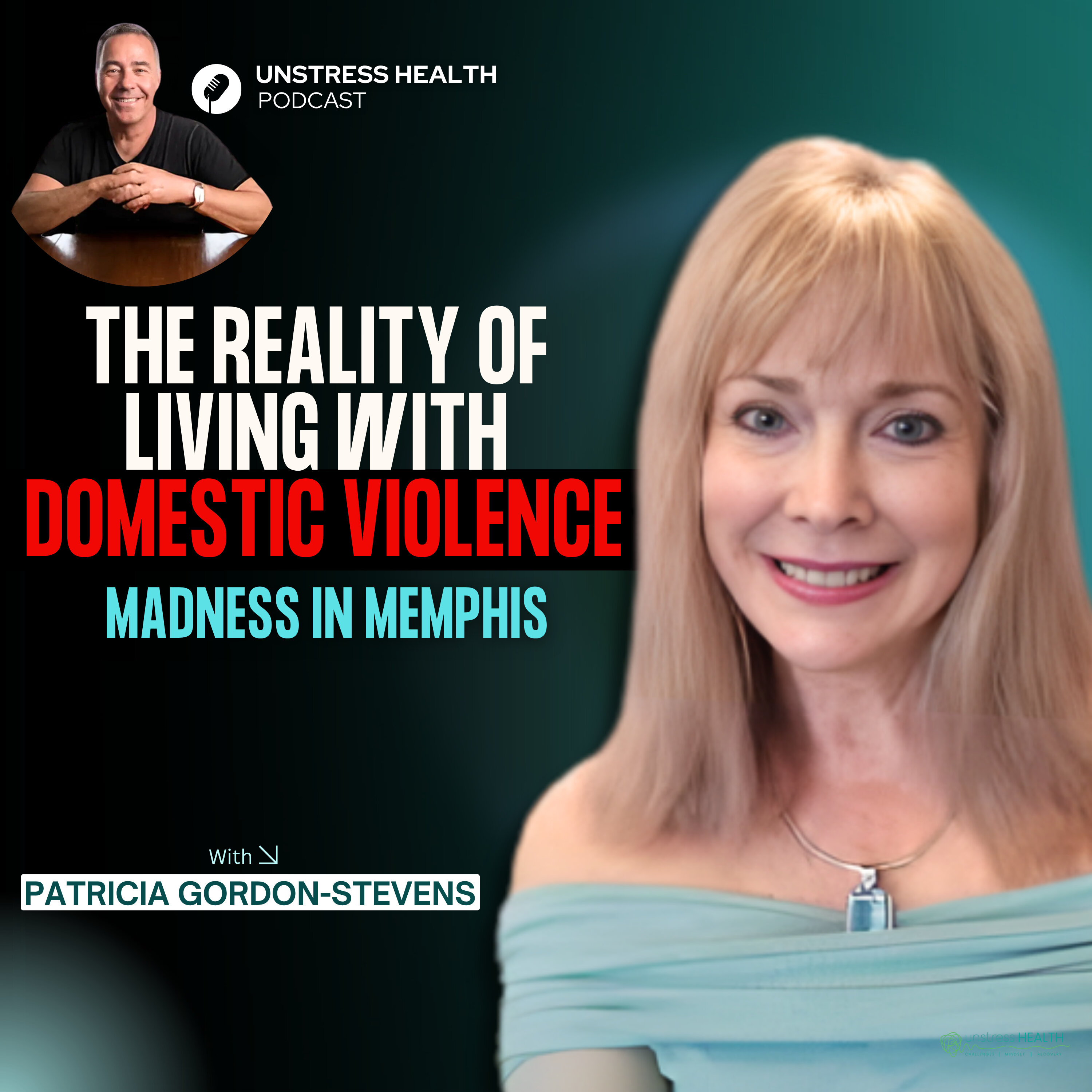
Breaking the Silence: Understanding Domestic Violence & Coercive Control with Patricia Gordon-Stevens
About this episode
This episode explores the realities of domestic violence through both professional insight and lived experiences. Patricia Gordon-Stevens discusses alarming statistics, the hidden nature of coercive control, and the emotional and psychological damage victims endure.
The conversation also examines why victims stay, how early life experiences shape abusive behavior, and the critical importance of awareness and support systems. Through her novel, Patricia brings these experiences to life, helping audiences emotionally connect with the issue in a powerful way.
◉ 𝐀𝐛𝐨𝐮𝐭 𝐨𝐮𝐫 𝐆𝐮𝐞𝐬𝐭:
Patricia Gordon-Stevens is a counsellor, advocate, and author dedicated to raising awareness about domestic violence. With a background in psychological science and sociology, she uses both professional expertise and storytelling to highlight the emotional realities of abuse.
Her novel 𝘔𝘢𝘥𝘯𝘦𝘴𝘴 𝘪𝘯 𝘔𝘦𝘮𝘱𝘩𝘪𝘴 offers a fictional yet deeply realistic portrayal of a woman escaping domestic violence, aiming to create empathy and understanding beyond statistics.
- Book: Madness in Memphis
✍️ 𝗔𝗱𝗱𝗶𝘁𝗶𝗼𝗻𝗮𝗹 𝗥𝗲𝘀𝗼𝘂𝗿𝗰𝗲𝘀 & 𝗛𝗼𝘄 𝘁𝗼 𝗖𝗼𝗻𝗻𝗲𝗰𝘁
Explore More Health & Wellness Solutions:
- Visit Dr. Ron Ehrlich’s Website: https://drronehrlich.com/
- Podcast Archives, Q&As, and Expert Resources
📱 𝗙𝗼𝗹𝗹𝗼𝘄 𝗗𝗿。 𝗥𝗼𝗻 𝗘𝗵𝗿𝗹𝗶𝗰𝗵
🌐 Website: (drronehrlich.com)
📘 Facebook: (facebook.com/Doctor.Ron.Ehrlich)
📸 Instagram: (@drronehrlich)
🐦 Twitter: (/doctor.ron.ehrlich)
📶 LinkedIn: (/dr-ron-ehrlich/)
▶️ YouTube: (@doctorronehrlich)
🎥 TikTok: (@drronehrlich)
🎧 Spotify: (https://shorturl.at/JqK9h)
💽 Omny: (https://omny.fm/shows/unstress-with-dr-ron-ehrlich)
📗 𝗙𝗲𝗮𝘁𝘂𝗿𝗲𝗱 𝗕𝗼𝗼𝗸: 𝘈 𝘓𝘪𝘧𝘦 𝘓𝘦𝘴𝘴 𝘚𝘵𝘳𝘦𝘴𝘴𝘦𝘥
◐ Australia (https://amzn.to/3Ug4iCK)
◐ US (https://amzn.to/3Nlx3vR)
◐ UK (https://amzn.to/3WgPUMx)
🔒 𝗝𝗼𝗶𝗻 𝘁𝗵𝗲 𝗨𝗻𝘀𝘁𝗿𝗲𝘀𝘀 𝗛𝗲𝗮𝗹𝘁𝗵 𝗠𝗲𝗺𝗯𝗲𝗿𝘀𝗵𝗶𝗽
◑ Join Here (https://bit.ly/3epjFcO)
◑ More Info (https://bit.ly/3RIubcN)
🎧 𝗖𝗮𝘁𝗰𝗵 𝗔𝗹𝗹 𝗘𝗽𝗶𝘀𝗼𝗱𝗲𝘀:
❏ Apple Podcasts: (https://podcasts.apple.com/au/podcast/unstress-with-dr-ron-ehrlich/id13337959190)
❏ All Episodes: ( https://drronehrlich.com/podcasts/)
👉 Join the 𝘜𝘯𝘴𝘵𝘳𝘦𝘴𝘴 𝘏𝘦𝘢𝘭𝘵𝘩 community and transform stress into strength. Access expert-led courses, curated podcasts, live Q&As, and more. Visit unstresshealth.com to start your journey today.
🎧 Listen, reflect, and share this episode with someone who may be struggling.
𝘐𝘧 𝘺𝘰𝘶 𝘰𝘳 𝘴𝘰𝘮𝘦𝘰𝘯𝘦 𝘺𝘰𝘶 𝘬𝘯𝘰𝘸 𝘪𝘴 𝘦𝘹𝘱𝘦𝘳𝘪𝘦𝘯𝘤𝘪𝘯𝘨 𝘥𝘰𝘮𝘦𝘴𝘵𝘪𝘤 𝘷𝘪𝘰𝘭𝘦𝘯𝘤𝘦, 𝘴𝘦𝘦𝘬 𝘱𝘳𝘰𝘧𝘦𝘴𝘴𝘪𝘰𝘯𝘢𝘭 𝘩𝘦𝘭𝘱 𝘪𝘮𝘮𝘦𝘥𝘪𝘢𝘵𝘦𝘭𝘺.
𝗗𝗜𝗦𝗖𝗟𝗔𝗜𝗠𝗘𝗥: This podcast provides general information and discussion about medicine, health and related subjects. This content is not intended and should not be construed as medical advice or as a substitute for care by a qualified medical practitioner. If you or any other person has a medical concern, he or she should consult with an appropriately qualified medical practitioner. Guests who speak in this podcast express their own opinions, experiences and conclusions.
#DomesticViolenceAwareness #CoerciveControl #MentalHealthMatters #UnstressHealth
#TraumaRecovery #RelationshipRedFlags #EmotionalAbuse #HealingJourney
#PatriciaGordonStevens #DrRonEhrlich
See omnystudio.com/listener for privacy information.
Get every episode summarized
Each time Unstress with Dr Ron Ehrlich publishes, we email you a written briefing from the transcript — the topics, who appeared, and any specific claims, with the ad reads skipped.
Email me new episodesFree for 3 shows. No card needed.
Hosts & guests
Transcript ready
438 searchable segments. Every word is indexed and playable.
Full transcript
Unstress with Dr Ron Ehrlich — Breaking the Silence: Understanding Domestic Violence & Coercive Control with Patricia Gordon-Stevens. Machine-transcribed; use the interactive transcript above to jump the player to any line.
Hello and welcome to our Unstress Health. My name is Dr. Ron Early. Well, today at Unstress Health, we're exploring a deeply important and sensitive topic that I haven't covered before the issue of domestic violence. And when we talk about domestic violence, we are not just talking about physical violence, which is a real and present danger to many people as you will hear, but also mental and emotional of domestic violence, coercive control. We discuss this all today. My guest is Councillor and author, Patricia Gordon Stevens. Now while this is a can-fronting issue, whether you're a victim, a perpetrator or an observer, I also hope it is this episode is empowering. Our intention is to discuss the issues that are both complex and compelling and offer
an understanding and a hope, perhaps also some practical insights. I mean, the statistics are mind boggling, considering that this is about reported cases. God knows what the real problem is, but the causes are so complex and deep-seated that the solutions are challenging, but we have to start somewhere and awareness and support seems like a good place to start. I hope you find this conversation with Patricia Gordon Stevens, similarly stimulating and compelling. Welcome to the show, Patricia. Thank you very much. Thank you for having me. Well, Patricia, when I saw the topic of our discussion today, I realised that it was a subject that is so important, we can't talk about it often enough, I think, really, and I haven't covered it in my podcast, so I really am looking forward to this discussion
as difficult as I think some of the things we talk about may be. But what was the defining moment in your life that led you to speak so publicly about domestic violence and then go on to dedicate your work to supporting others? I was a mature-aged student, I returned to university very late in my life and after studying psychological science and sociology through the University of South Australia, I was hooked on study and I went further. I did want to help others, I'm older, I'm 70, I've lived a lot of life, I wanted to help my community, I live in a beautiful rural regional area, COVID had hit and my husband was really, really sick. I had plans to go to table or college in Adelaide physically, but I couldn't be around people who were sick, so long story short, I got my master's through Edith Cowan University, she was the first woman to be in parliament, the university named after her, and I got my master's, and through these studies and going through professional field placement
after I graduated, I met a lot of women, I met a lot of men, I met a lot of people but there was this defining thread of women who were far braver than I, who had been through so much, felt so fortunate to be alive and the stories I was told were harrowing, absolutely harrowing, and I think one, I don't know about you, but I'm a member of LinkedIn, I enjoy the professional space, I like people in that space because they share their wins and their losses, but there's a lot of advocacy work surrounding domestic violence, you'll get up-to-date statistics, you'll see what's happening, you'll see the horrible details of yet another woman who lost her life with young children too, I felt after my studies and after going through professional field placement, I wanted to make a difference, but I didn't think if I'd fed you any more statistics, if I'd written a nonfiction
book about what's going on in the wealthiest countries in the world, I feel like those statistics are falling on deaf ears, so I wrote a work of fiction, I wrote the work of fiction because I wanted people to experience the feelings of what the protagonist Morgan Sage goes through as she flees domestic violence with her two young children, that's it. Yes, well this is the book Madness in Memphis, I think, and we're going to be talking about that, but I am interested in some of those statistics because I think it surprises people how big a problem it is, I mean we've done programs on depression and it surprises people to learn one in six Australians or on anti-depressants, so I'd be really interested if you could share with us how big an issue this actually is. Well the issue is huge and you have the same capability as I do to go to the government statistics of Australia, even the UK and the United States, we all have that capability. The most up-to-date
stats I can get from the Bureau of Statistics Reflect 2023, so they are a little bit old and you will clearly find one in four females experience or live with domestic violence and I was talking to my postmaster in Kampalda the other day and she said, that's 25%, that's 25% of women and when you flip it and say it that way, it sounds huge and it is and I don't create the statistics run, I report them. If you go into the American Psychiatric Association website, those have been updated, those stats have been updated to one in three, so the statistics are heroin and a lot of people say, well indigenous and aboriginal statistics could be higher and they are but it doesn't break it down on the general statistics of the color of the woman of the race or the culture of woman, it's just females in general, females who are experiencing domestic
violence, you can go to those areas and find those but right now this is the surface, one in four women and yes, women are monsters too, women commit crimes against males, there is absolutely female on male violence but those stats have not risen to the level of male on female violence and we certainly hope they don't all violence needs to stop. What is that breakdown? I mean, what is the statistic the other way? It's about one in seven. It's about one in seven and some can be one in eight and one in nine depending on again where you go but it's around, it's hovering around one in seven. Okay, but let's come back to the one in four shocking, one in three even more shocking and that is reported, that is a reported domestic violence, so one can only say that is probably just a baseline and the problem would be much greater than this. I mean, in your
experience and research, what do you think the under how under reported is that statistic? Oh, Ron, it's huge and thank you for even pointing that out or saying that because when a woman is sitting before a police officer, they have taken the time, both of them together to write that report. He asks questions. She gives answers. He puts the report together and then and then. She doesn't want to go forward. She doesn't want to move forward to prosecution. She wants to retract her statement. She wants to do anything she can to make it go away and that happens repeatedly out of fear, out of fear for herself, her own well-being and of course, if their children involved out of fear for her children, you know, she was brave enough to go in there. She was scared enough to go in there. She knew that she was going to be hurt further. But then she convinced out of wise. Yeah, so we have kind of three, at least three scenarios here. One is
reported case that is officially accepted as a domestic violence case and that varies between one in four, one in three, still whatever it is, it's shocking. Then the second scenario is the person who goes in, reports it and then retracts the report. Is that no longer part of the statistic? That is not part of the statistic, but it is part of the, they can tell you so many people come in and don't finish, don't finish prosecution and some of them are mid-reporting and they leave too. But you'll just see that there is a high number of unreported incidents and they can't be reported because she's changed her mind and she's left the station. That varies from the UK and from America and from Australia and I cannot speak expertly on that. But there are huge amounts of unreported cases. So do we know? Do we know if it's truly one in four women experiencing domestic violence? No, it's much higher than that. But we don't have a grasp of exactly what that is.
Yeah, but I think the kind of what I'm getting at is yes, one in three, one in four shocking, reported official. There is the group that will go to the police but then retract. But then there's the other group that haven't even got there to admit or to come out and call out the kind of behavior. That must be, I mean, this is just mind-boggling. But listen, the thing about it also, the domestic violence is we kind of easily, well, not easily, we think of it as physical violence. But it's not just physical violence. When we're talking about domestic violence, we're talking about much more than a coercive control, mental, emotional, physical, an emotional abuse. These are all part of the domestic violence. A picture, is it not? They are all a part in subsections of the domestic violence picture. It's not just about a woman applying makeup on bruises that she has, scarring that she has on her arms or her face or parts
that can be seen. New South Wales and Queensland led Australia with the coercive control laws. Yay, they did an outstanding job. South Australia has those laws coming into place too. I believe the last thing I read is that they're there, but they cannot be put into place until 2027, I believe it is, because everybody has to be on the same page. I don't know what that means. Everybody has to be on the same page, but I at least live in hope that coercive control is a part of it. And run that means people tracking other people. I mean, you may want to track your children or your teenagers. I don't know. That's a parents' own decision. But that's the person tracking another person. That's a person with all the financial control. He doles out money. He decides, he decides he or she, but he decides when you're going to have your phone, he checks your phone. It's not just the physical part. It's how he tells her to dress. And all of these little things
like this, I try to tell my best friends and family members, if a woman is in a new relationship, and you're not seeing her as much as you used to, I understand when people fall in love, you know, the birds are singing, the butterflies are about, you cannot wait to see that other person. And you do fall out of sync with your friends and family members for a while. But if it's been longer than a while, and the next time you see her, if her demeanor has changed, if her dress has changed, if he touches her elbow when she wants to speak, or if she acts like, maybe she was really independent and vibrant before. And now she's mousy. Now she looks unsure of herself. All of these things are red flags. You, we, all of us need to be vigilant and check in on our friends in a new relationship. Yes, now I was going to ask you about red flags and you've touched on it. We might come back to that later. I'm intrigued to hear you say coercive control laws are are now in
certain states. Yes. Yes. Excuse me. I'm sorry for interrupting, but yes. Those states are again and what are those laws? I know for sure. All I know for certain is new stuff wells and Queensland have coercive control laws. And a man was just found guilty. I think on LinkedIn, I read this three days ago, he was found guilty of coercive control, telling her when she couldn't could not leave the house, telling her what she couldn't could not wear, what she couldn't could not buy. Every single aspect of this woman's life was controlled and the judge found him guilty. To my knowledge, this is the first person who's gone under the new new South New South Wales coercive control act who's been prosecuted and found guilty. Because I know that I mean, coming back to the physical abuse because I'm sure I know there would have been a time in in history where men felt that if they were married to the woman that physical they could be
physical. I have sex with that woman whenever they were there's my wife. I mean, that's what it was wasn't it? But I know the laws have changed in that sense that if a woman says no, whether you're married or not, it does mean no, doesn't it? And there are laws to support that. It does to you run and it does to me, yes. But there are many people that are still not on that save wavelength or that same mindset. And I think these are very, very tricky to prove in court. I think there has to be ongoing behavior. And I think the woman, more than likely, everything always falls down to the person, the victim, the person to try to prove that this is what's happened. You know, she documents, people need to keep journals, they need to keep dates, they need to keep times. Not everybody does that in their personal life. But you're right. Everything is supposed to be consensual. Even if you're having kinky sex run, I know that's not what this topic is about. No, no, but if you're having kinky sex, if you want to try something
different, you always ask permission, you always say you always have a discussion about it first. Yeah, but I know that I think raping marriage laws did change certainly in New South Wales in the late 80s or 90s. So I think that law is in place. And now I hear coercive control laws are in place. I know the Australian of the year, a few years ago, Grace Taim championed this whole topic. So it's become really front and center. I think one of the most misunderstood aspects of domestic violence is why people stay. From your perspective, what are the deep, what are some of the forces that keep people trapped? That is such a deep and comprehensive question because it varies so much. Most of the time, it's simply a woman is fearful that something worse is going to happen. And again, double and magnify that, double and triple that if a woman has one or two
children with her and she's trying to flee with all. So you can imagine if I go, it's going to get worse. And the stats will tell you too that once a woman does flee the marital home or the home where she's living with her partner, that's when the time is tricky and the violence does escalate. He has lost control. He has lost control of the person to whom he's placed all of his energy and effort over the years. And he's really upset. And then there are women who are in the public eye, in corporations, in very high-powered positions. And it's hard to admit failure. It's hard to admit that they're thinking they weren't as perceptive as they thought. They chose the wrong person. They made a bad choice. Their marriage is fractured or absolutely obliterated. There's a divorce coming down the road. If they're in the public eye, sometimes they would rather that be private and they went away until a different time. So they'll delay. They will delay. They will
delay until they feel as though this is the right time for me to do it. I've stepped away from the public eye. And you know, you've heard before people say the higher they are, the harder they fall. Most people run, associate domestic violence with women who are poorly educated, undereducated, drug abusers, alcoholics, and that's who they chose for their life, that's who they're married to. That is not the case. Domestic violence does not discriminate. Period. I don't care what you look like. I don't care what type of family you were born into. If a man or a woman has their sights set on you to control, they're going to do their very best to get you into their little web that they're weaving. I often think about the sort of person and the background of the sort of person that would become involved in this kind of scenario from a male perspective. How can
that be possible? Invariably, the background from which this person has come. The family environment has been modeled in this way because it's often I imagine from the male's perspective seen as quite normal. There's nothing. I mean, I think the book that comes to mind says is called look what you made me do or something. Look what you made me do. I'm a perfectly reasonable, logical, rational male. The only reason I'd behave this way is because, well, look what you, the victim, made me do. Is that your experience? Is that what happens? That happens a lot. That happens repeatedly and it doesn't matter. It's not just from the male point of view. If a child is raised, all of this happens from the very, very beginning run, from the very beginning when we're babies. There can be a time that we needed our mother, our nurturer, our father. We needed someone to notice our crying. We needed to be held. We
needed to be comforted. Well, parents are tired and parents hear a lot of cries throughout the day and the night and sometimes we don't answer. Maybe the way we should have or at the very moment or time that person needed someone. That carries on. That carries on through and develops into insecurities and other things. Now, I'm not saying every time we were picked up, we're going to turn into this person who is abusive. That's not it, but it does have to do with attachment and it does have to do with what you witnessed in your home, within your family. If you see your father always putting down your mother or physically slapping verbally, abusing, well, that's what you grow up in, right? If you see mom and dad arguing all the time, it takes that moment when a young man, a young boy, a young girl, has been invited over to somebody else's house and they see mom and dad at the barbecue. They see dinner being prepared. They see a loving family. Maybe the wife is getting
that has been a drink or vice versa. They're talking. They're laughing together. They're barbecuing together. They're putting a beautiful meal on the table. People are actually laughing and talking and having a great time. Then they return home and they see their family dynamics. And nothing could be further from theirs than what they just witnessed. And that's when the penny drops. Oh, but it's already entrenched. This is how their family solves problems. When dad feels insecure, when mom feels angry, when things aren't going their way, what do they do? They lash out. They get angry. They yell. They scream. They hurt and hurt people hurt. How many times have we heard that? It's true. But there has to be a line in the sand when it stops. Yes. Well, I think that I'm not sure who I would attribute this. I think it's the Jesuits who said, show me the boy or let's say the child at seven and I'll show you the man or adult.
Let's say, but show me the boy at seven and I'll show you the man. So if the boy at seven, I mean parents can occasionally shout at a child and be angry with that. I don't think that's quite what we're talking about. I think what we're talking about is repeated behavior that becomes so entrenched that that is the normal. Absolutely. This is the way I was brought up. This is a perfectly normal, natural family upbringing. And there's nothing wrong with what I was brought up with. I think that in order to solve a problem, you really have to acknowledge, will you really have to know what that problem is first, don't you? Well, you do. And it all starts early. It all begins with that early education. All new parents need education and need help and need support in dealing with the brand new born baby too. I wish all hospitals could provide it. I wish they did provide it. It starts with early education, solving problems, dealing with difficult emotions,
takes time and patience. And it also takes someone mirroring, reflecting proper behavior to you so you can learn. I mean, whether we like or not, we're mentors for all the little ones around us, aren't we? Look what happens at sports day. Look what happens out there with parents acting the way they act on sports day. I mean, get a grip. Hi, Dr. Rhonda here and I want to invite you to join our unstressed health community. Now, like this podcast, it's independent of industry and focuses on taking a holistic approach to human health and to the health of the planet. The two are inseparable. There are so many resources available with membership, including regular live Q and A's, on specific topics with special guests, including many with our amazing unstressed health advisory panel. Now, we've done hundreds of podcasts or listening to with some amazing experts on a wide range of topics. Many are world leaders,
but with membership, we have our unstressed GLAB podcast series where we take the best of several guests and carefully curate specific topics for episodes with a jam packed pool of valuable insights. So, join the unstressed health community. If you're watching this on our YouTube channel, click on the link below or just visit unstressedhealth.com to see what's on offer and join now. I'll look forward to connecting with you. Yeah, it can sometimes be quite ugly and at the same time, on the same sideline, we have the model of parents encouraging, supporting. It's not important. The main thing is you're trying. You're doing was good as you can, but on that same sideline, we have some very ugly scenes going on and I guess that is just a metaphor for what's going on privately in people's homes. Yes, and sometimes you wonder too if they can be so blatantly out there acting in such a
horrific way in a manner that's just revolting and repulsive. If they can do that in public, what in the heck are they doing behind closed doors? You cannot even imagine, can you? I can't. I don't want to. No, and it is often I guess surprising. You talk about people in senior positions feeling embarrassed about admitting that they are subject to domestic violence, but I guess it's often people who appear so lovely. I met him. He was a lovely guy. No, I can't believe he would behave in such a way, an abusive way. That must happen in awful lot too, which adds to the complexity of it, which adds to the complexity of it. But some of these men and women, my book is about male-on-female. Some of these men have, they've already set their sights on the person, they know what they've already introduced themselves to family members. They've already been around and it made sure, made certain that they knew they're outwifest friends. And they've gone in with
this charismatic, beautiful personality, just a charmer, an absolute charmer. So when you know what hits the van, you're absolutely right. Those people closest to her are saying, that can't be true. There's no way he's capable of doing this. Oh, he's so nice. He was just here last week. We had coffee together. Oh, no, no, no. Oh, something's wrong. You've got this wrong. I think it was misinterpreted. You know, and that round work has already been laid. That's there. He knows what he's doing. Yeah, I mean, there's also a hidden cost here, isn't there on health? I mean, when someone lives in fear, coercive control of emotional instability over time, what do you see as the long term effects on mental, physical, or even spiritual well-being? What are some of the effects you're seeing? After coming through? Yes. After being subjected to and coming through. Well, we'll talk about coming through in a moment, but being there involved involved in it. Well, you first of all,
the woman is normally walking on eggshells every single day, every single moment. She's not sure. The women that I've spoken to said fixing or preparing a family meal was equal to the domestic abuse they received in their daily experience. They knew it was coming. They just didn't know when. They didn't know if it was going to be before lunch after dinner at breakfast. They never knew. It was always like you said earlier in our discussion. If you just wouldn't do what you do, if you hadn't said what you said, if you just would treat me differently, look at me differently, speak to me differently, everything, and so she can change. She will try to change. She will try to change her demeanor, what she does, but I can assure you no matter what she does, it's not going to be good enough. It's not going to be right. So women suffer. They don't know who they are anymore. They suffer a sense of loss of themselves. First of all, that goes. They have to rebuild their
sense of who they are in the long term. And then can we even talk about trust? Can we even talk about faith in other people that takes a long time? And I always encourage people to go back to some people they may have lost touch with. The ones that they were closest to long ago were they felt safe. Any connection where you felt safe long ago, if you can reconnect and start building your life back that way, that's a wonderful thing. They're already resilient. They're coming through something that's just been pure hell, but they don't feel like they've done anything courageous. They feel like they've gotten out by the skin of their teeth and they were just simply fortunate. They were just simply lucky because so many women don't get out, but they don't think they did anything special. They just feel lucky and fortunate to be alive. I mean, the look what you made me do by line also introduces this feeling of ironically guilt. Guilt for being the victim of domestic violence,
which is so shocking, but I do believe many women must feel that. They must feel what have I done wrong? What have I done to deserve this? Because that's what the message that's coming their way constantly is being conveyed, I guess. What have I done to deserve this? And there are many people, many women who had others around them saying, you're moving too quickly. I'd give this more time. I think you don't know as much as you should know. And there are some women, of course, who don't listen and you don't don't like being told what to do. And they feel completely connected to this new person and they jump in, and nine times out of 10, it can be too soon. Please, please, please wait two years if you can. Most people can't. Please at least wait over a year. Don't make any rash decisions. Please get to know someone. A person can mask their personality. And within all
of us, there's a bit of good and there's a bit of bad. You know that. But if someone is masking their personality, anything over within a year is a long, long time to keep that act up. It's a long time. You mentioned red flags and the red flags for the victim. I think you outlined. It might be worth repeating them. But you've touched on something else there about don't rush into a relationship. Play the long game. If you're serious about it, then play the long game. What are some of the red flags that people embarking on a relationship should be looking out for? Well, for goodness sakes, this is so old. This is older than I am. But if it's too good to be true, if it's too good to be true, it normally is too good to be true. I mean, if every day feels like fantasy land and fairy land, and this person is just just blowing your mind with all of the antics and all of the
things that he's doing, that steam, that energy is going to run out. Okay. It's going to. If he wants to know about every aspect of your day, because he cares so much, he's concerned, and he loves you so much, he just needs to know everything that's going on. I want to hear about every part of your day. Well, no, we're still individual people. We are individual people joining together to become a couple, but that doesn't mean that every single aspect of your day is to be owned by your partner. You have space. I hope you have space. We all need space. We need to regroup and to recharge and to be alone. We don't have to spend every minute of a waking moment with the person we profess to love. If you want to, that's fine. But make sure it's because you want to, and you're not being forced to. We don't have a choice. Well, let's talk a little bit about coming through this, because we do want to be hopeful, and the point of this is not just
to identify a problem, although I'm intrigued to hear a little bit more about your book, a madness in Memphis, but I will come to that. But once someone has escaped an abusive relationship, and that escape is easier, I'm sure said than done. What does healing look like? What should people be looking towards? What should people be looking towards? They should, first of all, feel safe. The moment they're out of there, you hope that their first feeling when they wake up the next morning is one of safety. Safety and calm. Taking a great big sigh of relief that they got out of a place that was very precarious and dangerous. It looks like hope. It looks like, and what is life without hope for any of us? I mean, we have hope right now that this world is going to turn around into a safe and peaceful place for every country. People are scared to death,
and people are living on to threads of hope right now. That woman who's just left is hopeful that she can return to a place of peace with her children and just know a simple life where she's not living in fear every single second. And you're absolutely right. It's not something that's easily done, and I tell everybody that women need a circle of support or a tribe to help them do it. If you think you could just walk out of that door and everything's going to be fine, wherever you land, he's going to find you. If you don't have a circle of support, if you're not being hidden, if you're not being taken to an unknown place, he's going to find you, and it's going to be worse. So if you don't have lifelong friends or a huge family that can help protect you or put you in a safe room or a safe apartment or a safe house or a country home. I tell everybody if you have a second home or a country home, if your parents have a country home, if there's a place, you can put a woman and their two children for a week, for two weeks,
so they can freeze and make a plan, you could be saving someone's life. So they look forward to taking baby steps day by day and they want those steps to be safe. Because by the very nature of what we're discussing domestic violence, we are talking about individuals, mostly men in this situation, who have a history of violence and coercive behaviors. So not about to turn around quickly going, oh my, I look so sorry. Yeah, okay, totally get why you don't want to be with me. All good. See you later by. I mean, I think they have things called AVOs. What does that stand for? Anyway, you know what I mean? Stopping people to come within a restraining order. Yes, yes, yes. Yeah, it would be wonderful if they could immediately admit and see. Yes, but that's not the case. Because they've lost control.
And when you lose control in certain minds, you become completely unstable and paranoid and you've got to get that control back, whatever it takes, you've got to get it back the way it was. How does the restraining orders work? I mean, in your experience 50, 50? Well, that's what I was going to say. Is it kind of a 50, 50 hour half the time they respect that order, but half the time they don't? Well, what is there? I could not answer that question. That is a great thing for me to try to find some stats on to because everything we read about when we read about these unbelievably heartbreaking stories, there was a restraining order and he just marched right through it. And now what the advocates, especially on LinkedIn are asking for the judges to do is not let them out if they if they've been brutalizing. If they physically have hurt the woman, why are they getting out on bail? Make those days in jail longer. Don't let them out within 48
hours, 24 to 48 hours. They're already revved up and angry enough that they're behind bars. They need more time behind bars, whether it's to calm down or whatever. That's a great question. I need to do more research on. I didn't mean to put you on this spot. No, no, no, no, but I just know. I just think they don't work. In most cases, we know that there's already been a restraining order out and then a woman is dead and their children are gone. Yeah, yeah. Well, you've worked with so many people who have, I presume, rebuilt their life after profound trauma. What gives you the most hope about human capacity to recover and thrive after experiences like this? The women I have met are magic. The women I have met, I have listened to stories where I felt like I'm not sure if I can stand up straight again. I'm not sure if I can get my breath back again. I need to go out and absolutely kiss mother earth and be grateful. I'm thankful for all the beautiful people in my
lives. There are women who just look at it as it was a horrible experience. I made a pretty rotten mistake and they blame themselves. You know, they have to find a way out of not blaming themselves. That's a long journey for them, for most of them. But, but they do know, because they've experienced other really decent people in their lives, that there are decent people out there. And they do take, like I said, baby steps to in order to trust people again, go back and reconnect with people that meant a lot to them in their lives. Building new relationships don't happen immediately. Most people revert back to their families and to their lifelong friends. And they like to fill in that safe cocoon for a while. But they see that there's another side to life. And that's what they've been waiting for. And they're heading towards it. Whether it's moving state, interstate, moving places, whether it means going back to university, going into a new
profession, they want a new, they want new beginnings. Yeah. Now, you have written, you mentioned this book, Madness in Memphis. And it's not, it's, it's a fiction, right? Read based on a lot of fact, I'm sure. Tell us a little bit about why you chose to do fiction and tell us a little bit about the book. Well, I did, my mother, my gorgeous mother, Judy, Reston piece would probably really have preferred that I wrote a nonfiction book. I mean, I was fresh out of college at a university at my old age of, I think I graduated at 68, but I just feel as though all those stats have fallen on deaf ears. And I thought, what if I put the experience out there? What if a person came away knowing exactly what it felt like to be in Morgan's Sages shoes? Morgan's sage is the protagonist. She has two young children, Ali and Opal,
whom she brought into a second married, she'd been divorced for a while. And she has a beloved family member named Dixie, white furry, four-legged. And they go through the most unrelittless amount of terror. And her, her circle of support, who is her best friendly, her mother cat, her brilliant work, colleague Antonio, and her very warm, wise and compassionate new attorney Ash. They witness everything. They see this ongoing. And it, it's like she can have one day where she's at peace and everything is fine and beautiful. And then the next moment she's climbing up a mountain of mud. She goes to the mountaintop, she slam down again. And I purposely wrote the book at Christmas, Ron, at the Christmas season, because monsters do not care if it's Christmas. They don't care if it's Easter. They don't care if it's your birthday. Monsters are going to behave the way
they want to behave any day or hour of the week, month or year, because that's what they do. They have to get what they want when they want it. So you, the reader, will come away with a real feeling. It's dark. It is dark. And it will give you the chills, but you will also see a beautiful undercurrent, a love and care and connection running throughout the book. You will be cheering for Morgan. You want Morgan to get away from this monster. Okay. Well, that's a kind of spoiler alert that our protagonist comes through, comes through this trauma. And there is hope, which brings me to my last question, because if someone suspects a friend or a family member is experiencing domestic violence, be it physical or mental, and in fact, physical may be easier to spot the mental, really, isn't it? But still, what is the most helpful thing that a person can do? Or, and also at the same time, what should they avoid doing? So what can they do and what shouldn't
they do? I have said this before, please, we all need to be vigilant. We need to be that friend. We talked earlier about if you're not hearing from them as much as you used to by text or phone call. If this is a dear friend of yours, go and knock on the door if you have to. If she's not answering or returning your calls, knock on the door and say, this is my friend. I need to see her. What's going on? If he answers, if he has his arm over the door and says, oh, I'm so sorry, she's not feeling well. Oh, I'm so sorry. She has a headache. Oh, I'm so sorry. She cannot come to the door right now. If you feel safe enough, you just push on through and say, oh, sorry, but she's my good mate. I have to see her. If you don't, well, then that's time to retreat and go get a tribe. Go get, go get people. I don't know if you can get the police at that time or not just because your friend's not answering the phone, but you can get a group of people and you can go back and say, we need to hear from you. We need to know that you're okay. And of course, she's going to be in front of him if he's there. So she's going to act completely different than she would if something's going on.
If you had her by herself. So you just have to be vigilant. You have to continue to call and text and reach out. And one, sometimes we'll ask women, especially strong and professional women, are you okay? Is everything all right? Are you scared? And for the first five times, they may say everything's fine. Thank you. But on that sixth or seventh time, they may say, I am scared, it's hell. And I don't know what to do. Please help me. So it's up to us to pay attention. Well, Patricia, thank you for bringing this to our attention. And we'll have links to your book, of course, on webpage. But thank you for sharing your knowledge and wisdom with us today. Oh, thank you for having me, Ronald. I really enjoyed meeting you. Thank you. Well, just as every individual is different, every individual situation is different too. And
there are clearly varying degrees of this disturbing issue above domestic violence. And as I said, not just physical, that is shocking and disturbing enough, but also the coercive control and the mental and emotional trauma that goes with it. And the feeling of guilt that so often accompanies women who are victims of this, it is often women. And the statement, look what you made me do. I am such a good person usually, but you made me do this. I didn't want to do it, etc. Well, maybe they did. And that's even more disturbing. So I think the first thing in solving a problem is actually to identify it. And I hope that this has at least contributed to a conversation that is going on increasingly more often in our community. And yet, as I said in the episode, show me the boy at 7 and I'll show you the man. I mean, men who perpetrate this kind of domestic
violence have often experienced it. It's been normalized where abuse is just a normal part of their upbringing. And they think there's nothing particularly unusual or disturbing about that. So it is a really complex and deep-seated problem. Look, on a brighter note, I would like to invite you to join the unstressed health community where issues like this can be discussed and support can be provided. I mean, you know, there are professional organisations that provide that. I'm talking about a community of like-minded people that are there to support each other on a journey to better health. So join the unstressed health community. I hope this finds you well until next time. This is Dr. Ron Erlich. Be well. Feeling stressed, overwhelmed. It's time to unstress your life. Join the unstressed health community and transform stress into strength, build mental fitness from self-sabotage to self-mastery. And together, let's not just survive,
but thrive. Expert-led causes, curated podcasts, like-minded community and support, and much more. Visit unstressedhealth.com today. This podcast provides general information and discussion about medicine health and related subjects. The content is not intended and should not be construed as medical advice or as a substitute for care by a qualified medical practitioner. If you or any other person has a medical concern, he or she should consult with an appropriately qualified medical practitioner. Guests who speak in this podcast express their own opinions, experiences and conclusions.
More episodes
More from Unstress with Dr Ron Ehrlich

Walking Your Way to Vitality with Dr. Jacques MoraMarco & Dr. Yun Kim
Unstress with Dr Ron Ehrlich

Is Cancer a Parasite? A Radical New Perspective with William F. Supple PhD
Unstress with Dr Ron Ehrlich

COVID, Immunity & The Truth We Missed – with Prof Robert Clancy
Unstress with Dr Ron Ehrlich

From Food Critic to Regenerative Farmer: Rethinking What We Eat with Matthew Eva...
Unstress with Dr Ron Ehrlich