About this episode
Fresh Air is made possible by:
Subscribe to our free weekly newsletter
Follow us on Instagram
Subscribe to our YouTube channel
Check out the Fresh Air Archives
See pcm.adswizz.com for information about our collection and use of personal data for sponsorship and to manage your podcast sponsorship preferences.
NPR Privacy Policy
Get every episode summarized
Each time Fresh Air publishes, we email you a written briefing from the transcript — the topics, who appeared, and any specific claims, with the ad reads skipped.
Email me new episodesFree for 3 shows. No card needed.
Hosts & guests

Transcript ready
428 searchable segments. Every word is indexed and playable.
Full transcript
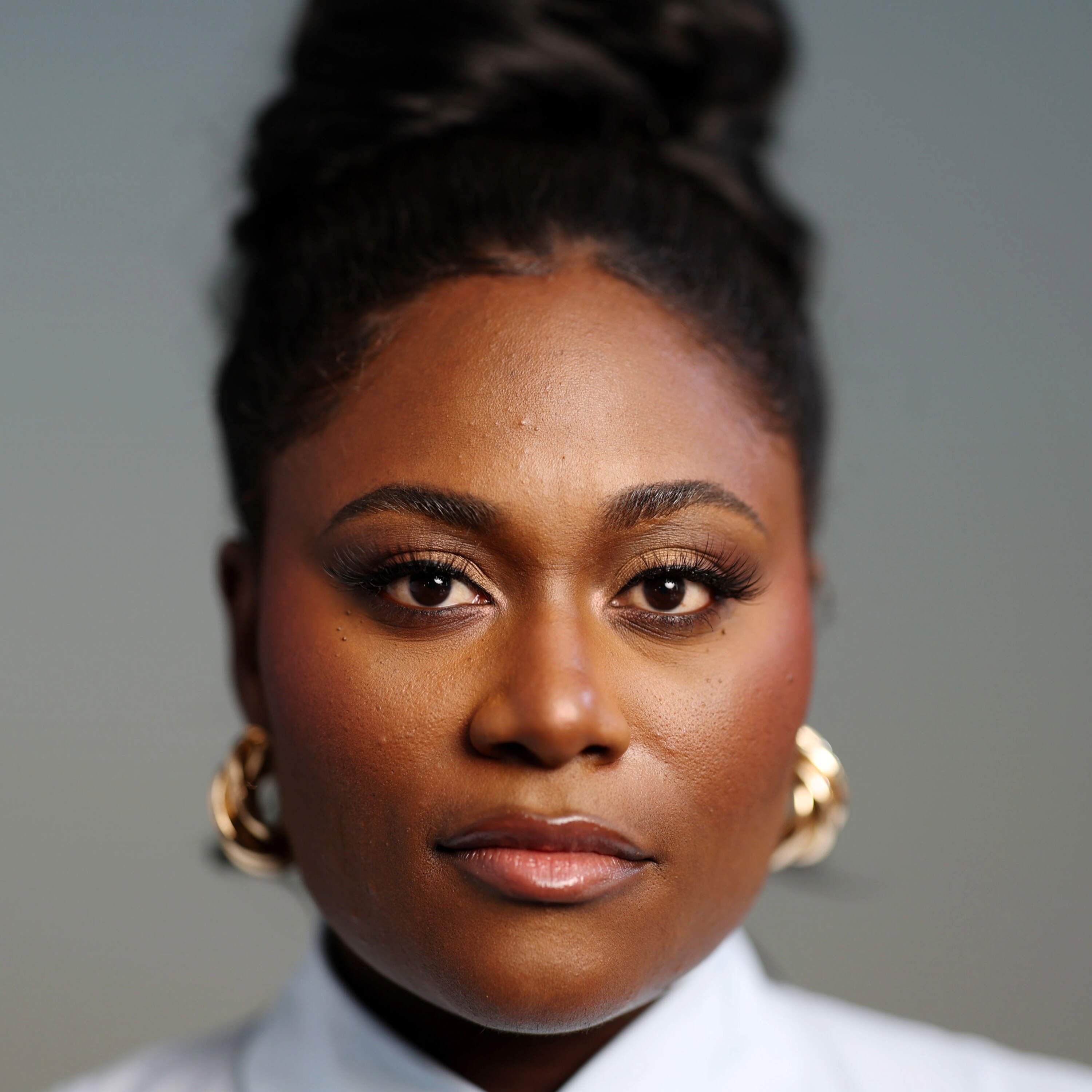
Fresh Air — Actor Danielle Brooks has blessings to count. Machine-transcribed; use the interactive transcript above to jump the player to any line.
Up first from NPR News is your way to slow down a fast moving world and make sense of it, which is just what tech leaders say they need right now. One of the big stories this week is that tech leaders say they want to slow down AI development. Also, the latest fighting in the Middle East could push oil prices even higher. Start your day with what you need to know on up first. Listen, on the NPR app or wherever you get your podcasts. This is Fresh Air. I'm Tiri Gross. When Danielle Brooks started appearing in the Netflix series, Orange is the new black as the character Tasty. She was astonished to find she was recognized wherever she went. Orange was about women in prison and Brooks played one of those women. When the series premiered in 2013, Brooks was a recent graduate of Juilliard and Netflix was relatively new to producing original content. Two years later, while still filming Orange, she learned she'd gotten a role in the Broadway revival of the Color Purple, a Sophia, the character that Oprah Winfrey played in the 1985 film.
Rather than giving up one of those roles, she continued to shoot Orange while also performing on Broadway. The Color Purple had special significance for Danielle Brooks. The original production of the musical was the first Broadway show she'd ever seen. It convinced her she wanted to act and that there might be a place for a black woman like her. She was nominated for her Tony for her performance in the revival and was nominated for an Oscar when she played Sophia again in the 2023 movie adaptation of the Broadway musical. While preparing for this interview, I learned she played the beloved gospel singer, Mahalia Jackson, in a 2021 biopic for the Lifetime channel that's now streaming on several platforms. She gets to do a lot of singing in that and as you'll hear later, it really shows off how emotionally and physically powerful her voice is. Brooks started singing and acting in church. Her mother is a minister. Her father is a recently retired deacon. Brooks was also recently in a Minecraft movie and in the series Peacemaker.
Now she's in a new indie film called If I Go Will They Miss Me. It's about how one family's life is changed when the husband and father is released from prison and returns home emotionally distant from his wife and two children. Brooks plays the wife and mother who has a steady job and is holding the family together with no help from her husband. Brooks and John Batiste are two of the executive producers. The credit music is John Batiste singing This Bitter Earth. Daniel Brooks, welcome to Fresh Air. It's such a pleasure to be able to talk with you. Oh, Terry, it is so lovely to speak with you too. Thank you for having me. My pleasure. So, you know, in Orange is the new black you play a prisoner and now in this new movie you're playing the wife of somebody who's been in and out of prison. And in Clamancy, the father of your child is on death row. So, this is like the third that I'm aware of the third movie related to prison that you've been
in. And I wonder if you see that as related to mass incarceration, like a reflection of mass incarceration. When you put it like that, I'm like, man, I need to do play a, I don't know, royal queen or something. Well, you come close and my hell, yeah. Hey, I love that. Yeah, for sure. I mean, yeah, this is the world we live in. You know, and for me, I'm always searching, reaching for honesty and truthfulness in what is in this world. You know, I feel like I've been able to do a lot in my career, but yet we do find ourselves back in places like this. You know, when you mention like playing a woman that's incarcerated, when it comes to Orange is the new black and playing tasty this inmate, there was just so much
complexity to who she was. And to be honest, Terry, I didn't want to play tasty in the beginning. Why not? Because she was an inmate and because I was nervous coming out of Juilliard 21 years old, like, oh my gosh, I'm about to play it inmate. And what is that saying about black women, you know, what viewpoint am I putting out about black women? But then I remember my audition in the casting director saying, you know, I know what's on the page, but she's very lighthearted. She has a lot of heart to who she is, joy to who she is. And I was so excited because I was like, that's the direction I was already planning on going with her. And you see me singing, you know, in the shower, you know, in the beginning as the first scene is me singing, tell me something good.
And it's just that's what drew me to her. It was more to her. She was a young woman who actually did not commit the crime. She was in foster care. You know, she started a riot, you know. There was just a lot to the person, you know, and I find that to be true with clemency. And if I go, will they miss me, especially? So, John Batista is one of the executive producers of the film and he's things the credit music, the spit of earth, which Dynawashin Tenon had a popular recording of. And wondering, I know he went to Juilliard. Did you know each other in Juilliard? We did. And you recorded together also. Yes, we did. John Batista and I were at Juilliard at the same time. And we also graduated the same year. I remember watching him in the halls. And he was a
hoot. I mean, this man would be running around with that small miniature piano that he plays in his hand blowing it, you know, as like if he was on a line in New Orleans, you know, with his friends behind him jamming in the cafeteria. And I was like, how the heck is this man? You know, he was just so such an like artisty, you know what I mean? Like artsy fartsy kid from New Orleans. Did you introduce yourself to him? I think we just knew each other because we were black kids at Juilliard. It's not but so many of us, you know what I mean? And so I actually remember we would do these like crossovers. So it's where like the drama division would hang out with the musician. So he was in the jazz department and we would jam. And I remember like, John would play something and they asked one of the actors to sing with him. And I remember that was the thing. So it was like a call and repeat
type thing where he would play like a doodle doodle doodle and I would repeat it with my voice, you know. So I just feel like we bonded from that and then you know, we had like the Martin Luther King days where all the black people would get together and others too and put on a show and in reverence of MLK. Like so we just found each other, you know what I mean? We built that community. And then from there on, like I did an EP of my own music called For and I asked John once we graduated if he would be on that and he did. And then he asked me to do a Christmas song with him for Spotify and I did and and then we did Color Purple together. You know, like it was just so it's just so many like full circle beautiful moments that we've been able to share. So I want to talk about your singing. I want to play Hell No from from the movie version of the Color Purple. But first,
what was your audition for the Broadway revival when you first got to play? Oh my gosh, Terry. So I mean, it's it's layered. Okay. Because I had seen the Color Purple on Broadway, 15, my dad had taken me and you know, I go to Juilliard. There was a big deal because you were from Greensville, South Carolina. Yes. And so you were doing an internship in New York. And you got to see the color purple. Yes. Your first Broadway show. Yes, took me to the Broadway show, Color Purple, because to be honest at the time. And that's all another conversation. But that was the only black show outside or considered the only black show outside of the lion came, which is actually about animals, played by black actors. That was on Broadway at the time. And so, yeah, my dad took me. I was in awe. My jaw was on the floor. Tears falling down my face. I was like, this is what I want to do. So what was your audition song? Oh, Hell No. Oh wow. That's
I did. And remember like, was that your choice or their choice? No, that's their choice. They want to make sure that that's what we was singing. Yeah, for sure. But I remember like they had a table with the director and producers. And I went straight up to that table and I tapped that table. And I was like, oh, my life, I've had to fight. And I just remember them being like, whoa, and I could feel them being like, yeah, this is ourselfie because of course, so fee would have enough cajunas to come up to the table and get right in our face. You know, that's great. So let's hear the real thing. So this is Sophia basically saying to Cele, if a man raises his hand to you, Hell No, fight back. Don't take it. All my life, I've had to fight. I had to fight my daddy. I had to fight my brothers, my cousins, my uncles too. But I never, never, never, never, never, never, never find out. I'd have to fight.
In my own house. I feel sorry for you to tell you the truth. You remind me of my mama under your husband's thumb. Now, you under your husband's foot. Oh man, I love that. You sound so good in that one of the hardest things in musical, I think, is to get from the dialogue into the song. And I'm wondering what that was like for you. Like what? How you do how you try to make that transition from dialogue to song. Well, I think, you know, we're taught when it's time to sing, it's the most heightened moment
of the section, you know, whatever part. It's too big to express just through the spoken word. Exactly. And so I think that just helps, you know, you as an actor to know the movement of the piece. You know, and that was exciting to get to do that in some because I'm not a theater girl, like people, musical theater girl, like people think Terry, you know, that was, I had done only one other musical before that. And that was rent, you know, and I didn't grow up. Where were you in rent? I was the soloist, the 525,000, 600, the main soloist in season of love, who hits the high note. Oh, no, this was in Ithaca, New York, at a theater, a regional theater. Yeah. And I didn't grow up, you know, listening to all the musical theater. So I was a church girl. Maybe you sang in church, right? Yes, I sang in church from four, three, four years old.
I was singing in church. And wasn't much of a soloist to say. I was definitely a part of the choir. And there's video of me singing in church when I did have solos. And you can see I'm so shy. Like I literally had the lyrics, like the words, you know, written on a piece of paper. And I'm looking at them because I'm so scared that I'm going to forget them. Super shy back then. How did you get from super shy to singing a song like Hell No? God truly like, I feel like, you know what? This is what I'll say. For me, when I am playing a character, I get to escape. And that is my favorite place to be because I get to not be Danielle. When someone would ask me to sing as Danielle, it would terrify me. But ask me to sing in Sophia, ask me to sing as Mahalia. I got you. Because it was my
way of like hiding behind the character. So let's talk more about singing and church. So you grew up singing in church, mostly in the choir, but starting when you were like three or four. What were some of your favorite gospel songs? That is such a good question. I've had some hills to climb. I've had some weary days and some sleepless nights. But when I look around and I think things over, all of my good days, how'd we my bad days. And I won't complain. That was one of my favorite songs.
What made it one of your favorite? Well, when I was six, or six or seven, I don't remember. It was my first church solo. Now, what does a six, seven year old know about complaining in good days and bad days? I don't know. But that was my song. And then when I became an adult, I understood with that song meant. That's why I love that song so much. Because we do have good days and we have bad days. It's unescapable being a person, right? But it's also perspective at times. It's like how are you choosing to see those days? And I choose to do as least amount of complaining as I can. And that's what that song is really saying. It's like how can you just see the good when you look around and think things over and gratitude should always lead the way? We were talking earlier
about being in Juilliard and you got there with the help of $20,000 that your godmother left for you in her will. And I think she died not long before you got accepted to Juilliard. Who was your godmother? Who was so generous? Her name was Annie Edge. She was so spectacular to me. She was an older woman probably in her 60s. And we just bonded. I asked her to be my godmother at five and I met her at church. And so my mom said, yeah, we were stuck at the hip. I mean, I would spend the night of her house. She taught me what an English muffin was. I taught her to forget people that were behind her when she's driving in there asking her to drive faster by honking. I was like, don't worry about them, Ms. Edge. We were tight. And she unfortunately passed away from cancer
when I was 15. And now it hard for me. That was one of my first losses. I experienced death in a personal way outside of losing my mother's mother. So this was a heavy one for me. I was tight with her. And I had no idea that she had left $20,000 in her will from my college education. And we needed that money, Terry. I was the first born and my parents were lower middle class at the time. And they worked really hard but wasn't able at the time to save money for my college. And had expectations at the time for me to not study it. They didn't know that their kid was going to want to go to Juilliard. They were thinking maybe a state in state school where you can
get funds from the state, make it cheaper. But yeah, their baby girl had big dreams. And luckily Ms. Edge saw something in me and made that generous donation to my education. And I have something called the Annie Edge Scholarship which the Annie Edge Scholarship I started over five years ago. And it's you know you have to apply. And it was only for my you know the kids at the church who were getting ready for college. You know and so yeah I just am so thankful for Ms. Edge and that's my way of honoring her. Did Ms. Edge have children? She did not. I was her child no she did not have any kids wasn't married. Yeah it was just her. How did your mother feel about that? Do you think she was at all jealous? No I think my mother knew that it takes a village and I think
she was so grateful that I had somebody like Ms. Edge and I'm grateful that my mom you know functions like that because there are parents who do get jealous that their kid doesn't run to them first for whatever. But my mom took it as like oh thank God she has somebody that I can trust that I know that is instilling good things in her that she can lean on. And I treat my daughter the same way you know I can't always be there because of the line of work that I do. I always make sure that my presence is known that mommy is here but I can't always physically be there. And so I because of how my mother treated me with Ms. Edge I do the same thing and I am very encouraging of you know free uh connecting with other positive women. Yeah free uh yeah. If you're just joining us my guest is Daniel Brooks. In the Netflix series Orange is the New Black she played Tasty
and the Broadway revival of the musical The Color Purple and in the 2023 film adaptation of the musical she played Sophia. She also appeared in a Minecraft movie and won a Critics Choice Award for her role in the series Peace Maker. She co-stars in the new film if I go will they miss me? We'll be back after her short break. I'm Terry Gross and this is Fresh Air. This message comes from BetterHelp. Imagine carrying a backpack every day. Inside it every conversation every mistake every expectation. It is easy not to notice how heavy it is until someone asks if you want to put it down. Sometimes feeling better starts exactly like that. Better isn't one size fits all. Better is personal. It's therapy tailored to the individual to help lighten what you carry. Match with a therapist who truly understands. Visit betterhelp.com slash NPR. Looking for love? One New York event promises to find you your perfect match using volunteer, though not affiliated with the actual software company. They can sue me. I could lose
everything but it would all be worth it if at least two people here have a spark. So no pressure. The facts, myths and dark jokes surrounding volunteer. Listen a plan of money on the NPR app or wherever you get your podcasts. On NPR's Wildcard podcast actress Jillian Anderson says she's looking forward to getting old. There is part of me that has always slightly fantasized about being in a in a home. Watch or listen to that Wildcard conversation on the NPR app YouTube or wherever you get your podcasts. This is Fresh Air. I'm Terry Gross. Let's get back to my interview with Daniel Brooks. She co-stars in the new film if I go will they miss me. In the Netflix series Orange is the new black she played Tasty. In the Broadway revival of the musical The Color Purple and in the 2023 film adaptation of the musical she played Sophia. She's also known for her roles in a Minecraft movie
and for the series Peace Maker for which she won a Critics Choice Award. She played gospel singer Mejelia Jackson in a biopic for the lifetime channel that's now streaming on several platforms. Brooks's father is a retired deacon. Her mother is a minister. Did you hear a lot of Mejelia Jackson when you were growing up? I did. I did. Yeah she definitely was in our home for sure. My mother's a singer as well. So when you got the part as Mejelia Jackson in a movie that's officially called Robin Roberts presents Mejelia. Your parents must have been so excited because your mother is a minister and your father was a deacon. Yes. The church was so excited and you know the movie actually dropped during the pandemic. So what we did was we did a private screening for the church
that I grew up in in Simpsonville, South Carolina, Bethlehem Baptist Church and everybody stayed in their cars and we got a huge projector out in the parking lot and everyone listened from a radio station and watched it like old school movies. They watched it in their cars and that was so cool. This place that I really do think helped me to love the theater. Believe it or not, like the church is where I think my love for theater came to be able to share something with them that I knew was going to be meaningful. So I want to play you as Mejelia Jackson from the soundtrack of the movie and what I want to play is my God is real. Oh wow. You sound great on this. So let's hear it. This is my guest Daniel Brooks. Mmm.
There are some things. I may not know. Oh. There are some places. Dear Lord, I cannot go. But I am sure of this one thing. That God is real for I can feel him in my soul. So that is a beautiful song and you sing it so well. What did you have to do with your singing to sound
like you were Mejelia Jackson for the movie? Terry. Ooh. We worked on music for probably two weeks I think because I did sing all of that. And the hardest part was getting rid of the things that I was taught at Juilliard to be honest, which is one of the things that they taught us, you know, gave us in our toolbox is like knowing when to throw, you know, the baby out with the bath water is one might say, you know, letting go of the technique when it's time. And that's what I had to do. Like so, for example, you know, when she says, um, cheering, you know, I would be singing children and I had to stop myself and like, why am I saying children? She would say cheering, you know, um, or just like not over articulating things. I'm going to meet Abraham and Isaac, you know, normally I'll be like,
I'm going to meet Abraham and like articulating all of the, you know, confidence and stuff like, I had to really break it down and kind of like a Shakespearean way like I would with with Shakespeare and, you know, you have Iambic pentameter and things like that. And you just have to, it's like a code. You got to create a code for yourself to understand how this woman speaks and where she speaks from and how she uses language, you know, and that's the thing. Like, Mahalia sings all the way down in her feet, you know, so when I would do this, I would, I would be barefoot when I was in the studio, you know, because you really do need to be that it's that low. To be honest, she sings from another place too, but I'm trying to be respectful, you know, but that core space is where she's saying from.
So you grew up very church with your mother and minister and your father and Deacon. And was it, did you got what the feeling that your parents had a special connection to God? Oh, for sure. I mean, my mother was a praying and still is a very prayed up woman. She would be the one at 6 a.m. You would hear her downstairs in the living room, speaking in tongues, praying, talking to God, you know, it was yeah, she woke you up in prayer and at the time, you know, we had two floors and she would turn up the music like you had speakers in each room, even though we was not rich, even though that sounds very rich. We had these speakers in our house and she would play gospel music on Saturdays and probably eight in the morning to wake me and my brother up to clean the house, which sounds so old school now that I'm saying it back to you
because nobody's really asked me questions like that. But and my dad was too, you know, he wasn't as fourth showing if that's the right word to say or like he wasn't as showy with his relationship with God. Like he went to church all the time and obviously was a Deacon, but like my mother was the one you saw like in worship all the time and still is. Did you speak in tongues? No, no, not at all. Like no, definitely did not. I would say I do feel that I have a wonderful connection to God, you know, in the spirit and still practice Christianity and go to church on Sundays with my family, you know, and I am and I listen to gospel music like no other genre because it just suits my soul and I feel like gospel music has always been that for me.
My help mate in life. So feeling that your parents were kind of had a special relationship with God and were like God's representative or close to God. Did it make you like an awe of your parents to do feel like you couldn't misbehave because that would be misbehaving in front of God in a way that people's regular parents who weren't leaders of the church wouldn't feel? Yeah, for sure. There was a lot of pressure as a kid to be perfect. I think that's like probably one of those things in my adulthood. I'm still going to therapy for. You know, it's like this sense of perfection. Not getting anything wrong and you know, the bible says, honor thy father and mothers that your days may be long on this earth. And so that rang very true in my house. You know, we needed to do what our parents wanted us to do. There was
no way around it. You know, and if you had slip ups, it just the guilt that weighed on you. You know, it was heavy for me. And I don't know if it stemmed from me doing pageant set church, you know, and they taught you how to hold your feet and how to stand. I don't know. It's just this perfection that was built in me pretty early. And maybe it's being the first child, you know, and the responsibilities of being a good example to my brother. And say I respectfully say this, you know, but I think my mom really cared a lot about what others thought. And I say respectfully, mom, if you hear this. But I think that had a lot to do with it is what do people see? And how are they perceiving you? And I maybe this is a southern thing. You know, maybe it's not just
my mom thing. But I don't think it's just your mom thing. Yeah, a lot of people, right? Yeah, I think so. Yeah. What did they want you to do that you didn't want to do? Oh, that's a deep question. Well, one thing, you know, was there was a fear of me going to Juilliard. My mother was really scared for me and my dad said to me, he's like, I want you to follow your heart. And so I did, you know, I went to Juilliard and she was just scared of like, you know, being in New York and her child leaving at 17. And then she was nervous about me doing oranges and black. And then my father again was like, follow your heart. And I did. And that changed my life. You know, but then there was that fear of like, what is she being exposed to? You know, there's a lot, the subject matter of lesbians and gays was all up and in between oranges and black. So that was a fear, you know, of what I was being taught.
Hell of language. Fowl language. I mean, we had drugs. Come on, let's go. I get you going. Yeah. So yeah, mama was shooketh. But she cat over it. She really started to see the beauty of the show as time went on. Your first scene in orange is the new black where, you know, the person who story we start with is in prison. And then everybody gets their stories. But, you know, it's based on the character whose memoir the series is based on. But anyways, so she gets in the shower, your character comes by and makes comments about her body and gets into the shower naked. And I know when you read that, you thought, oh, I can't, I can't do naked. And I think you already know I was like, I can't do naked. Right. And you're probably thinking about what your parents would think. But, but you're not really naked. I mean, we don't see your body.
We know that you're in the shower naked. So did you tell the director, I want the role, I'm can't be naked. You can't see my naked body. I waited until I got there. And I was terrified because I knew it was in the on this page. You know, it was like she takes her clothes off and gets in the shower. And I think they, I think low key, if I would have done it, they would have kept it. Like if I would have said, all right, here's, you know, what I'm doing it, they would have kept it. But I remember our director's name was Michael. And I talked to him about it. And we found a solution. And do you know how I felt like this weight lifted off of my shoulder when we came up with that solution where we did not have to be topless? I was like, wow, like because when you're coming into this industry, you hear all of these stories, you know, and, and all of these sacrifices people make to get the job, you know, and so I was scared. I was like,
I don't want to enter this. And this is the start for me. It's like my first scene. Now, I'm just going to be known as the girl who takes the clothes off. Like I was saying, I'm an inmate. Like, what am I doing? But it was the best decision ever that I could have ever made from my career. If you're just joining us, my guest is Daniel Brooks. She co-stars in the new film if I go, will they miss me? You may also know her from Orange is the new black, the color purple, a Minecraft movie and the series peacemaker. We'll be right back. This is Fresh Air. This message comes from Edward Jones, where they believe rich means opening yourself to new possibilities. That's why your dedicated financial advisor meets you where you are, helping you move forward with confidence. Let's find your rich Edward Jones, member SIPC. On the next through line from NPR, let's listen to Josh Reddick's new walk-up song. Whether you love it or you hate it, walk-up music has become a huge part of Major League
Baseball. The need to secure the attention of the fans is relentless. I thought, am I hearing things? I mean, I realize everybody's singing along. Listen to NPR's through line in the NPR app, or wherever you get your podcasts. On the latest code switch, 25 years after 9-11, Americans have gotten real used to being watched by the government from doorbell cameras to AI-powered license plate readers. If you put anyone under a microscope or any community under a microscope, you're going to find reasons to harass people or to ticket them or to arrest them. Listen to code switch in the NPR app or wherever you get your podcasts. This is Fresh Air. Let's get back to my interview with Daniel Brooks. She co-stars on the new film If I Go Will They Miss Me. She's known for playing tasty in the Netflix series Orange is the New Black and Sophia in the Broadway revival of the musical The Color Purple and the 2023 film adaptation of the musical. Brooks grew up in the Baptist church. Her mother is a minister and her father is a retired deacon. She sang in the
church choir. In 2021, she portrayed gospel singer, Mahalia Jackson, and a biopic that is now streaming on several platforms. One of the things I love about gospel songs and hymns is that so many of them are about death, about the fear of death, about the release of death, being reunited with loved ones. Some of the songs are from the perspective of being frightened and others are reassuring. I wonder if you have a favorite gospel song about death. I do miss called precious Lord and it goes precious Lord. Take my hand, lead me on, and let me stand. I am tired. I am weak. I am worn through the storm,
through the night. Lead me on to the light. So won't you take, take my hand. And precious Lord and lead me on. Yeah, that's one about death. And it is so beautiful. You sing that in the Mahalia Jackson movie. I do. And Mahalia Jackson sang it at Martin Luther King's funeral. Yes, yes, yes, such a tie-ins. And do you know that from church? I do. And it's definitely a song that I heard all the time in church. And when it was time to leave church, and we sang it at people's funerals,
I'd even think I sang it at my grandmother's funeral. If I'm not mistaken, I believe I did. Yeah, that song I heard all the time. Back in when you were 25 and you're about to be 37, so that was about a little more than 10 years ago. It was an article in Glamour magazine that had your byline and it was headline how I learned to love my body. And it's all about body image, being plus sized, your hair. And you said or you wrote by the standard definition of beauty that I had absorbed from the world around me. I had three strikes against me. I was too dark, too curly, and too fat. And you ask a question in the essay that I think is a really important one. You write if art is supposed to reflect life, why don't the people on red carpets and in magazines reflect reality? It doesn't. It doesn't. I think about all the time. I don't know. I just remember being
in rooms like Golden Gloves and I would say to myself, Terry, I would say, is there anybody in here I could change a dress with? And if you think about it, there's 67% of women that wear a size 14 or more. And that does not reflect what we see on television. Now it's starting to change and shift. You know, we're having amazing actresses out now that aren't reflective, you know, but in Hollywood, we're talking about A-Listers, big dogs, the ones that are on vogue and Cosmopolitan and the vanity fair, they do not look like me. And I think that has been one of my main goals is to be able to like bust open the box, break that thing down, and really allow this next generation
to say, wow, man, if Danielle was able to do that, I can do that. What do you think the GLP ones has done to the body positivity movement? Oh, now you get in deep. I think, and now this might be controversial, but I think it's helping because I don't think body positivity is just about like loving your body, you know, as it is even if it's big, just love it. I think you should love your body at whatever size, you know, and for me, like I've lost 80 pounds. People don't really notice, I don't understand why, because I'm very proud of it. But like I've lost 80 pounds from when I had my daughter in 2019. And there was moments when I had gained that weight and I wanted, I was hiding. I was hiding from the world when it came to social media. You know, if you go back and watch that first episode
of Peace Maker, you're going to see those 80 pounds on me. But I worked really hard. I worked super hard on my own, you know, and to got down to maybe like 60 pounds, you know, less on my body. And then I started taking GLP ones. And I'm not ashamed at first I was. At first I was like definitely what am I doing? Like is this healthy? Is this safe? And after being on them for months, I am very happy that I made that choice. You know, I feel more confident. And I think the thing that I have always preached is love yourself wherever you are. I have never said that you got to stay there. So I'm here for it. Daniel Brooks co-stars in the new movie, if I go, will they miss me? It's currently an unlimited release and will open in more theaters this Friday. This is Fresh Air.
This message comes from Edward Jones, where they believe rich is more than caring about the latest and greatest. It's also about taking care of what gives your life meaning. That's why your dedicated financial advisor meets you where you are with personalized financial strategies that help protect what matters so you can preserve your progress while creating a path forward. The key to being rich is knowing what counts. Let's find your rich together. Edward Jones, member SIPC. This message comes from Sports in America with David Green. The world of sports is filled with stories that go beyond the highlights of the game. Join former Morning Edition host David Green for Sports in America from WHYY and PRX. A weekly show featuring in-depth conversations with star athletes, coaches, parents, and the millions of fans whose lives are touched by the game. Hear about the personal and transformative moments that make fans want to stand up and cheer each week on Sports in America with David Green. Listen wherever you get your podcasts.
This is Fresh Air. Let's get back to my interview with Daniel Brooks. She co-stars in the film if I go will they miss me. She's known for her role in the Netflix series Orange as the New Black as Tasty and for her role in the Broadway revival of the musical The Color Purple and in the 2023 film adaptation of the musical as Sophia. Brooks was also in a Minecraft movie and recently won a Critics Choice Award for her performance in the series Peace Maker adapted from a DC Comics superhero series. I want to play one more song and this is a song from an EP of four songs that you recorded and this is a song that you co-wrote and John Batista is featured on it. We hear his voice very very briefly on it but what role did he play on this? Did he produce it or range it? See at the piano. He's at the piano. He came at the end on the organ and spiced up the song for me
and lended his voice like you say very lightly in the end and we kind of go back to that Juilliard feel that I had mentioned that column response at the very end of the song. And I think it's interesting given all the discussion that we had about church and gospel music that this is a secular song but it's called Blessings and it's about kind of you know being grateful for your blessings. Can you talk a little bit about what inspired the song? Hey I guess I'm really just fond of you know staying positive man like I just know that life gets tough and I guess this was my version of the gospel song I won't complain you know it's that reminder to count your blessings. I'm on my feet you know four five six no I can't for a great at the end of the day I got blessed as to count like I got so much to be grateful for
you know and I think for me I just I need that reminder you know and I want people to be reminded and the reason I want people to be reminded is because we affect each other so powerfully you know and how beautiful that is if we could just find ways to uplift each other Daniel Brooks it's been such a pleasure to talk with you thank you so much thank you Terry thank you for having me thank you for your poignant questions and you know allowing me to reflect on what life has been in my 37 years almost you know I've I've really appreciate you thank you and here you are singing blessings
that I remember count one two three I still on my feet count four five six no I can't for again at the end of the day while this blood flowing through my veins I've got blessings blessings blessings and to count when I feel unqualified and it seems like I can't make it through no matter how hot I try Daniel Brooks co-stars in the new movie if I go will they miss me it's currently in a limited release and we'll open in more theaters this Friday tomorrow on fresh air president Trump's son and Lord Jared Kushner has said peace deals are like real estate deals he's involved with both as a
US special envoy negotiating peace plans while working on private business deals with some of the same countries we'll talk with the New Yorkers Dexter Filkins about his story Jared Kushner's dollar diplomacy I hope you'll join us to keep up with what's on the show and get highlights of our interviews follow us on Instagram at NPR Fresh Air Fresh Air's executive producer is Sam Brigger our technical director and engineer is Audrey Bentham our engineer today is Adam Stanishevsky our interviews and reviews are produced and edited by Phyllis Myers and Rebordonato Lauren Crenzel Teresa Madden Monique Nazareth Thaya Challener Sison Ycundi Anna Bauman and Nico Gonzalez Whistler our digital media producer is Molly Sevee Nesper Rebordor Shorok Directs La Show our co-host is Tanya Mosley I'm Terry Gross this message comes from Granger for the ones who get it done Granger offers the professional grade products you need to get the job done with fast delivery and access
to technical product experts ready to help you meet any challenge call click Granger.com or just stop by this message comes from Jerry Jerry's changing how you think about car insurance for people who like to save or shop smarter Jerry doesn't lock you into a policy that auto renews reshop anytime by comparing up to 20 quotes side by side and switched all in the app no spam calls no hidden fees drivers who say with Jerry save over $1300 a year on average you'll probably be the first one you know to use it making you the smartest friend in the group download Jerry today
More episodes
More from Fresh Air

Colin Kaepernick is still fighting – for justice and for his football career
Fresh Air

Best Of: Life in the Mojave Desert / Director of ‘The Uprising’
Fresh Air

Stories of survival & loss at Ground Zero
Fresh Air

How the WNBA became a political prop in the culture wars
Fresh Air