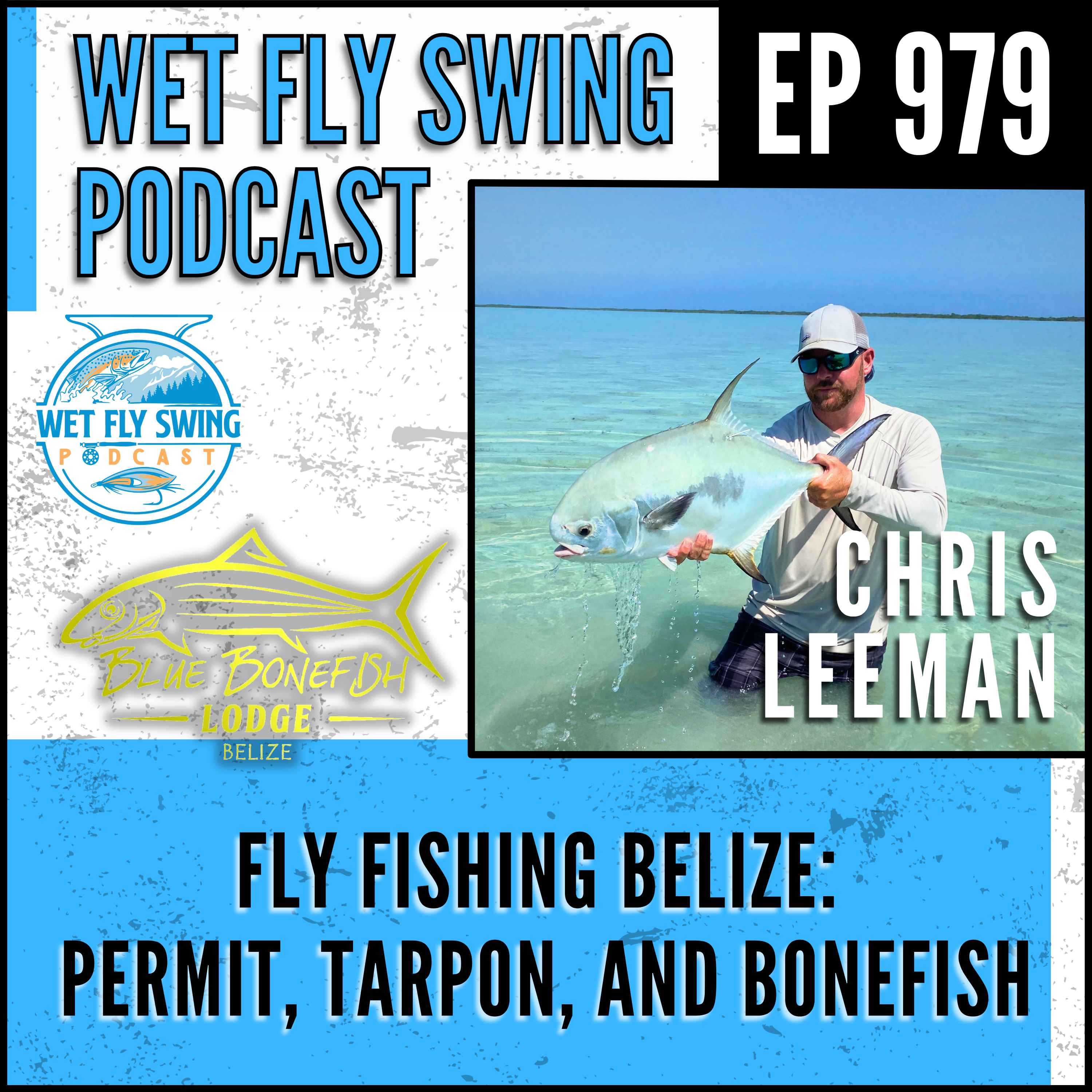
979 | Fly Fishing Belize with Chris Leeman: Permit, Tarpon, and Bonefish
About this episode
#979 Show Notes: https://wetflyswing.com/979
Presented by: Blue Bonefish Lodge
In this episode, Chris Leeman of Blue Bonefish Lodge explains how Sargasso has changed fishing Belize around Ambergris Caye. He also breaks down seasonal opportunities for tarpon and bonefish, why full moons can produce excellent fishing, and why July may be one of Belize's most overlooked months.
Show Notes: https://wetflyswing.com/979
Get every episode summarized
Each time Wet Fly Swing Fly Fishing Podcast publishes, we email you a written briefing from the transcript — the topics, who appeared, and any specific claims, with the ad reads skipped.
Email me new episodesFree for 3 shows. No card needed.
Hosts & guests
Transcript ready
727 searchable segments. Every word is indexed and playable.
Full transcript
Wet Fly Swing Fly Fishing Podcast — 979 | Fly Fishing Belize with Chris Leeman: Permit, Tarpon, and Bonefish. Machine-transcribed; use the interactive transcript above to jump the player to any line.
Permit have a reputation for making fly anglers earn every eat. But along the coast of Belize they're doing something that would have sounded pretty unusual a few years ago coming to the surface to eat your fly. Today we're heading into Belize to look at a fishery that's changing in some fascinating ways from permit feeding on sargaso to full moon fishing overlook summer opportunities and research that could help protect these flats for years to come. Chris Lehman is here from Blue Bone Fish Lodge and he's going to be bringing an interesting background in his work over 16 years guiding Alaska in Florida for many years and now in Belize running and owning a lodge a family run lodge today we're going to get into it all including how this sargaso has changed in ways we've heard a little bit about this out there these floating crap patterns now you can catch permit on the surface maybe easier than you can catch them below before we're going to find about moon cycles and what he likes and why a full moon is something to be thinking about and why that might increase
your opportunities. Also why July might be one of the most overlooked months in Belize and it's something to think about if you want to find a time when there's less people less crowds July and summer might be the best time. We're also going to talk about one number Chris isn't going to give us and if it's your first saltwater trip that you need to be thinking about 50 feet and we're going to get comfortable with 50 feet and talk about how you can get ready for your first trip or maybe it's your second but we're going to get you prepared for that. Chris Lehman you can find him at bluebonefishbelize.com alright let's get into it here he is Chris Lehman. How's it going Chris how are you doing today? Very good very good thanks Dave. Yeah I want to get into what you have going at bluebonefish I know your story goes back you've got many years guiding in your program and I want to hear about how kind of bluebone fish came to be can you give us that story run us down to how you started it sounds like started down in Alaska got a number of years starting off.
Yeah I started working for Rainbow River Lodge which is out of Bristol Bay Lake Elliott in the area back in my early 20s ended up doing about 16 seasons up there few too many seasons too long I would say but about halfway through the Alaska my seasons up in Alaska ended up getting the saltwater bug and ended up starting a charter service down in the Florida Keys and had run that for about nine years at a big pine chasing the same species we haven't believed and during that transition we started hosting trips down to bluebonefish Lodge with the previous owners and of being small groups of eight or ten down with Jim and Phyllis Johnson and this must have been 12 13 years ago and towards the end of one of our roasted trips they had pulled me aside and said hey we're we're thinking about selling a place down in Belize and I'd like to offer it to you first to see if you'd want to take it over and long story short we ended up signing on the dotted line at about 2019 and already rolling off into our eighth season already.
Yeah well if you add up those numbers that's a that's a lot of years guiding I mean right you've got 1698 you've been doing this a while is it how is that band it sounds like Alaska you put in your time there what was the between Florida and Belize is there a pretty big difference between the kind of just everything there. You know it very similar fisheries fish populations vary you know a little bit from different areas I think the the one benefit Belize has is that it is far enough south to where we do not really have cold fronts affect us you know and and guided in the Florida Keys you know for many years it would really be hesitant to book trips in December January and even early February due to the cold fronts you know we'd see water temps drop in the you know high fifties low sixties during those months and while we're in Belize you know the same cold fronts will hit us but a water temps will only drop to 77 78 degrees so we're we're pretty blessed you know in the cold fronts in Belize we call them cold fronts and it's got a funny you know you
get a cold front moving through the island and you know all the locals are wearing jeans and sweatshirts you know thinking 75 degrees is pretty cold out and you know we're loving it you know it's kind of like humidity and you know puts our fishing down for 24 hours or so but it it warms right back up you know doesn't take weeks like doesn't the keys right right well that's cool and what is it so now as we're talking it's August we're getting the September's right around the corner what's it like down there this time of year right now and maybe you can run through your program a little bit well the the fishions really good year round in Belize it's uh if we have a few migration old different patterns that come through with a few different species we catch permit 12 months of the year we catch tarpon 12 months of the year and we catch bonefish 12 months of the year I mean there are obviously a little better times with different migration patterns that come through I would consider kind of your winter months kind of best for bonefish as they get in skinny and the water tents are a little bit cooler so you're looking at late November through really March early April once the springtime conditions hit that's when our permits start aggregating
you know so everybody kind of is aware of a March and April even in early May a lot of the large repurmit come in off the reef and off the channels and we'll aggregate kind of pre spawn on the flats surrounding Ambergis Bay and gives you opportunities is some larger permit 15 20 25 founders on the fly during that time of the year and then our tarpon season really starts firing about that same time about April May we start seeing a lot of ocean side tarpons start to move in and they're not large migratory ocean tarpon but you know they're going to average that 20 to 50 pounds in the occasional 67 on that ocean side and that holds pretty solid all the way through the summer months and you know sargassos and other topic I'm sure we'll discuss you know during this time but this sargasm really starts moving in the springtime and and create some feeding opportunities for both the permit and the tarpon and we've been pretty excited the last few years while it's has not been good for tourism for your beach goers and couples has created some really unique feeding environments for our permit and tarpon as they're looking in that sargaso for it as a food source right and this
is a lot you know this is the great thing there's a ton going we can dig into here I I feel like all the species are great you know and in permit you hear a lot about them being the hardest out there maybe the hardest fish and in fly fishing to catch you know because of kind of how they're they're just moody I guess but how does that how does it work now on on when you think surface versus below the surface are they still hard to catch on the surface or is that is that change the game a little bit well in the right situation with the right school of fish on the ocean side I think they're predominantly looking to feed on crabs on the surface I mean it's a bad a great example a couple weeks ago I was fishing the ocean side and had found a school of fish and we were prepping for a tournament and I said well it's let's experiment here and put a weighted fly on and see if uh you know we're gonna get some fish to move out of the school and eat the fly and I put two good shots in there with a traditional weighted rac head fly and pre-for followed it and you know school regrouped and we didn't get a bite out of that group and grabbed the other rod and grabbed
the floating crab and first shot into that school I had three or four of them you know chasing it and fighting for it on the surface so um in my opinion I think if if it's that spring to summer months I think if you have permit on the ocean side I don't see any reason why you should not throw a floating crab especially if there's star gas opresent you know I mean it is becoming one of their major food sources and and really what they're keying in on yeah and you mentioned the that time of a year when the permit are coming in the bigger ones what is going on you know during that time and are the big fish harder to catch or are there a few of them or describe that a little bit? Well the bigger one or for sure harder to catch it's uh uh you know believe this is known for a lot of permit being caught a lot of anglers catch their first permit on the fly but I always joke around with our clients that uh you know 80 to 90% of our permit that are caught at the lodge throughout the course of the year and and we catch you know hundreds of them during the season you know most of them are those cookie cutter three to six seven pound permit you know those are what we're blessed with and we're super fortunate to have those smaller fish around to be able to
give these beginner intermediate anglers their first crack catch their permit and you know it's a lot of our our guests are stacking numbers up you know as far as getting counts over a hundred fish you know during their stays with us over the last four or five years and a lot of those fish are are three to six seven pounds and you know occasionally we you know catch one that's in that 15-20 pound range and and that still could happen anytime of the year but I think there's there's areas within our fishery that tend to hold larger permit and you know it's hard to say go and permit fish and hey let's just go chase big permit around because that's not how that can work so you just gotta go chase permit and if you're lucky enough to come across a big school of permit that are feeding then great you know you know it's one of those things that catch 22 it's uh uh you know we love chase and big permit but it's uh you know they are smarter I mean there's a reason you know why these fish get to 20 25 pounds and you know a fish of that that size is is starting to get in that 15 to 20 year old age range and and they're pretty home bodied fish you know we've done a lot of tracking and tagging studies on some of these larger dollfish and many of them will frequent the
same flat for weeks on end you know so if you're seeing that school one day and you see in there the next day odds are it's the same school of fish it is wow and are all these fish mostly are they migrating a lot you know between you know the flats and out or they're described that a little bit and I know the tarpon maybe is a different thing because they've you mentioned the size range maybe describe what's the most out of the three species which one has life history that's kind of easiest to describe well the bone fisher definitely the most home bodied and you only really research we've done down in Belize has been collaborated with bone fish tarpon trust and one of their first studies they did was you know 10 to 12 years ago to where they were tagging and tracking the bone fish migration routes and most of those schools of bones would stay in the same lagoon for sometime months on end and the only thing it would trigger them to leave that particular area was one fishing pressure or two the right moon phase and they were moving out to the reef to go spawn outside the reef so
they're very very home bodied and impermanent are very similar as well they you know at times if they're not pressured and they're you know not being fished hard they'll they'll stay in that same area for weeks on end as well and I think a lot of time joining a movesome is fishing pressure you know and then they relocate to a different area with and then you know obviously somebody finds those and they pressure them and they they move again tarpon obviously would be the most highly migratory very very little research has been done about the tarpon embolies and it's something that we're kind of kind of curious about you know where do these fish come from and a lot of people think that they move into the river systems and the winter months and feed on the bait coming out of the rivers and then as it warms up and the rivers are too hot and the bait moves out then the tarpons are coming out towards the ocean side which is where we start seeing them in April and may moving out of the rivers and the snooker fairly similar as well they kind of have that same migration route but pretty exciting though we are doing an acoustic tagging project with BTT right now in Belize they've successfully put about 15-16 tags in permit and then there's receivers
within Mexico and in northern Belize and this acoustic tag will send out a ping and it'll actually track the fish and say fish zero zero one was here next to this receiver at eight o'clock in the morning so it's pretty exciting that we're going to be able to start tracking some of these larger fishes migration routes and see what the connectivity is in between Belize and Mexico where the responding sites are frequently they you know kind of frequent the flats in those same areas in a very similar study was done in the 40 keys and it was instrumental for having a lot of the habitat protected and changing some of the harvesting regulations in Florida so the data that you know these guys are going to collect here in the next three to five years with the acoustic project is going to be really instrumental instrumental for Belize to move forward with the conservation efforts that's cool yeah that's and we're hopeful we're going to have somebody on from BTT to talk about that you know the ear area and just describe more that because I think that sounds really interesting and you're talking about and that is for permit that's the main species.
Strictly permit project happens an acoustic tagging permit project and it's a very light budget project right now we are looking for some more sponsors and more donations in order to get more tags in order to quickly gather more research and more data but the tags each are a couple grand you know and it's it's an expensive process and most days we're capturing one or two permit you know so it's a slow process to put you know 16 tags in permit you're talking 16 days efficient you know unless you have a real good day you might be able to get two or three tags in but you know it's it's a slow process you know right wow this is cool and this is going to be awesome here and and maybe describe you don't have to go like high level but the acoustic tag so that when they plant one of those can they they track it like every step of the way and how are they tracking it what is the device yes so the only way that the scientists are able to track these permit is when it's physically swims by one of the acoustic receivers so acoustic receivers about a foot long and maybe about eight inches around and it's powered by lithium battery and it's
anchored to a concrete block and they basically drop it down in a channel near the flats on the outside of the reef and the only way that fish is going to be detected is if it swims within a certain radius of that receiver and that's when it the secoustic transmitter sends out a ping and every time it pings that receiver it records a data you know so it's it's a long process you know the the acoustic tagging project doesn't all within the keys with BT team and they did five years worth almost seven years with the studies with the acoustic tagging and they were able to get a little over a hundred fish tagged but the data was incredible to look at you know as far as where they moved and how they moved and why and the one thing in in Belize we don't know is where do our permit spawn you know and we don't have a really big threat to our spawn compared it to the Florida Keys where the offshore captains are looking to capture and catch them offshore on heavy jigs and crabs you know the the locals really don't target the permit offshore which is a blessing for us but still need that data for future years to come because eventually that's going to come
yeah that'll come that you like the impacts there will be more impacts so you what you're saying is if you can document that now protect the habitat maybe even put sanctuaries or protected areas that's going to be a big thing for Middle East looking at or the whole area looking ahead 100% yeah that's great okay nice well we're gonna I want to get into some maybe some tips and tricks too we talked about the sargasm and all that but let's hear about the lodge I want to hear about maybe describe kind of where this is sitting out so again somebody's listening maybe they're new maybe they haven't meant to believe and talk about that because you're in kind of this unique part of the world on on the tip right describe the lodge a little bit yeah so we're located on the very southern most in the vanbergis cave about four and a half miles south of the downtown area very easy to get to from the us direct flights come from Denver Houston Miami Charlotte's even Seattle Portland LAX but for example you'll come out of Miami it's an hour to half flight out of Dallas here about two hours and 15 minutes two hours and 20 minutes so very straightforward you know it's not as far
away as everybody believes and feels it is so it's a one day travel event you know if you leave by seven a.m. you could be to lodge you know it is latest three o'clock in the afternoon which is a blessing you know but very straightforward travel you could fly in a bleese international and then from there you have two options take either water taxi or a little charter flight over the island and the flights about 15 minutes and our drivers will pick you up and bring you down to the lodge once you arrive on the island and then it's game time kind of get the rods ready and get ready for fishing but yeah we're pretty blessed somewhere we're located we're like I said on the south end of the island so great access to the fishing the eyes will come straight into our pier and the dock in the morning after our breakfast service and they pick up right at our dock and fish for a full day and then drop off you know right in afternoon on the same dock so a lot of our guests never really feel the need to leave the lodge but if you want to you know we do have golf carts at the lodge that you're able to jump in in the afternoon do some DIY fishing go cruise around bonefish flats look for darpen and the small legoons or simply go to happy hours in town and cruise around and get some
drinks in listen to live music so the beauty of ambergis k.a. I think is it you know there is flexibility with not having to be such a hardcore fishing program we definitely offer that type of program but you know if you want to bring your spouse or your wife you know she's not going to get bored while you're a fish and there's things for her to do around the island and around the lodge which is a little bit you know different from some of the lodges down in southern Belize where if you're on a remote island and that's what you're doing and that's what you're stuck doing so right so we're very blessed in that sense yeah that is going and sand Pedro is the town that's just north of you up there that you you could go to yep yeah about a 20-minute golf cart ride and we're actually going to be shorter than that as our road is finally getting paved to our lodge which has been a blessing for about 10 years 12 years ago in this lodge we've had a dirt road okay down and hopefully within the next six months we're gonna have that thing paved and we'll be rocking a roll and which would be good that's great that's great and what are some of the things that people are doing like if you weren't fishing what would be some of the things you could do let's say took your
partner or something like that there what would that look like well you know we do offer a good couples package but you know fly fishing is our main bread and butter that's what we focus on we have a 28-foot boat out front that we offer snorkel tours and then we also have a 25-foot boat that we offer reef fishing trips and beach barbecues and we do sunset cruises we do eco tours to the marine reserves and also from the national parks so bird-watching, mancy tours, eagle rays all of that's an option you know we have in-house guides it kind of handle all that for us mainland tours are also a popular tour for our couples it come in they'll they'll jump back on a plane and head back over to the mainland and go see mine ruins go cave to be yeah that's cool is Belize City is that the main like if you went to the mainland is that where would you be going to check out the main tour fly back in a Belize municipal and then it's about an hour and a half they and ride back up to Belmont pan and then from there you would visit the mine ruins okay and is Belize is that the main where's the main airport you're gonna fly into
Belize International and that is out there's two airports and Belize yeah I got you okay yeah perfect all right and yeah I think you know one thing you know I think Belize so that would be something that's fairly if you kind of were going there with your family you could do this and be pretty safe go into the Belize to the city for some things about maybe the I don't know if it's Belize city but some of those places where you got to be careful a little bit more than where you're at obviously yeah never let our guests stay in Belize City overnight you know it's the only reason we're going to Belize City is to head over to for a mainland tour and it's on a guided tour so you're in good hands the entire time the Belize City safe you know if you're out late in late at night and looking for trouble obviously you're gonna find it but you know we really never suggested our guests you know stay there if they if they don't have to get over the islands you know and come over here and relax and it will save for on the island compared to Belize City gotcha gotcha okay that makes it easy perfect so yeah and we were talking you know a little bit about kind of the different species let's just start you know there's a lot of different you know people out there obviously listening here of experience with you know different these species we're talking
about but let's just take it to somebody who's fairly new maybe hasn't been to Belize maybe he's kind of newer to saltwater and it all sounds like throughout the year there's times you can fish so it's hard to pick a one time but if we were if I was picking a time to you know go down with a few people what would that look like what do you think you'd be telling us if we were asking okay we're trying to plan this trip in the next year or so well I get that question almost every day when it's when is the best time to come to Belize and honestly I don't I tell our guests that they're they're looking to book I mean it's it's good 12 months of the year I mean it's really it's so hard to throw a dart at a board and say you know you're gonna have this is gonna be perfect in March because in March you know or even August say June July I mean you can have a tougher weather week and and really I would see a correlation throughout the 12 months of the year to where our best fishing coincides or lines with good weather pattern high pressure systems and and you can have good weather in January you can have high pressures all throughout the course of the year or you could have a low pressure with two or three days of rain and some clouds and wind and it's gonna put a damper on
the fish and so it's you know moon phases play a little bit of phase a little bit of roll into our fishing program you both new and full moons are are very productive which is contradictory to what you hear a lot of in a lot of articles you read I'll tell you firsthand from living down there last eight years and also guide in the keys I mean some of our best permit fishing weeks come on full moons we will have 20 25 fish weeks sometimes 30 fish on a full moon phase and everybody's like wow you know I don't wouldn't think they would have bit that well you know you're tarping a little bit more sluggish on a full moon you know but bonefish permit you know I really feel that you get more tidal movement you're getting more water movements more fish activity during those big moon phases so don't be afraid to book a trip around a full moon it's it's really it can be super productive but as far as you know a year-round calendar from January to just you know that the end of the year in December you know it's it's really good 12 months of the year your best bone fish is going to be probably November through February as the water temps are more favorable for them to be in
skinny and you're going to find that traditional fish tailing in six 10 inches of water in a mangrove shoots yeah everybody thinks permit fish is a really good March and April at which it is but it's our permit fish is pretty good year-round I think you know you have a few larger fish in the spring time in our tarp and game I would say you know kind of the sweet spot of having all three fish available would kind of be that late March April May and in it in early June where we have all three species you know really available I think we probably catch the most grand slams in between the months about April and in July would be my suggestion yeah April and July that's what I was kind of thinking so if we were planning something maybe in that period March April maybe early April something like that that might be a good time to lock it down okay and then you'd have a shot maybe you know again it's fish and so you never know but you might have a shot at all three potentially you would you would yeah and it's it's also the time of year that books up the quickest right keep that in mind when you're you're looking for a trip to believe that you know we are already looking at our schedule for 2027 and I have limited availability from February through really June
already it's you know a handful of spots in month April and in each month you know it's it's amazing how quick that that time books up and in a core relates with the colder weather up north you know and a lot of people are wanting down south you know from January to May and get out of the snow and cold so that's partly why it books up quicker too and and I think are more serious hardcore anglers that have fished a little bit in the in the shoulder seasons are starting to realize that hey it's it's pretty darn good in July like there's nobody down here fish and pressures light you know I'm gonna keep coming in July you know I like this time here so it's it's it's fun to see you know that is cool yeah I'm believe this I mean that's the cool thing about where it's at is that it's kind of it's equidistant almost right to the east coast and the west coast is it about the same getting there from northeastern New York and stuff like that as it is from the west it's a little bit you know coming out of New York New Jersey that area you're gonna have to come through Charlotte so you're gonna add another two and a half three hours but it most your travel time is in between seven and ten hours you know I think the hardest area to come from is a Pacific
fourth west maybe Oregon Washington Seattle area typically a lot of our guests are overnighting red eye in Houston or Dallas and then coming down the next morning but we suggest if you're on one of those legs to come in on a Thursday coming a day early gets the island the night before grab a hotel and get yourself kind of recouped before you come down the lodge on Saturday yeah definitely that's always a good idea get there day early and make sure your bags are there there's no issues that seems to be the one of the big travel tips if you're doing a lot of travel give yourself an extra day when you're getting there just in case yep yep okay good well tell us this on you know we're talking about species a little bit on the on the permit fishing what is the I think we might in a future episode get deeper into the Sargasm but describe that what's going on there and and maybe a little bit on on the fishing how that's changed the game down there yes it's kind of been a transition over the last four or five years each year we're starting to see more and more Sargasso come
into the Caribbean basin and into the you know Caribbean coastline I guess you'd say the eastern sides and it's it's not just Belize in Mexico it's Cuba it's Florida the Texas Panhandle all those areas are getting super affected by Sargasso but for whatever reason the pH balance in the ocean and these major river systems that are coming out of these these continents are are leaching fertilizers into the ocean and has created this chemistry and perfect balance for this Sargasso to bloom and while it's a drift out in the ocean it's multiplying and multiplying and multiplying and our predominant east wind blows that right into our shoreline and it's bringing with it you know a couple bad situations but also some good situations you know while it's a drift offshore it's great I mean the Mahi are feeding underneath the bait's holding on if there's crab and tripping it tuner looking for food underneath it but as it crosses the reef and piles up on the shoreline that's when it starts decomposing creating the low oxygen water it's got a sulfur smell to it
so it's really dampering our you know normal tourists that wants to come and lay on each and and that's been the sad part of it but for a fly angler we're looking at it going hey you know this is this is actually good stuff I mean so these pirmid are adapting these tarpon are adapting to see and figure out how to feed out of this this grass and they've learned that they can look up and say hey man there's a Sargasso crab right there and they'll come up and pop it kick it push it knows it and it'll kick that crab off it and then they'll circle back around and pop it right off the surface and so it's very visual you know and and it's a good sign when you see these fish you know they'll swim underneath the grass lines and when you see that situation these these schools of pirmid that are looking going from glass grass line to grass lines like hey it's game on like get the floating crab out and and let's put a good shot on and they will they will not hesitate I mean it's I've seen more reluctant fish to try to eat a subsurface fly and the real cautious real cautious but when they come up and try to get a crab off the surface it's like no questions ask come up and they pop it you know and so it's it's pretty fun I mean I think
if you get their attention with it and they want to get it it's very rarely they turn off and say no I'm not you know if they take the energy to go chase it they're gonna eat it yeah they're gonna go for it man it's amazing and what is the and is this kind of changed throughout the year of their times where you get more of that vegetation and maybe you could also describe kind of what it is is this something I'm guessing it's something that's been there before it's just but the called water quality is made it just bloom more readily yeah the sargassos always been prevalent I mean even the Florida Keys and I was there you know big pine we would on the eastern sides a big pine there's a sargasso collection area on the eastern side of the island there in the tarp and will go bonkers then they're on the shrimp hatches that come out of that grass so it's something in you know even the keys I've seen the pirmid in some of the channels you know north of big pine up there are feeding off the sargassos and this was 15 years ago down there so it's it's not new but it's becoming more predominant and more consistent is a good way to put it you know and in in last three years four years our guides are adapting to an a fish are too as well that you know
well there's new really nothing in the turtle grass to feed on there's no green crabs or there's no blue crabs because that's pretty much all died off from our low oxygen so these fish don't have a habit to have to feed on on the bottom anymore they've got to find a source elsewhere and that's where they've adapted to so it's kind of unique you know and you know the development of our our fishery and the way we're approaching it is we're learning as we go you know we don't have it a hundred percent dialed it I'd love to say we do but we're still designing flies we're still designing leader setups you know we're trying to figure out how to get it not to sink and stay on top we're starting to fish full clear fly lines because you can visually see the fly on top so there's a lot of things that we're adapting to do that are increasing our catch rates that have been fairly productive in the last you know year or two right right that's awesome and and then tarp and two so you can if you how does that look differently for tarp and if they're the same thing they're poking it off and then hitting it what does that look like yeah so the tarp and are also in the sargass so and they they cruise in between the dirty water and a clean water and
if you've ever fish you know that situation you know what I'm describing there but you know the tarp and are more in there to feed on what's dying off and there'll be batches of this red water on the ocean side that you drive through a little senior nostrils and the tarp and are in there feeding on the ed fish and dead shrimp and stuff that are coming out of it so it's creating a unique fishery early in the morning you'll go in you'll see birds working in this area and then you'll see jacks cruising through and all of a sudden here come the tarp and they're pop pop pop you know feeding on top so in that situation we're fishing a lot of streamers and white toads black and purples char truces just something to get their attention but it was unique we were prepping for a tournament a couple weeks ago and I had a floating crab on we were looking for permit and you know jokely around saw tarp and roll than my 80 90 feet through a shot in there on a floating crab and came up and ate off the top and actually cupping off in 2.5 seconds but no that was interesting you know and I saw another one roll and I think I went through five floating crabs that day just because every tarp and I threw that came up and ate a sargasso crab
that I had the same thing we're catching permit on those tarp and are eating the same exact thing in that same situation so we're gonna get back onto on advice and try to figure out how to design a little beefier floating sargasso crab you know right there you go wow and then and then what about the bonefish are they they're also hitting that stuff or they they got there again they seem to be the ones that are the maybe the easier fish out of the three to catch they are for sure you know much as I hate to say it we're not seeing the bonefish on the ocean side when the conditions are like that because it is too low oxygen water they're used to feeding and skinny if you find a batch or clean ocean water on the ocean side you'll find bonefish in it but most of our bone fish in the springtime it's gonna be on the lagoon side which we have 25 miles of shoreline over on a basically Chetamal Bay on the backside of Ambergus Kay and that's where all our bonefish is done and we've got some bonefish on floating crabs what it's not something that were specifically targeting you know we're throwing our traditional Christmas islands and gotchas and
but it's the bonefish and populations have not declined they're just moving from the ocean side back into the bay to find areas to feed that are that are healthy for them if that makes sense yeah that does maybe you can talk a little about your guides in that area I know you're just your operation I think you think of it as more of a family you know atmosphere right describe that a little bit who are the guides that you have there and kind of are they part of the family down there they are very much part of the family and that's part of what we pride ourself on we have a great group of full-time guides lodge guides that are strictly work for us you know six days a week and they're there nine months of the year ten months of the year and take a couple months off in the summertime but but most of our guides that are full-time with us have been with us since I've taken over or we've inherited from the previous owners and we've also developed and and brought on a few other guides that I've felt very passionate about and strong about that they're very confident with them would take our guests out so it max we run about seven boats today is
kind of my sweet spot six to seven boats you know we're running between about 14 anglers today or 14 anglers a week so seven boats is pretty comfortable to anglers boat but they've been with us a long time and they're they're not just bonefish guides they're not just a specific permit guide they're not a specific tarp and guide all of them are good at all three species and that's something that we pride on it you know we we rotate our guides which is you know not common in saltwater fishing lodges you know most of the time you book a trip somewhere in a Caribbean and they say hey you're going to be fishing with X all week long and you got five days this is your guide I don't set our schedule until I get all of our guests to the lodge on Saturday afternoon I have a chance to physically meet them in person we're blessed we do have a lot of repeat guests but the new ones I want to interact with them talk to them you know see if they want to fish for see what they're living experience for the week and get their personalities and then not enough guide in Alaska and through the keys but my lodge owner worked for in Alaska he rotated our guides every day and I I always felt that was super beneficial for the angler to be able to
see and feel and be instructed in different ways be guided see different areas so it's been really good and very well accepted from our clientele you know that hey you know you're fishing with Darwin today and tomorrow you're going to go with David next day you're going to go Farco next day you're going to go with George and by middle of the week if he enjoyed fishing with one of our guides and say hey man I'd really love to get back with Darwin tomorrow you know we we really clicked and I usually am able to of course schedule out enough to be able to get you back another day or two you know with that same guide if you have somebody just clicked or didn't click with you know that happens to me sometimes your personalities don't mesh and that's the worst situation where if you know you're at a lodge and you got five days with somebody you don't enjoy fishing with you're not going to come back you know yeah no I agree I think from what I my experience too I like that when you switch stuff because every day you get a different person like you said different perspective you're learning probably some different things and it just keeps it more interesting I think that's fun nice um well so we're on this track of you know kind of the trip and we talked
about getting there so describe that first day are people coming in typically the same day what is that first kind of day once we're kind of at the lodge yeah so arrival we always have arrivals on Saturdays and our departures are on Fridays we have a set schedule throughout our entire season makes our life easy for myself my wife my housekeepers my kitchen staff so arrival is going to be typically from about one o'clock to five o'clock on Saturday once you get boots on the ground of the lodge is checking your room get your bags unpacked and then we grab rods head over to our plapa and then myself and usually moosey who is his name mooseal is there helping us rig rods so whether you brought rods you know or don't have rods if you did bring rods you bring them down and then we start stringing them up and getting ready for the next day and putting them on a racks and we do have good equipment for our guests to use we pride ourselves and keeping really good care of our fly rods but including all of our packages we have eight weights and 10 weights and 12 weights for our guests the borrow and use of each time you know so there's no nickel and diamond there's no rod charges for
an extra day you know if you need to borrow one of our rods they're there left hand right hammer tree good lines on them floating lines sinking lines etc so most that stuff we dial in before arrival and nine times out of ten I've got them all rigged up strong up ready to go before you even step you know your feet on the property and they're ready to go for fishing the next day but uh yeah after we get the rod strung up we have a happy hour appetizer time around five five thirty and then dinner service is typically around six or six thirty and then dessert and uh usually it's crickets around a lodge by eight o'clock and everybody's ready to go fish the next morning right right is the next morning pretty early uh start yeah winter months we do about a seven a.m. start and as we transition to the spring you know we'll start the part in as early as six a.m. if the winds are flat and calm you know sometimes we'll do a dawn patrol mission and we're leaving it you know five five thirty in the morning try to get on that tariff invite but uh their average start time is between about six thirty and seven throughout the course of the season okay and then you go out and they are you putting in kind of an eight hour day and then and then come back at the end yeah you're typical eight hour
you know two or so seven to three and kind of come back online we have uh once you pull back up the dock in the end of the afternoon we'll unload the coolers we unload the rods for you we wash them down we put them back on the racks we keep all of our rods labeled with your name how many rods you have and then uh pretty much come back to ploppa grab a cold beers at the pool have some runpunch and then we do usually you know a light snack in the afternoon and then we hit the repeat button appetizers around five thirty dinner six thirty and it's crickets again at eight o'clock at mom Monday night so it's uh it's pretty funny how quiet you know everybody's kind of rowdy on first night or two and then by Wednesday it's it's a ghost down right after dinner everybody's beat oh yeah definitely yeah you gotta you gotta pace yourself a little bit right that's the I guess that's the guy that's why it's nice having guides they kind of keep you going what does it look like when you're out there I guess everybody's going to different locations how far away might you be traveling from your area or you guys have kind of this close area your fishing well it's time some the best permit and monefishing is within five to fifteen minutes of the lodge and I think that
is the beauty of us rotating guides I think a lot of our guides have certain particular areas that they've been key and in on and uh it times we'll do short runs and you know if the guides are seeing fish farther away we were not afraid to burn fuel and we have some runs that will do 25 miles and go up to the northern coastline in Mexico and Belize we fish the mainland of Belize we also go south down towards say Georgia's down towards Hickskis and some of those runs are 45 minutes to an hour um so it's you know it's neat to get off the beaten path get away from the island typically the wind dictates a little bit of what we do as far as how far we can travel if the winds are up we typically stay closer to home winds are calm we're we're turning a burn and we're exploring which is fun yeah it is fun no this is good so it sounds like and I'm just kind of putting together thinking about you know what this trip would look like with the group coming down there and it sounds like yeah you guys are would have to check in with you on availability but um you know if not I guess would do you also plan things out a couple years if somebody you know was looking at 28 that sort of thing is a good to call early on all that it is it is yeah we do give our guests the first right
to read book which is very common in most lodges and in a respectful way to do it so if you have had the first week in March booked with us for the last three years I'm not going to slide somebody in in your spot in 2028 I'm gonna allow that week to be operated and then I'll open that spot up I'll talk to you towards the end of the week and say hey you looking to come back down next season and they typically hopefully say yes and and then we slide them right back in I do have some wiggle room I do know our schedule and clientele well enough to where I can probably course you into a week in 2028 2028 if you're looking that far out and we are taking bookings that far out but we have a long enough season to where there's some some flexibility it's not like an Alaska season where you have four months of the year and at first week august is when the eggs are dropping and that's when the silver is starting to come in and that's like the most ought to after week you know for us I mean you throw darted aboard from February to April it's pretty consistent it's just a matter of getting a good weather pattern that makes sense yeah it does no that I think that's what's cool about it it's pretty no matter when you you can go you know it's
gonna work and I get it the winter time would be cool because you get away from some of the cold get down there but but it sounds like yeah the summer down there July August like right now I mean as we speak there's people right now it's how's the how's the weather been there like this time you guys were speaking right now it's been great you know our winds held a little bit longer in the June and they typically do is the kind of an odd season for us we had had some colmar winds through March and April and and typically April is one of our windier months and into May and the winds held almost all the way through April then the winds decided to pick up in May and June and and just killed us you know it was it killed us but you know it limited it limited a lot of our ocean side fishery which were used to fishing in in June with colmar winds and then July kicked in and the winds flattened out and we saw some phenomenal fish in through July I think July is being one of the the sneakiest months you know I mean you got still got lots of permit around the you know and then tarpenter started to just really go bonkers does the winds really flattened out in July and the hard part is everybody's thinking you know Montana Alaska you know
outfishing mountain biking golf and you know all that summertime stuff they don't think oh I'm gonna wait to go to the knees until the snows but you know if you're serious about it I mean I would not hesitate to book a trip in the summer months down here it's it's great fishing yeah that's it's gonna be less maybe maybe easier to get a spot and not as much not as busy very much yeah it just lighter fishing pressure I mean the island itself is slow I mean it's I know through the believes international airport in a month of July there's maybe 10 to 12,000 people coming through if you come in March there's about 70,000 people that come through that airport wow it just tells you the whole island's dropping you know in tourism yeah exactly maybe just describe your you know your operation the lodge how it's different than maybe some of the other places out there and maybe even compare that you've been you've seen a lot you've seen Florida and all that how you describe that the difference is there of what you know what you guys have I think the unique things is that we we're kind of a unique little boutique lodge we're we're very small ran operation it's it's family-owned it's a wife and I were boots on the ground
we live there 12 months of the year you're gonna see every day every morning every afternoon my wife and I you try to pride ourselves in being as present as possible with our clients when they're back at the lodge and be there to answer questions and you know help them and be as intimate as we can we don't have housekeeping manager we don't have a GM we don't have a phishing program manager that's basically what a wife and I do which is different from some of your bigger lodges that are holding you know 30 40 rods a week we're not corporate you know we're we're a small mom-op operation and if you call it a book a trip you're gonna get me on the phone and you're gonna get myself answering the email and priority or trip coming down I'm gonna be the one reaching out and touching base making sure you're set good to go and in the same thing with the schedule and while you're at the lodge it's a me get done fishing in the afternoon I'm gonna catch up with the at five o'clock here at Abitizer time and check in on what you want to do the next day and talk about you know what you want experience and then I'm gonna go to my office and try to make
the best schedule I can for our guests at the lodge for the next day and circle back with you at dinner time let you know who you're fishing with when your departure time is and then you know I'll be there having breakfast and coffee with you the next morning and help load your odds you know so it's you know aside from that you know we we do have a really good family at the lodge and if you ever get it bored and want to read some Google reviews on the lodge but you'll see the Mendes family listed all throughout reviews but it's a great family of about seven husband a wife couple their kids the chef Nubia who works in our kitchen she is phenomenal ever really local Belize cuisine it's not you know coming down to Belize to eat steak and potatoes you got easy to stew chicken tamales you know you want to eat lobster you want to eat fish so we do a really you know local cuisine and it's one of the highlights of staying at the lodge is getting be able to eat you know what the locals are eating it in a nice you know atmosphere and in a really good cuisine I mean she's top notch you know as far as what she kicks out of our kitchen
so it's it's fun to see you know and the staff is amazing they're super helpful you know you'll end up meeting Steve and Uzi who is kind of our guest services I guess you could say around the lodge with their serving the dinners and breakfast and see you'll be trying to shove run punches down your throat and making sure you're happy around the lodge yeah that's right that's really cool yeah I think that's kind of the X factor right I think the food is a big part and we were at a lodge fish for in Canada fished in for northern pike and I felt like it was the same thing the family atmosphere you had every day you were kind of you were greeted from the start to the end but it was just it was this family atmosphere that that kind of made you connected to it and one to come back right I feel like that's a big part of what you're talking about here it is you know it's it's what we really try to focus on it and I hope we can keep that going for years and years to come and it's we never want to outgrow where we're at right now I mean we get asked quite a bit are you gonna expand you're gonna get bigger are you gonna try to do something different here and we're having our like nope we're perfectly content with where we're at we're comfortable you know
we have 10 guest rooms when we can accommodate 20 anglers if we wanted to put twin beds in the rooms and pack people in but we've decided to back up all those twins out put single single beds in there get our numbers down provide a better better product you know and try to really focus on our guest that are there so it most were 14 to 16 guests a week and it's just been our sweet spot I mean that's kind of been where we've been happy with we feel like we're not overloaded we're able to communicate you know get intimate with all of our guests so we're we're happy with with the numbers we got yeah that's awesome that's the experiences is cool well we're gonna take it out here and I want to get a couple of tips maybe on fish and I will talk maybe fish in the permit bone fish we'll get into this here in a second but I want to do kind of our conservation corner segment and we mentioned before BTT I think we're gonna do some more on this to hear what's going on down there but let's give us a on that just your connection sounds like you probably through Florida started what was your first connection with BTT and talk about that that group what they're doing out there well I remember moving to Florida and is everybody probably knows trying to become
a guide and in the keys is not the easiest thing in the world to do without getting your cut off and I've heard this too Chris on the guides I've heard Florida is like and maybe people are joking about it but those guides down there will yell at you and cuss at you and stuff like that is that a reality what what is that is that just kind of is there a difference between the Florida guides and other places yeah yes and no I think those types of guides are everywhere Dave I mean okay yeah I think you got those same guides in Montana I think you got guides like that in Alaska I think you have guides like that in the keys and I know some of them beliefs to those gods in Belize work for us to act that way no you know what a higher guide that acts that way in the keys no you know are there great guides that are patient and willing to work with you and teach you the ropes yes you know and and that's that's the hard part of a booking fishing trips throughout the world is you know you need a referral or you know some reference in order to feel confident about booking a fishing tour and and that's you were we're kind of getting it to lodge to where most of our guests are repeats or referrals and I think that's where our confidence is building it we've
kind of in a business long enough now to our reputation starting to hopefully speak for itself and that we do have a great staff work and for us but you know there's there's guides like that all all through over the world and then some fortunate that you know some are salty and burnt out and at that point it's time to hang up to that and say hey you know I've been doing this long enough it should probably quit yeah that's right yeah definitely okay so but that's yeah and on that track so you I mean yeah the BTT is they've been going strong for a while right maybe describe that yeah so what was your first connection with them um first connection was in the Florida keys and we had met a gentleman by the name of Jacob Brownscombe he was uh uh I'll try and remember the university he was going to but he was kind of the the main guy that was doing the acoustic gagging project and that was his uh final project for his uh for his college jury and and it was pretty unique he was working with a handful of us and we would volunteer our time and he would you call us and say hey we're looking to get out and go to accident firm and are you available and
you know we would pay for fuel and put drinks in the boat and we go out and have fun fishing and you know we were able to tag no five or six permanent you know in the course of a couple months you know on my boat and then uh uh we were able to do a couple tv shows with BTT down there in blaze and um I kind of saw that stem and as we bought the lodge in blaze I knew that we wanted to keep that connection going and I knew they had scientists in blaze so I was very fortunate enough to you know networked with the deal Perez who's the based with the mexico science or mexico blaze um you know the scientist in our area and we connected pretty early and we offered our services I say hey if you need anything if you need a room to stay in you to golf bar you need a boat you know you need a guy to take you out you know or at us you know and um it's just kind of bloomed from there which has been a lot of fun you know we've uh since then I've been able to collaborate and put together a guide association um that we have down in blaze it's called the blaze flat spissory association but it's a guide association that uh very similar lower keys guide association that was a member of
for a year's in the keys and um it's been kind of instrumental on on allowing these guides to become together and have one voice in the country and fight up fight conservation issues and certain threats that are happening on the island and um it's kind of giving them a voice which has been fun so yeah we've worked on the the bonefish tagging project uh we did a lot of dark tags and permit um we've done some economic impact studies you know we've and now we're kind of working into the acoustic tagging project uh a lot of other small projects in the mix in between but uh you know the major one right now is our acoustic tagging for permit yeah acoustic tagging great well we're gonna like we say we're gonna talk more about that I want to hear more on BTT all the good stuff and the programs they have going so we'll we'll hold that maybe for the next one but let's just jump out of here with a couple of tips on you know and we've got all these species we could jump into let's just say we're looking at uh hit and permit down there and we're on the boat we're getting ready what what's the best advice you're giving this is one of us we're listening now before the trip to kind of be ready for that moment well I think the good number one thing I see
our anglers struggle with and this everybody probably knows exactly what I'm gonna say here is their lack of ability to carry and control and and have distance in their flycasting and it's not something you're gonna learn on the bow of the boat I mean our guides will do their best to teach you and help you out throughout the course of the week but you could instrumentally jump start your week by taking a local lesson doing your YouTube research watching double haul videos you know going out to the yard and practicing a couple days a week you know it's it will just benefit you know I always joke around I mean you're not gonna go play a gust of national or let pebble beach and not gonna play a practice round somewhere you know it's right kind of same thing I mean we're you know it's a beautiful fishery we're blessed to have the amount of fish we have but it's not a it is a beginner game to some sense I mean you're gonna learn you gotta do your first trip somewhere but you know if you can jump start it by getting out there and working on I always say comfortably 50 feet you know if you can handle 50 feet of fly line a little bit of wind you're
gonna be that much more consistent and put that many more fish on the boat and you'll let the crane was joked around he's you know you can travel pay all this money to go take a fishing trip guys gonna put you show you the fish there they are 10 o'clock but the last 50 feet up to you to catch fish you know and that's that's the hard thing that a lot of our anglers realize and and after the first trip if you're being internet you're nine times at 10 you're gonna go back and go okay I understand now what everybody said about having to practice you know and it very rare somebody goes home with their tail between your legs I mean our beginners come down they catch fish a lot of them catch their first permit on their first trip you know they catch bone fish jump carpet but if as you progress and get better you know and you do three or four or five of these saltwater trips you start clicking and going hey you know if I can hit 70 feet hit 75 feet 80 feet you know you're just gonna touch that many more fish show that many more fish more flies and it and turn you're gonna get more bites yep yeah those are awesome tips yeah and I think the 50 feet thinking about that and I've been doing a little bit of that with the casting instructor which is
new to me and you know just measuring it out like putting 50 feet out on a tape measure to see what it looks like and get you know and build up to it and I think those are some of the tips that you know as we I've been doing some of these exercises you know you start small and work your way up and you're really working on that that form and then the the double haul right there's this little tiny timing things in the double haul that it's struggle I struggle for many years but just recently I've kind of learned a couple of things that have helped big time and you know so I feel like that's those are huge I think anybody if you're gonna go up and put all the time and effort into do this you know you should do a little bit of practicing before so good yeah you should he should it's a you know and work on your back cast not enough anglers you know can make a shot oh right one o'clock or two o'clock at 50 feet throwing it off your right shoulder if you're right hand at angler being able to put it where it needs to be a lot of times the wind's blowing and the guys you know struggling keeping the boat in place he's not gonna have time to turn you you know by time he turns you and gets you a better shot or if you could just release it off your right side you know
you're gonna get that shot in there six to ten seconds quicker than you would if you're gonna wait for the guy to spin the boat all the way to get you the shot and that those fish are gonna creep in on you from 70 feet to 50 feet to 40 feet and all of a sudden they're at the bow of the boat by time he spun it so you know how working on your back cast is super super important to it is perfect well let's get a couple of random ones Chris then we'll get out of here today where did you first before you hit Alaska I know you got a little bit of experience on the west coast right what were you what was your do you still have a river out there that you kind of think of as home on the west coast yeah so I grew up in Bend organ and before a fishing guide I was actually golf professional and out of high school turned pro at about 19 and and was a teaching pro in central organ for quite a few years and I found myself leaving the golf course to go chase steel head and that was kind of my passion at that time you know from 16 17 18 years old till I really started guiding Alaska about 21 22 I mean I would leave the golf course instead of playing golf
I'd be like man you get out of here I need to go go to the river you know and I think that's where really sparked but the lower the shoots you know when it had fish back then was phenomenal fishery but you know lower the shoots north umqua were my stomping grounds I mean we'd I'd spend 45 60 80 year on the shoots and probably another 30 40 on the winter side during the January February March you know chasing steelhead so but luckily I've been blessed to be able to fish about every steelhead river from Northern California almost up to B.C. you know but definitely to Washington and got steelhead in Alaska and that was really where my passion was for a lot of years until I got stuck in Boca Grande on a famerine and I'd land in a hundred pound tarp and on my first day I said well there goes my spay rods and oh yeah back to you haul and sold my drip boat raft and bought a skiff in Florida that's so great that's so great yeah I feel like the aftertalker a lot of people on you know the top species I feel like you know steelhead has got this really passionate following but tarpon seems to be the one it seems to be when you ask people like what's
the one species I think people if they could only have one it feels like tarpon do you do you see that is tarpon between tarpon and everything else is it just kind of that I don't know what you call it how you describe it it is I mean they they're the most user friendly and they do everything you want a fly rod fish to do you know that makes sense they're their visual leaders you get to see them come down the line put a good shot on them they react to the fly you get to see them open his mouth he gets to see him eat it and then they turn and jump in all hell breaks loose I mean it is the quintessential fly rod fish and you know I'm not the first one to ever say that I mean you look at guys like lefty create flip palette and forward ice I mean that's what they built their careers round were chasing tarpon andy mill those guys you know for me is it still my favorite you know my my fishing careers changing paths a little bit now but uh you know that's what brought me to Florida and that's what sparked my bug I mean I that first hundred pound fish I ever put in the air and got boats out I was like man this is the coolest thing to get ever to
fly rod and it was and that's what made me drive from Bend organ to big pine key Florida and five days of drive with the you all try to figure out how to start a guide service down there and and it's uh it's a unique unique fish I mean it is it is quintessentially the the prime you know fly rod target species fish it's their incredible fish yeah they are good well you mentioned golf I think that's something maybe we'll talk more about on another one too because I think that's really interesting I feel like there's something about and it sounds like you turn pro which is the whole next level but there's something about professional athletes are at that higher level that it moves over to fly fishing really well there's something I'm not sure what it is maybe it's the hand eye coordination but I've heard that a lot right where these people that were close to pro or pros were really great fly anglers and um and so it sounds like you were in that in that ballpark but leave us with I want to hear your meals you mentioned some food what's your if we're talking one meal this week that you have a favorite you have something out there on the on the menu that you're going to enjoy well if you ask our guests it's going to be it's stew chicken rice beans pineapple coleslaw and uh
it is the quintessential you know beliche meal I mean if you go to grandma's house for somebody's birthday or it's a holiday that's what they're cooking you know that's their Thanksgiving meal which is we serve every week and and my wife and I joke around me we you know kind of the same meals weekend and week out and we always joke around like man a student chicken I work sided like it's student chicken night again you know so outside of that you know we're very blessed um by wife and I do a lot of offshore fishing and in Belize as well and we do a lot of wahoo fishing wahoo is probably my next uh species of fish that uh I've went down a rabbit hole trying to figure out how to catch but uh you know we've been lucky enough to to get pretty good at catching them and we've been able to serve wahoo every week at the at the lodge when they're in season and uh chef novia makes this wahoo coconut curry that will blow your mind and uh it's one of the one of the best dishes we serve too as well so those are probably my two favorites coming out of the leaves there we go all right we'll have to look forward to that one in the future and uh yeah well until
we meet on the next one Chris has been great today really appreciate all the insight and get us fired up I'm just looking at photos right now at your lodge on there with all your all your five star reviews obviously people are excited about this we can send everybody over to uh bluebonefishblees.com today uh people can check that out and we're we're gonna be in touch we'll hear more about conservation more about species as we go but again thanks for all your time today thanks Dave appreciate thanks for having me on if Belize has been on your list uh this is your time to act we've got into all the good stuff today if you're interested in digging in more checking with Chris at bluebonefishblees you can also check in with me uh Dave at wetflyswing.com if you want to hear more trips that we have going we're gonna be putting this together so if you're interested I'd love to hear uh the best chance to do this as a group if you can check in with me wetflyswing pro is the community where we're building things all year long here too we got our boot camp coming up if you haven't been to a boot camp yet this is gonna be awesome this is where we bring on some of the best instructors around the country around the world uh to present for you live to answer
your questions so check out our boot camp this year and we're also gonna be doing some more talk around trips coming up uh we've got lots of good stuff coming up here including our greatest hit series which we've just been kicking out this summer during our summer break we've been popping out some of the greatest podcast episodes of all time on this show 2018 2019 2020 so stay tuned for that I think we had Ed Angle on last week um Ed has been uh for years doing great stuff out here we re-release that on tiny flies so if you get a chance checking with that episode our greatest hit series we got some good stuff coming there and and I'm gonna leave it there for today hope you're enjoying uh your summer uh or whatever time of the year you listen to this on the replay so hope you can check in with us as we go and I want you to have a good morning afternoon or evening catch up with you on the next episode see you then thanks for listening to the wetfly swing fly fishing show for notes and links from this episode visit wetfly swing dot com
More episodes
More from Wet Fly Swing Fly Fishing Podcast
981 | Exploring New Trout Water with Tim Cammisa: Access, Flows, and TroutRoutes
Wet Fly Swing Fly Fishing Podcast

980 | Swinging for Steelhead in Indiana with Tim Scott of Tie-A-Thon
Wet Fly Swing Fly Fishing Podcast

978 | Miramichi River Atlantic Salmon with Marlon Prince from New Brunswick Fish...
Wet Fly Swing Fly Fishing Podcast

977 | The Small-Fly Playbook: 14 Tips from Ed Engle
Wet Fly Swing Fly Fishing Podcast