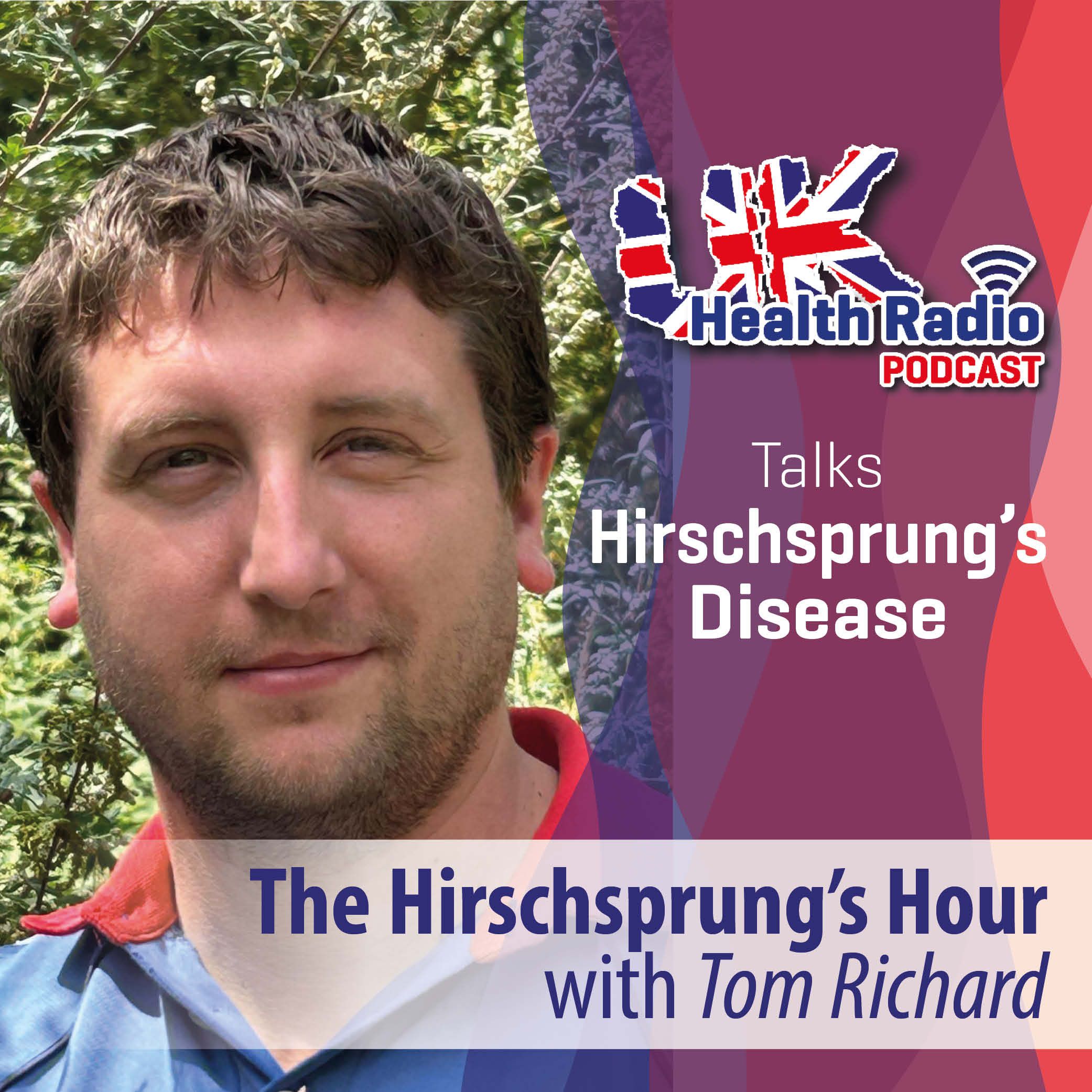
95: The Hirschsprung’s Hour with Tom Richard - Episode 95
About this episode
Disclaimer: Please note that all information and content on the UK Health Radio Network, all its radio broadcasts and podcasts are provided by the authors, producers, presenters and companies themselves and is only intended as additional information to your general knowledge. As a service to our listeners/readers our programs/content are for general information and entertainment only. The UK Health Radio Network does not recommend, endorse, or object to the views, products or topics expressed or discussed by show hosts or their guests, authors and interviewees. We suggest you always consult with your own professional – personal, medical, financial or legal advisor. So please do not delay or disregard any professional – personal, medical, financial or legal advice received due to something you have heard or read on the UK Health Radio Network.
Get every episode summarized
Each time UK Health Radio Podcast publishes, we email you a written briefing from the transcript — the topics, who appeared, and any specific claims, with the ad reads skipped.
Email me new episodesFree for 3 shows. No card needed.
Hosts & guests
Transcript ready
724 searchable segments. Every word is indexed and playable.
Full transcript
UK Health Radio Podcast — 95: The Hirschsprung’s Hour with Tom Richard - Episode 95. Machine-transcribed; use the interactive transcript above to jump the player to any line.
You are listening to the Hirschbrung's Hour on UK Health Radio, where I interview incredible people with connection to Hirschbrung's disease and other associated conditions, such as IBD, IBS, Crohn's, Colitis and Ulcerative Colitis. Each week I bring you a new and exciting interview with people from all walks of life, including charity founders, models and professional sports people. We go through the ups and downs of having Hirschbrung's with a positive message throughout. Hello and welcome to episode 136 of Tom's Hirschbrung's podcast. I'm very glad this morning to be joined by Megan. Good morning Megan. Morning. Thanks so much for coming on. We are here to chat. We're here to chat about your son Oakley, who has Hirschbrung's. A interesting story that I can't wait to delve into. Lots of little subjects. I know we were just talking a little bit off air about lots of hits and pieces that have happened in his life so far.
His short life so far because he's not very old at all. But yeah, really, really interested to to delve into those. But I'll hand over to you. Would you like to take us back to the beginning? Well, when August is born in November 2024, we're adding vice-e section because I had just social diabetes and when I went for my 38 weeks scan, the rest of his body was measuring 38 weeks bang on but his stomach was measuring 42 weeks and three days. The told me, we'll have to get him out as soon as possible because that's due to gestational diabetes. Didn't think anything of it. No problem. The tried to induce me. It didn't work. Then the took me down for a... It was technically a class as an emergency but I was already booked in on Tuesday the 26th of November.
And the class is an emergency because the induction failed. So we had him. C-section went great. You know, back to the room. Family came in but he wouldn't feed at all. He had no interest in the breast. He had no interest in a bottle. It was bright eyed but just like any newborn looking about. And I kept saying to my midwives, he won't feed. He won't feed. We'll make him feed. So I said, well, I want to breastfeed. I don't want to give him a bottle. I'll be going to have to. So the fetch bottles and we're forced feeding him effectively. And he was throwing every single bottle bit of it back up every time and then he'd cry because he was hungry. So he'd try again. And he was actually having a lot of wet nappies but there was no
stool. And then I had him around half past three on the Tuesday and they sent me home at five o'clock on the wedding's day which I thought was a bit... oh that's too soon after a C-section for me but they needed the room. So we went home and by the time we got home, every time I tried to feed him, it became yellow, the sick with the funny smell. And I was like, no, this isn't right. You know, this didn't happen with my first. So I don't know what it is. Still no poo. But I didn't, didn't even think anything of that. And then the community made wife came at eight o'clock in the morning, took one look at him and said, getting back to hospital right now, there's something not the... there's something not right. So we went back up to the hospital and they're like, well he's totally fine. This is really isn't fine because he's not feeding. He's now throwing up green sick which can't be very good. You know, that's not just stomach acid. And they give him an
enema and me and my partner Andrew literally watched him in the little crib blow up. I thought he was going to burst, he was just getting bigger and it was literally, it was like the size of a balloon. It was huge. And Andrew rushed off to the desk and they were like, we don't know why he's, we don't know what he's... took him away, cannulated him, put an NG tubing. Well as soon as they put the NG tubing, all the screen stuff started flowing right out of it. And we were like, what the... what is going on? I don't understand. And the rushed him back to the caboo. And for a new pass hospital, because that was the closest specialist hospital to us, even though it's like 70 miles away. And the nursing's caboo, I will never forget it, she looked at me and she put a hand on my shoulder and she said, if he makes it off the ambulance, he'll go straight into theatre and you don't know,
we don't know what's wrong. And I was like, oh, so the the came in with the incubator and everything from Newcastle and the two people on the ambulance were amazing. They explained everything to us that, you know, they weren't using all the machines on it. It was just the... to keep him warm and to measure his oxygen and stuff like that. There was no big machines on, no medication going into him anything. And they dast car oil that, have you taken X-ray? Oh no. So they got him back out, put him in the thing, did a portable X-ray and you could see that his bowel was impacted, it was humongous. And they still said to me, oh, well, we don't know what that is. And I'm like, I'm hisidwa, I'm not a doctor. So we've got blue lighted, all the way to Newcastle. And luckily,
I got there before anybody else. So Andrew and my family were following behind, but they'd been a crash on the A69. So the Neely got stuck in that. So I got there, we've got rushed down straight to the room and the doctor came straight in and luckily Andrew was only a minute or two behind. And he was like, please can you calm down? And I was like, no, you're going to take him to theater. And they were like, no, we're not. We're going for an X-ray and then we're going to give him a washout. And I'm thinking, how do you wash a baby out? You know, I didn't understand. And so we then went off to X-ray, the said it hasn't changed. It's got a massive impact. We're washing out. And there was nine balls on the bed, rounding, a stuff that just kept coming out and coming out. But as they were doing it, you could see him, the relief, and he's stomach going down
and he completely settled. And I was like, oh, wow, I don't understand. So they never said anything to us about what it could be or anything, because this was like one o'clock in the morning by at this point. That's how long it took them to get any answers at Carlisle or anything. And when they came to us the next morning and they'd had a really settled night, it slept all night, but it hadn't really slept either right from being born to going back to the hospital. So he'll have been tired. The said have you ever heard of her from this disease? I was like, never. We think that's what it is. He's gone to have to have a biopsy. And I was like, how do you do that? Well, we're going through the bone, take tissue and send it off, but he can't have it until he can go 24 hours without a wash out. And I was like, right, okay, she was like, so we don't know
how long that'll take. You know, it might be the, it might take two weeks, it might take three weeks, it might take two days. We don't know because we can't let you feed him yet. So that's when the told us, don't Google it. Just look on the told us to go on all the hair. Or it was the University of Sydney in Australia, which I found really funny after the fact because the sick children's hospital of Toronto specialised in it. And I knew that from Bella Brief. Okay, health radio. This station makes you feel good.
After I'd, you know, you realize, oh, that person's got it. Oh, you know, oh, that, you know, looking about and stuff. Um, so yet, took in seven days to be able to go the 24 hours. And I didn't, I wasn't allowed to feed him. So we got to the hospital on the third day. I wasn't allowed to feed him till the sun day. So he was nailed by mouth that whole time. And I was like, I'm never going to be able to feed him myself. You know, we'll even take a bottle, what'll happen? Uh, but thank God, a fluke, he fed straight away off me. And that was it. He was great. And I actually think the feed name helped him go that bit longer and get to the 24 hour mark. And then it took six days for his results to come back. And they were like, yes, he's got her. She's from his disease. We don't know the extent of it. We don't know what all it'll entail, but he needs an operation.
We're doing it tomorrow. And I was like, what? You know, like my baby, you can't operate on my tiny baby. But in the back of my head, you know, it's going to save him. So I can't say no. Just got to put your big girl pants on and be brave. So the next day, he was nailed by mouth from 10 o'clock because he was in at two. And the coming and his surgeon is, I mean, is an angel on earth to us. And when we were in the room and we were allowed to ask him questions and everything, my daughter, purely, he was 11 at the time, asked him more questions than any of us did. And there was me or his dad's grandparents, Auntie, all in the room. And he sat with her and told her more in it, like a, not a short version, but a way that she would explain, which that in turn helped me just listening to that.
And you know, he said, he might come out with a stormer. He might come out cooked from here to here. That way to that way, we just don't know, but you won't know until he comes out. And I was like, right, you know, whatever, just saving, if it's going to save his life, just do it. You know, it'll go into intensive care. So he was in three of five and a half hours, turns out he's got short segment to talk 10 centimeters away. Did the pull through perfect. He was, he was the staff, you full of the day. That's what he's got. And then he went over to intensive care. We were allowed to see him straight away. And his nurse that was looking after him, really laughed because he'd not walk up like on the move from recovery to and as soon as I went in, I was like, how are you darling? And he went, looked, we're right in the eye. And then she was eyes again, we're back to sleep.
And I was like, oh, but obviously not allowed to stay with them in case you fall asleep. So I was like, sat on the chair, like trying to keep my eyes off. I don't want to leave him and the nurse called Eve and she came over and she packed me on the show. And she was like, go and get some rest because you know, used to him, sit in there, fall asleep. And he was in there for, he did two nights, but it was more because of how they told us it was. I see you are more trained on giving more feed. And that there's a very fine line between two little, too much and perfect. Whereas the ward staff, they've got that many children to look after. They're like, no, it's wonderful. Well, one to two in intensive care. We don't have the capacity to monitor him as, you know, I don't know what the word is.
As hard. And we went back to the ward and I did actually sleep for eight hours. And I think it was just sheer exhaustion. It had been two weeks of I had people in the day helping, but then at night time it was just me and him. And he was uncomfortable and he'd cry when I like, he got too full and it was just, it was really, really hard. And then he came back to the ward, but it did take him 36 hours to poo. Which that was kind of worrying me because you're not to feed them until they've had the first bowel movement. But after the first one, when they tell you you need nappies and wipes, well, not wipes cotton. They wouldn't let me use any wipes. And I realize now why because when we've got home and I start using wipes, they got a sort of one. One, one cotton pads that you do. It was every 10 minutes for weeks and it was like, oh my god.
Is this going to be forever? And I made a comment to research and one of you's check up. So I was like, God, these nappies should come on prescription. I was like, well, actually, you can get them on prescription, but they're not very good. And I was like, oh, it was like, so just scan the back. I called in the pumpers and you'll get a one free every four pockets. I was like, oh, right, okay. And then we were finally allowed home on the 18th of December for Christmas. We had to go, we did a check up on the 22nd. So it was four days later. We had to go back and get them checked over. Had, you know, all my Christmases came at once because that was all we wanted. We just wanted to be home for Christmas. And in the first couple of days, we've been in hospital when they were talking about it's got to have an operation. If this is what it is, it's got to have this. They said, if it has an operation, you won't be home for Christmas. And we were like, you know, heartbroken.
But we made it home. And then the whole time, actually, after about a week of being at home, it was very uncomfortable lying flat. And I kept saying, no, there's something not right. No, there's something not right. But it wasn't descended. It wasn't being sick. It wasn't having like foul smell and poo or anything. And we went for our check up on, I think it was the 20th of January because it was, yeah, it was because it was barely as birth to that. That's his older siblings birth day. And we went for an X-ray because as soon as Tom looked at him, he said, is his stomach all like that? And me thinking, I knew everything about him was like, yeah, yes, yeah, why? And he's like, because it shouldn't be. And I was like, oh, felt like, you know, world's worst man.
Because how did I not notice? I knew there was a noise and that it was really uncomfortable and that something wasn't right, but I didn't realise there was anything wrong with him. And he says, I want to admit you, but I understand that it's you're so far from home and you're still going to have to wait a week for the contrast X-ray because we can't fit in. But I would rather you were here because I know you're going to end up here before that. And I was like, well, we'll go home. We'll see how we go. But any single change we will come straight back. We won't be hauled, descended, got rushed back over. Well, no, that's a lie. We went up to Carlisle and this was the first terrible experience. We went up, I told him, we'd descended. This is what we found out three days ago. Oh, well, we'll just keep him in here and see how we go.
I think that I know I would really like an X-ray to make sure it's not different or worse and could you ring new castle? Please, can you ring his consultant and tell him because he knew this was going to happen? Would you just didn't really know when? So, they didn't do anything apart from going ring Tom. Tom must have said to them, do him an X-ray right now and get him on an ambulance over here. So, the cannulated him, end you tube again, took him off for an X-ray and I said to them, I said, can I see it please? Why? I said, because I want to know for my own peace of mind how fast it got bad, because it wasn't all that bad. It was just a little bit bad. It's how I had it described to me really. And his whole bowel is there was loops, there was air pockets, there was impactions. He was there and everywhere and I was like, that is really, really bad.
And the most percent of it over to new castle, the rang straight back, put him on the first ambulance, get him over here, that's not right. So, rushed over, the cannulated was eight weeks old at this point, it was the 26th of January. And the washouts again, NIL by mouth. And I was panic and thinking, this is going to be my life. You know, it's heart wrenching to see him the way he is. And this is going to be our life and that's no life. That's all I kept thinking, why did it happen to him? Why did it happen to us? You know, this is awful. It's so, it's so, really, really hard. I can't find the word really. And again, Tom straight away came to us and I call him Tom
because that's how he presents himself to us. I kill Rangi up and I'll go, hey Megan, it's just Tom. I'm like, oh, hi. He came to us and he was like, right, Contrast sex rate tomorrow of squeezing EUA for day after. Right, that's fine. He was like, I've sported it, I will hold team. And this is when they said, four-seater stormer, three of us say not. But he was actually, all he's going to need is stormer. So he walked us through what that would look like and how it would be reversed in maybe two years, giving his bowel time to rest and go from there, try the pull through again. Which instantly he'll like, oh my god, what I've never dealt with a stormer. I don't know what I'm doing. I can't care for that. I'm a dairy farmer. You know, I don't do humans. What am I going to do?
So when we did the Contrast sex rate, we couldn't really find anything apart from a small tightening at the bottom of his finger muscle. And he says, oh, that's not consistent with how bad it got. Definitely stormer. And I'm like, oh, god, this is scary. So when they're taking down the theater for the EUA, he says, again, it'll come out how he comes out. That's it. There's nothing you can do. We can't tell you until we've done it. And we're taking down to the theater and that's how I'm wrenching in itself. You know, handing your baby over to somebody and it's like, oh. But we went downstairs to the shop, went outside for some fresh air, it would have been no longer than 10 minutes. And we were walking back in the room and I shook the door and then the door opened straight away and he was like, hey, we're finished. And as he was saying, we're finished.
I went, what are you doing? Where's the Orkley? And he was like, we've given Botox. I was like, right, he was like, come on. He's in recovery, come with me. So we went and sent him, got him out, fetched him back after half an hourish. And when the came and said, we can't find what's wrong, but everything actually looks okay. So we've given the Botox, but you're staying in for a week. So we can make sure it's working. And it worked straight away. As soon as he was back awake and it's fed, it was like back to the start of, you know, it was every 10 minutes. And touch wood, that's been the last major poolie and he's thrived since. He's jumped up the centiles. He was on the zero centile on the chart
when he was born. I mean, he didn't even fit his skin. You know, the skin on his legs hung. And his arms, the home. And it was so sad to see. And now it's like 86 centimeters. It's too strong. And it's just the happiest, funniest little 19 month old kid ever. And we have had a couple of instances of, like the sickness bug. He suffers really badly to tonsillitis. And that's from me because I have my now. But the tonsillitis does aggravate his bowel. Which that was when I was told in Ernie that I was an overbearing mother and all children get poolie. And that was our local Ernie. And up to now.
We've had no more major poolies. And we have had the sickness bug twice. And I did take into our actual GP practice. They're really good. The ring new castle and they say, this is what's happening. What do you want us to do? And they'll say, oh, they sent you by that antibiotic. Leaving for a few days and see what happens or whatever their plan is, the GP asks them and does what they say. And luckily, we've had no really bad, you know, entercollitis says or anything. Apart from the next big thing is what Tom said is, potty training, because boys hold it in. And that's really not good. So that's kind of my next big worry.
But then I'm also kind of not worried because he's already telling me or I need the toilet. I don't know if I'm doing away, which is really good for his age. Really, really good. I just don't want him to be like, oh, I'm scared of the toilet. Let's hold that in. So yeah, is, I think, we're a good story out of so many bad. And I want to tell you a story because I've been the frightened mum where I thought, oh, my God, at some point, it's going to die because of this. And he's so poohly now and we ever going to get some happy days. And I wish I had somebody then that was me now to say it's going to be okay. You know, the can be good out of it. You know, not every story is awful
and I feel heart sorry for people that are. But as a newly diagnosed, terrified child and mum, I just, I wanted somebody that's me now to be like, well, look at Orkley. He's absolutely thriving. You know, yes, something's bothering, some food's bothering. But he is happy. He's not ill. And nobody would even know that there was anything wrong with him. That doesn't know him. Yeah. No, and I, I mean, what a, what a story. First of all, so far. But, and I really appreciate you coming on as well. Because like you said, there will be people listening to this. Yeah. Or there will be people who listen to this in the future. And I think that, that have been in your position, you know, a month, two months, you know, down the line. And going, you know, what, what is next, you know? I mean, there's, there's some parts of that story that you brought up where you,
they're mentioning the term hersprung disease. They're saying, wash out. I mean, without knowing what hersprung is, without knowing what a wash out is, how would you ever know? It's just, you know, and like, like you said, you're going to wash my baby. Why are they washing my baby? You know, but that makes total sense. Because why would you know what a wash out is? You know? Yeah. And it's, yeah, it's, it's, but there will be people listening to this. That will be in that same situation that will be thinking, oh, there is light at the end of the tunnel. Yeah. Yeah. And that tunnel seems so long, like it's never ended. And then all of a sudden, you actually, I've actually thought to myself, hang on, I need to stop thinking negatively. Look at him. Like, like when he was six months old and we were going on holiday,
I was so terrified, thinking he's going to get pooly when we're aware what we're going to do. You know, and actually, nothing happened. And that's when I first started thinking, oh, we are actually okay. You know, he's okay. He's happy. Look at him flying around the pool with his brothers and sisters. And it's just, yeah, that was my kind of awakening of the light at this time. I'm at the end of that tunnel now. Yeah. Yeah, absolutely. And it's, it is one of those conditions that, I mean, it is a lifelong condition. But, you know, there are many success stories out there of people who, you know, maybe have a few difficult early patches. But then, I've interviewed plenty of people who are adults now who've, you know, had a difficult, maybe first couple of months, but actually have gone on, you know,
and now in their 20s, 30s, 40s, whatever. And have no complications, whatever, whatsoever. Yeah. That is more than possible. Yeah. That, that, and I hope, that, I hope that for all children with it. Sure. You know, but I feel like hearing a good story at such a young age I'll give more parents that hope that, yes, rather than bad time at the minute, but it can be better. You know, and the thing, I mean, the things that we've done for him since, like, to us, that hospital is, God, you know, it's everything, it saved us, we've done loads of fundraising. And it's just to give back, but how do you give back to people that saved your life and your son's life? You know, nothing to do ever feels enough. And, we always say,
you know, we worship the ground there walk on, but it's their everyday job. Yeah, they don't, they don't see it like that, because it's their, their job, they don't, well, maybe they don't, maybe they do, maybe they don't, but, because I guess it's normal to them to say people's lives, to operate, to care for other people. It's, it's still important, obviously, and they still recognize the importance of it, but maybe, they're a lot more humble about it, I think. Yeah, yeah. I think like we were saying, I'm a dairy farmer by trade, you know, that's, and I can do anything with a cow. But I come home, and I don't, you know, I'm not like, oh, we have to do this on a cow today, and it was really interesting, because it's just our normal everyday life, but to us, like to somebody else that doesn't farm, they'd be like, oh my God, that is amazing, you know,
and I feel like it's the same with all these surgeons, in anything they do, but I feel like people that operate on children must be like, I say of them. But then they still go home, and they just sit and eat the tea, and they're like, oh, I did three operations today. Oh, right, did you hear? Yeah. It's just normal. Yeah. But to us, it is, it is, but speaking of doing things for others, and helping other people, you've also been involved in the every step campaign, as well. Yes, yes. Would you like to talk a little bit about that? So, the new castle hospital's charity, and it is all of the hospitals, it's not just the AVI, it's the Freeman Crumlin, and I think, and it could be James Cook, but that isn't gospel truth of me, because I'm not sure where.
Got in touch with us last May, and asked if, Oakley wanted to be part of the every step campaign. Would we go over, have his fruit pints taken, and they would be used as the promotion for it? And I was like, yep, you know, anything. So, we went over for the day, and all of them, all our markets, got to, have the footprints taken. So, those barely whose, my oldest, Lacey and Alfie were, Andrew's older too, and Oakley. And when they explained to us what it was, it meant so much to us, because the whole campaign is every step of your journey, from walking in to Newcastle hospital, right through from your diagnosis, your treatment, your aftercare, right through they are there,
every step of the way, no matter what. And that is exactly what we've experienced as a family. There's been times where, when we've been at home, I've had to ring up and ask, what I think is a silly question, but it isn't. There was times, on a night time, where I was so upset in the room on my own, I for everybody had gone home, and the nurses would just come and sit and talk with us, explain everything, they took the time to get to know our family, our family's interests, what they did. You know, even when we were in there, all the nurses got barely in Lacey and Alfie and the ward windows for Christmas. You know, and right from the moment we walked over that doorstep, they are there, at any given moment, and that is exactly what the every step campaign stands for. And it's what the,
the one every patient and every family to feel. And if they feel like we do, that is the campaign, you know, in this evening, they were angry, and the most annoyed soldiers Generally, they don't jump in the room you just found out you found him was not responding by hearing them talking on my phone They decided to jump in and they did fall out in a hole, and it is absolutely amazing how to do the le치� next ones are a needy confirmed and it was my favourite nurse came and she was like is that you Megan? How is the whole thing? I thought it was your voice and I'm like you know, you just remember it and that is everything that every step represents. They want you to feel you know, looked after and put you trusting them through the whole thing
and it's amazing and I can't believe that we got to do the promotion for it but also experience it as well and when we went and got the footprints taken there were so many kids in that room that were also doing it and they had so many different journeys you know, there was cancer patients there was children with disabilities that you didn't really know what was wrong with them but everyone is just threat like royalty and I feel like that's how it should be. Yeah, I mean that's brilliant and it must, I mean no matter what you're going through at the time it must feel, well I know from my own person experience, how good it feels when people they might not understand everything that you're going through but they know who you are
and your value is a human being rather than just patient 3075. You know, that must be what I know myself that is worth a lot I guess isn't it? Yeah, it is yeah, yeah. Like when we were in, both times that we had kind of a long stint, when we were leaving, the nurses on the wardrobeset too and there were like we've got to see him before we go, like please don't go until we've come and seen you and it's like it's not just like right need that room you're out today and that is everything because you know that they have put their all into care and for your child no matter what's wrong with them could be hurt like there was on our ward there were so many different things like there was a little boy in that
a barely had made friends with is a art or a birthed and it's like wow you get that you know to what that would be you get special treatment because that is huge but we all get that special treatment in our own way tailored to you and your family and it's like everything the whole thing that right from going in to coming out and even going back to check ups now everyone's like oh hey yeah, hey yeah it's just amazing, absolutely amazing you're not like you said you're not just a number Yeah, yeah and that's got to be worth a heck of a lot I mean it's especially when you know UK Health Radio the station that makes you feel good
UK Health Radio the station that makes you feel good when you're going through what can be quite an uncertain time I mean especially as we talked about right at the start especially with the being rare disease you know you said you've got lots of children on the ward chances are you probably not got anybody else there with her sprung so it's you can feel a little bit alone so to have somebody who again might not know everything you're going through but at least they know you they know Oakley you know they know what Oakley has you know they she's got you've got somebody there who's supporting you I guess yeah yeah when they were doing is washouts and I was like this is wild what I liked was even anything even your student nurse right to your ward sister knew how to do that procedure
who needed that procedure and what it entailed there was no all you'll have to wait because we don't have such and such everybody knew everything at what time and people have come in and be like has Oakley had his washout I've just been on my break up or you know everybody knew and they explained to us things like that are kind of their bread and butter on the ward washouts because you actually you can get a washout for a lot of reasons apparently not just the her sprung and stormers are there that it was our ward bread and butter and that's what said so everybody knows how to do everything and when everybody needs it and that kind of made you feel a bit better but then you still didn't know who had what if that makes sense you know
yeah yeah yeah but you knew that then you what they were doing so they could tell you about it and that made it put me at ease and the rest of the family and obviously you trusted them to do it yeah yeah I mean confidence as well is is so important to have confidence in people because they're looking after you know the most precious thing in the world to your child you know so to have a hundred percent confidence in the fact that you know they know what they're doing they know when they're doing it they're not running around going oh what what's this happening you need to get so and so and all of that like you said you know and they're checking in on you as a person rather than just a patient as well and they know what's going on it again that that's got to be you've got so many things going on like you said through your head about not knowing this is going to happen is that going to happen there's an all manner of techniques and phrases and terminology being thrown at you
like everyone with her sprung so you've got to learn everything so fast things that you didn't even know existed 24 hours ago suddenly you've got to know all of it yeah and very quickly yeah and yeah yeah yeah I mean it's but no this is a brilliant thank you so so much for coming on and just just finally I know you you said the Oakley's doing really well now which is great which is so so good to hear in terms of sort of the future for him what but you hope hope that he is well enough to you know not have accidents at school and stuff like that but I hope he grows up and achieves
anything and everything he wants to achieve you know I'm living proof a grade on a piece of paper doesn't define your future because my grades at school were horrendous and I have done six years at agricultural university passed it all with flying colours I've got 20 years experience in it under my belt now although I don't look at the other 21 obviously and that's all I want for him to be able to go ahead and whether I mean he's really clever whether it's academically clever you know working clever whatever he chooses to do I want him to grab it with both hands because there was a day there where we couldn't even see his future and the days that were living now and for the rest of his life
or everything we wish for in that moment when that nurse said to me if he makes it off the ambulance yeah beautiful but anything he does I'll be the proud man like her sprung can't stop you exactly exactly that is wonderfully put and a fantastic sentiment to finish on it and I wish Oakley yourself and the rest of your family all the very very best for the future thank you so much for coming on thank you very much for having me thank you for listening to the Hirschbrung's Hour on UK Health Radio you can find me on Facebook under Tom's Hirschbrung's podcast or Instagram on Tom's underscore Hirschbrung's underscore podcast I hope you enjoyed the show and we'll bring you another episode soon
More episodes
More from UK Health Radio Podcast

102: Sleep Science Today with Andrew Colsky - Episode 102
UK Health Radio Podcast

181: The Relaxback UK Show with Mike Dilke - Episode 181
UK Health Radio Podcast
13: The Smartest Doctor in the Room with Dean Mitchell, MD - Episode 13
UK Health Radio Podcast
175: New Life Perspectives with Liz Larson and Bill McKenna - Episode 175
UK Health Radio Podcast