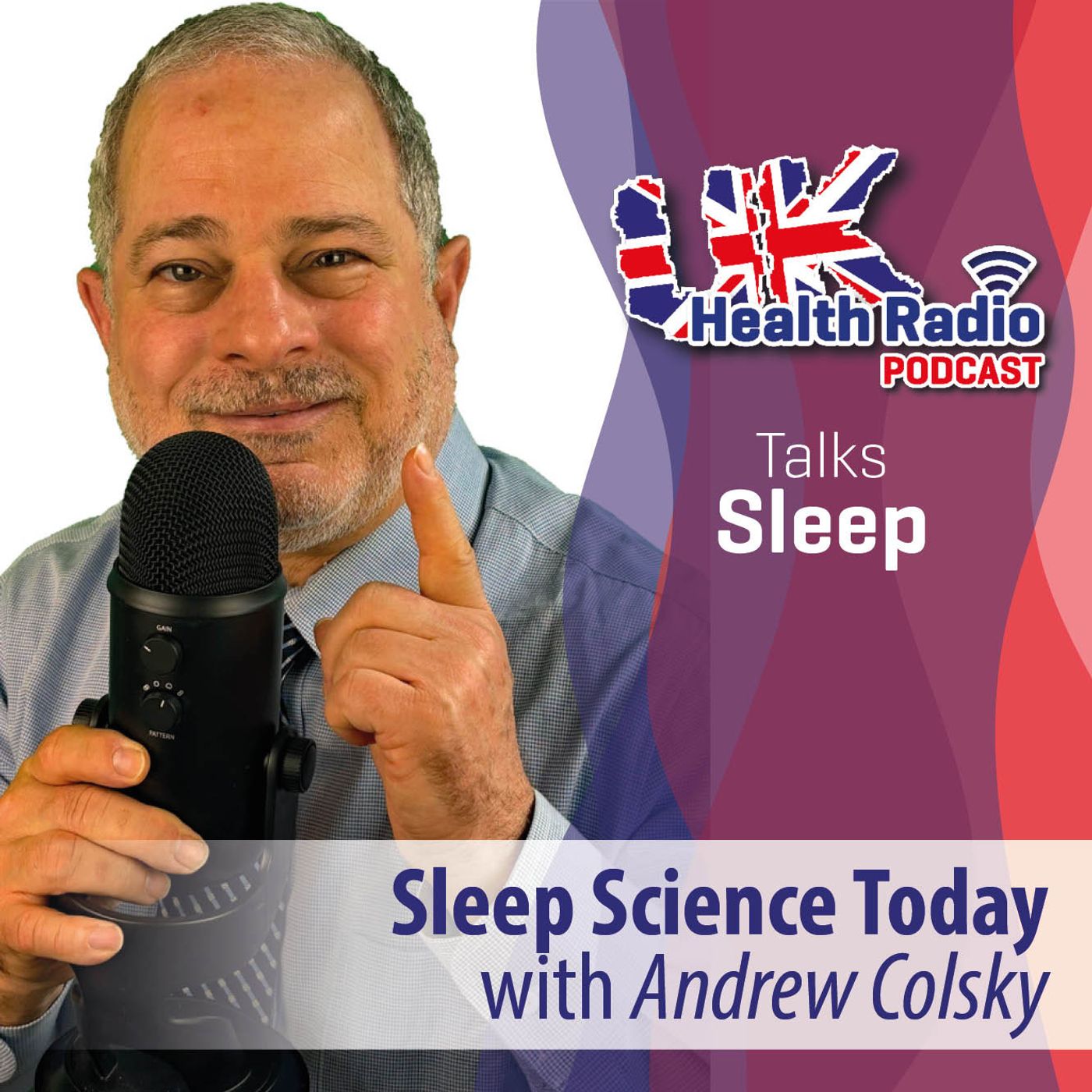
102: Sleep Science Today with Andrew Colsky - Episode 102
About this episode
Disclaimer: Please note that all information and content on the UK Health Radio Network, all its radio broadcasts and podcasts are provided by the authors, producers, presenters and companies themselves and is only intended as additional information to your general knowledge. As a service to our listeners/readers our programs/content are for general information and entertainment only. The UK Health Radio Network does not recommend, endorse, or object to the views, products or topics expressed or discussed by show hosts or their guests, authors and interviewees. We suggest you always consult with your own professional – personal, medical, financial or legal advisor. So please do not delay or disregard any professional – personal, medical, financial or legal advice received due to something you have heard or read on the UK Health Radio Network.
Get every episode summarized
Each time UK Health Radio Podcast publishes, we email you a written briefing from the transcript — the topics, who appeared, and any specific claims, with the ad reads skipped.
Email me new episodesFree for 3 shows. No card needed.
Hosts & guests
Transcript ready
401 searchable segments. Every word is indexed and playable.
Full transcript
UK Health Radio Podcast — 102: Sleep Science Today with Andrew Colsky - Episode 102. Machine-transcribed; use the interactive transcript above to jump the player to any line.
Kitchen and bathroom professionals know what goes behind the tile matters. That's why TradePros trust Fiber cement, Party Backer Board to keep tile firmly in place, resist cracking, and help block moisture. Chosen in over 40 million Kitchen's and bathrooms, Party Backer Board, what the best build on. Shop now at participating Home Depot, Lowe's, and floor into core stores. For more information, visit JamesHearty.com slash HeartyBacker. If you're running a small business, the last thing you need is enterprise-sized software costs. That's why Autodesk built solutions for the way small teams actually work. With Autodesk for small business, it's easier to find the right Autodesk tools without adding extra complexity. And now Autodesk Flex starts at just $99, giving you access to more than 100 Autodesk products on a pay-as-you-go basis. So whether you need design tools for one busy week or one big project,
you can scale usage without paying for more than you need. Everything you need, nothing you don't. Go to Autodesk, a-u-t-o-d-e-s-k dot com slash small business. S-m-a-l-l-b-u-s-i-n-e-s-s today. And see which Autodesk tools can help you take on more work without locking into long-term costs. It's time to wake to sleep with the number one sleep authority. Sleep Science today and sleep better tonight. Welcome to Sleep Science today. This is the show where we talk about sleep and all of the science behind sleep so that you can get better sleep. I'm your host Andrew Kulski, and today we're talking with Matia Luitt. She is founder owner of Philadelphia Social Work. So welcome to the show, Matia. Thank you so much for having me. I'm happy to be here. Great, great. So obviously the topic of the day, as always on the show, is sleep.
But sleep is not just something that happens in a vacuum. So tell us about sleep as you work with sleep. Sleep is a really important part of our lives, but it's often underappreciated. People think like, oh, you should get a good night's sleep. You should get seven to nine hours of sleep. But sometimes we don't necessarily know how to make that happen. And there are so many different distracting things going on in our lives that can make it hard to get a good night's sleep. Whether we're talking about electronic devices or finally getting some time for yourself or the fact that we're exposed to a lot of electric lights, which can impact our sleep cycles, there are a lot of things that can interfere with getting a good night's sleep on sometimes. We don't even realize that we're not getting a good night's sleep just because we're so busy that it's not a high priority. Yeah, yeah. And, you know, I probably should have asked this question first,
which is, so you're dealing with social work, which means you're dealing with a lot of different types of issues that people have. And it's always been baffling to me that in the professional schools, as we're teaching social workers and counselors and mental health professionals, etc., etc., they don't really talk about sleep at all, at least in my experience they haven't. So how did you even become aware to be thinking about sleep as part of the bigger picture? What a great question. The truth is I did not have any training on sleep in grad school and I only had the opportunity to learn more specifically about sleep when I was working at a university affiliated clinic, helping veterans and military family members, and one of the opportunities that I had there was participating in lots of different trainings on different kinds of therapies, including cognitive behavioral therapy for insomnia. I was really lucky that I was able to train with somebody who is nationally, and I believe also internationally known for training people on working with insomnia.
And so I had a full day of training as well as some recorded trainings that I watched, and I was able to consult with him. But also one of the things that was so exciting about this particular therapy is the cognitive behavioral therapy for insomnia or CBTI for short, is extremely effective very, very quickly. So in six to eight sessions, somebody could be sleeping better than they'd been sleeping in years, and as a therapist who does lots of different kinds of work, that's amazing. Being able to help somebody feel better in just two months when they've been suffering for years. So I think it's very appealing to be able to offer that. It's fun for me, but I also really like being able to have a big impact and help people have great outcomes. So as a social worker, I do think about all of the systems around us that affect our health and well-being, and I think that because sleep is not necessarily something we're having a lot of conversations about sleep science today accepted, people don't necessarily realize it's such a big deal
on that it can have such huge ramifications for your physical health, your mental health, your relationships, your general well-being. Mm-hmm. Well, let's take a little bit of time here, and tell us about that experience where you were training, and here's my questions about it. So you're working with veterans, and veterans are humans like the rest of us, although they have different experiences in many cases in life, however. There's a big picture from that holistic perspective. I'm really curious to learn the work you were doing, how did, you know, tell us the types of experiences that people have, the types of issues you're dealing with, and how did the clinic even know to kind of bring sleep into the fold? Okay, so there were lots of different reasons that people came to our program,
whether it was depression, anxiety, post-traumatic stress, life transitions, sometimes even more serious issues. We also did some work with kids and families, and I think the reason that we were able to do some training around sleep is that we were at Penn, and we're very fortunate there to have access to tons of excellent professionals, mainly psychiatrists and psychologists, but obviously other practitioners as well. And so we got to learn things just based on who was around. So we had training in motivational interviewing, we had training in complicated grief, therapy, and we had training in CBTIs, as I had mentioned before, we had training in working with couples, although I wasn't participating in that just because that's not really my thing. But we had opportunities to train in things just because we had so many great knowledgeable people around and really wanted to take advantage of that.
And so that was something that was very appealing about working there, working with the great team and getting to learn with people who are at the top of their fields and are incredibly knowledgeable and also really good at teaching things in a way that's accessible, because obviously somebody could be extremely skilled, but not a great teacher. So did clients come in specifically, oh, I have problems sleeping? Or did they come in with, I don't know, depression, PTSD, all the other things, and then it was sort of up to the practitioner to recognize that maybe sleep was also. Yeah, so sometimes people won't come to therapy and they won't actually be able to tell you exactly what's wrong. It's just something like, I don't feel like my regular self. I want to feel better. Sometimes people will say, I'm going through this crisis in my life or I'm going through a hard time.
But one of the things that I really liked about working there is that we were able to do a really detailed and thorough assessment to really understand what was going on for people. So when I am doing intakes, I'll usually ask people, how's your sleep? Do you have any concerns about your sleep? Any problems with falling asleep, staying asleep, waking up too early? And that just opens the door to having more conversation. So for example, if I'm talking with someone and nobody ever asked them about their sleep, they might say, actually, I've been having nightmares for a really long time. So then that would allow me to say, when did your nightmares start? How frequently are you having them? Are they disturbing your bad partner? If you have one, like what's going on with the story of your nightmares? Or if somebody says, I don't have nightmares, but it's really hard for me to fall asleep. I can ask, well, what's going on? How long has that been happening? Is it that you are worrying a lot? Is it that you are noticing that you're physically tense?
And it's hard to calm down? Are you feeling like you're in a state of being tired, but wired? What's going on? Because I think that it's really important to approach our clients with curiosity and trying to really understand somebody's experiences. And so asking about the nuances of what's going on is very important. Plus, other mental health issues can cause problems with sleep, like with depression. Sometimes people are sleeping too much, or sometimes people are not sleeping very much. And that can be associated with other issues too. Like, sleep can impact our eating, whether it's eating too much or too little. And so it opens the door to be able to talk about lots of different things that might be important in terms of helping somebody feel better. So, you know, I think back to my own training. And we had to do an internship. And we had to do a residency. And most everybody does as part of your training.
And because I had not been taught anything about sleep in school, when I was doing my internship, when I was doing my residency, there were plenty of times that clients would come in and they had one issue that they came in for, maybe depression, maybe PTSD, you know, something like that, anxiety. And they would talk about their sleep to me. And because I had no knowledge about it, no training, it was always like, well, let's try and treat the underlying disorder here and just hope that your sleep gets better. You know, because it wasn't even a thought about, oh, let's specifically focus on sleep therapy because I didn't even know that such a thing existed because nobody ever trained me on. And so in your experience, when you started working with people and you started to actually pay attention to their sleep as part of the picture, how does that change the way that you work with them? So someone comes in, they're depressed.
What would you say is different about the way you might work with them when you are aware of sleep versus when you're not? So I think I would ask different questions, honestly. And your point about not getting a lot of training in sleep is very real. I certainly didn't even know that I could seek out training in sleep until it was available to me. And I think that sleep specialists are a very small subset of mental health and physical health professionals in terms of what people learn about and what people do. So if I know that somebody is having problems with their sleep, I might ask questions like, can you walk me through what's happening in the 30 to 60 minutes before you're going to bed? What does your bedroom look like? How is the temperature in your bedroom? Is it too warm? Is it too cool? Is it comfortable? Is it cluttered? What's going on? Are there things that are distracting for you? There are lots of different interventions that can be really effective right away in helping people feel better.
So let's say somebody is having problems with their sleep because they're worrying so much. I can talk with them and say, it seems like you're spending a lot of time in bed going over and over your to-do list. What if we moved that to earlier in the day so that you have dedicated time to do it? So you're not thinking about it right before bed. And I also would share some information to help people understand why it might be the case that they're worrying so much when they're trying to go to sleep. If you're really, really busy and lying in bed is the only time you're still, your brain hasn't had the time to unwind. And so you might really need to be intentional about creating buffer time, like having some time to read a book. Not something that's too exciting or too thrilling, but it may be something that you do enjoy. Having some time to maybe have a cup of hot tea, maybe take a bath, stuff like that. So I think it allows me to better understand somebody's environment because I know what kinds of questions to ask as opposed to if I go back in time to before I learned about this, if somebody told me about their sleep,
I might have been in exactly the same situation as you. Like let's work on the other issue and hope your sleep gets better. And if not, maybe I'll have figured out how to help you by that time. Right, right. Yeah. And it's even talking with like a lot of people who are having sleep issues may also have some other medical issues. So they go to their primary care physician, which is of course where you would expect them to go. And in listening to different conferences and conversations between primary care providers, the comment typically is if a patient comes in problems with sleep, they're going to do one of two things. One, I hear often, well, we just give them a sheet of information about good sleep hygiene and we send them on their way. Or two, the one that's more scary to me is well, we give them a prescription for a sleeping pill. And we send them on their way.
And there's really, again, not their fault, but again, training wise, that they don't get really any training in medical school about sleep. So you have patients who then get, you know, reliant upon the sleeping pill. And then several years later, they realize, wow, I really want to get off of this stuff. This isn't meant for long-term use. And I'm concerned about side effects and all other types of things. And that's when they first are able to seek out any sort of true, you know, sleep therapy. And very, very, very, very few people out there have ever heard about behavioral sleep medicine, which is the one that is really designed to address insomnia and nightmares, you know, all these types of things we're talking about. So tell us this, if someone has anxiety, we typically think of them as sort of wound up.
And, you know, a lot of activity going on, so it's very hard for their system to calm down. And then that can impact their sleep. On the other side, you've got people who have depression, who, like you were saying, they tend to sleep too much. And they're the opposite of wound up. They're very much subdued. And my question is going to be, what have you seen in terms of the difference, or is there a different approach that you might take if you're dealing with the sleep issue part of those two different audiences? But before you answer that question, I do need to take a commercial break. So let me take a break. We'll come back and then we'll start with that question. So we'll see you on the other side of the break on Sleep Science today. Okay, health radio. This station, I make you feel good. Kitchen and bathroom professionals know what goes behind the tile matters.
That's why trade pros trust Fiber cement, party backer board to keep tile firmly in place, resist cracking, and help block moisture. Chosen in over 40 million kitchens and bathrooms party backer board. What the best build on shop now at participating home depot, lows, and floor into core stores. For more information, visit jameshardy.com slash hardy backer. Having problems getting a good night's sleep? Apollo neuro, maybe the help your body needs Apollo neuro is a wearable design to calm your nervous system so you can fall asleep faster and sleep deeper. Without medication or side effects, it works by sending gentle, silent vibrations through your wrist that signal safety to your body, like a hug for your nervous system. The result, fewer wakeups, deeper sleep, and mornings where you actually feel rested. It's not just a sleep tracker. Apollo neuro actively helps you regulate your body and smart vibes AI automatically personalizes the experience for sleep, calm,
focus, and recovery. It's scientifically backed with clinical trial participants gaining up to 60 minutes of sleep a night. Try it risk free for 30 days. That is a P O L L O N E U R O dot com. Visit Apollo neuro dot com and take $99 off today. OK, health radio. This nation, I make you feel good. Be sure to visit sleep science today dot com for access to all of our channels and special offers. I'm back to sleep science today. I'm your host Andrew Colski. We're talking with Matia and we're talking about sleep as it relates to anxiety and depression. So have you had the opportunity to deal with that and what is it like?
Yes, so I think your question is great. There are indeed different approaches that I would use if somebody was having sleep issues due to depression versus sleep issues due to anxiety. And if somebody was depressed, the first thing that I would try would probably not be fixing their sleep. It would probably be behavioral activation. The idea was behavioral activation for listeners who may not be familiar with this is that when we are feeling depressed, it's often the case that we have negative thoughts. We are not able to motivate ourselves to do anything so we don't do anything. So we continue to feel bad and behavioral activation is a way of breaking the cycle. So what we want to do is pick something to do that is going to help us feel better. And so what that means is on a scale of zero to 10, where zero is this is totally impossible and 10 is this is as automatic as breathing. We pick something that's at least an eight. So what we want to do is think about something that is doable and is going to help us feel better.
So it's not I'm going to clean my entire house or I'm going to climb a mountain or run a marathon. It might be something like I'm going to put my shoes on and I'm going to walk around the block for five minutes, where it could be something like I am going to tidy this one square foot of space. And I am going to appreciate having it be clean and maybe that'll inspire me later to do something else. So I'm going to wash one dish, something where it's very manageable. So if somebody's depressed as you pointed out, they might be more subdued, they might need something going on to help them feel more energized. So another very evidence-based way of helping with both depression and anxiety is exercise. Exercise is really good at regulating our moods. And also when we get regular exercise, it helps with improving our sleep. And we want to choose wisely when in the day we're exercising. So it could be that mornings are great for you or it could be that mornings are not really your time of day. So you exercise in the afternoon. We don't want to exercise too close to bed, especially if we're doing something really energizing because that can interfere with our sleep.
So that was depression and a little bit of depression and anxiety. And then if someone's really anxious, they probably need to feel calmer. I'm not going to say they need to calm down because I think calm down has often been used as a phrase that does not feel helpful for someone who is anxious. So they want to feel calmer, more relaxed. And so it might be that they need to do something that helps them reconnect with a hobby or interest. Like maybe they want to go to an art museum or maybe they want to go outside. I think that what we want to do is think about creative ways to help people feel better. And I always am really careful about tailoring things to what I know about my clients. So if somebody told me, I don't like karaoke, but I do like hanging out with my friends. I'd say, okay, well, if your friends are going to karaoke all the time and you don't want to join them, fine. But what if you said, hey, let's go get dinner. So as you're talking about that, I'm thinking about my own experiences with clients. And one of the things that came to mind was you're talking about the exercise part of it and how beneficial that can be.
And so prior to doing sleep work, I recognized the value of exercise from the fact that you get that endorphin rush and obviously there's benefits to your physical body, but also the mental health benefits because you're being active. But I always pictured that as, okay, I got to get to the gym and I got to get on the treadmill for 30 minutes and run hard or whatever. And then I started doing the sleep work. And over time, I started to recognize I have a good number of clients who we would talk about exercise, not from the standpoint of going to the gym and doing all this vigorous exercise, but literally we talked about go out and take a walk, take a walk around the block. And it doesn't sound like that's going to do too much or whatever, but I can tell you from experience, from multiple clients, once they started to incorporate a daily walk into their routine, we saw incredible changes in their sleep.
Now they were doing other working things as well, but for sure in my conversations with them on a week that they did their walking regularly, you would see the sleep improving. And then you might see an off week where maybe they kind of regressed a little bit or something kind of didn't go right and you inquire and say, yeah, well, I didn't have time to do my walking this week. And a really market change from something that seems so innocuous. Have you experienced similar types of things? Yes, I think that a walk can seem like such a small thing, but it can make a really big difference. And one thing that I think about a lot is habit formation and routine building. So when I worked at an ADHD specialty practice, that was something that we talked about a lot because obviously those things are harder when you have ADHD, it's harder to set a new routine, it's harder to stick with a new routine. And I think sometimes people underestimate the power of making small changes. So going for a walk might not just be going for a walk. It could also be that you go for a walk and you happen to see your neighbors who you like and you go outside and you get sunlight and you realize, oh, right, I like my neighborhood.
And maybe I'm going to go for a different walk this time than my usual route. And it can lead to all sorts of different things. I think too sometimes we think about changing our routines like, okay, January 1st is coming. It's going to be a new year, new me. I'm going to set new goals. I'm going to be a totally new person. And that's not actually how change works. What tends to work best if we want sustainable changes to be able to do something small and meaningful and build on that. So the example of going for a walk, maybe some of the clients that you worked with started with going for a walk. And then they added other things into their routines like going to the gym or making time to chat with their friends regularly, things like that. So I think it's a tribute to the power of small changes. Yeah, yeah. And it's, you know, for those people listening to the show, if you're considering just incorporating walking into your own routine, there's never a bad time to walk.
But I try to encourage my patients anyway. Because the circadian rhythm really kind of gets set through your wake up time and through light. I encourage them when you wake up. And this is, this is great if you have a dog or something because you got to take the dog for a walk. But to get up, get yourself ready and go out and just take a walk around the block because number one, you're kicking in that exercise, you're getting your heart rate going and all. But you're also experiencing the sunlight and you're getting your day going and you're helping to kind of solidify that circadian rhythm. So, you know, first thing in the morning walk is a great thing to do. Now, if you don't have time or for, you know, other circumstances, you can't do it. Do it when you come home, you know, or lunchtime. Go take a lunchtime walk. So it really does make a difference. Let me ask you about the food part of it. What do you tell people about food?
There's a sleeper in general. And it, well, in general, but also impact on sleep. Yes. So the main food thing to keep in mind with sleep is that you don't want to eat too late in the day and you don't want to eat too much because both of those things can affect your quality of sleep. I think in general, I try to be pretty pragmatic about sleep. People are busy, especially the people who I work with, some of whom have really busy schedules because they're taking care of other people in addition to taking care of themselves. And so I am a big proponent of making sure that you can make food workable for you. So that might mean that you do a meal plan. It might mean that your dinner doesn't necessarily look the same as everybody else's dinner, but that you want to be eating meals approximately at meal time and that you don't want to let yourself get too hungry because then you might end up snacking when you actually wanted to eat a meal.
So paying attention and giving yourself time to check in is really good. I think you can have a mindfulness practice around your eating if you're able to do that. But I want to be realistic and try to meet people where they are whether we're talking about food or sleep or exercise or any sort of habit. Yeah. It's one of my prior shows we were talking about mapping or bedtime and snacking before bed. And the guest she explained that a patient would say, yeah, I have my dinner earlier whatever and then I'll have a little snack before bed. And when she inquired what the snack before bed was, it was a very heavy, oily, greasy meal that I would call a meal, not a snack. And once the patient changed that and stopped having that heavy, heavy food just before bed, things improved dramatically pretty quickly.
So everybody I guess has their own definition of snack versus meal. But so do you ever have conversations with people about the types of food that they're having? Yeah, I mean, that's something that I would ask about. I want to go back to what you were saying about mapping and eating a big meal versus a snack though, because it reminded me of something that I think is good to keep in mind, which is that we want to allow our sleep drive to build up during the course of the day. So if we're having problems with our sleep, we want to be really careful about mapping. We don't want to be napping for too long or too close to bedtime. And the way that I usually explain that is to say that just like if you want to have a good appetite and meals, you don't want to be snacking between meals, you don't want to be napping before bedtime, because you want to have a good drive for sleep. And I think that I try to be really holistic and thorough in asking people about what's going on like a lot of my clients have ADHD and are busy people.
So sometimes they might not eat meals that are necessarily meeting the nutritional guidelines, because they're busy or they're tired or their kids are really picky. So it's like you have to make one dinner for the kids and then you make one dinner for the adults. And at that point, you have kind of given up on being able to do anything productive. So I try to ask about food in a way that's really nunchouch mental and non-shaming, because I think people probably are getting enough of that elsewhere and they don't really need that in my office. Yeah, yeah. It's, you know, we go back to this concept that we started with, which is this holistic concept. And, you know, I can safely share stories about myself. And in my own experience for me, when I paid special attention to my diet, meaning what I was eating, not dieting the way you think about diet, but what I was putting into my body.
And I moved from the heavily processed foods, the heavily oily foods, the heavily heavy meals and heavy meats and things. And I changed that. You really get where I got more clarity in just my thoughts, more energy throughout the day. I did lose weight. The purpose wasn't to lose weight, but I did lose weight. Sleeping became better. Really just exercise became easier. Such a tremendous difference, primarily just by changing the things that I was putting in my body and fueling my body with. I think of how sometimes just changing one habit influences other habits. Like if you have a regular practice of tuning into your breath and paying attention to your breathing for a few minutes, it might influence you to do other things that are positive for you.
Like making time to exercise. And if you're making time to exercise, then you might be more likely to pay attention to what you're eating and making sure that you're eating plenty of fruits and vegetables and getting good nutrition. If you're doing all of that, then it might also influence you to be more attentive to your sleep. But all of these things work together because if we're able to organize our lives in a way where we can protect time to take care of ourselves, we're likely to feel better and we're likely to have better relationships. Yes, yes, absolutely. Well, we are at the point where we need to take our second commercial break. So I'm going to do that now. We'll be back in just a minute on Sleep Science today. Okay, how's the radio station? I make you feel good. If you're running a small business, the last thing you need is enterprise-sized software costs. That's why Autodesk builds solutions for the way small teams actually work.
With Autodesk for small business, it's easier to find the right Autodesk tools without adding extra complexity. And now Autodesk Flex starts at just $99, giving you access to more than 100 Autodesk products on a pay-as-you-go basis. So whether you need design tools for one busy week or one big project, you can scale usage without paying for more than you need. Everything you need, nothing you don't. Go to Autodesk, a-u-t-o-d-e-s-k, dot-com slash small business. SMAL, BU-S-I-N-E-S-S today. And see which Autodesk tools can help you take on more work without locking into long-term costs. So if you've ever furnished a restaurant, hotel, or an office, you know the trail. Five vendors, five invoices, five delivery windows. But there's a better way to do this. Creighton Barrel Contract is a business to business program that covers three brands. Creighton Barrel, CB2, and Creighton Kids with one account, one order, one delivery.
They've got durable plates and glasses, contract-grade furniture, and lighting that looks custom that's built for the wear of busy space actually takes. And the best part is you're not doing it alone. A dedicated rep handles your project end to end, from volume orders to design curation. Plus, members get 20% off, tax exempt checkout, and flexible payment with no minimums. Learn more at Creightonbarrel.com slash podcast. That's Creightonbarrel.com slash podcast. Okay, health radio. This station, I make you feel good. Be sure to visit sleep science today.com for access to all of our channels and special offers. Sleep science today. And sleep better tonight. All right, we are back from our break. I'd like to kind of shift gears a little bit here.
And one of the big issues that a lot of people have is boundaries. How do boundaries impact people as you see them, and especially their sleep? Yes, well, I think one of the things that's really tricky about boundaries is that people don't always understand the term in the same way. So when I use the term boundaries, I think about it as the limits that we set for ourselves that help protect us. And our resources are limited. Our time, our energy, our money, our other material resources are limited. And so we want to be really careful about what we say yes to, and also what we say no to. So I tend to work with people who often are really caring about other people and often say yes to too many things and end up over committing. And so what many people, I'm sure this is very familiar because a lot of us in the healthcare professions have this problem ourselves. Yes. And so what we want to do is we want to think about why am I saying yes to that when I actually mean no.
If I say yes to X, does that inherently mean I'm saying no to why probably so thinking about how to organize your life in a way that helps protect against over committing as adults, we have a lot more control over our lives than as kids and sometimes we even have more control over our lives than we realize. So maybe we don't necessarily have to be saying yes to all of those social invitations, for example, or maybe we could think about, do I really want to spend two hours doing scrolling maybe not. Right, right. Yeah, that that's one that we talk about various mental health issues, the, the doom scrolling, the social media, I see that as such a big deal. It's such a big element in so many of the issues that clients come in with and we will do a thing that or I will do a thing with my patients where we get off of social media for a week and we try it and see what happens and always, always things improve.
So, you know, sleep wise, the worst thing you could possibly do is lay in bed, doom scrolling, hoping that you're going to fall asleep because guaranteed you're not. It couldn't even count how many people I've talked to about why that's not a good idea. This is reminding me about, excuse me, a great book that I read that's called How to Break Up with Your Phone by Catherine Price and she talks about how to develop a healthier relationship with technology because if you think about it, phones are kind of like slot machines that give us candy. Right, right. Oh my gosh, I didn't think of it that way, but you're right. Wow. I can't take full credit for that. That was an analogy that my friend came up with. He usually has his phone in gray scale and then he said, he'll sometimes need to put it in color and it looks like a slot machine and a candy store could bind. Yeah, yeah, but you're right. You do because you'll be scrolling and then you'll find that one video or that one thing that really kind of gives you that jolt of energy and that's a great analogy.
I don't know, Jay, I like that. But more often than not, I find people will scroll things that make them angry or upset or irritated and then they wonder, well, why can't I sleep when their whole system is activated because they're fuming over that post that their friend, you know, put up. Wow. Yeah, and I think that's a really good opportunity to talk about how are you using your phone and why and the fact that if you're not paying for something, the currency you're paying in is your attention and that the algorithms are often designed to promote strong emotional responses, whether that's anger or sadness or frustration or even the phrase I've heard compared to spare where you see that your friend has gone on this fabulous vacation. And then you wonder why not be and the way that I like to think about it is that what we see on social media is a highlight real, but we have the directors cut in our own lives.
And so we know about what's going on behind the scenes, but we want to be intentional about it. It's kind of like your diet. You don't only want to eat chips and popcorn and ice cream, even if those might be fine and moderation. It's not going to be nutritious for you if you were on social media all the time. Yeah, and I think another way to look at that as well is, you know, if you ever talk to someone who went out to a casino, what will they tell you? They'll tell you, oh, man, I won 500 bucks on such and such. Do they ever say to you, well, the last three times I went, I didn't win anything. I lost a whole bunch of money. They don't tell you the big picture. When you're on social media, you see that little tiny clip of something that maybe was fun or went well or whatever, but you know nothing about the fact that this person had all of these other issues that were just the opposite, just like you.
You know, we're all human. We all have the same type of experiences, but we're not going to put up the things that we don't want people to see on social media. We're going to put on a face of, oh, look how great and wonderful this whole experience is. Totally. I think that's a good point because it's lacking context and that's part of the reason that things can be really tricky when you're spending too much time online. You don't have the full picture as opposed to if you go to the library to learn about something you could read one book that leads you to read another book and then it gives you a fuller picture and more background as opposed to little pieces of something. So let's talk about another issue here. We're talking about sleep and sleep issues and all these things related to sleep. And primarily we've been talking about people who come in for therapy of one sort or another and we realize that sleep is an issue.
What are some of the types of things that people can do on their own versus the types of things that they might need professional? Yeah, so I think in general you want to seek professional help if you've already tried a lot of things and you haven't seen success or if it feels like it's complicated enough that you want to make sure that you get support. So the types of things that you can do on your own are relatively straightforward so you can move your phone out of your bedroom. No electronic devices need to be in your bedroom as a general rule. You can buy an old fashioned alarm clock. I know very very old school but that is for sure an option. You can also protect the 30 to 60 minutes before bed. No electronic devices, no bright lights, things like that. I say 30 to 60 minutes. 60 is better but a lot of people are a little bit reluctant to do that when I suggest it. So I suggest 30 as a little bit of an easier way in.
You can also do a little bit of a time audit and look at how you're organizing your day. When are you eating? When are you sleeping? When are you having time for yourself? One thing that shows up for a lot of folks that I've worked with is the concept of revenge bedtime procrastination which is you were really busy during the day and you didn't have enough time to yourself. So you sort of steal it from yourself at night and it might be your scrolling on Instagram. It might be that you are watching videos on YouTube. It's not something that is necessarily that beneficial and it's something that can happen to all of us if we're not careful. So being deliberate about how you organize your environment and making sure the things are set up in a way that works for you. There are plenty of resources about good sleep hygiene or healthy sleep habits as I usually call that. But when you've been trying these different things and you haven't seen much of a positive result, that's when you want to reach out to somebody else. And I'd encourage people to start with their primary care doctors and hopefully your primary care doctor is educated enough to be able to send you to a sleep specialist rather than just handing you a list of good sleep habits or
prescribing medication. The truth is behavioral sleep medicine is actually much, much more effective than medication and it doesn't have the side effects and it's not addictive or something that you have to worry about. So it is hard to find a good provider but there are directories available that are going to help you and you you don't have to have a bad night's sleep and think that your sleep is ruined forever. Most of us can bounce back from one off night and be fine. Yeah and that's something that I think is worth stressing for for the listeners. If you're listening to this show because you find that you're having trouble sleeping and if you find that you are going to the drugstore and you're looking for over the counter sleep aids or taking melatonin or something like that. Probably you would benefit from speaking to a professional who deals with sleep because as Matia was saying sleep is a behavioral process more so than anything else.
Melatonin unlike what many people think is not a sleeping pill. Melatonin is a chemical that signals to your body to start preparing for sleep and your body makes melatonin. The only time melatonin really truly can be beneficial is maybe if you're dealing with jet lag or something to help kind of kick start that process. But if you're popping melatonin pills or over the counter things or even prescription pills and if you haven't tried the behavioral approach first, you're probably missing out on the real solution that's going to help you sleep better. Yes, I have a thought about melatonin and something else that I really wanted to highlight. The current research suggests that melatonin is more effective with helping kids with sleep than with adults except for jet lag as you had mentioned and in general we want to allow sleep to happen if we're working too hard we're not going to be able to fall asleep so we want to create the conditions where we can allow good sleep to happen so that we can get a good night sleep because it's going to have a positive impact on our moods our relationships our ability to function in our day and it just makes such a difference.
It just makes such a difference when you go to good night sleep. Yeah, yeah. So, you know, the good news is that there's good news. There are effective treatments. There are trained professionals who can help you and the goal is continued regular good sleep as opposed to trying to get just one night of good sleep or finding something to help you get through tonight because you're not sleeping well. If you fix the problem then the problem goes away and you know both Matia and I have a personal experience watching that happened again and again and again and it can happen for you as well so make sure that if you're listening and you're having these types of problems that you think about reaching out to a sleep professional who can help you with those issues and help you return to regular consistent restful sleep. So, with that I hate to say it but we have reached the end of our time. So, I really appreciate you joining us and sharing the benefit of your experience and knowledge.
I do want to remind the audience that we have a new show every week so we cover all the different topics related to sleep issues. You can always visit us at www.sleepsciencetoday.com and you can find access to all of our other shows. Matia, if people wanted to get in touch with you, how would they do that? So, let again in touch with me is through my website which is www.filadalfiasocialwork.com. If you're interested in working together either for therapy or supervision or consultation or if you're interested in networking I would love to chat with you. Fantastic. Well, thank you again for taking your time to join us. Thank you for the work that you do. I encourage you to reach out to Matia if you feel that she can help you. Otherwise, we will see you next week on Sleep Science Today. You have been listening to Sleep Science Today, your number one sleep authority.
Sleep Science Today. And sleep better tonight. We have the tech to get food delivered in 15 minutes but we all have horror stories about buying tickets. The Game Time app gives fans the advantage. Get amazing tickets in just a few taps. Fees are included so what you see is what you pay. And the Game Time guarantee means authentic tickets at the best price every time. Take the guesswork out of buying tickets to concerts, sports, comedy and more with Game Time. Download the Game Time app and create an account for $20 off your first purchase. Terms apply.
More episodes
More from UK Health Radio Podcast
95: The Hirschsprung’s Hour with Tom Richard - Episode 95
UK Health Radio Podcast
181: The Relaxback UK Show with Mike Dilke - Episode 181
UK Health Radio Podcast
13: The Smartest Doctor in the Room with Dean Mitchell, MD - Episode 13
UK Health Radio Podcast
175: New Life Perspectives with Liz Larson and Bill McKenna - Episode 175
UK Health Radio Podcast