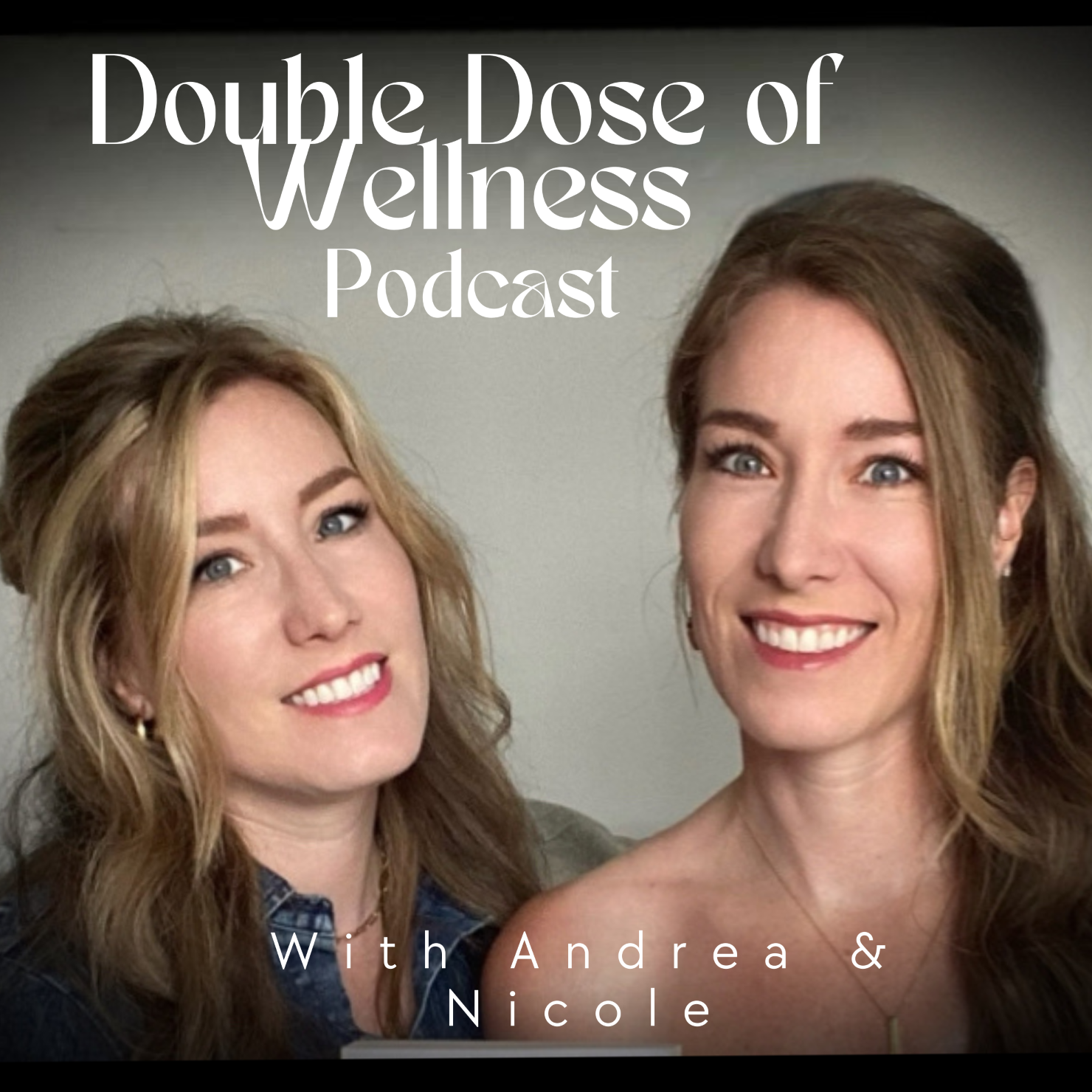
#67 Small Daily Changes That Create Massive Health Results
About this episode
In today’s episode, we’re breaking down one of the biggest myths we see in women’s health: That real change has to be dramatic.
More discipline, supplements, intensity, rules.
But exhausted, inflamed, stressed bodies don’t heal through more pressure. They heal through consistency.
In this episode we share five simple, evidence-based daily shifts that quietly and powerfully influence your core biology:
✔ steadier blood sugar ✔ more predictable energy ✔ better sleep timing ✔ improved appetite regulation ✔ and a calmer, more resilient nervous system
None of these are extreme. None of them are expensive. And none of them require a full lifestyle overhaul.
They’re small inputs repeated daily that compound over time.
If you’re tired of chasing the next health fix and ready to build results that actually last, this episode is for you. Grab your tea, get comfortable, and let’s dive in.
Follow us
Instagram @doubldoseofwellness, Facebook @A&N Holistic Health
Book a FREE Clarity Call Discovery Call
Get every episode summarized
Each time Double Dose of Wellness Podcast publishes, we email you a written briefing from the transcript — the topics, who appeared, and any specific claims, with the ad reads skipped.
Email me new episodesFree for 3 shows. No card needed.
Hosts & guests
Transcript ready
194 searchable segments. Every word is indexed and playable.
Full transcript
Double Dose of Wellness Podcast — #67 Small Daily Changes That Create Massive Health Results. Machine-transcribed; use the interactive transcript above to jump the player to any line.
Come back to the Double Dose of Wellness Podcast where Andrew and Nikki, twins, healthcare pros and your guides on this journey to living a balanced vibrant life. We help high-achieving women reconnect with their bodies, rebalance their gut and hormones, and finally feel like themselves again. This is a place where science meets soul and where the journey back to yourself truly begins, so grab your tea, get comfy and let's dive in. Hey everyone, welcome back to another episode of the Double Dose of Wellness. Today we want to talk about something that we see all the time with women who come to us. They think transformation has to be dramatic, so a new diet, a new supplements, a new workout plan, basically a whole new personality, and honestly that belief is usually the thing that's keeping them stuck. Because these big, intense overhalls are exhausting, and exhausted women, they don't need any more intensity. What they actually need are small things, done consistently, that are going to calm inflammation
and regulate the nervous system. So today we are diving in and sharing five tiny daily upgrades that create a huge impact for you. You know, when you wake up first thing in the morning, your cortisol naturally rises, that's normal. It's called the cortisol awakening response, and it helps you feel alert and ready for the day. What happens next matters, so if you skip food and only rely on coffee, rush straight into stress, your body stays in a more activated state for longer. So for some women that can feel like shaky energy, mid-morning crashes, you're irritable or you get that intense hunger later. So including protein in your first meal, this is going to help stabilize blood sugar and that overnight fast. So protein slows digestion, and it supports a steadier rise in your glucose. So this is going to help you feel full longer, compared with meals that are mostly made up of refined carbohydrates, refined carbs. So research shows that higher protein breakfasts are also associated with reduced hunger, later
in the day, better appetite, control, satiety. So for many women, that equals more consistent energy and fewer urgent cravings. So cravings tends to be one of the common conversations we have with women. And it's not that protein magically makes excess weight disappear. It's just that it stabilizes your blood sugar, so there's fewer extremes. And fewer extremes usually leads to better food choices, more focus, and just more predictable energy. Just to be clear about something, eating breakfast doesn't signal you are safe to your nervous system, but regular nourishment does reduce that physiological stress that comes from these big swings in your blood sugar. And that can help you feel more calm in the body, which is why women often notice improvements pretty quickly, not because it's dramatic, but because your body thrives with consistency. All right. So change number two is simple, just stepping outside for five minutes of morning light.
So morning light is one of the strongest regulators to our circadian rhythm. Your body's internal clock. That influences sleep, alertness, hormone timing, and metabolism. So when natural light enters our eyes, cells in the retina send signals to a part of the brain, and that area acts like this master time keeper for your body. So it helps determine when cortisol should rise, when melatonin should fall, when you feel alert, and when your body prepares for sleep later on. And this starts happening within minutes of light exposure. So five minutes, this means no workout clothes required, no green juice required, just eyes to the sky. That's that simple, that simple input that tells the brain daytime has started. So getting light early on in the day, this is going to help anchor the rhythm. So that melatonin is more likely to rise at an appropriate time for you in the evening. And research consistently shows people with stronger circadian alignment, they tend to
report better sleep quality, easier time falling asleep at night, improve daytime alertness. It's also evidence linking circadian alignment with better metabolic regulation, appropriate to appetite signaling, mood stability. And now here's the part that many women don't realize, this indoor lighting is far dimmer than outdoor light. So even a cloudy morning outside is usually brighter than your kitchen. So if you wake up and you stay under artificial light or immediately look into a screen, the signal to the brain is weaker, which means that rhythm drifts. And when this happens, people often feel tired in the morning, wired at night, they're out of sync with their energy. So better sleep tonight, it really does begin in the morning. All right, so change number three, this is one of our favorites. Women sometimes get a little bit nervous when we present this one, but add, don't restrict. So instead of constantly asking what should I cut out, try asking where can I add nourishment?
So when we say nourishment, we're talking about protein, adding fiber, fluids, adding electrolytes and micronutrients, because oftentimes a lot of the symptoms that women are frustrated by, low energy cravings or concentration, this is influenced by not getting enough of what your body actually needs to function well. So when your intake is consistently too low, the body starts to adapt. This shifts your metabolism, your hunger hormones can increase, you become preoccupied with food. We talked about this a few episodes ago, and then your energy drops. So those aren't failures, those are just normal biological responses when your body and your mind perceive scarcity and that comes from restriction. So adding nourishment, this is going to help stabilize some of those signals. For example, fiber, which supports digestion, blood sugar regulation, satiety, adequate protein, this is going to support your muscle maintenance and fullness, hydration, this
is going to support circulation, cognition, pain, temperature regulation and micronutrients. So these are required for thousands of different processes in your body. So does simply adding nourishment automatically fix everything? No, but many women tried to solve problems created by underfueling with more restrictions. And I was underfueling and restricting for many, many years and I know how much that can backfire. So when your body receives more consistent nutrition, this is where people start to report that their energy is steadier, that their digestion is better, they're getting fewer intense hunger swings and it's not because something magical happened, but it's just because physiology tends to work better when your basic needs are met. So supporting this creates a different internal environment than what you get when you deprive yourself, when you're underfueling, under eating. So there's a really big difference. All right, so change number four, one nervous system reset per day.
So if your body is spending large portions of the day in that stress response, it can be harder for other systems to work optimally. And the sympathetic nervous system, so often we refer to this as our fight or flight, is dominant, resources are shifted towards immediate survival. So this means that our heart rate rises, blood sugar rises, our glucose is mobilized for quicker energy and processes like digestion and long term repair, they're not the priority in those moments. And that makes sense. Your body is trying to deal with what they think is urgent. Now stress responses are normal and they are necessary. We want them, but many people move from one stressor to the next with very little time to relax, very little time spent down regulating and building in short moments that activate the parasympathetic system. Sometimes call that rest and digest. This can create more balance for you across the day. And this doesn't need to be complicated, five minutes can make a huge difference here.
For example, deep breathing exercises, a brief walk, maybe stepping outside for a little bit of fresh air, even just listening to music and moving your body. So these activities are associated with reductions in our heart rate and they can help the body transition out of that high alert. So just lowering the intensity so that your body has some space, has some time to do other jobs as well. And over time, when you practice this routinely, this down regulation, it's linked with improvements in perceived stress, our emotional regulation and just overall well-being. Awesome. So change number five, going to bed 30 minutes earlier. And this one's heavily based in evidence. This one's definitely going to trigger some people, but it might be one of the highest impact habits that you can start to build into your routine. So sleep is when the major regulatory recovery processes occur. So during sleep, and this is talking about adequate sleep, this is going to help balance
your hormones, appetite, it's going to help your body regulate glucose. This is where all your cognitive processing takes place, your emotional regulation, your immune function. So even small reductions in sleep, we know that this influences hunger, cravings, insulin response the following day, which is why after a short night, people often want quick energy fixes, usually sugar, refined carbohydrates, thinking about my sleep deprived years or year as a new mom, yeah, probably years, we're still in it, we're still in it, thinking about how your hunger is affected the next day when you're tired and when you're irritable. And just to be realistic, going to bed 30 minutes earlier, it's not going to instantly fix your metabolism or your hormones, but over the course of a week, that's going to start to add up to several hours more of an opportunity for your body to recover. And sleep is cumulative. So consistently getting more, this can support daytime alertness, this is going to contribute
to better decision making, contribute to better stress tolerance and resilience. This is also going to influence your food choices, your movement, your overall rhythm. We know when people are less exhausted, you tend to function better. So here's the honest truth. You can't compensate for chronic short sleep with supplements, caffeine, willpower. You know, that might get you through the first day or the second day, but that eventually is going to catch up to you. And they might help temporarily, but they're not going to replace sleep by itself. So ladies, bringing this home, none of what we talked about today is extreme, expensive, complicated, groundbreaking. But these are powerful because they do have the power to influence our core biology. So to recap, the five daily shifts that you should be starting on, that you should focus on before you sign up for these protocols and massive overhalls, number one, eat protein at your first meal at every meal, but definitely make sure you're including it in your first
meal of the day. So this is going to support stead of your blood sugar, appetite regulation, especially after that overnight fast. Number two, getting outside for morning light to help anchor your Canadian rhythm and support better sleep timing later. And number three, focusing on adding additional nourishment. So when you're adding protein, fiber, fluids, micronutrients, you're also making less room for empty carbohydrates, sugary food, quick fixes because your body tends to function better when its needs are consistently met. So if you start hitting those at every meal, you're eating to nourish your body. Number four, creating at least one moment to down regulate your nervous system. So you're not living in a constant high alert stress state. And number five, aim for a slightly earlier bedtime. This is going to increase your time to be able to rest, recover, and improve how you function the next day. So all of these are very small adjustments, repeat them daily.
And then just watch and monitor the effects and how you feel as you compound and continually add these into your daily routines. None of these are glamorous. No one's making a dramatic transformation real about eating breakfast or going to bed earlier. We realize that. But these are habits, right? So they influence our energy. They're going to influence appetite. They're going to influence how resilient you feel during the day. You can't out supplement chronic sleep loss, like we mentioned. You can't out hack a nervous system that never gets a break. So trust us, women have tried, we have tried. So just start with one, stack them slowly, and then just pay attention to how different you feel next week, next month, and let us know how you make up. All right, that's the wrap on today's episode. If you loved it, laughed or felt seen at any point, send it to a girlfriend who gets it, and don't forget to leave us a review. It helps more women find the space and get in on the conversation. And just a little reminder, before you go, you don't have to do it all to be doing enough. Take what you need from this, let the rest go, and we'll see you next week.
More episodes
More from Double Dose of Wellness Podcast

#91You Can’t Hate Yourself Into Becoming Someone You Love
Double Dose of Wellness Podcast
#90 Stop Waiting To Become Her
Double Dose of Wellness Podcast
89: The Conversation You're Having That You Don't Even Realize
Double Dose of Wellness Podcast
#88: Can You Really Boost Your Metabolism?
Double Dose of Wellness Podcast