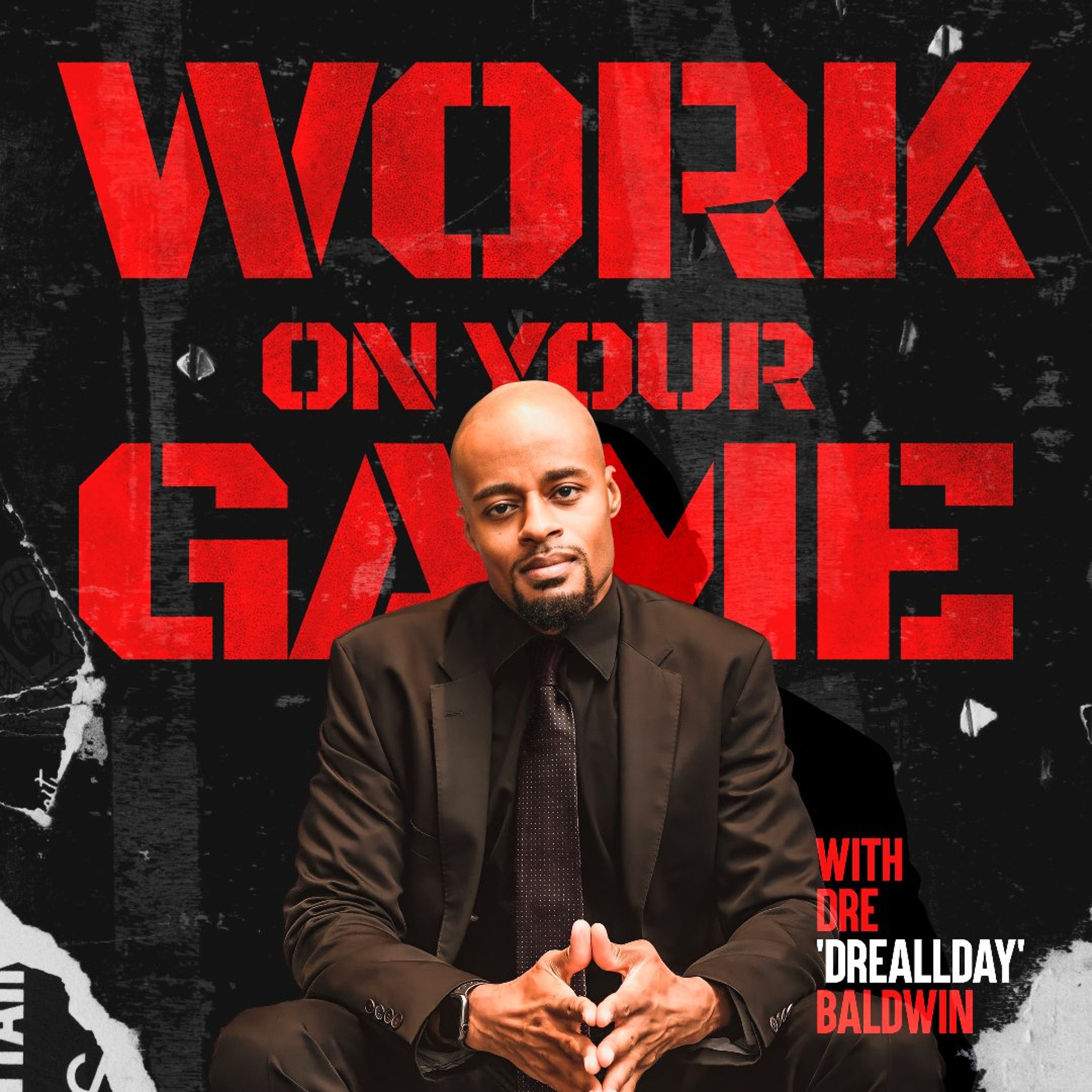
#3774: Don't Be An "Open Book"
About this episode
Get every episode summarized
Each time Work On Your Game: Discipline, Structure, and Execution Under Pressure publishes, we email you a written briefing from the transcript — the topics, who appeared, and any specific claims, with the ad reads skipped.
Email me new episodesFree for 3 shows. No card needed.
Hosts & guests
Transcript ready
419 searchable segments. Every word is indexed and playable.
Full transcript
Work On Your Game: Discipline, Structure, and Execution Under Pressure — #3774: Don't Be An "Open Book". Machine-transcribed; use the interactive transcript above to jump the player to any line.
Some people recalibrate before things drift. Others wait for feedback they can't undo. Power presence calibration exists for the first group. It is not designed to be welcoming. The location is listed below in the description. If you're looking for shortcuts, hacks or inspiration that wears off by Lensdum, this is not for you. But if you want practical ideas that help you think better, lead better, and execute more consistently, get my free daily game email. One message every day, right to your inbox, at workonmygame.com. That's workonmygame.com. You just want to be so predictable to people, just you blend into the furniture is almost like you're not there. That's what happens when you're in an open book. Close the book. Or write some new chapters. They all lay down. Work on your game. Work on your game. Work on your game. This is Dre Baldwin.
And work on your game. This is a system that turns discipline into dominance. Today's topic is, do not be an open book. The moment people think that they have you completely figured out and they know everything is going on in your mind, heart, and soul. First of all, they're going to stop paying attention to you. Secondly, they can use the material that you have volunteered against you. This predictability of knowing exactly who you are, you wearing your heart on your sleeve or being an open book, whatever language you want to use to describe it. This makes you easier to manipulate, as I said. This makes you easier to dismiss because people already know they already read the book. Most people don't read books twice. Most people don't read books once. It also makes you easier to underestimate, but not in that positive way. Not sneak up on them way, but easier to underestimate. We don't have to pay attention to this person because there's nothing there that we don't
already know. We already got everything we need to get out. We already extracted all the value out of this person. We don't need any more from them. Being an open book is what I'm advising against here today. Now, there are a lot of people out there who call themselves open books who are not really open books. Some people say that because they pride themselves on always telling you what they're thinking, always letting you know what's going on in their heads, wearing their emotions on their sleeves, being a person with no or a very low level filter for what comes out of their mouths. That doesn't necessarily make them an open book. Some people do that. It's kind of like a trick that they play on you. Letting you know their open books, so you think everything they tell you is exactly what they're thinking but it's actually not. There are some people who are actually open books and you treat them the exact way that I'm explaining here today. And I will explain as we go further. You figure you already know everything you know about this person. You don't have to pay as much attention. They are very predictable. They can be manipulating because you know exactly what they're thinking. How they're feeling, how they respond to everything. They are easier to dismiss because you already got everything out of them and you may not
even value their presence because you already got everything that you need out of them. Whatever you got out of them is not so necessary that you need them to stick around or you need to stick around there. So today I'm going to suggest you not being an open book. Doesn't mean don't be honest. Doesn't mean don't communicate. Doesn't mean don't win friends and influence people. But let me explain what it does me and point number one. Today's topic once again is don't be an open book. Number one. Being easy to read reduces your leverage. Part of your leverage in life is people not quite knowing how you respond if you respond. What you will want. How you will engage. How you're going to communicate. What you're going to ask. How you will answer. That's part of your leverage in life is other people's uncertainty to a point. I'm not saying you need to be this completely unreadable, vibe, wire, nobody ever knows what they're going to get from you because if people look at you and they're not quite sure what they're going to get from you ever in any way, well, you'll never get a job. You'll never win a friend. You'll never influence a person. You will never have a solid long-term relationship with someone who has to live in a constant
state of anxiety, not know what's version of you they're going to get from moment to moment. You have that type of person people will get away from you as well. I remember it was this girl I knew and I had brought her to a business event that I was at once and this girl I believe she had bipolar disorder. I'm not saying that. I don't mean that colloquially. I think she really did have bipolar disorder. I don't know if she had been diagnosed or not, but this girl was, she would just have these wild mood swings where she would just go from completely one way to completely another way in the span of like 15 minutes. I remember I bought her to this business event. She was with me at this event. We were not dating, but I bought her to this business event and she was fine on the way there. She wrote there in my car. When we got there, I introduced her to a business associate of mine and the business associate spoke to her and this girl layered at this guy like he was the scum of the earth and then just turned her back on the guy right in front of me and I'm looking at this business like, are you fucking crazy?
The whole point here is, I told you that when I went and picked her up and drove her to the event, she was behaving in a perfectly normal way, the way that I understood her to behave, what I saw as her baseline. But as soon as we got there, her whole energy flipped and I didn't make that the second and I never dealt with that woman again. She was crazy. Now see, you don't want to be so far in the other direction that you become that type of person to where nobody wants to deal with you at all because they have no idea what they want to get. See, that's a bad idea too. But at the same time, you won't be so open that people can basically predict your every move before it even happens. There's a reason why human beings dominate the animal kingdom. We dominate all animals because we can predict their behavior. We know exactly what they're going to do at all times. We've logged everything that they do, everything they could do all the ways they may respond to things so we can control them even though a lot of animals are bigger, faster, stronger, and have physical capabilities that far exceed human capability, but we still dominate them because we can predict their behavior. They can't predict ours. So when you're easy to read, it reduces your leverage.
There should be something about you that people may not quite know or something that they are still not quite sure of. They may have a best guess, but they can't 100% say for sure. You need to keep some of that in reserve when you're dealing with other human beings. Why? Because people are people. That's a good enough reason. When people can accurately predict your every reaction, decision, and behavior, they gain an advantage on you again, the same way that we can put tigers and lions in captivity, even though tigers and lions are bigger, faster, stronger than human beings. How we dominate them because of this? We can predict their behavior. They can't predict ours as well. We win. Uncertainty. Some level of uncertainty, not full uncertainty, but some level of uncertainty. Forces other people to first of all pay attention to you and also forces them to remain respectful of your possible response. Once they don't know how you're going to respond to certain things, they may think twice about doing certain things because they don't know what you're going to say that or what you're going to do back to what they did. And people generally, most people who have full control of their mental faculties don't
take unnecessary risks with other people, which keeps them respectful and keeps them mentally and emotionally at a certain distance from you, even while being close to you. That makes sense. Point number two. Today's topic, once again, is don't be an open book. Number two, predictability breeds complacency. When people can't predict your every move and behavior, they get complacent around you. They may get a little bit too comfortable with you. They may start to feel like, well, who know what? I don't need to go above me. I don't really need to show up all the way for the job. I don't really need to make sure that this thing is done right or that I'm showing up in the right way because I'm only dealing with this person because they can predict your behavior and it seems like you're not going to have a negative response to anything they're doing. People can grow complacent simply because you haven't given them a reason not to. This is why a little bit of unpredictability matters. And having an error of unpredictability gives you power, gives you influence. And it forces people to pay attention and be wary of how they deal with you.
This is one of 48 Gauss power is having an error of unpredictability about you because again, it keeps people slightly on your toes, slightly on your toes. Again, not 100% unpredictability because that's unsustainable. But just enough. And the 33 strategies of war, this is a key thing in war. You can't be completely predictable in war because if you are an enemy, well, completely envelope you and annihilate you and war won't even last them on one even war because they'll just destroy you before it even starts. They know exactly what you're going to do. You have to have some element of surprise to you. Same thing in any form of competition. People need to not be quite sure of exactly how you're going to show up all the time. They need to be sure enough that they can trust you, but not 100% sure that they can relax. So there's a balance here. And remember folks, balance does not mean 50 50. Balance means everything adds up to 100%. People value what continues to surprise them. So if every now and then you do something that is out of the ordinary outside of your normal routine, that keeps people awake and alert around you because they don't know
when one of those moments may show up again. And I'm saying this is a person who operates in a very structured, very, what most would call a disciplined way. But every now and then I will do something that maybe not with you all who's listening here, but maybe even here sometimes. Every now and then I will do something that is off the beaten path of my normal mode of behavior that keeps people again offline that keeps people kind of paying attention. But we don't know in that moment, they show up again, might go a week and not do anything different. But then the next week something happens. Then three days goes by, then 10 days goes by, then a month goes by, you never know when it's going to happen. People need to know that that could happen. That keeps them paying attention because they don't know what's going to happen next. People see the same thing over and over again. And they're like, okay, I pretty much got it. I don't do look anymore. And I used to make basketball content. I used to do the same drills. I worked on the same moves every single day, but I couldn't build an audience online putting out content doing the exact same stuff every day. I was going to have to mix it up somehow.
So what I would do is drills, certain drills doing different moves and such every day, those would be the videos I'll put on YouTube, which would be two to three minutes long. Then the rest of the workout that wasn't on video or was on video, I just then put it out. And I put the same stuff over and over again every single day. Now the same stuff that I did every day, I didn't put that out every day because it would have bored the audience. But when I put out the unique stuff that kept the audience's attention, that's the way I was able to build an audience and it helped me work on my game at the same time. So that predictability breeds complacency when people are complacent with you. They stop paying attention. They stop listening. They stop following and eventually they forget you exist. You blend into the wallpaper. All right. That's what you don't want. When there is nothing left to discover about a person, the curiosity goes away and people just allow their assumptions to take over. One way that you can maintain and this alludes to the power of presence protocol. One way that you can maintain curiosity, you can maintain that there is something to be discovered in you when dealing with other people is actually a pretty simple thing.
Speak less. Most fully grown adults have the capability of speaking. We all have something going on in our lives that other people probably don't know about. Something that we're thinking, looking at, reading, watching, considering, doing, etc. The less you speak, the less you share about yourself, the less people can know about you, people know about you, by listening to you talk. Well, if you don't say anything, how do they know? Well, easy answer. They don't. And as long as you don't say a lot, there must be something that they don't know, especially if there's something intriguing about you that isn't said by you. So people see you doing a certain thing all the time. Maybe something that is interesting, impactful, surprising, useful, valuable, yet they don't hear you talk. They're interested because you're doing something that is valuable and impactful, yet they don't know quite where it comes from, who this person is, why you're doing it, how you came to do it, how you developed this ability. They don't know because you're not telling them. The less you talk, the more you keep them paying attention because they're still trying
to figure out what is going on here. Now, the more you talk, the more you've explained yourself, the more they feel like they already got it. So they don't need to hear it anymore. Irony's not lost in me. I'm doing this as a person, as a show, it comes out every single day, but this show is only 20 minutes in episode. There's 24 hours of the day. When there's nothing left to discover, curiosity fades. Assumption to take over. And that's when people stop paying attention. Power presence calibration is not offered publicly. It is not explained. It is not scaled. It exists for people whose position already carries cost. Everyone else should move on. The reference point is in the episode notes. Point number three. Today's topic, once again, is don't be an open book. Number three, be consistent and principle, but not predictable in behavior. This is the crux of everything we're talking about here. Consistent and principle means you have standards and operating procedures that you work by, but at the same time, your behavior is not predictable. You can be predictable in some of your behaviors, but not every single thing that you do.
You can predict listeners of this show. You can predict that the show is going to come out every day until further notice. The principles are consistent that I'm going to be operating from principles and I'm going to explain to you the principle. I'm going to tell you why the principle is the principle. I may sprinkle in a story or anecdotes or two with the stories and principles that I share. I'll explain why they matter. I'll explain the context of any possible counterpoint to the things that I say. The principles you know those are going to come. It's predictable in that sense, but there are other aspects that are not predictable. Again, this shows about 20 minutes a day. There's 24 hours in a day. Your values should never change. Those are your principles, your standards, your operating system, but your tactics or your motives are very, but your tactics should remain adaptable. In other words, you make changes as necessary. One day I could decide, you know what? I'm just going to put the show only on YouTube and I put on audio platforms anymore. I could decide that one day. Today is not that day, but I could. Show still coming out. Just not here is only going to be there. Or I could decide I'm not going to put on YouTube anymore.
I don't like YouTube anymore. I'm just going to put the audio out in no video. I could decide that that's what I'm going to do. I didn't do that, but I could decide that that's what I'm going to do. The principle is I'm going to put the game out there every day and so further notice. But I could decide different ways to put the game out there. I can say, you know, I'm just do this by email. I'm not going to record anything else anymore. I don't feel like talking anymore. I'm just right. I could decide that. I'm not saying this is what I'm doing. Point is the principles are consistent. Principles is I'm going to put it out every day and so I decide I'm not going to put it out every day. I'm going to be consistent in the things that I'm going to be consistent at and the way that I decide to be consistent. That's the principles. Those are the things that I preach as someone said. But the tactics, how I decide to do it is completely up to my discretion and subject to change as I choose. Long people are reliable without being transparent. Those are two different things. I am reliable. You know that I'm going to show up consistently. You know how to reach me. You know you can text me at my number 305-3846894.
You can email me at dreayalday.com. You can find this show, work on your game masterclass on YouTube, Spotify, Apple Podcasts, etc. You can find me on all your favorite social media platforms. You can go on my name, Dre, D-R-E, Dre, Baldwin. What else? You know my emails come out every single day. I'm calling the daily game. If you're not on my email list, you can get on it by going to work on mygame.com. All those things are variable. You know that I'm going to do it. But I'm not transparent. Meaning there's a lot of things about me that you may be considering or have maybe thought about but you don't know and I'm going to tell you. And I'm not volunteering. Alright, that's part of the game too. You can be transparent about not being transparent. Nothing wrong with that. People don't need to know everything, folks. There are three different lives that you would. There is a public life, a personal life and a private life. Public life is the stuff that you put out for the world on purpose because you want them to see it, read it, know about it, watch it, engage with it, leave a comment, like it,
whatever. That's your public life. That's the stuff you put out to the world. You know you're putting it out. You want them to see it. Life are the things about you that are not necessarily business-related. Your coworkers and your business associates don't need to know it but you decide you want to share it. That's the personal stuff. Here's my wife and kids. Here's my family. Here's my dog. Here's me on a family vacation going to the beach. That's your personal life. Private life is the stuff that nobody knows about. And you don't want anybody to know. It's not made for the cameras and you do not make it available publicly. That's a private life. You need to have all three. Most people have a public life. I'm most everybody has a public life. Most of you have some type of profile and some app linked in, Facebook, even if you're not using it for business, you just have one, Instagram, whatever. Then there's your personal life. That's your family, your kids. You went on vacation, playing golf, etc. Your private life is the stuff you don't put on. And you only talk to people who you have a strong relationship with about.
That's the private life. It's happening these days and this is not a good thing. Is that many people are completely erasing their private lives by making it public. I strongly suggest you don't do this. And if you have started to do it, I suggest you revert and go back. Don't do that. You need to keep some things away from the camera. Once it's not everybody's business. All of your life is not the business of the world. You can pick and choose which parts of the world it will be enough to satisfy them. And if it's not coming from you, it'll get it from somebody else. That's okay. By the way. Recappin today's class, which is. Do not be an open book. Number one, predictability weakens your position. People know exactly what they want to get from you. Your position is weaker because they don't have to think about where you're coming from because they can pretty much predict it. Number two, curiosity disappears when there's nothing left to discover. You got to leave something under wraps that people don't know so that they got to keep paying attention so there may be more than meets the eye from what they've seen from you up to this point. Simple way to do this is talk less. Number three, stay grounded in your standards while remaining strategically unpredictable.
Your standards and principles are there, but how exactly you exercise them is up to your discretion and subject to change as you so choose. Final thought. The goal here is not to be mysterious. The goal is to avoid becoming so predictable that people stop taking time to understand you. That's the goal. You just don't want to be so predictable that people just you blend into the furniture as almost like you're not there. That's what happens when you're an open book. Close the book or write some new chapters. Work on your gang. Pray all day. You already know what to do. The question is why aren't you doing it consistently? ERI, execution, reliability, index, quantifies the gap between knowledge and execution. No guessing, no excuses. Get your score at workonyourgame.com slash ERI. That's workonyourgame.com slash ERI. That's workonyourgame.com slash ERI.
More episodes
More from Work On Your Game: Discipline, Structure, and Execution Under Pressure
#3775: Systems ALWAYS Get "Gamed"
Work On Your Game: Discipline, Structure, and Execution Under Pressure
#3773: Why Stories ALWAYS Beat Statistics
Work On Your Game: Discipline, Structure, and Execution Under Pressure
#3772: Your Brain Needs "Alone" Time
Work On Your Game: Discipline, Structure, and Execution Under Pressure
#3771: The Death Of Nuance (And Why It's A Problem)
Work On Your Game: Discipline, Structure, and Execution Under Pressure