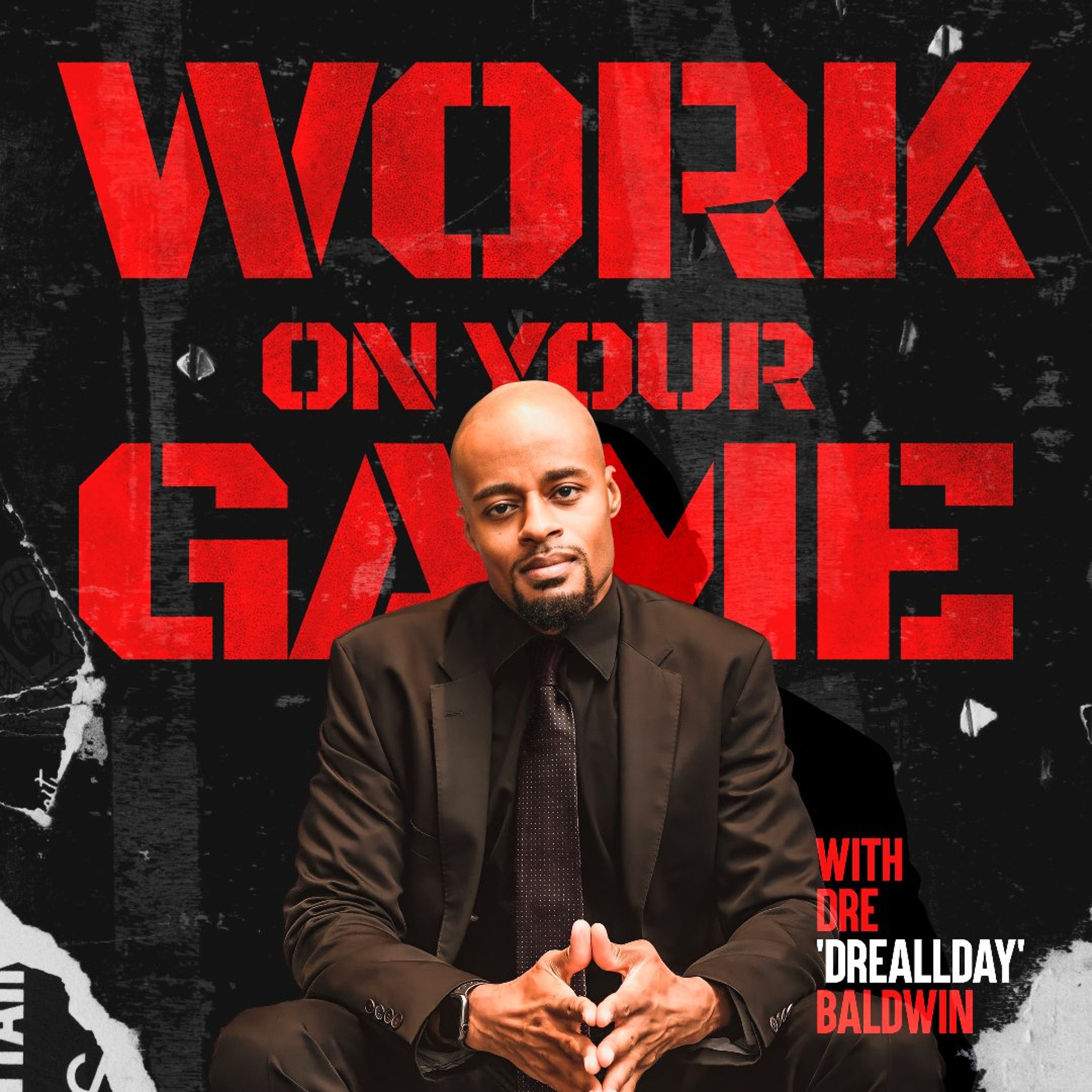
#3771: The Death Of Nuance (And Why It's A Problem)
About this episode
Get every episode summarized
Each time Work On Your Game: Discipline, Structure, and Execution Under Pressure publishes, we email you a written briefing from the transcript — the topics, who appeared, and any specific claims, with the ad reads skipped.
Email me new episodesFree for 3 shows. No card needed.
Hosts & guests
Transcript ready
416 searchable segments. Every word is indexed and playable.
Full transcript
Work On Your Game: Discipline, Structure, and Execution Under Pressure — #3771: The Death Of Nuance (And Why It's A Problem). Machine-transcribed; use the interactive transcript above to jump the player to any line.
Some people recalibrate before things drift. Others wait for feedback they can't undo. Power presence calibration exists for the first group. It is not designed to be welcoming. The location is listed below in the description. If you're looking for shortcuts, hacks or inspiration that wears off by Lensdum, this is not for you. But if you want practical ideas that help you think better, lead better, and execute more consistently, get my free daily game email, one message every day right to your inbox at workonmygame.com. That's workonmygame.com. See a confident person doesn't mean you always absolutely know the answer and they can't be questioned and can't be challenged. That's not confidence. Alright, that's performance. Great old man. Great old layup company. Workon your game. Workon your game. Workon your game. This is Dre Baldwin and workon your game is the system that turns discipline into dominance.
Today's topic is nuance is disappearing and that's a problem. The disappearing of nuance, the unwillingness to take time with a thought or an idea before coming to a conclusion. It's going away. There are certain specific things I'm going to point to that are causing this. We're going to talk about that here today. First of all, it's getting a definition of what nuance is straight from Marion Webster dictionary. It is a subtle distinction or variation or a sensibility to awareness of or ability to express delicate shading of meaning, feeling or value. The word nuance actually comes from the Latin newbies, newbies, which means cloud. In other words, nuance is about the gray area that exists between the poles of any idea. That's nuance and nuance matters. There are times when nuance needs to be discarded and you just need to make a decision to move
on it. There are also times when nuance matters and we can't make a decision because we don't have enough information and we need to be honest enough and confident enough to admit when we don't have enough information from which to draw a hard conclusion. The issue I see a lot of times these days with influential people, male and female, often it's more often the males who do this. Yes, that's the day we talk about the red pill. People are a lot of men in the red pill community. They have this very affliction right here. They don't want to invite nuance into any conversation because it conflicts with their world you, which is exactly how it is. And anybody who says it's not how it is, they're wrong. So therefore they have to do that every time they talk even when they can maybe see I'm giving them the benefit of their intelligence they can see that there's some nuance in a situation they can't admit it. So today's culture rewards certainty more than accuracy. If you want to come across as a very sure person and person really knows their stuff and you want to build a big audience very quickly, you can't speak to nuance because most of me being these are too fucking mentally lazy to accept nuance. They want a conclusion, they want a hard answer, they want to be just like this, they want
things to be black and white, color by numbers. There's no gray area in between and that's what moves the masses because the masses of people don't have the intellectual capacity to deal with ambiguity, the ambiguity of conclusion, which we may not be able to come to one yet because we don't have enough information. The example that I just gave you in a previous episode, that's where a nuance lives. The essence works because you can say this is what it is, this is how it works and any mistakes made that way, you can overcome those mistakes by just tripling down on it. As I explained to you yesterday, people increasingly treat complex issues as if only two extreme positions can possibly exist. They leave little room for careful thinking, little room for, hey, we don't know yet, little room for let's get more information because again, all that stuff takes time, it takes thinking, it takes mental patience and it takes an ability to be okay with not having a hard, fast answer. And a lot of people can't deal with that.
Let's talk about it, point number one. Today's topic once again is nuance is disappearing and that is a problem, point number one. People reward certainty over complexity as a justice might. You have to have the confidence. When someone asks you a question and answer by saying, I don't have enough information to give you an answer. A smart person can give that answer. Many times people want an answer to a question for which there is not enough information from which to draw a conclusion. We don't know enough yet. A man says that his wife want to go do something else. They're not together anymore after 30 years and a man who has built his brand on being certain about everything comes out and draws hard conclusions about it. I commend and say, well, you don't have enough information to draw hard conclusions because we all have access to the same limited information. And he says, well, something must be wrong with me because I'm questioning his conclusion. That's the foolish way of thinking is the foolish way of speaking and is a dangerous way
of teasing people because you're teasing people to be dependent on a worldview rather than actually thinking for themselves. And when you got a whole audience of people who again don't even know who they are yet, but they're learning from you and you appear to be credible because of your articulation, your voice and because of your audience. Well, you're actually making the next generation worse, not better, but at the same time it's helping you because you get to build an audience, you can sell them stuff, you can make money, you can build relevance for yourself, but you're actually making things worse when the ostensibly the point of what you're doing is to make things better. You're not. But that require use going down. That require you saying, I don't have enough information for what's the draw conclusion. You can still be a confident person and say that. See, this is the issue. You've heard me talking about confidence. I'm talking about confidence for 20 years. On the basketball court, off the court, business, entrepreneurship, social life dating life, you heard me talk about confidence a million times online over the last two decades. The biggest mistake people make with confidence and especially men, make with confidence is they think confidence is something that you do. They look at these surface level traits that they describe as confident and they believe
if I do more of that than it proves that I'm confident that it's bullshit, no, it doesn't. Being absolutely certain every time you speak is not proof of confidence. If you're absolutely certain about something that you actually know what you're talking about and you can defend it, then that makes sense. If you're projecting absolute certainty on something for which everyone in the audience knows you don't have enough information to draw a conclusion from, then you look stupid to people who are smart enough to see what you're doing. You look smart and confident to people who don't understand, but again, you're making them weaker because they're not learning how to think. If you are actually confident you will say to your audience, listen, we don't have enough information yet and here's why. And as all of you go through situations in life, you will understand sometimes you will have enough information from which to draw a conclusion. Now yes, my frame may be this, but until we get more information, I can't say this fits the frame because we don't know enough yet. And a confident person can say that. See a confident person doesn't mean you always absolutely know the answer and they can't be questioned and can't be challenged. That's not confidence. All right, that's performance. Confidence is not a performance. Confidence is a removal of interference.
There's not an addition of anything. If you're adding something on in order to be more, quote unquote, more confident, that's not confidence. Where you learn that from, price, some red pill clown, but that ain't confidence. I'm telling you what confidence actually is. Confidence accepts nuance. On social media, nuance perspectives will get attacked because you're challenging the certainty of a person who can't possibly be certain because you know that they don't know enough to say what they're saying. And if you don't fully endorse one side or the other, somebody can attack you by saying, well, look at this person there in the middle. So they're weak because they're not having a strong opinion. And that sounds convincing to people who again don't have the critical thinking skills to look at the situation and see what's happening. And most people don't have critical thinking skills. So this is a very effective way to maneuver an audience into a certain way of thinking. And that's why it's a problem because when you're maneuvering an audience into a certain way of thinking and your way is more convenient, easier and requires less friction than the
other way, well, your way is going to get more attention because it's easier. It's easier to sell a Snickers bar than it is to sell some organic produce. Well, I because the Snickers bar is easier, it's simpler. Has a longer shelf-wise shoot. Many people mistake this confidence. This blustery quote-unquote confidence is not real confidence as performance is what we should call it. They mistake this performance for correctness just because you strongly believe in a point doesn't make a true. Triple it down on blustery-ness or raising your tone of voice or raising your volume or shouting down anybody who disagrees with you does not make your point any more valid than if you said it quietly. Point number two. Today's topic once again. New loss is disappearing. That's a problem. Number two, ideology has replaced investigation. This is people deciding this is the way it is and anything they see must fit into that ideology. Men do this, women do this, a lot of people do this and because a lot of people are being influenced by known individuals who do this exact same thing. Politicians do this all day every day.
Democrats, anything Republicans do, they find a negative way to frame it. Republicans do the same thing to the Democrats. As well, politicians are not people to be trusted, look at or followed as examples of anything. They're great salespeople, they're great manipulators, and they're great at pre-framing and persuading people to go along with what they've already decided is true before they even have all the information, even when they have no information. They're fine to watch them if you understand this and you can use them for entertainment purposes. That's what I do. But if you're looking at them as examples of how to conduct yourself, you are going in the wrong direction, you're going backwards. It's the same thing with a lot of influencers, they do the exact same thing politicians do. They adopt the position and then they start forcing any new information to fit that position instead of letting the actual facts of the situation shape their conclusion. If your conclusion is the same every single time, then you have an ideology you're not thinking. That's not critical thinking. You can show me 20 different situations where 20 different relationships between men and women and I may come to 20 different conclusions because each situation is unique. It's not I'm going to come in and say, well listen, bitches are hoes in their gold diggers,
so every one of these situations I'm going to figure out a way to show you how the woman is a gold digger in a hoe. See that's the ideology. See that's the red pill ideology. I'm going to find a way to bring the woman no matter what the situation is. A man gets in a domestic violence battle with a woman and hits the woman and the man, the red pill man, he'll come in and look at that situation. I'm being kind of sarcastic here, but I'm really not. He'll come in and look at the situation to say, see, men, this is why you should always have a camera in your house anytime you get an argument with a woman because she can try to act like you hit her even when you didn't hit her and this will get you arrested. Or if you have a woman in your house and she starts yelling, immediately leave the house or kick her out, call her Uber, get her out the house and completely separate physically from her because you know she's going to try to do some bullshit and use it against you. There's not that they're necessarily wrong in that case, but you notice what they didn't do. It didn't say, hey, man, you probably shouldn't put your hands on a woman no matter what she says. This is the ideology. This is the ideology framing where something has to fit an ideology no matter what it is. I'm using that as an example, but I'm sure there are people who actually come out and said this exact thing. Complexity is an inconvenience rather than something to understand.
Neuontz accepts an embrace's complexity. Now why does Neuontz accept an embrace complexity because people who understand Neuontz are willing to think critically. Critical thinking breaks down complexity and turns it into clarity. Bustery, ideology-based thinking, ideological thinking does not want to deal with complexity because that requires thinking, that requires breaking things down piece by piece, that requires breaking them down, then putting them back together. And all the time you spend doing that, you're losing audience members, the small brain people who just want to simple answer. Back in my basketball days, I would get athletes coming and ask me a question in the comments or send me an email, ask me a question. And often people would say, could you just give me a straight answer? I would often ask people that preemptively before I even answered the question, can you just give me a straight answer? What they meant by a straight answer, what they meant was they want me to decide for them something that I wasn't going to decide for them. They would ask me a question and the answer would generally be, it depends on and then I would tell them what depends on. Well, if you're looking at this or looking at this, these are your different options,
this is what could happen. Now you decide based on that information. A lot of people would bristle at my given that answer because me giving that answer put the ball back in their court because I was challenging them to do something and most people don't want to do. You know what that is? Think. I was challenging them to think rather than me thinking for them. The purpose of me challenging you to think rather than thinking for you is I'm empowering you to think for yourself because I'm not always going to be here to provide answers for you. I'm not here to provide answers for you now. I'm here to help you think so that you can provide answers for yourself. That's how you empower people. You're empowering people by telling them what to think. You empower people by showing them. Here's how I think about it. Here's how you can think about it. Here's what I would notice. Here's what you may not be noticing. Now that you have all this context, now let's think through this together and you're going to come to a conclusion based on the information that we have in front of us and based on asking the right questions. That's how you empower somebody because now once you teach them that, now they can do it on their own. Now you can help them with the next level and the next level and the next level. You can guide them through levels. If you do all the thinking for them, then they're going to get past level one.
And this is what ideological thinking does. It doesn't on the male side. It doesn't on the female side. Politicians again, they do this as well. Complexity is inconvenient for these people because it requires understanding, that requires thinking, that requires time, that requires effort. A lot of people don't want to make any of those investments. So if you shortcut them, you offer them a shortcut and I haven't to do any of that, they will come listening to you because you make their job easy. I'm not here to make a job easy. My brain is called work on your game. My job is to make your job easy but not in a way that I'm going to absolve you of having to use your brain. If I do that, then you become dependent on me. Then what if I go away? I've actually made situations worse for you. I want to make you more dependent on you. I want to show you how to do it so that you understand I'm going to give you the structure for how it works. I'm not going to decide for you. I'm going to give you the structure for how I look at a situation and you can look at it the exact same way. And again, now we can ascend to another level. Now we can look at a higher level of things than a higher level than a higher level and it keeps going up.
As a member, higher level people always have a higher level to go to and they can take you with them that they know what they're talking about. They don't know what they're talking about then they run into walls or they got to keep you at the same level where they can control you. Again, influencers, politicians, they all do this. Power presence calibration is not offered publicly. It is not explained. It is not scaled. It exists for people whose position already carries cost. Everyone else should move on. The reference point is in the episode notes. Point number three. Today's topic once again, nuance is disappearing and that's a problem. Number three, nuance is a sign of strong thinking. You're a critical thinker. You understand nuance. You point out the nuance in a situation rather than saying this is the conclusion, you point out the nuance. Wait a minute. Do we know enough yet? Wait a minute. Do we have all the information here? Wait a minute. Are we sure about that? Critical thinkers talk like this. Critical thinkers say, if we look at this, have you considered this?
How can you draw that conclusion when all you have is this information? This is our critical thinker. So, critical thinker, as I told you this, when I did the series on critical thinking, episode 1826, 1827, people get annoyed with critical thinkers because critical thinkers will often take hard and fast conclusions that people draw and say, wait a minute, you can't draw that conclusion because, and people get annoyed not because the critical thinker said that because if you are wrong, they can just say you're wrong. But see, they can't say that you're wrong because you're right. We don't have enough information here. So, they get annoyed because they, by pointing out the critical thinker, by pointing out that we don't have enough information yet, they are sending you back to the drawing table of thinking. Most people don't want to be sent to a table to think because thinking is worked. So, to get mad at you for assigning them work that they didn't want to do. When you point out nuance, it doesn't mean you're weak in your conviction. Again, you have no basis to be convinced of anything if you don't have all the information or enough information.
You don't have to have all the information, but you don't have enough information. Just today, there was an internet personality guy. He got arrested in the state of Florida for allegedly domestic battery of his wife. And when the story came out, a bunch of people who don't like the guy came out and said, look at this guy. See, he's hitting his woman. He's a bad guy. He always talks about when other people get in trouble. Look at him getting in trouble. And I said to them, I commented to them, wait a minute, I won't even know what happened yet. A man gets charged with domestic battery. Doesn't mean he was just out there rampaging and looking like Mike Tyson on his wife. That might not have even been what happened. What if she tried to slap him? He grabbed her arm and her wrist and put it around her back to stop her from attacking him. She calls the cops and says, well, he grabbed me technically he did. He gets arrested for domestic battery because the cops came. They got arrested somebody. They arrest him. Now he's in jail and domestic battery. We don't even know what happened yet. You see how easily it can look like one thing, but it's actually another thing. I said, we don't know. And we don't know. How are you going to make this comment knowing that you don't have all the information?
But see people who want to make that comment, they want to make the comment anyway. New wants is we don't know you. New wants is I don't have enough information to give you a solid, full, complete, convicted answer yet. Are you willing to accept that critical thinkers are willing to deal with that uncertainty of I don't know everything yet. Whereas people who need everything to fit their worldview, they have to be certain about everything even when again, it's obvious they can't be. So they don't like hearing from people like me. Analoging uncertainty or analyzing exceptions is not weak in your position and makes you more accurate. Remember the job in life is not to be right is to be accurate. Accuracy means we achieve the goal. Right means I've proved my point. You can prove your point and lose. And you have been in a job where one of your co-workers proved their point and got fired and the process of proving their point. So you can prove your point and not give what you want. Those are two different things. Being accurate is about what is going to help me reach the goal. Even if it means at times, not being right.
Even if it means at times, you don't get your way. Even if it means at times, you yield a bit and give some ground in order to win in the long run. Say, I don't need to win this battle. I mean, when in the long run here, it'd be accurate rather than being right. See when people are focused on conviction and quote unquote confidence, their performance that they call confidence, then I'm willing to do these things. They have to be right about everything. But the problem is being right is not the goal. So you're playing a wrong game. You want to race the you and you want to win. Accuracy is the goal. The strongest thinkers can hold a firm opinion while recognizing that reality is rarely absolute. Reality is often not as sexy and as clean as people make it seem. But since most people don't want to think, they lean in with somebody offers them that. Recap into today's class, which is nuance is disappearing and that's the problem. Number one, certainty has become more popular than accuracy. You can appear certain and people just listen to everything you have to say, even if what you're saying is nonsense because most people don't want to think. Number two, many people will defend conclusions that is seeking in truth.
They'll come to a conclusion without enough information. And if you come to them saying, wait a minute, that's not quite the truth. They will attack you for undermining their quote unquote confidence. And number three, mature thinking leaves room for complexity. Most of life is it can be very simple, but some situations are very complex. There's a whole lot of grade, there's a whole lot of nuance and you may never have 100% of the information and you have to be confident enough to admit that. Final thought, if every issue has only one acceptable answer, you are no longer thinking, you're repeating, you are confirming. That works on some people, it doesn't work on everybody and works at some places, it doesn't work everywhere. The strongest minds do not fear nuance, they actually depend on it and they appreciate it. Work on your game. Dre, all dead. You already know what to do. The question is, why aren't you doing it consistently? ERI, execution, reliability, index, quantifies the gap between knowledge and execution. No guessing, no excuses.
Get your score at workonyourgame.com slash ERI. That's workonyourgame.com slash ERI.
More episodes
More from Work On Your Game: Discipline, Structure, and Execution Under Pressure
#3772: Your Brain Needs "Alone" Time
Work On Your Game: Discipline, Structure, and Execution Under Pressure
#3770: How "Red Pill" Men Are Just Like Feminists
Work On Your Game: Discipline, Structure, and Execution Under Pressure
#3769: The 4 Quarters Of Life (And What Each One Is For)
Work On Your Game: Discipline, Structure, and Execution Under Pressure
#3768: The Rarest Skill In Business- Get Shit Done!
Work On Your Game: Discipline, Structure, and Execution Under Pressure