About this episode
Get every episode summarized
Each time Dr. Eric Berg DC publishes, we email you a written briefing from the transcript — the topics, who appeared, and any specific claims, with the ad reads skipped.
Email me new episodesFree for 3 shows. No card needed.
Hosts & guests
Transcript ready
278 searchable segments. Every word is indexed and playable.
Full transcript
Dr. Eric Berg DC — You Will NEVER Eat Sugar Again after This!. Machine-transcribed; use the interactive transcript above to jump the player to any line.
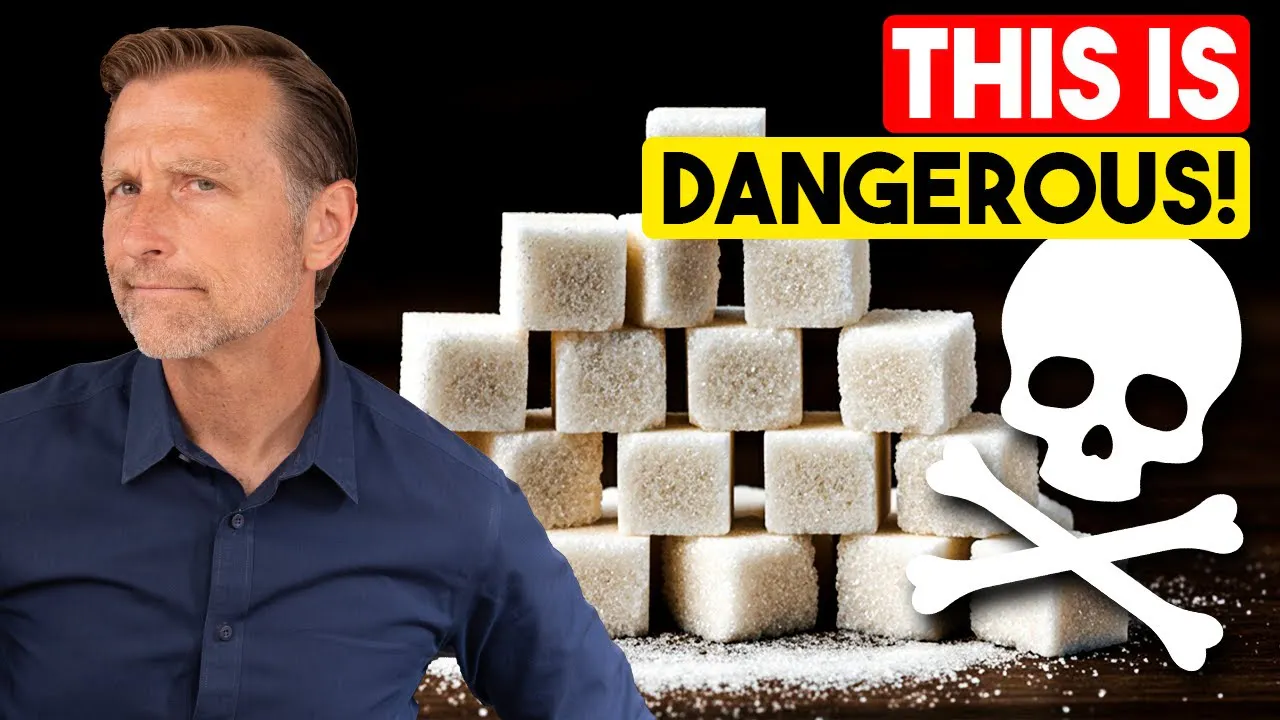
you will never consume regular sugar again. And when I'm talking about regular sugar, I'm talking about the sugar and stuff like this or this stuff right here. A really important question to know is why does consuming sugar always cause you to be tired, weak, irritable, or grouchy? Brain fog, which includes lack of focus, concentration, a person is also hungry if they either skip a meal or go too long without eating. And of course, they will have cravings, especially to, you guessed it, sugar. All of these symptoms are symptoms of low blood sugar. Why is it that when you eat a lot of sugar, you have symptoms of low blood sugar? It's just, it's strange, isn't it? Well, take a look at this right here. We have all this sugar in the blood, okay? After you ate a lot of sugar, normal sugar is really one teaspoon of sugar in all of your blood. I mean, this is kind of weird because an average person consumes a lot more than one teaspoon of sugar.
An average person in America consumes 75 teaspoons of sugar every single day. If you include all the other stuff that turns into sugar very quickly, like flour, bread, pasta, starches. So in spite of eating so much sugar, a person ends up with a low blood sugar. And they will end up with low sugar inside your cells. There is a very tight control over sugar. Your blood does not want high sugar at all. It will remove it because it considers sugar as something very toxic. Now remember, there's a very tight controlled mechanism in the blood, very similar to your, your temperature, which is 98.6 inside the body, the core temperature. But the blood sugar should be roughly around 80. You eat sugar, it spikes up. And the body goes, OK, that's too much. So it starts bringing it down. What causes it to go down is a control hormone called insulin.
Insulin reduces blood sugar by getting sugar out of the blood and also puts it into the cells. If you keep eating more and more sugar, the body is going to compensate and start to protect itself and start to block these receptors for this guy right here, insulin. Now the sugar doesn't get in, OK? Now you have a little thermostat inside your cells that measures how much sugar that's in there. And it's going to detect low sugar. So what happens over time is this insulin raises higher and higher and higher. Remember insulin pushes your blood sugar down. This is why you start getting lower and lower blood sugars because insulin is so high, it's pushing your sugars way below normal to the point where now you have low blood sugar. But not only that, you're at the same time developing
more resistance to insulin to the point where your fuel becomes less, less, less inside your cells. Now what's really happening with the pancreas producing so much insulin, it's compensating for these barriers right here. Your cells are blocked. And so between 15 and 20 years of doing this, what's going to happen next is this whole compensation, protection mechanism is going to break down to the point where it's not going to work anymore. They can't produce any more insulin. So at first, the insulin goes super high, which by the way, the doctors never test insulin. They always check the blood sugars. If they did, they would find it to be super high. But then over time, it starts going down, down, down, down. Now what's going to happen if you keep eating 75 teaspoons of sugar and you don't have the insulin to push it down? Well, the blood sugar keeps going higher and higher and higher. This is what is called diabetes, okay?
High blood sugar. And then the nerves, especially in the bottom of the feet and even the hands start to break down to the point where you get numbness and tingling in the bottom of the feet. And eventually, the tissues die off to the point where you get gangrene because the circulation is bad. They have to start chopping off the toe, it was in the legs, amputation. But other than that, you're going to be perfectly fine. I know this might surprise you, but some people might have a difficult time getting off sugar, cold turkey. And there's also some people that can get off sugar, but they occasionally want to go back on sugar for various reasons because there's two types of sugar that they need to kind of know the difference between. You have ultra-process sugars right here and then you have higher quality whole sugars right here. These sugars are all in stuff like this, okay? And I want to explain the problem with those type of sugars because there's a huge problem, but there's actually a very simple solution, okay?
We're talking about stuff like glucose. So when you look in the back of the label, it'll say glucose might say dextrose, which is a chemical name for glucose, or it might say corn syrup or glucose syrup, pretty much the same thing, or you might see high fructose corn syrup, or even sometimes you might see agaba syrup, or even just regular sugar, right? If you just look at the difference between white and brown sugar, there's not too much difference. And then they refine it and take out all this other stuff other than just the sugar, you get something called molasses. And brown sugar is just a little bit of that molasses added back in, but not too much. And then you also get things like rice syrup. All of these are heavily processed. And when I mean processed, I'm talking about they remove things from them. What do they remove? The nutrients, B vitamins, minerals, trace minerals, phyto nutrients, antioxidants. In order for you to take actual sugar
and turn it into energy, it requires nutrients. Nutrients are like the spark plugs that allow it to ignite and be utilized. And I really want you to get this next part. If there's fiber like in fruit, for example, that will lower the blood sugar spike that happens when you eat that food. These three things right here, lessen the bad effects of sugar. Without certain nutrients, you cannot use this glucose. So what happens when you consume this process glucose like these things right here without the nutrients? Well, there's only one choice is to poll from your reserves. Okay, if you have any, poll from other tissues. You're gonna rob Peter to pay Paul. And the body's hoping you'll actually add more nutrients in there. But of course, if you keep consuming this over time, you're gonna deplete all the nutrients which are needed to process this sugar and then the machine inside your body will not work anymore. This is why people get tired, okay? Their body just cannot produce energy.
Even if they consume sugar, they're just like completely exhausted all the time because the machine is broken. Fiber, lessens that blood sugar spike. Nutrients allow you to turn the sugar into actual fuel as energy and phytonutrients slash antioxidants help protect against all of the damage that sugar creates on your cells. When you eat sweet things, you're putting a tremendous amount of energy through this machine. And with that comes a lot of byproducts. Like for example, if you consume raw honey, raw honey has like 181 different chemicals to allow you to metabolize that sugar and protect the machine from all the fuel that's pumping through this machine. Maple syrup, it takes a tremendous amount of sap from trees to make just a little bit of maple syrup. Same thing has a lot of phytonutrients, it has nutrients. And then turbinado sugar is less refined. It's kind of like sugar cane, but not broken down all the way down
to even brown sugar or even white sugar. But if we take molasses, molasses is super concentrated vitamins, minerals, antioxidants. So when you consume this, this is going to be very protective against a lot of complications that happen with sugar. Then we get something like coconut sugar, which basically has a little bit of fiber and it has phytonutrients and nutrients. Then we have palm sugar, which comes from a different plant, date sugar as well. All of these are less processed than these. When you consume these right here, they are sucking nutrients out of your tissues. So they leave you in a deficient state. Before I was married, we went to look around town for wedding cakes. And then we go to an Italian restaurant. And we spent a long time there to the point where we looked around and everyone was gone except us and they were closing. And this person was delivering this cart with all these little cakes. And as he passed our table, he asked, listen, we're going to shoot these out.
Do you want to sample into these? And of course, we sampled everything. Okay. That day, I've never consumed more sugar in my life. We drive home, go to bed, and my pulse in my ears pounding. Bam, bam, bam, bam, like what is going on? My heart is racing. What happened was all that sugar sucked all this potassium out of my blood with the sugar to be stored in my liver because that's what happens. And when you're low on potassium, your heart rate goes up and you hear that pounding in the inner ear. And when you consume these, you also do not get the protection from the phyto, whoops, nutrients. Okay, these are antioxidants. There's no antioxidants in these at all. Now, if you do have low blood sugars, the best thing to do is not consume any sugar. People that have hypoglycemia, low blood sugar, people tell them that they should have sugar, right? Just to keep their sugar high. I think a much better plan would be to consume protein
instead of sugar because protein can increase your blood sugar and you're going to feel much, much better if you consume protein and not the sugar. But let's say, for example, you are really addicted to sugars, you can't come off very easily. It's going to take some time and you want a good substitute. Boom, right here, all of these, these at least will protect you against a lot of the problems that all of these create. Now, I want to get into a couple of things related to hyphrytose corn syrup and agave syrup. Okay. When we're looking at really all of these sugars right here, glucose obviously just has glucose. And corn syrup is just glucose. And glucose syrup is just glucose. But hyphrytose corn syrup is a combination of a little bit more fructose, the glucose. And agave syrup is like the worst amount of fructose. It's 80%. Now, when we get into white or brown sugar, we're dealing with like a 50, 50 split glucose
and fructose and the same thing with rice syrup. Now, here's the thing you need to know. Fructose only gets metabolized by the liver, whereas glucose can be processed by the entire body. So when you consume a lot of fructose, you are forcing that type of sugar to be dealt with just by the liver. And this is why hyphrytose corn syrup creates a lot of fat on the liver. It can then lead to type two diabetes. It also creates high blood pressure and also obesity. If we look at hyphrytose corn syrup and agave syrup, agave is like 80% of this fructose. So agave is actually probably a little worse than hyphrytose corn syrup, but people don't talk about it. In reality, people don't normally consume large amounts of agave syrup. They do consume very large amounts of hyphrytose corn syrup. Now, when you eat fruit, you have fructose, and it does go to the liver,
but you also have the nutrients, you have the fiber, you have the antioxidants to protect you. So you're not going to get any of these things if you're getting your sugar from fruits, and that would be a lot better than any type of sugar, because you're eating something kind of sweet. Berries, I think, would be the best thing if you could do that. Just because it's the lowest amount of sugar, it has a lot of fiber, but what I'm trying to explain is not all sugars equal each other. There are sugars that are really bad for you, okay? And then there are sugars in fruit that if you don't have instant resistance, or you're younger with a very fast metabolism, or you fixed your metabolic rate, you could probably get away with these without a problem. But I will tell you right now, with an average person that is, let's say, middle aged, and they'd be consuming a lot of sugar for a long time, even fruit might slow them down. Now that you know a lot more about sugar, if you have not seen this very popular video about sugar, check it out. I put it right here.
More episodes
More from Dr. Eric Berg DC

The #1 Best Protocol to Reverse Gout (and Prevent It)
Dr. Eric Berg DC

Take ONE Teaspoon of This Spice to Resolve Your Diabetes
Dr. Eric Berg DC

The Top Foods That Have Been Blocking Your Nutrient Absorption (Vitamins & Miner...
Dr. Eric Berg DC

DON'T CONSUME THESE IF YOU'RE OVER 50!!!
Dr. Eric Berg DC