Loading...
societySep 3, 202654:45pending
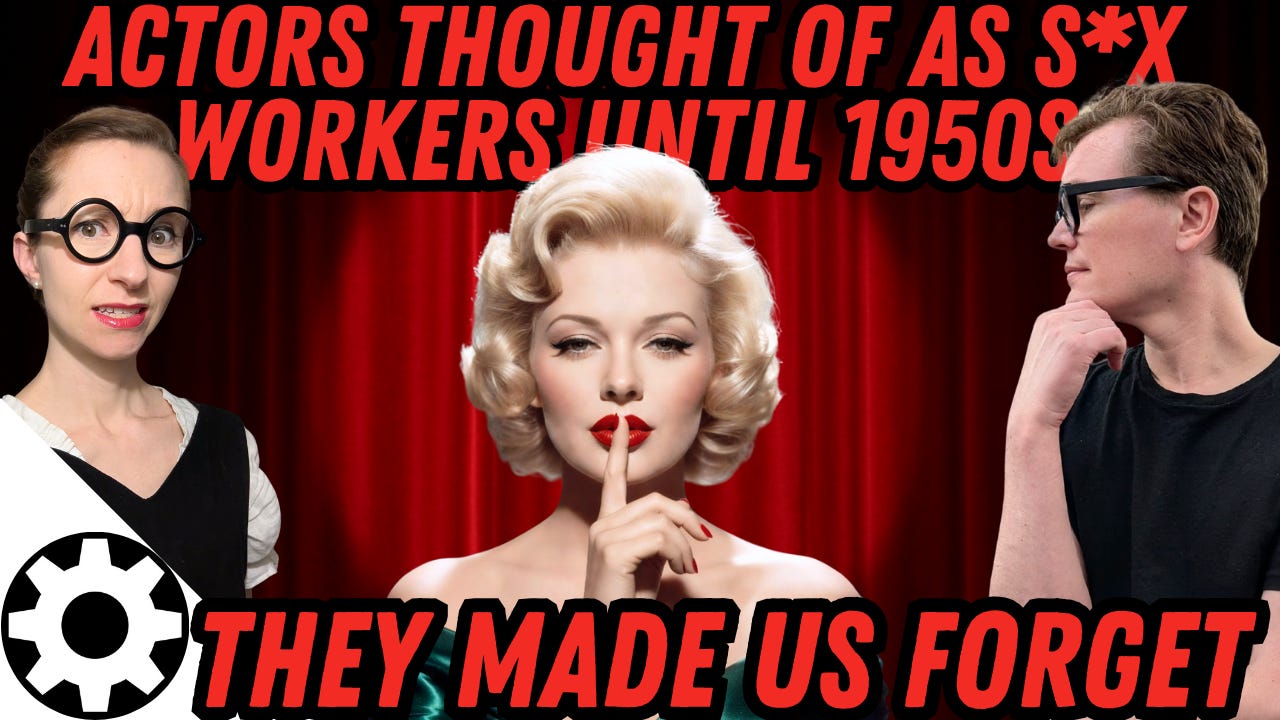
Why Actors Were Social Outcasts Until Recently
About this episode
For most of Western history, acting was a low-status profession often linked with vagrancy, moral suspicion, and limited respectability. This episode traces how that reputation formed—from Restoration England and Victorian theater culture through early Hollywood—and why the public association between performers and social stigma lasted far longer than most people realize.
Drawing on historical research and primary accounts, the discussion covers when women first appeared on the English stage, how limited career options shaped public judgment, the slow professionalization of theater after the Civil War, and the modern shift that turned entertainers into trusted public voices. Key turning points include late-night television’s studio-era promotion machine and the legitimizing effect of a former actor reaching the highest political office. The conversation closes with a practical takeaway: how to choose role models and sources of life advice more carefully.
Episode Transcript
Malcolm Collins:Hello, Simone. I’m excited to be here with you today. Today, we are going to be talking about another part of history that has been hidden from people, which is that until very, very recently, actors and actresses were seen as the same kind of a thing as smex workers.
Simone Collins:Yeah. Yes. It shows up a lot in my regency era romances.
Malcolm Collins:It comes up a lot? Oh, yes. Yes. Yes. Yeah. Yeah. They don’t they’re like, how could you be with an actor? No.
Simone Collins:Well, they yeah. They’re basically roughly the same thing. Like, you you kind of understand, you know, if she’s an actress. That’s
Malcolm Collins:what she does. And what I will be going into in this particular episode is the reasons why this connection was made, but also tracking that the reasons why people originally well, let’s put it this way. The reason why one of the big reasons why is because actors were, one, literally selling their bodies, which they do to an even greater extent today. They often appear on stage naked on Yeah. Major movies
Simone Collins:and Kissing people for pay. For pay. Yes. Romantically interested in.
Malcolm Collins:And in addition to that, it was well understood that most of them would sleep with theater directors and stuff like that for their roles, which, you know, going till today is still something they do. but look at the Harvey Weinstein case. and you also see this was males as well. Matthew Lawrence described being sent to a hotel room where an Oscar winning director in a robe asked him to dress for Polaroids and applied compliance would get him a major role. He declared Male or female? Lost his agency. This is Matthew Lawrence, a male actor.
Simone Collins:And and the director. I’m asking if the director Male director. Oh, okay. Well, yeah, sure, I guess. Mhmm.
Malcolm Collins:So, yeah, this is this happens on both sides of the fence in in Hollywood, and people in Hollywood selling their bodies. They are still sleeping with directors for roles. And so the question is, if they’re acting like prostitutes, why did we as a society start respecting them? Why did we as a society start taking political and life advice from what is essentially high pay prostitutes?
Simone Collins:Yeah. Because I guess now it’s it’s there’s a there’s the actor to influencer lifestyle product purveyor pipeline. Yeah. Or the assumption is, ah, yes. We must we must listen to them and buy what they buy for they know better than we do, which is so funny. Because I guess, yeah, even with going all the way back to, Greek plays, all the men played women. And then same with Shakespearean plays. There weren’t female actresses. The men played women. So, yeah, when did women start acting in the first place? When were women allowed to start acting in the first place? I don’t know how this was with Kabuki in Japan. I admittedly don’t know if that was
Malcolm Collins:That is one of the things that we will be talking about.
Simone Collins:Oh, good. I want to know. Oh.
Malcolm Collins:So just some this was a hard episode to put together because, again, there was so much academic research on this.
Simone Collins:No kidding.
Malcolm Collins:Very well studied phenomenon. Yeah. In one piece titled actresses and prostitutes in Victorian London, I I’ll quote a bit from the abstract here. The popular association between actresses and prostitutes and belief in actresses inappropriate sexual conduct endured through the nineteenth century. In The United States, religious fundamentalism accounts for much of the prejudice, but in Great Britain, where puritanical influence was not as influential on the theater, other factors helped to preserve the derogatory view of actresses. In certain times and places, actresses did have links with the women the oldest of all women’s professions. male actors were not high status either until the nineteenth century. They were often viewed as little better than vagrants or circus people. The first actor united in Britain was Henry Irving in 1895. In The United States, the census and contemporary accounts show a rapidly growing but still socially ambiguous profession, after the civil war. By 1912, there were tens of thousands of people working in theater and popular entertainment, but they were still seen very poorly. In fact, even though we had famous actors and actresses before the period, they were not really normalized until the nineteen eighties as something that should be respected. The eighties? That late? No. No. Because you had before that actresses like Audrey Hepburn and Marilyn Monroe and Katherine Hepburn. Your beloved Hold on. Let’s take a step back here. Okay. What did people actually think of characters like Marilyn Monroe But Audrey Hepburn. We’ll Please. We’ll focus on one that you said because I think that she’s a great example that this came to your head. People thought of Marilyn Monroe as basically a famous prostitute. She was known for sleeping with married men. She was known for showing her body, showing her legs, the whole great scene thing. She was known as a glorified prostitute. In fact, I think people would have seen only a thin line between her work and what was going on in Playboy was in the same period.
Simone Collins:She was monogamously married twice or three times twice.
Malcolm Collins:Was the one who hooked up with Kennedy. Right? Yes. But Simone, mister happy birthday.
Simone Collins:Well, that was after the second marriage, I think. It she was single again then. But it
Malcolm Collins:He was married.
Simone Collins:Yes. He was married. Yeah. That was bad. That was bad. But, I mean, like, famous people do things like that.
Malcolm Collins:Yes. But it doesn’t get scandalized to the extent that she did. Everyone was like, of course, she did it. She’s an actress.
Simone Collins:Look. There were many other actresses at that time that did not have that same kind of reputation. But, yes, I I I I see your point broadly. I’m just kind of shocked that you would say not until the eighties was it considered. I mean but even then, it had sorted
Malcolm Collins:And I’d point out to you. Even if you look at Marilyn Monroe and Audrey Hepburn, we actually don’t have the same sort of phenomenon of even major famous actors that you still respect today like them going on other TV shows and giving life or political advice. They just didn’t do it.
Simone Collins:Yeah. Audrey Hepburn engaged in charity work, but in a way similar to how you’d expect a royal to engage in charity work where she, yeah, doesn’t seem to engage in a whole lot of, like, political opining, which is not what you see these days.
Malcolm Collins:Yeah. Point made. Alright. Let’s get into it.
Simone Collins:Alright.
Malcolm Collins:So so you know I’m not putting a conservative slant on this. The piece that I ended up using as the main piece we’ll be reading from was from Jezebel Oh. Where they interviewed a bunch of historians and anthropologists from this period. Long before the advent of recording technology, theaters were assumed to be basically brussels, it and was taken for granted that the women working in them were sexually available. Quote, there is a very long history of a kind of literal quid pro quo, but also simply women subject to harassment or attacks and abuse of other actors, directors, managers, or wealthy audience members. Looking back on earlier centuries, Kirsten Pullen, head of the theater department in the University of Illinois, then author of Actresses and On Stage and in Society, told Jezebel. Women first appeared on stage in England in around the sixteen sixties. Theater had been banned by the Puritan government in 1647 and restarted under the restoration, the glittery, brawdy reign of Charles the second. Shortly after he was put on the stone, he decreed that women could work on the stage. Among his many mistresses was a beautiful and talented actress, Nell Gwyn, who supposedly was raised in a brothel. So you asked why did women why did women, get in in in theater? The answer is that England had a moral Puritan government, and then, of course, came in Charles the second, who did convert to Catholicism on his deathbed. And the first thing he wants to do is hook up one of his mistresses who wanted to be in acting with a job, and that’s how it got started. One of the women he was sleeping with on the side thought it’d be fun to act in front of people, so he decided to make it public. This is why
Simone Collins:for okay.
Malcolm Collins:Yeah. He made it legal.
Simone Collins:That was what year? Like, around
Malcolm Collins:That was 06/06 sometime after 1647, so maybe, like, 1650.
Simone Collins:Okay. Yeah. Because I’m I’m trying to, like, piece together in my mind when I know that small plays became okay. I know that, for example, Marie Antoinette and her social set would have private stage plays, like, among their friends. Like, you’d put on a play for your friends, but it wasn’t for the public. They would also attend the opera. So I know by that point, like, the late seventeen hundreds, you had women singing in the opera, so that was acceptable. And, also, like, literal queens, at least privately acting. So something changed definitely, maybe beginning with this first
Malcolm Collins:6050.
Simone Collins:Publicly acting. Okay. Interesting.
Malcolm Collins:It was a racy, rowdy world. And even as they packed houses, the women who made their living there were insulted and even condemned by the judgment of society. A complete break was tradition. The unprecedented actress of the restoration became a symbol for the license and purported immorality of the error, cementing a long running presumption of the relationship between promiscuity, prostitution, and women of the theater. But it was literally thought and brought about by a woman raised in a brothel who was the mistress of the queen king. Right? Like
Simone Collins:Wow.
Malcolm Collins:They they were intimately linked. Betty Bodle, a restoration era actress that Pullen covers in her book, was once referred to in the verse as a woman whom all the town f’s. Great. This association persisted for centuries. London’s Covenant Garden was traditionally the center of both the theater district and the smex trade, a place where it was understood that women could be bought and sold. In Paris too, this overlap between the theater and the demi monde was significant. William Hogger’s Demi monde. To print strolling actress dressing in a barn testifies to the public’s perception of actresses as licentious and sexually available. Pullen notes during the restoration, men could pay a little extra wizard ticket to go backstage where they might find actresses changing clothing, socializing, or even eating and drinking. Quote, men could go back and interact with them. They could watch them. They could talk to them, and they could share oranges with them, end quote. Quote, men are paying for this sort of extra access to the backstage. How we are women ever supposed to be in a position to say no, end quote. Backstage actresses would maintain a sexualized mystique with the nineteenth century impressionist Edgar Degas and post impressionist Henry Talois Lautre both painted behind the scenes, offering talented glimpses of entertainers all said, I am not gonna pollute my mouth with un American words, you stinking woman. This is Oh my god. I’ve gotta get you pregnant again. So the next time you cry, you end up laughing this much, you end up peeing yourself, and you end up suffering for it.
Speaker 3:That’s so good. Oh god.
Malcolm Collins:I don’t know how our fans tolerate you. Can you not see this detestable woman who
Speaker 3:does nothing but
Simone Collins:deem and laugh at her husband?
Speaker 3:It’s beautiful. It’s beautiful.
Malcolm Collins:Oh, gosh. Sorry. I will send you to the theaters, Simone. You know I have a thing. That’s like my
Simone Collins:fetish mispronunciation of
Malcolm Collins:We we should do another episode on the theories of, like, you don’t understand how this used to only be for hoards, focused on makeup.
Simone Collins:Oh, that’ll be great. That’ll be fantastic.
Malcolm Collins:Yeah. Yeah.
Simone Collins:To lose the track. Go on. The artists that made that were talking about women and and and, essentially, sex work. Yes.
Malcolm Collins:Yes. Yes. Yeah. Oh, shut up. Shut up. I love you. I love
Speaker 3:you so much. I love you so, so much. Okay. Go. Go on.
Malcolm Collins:The social safety net is a relatively recent innovation. And for much of Western history, there were very few jobs available to women, and most of them paid poorly and left them just as exposed, if not a little more than the stage. Quote, the options for women, and I’m talking here historically, were so limited that if we’re going to be sexually exploited, wouldn’t it be better to be sexually exploited by a wealthy man and have a career on stage, end quote, said Pollan. Quote, I’m not talking about now when women have a lot of other options, but we’re looking at 1714. It’s not surprising that there has been this long term link, end quote. In Painted Love, Prostitution and French Art of the Impressionist Era, Holly Clairson writes how in the nineteenth century, mileria knee was conflated with prostitution, and women who worked in the industry were presumed to be available for purchase.
Simone Collins:I can’t milleriony? What’s milleriony?
Malcolm Collins:Let’s let’s look this up. Do you wanna
Simone Collins:Are you talking about millinery? Like, making hats? Oh, hats. Yeah. Millinery. Okay. Okay. So, yes, this is this is interesting. Coco Chanel, for example, started out as a milliner. Mhmm. The famous designer. And one of the the reason why she has the name Coco Chanel was that was, like, her stage name because she would also do little cabaret shows or something like that in in France. It’s interesting that millinery but it also makes sense. I mean, maybe
Malcolm Collins:being a milliner female during that period Well, look.
Simone Collins:You’re a working girl. And look. Coco Chanel had to, like, moonlight as, like, a milliner, and then she would do cabaret shows. And then she kind of was the friend of, like, a rich dude friend, you know, accompanied him. They weren’t married. Octavian, you wanna go watch some chess strategy videos or something?
Speaker 3:No.
Simone Collins:Buddy, we’re gonna finish recording really soon. I’m gonna come down and make you dinner. We’re gonna have mac and cheese tonight? K? So off you go, friend. I love you. You be good. And Duffy. Duffy climbs. Oh, gosh.
Malcolm Collins:But maybe it was a bit like I’m making jewelry now, but for that period where it’s like a job, like, everyone understood it was for women who just wanted to pretend to have a job, but were really, like, prostitutes.
Speaker 4:she finally figured out what she wanted to do.
Speaker 5:I mean, what’s that? Going
Speaker 7:So I decided to, instead of just speculating, decide to have some research into this. And the answer is several things that were stacked. The shop was often a pickup spot for fashionable young men. And rakes went to milliner shops as much to look at girls as hats. A 1781 French observer put it bluntly, purchases were only a pretext. One looked at the seller, not the merchandise. Contemporary advice books warned parents that the constant traffic of idle gentlemen exposes young creatures to many temptations and and and in a sensibly debauches their morals. Some shops were fronts. Bonnet shops and miller establishments sometimes had rooms upstairs, used for assignations. A man could walk in, buy something, or pretend to, and be steered to the back of the parlor or upper floor. This was not every shop, but it was common enough to become a stock joke and a police moral reform talking point. Wages and seasonality. Pay was low by seasons. Spring autumn hats were followed by slack periods and layoffs. A young woman who had already left home, been seduced and abandoned, or simply could not make rent, had few other options that paid as well as quickly. Reformers and investigators repeatedly listed millers, dressmakers, and similar needlewoman among the trades from which many prostitutes came from. Robert Kaplan is a London tradesman 1747, claimed that more than half of the common women in town walking between Charing Cross and Fleet Ditch had started as milliners. Very interesting, more than half. Henry May’s mid nineteenth century investigations repeated the same pattern. I think it’s she’s making jewelry now. I think that that’s the best analogy. There was also something of a moral panic around women in fashionable work, but I don’t I don’t think that’s if they’re noting that more than half of the prostitutes were originally milliners. Fascinating. That, by the way, comes from a study titled millinery and the milliner headwear and millinery in eighteen thirties England by the University of Huddersfield.
Speaker 3:Actually, Helen, it says that you forgot to lock this. I
Simone Collins:will. I will, and I’ll relock it. Thank you. Okay. I think also if if at that stage, you have to keep in mind this is like a you’re just coming out of a period in society where if you are an unmarried adult woman, who is not in the care of her family, you don’t there is no social safety net. There is no protection. You have no job security whatsoever. If you are capable of turning to that form of work as an option because you don’t want to become, like, a nun or something, that’s you’re you’re kind of going to. Like, I don’t think everyone who’s a milliner turned to sex work, but I absolutely think that they went to sex work adjacent style things. Like, I’m not gonna say that Coco Chanel was a sex worker, but she was a cabaret singer. Her name
Malcolm Collins:wasn’t mean, with a name like Coco Chanel, I would not be surprised.
Simone Collins:Coco was, like something about, like, a rooster. Like, she’s saying this whole song about, like, a rooster, and Coco is, like, roosters
Malcolm Collins:so stupid. For our our recent episode that we did on absolutely love doing this episode with you on how dating is a a modern phenomenon and
Simone Collins:is worse
Malcolm Collins:than than sex work. At one point, we talked about taxicab.
Simone Collins:Taxi taxi women. Taxi dancers. Taxi dancers.
Malcolm Collins:And we talked about how they would, like, line up behind, like, a rope Yes. Or barrier and try to get them in to, like, go to them. And one of the people mentioned in the comments, and I had never seen this movie, so I didn’t know. But the movie that the the song that almost everyone has heard is hey, big spender comes from, That song is sung by a bunch of women behind a rope trying to coax a guy to dance with them.
Speaker 9:let me get right.
Speaker 10:To the point, I
Speaker 9:don’t pop my cork for every guy I see.
Simone Collins:Yeah. So Malcolm saw the comment and then pulled up the video, and we watched it together in our kitchen. We’re like, oh my god. They’re behind
Malcolm Collins:the rope. Spender is about taxi cab dancers.
Simone Collins:Yes. Trying to catch the attention of the sparse men who aren’t that interested, but, you know, they’re trying to oh my gosh. It’s so it was so crazy. That was so crazy. Great comment. Thank you for whoever pointed that out.
Malcolm Collins:this one came from a comment too, this entire episode. Somebody was like, well, and we don’t talk about actors enough. I was like, yeah. We don’t. Let’s talk about that.
Simone Collins:Yeah. Yeah. So by the way, everyone, thank you so much for the comments. Really great. Love them.
Malcolm Collins:anxiety about demands that women exchange sex for work began with the beginning of the industry settlement in Los Angeles, explained to Hilary Hallett, a professor at Columbia University and the author of Go West Young Women, The Rise of Early Hollywood. they really helped define this idea of Hollywood as it first emerges right after World War one in the nineteen twenties. So she’s arguing that even the idea that it might be bad to demand women sleep with you for roles didn’t begin until the nineteen twenties. And it’s just it didn’t really stick. So you know? A flood of hopeful young women fled into the fledgling business, and it certainly presented an environment where bad actors could operate. In her book, Without Lying Down, Frances Marion and the Powerful Women of Early Hollywood, Carrie Bootcamp notes that the Central Casting Corporation was created in part to help channel those who wanted to get into the film business as extras as it was alarmingly easy to pose as somebody within power for nefarious purposes. One man who admitted to placing ads in local papers for a, quote, unquote, casting call to be held in his room at the Biltimore Hotel didn’t know if he was more surprised that the ad brought a deluge of replies at the young girl’s inability to differentiate between legitimate calls and illegitimate s**t snares,
Simone Collins:cheers. Oh, no. Where are their parents? Where are their parents? Goodness.
Malcolm Collins:Sitting them to Hollywood to get a job in the movie industry. Yeah. I don’t know. Mm-mm. And yet, Hollett hasn’t actually encountered much use of the specific term casting couch, the origin of which is very murky. It apply appears in Linda Williams’ 1989 study of pornography, hardcore power, pleasure, and the frenzy of the Invisible, which cites the existence of a 1924 film, The Casting Couch, which was a a Korn film. If that rings a bell, it may be due to Feud and the decades of rumors that Jonah Crawford appeared in the softcore movie by that name. Oh, interesting. Which nobody has ever managed to prove conclusively. Providence for early movies is a tricky thing, so the year of its production is uncertain. The Atlantic history records several instances from the twenties to the thirties. A recent slate pace explains that the term casting couch first appeared in Variety in 11/21/1937. It was a story poking fun at a Chicago Tribune reporter for misusing it because he wasn’t cool enough to already know what it meant. Oh, interesting. So even back then, it was understood that it meant sleeping with someone. Wow. In the piece on the Atlantic tracing the history of the term, Ben Zivverbind says that the term was often associated with Broadway in the nineteen thirties and particularly with Schibert’s, the powerful family of producers, uh-oh, who helped create New York’s theater scene at the dawn of the nineteen hundreds. The earliest use offered as an example in the Oxford English Dictionary is from 1948 in H. L. Mencken’s American language supplement two, describing it as the divin in a casting director’s office, a straightforward but knowing description. Some of the specifics of Hollywood’s steamier side didn’t seep out until the big celebrity memoir boom of the nineteen seventies and eighties when tell alls became hugely popular. Shirley Temple said in her 1988 autobiography that a producer had exposed himself to her when she was 12, for instance. But the notion was clearly circulating in the popular conscious in the nineteen forties and fifties. Slate did a piece on this in 1950, 1965 expose by the British movie, magazine pictographer, which at least documented the practice. But the layout for the piece was outright sexy. It reflects an almost fetish like dimension to the trope. One of the things that turned up in my research was a 1963 article from the downmarket Playboy competitor, Jim, a new look at the old casting couch, it was titled, which opens with a larger view of a faceless naked woman. Even today, it remains a trope in pornography. Lurking on the old coverage of the phenomenon too is a warning. Over the decades, the casting characters often acknowledged but framed as a thing of the past. Oh, we by the way, before I continue, thoughts, Simone?
Simone Collins:No. Carry on. I mean, this all makes sense.
Malcolm Collins:Yeah. I I don’t think I’m I’m saying anything that’s particularly but the wild thing is is that we forgot this as a society. We forgot that actors never stopped being high grade prostitutes.
Simone Collins:Well, I think me too almost framed it as revisionist history. Like, how could they insinuate that I sleep with them in order for favors when sort of what was happening was these men were engaging in a very age old trope, not making it acceptable.
Malcolm Collins:What’s interesting is that some of the most effective actors, celebrities of the the last era of actors, celebrities you can see our video of the show on Earth, which goes over the death of that world, really just dropped the facade and went, like, yeah. I’m just a prostitute. Like, look at Paris Hilton or Kim Kardashian, right, who rose to fame on the release of sex tapes and really just focus on on selling their body in the early days.
Simone Collins:Yeah. Yeah. It’s it’s it’s interesting me to me, though, that we were sold the story in the Me Too era of this is not normative, which I think led people to kind of forget that it was and almost always has been. I mean, that is to say as long as women have been permitted to act, which is not
Malcolm Collins:Well, what’s interesting is a lot of people talk about this as, like, a Jewish thing. Right? And it’s it it clearly existed in acting long before the Jews became the major players in the production industry.
Simone Collins:Yeah. It just happened to be disproportionately there. That is
Malcolm Collins:Not not that they you know, that their sexual impropriety deserves no blame. And that if another group had been in that position, they may have done it at a lower rate or even split it out.
Simone Collins:The level of sexual control that your average, at least Orthodox Jew has, is is kind of insanely high. I mean, a practicing Orthodox Jew is not gonna touch their wife for, like, half a month practically. Right? Like, they’ll sleep in separate beds because they can’t they they will not. Their hands won’t touch when they pass each other objects in the kitchen. This level of discipline, I think, to to frame at least practicing devout Jews as sexually uncontrolled is is it’s odd to me. It’s odd to me.
Malcolm Collins:Yeah. Well, it it it it is odd. It is odd. But to continue, the OED sites well, it’s also interesting to me that, like, take Catholics, for example. They’ll always be like, well, not the not the conservative, you know, Catholics who attend church all the time. They don’t do that. So, like, why are you blaming us for it? And in the same breath, they’ll blame the entire Jewish community for stuff that the Orthodox Jews are not doing. Mhmm.
Simone Collins:Yeah. Fair.
Malcolm Collins:But to continue here, the OED cites a 1963 article in the Sunday Express claiming that, quote, in the old days, the only way anyone got anywhere in this business was by the way of the casting couch, end quote. A particularly incredible paragraph comes out courtesy of February 1941 issue of the fan magazine Modern Screen. The day of the casting couch when a girl had to exercise her libido instead of her talent for a job is almost dead. The much publicized tradition of the Hollywood orgy died that evening when Fatti Arbuckle became involved in the community’s most colossal scandal, which meant the end of the Virginia rap. Today’s Hollywood parties are pretty dull in business like affairs, where Darren Zackel is talking about himself and boring Joe Pasternak, who would like to talk about himself, and where Jack Benny, who won’t talk about himself for fear of losing to a gag to Bob Hope and Ken Murray, who are also silent. In fact, Xanax name drop comes up in talk of casting catch practices. And in a piece just days ago, the Daily Mail, Joan Collins acknowledges that she was warned about him by Marilyn Monroe herself, and he did indeed try it. And this modern screen article appears just four years after the event that would become the subject of a shocking court case that discussed in the documentary Girl 27 in which 20 year old Patrick Douglas was allegedly groped by an MGM sales rep at a boozy studio party where she and other young women were basically offered up like a buffet. Her legal efforts were ultimately stymied by the fact that Hollywood was essentially a company town. So, basically, what we’re seeing here is this constant perception going back to, I wanna say, the nineteen twenties, and then it happens again in the nineteen forties, and then we see it again today where people are like, Hollywood used to be that way, but it isn’t that way today. And then twenty to thirty years later, people write their tell alls, and it’s no. Hollywood never stopped being that way.
Simone Collins:Yeah. I I I have all the pieces together in my head. I just never put it together because we grew up to actors and actresses normalized to such godlike aspirational people. Though I do think that that’s changing a lot.
Malcolm Collins:Yeah. So let’s talk about when we began to respect actors and actresses and how all the problems came about from this. the reality is is that the biggest player in this transition was one of our own, Ronald Reagan. Ronald Reagan being elected president Fair Point. Really legitimize the industry of actors and actresses having political opinions, which was not as common before that. the big, like, progenitor to him would have been Jane Fonda. What did Jane Fonda do politically? Yeah. 1972 Hanoi trip, which was radioactive at the time, yet she kept winning Oscars. So she was
Simone Collins:really Even though she became active politically, she didn’t lose her position as a a working actress. That’s the thing that no. That I don’t think that counts the same way that Ronald Reagan becoming president does. It just meant that someone an actress could be politically involved without losing her career. But it’s different from being yeah, having a push on everyone. Yeah. Yeah. Like, if that doesn’t mean that people, like, change their minds because of Jane Fonda, though maybe they did, did they? I don’t think so.
Malcolm Collins:I don’t. And what really happened and what really normalizes for everyone was the the studio industrial complex, I’ll call it, or the rise of the late show. Oh.
Simone Collins:Oh, because they would mix talking with politics alongside having actors come in, but then they might act ask the actors for their opinions?
Malcolm Collins:So, essentially, what happened is the you had the rise of these late shows that were owned by the same companies that owned the movie studios. And and and this point is really important. It was not organically that people cared about the political opinions of actors or wanted to make them measure celebrities that everyone worshiped or wanted to hear about their daily life or how to be a good person or anything like that. It’s that when one company owns both the TV shows that are on at night and who they end up casting as their guest at the end of the night, as well as have the vested interest in the next big movie taking off, they then do the rounds of having the actors go to the shows and talk.
Simone Collins:Okay. So these late night shows were the original dynamic of, like, game originally gaming streamers then switching over to politics kind of because they ran out of gaming content to talk about. And if you have these actors going on these late night TV shows, you can only talk so much about your movie and yourself, and then you start talking about other stuff.
Malcolm Collins:Well, they’d also be primed with political questions and stuff like that. But, yeah, that’s Sure. And it also explains why the era of the famous actress who everyone respects is basically dead at this point. It’s because Because
Simone Collins:late night TV is dead too.
Malcolm Collins:Failed. Yeah. And it’s been replaced with programs like ours. And what we use our show to do, if people have noticed, is when new people enter the space who I think have the probability of becoming big, like, look at us promoting people like basic logic when he was still small, or Nukiyaru, recently. We take people who we see who are part of our community, and we promote them. Because in the same way that the big studios tried to control who became famous, we are trying to do the same. We’re like, oh, this looks like a good actor in our community. Let’s promote them.
Simone Collins:Or I guess, the opposite of what Ben Shapiro was doing in this space where he would try to gatekeep people when they seem to be entering Yeah. His broad zone. Just trying to do the complete opposite of that. Whatever he did, don’t do that.
Malcolm Collins:I know I do what Ben Shapiro did. Ben Shapiro was not very bright in the way he handled that.
Simone Collins:Oh, I don’t know. I mean, you you clearly don’t get to where he is in the world without being incredibly savvy, hardworking, and intelligent, plus very lucky. But he I think he’s made many strategically poor decisions. Probably not as many as I have, but, you know, when you climb higher, you’re farther to fall.
Malcolm Collins:Yeah. True that. Well, I found this really interesting, and I would really encourage people to you know, in yourself, in your kids, and this is one thing with your kids, teach them how to determine who they respect, who they get advice from, and who they envy. I think a lot of people desire to become an actor or an actress one day because they want the fame. They want the attention. They see somebody who is high status, and they want that. And, you know, I I saw this within my own family growing up. Some of my family members wanted to be actors. And I think that, you know, this is why. And it’s it’s a very foolish thing to want. Actors don’t live good lives even today. They are used for sex. As as we pointed out, they still do they do nude scenes now even at higher rates than they ever have. You know?
Simone Collins:It’s also just an extremely stressful line of work. Yeah. Very hard
Malcolm Collins:on Oh my god. I can’t even imagine going to actors parties and stuff like this. BoJack Horseman, I think, does a good job of
Simone Collins:showing Yeah. They did a great job of making it look very unappealing. That’s true. Oh my god. Yeah. Yikes.
Malcolm Collins:And and he’s the success case. You know? He had the very famous show. Right? You know?
Simone Collins:Well, I mean, these are cartoon animals and human. There’s one human. I don’t know. I can’t remember.
Malcolm Collins:It was
Simone Collins:too depressing to funny.
Malcolm Collins:In the world. There’s a number of humans.
Simone Collins:No. Not just the one annoyingly asexual one. Why do they have to make asexual people so intolerable in that? Take great offense. But anyway
Malcolm Collins:Sorry. Simone’s pretty asexual. That’s why she says that.
Simone Collins:Yeah. I’m I’m asexual but gay from Malcolm. This is my this is my sexuality, and mispronunciation is my fetish. Now you know all all the secrets. But I am a little surprised, though amused, by the intense puritanical nature of the conclusions that we’ve been drawing lately. Like, dating is bad and Acting is bad. Acting acting is sinful. You must not do these things.
Malcolm Collins:In the early American colonies, in many of the Puritan colonies, you weren’t allowed to act.
Simone Collins:I know. I know. I know. Weren’t you also not allowed to dance or anything? That’s gonna be a problem. Our kids got some serious twinkle toes. So I don’t know. May maybe, like I I have you seen, like, the very viral YouTube videos of Amish kids dancing? Maybe, like, you know, Amish dancing is okay.
Malcolm Collins:Amish dancing. Okay. Well, I love you, like,
Simone Collins:real grooving. You’ve not seen this? Just, like, Amish teens just, like, going for it. It’s great. It’s very real.
Malcolm Collins:Awesome. Good. That’s that’s awesome. I’ll add a clip.
Speaker 11:. It now.
Simone Collins:It makes me happy. I mean, I think you you were the first person to get me to this kind of genre of, like, religious people dancing, but you, like, set it to death metal or whatever, and it just works or, like, techno. You do that with Orthodox Jews at one point. Right? Yeah.
Malcolm Collins:They do, like, Orthodox Jewish dancing and setting up to techno.
Speaker 12:Christ.
Simone Collins:Yeah. It’s it were I mean, they know how to have a good time. Say what you will. Yeah. I don’t I how to behavior. But no. The Amish dancing is is is beautiful. I really like it. It’s very, like, stern, but it looks
Speaker 3:fun at the same time.
Simone Collins:Anyway, have nothing else to say. Acting is a sin. I really liked acting, though, when I was a kid because it taught me I guess, it taught me how socially awkward I was.
Malcolm Collins:there was this one I like acting because it was full of loose women, and I didn’t have to exercise.
Simone Collins:There was no there were no loose women.
Malcolm Collins:It’s where all the the hot goths
Simone Collins:in punk girls have to oh, theater kids. Yeah. I guess some of the goths are are in that crowd. But it’s it’s whenever Theater
Malcolm Collins:kids are very easy to seduce. I’m I’d like when I was a kid. That’s disgusting.
Simone Collins:No. You just you just seduced all the people because you had a mission at the time. Meanwhile, I discovered for the first time ever when trying to rehearse for my role as Elsa in the sound of music that I was incapable of expressing affection. And I will never forget when the director of the play was, like, trying to explain to me to, like, flirt with my boyfriend, captain Von Trapp. And I was like, what do you want me to do? And he he tried to direct me poor Tyler. He tried to direct me to, like, flick my my finger across his chin or something while I walked by him. And, like, he, like he walked by poor Tyler and, like, did it to him. And I’m like, okay. Bonk. And, like, I just had no idea of, like, how do I show
Malcolm Collins:Why did I decide to marry this woman? Why am I still with you?
Simone Collins:And I, like, literally needed professional direction to show even the slightest amount of flirtiness, and I still couldn’t do it. But it worked because Elsa is supposed to be, like, this stiff, bad, improper love interest because captain Von Trapp, of course, is supposed to end up with the child loving Maria and not the stiff Nazi Nazi Elsa. So they took out that song, though. Be wise, compromise, compromise, and be wise. They took
Malcolm Collins:it out from your plate?
Simone Collins:They took it out. Yeah. I only sang a song about, you know, how can how can we, as two rich people in love, make it work. That’s the song. It’s the song that
Malcolm Collins:she sings.
Simone Collins:Yeah. Not in the movie, but in the play. Yeah. She Elsa sings two songs. In the play, she sings one that’s basically about, like, look. The Nazis, they can be kinda difficult, but, like, let’s just yes. And it. Okay? Just yes. And. And then the other one’s like, you know, how are we gonna be romantic if we’re so rich, which is is great. Yeah.
Malcolm Collins:I love you, Simone. You’re such a goof. Like, you are your lack of ability to flirt, like, I am so lucky because you would have been snatched off the market so quickly.
Simone Collins:Yeah. But then, like, the people are doing this documentary on us, you know, and they’re like, oh, it’s, you know, my you know, they we love each other deeply, and they’re like, so show show us. And I’m like, I love him. I I pat him on the back. I give him a hug.
Speaker 13:I am reacting appropriately to the thing you just said. Small talk acknowledged. That’s a bit much, but these work. Who’s an antisocial weirdo now? Not the girl who invented robot arms to hug strangers. Oh my god. I sound insane.
Simone Collins:It doesn’t work. It’s it’s gonna make us look so freaking bad.
Malcolm Collins:Here, hug. Hug.
Speaker 3:Oh my god.
Simone Collins:I make you food. I have other love languages. Although I heard that someone completely disproved the concept of love languages, which is deeply disturbing to me because it’s
Malcolm Collins:like you just don’t love me. That’s your love language. Not loving me.
Simone Collins:Poor Malcolm. I gosh.
Malcolm Collins:She’s great. She’s great at showing it. She gives me so much stuff.
Simone Collins:Oh, that’s true. Look at behind you. It’s all Malcolm gifts. I got you the helmet. I got you the tarj. I got you the other helmet. I didn’t get you the sword, though. I didn’t get you the sword. Oh, well. Anyway Mhmm. I’m gonna let you go to sleep. I’m really tired. I love you so much.
Malcolm Collins:And gonna crawl in bed and pass out, but I’ve gotta prep the episode for tomorrow.
Simone Collins:Can you wake up and do it early?
Malcolm Collins:That’s what I think I’m gonna do.
Simone Collins:Do it. Just pass out. You you the spark isn’t out of your eyes yet, but it’s getting there. Just the Malcolm has this spark in his eyes that, like, literally disappears when he gets too sleepy. And you can really tell when it’s gone. It’s it’s fading. It’s it’s sparkling. About from
Malcolm Collins:this part because I see it in our kids. Like, other people don’t have it. Don’t know. Maybe they don’t have a soul. Maybe they don’t. You know?
Simone Collins:I don’t know what it is. I think it I think it’s akin metaphorically in in sort of an epic story kind of way, philosophically, to Peter Pan’s kiss or Wendy’s kiss or missus Darling’s kiss. There’s this, like, concept of, like, just these, like you cannot describe it. It is a thing. It is heavy and meaningful. It it has the equivalence of a soul, which is, like, it it doesn’t exist, but it does exist, and you have to talk about it. But, yes, that is your it is your spark.
Speaker 3:This is it.
Malcolm Collins:And she yeah. She always says it goes out of my eyes when I get too tired. I’m just, like, zombified.
Simone Collins:It’s and you can see it. Any any if any of you ever meet Malcolm in person, you can see it. It’s sad. So go to, like, okay. Bye. I love you.
Malcolm Collins:Bye. Love you. Oh, yeah. You guys need to try out rfab, r f a b dot a I. That’s true. You can do if you wanna explore what it was like to be in the early acting world, you can do historic role play. You can do chat role play. You can do, you know, recording. We’re recording this episode in it.
Simone Collins:I use it to stalk people online using Superstock. It’s under the search tools.
Malcolm Collins:Yeah. If you do vibe coding, you can use the Artfab dev API, which will allow your vibe coding AIs to call you even if you’re not using Artfab for for vibe coding.
Simone Collins:Mhmm.
Malcolm Collins:We offer all sorts of I mean, just, like, recipe generators, anything. Image generation, we offer a really good suite for that. We offer a good suite for video generation. Daily. Right now, working on creating a good one for music video generation so you can create your own SkyBrowse videos, like, in
Simone Collins:the in box.
Malcolm Collins:SkyBrowse in a box. But but that’s still alpha, you know, we’ll work on that.
Simone Collins:Yeah. As is little brother, which I’m super excited about. It’s a you can buy a bunch of devices and then install this software on them. And then your chosen character, your sentinel who you design, ours is a mermaid princess, We’ll watch you and give you feedback on your day, also based on, like, your email inbox. So, like, reads out your email.
Malcolm Collins:Should be updated and making the calls now, by the way.
Simone Collins:Oh, perfect. I will I will make sure all the new devices are reflashed. But it watches you. It knows who your family is. It recognizes your family. It listens to you through any of the devices that are on and around with an SD card inside them, and it gives you feedback.
Malcolm Collins:Oh, no. Even if they don’t have an SD card, it listens. It just isn’t as good.
Simone Collins:Oh, well, then I need to I’ll I’ll submit a maybe I can try to push a fix for that.
Malcolm Collins:Yeah. Go for it.
Simone Collins:Yeah. Okay. I’m excited to do that because
Malcolm Collins:it And plug in the devices because the AI can see what’s happening in the bugs for on the devices. Like, the devices collect bug reports.
Simone Collins:While they’re just on Wi Fi? Yeah. That’s awesome. Okay. Well, they they are plugged in. She’s just been on, in my office the whole time.
Malcolm Collins:So
Simone Collins:Yay. Okay. Good.
Malcolm Collins:That’s fantastic. Yeah. But, but what is working is the devices for, like, simple companion apps, which is, like, good for kids.
Simone Collins:Oh, yeah. Which you can also load on the devices. So we’ll sometimes hand them to our kids and have them talk to characters we made that are designed to, of course, learn about our kids, learn their names, learn what they’re interested in, but then redirect the conversation to, like, science, physics, history, math.
Malcolm Collins:Simone had a big milestone today? She she officially started vibe coding?
Simone Collins:Only because Malcolm took a lot of time to handhold me much to his look. I’m sorry, Malcolm. It’s hard to live with your wife who’s incapable of delegating and vibe coding, but I’m gonna get better.
Malcolm Collins:That’s very important that you get used to doing is starting a vibe code task then getting to your other work.
Simone Collins:That’s what I’ve been doing. That’s okay. It’s it’s great. And I didn’t realize just how good, especially Fable was. Like, even halfway through this the first podcast we just did today, I just stopped really quick to, like, give my fingerprint because it’s building an ad campaign on Google Ads based on everything we discussed. And, like, I just love that. I love that it’s just going. And
Malcolm Collins:I told you. It’s awesome. Right? And one of the things oh, did you see the WhatsApp I sent you to give to an instance of Fable?
Simone Collins:About the reporting the financial reporting?
Malcolm Collins:No. The API. Oh, no.
Simone Collins:I did did you send that? Let’s make sure you actually sent that. I sent you multiple things. Oh, work this into the doc. Oh, okay. So it’s an API key?
Malcolm Collins:Yeah. You’d literally just insert that into an instance of Fable you have running. Well, a
Simone Collins:new one. Any any oh, a new one. Just start a new thread and then Yeah.
Malcolm Collins:And you know to keep them short. Right? Like or they cost a lot more.
Simone Collins:So, like, one task per thread and then a new thread for every new thing. Okay. Sure.
Malcolm Collins:Sure. Sure.
Simone Collins:I don’t know that. So that’s that’s why it’s really helpful for you to handle.
Malcolm Collins:To mention stuff
Simone Collins:like Yeah. Just I know you don’t want to acknowledge the fact that I am profoundly more dumb than you are. But even though you’ve seen the freaking histograms of, like, our genetic analysis That is if
Malcolm Collins:you’re a woman.
Simone Collins:Well right. But you know what? You’re gonna have to, like no. Because when you look at where our daughters are on the histogram, that’s not, a thing. Like, I I I actually our highest performers are very mixed in terms of the parasite reports.
Malcolm Collins:Ginger? Okay. Okay.
Simone Collins:Anyway, you know that I am, so you have to dumb it down.
Malcolm Collins:Alright. Guys, check out our FAB. Love you all. have a great day. And if you want more episodes, we have them on weekends, Patreon and Substack, and and, obviously, a huge backload if you haven’t subscribed yet. Bye. Bye.
Simone Collins:I didn’t mean to I think it just remembers what you last had on, and I forgot to turn off. They just I need Tidet to talk with her more and learn about the world. But I do love that they teach us all sorts of things, random things.
Malcolm Collins:And for dinner tonight, I didn’t really want anything. I had a sandwich.
Simone Collins:Okay. But if you do change your mind, you will let me know?
Malcolm Collins:Yeah. I’m fine. And Disa, a steak, so that’ll bring me down.
Simone Collins:Thank you. Okay. Like, I wanna make you one if you don’t like to eat late, which, I mean, many people advise it’s it’s best to not eat late or eat dinner at all. If you would rather front load your calories in the morning, I can make you steak and fries for lunch. Like, you do not have to
Malcolm Collins:wait for might be really good, actually.
Simone Collins:Yeah. Do you want just that? Because we can just I can make you lunches.
Malcolm Collins:We should try it. K.
Simone Collins:Because you seem to do much better when you don’t, like, do a whole dinner thing. But
Malcolm Collins:Yeah. Yeah. I get to sleep earlier and everything. Alright.
Speaker 14:So pretty. You’re waiting for customers? Oh, and you’ll show them how it’s done? Yeah. How do I shop at your store?
This is a public episode. If you'd like to discuss this with other subscribers or get access to bonus episodes, visit basedcamppodcast.substack.com/subscribe
Hosts & guests
No transcript yet
This episode has not been transcribed. Request it and it moves to the front of the queue.
More episodes