About this episode
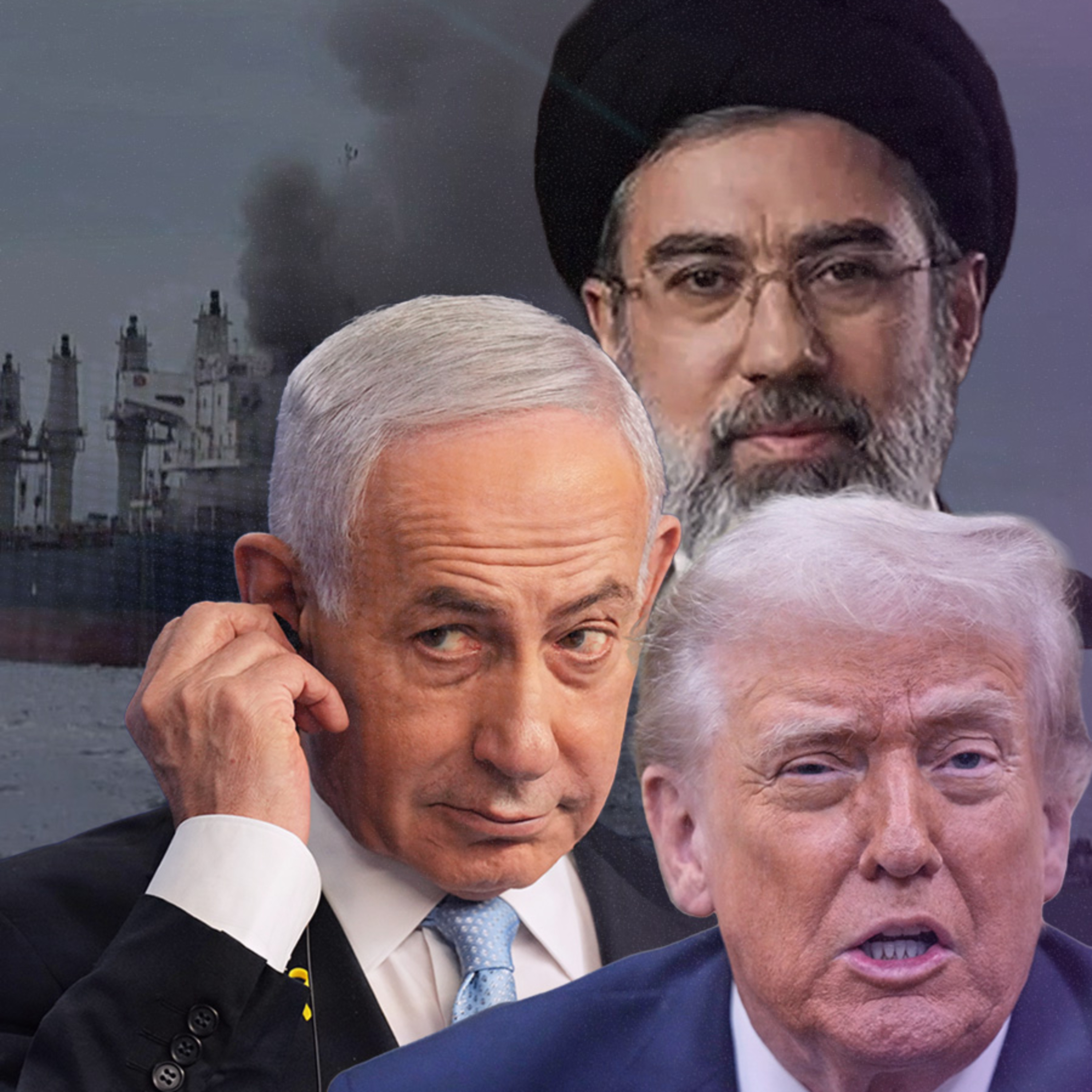
18 days into a war that has reshaped the Middle East, the question that matters most is also the hardest to answer: who is actually winning. Washington says Iran is collapsing under the weight of thousands of strikes. Tehran claims it is bleeding its enemies and outlasting them. Oil prices are surging, missiles are still flying and the region is on edge.
In today’s episode of The Fourcast, Matt Frei is in Israel and he speaks to two people who understand this conflict from the inside out. Emile Hokayem, an analyst of regional security and military power. And Muhanad Seloom, a leading expert on Gulf politics and Iran’s security networks.
Get every episode summarized
Each time The Fourcast publishes, we email you a written briefing from the transcript — the topics, who appeared, and any specific claims, with the ad reads skipped.
Email me new episodesFree for 3 shows. No card needed.
Hosts & guests

Transcript ready
338 searchable segments. Every word is indexed and playable.
Full transcript
The Fourcast — Who is winning the war in the Middle East?. Machine-transcribed; use the interactive transcript above to jump the player to any line.
At the end of it, we may well have the three main protagonists, the US, Israel and Iran, each claiming victory, even as each will be strategically worse off. There's no going back to the 27th of February, where oil, aviation, all this was flowing nicely. If the US wanted to have any extra strategy for this or a diplomatic solution, they wouldn't be killing everybody possible who can sit and talk to them. Iran has taken huge, huge losses. The question is, is Iran still maintaining leverage? On day 18, who do you think is winning and who is losing? Welcome to the forecast. I'm Matt Frye in Jerusalem today. You probably won't be able to see the old city of Jerusalem behind me, but that is prime real estate for the world's three great monotheistic religions, Judaism, Christianity and Islam. Yesterday, one of the Iranian rockets shot down by the Israelis, landed perilously close to the Al-Aqsa Mosque.
We're in the thick of it. We might get some alarms in the next hour, so that compete with the sound of bells and the Mouradzim. It's an interesting neighborhood to put it mildly, and it's been a big day for news because we heard this morning from the Israeli side that Ali Larajani, one of the, perhaps the de facto leader of Iran at the moment, one of the key figures historically in Iran, who's had a number of key jobs, has been killed by an Israeli air strike. This has been confirmed by the Israelis, but not yet by the Iranians. In other news, the head of the besiege militia, when I say militia, what I really mean is a kind of million man, thug army, largely responsible for suppressing domestic unrest and the protests that we saw in January. This man, Goulam Reza, Soleimani, has also been killed by the Israelis. That has been confirmed by the Iranian regime. So a lot of stuff going on, the usual pet strikes, of course, the Israelis again doing that, but also launching their attacks, massive attacks on southern Lebanon to take out his Bilal.
So to try and get a sense on day 18 of who is actually winning this war so far. I know it's early days, but that is the key question for our podcast today. I've got two guests here to discuss this. One is Enil Hakaim, his director of regional security at the International Institute for Strategic Studies. He's in London today for us. And Mohamed Saloon, he's the assistant professor of international politics and security at the Doha Graduate Institute in Doha where he is for us today. Welcome to both gentlemen. It's a big day. Let's start then with this rather tricky question because the different players in this war are defining victory in different ways, almost on a kind of day by day basis. So first to you, Emile, on day 18, who do you think is winning and who is losing? Very tricky question. I don't think anyone is clearly winning at this point. The danger is to go just by the metrics and the metrics would tell you that the US and Israel are accomplishing a massive military victory, which would be true.
The question is who's building leverage over time and I think that the Iranians are. Look, the way this war is playing out leads us to an exquisite irony in a way. At the end of it, we may well have the three main protagonists, the US, Israel and Iran, each claiming victory, even as each will be strategically in a worse off. And this is the nature of asymmetric conflict that we see. The Iranians have several advantages. They want this war to last as long as possible. They have the advantage of geography and they have high-paying tolerance. The Americans, there are high expectations about what they can do in terms of maritime traffic, about the post-conflict situation. These rallies, essentially, they don't care. What they want is to degrade Iran's military power and then they're not interested in what comes next, as long as Iran can no longer project power.
So we're judging them by very different standards. And I would argue that Iran is not doing badly. Iran has figured out how to align means and ends. And while the numbers are not looking good for the Iranians, they have developed leverage, significant leverage because of their ability to disrupt hormones. They've imposed a new status quo. There's no going back to the 27th of February, where, you know, oil, aviation, all this was flowing nicely. Okay, so that's quite a complicated picture. You've painted it. But essentially, what I hate you saying is that the Iranians have scored a kind of victory by just, you know, clinging on and still being in charge of something, although we're not quite sure who exactly is in charge of what they're in charge of. There was a report, by the way, today as well, that mushtab al-Khamenei, who took over from his father, maybe treated for his injuries in Moscow.
This is something the Russian Foreign Ministry has denied, but suffice it to say that we haven't seen him or heard from him in recent days since he was appointed. Moana, do you agree with that assessment by Emil? Or do you think actually it's been more of a victory for Israel and the United States? Well, I think it's more of a victory for the, for Israel and the United States, but maybe we have to go a little bit deeper. I agree with Emil that numbers look good for the US and for Israel, but they are, you know, they cannot be translated on the ground. So the US has started off with saying that we want regime change, we want the whole Ayatollah, you know, Mullah's, you know, regime to be changed. And this is, this cannot be changed from the, by planes and, you know, from the air. But at the same time, the metrics, you know, I will come to Hermos maybe at the end, but if we look at what happened since the 28th of February, almost the whole, you know, the whole leadership have been decimated,
have been assassinated. And you know, the process is going on, the campaign, the military campaign is not finished yet. If we want to have a comparative, if we want to have a comparative case, let's look at Iraq in 1991 and Iraq in 2003, the US took between four and six weeks, weeks to attack Iraq, but then even Iraq that which was eventually invaded, not many of its leadership was assassinated. And because, you know, they had cohesion inside it, they had good security, relatively good security services that protected its leadership. While Iran, last June, we have seen that, you know, many of its leader made leaders even though they were not the first in line, they were the second line, they were assassinated. Then this time around the first day, the US and Israel assassinated 39 of the leadership, including the Iatal Ayatollah Hamani. And now the sun is injured, reportedly.
So what we are looking at here is the US being able to degrade what Iran has, its military capabilities, decapitate its leadership and cause a lot of disruption. Because, you know, I would, you know, refer to what you said, Matt, that, you know, we don't know who's leading Iran now. We have Iraqi, we have the political side of the, you know, of Iran, because Iran has two, if you like, a dual system where there are, you know, there is the president, the ministers, the citra and minister of defense, but also they have the IRGC, which seems to me to be leading the charge. Then I agree also again with me of that, you know, the, the Hormuz's straight is an issue, but how long Iran can hold that against the US ongoing campaign and, you know, they have this in the plans. Let's not forget that Israel, Israel and the United States have been a plan in this for decades, not for years for decades.
They knew that this they would come and they would confront Iran. Equally, Iran had been a plan in this defense for decades as well, but to me Iran does not seem to be doing very well. Neither militarily nor citricugically, and I think Iran, you know, is on its back foot at the moment, and, you know, we can talk more about its proxies in the region, how they are widening this conflict, and neither there is not doing very well. I want to talk about the Straits of Hormuz, which we are talking about far too much these days, but we have to, and we've all become geographers and cartographers, haven't we, in a minute. But first of all, Emil, tell us a little bit about the two people who were killed today. I mean, especially Larry Jani, he was, he was kind of regime royalty, wasn't he? He was very well connected, and he's been a veteran for many years in lots of different roles. Can you tell us about him? Yeah, I mean, he's one of the most recognizable figures of the Islamic Republic. He belongs to a family that has provided a number of Apparachiks in the system.
You know, he served as Speaker of Parliament. He has, at times, challenged other leading politicians. He had some international experience, you know, he served as the head of the National Security Council, for instance. And you know, fundamentally, he was, you know, someone who played across factions. He was not, you know, the stalwart of the most hardline faction. I mean, I'm not trying to suggest that he was a total moderate and reformist. He was not. The point is that someone like Larry Jani would have been someone that had enough credibility inside to sell a diplomatic solution, and had enough experience to deal with, with outside actors. The downside of the current strategy is that if, at one point, we want to get to a resolution, who do we talk to in Iran? You know, who has enough credibility inside the system?
As for the other, you know, the Basiche Force is a strong paramilitary force that is associated with the Revolutionary Guard. They are, as you said, the SUGS that, you know, enforce the will and the ideology of the Islamic Republic on Iranian citizens. They're the muscles who control checkpoints and can storm schools and, you know, commit some of the, you know, large-scale executions atrocities that we saw in January. They are fundamental for the coercive control, the control by coercion of the Islamic Republic, and they provide manpower to the IRGC when needed. So these are significant hits, and I want to be clear that, you know, Iran has taken huge, huge losses in the past two, two plus weeks. The question is, is Iran still maintaining leverage? Has Iran figured out the center of gravity of that effort?
And I would argue that by imposing a new status quo in the state of Hormuz, it has. You can decapitate, you can take out, you know, as many people as you want. You don't need to hold the streets. You need to pose a credible risk to navigation and make it more complicated for the other side to operate in it. And so, you know, the operation for the moment, yes, it's been years and decades in the planning, but it has failed to address a central issue, which is, you know, free flow of trade and energy that has global implications. And I don't think the Americans or the Israelis for that matter are ready to turn the tide on that. It's going to take much, much longer than the world economy, and certainly regional economies can take. Well, Hanad, I mean, are you surprised by the fact that the Iranians for now at least have been able to kind of have a chokehold on the world economy through the streets of Hormuz? I mean, if Amir is right and they've been planning this for years, if not decades, this is kind of one of the obvious points that people, you know, have been pointing to.
And I mean, I remember hearing about the streets of Hormuz and this possibility decades ago, and I was a very young journalist. And here we have this nightmare scenario unfolding. What happened? What went wrong? Well, nothing went wrong. I think the U.S. by design and Israel, they knew that this would happen, and this is part of the pain. They seemed to me that they're willing to take this, you know, Amir mentioned the diplomatic or the diplomatic exit strategy. The U.S. strategy and Israeli strategy does not seem to me that, you know, by design, it doesn't have any kind of exit strategy. What they want is the end of the regime, and it seems it's going in that direction. You know, you wouldn't, like if you want, if the U.S. wanted to have any exit strategy for this or a diplomatic solution, they wouldn't be killed and everybody possible who can sit and talk to them, and include in La Rijani. So they're doing, basically, they're progressing with this, saying that, you know, the center of our attention is not Hormuz, despite the fact that it is very important.
And they will try to do something to minimize some things to minimize the effect, the negative effects of state of Hormuz or the state of Hormuz on the international economy. But to me, it doesn't seem that President Trump is caring too much about it. He said this very clearly. He said that, you know, the Asian countries, European countries, they should come in and help with clearing or, you know, facilitating the floor of the international economy. He said the floor of international trade through the state of Hormuz, but he's not going, he's not willing to do the hard work. And he said that very clearly, he said that the U.S. economy is not dependent on this is trade of Hormuz, and we don't import as much oil. So to me, it seems that the U.S. is an Israel. They're going in that direction, and they want to focus on what is happening in Tehran and how they can change the regime in ways that would make this regime. Does not pose any danger to its neighbors or to U.S. and its really interests.
Right. But the President of the United States who started this war 18 days ago, and many people still think it was a war of choice rather than necessity, although the view here in Israel is rather different on that, as you know. Many people would say you cannot declare victory, Donald Trump, even if you really, really want to, if the price of a barrel of oil is over $100. Because that wasn't part of the plan, and it means that this victory here looks and feels like a defeat to people at the gas pump in Pennsylvania. Well, indeed. And so what he, I think that's why the President, you know, President Trump and Israel, they're saying that we will continue this war. We're not willing to sit and talk just yet. We think that we can achieve more things, more, if you like, advances on the battlefield than by talking to the Iranians. They don't think that it is, you know, the time to talk to the Iranians or have any kind of diplomatic exists. A track that you have a look at.
For example, a man, they already, their money is a money government already talked to the U.S. and to Iran, and they are one of the credible channels. Qataris as well, they have back channels with the Iran, but then Iran itself is not very much interested neither the U.S. So what we are looking at here is that both parties, they're locked into this. They're saying that we are not there yet. We need to do more on the battlefield, and then we will talk if at all the U.S. does not seem to me plan to sit and talk to the Iranians. They think they can finalize things on the ground. I mean, even if the remnants of the regime in Tehran managed to use the straits of Hamuz and their geography to their advantage, at the end of the day blocking the straits also means that they are able to export less oil to the people who have been buying it. I mean, maybe they can do a special deal here, but it's not, you know, a done deal, as it were. And also, they're not projecting power anymore. The ring of fire has been, you know, snuffed out.
So I just wonder how long, you know, the regime that's clinging on at the moment can carry on clinging, as it were, especially when so many of its own people are probably cheering right now that Ali Larajani and indeed the Supreme Leader are dead. Look, first I am in total agreement when it comes to Iran's power projection in the region. I mean, the Iran's networks of influence were here to deter and punish primarily. Yes, it was about projecting influence in a number of countries, but it was about deterring the U.S. and Israel and punishing them if need be. And at this point, they're unable to do that. They're exhausted. The most formidable actor in this galaxy was Hasbarla in Lebanon. Yes, it will put a tough fight against, put up a good tough fight against Israel in Lebanon. It will bleed the Israelis, but it won't change the Israeli calculus or the U.S. calculus for that matter. And did take a massive hit on its regional power.
Its credibility, I would say, because all this was profoundly mismanaged on the part of the Iran since they won. I mean, Iran had built, had sustained that security architecture to deter Israel. And then, you know, a pretty small actor within the system, Hamas in Gaza, starts a chain reaction that affects the core. It's supposed to be the other way around. You know, when Hasbarla came under attack in Lebanon in 2024, the Iranians were nowhere to be seen. You know, they did not jump into the fight. So there is a lot of trouble. There is a lot of tensions in this. Now, however, it's different when it comes to, I think, the Islamic Republic in Iran proper. Yes, Iran is no longer the regional power that it was, you know, a year ago. It's much diminished. It's poor. It's losing critical infrastructure. But the regime itself is standing. It has a sense of purpose.
It's here to fight, to resist, to survive. They can try to change the domestic economy. They will struggle to get the resources if they cannot import stuff. More importantly, exports, export their oil. So I'm not telling you things are going to be nice and easy ahead. I think Iran is going to go through very traumatic times. But for the foreseeable future, they can impose a cost on regional economies and on the global economy. And here is my disagreement with Muhammad. Well, the Israelis were fine. What happens in the street of Hormuz is not their issue. The way they look at Iran was at this overwhelming threat and the cost was worth it. For the US is a very different story. The US is risking quite a lot. It's risking its credibility. It's risking the global economy. It looks incompetent in the eyes of its regional partners. If you're in Asian power looking from far and you depend on, you depend on, on Gulf energy.
You're wondering what this is about. And guess what? You may have to actually talk to the Iranians and perhaps bribe them along the way. Pay some kind of duty to get some oil out if you are in East Asia or in South Asia. And need to fuel your economy and get your tanker out of the region. So I think we need not out of support. But we need to credit the Iranians with having a strategic effect from their perspective. And this is something they, for the moment, they can use as currency. It is real leverage. On the long term, I think that the Iranian system is going to struggle to explain to its own population. Why this massive cost was worth taking on. What the prospects are for the future. And what is the ethos of that regime? Because it is going to transform that regime is already transforming.
I think with the rise of a very different IRGC elite that wants to see a very militarized system. I mean, Mohan, we really have no idea what Iran will look like at the end of this process. Do we? Will it be a smaller, more concentrated, more vicious form or shadow of its former self? Could it be civil war? Could it be some kind of muddling through like in Libya after Gaddafi, which is a kind of civil war? Could it be a version of, I don't know, Sweden and the Middle East, I'm exaggerating, of course. But a peaceable civilized state that takes up all the great Persian traditions of culture and this and the other. Persian acceptionism reinvented for the modern era. Do you think that's, which one of those scenarios is the most likely? I think I will start from there. What we are looking at here is an Iran that has been decapitated. So what regime we are talking about that would lead, you know, whatever is the next stage.
So there is no, there is no Hamane and the son, you know, we did not even hear his voice, the new Ayatullah, who is supposed to lead the country into the second phase. Most of the first line of commanders of the IRGC have been assassinated. We're talking also about most of the commanders of the armed forces have been assassinated. So which Iran we are talking about and which the strategy Iran has. What do they want to do next? I think that's a massive question, not for us only, but also for the Iranian people. And I'm not talking here in terms of like, you know, trying to criticize, like to make Iran look weaker than they are. Iran is on its back foot. There is no doubt about the US has the upper hand when it comes to the military power and military might. And as well as the war is ongoing, it's not a stop. And as we talk now, there are probably planes all over Iran attack and thousands hundreds of targets,
just like what the US is saying. So what we're looking at here is Iran that is a transforming into something new. With the regime fall, this is what the US is trying to do. I think along with Israel, they want to have the people rise, you know, again, is the regime once the regime is weak enough. But I think the bigger question that he posed rightly, and I agree with the meal as well, and everybody else who's talking about this, that we don't know what is what how Iran would look like and say a few months if the regime collapses. If it doesn't collapse, how would that look like as well? Because if the war stops, why would it stop? Would Iran surrender? Or would Iran just, you know, or would the US just declare some kind of victory and would it draw? I don't see the US with the drone without making sure that Iran is too weak to attack US interests and US allies. And as well as Iran giving up on its nuclear system. So this is what Iran would look like after the end of the campaign.
But politically, where would the country be heading? I think that's the $1 billion question. But let's dwell on that question for a minute, Emil, because, you know, on my visits to Iran, I was always struck by this sort of duality. On one side, there's the Iranian state that's been captured by the revolutionary guard and by the revolution itself on the year. These are entrenched institutions that have been running the place, the economy running the security apparatus for half a century. On the other side, you've got an incredibly sophisticated and educated, proud population that, you know, it asks you to kind of respect thousands of years of Persian history, points to the great monuments in places like Kashan and Isfaham. And, you know, and these are the people who have been, many of whom have been demonstrating on the streets, many of whom are in exile, and they say, leave it up to us. We will be able to do for Iran what Iran deserves. So which one of these two irons will prevail at the end of this process?
I mean, look, there's no doubt that Iran has immense potential. Human talent is sophisticated economy, you know, resilience, like few other societies, given what they went through and so on. The question is, what is the macro security framework for all that? If we're talking about Iran, where there's increasing disorder, increasing instability, and so on, a lot of those, you know, great people that you're talking about, Matt, may decide to, you know, just go away, become refugees. You know, this is, it's not either the, you know, the tough bad guys today winning or the good people coming on top. You know, it's the scenario in the middle where, you know, it's quite unstable. People don't want to leave. Some people, you know, invest locally, others, you know, call it a day,
and try to find opportunities elsewhere. You know, the regime itself is going to be ruthless. The regime is protecting first and foremost, the regime. You know, the nation of Iran is something they hope to inspire. And if it works great, but, you know, if the regime was really thinking in terms of the interest of the larger population, then perhaps it wouldn't have invested, you know, perhaps, you know, up to $500 billion directly and indirectly in a nuclear program that has never, you know, benefited the rest of the country. Or in foreign adventures that don't exist, that haven't, you know, materialized into any kind of like hard security. I think that it's very difficult to see, you know, any of those two scenarios, either the tough guys, you know, prevailing totally and being able to restore the Islamic Republic the way it was.
Or, you know, the great people of Iran essentially taking, you know, figuring out a smooth transition that allows for the full stabilization of the country. And just to be clear, there's more at stake here. I mean, let me rephrase that. There's a bigger picture there. First, you know, there's a lot of Iran's critical infrastructure that's being destroyed in the process. Who's going to rebuild that with what money? You know, how do you, how do you rebuild an economy? And is the US interested in accompanying that transition? This is not, you know, the old conflict. And the second point is, let's keep in mind one thing. We're focusing a lot on Iran as we should. The two attackers here, the US has a pretty fraught record over those years. Israel, which has spent two years, three years committing some significant horrors in Gaza.
So if you're looking from the other side, it's not as if you have those nice liberators coming and, you know, just creating, paving the way for you. This is a pretty fraught situation, morally, politically going forward. Well, I had a really crucial question for me is, especially as someone who, you know, comes from Germany and kind of understood how incredibly important the Marshall plan was for turning, you know, the ashes and the rubble of Germany after World War two, having, you know, taken the world to total ruin and tragedy, you know, as a result of a dictatorship. The Americans and spend a lot of money and time to build Germany into a viable, economically successful, functioning democracy, because it was in their interests. Do you think there's anyone at all in the White House, or indeed here in Jerusalem, who is thinking along those terms, you know, whether it's a Marshall plan or I don't know, the Netanyahu plan or any kind of plan.
The deals with rebuilding Iran after it's been, you know, destroyed to a large extent because I don't see any such plan at the moment for the Gaza Strip when we had been promised something like a plan for the Gaza Strip. The short answer is no, I don't see anybody in the White House or in Israel interested in, I don't think they even thought about that what they would do in the next day. You know, we, to answer your question, the general one, who is going to prevail in Iran? Is it the radical side of the, you know, of the equation or is it the people, the great people of Iran? I think the great people of Iran would prevail and they would lead their country into the future. And the reason why I say this, you know, I lived in Iraq, we're next door to Iraq. So with what means basically the what I see is now a regime that has lost military wise, but also they have lost what I call the legitimacy narrative, you know, in the past, this regime has been promising its own people that they would own or they would build their own nuclear capabilities, they will impose their strategic influence in their neighborhood and export the so-called revolution since 1979.
All these have failed. So now their nuclear system is, you know, is basically inoperable. What the regime has promised his own people, you know, it could not deliver on that. They have told the people to, you know, withstand sanctions for at least the last 20 years or even more so that they, you know, Iran could have this nuclear capability and then they would prosper after that. All these have lapsed in front of the Iranian people. I don't see even if, you know, even if this campaign does not succeed in toppling the regime. I don't see the regime making any kind of narrative to these people. What kind of promises they would give to the Iranian people? They are highly educated. They aspire to integrate into the world. They have a very, you know, lively and educated diaspora. I don't think that Iran has a massive potential, but who is holding them back this very regime, this regime that is involved in religious wars, sectarian wars and also wanting to, this very regime wanted to own nuclear weapons that could not own and also for no good reason.
So they don't even, the Iranian people, I don't see them now after what happened, support in these militias in the region that, you know, have the banner of liberate and Palestine. So we are in a, you know, in the front of a, if you like, a situation where the Iranians themselves won't change and what is happening now, which is a war that has been imposed on them is something that they hope probably that it would help them to topple the regime. I think at least this is what the White House and Israel is hoping, but at the same time the people are watching this useless war because they think that what why our regime is fighting against these very powerful adversaries, while we know that we are going to lose this, it's not going to be easy. And if we win this again is the US and Israel by holding into, you know, the, you know, hostage the international economy and also attacking our GCC neighbors. But then we would end up after the war with regional enemies, no proxies, no good economy and also again, we are up against the US and Israel.
I mean, at the moment, it seems to me ever since October the 7th, especially that for Israel, every problem in this neighborhood is a nail and every solution involves a hammer. And the reason why I asked about, you know, any kind of martial plan is that at the end of the day, if the Israelis want to have in their neighborhood, a powerful, but benign Iran, somehow someone needs to help them build that kind of society to bring out the better nature of Iran that has been hidden for the last time. And I just wonder, do you think in Israel anyone is thinking along these lines? And if not, why not? Because ultimately, if they don't, then you get getting back to that cycle that we've seen over and over again, which is the Middle East of unintended consequences, they get rid of Gaddafi, they get civil war, they get rid of Saddam was saying they get ISIS, you know, they get rid of the Iranian regime, what do they get? Look, the Israelis are ruthless and realistic. And they, of course, they would hope for the best, but they're not going to spend a single dime, you know, working towards that.
I think after October 7, the view is that we need to, we Israel need to establish full military dominance, have operational freedom across the region, we need to be able to do as we please, and we expect the others to cave, adjust, and so on. But where we Israel are not about building a better tomorrow for anyone, I think the view is extremely cynical on the region. It's also, you know, I think there's a lot of opportunism in there. I think this Israel is expansionist, you know, territorially, politically, and so on. And I just don't see the Israelis as particularly interested in doing that. If Iran is just as they should be interested in Palestinian statehood and, you know, good humanitarian outcomes for Gaza and so on. And yet there is consensus across the board in Israel in favor of essentially the, you know, ethnic cleansing in Gaza or the takeover, you know, even a tougher operation in Iran.
I mean, you will have noticed what the area Lape than others have said and Bennett have said about all this. So I don't think one should expect, you know, this, this kind of like sensible thinking where there is a win-win formula at the end of the day that's adopted from Israel itself. And look, while I agree with Hanod that the regime has lost legitimacy and support of much of the population, the key here is that it takes a small number of very committed people with guns and with a reason to fight with, with enough to lose if they don't stand up and fight to control a country. And, and, you know, this is why I don't write off the regime. You need to have a clear alternative. Everyone wishes the regime away, almost everyone wishes the regime away, but not everyone can actually figure out what is the alternative. And the Iranian opposition has had almost five decades to come up with that. And we've seen that Donald Trump at one point embraces Pahlavi and then says perhaps not him and then talks about the Kurds and then perhaps not the Kurds.
And, and so, you know, that that's going to be quite fundamental. People want to see a sense of order. And, and it's not clear that this campaign is going to provide the kind of like security and order that that people need to stay in their homes and build a better future. Well, finally to you, you're in Doha. Obviously, Qatar has been affected by this. So have the UAE. So has Bahrain, you know, Dubai airport has been closed down yet again. I mean, for those Gulf states that were selling life in the Gulf, especially to expats as life, you know, in a low tax safe haven in a very dangerous neighborhood, that model has been shot to pieces. I mean, I would say that they arguably are perhaps the biggest losers in all this because they're their ringside observers and, you know, they didn't expect this to happen and they really haven't had much of a response and they've got very little tolerance for the kind of pain that's been inflicted. How do you see Doha and the others in your part of the world, you know, dealing with this incredible challenge in the coming weeks and months.
Yes, so this is basically their nightmare scenario that they always wish that would never happen, but equally they have been preparing for this for a long time. They knew that they would come that some kind of a conflict in the region would happen with Iran or with somebody else that would affect the security of these countries. Iran was obviously the very potential candidate that would cause this kind of trouble to them. Iran has been threatening the region for some time. This is not the first time that the GCC has or had to deal with Iran. UAE has its own issues with Iran, you know, over the over the islands, Saudi Arabia as well. The threats have been, if you like, exchanged for many years, even Iran, mostly recently, Joe Ahmadiyya, if he was here in Doha. And when he was asked about the islands issue with UAE, he said, don't open that kind of warms because we still think that we own Bahrain, Bahrain was our 19th province.
And it was a strike in that, you know, after so many years and within the middle of a region that is moded by conflicts, Ahmadiyya, other former minister of foreign affairs of Iran was talking in this way, this language to the region. So they knew about this, and yes, they have been so far absorbing a lot of attacks from Iran. But what they see here is basically at this point, and I think this is relevant to the whole conversation. What they see is that do GCC countries see that they can coexist with the current regime? Because this current regime has across every red line possible, and also has done everything that, you know, that all these countries in the GCC thought that it was not possible. And this explains why all these countries still today, they're not calling on the US to stop the war. And I read yesterday, a Reuters piece saying that, you know, GCC countries are calling on President Trump to finish the job.
I'm not sure if the Reuters piece was getting the sources from the top leaders here, but I wouldn't be surprised. Because now Iran is enemy of the region. This region with rebounds, so maybe I end with this, this region with rebounds because they have the means and the capability. And still, they do have, you know, they can attract everybody who lost their trust in the region, not only with money, but also with the model they are providing, especially if there would be in the future some kind of regime change in Iran or attitude change in the future Iranian government. We then talk about the consequences for very ordinary people living in these countries between the missiles and their leaderships enough. I just want to end, and I want to brief answer from both of you, even if it's going to be a slightly longer question. The, I mean, the fact is that there is an opportunity here that I'm sure some optimists in a cave somewhere, you know, in the body on the other side of the old city of Jerusalem still believes in that you can turn all this chaos since October the seventh into a massive opportunity for a deal, a comprehensive deal, whether Saudis get on with the Israelis, you know, the Iranians end up with a better government than they've been served by.
For the last 50 years or subjected to, I should say, is this deal pie in the sky or is there actually a possibility that someone will come along and say we can make this happen and this region is full of culture and opportunity and so many missed opportunities will finally have it stay in the sun. Well, I know to Matt that in your description of the deal you live out the crucial element, which is Palestinian statement. I apologize, that was that was the most important part of it actually, that is the cornerstone, there cannot be a deal between the Saudis and Israel without Palestinian state of absolutely. So take that as given. And that's still at the heart of the issue, I think I think a lot of good things can happen if you address this issue directly, not dance around it, not design a multi-year process with, you know, weird conditionality is attached to it and so on.
Unless, unless this is front and center in a negotiation, I think it's, you know, that deal that we would all like to see, we would like to see a region at peace in which, you know, Palestinians and Israelis, Lebanese, Iranians, you know, people from the Gulf, from the various Gulf countries and Iraq and so on living peace and harmony. And yes, there is perhaps some prosperity at the end of that, you know, political alignment, but it would require the two most powerful players, Israel as a regional, the dominant regional military player and the US, the global superpower to make that decision. And, you know, we're still where we were at the same place as we were on October 6, 2023. And, you know, for we, it's understandable that, you know, some of this stuff was, was hotly contested, but it's still at the heart of the, of the, of the debate.
By advocating for a kind of comprehensive settlement, then obviously starts with the Palestinians and their statehood, which seems to be so far off the table at the moment in Israel. Am I, is this just pie in the sky stuff, which we shouldn't even be talking about? I think I agree with the, with the fact that the Palestinian state, a Palestinian state for the Palestinians that they would be content with, I think that's the corner store of any optimistic future for the region. And I think Arab states, they have the so-called Arab initiative where they said that if there is a Palestinian state, an independent Palestinian state, that Palestinians are happy with, with all the rings attached that we know that what Israel has been doing to the land and how complicated it is. Now to, you know, carve out a Palestinian state, if that can be managed, then I think that would be the very solid step towards prosperity and stability in the region. And even with the, you know, with the probability that there would be the same Iran origin somehow in Iran, which I don't think that, you know, it belongs to the future, but just for arguments say, say, that, you know, they, it would deprive whatever, you know, such a regime.
The narrative of fighting against Israel, because the Palestinians would have their own state, its independence, so Iran would have no reason to have its proxies or say that we are going to liberate Palestine, because Palestine is an independent place. And so I think that would be a really a step forward to stabilize the region, not the only step, obviously we need more things to happen, but that is a corner store of peace in the region. Now that would be victory, wouldn't it? But I think we're a long way off that. And I guess, whether you assess, when you assess victory and defeat depends very much at which point in time you choose tomorrow's victory for Israel and America could look like their defeat and I don't know, a couple of years time when what results in Iran is even worse than what we've had so far. Unintended consequences. I keep getting back to that, as everyone else does too. Gentlemen, thank you very much for coming on the forecast. Amin Halkaim and Mohamed Saloon. Thank you very much to both of you. That's it from us here in Jerusalem. Hope you enjoyed it. Hope you find it interesting. See you soon.
More episodes
More from The Fourcast

Iran war: will Trump’s Hormuz blockade backfire?
The Fourcast

Hungary Election: The blueprint for beating the far right?
The Fourcast
Will Trump turn on Netanyahu over Israel Lebanon attacks?
The Fourcast

Iran ceasefire: has Tehran outplayed Trump?
The Fourcast