About this episode
The U.S. and Israeli attacks on Iran continue. Meanwhile Iran is retaliating, firing missiles Israel, but also U.S. allies in the Gulf like Bahrain, Kuwait, Saudi Arabia, the UAE and even air bases Cyprus, threatening to expand the conflict. And the Hezbollah militia in Lebanon entered the fight, launching its first attacks on Israel in more than a year.
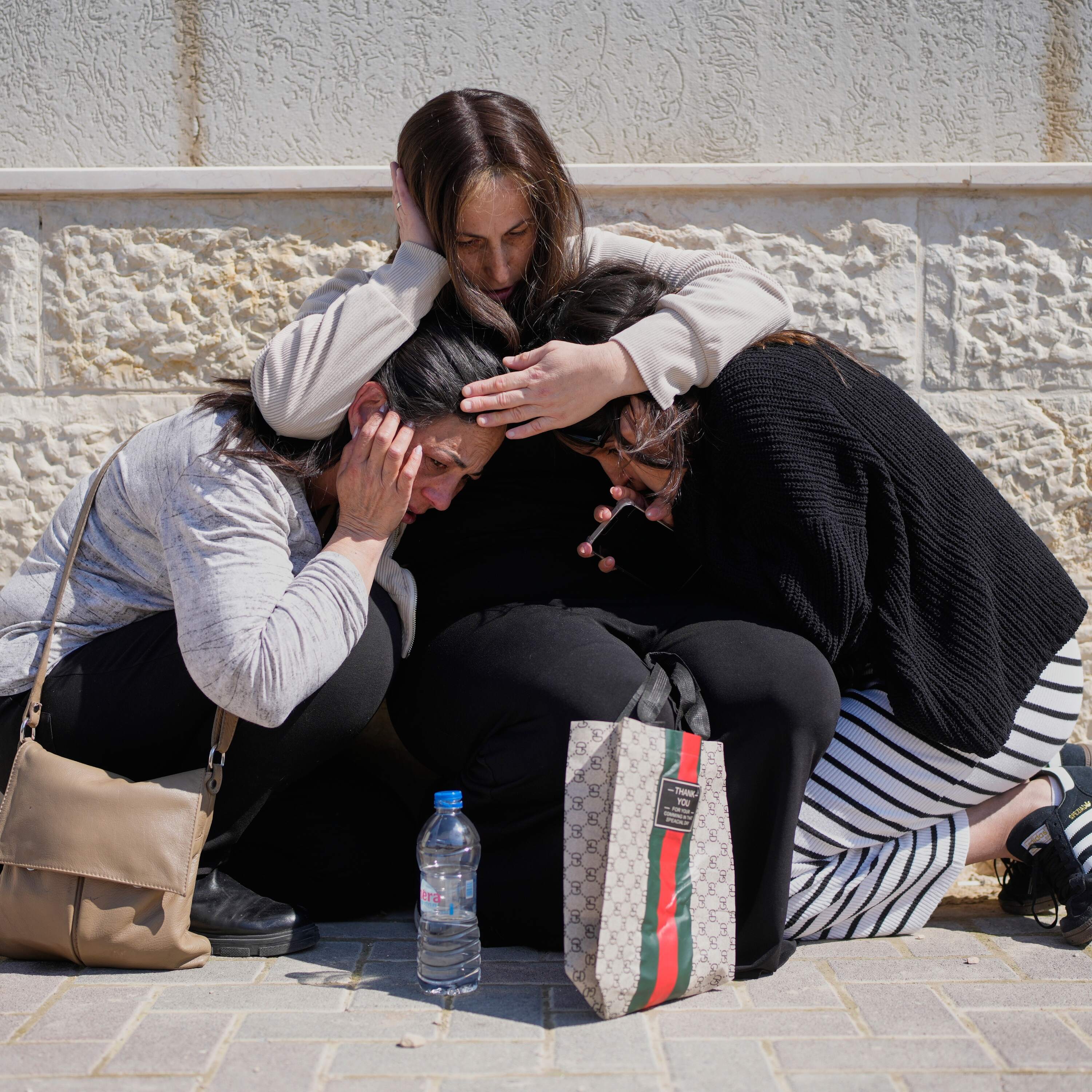
We get an update on developments throughout the Middle East. And we hear the voices of people experiencing the war. In Iran, there are mixed emotions for some. In Israel, the familiar feeling of needing to rush to shelters as they are under Iranian missile fire.
See pcm.adswizz.com for information about our collection and use of personal data for sponsorship and to manage your podcast sponsorship preferences.
NPR Privacy Policy
Get every episode summarized
Each time State of the World from NPR publishes, we email you a written briefing from the transcript — the topics, who appeared, and any specific claims, with the ad reads skipped.
Email me new episodesFree for 3 shows. No card needed.
Hosts & guests

Transcript ready
260 searchable segments. Every word is indexed and playable.
Full transcript
State of the World from NPR — What the war feels like in Iran and Israel. Machine-transcribed; use the interactive transcript above to jump the player to any line.
This message comes from Carvana. Finance and buy your next vehicle with Carvana. Shop a huge selection, customize terms to fit your budget, and buy completely online. No hassle, no pressure. Get the car you love the easy way with Carvana. Today on State of the World, what the war feels like in Iran and Israel. You're listening to State of the World from NPR. We bring you the days most vital international stories up close where they're happening. It's Monday, March 2nd, I'm Greg Dixon. The US and Israeli attacks on Iran continue. Meanwhile, Iran is retaliating, firing missiles at Israel, but also US allies in the Gulf, Bahrain, Kuwait, Saudi Arabia, the UAE, and even at air bases in Cyprus, threatening to expand the conflict. And the Hezbollah militia in Lebanon entered the fight, launching its first attacks on Israel in more than a year. In a few minutes, we'll hear voices from people
experiencing this war on the ground in Iran and in Israel. First, for the latest developments throughout the Middle East, we turned to NPR's Jaina Raf. She's covering it all from Jordan. And she spoke to Scott Detro. So much has happened in the past 24 hours. What are the most important developments? Well, these attacks are both intensified and the targets have widened. And in a sign of the US juggling military operations by allies that are not used to direct combat, Kuwait mistakenly shot down three US fighter jets. No one was killed, but the Pentagon announced that six service members had died as a result of an Iranian attack Saturday. And President Trump has warned of more casualties. General Dan Cain, whose chairman of the Joint Chiefs of Staff, said the US had struck more than 1,000 Iranian targets in the first 24 hours of the war. Now, he and Defense Secretary Pete Hegseth spoke at a press conference.
Here's how Hegseth described the conflict area. This is a big battle space with a lot of capabilities. That's part of the reason why it's such a threat to us. Iran's Red Crescent, which is the sister society, the Red Cross, said more than 500 and 55 Iranians had been killed. And that's including more than 175 schoolgirls and airstrikes on their school, according to Iranian authorities. Some Iran backed militias in Iraq also joined the fight. They launched airstrikes at US forces in the Kurdistan region of Iraq. And Scott, that's just three days into a war that Trump says could take four to five weeks. And Lebanon, what's going on there? Well, that's a country that emerged from war with Israel less than two years ago. And it looks like war again. But with an even potentially more dangerous twist this time, the militant group, Hisbalah, which is backed by Iran, fired into Israel for the first time in over a year
in retaliation for the killing of Ayatollah Ali Hamani on Saturday. Lebanese officials said Israeli counterattacks killed at least 52 people and wounded 149 others. So here's the thing. The Lebanese government agreed with the US that Hisbalah would disarm. And now it's saying it will arrest the Hisbalah members responsible for the rocket attack on Israel. So that raises the specter of Lebanese fighting Lebanese. And that's in a country which has suffered years of civil war. Meanwhile, Scott, Iranian missile strikes on Israel have killed 11 people and forced hundreds of thousands into shelters. How are the Lebanese affected by all of this? Well, there are tens of thousands of displaced here. The Lebanese government closed schools, turning them into shelters. Others evacuated with residents evacuating Beirut's southern suburbs as well as South Lebanon. And Parishawad Rasqala spoke with one man who said he left before dawn.
As soon as he heard the Israeli airstrikes hitting Dahlia, the Beirut suburb where Hisbalah has a large presence. L'Able Maradalat Bishar, Maqenq and Firmadars Filan Pauli. He said it's the second time he and his family had been displaced. The last time was two years ago when the shelters were full and they slept in the streets. And in the time we got left, which we think about the other repercussions that this has had? Well, definitely higher oil prices. Iran has closed a key waterway to oil exports. Iran also attacked a major Saudi oil refinery. There are hundreds of thousands of airline passengers stranded, some governments considering evacuations of their citizens. And it's tarnished the image of the Gulf, which formerly had the image of an ultra-safe haven. So Scott, it's upended a lot of things in this region. And Pierre corresponded to Jaina Raf and Aman Jordan. Thank you so much. Thank you, Scott. We're going to hear now from people experiencing this war on the ground, first in Iran. Their airstrikes began at the start of the work week.
And for some, they brought a mix of emotions. And Pierre's Arzu Rizvani has been exchanging messages with Iranians. She brings us their voices. And a quick note, everyone you're going to hear ask not to be identified, fearing government retribution. A 30-something-year-old engineer was settling into work Saturday morning when he heard the first boom. We even saw one of the explosions from our office window around downtown Tehran. He scrambled to get home. US and Israeli airstrikes pound a Tehran the rest of the day and well into the night. We were going to sleep and suddenly we heard cheers from our neighbors. And to be honest with you, the moment I heard the cheers, I knew what had happened. Israel had killed Iran's Supreme Leader Ali Hamani. Among those overcome with joy was a 22-year-old university student. She requested we distort her voice. I'm sure how this war will go. She's still fearful of government reprisals.
They killed him. They finally killed him. She says through tears, then switches to English. I'm very happy. I'm excited. Oh, I got it. I'm shaking. As news of hominase killing spread, people raced to rooftops and balconies. Their celebrations spreading across the country and social media. But by Sunday morning, a different crowd also emerged. Videos posted on state-run media showed large crowds gathering in public squares across the country, mourning their fallen leader. For others, like some, a university student, the feelings are more complicated. On the one hand, I'm really happy. A dictator, a criminal has been killed. On the other hand, I'm upset. We Iranians, we were robbed of an opportunity
to take hominase to court and hold him accountable. On top of that, Som's family, like many families in Iran, is politically divided. His parents support the government and are mourning the death of the Supreme Leader. From tears to cheers, Som is troubled by the extreme emotions this war has elicited. And worries, it could be the first glimpse of divisive and bloody days to come. Arzurezvani and PR News. Almost immediately after the war began, Iran started launching missiles at Israeli cities. Those barrages are ongoing. For Israelis, the urgent rush to shelters is now a familiar feeling, ever since the homosilid attacks of October 7th, 2024. And PR's Daniel Estren takes us to Tel Aviv for a glimpse of what it's like to be under Iranian missile fire. We're in the middle of Tel Aviv. We've just gotten alerts on our phones that a missile is expected to land in Israel. And there are the sirens. We're going to go down into the public shelter.
Let's go. We're going just a couple of floors underground. You can see the reinforced concrete. This is a large public shelter, multiple rooms. A lot of people here were their dogs, their cats, reading books, eating their morning cereal. We decided to sleep in the shelter this night. He lash up here, I didn't want to be running in and out of the shelter when sirens go off. And to do it in the middle of the night, while I'm eight months pregnant, it's just too much. She and her partner, Ori Iskovich, are thinking about the decision to launch a war with Iran. I'm hopeful about it, that it will bring a better future for them. And maybe it will be a start of a long desire change for the people of Iran that will get some freedom. And if what it takes is that we'll sit here a little bit, it's totally fine. If this war is going to help Iran, then I can survive it. But I don't know. We're really tired.
Tired is a word you hear a lot down in Israel's shelters. Netadafna is a therapist. Tired of wars, keeping happening and feeling out of control, because it's not our decision to go to war or to end war. And that war has been deadly in Israel. A missile landed on a public shelter Sunday in a city outside Jerusalem. Nine people were killed. Another missile attack in Tel Aviv killed a caregiver from the Philippines. We visited the scene. The blast radius is enormous. The missile fell in the center of a street. A building has been gutted. The outer wall has been blown off. You can see through into the apartments that have been destroyed. Shai Shor lives nearby. I want the Iranians to be free. But he's concerned Israel's killing of Supreme Leader Khaminai might not achieve that. We killed their leader, but the leadership in Iran
is not completely destroyed. And within a few months, they're just going to come back. Next year is going to be the same thing, same story, same kind of war. Saturday's missile attack shattered Windows blocks away. We follow a trail of debris into a ground floor apartment. And my kid's room on the ceiling crashed. Asaf Peretz is a documentary filmmaker, like in his work, he's taking the long view. Maybe in a few months time, we will be able to look backwards and understand what really happened. Yeah, Khaminai is dead. So it's big, right? But now I'm inside my debris here, inside my house. And this is where my focus is. It's a game that we are not truly understand. In a few months, he says he'll ask himself, is it over? Has Israel eliminated all the threats against it? And have more than two years of constant war been worth it? Daniel Estrin, NPR News, Tel Aviv.
That's the State of the World from NPR. For more developments on this evolving story, visit npr.org. Thanks for listening. This message comes from Angie. Tackling a home project, Angie can connect you with pros who do such a good job. You might ask them to be your kid's godfather. Don't do that. Just trust them to get the job done. Find a pro for your projects at Angie.com. That's a-n-g-i.com. This message comes from I-X-L. I-X-L provides personalized learning and powerful insights that help teachers boost achievement and understand student progress in real time. Learn more at I-X-L.com slash NPR. This message comes from Aliens Travel Insurance. The family was all set for vacation until the phrase break a leg became a little too literal
at last week's kickball game. Trip cancellation benefits can help when life sidelines your plans. Visit Aliens Travel Insurance.com.
More episodes
More from State of the World from NPR

The humble Scottish breakfast with rich cultural significance
State of the World from NPR

The souring relationship between Trump and Netanyahu
State of the World from NPR

Russia’s increased attacks on Kyiv and its partnership with Iran
State of the World from NPR

Rescuing those still trapped by flash floods in Nepal and Tibet
State of the World from NPR