About this episode
Get every episode summarized
Each time Dr. Eric Berg DC publishes, we email you a written briefing from the transcript — the topics, who appeared, and any specific claims, with the ad reads skipped.
Email me new episodesFree for 3 shows. No card needed.
Hosts & guests
Transcript ready
65 searchable segments. Every word is indexed and playable.
Full transcript
Dr. Eric Berg DC — What Happens If You Stop Eating 3 Hours Before Bed?. Machine-transcribed; use the interactive transcript above to jump the player to any line.
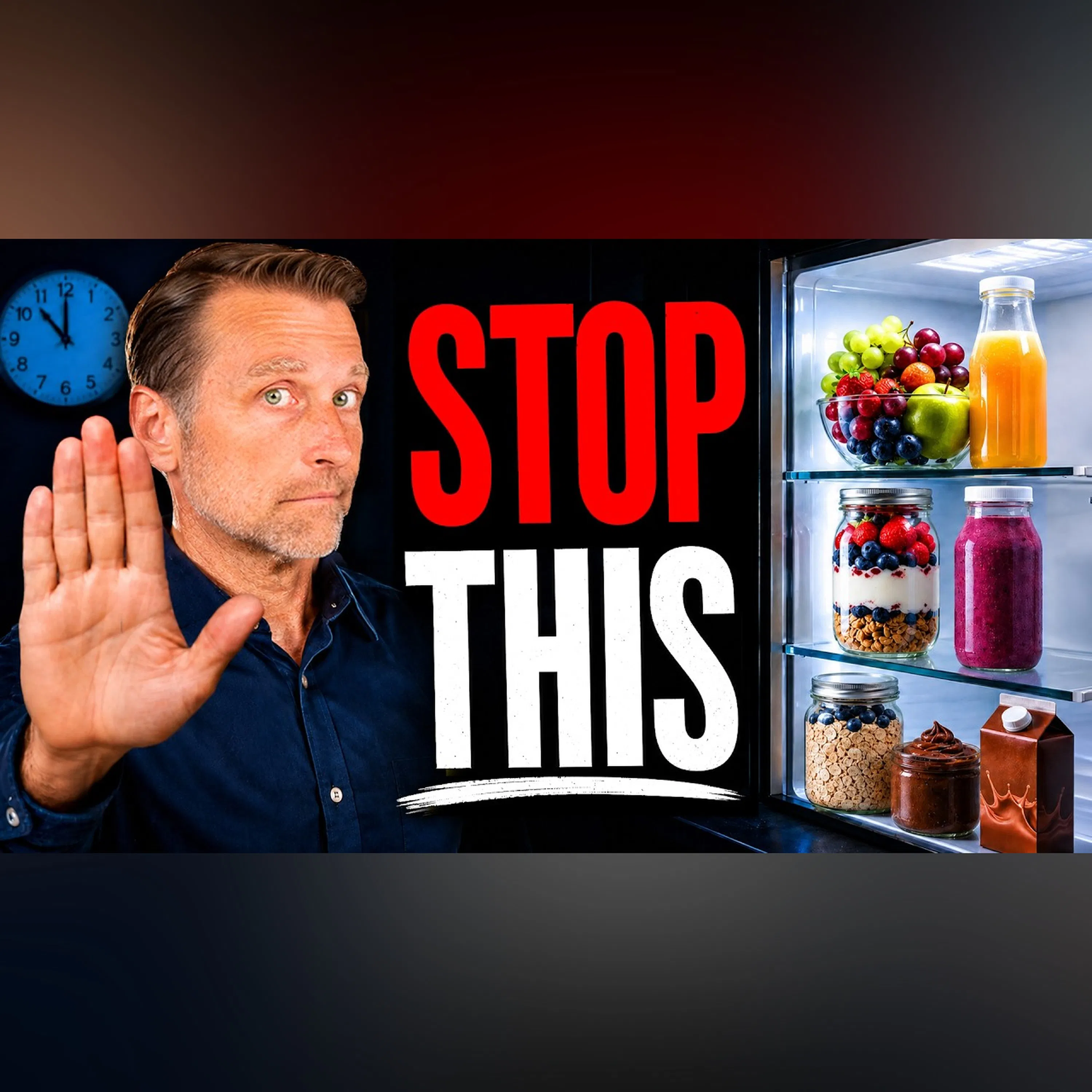
I want to share with you why I stopped eating three hours before bed and it's not the reason why you might think every single time you go to sleep at night the first 90 minutes after you fall asleep your body fires off the single biggest hormonal event of the entire day and the snack before bed can shut down that event by 78% and so we're really talking about a hormone called growth hormone growth hormone mostly spikes in that first 90 minutes in the deep Delta wave sleep so when you're brain you have this little gland called the pituitary that actually releases this growth hormone it actually has everything to do it when you go to sleep so if you go to sleep at midnight now we're talking at 90 minutes after that period of time and this is why the old advice of don't eat after 8 p.m. or don't eat after 6 p.m. that's wrong because the clock isn't the trigger it's the same that's the trigger I go to bed at 10 o'clock my wife goes to bed at 9 o'clock so what I'm going to talk about really has to do with when you go to bed and so it's really important not to eat anything sugary three hours before that period of time I am the poster child for snacking late at night in fact after dinner I would eat constantly right after I was done until I went to bed every single night in fact I used to work at a theater and I would come home at night
with a garbage bag filled with salty popcorn for my father and I to consume and when I mentioned sugar really I'm talking about the hormone that sugar activates because it boils down to this one hormone which I talk about in a lot of videos insulin insulin is the hormone that severely stresses and suppresses growth hormone growth hormone is the hormone that causes you to burn fat but not just burn fat also build muscle it also helps you repair skin and collagen which actually makes up all your connective tissue also growth hormone helps bone growth and growth hormone is intimately involved in recovery especially after exercise so growth hormone is not just about burning fat it's one of the many things that can help you do it at night when we're sleeping is when we do most of the building and repair of the body okay in fact when you exercise today you're basically breaking down muscles you're adding more stress all of the benefit from that workout is going to occur at night if you're sleeping if you don't have too much of an insulin spike if you want the best beauty sleep you want to avoid anything that suppresses growth hormone aka insulin
the other interesting thing about growth hormone is it goes into your immune system as well as your neurons in fact if someone has brain damage growth hormone is there to help build up gray matter now I know some of you're sitting there going wow I'm depressed because I normally snack at night and that means I can't ever eat after a dinner well what the research really shows is it really has to do with insulin okay I'm not saying you can't eat anything but anything that triggers insulin is going to blunt growth hormone okay there are foods that don't trigger insulin protein doesn't trigger insulin that much vegetables don't too much in fact most of the insulin occurs when you're consuming sugary meals and starches now for talking about growth hormone we also have to talk about deep sleep we need deep sleep to help us wake up feeling refreshed if you're not getting the deep sleep you're going to wake up feeling kind of groggy it'll start affecting your cognitive function you'll start craving the wrong food so just getting deep sleep is very vital but insulin can affect the deep
doubt away of sleep if your environment is off everything else struggles it's like a fish tank pollute the water and the fish get sick you could feed them the best food you can treat every single symptom but if the water stays toxic nothing recovers the body runs on 10 signals like insulin cortisol inflammation sleep quality gut function every one of them affects how you feel but there is always one signal that is more broken than the rest and until you fix that one everything else stays stuck I built a free two-minute quiz that finds it for you it tells you which one of the main signals is holding your body back right now click the link in the description take the quiz and stop guessing now on the flip side if you do a day of fasting for like 24 hours guess what happens to growth hormone when you go to sleep at night it has the potential to go up 5x that's right you can really spike insulin just by doing fasting now are there other ways that we can also
enhance growth hormone yes high intensity interval training when you lift weights or you work out where you're activating your muscles the higher the intensity the more the growth hormone spike and this is why probably out of all the exercises the explosive sprinting or plyometric type exercises are best for growth hormone we've already talked about low insulin keeping growth hormone working normally but also prolonged fasting if you fast it for five days you actually double the pulse frequency of this one spike so you get two spikes by doing a five day fast there's another little piece of the puzzle it's called melatonin melatonin is the hormone that's activated by darkness that helps you go to sleep but that hormone doesn't just tell you to go to sleep it also helps the pancreas release less insulin and so melatonin is also involved with insulin so if you're eating late that insulin is also going to affect your melatonin
so you may find it's hard to go to sleep if you're eating this sugary meal don't worry it gets worse now it doesn't get worse it's going to get better I need to mention how common snacking is okay it's not just you that might love to snack 60% of adults snack at 8 pm 44% of people actually are eating in bed okay at night when they're in front of the TV 58% of people between the ages of 18 and 24 snack on a regular basis Harvard did a study that said people are hardwired to get hungry at 8 pm however it doesn't mean that you can't do anything about it this is what I recommend let's say you're done eating at seven o'clock I would highly suggest you get a little sign with magnets and you put it on your refrigerator the kitchen is closed a lot of people when they're craving salty crunchy
really just need more salt and in the past I tended not to consume a lot of salt in the mid part of the day I would want it towards the end of the day so I would pre-load your body with more salt an average person needs almost a teaspoon of salt a day of sea salt and I would start putting that on the first meal of the day and also mix it in with your electrolyte powder if you're going to do that as well in the early part of the day so you can preload that sodium if you are low in sodium you're going to crave salty snack foods if you try to go to bed with low sodium you will have more of a difficult time going to sleep because sodium helps reduce cortisol that helps you drift off into a better sleep in fact if you are a salt craver just try this instead of eating something salty and crunchy just consume a little salt with a little bit of water in the evening before you go to bed or even just put it in your mouth and drink a little water my body sleeps so much better with salt
than going to bed when I'm craving salt and if there's any consideration about blood pressure what that's all about is you're also low in potassium so you can get a high potassium electrolyte powder increase that during the day not before bed because it's going to push out fluid and then maybe add some sea salt more at night and I probably should have brought this up before but if you were in the bad habit of consuming a lot of sugar you probably have fluid retention so when you start cutting out the sugary meal you may find that you need to pee more that's going to be normal until you get rid of all this excess fluid because carbs retain sodium and fluid so in summary whatever time you go to bed let's say it's 10 o'clock just deduct three hours from that that'll be your last meal that's when the kitchen closes that's when you don't want to have any snacks and that last meal is different for everyone depending on when they're going to sleep but really make sure that last
meal is nutrient dense that you have enough salt that you have enough fat in that meal so that you're not actually hungry at night okay so many people are not hungry they're just eating at a boredom and stress but make sure that last meal is sufficient with nutrients and fat and protein I personally think out of everything you could possibly do as a good habit this is the lowest hanging fruit maybe I shouldn't call it fruit but this is the icing on the cake now I shouldn't call it icing on the cake it's just something that's going to produce the most health benefits out of all the things you can do and there are some really important details that you need to know about intermittent fasting to really do it right and that's why I created this video right here check it out right now
More episodes
More from Dr. Eric Berg DC

The #1 Best Protocol to Reverse Gout (and Prevent It)
Dr. Eric Berg DC

Take ONE Teaspoon of This Spice to Resolve Your Diabetes
Dr. Eric Berg DC

The Top Foods That Have Been Blocking Your Nutrient Absorption (Vitamins & Miner...
Dr. Eric Berg DC

DON'T CONSUME THESE IF YOU'RE OVER 50!!!
Dr. Eric Berg DC