What a Police Officer Is—and Is Not: A Field Note
About this episode
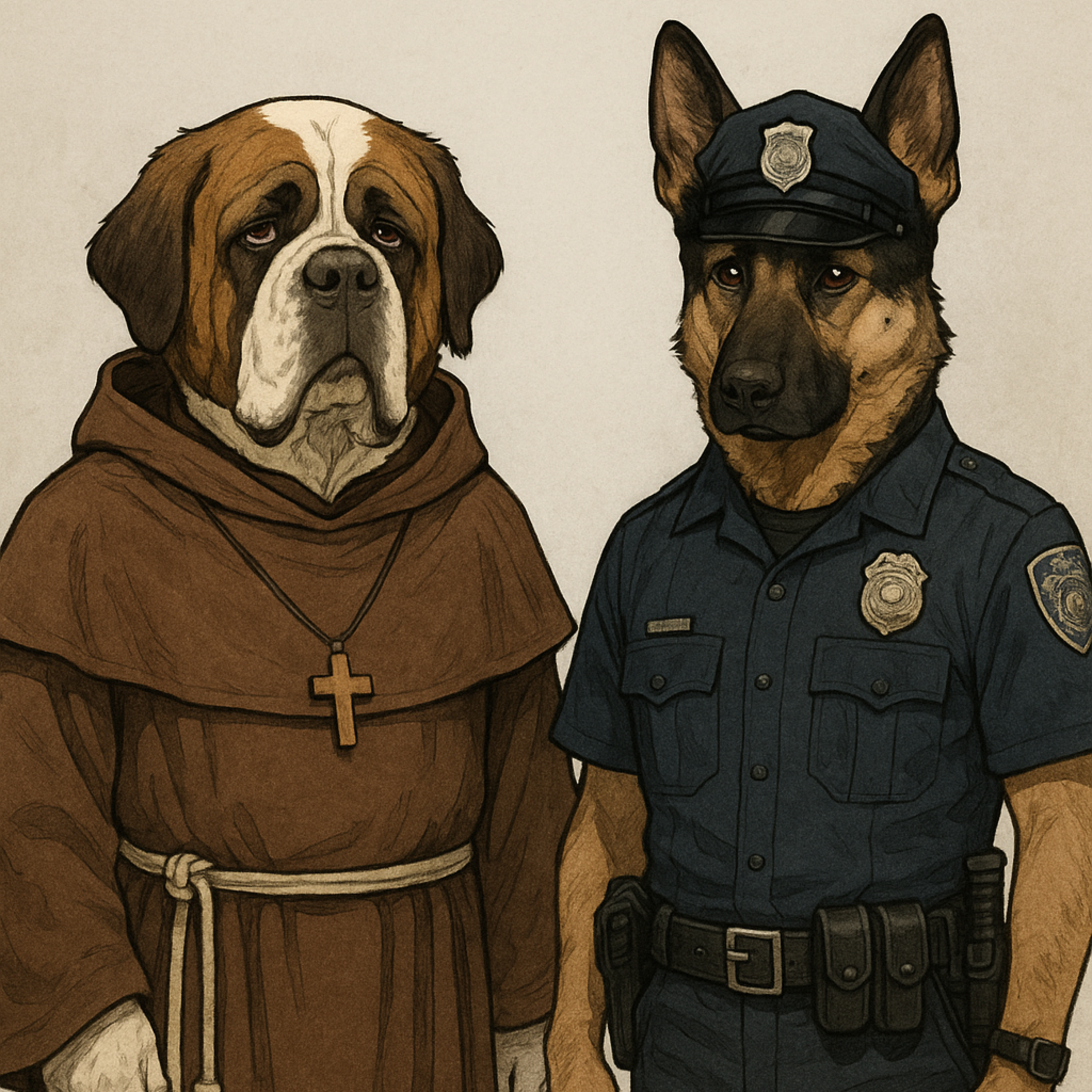
So much modern talk about policing rests on a wish: that the officer showing up at your worst moment is a hybrid — therapist, social worker, priest, and protector — who can fix every chaotic life story with infinite patience. But the reality is older, harsher, and simpler: the officer is a guard dog, not a Saint Bernard with a cask of mercy.
The old “beat cop” we romanticize — the Irish Bobby tipping his hat on a city stoop — was never your confessor. He was there to keep the reckless few from turning your street into an alley no one trusted after dark. “Protect and Serve” never meant protect the one swinging fists at strangers; it meant protect everyone else from him.
That basic truth is why every cop calls himself what the badge says: LEO — Law Enforcement Officer. Not Law Negotiation Officer. Not Neighborhood Mediation Officer. He carries the law the broader public agreed to — imperfect, sometimes unjust, but not your private code or your street’s whispered deals.
Yet look closer and you’ll see the paradox. Pick up a battered police trade-in Glock: the slide and frame are scarred from thousands of holster draws — a sign that deterrence is the point. But inside, the bore is nearly pristine. Most officers fire fewer live rounds in training than a hobbyist does in a single weekend class. They are underfunded, undertrained, yet asked to stand as the last line between the quiet majority and the wolf at the door. In DC, accidental self-inflicted shots are so routine they have a name: “getting bit.” It’s not just sloppy — it’s the proof that we expect perfect control without paying for the discipline that makes it possible.
If you want a softer response, remember this: the guard dog’s bark only works because the teeth are real. Take that away, and the wolf sniffs the fence and climbs right in. Even your comic book heroes get it: Spider-Man doesn’t chat up a purse-snatcher about childhood stress — he webs him up for the cops. Even in fiction, we know that law must draw a line.
From the 1930s beat cop learning by rumor, through the riot-trained 1970s patrolman, to the post-9/11 “homeland security” officer, the role has always been the same: protect the majority from the chaos-makers when all else fails. Some places have improved. Many haven’t. The average American cop still trains fewer hours than a barber’s license requires.
So be clear-eyed. A police officer is not your paladin or savior. He is not your redemption story. He is the state’s answer when the social fabric frays. If you want him to bark less, build a world that needs him less. Until then, do not be shocked that he carries a weapon he barely fires — or that when he does, the bite is real. Better to know what the guard dog is — and what he is not — than to stand unguarded when the fence gives way.
Field note closed.
Get every episode summarized
Each time The Chris Abraham Show publishes, we email you a written briefing from the transcript — the topics, who appeared, and any specific claims, with the ad reads skipped.
Email me new episodesFree for 3 shows. No card needed.
Hosts & guests
No transcript yet
This episode has not been transcribed. Request it and it moves to the front of the queue.
More episodes
More from The Chris Abraham Show

How I Stole 24 Months of Gameplay in 60 Seconds of Bad Decisions
The Chris Abraham Show

America Goes Abroad in Search of Monsters to Destroy—A 21-Year Warning About End...
The Chris Abraham Show

The Deportation Plan Broke So the Bombs Came Out
The Chris Abraham Show

Media Capture, Populism, and the NPR Trust Problem
The Chris Abraham Show