About this episode
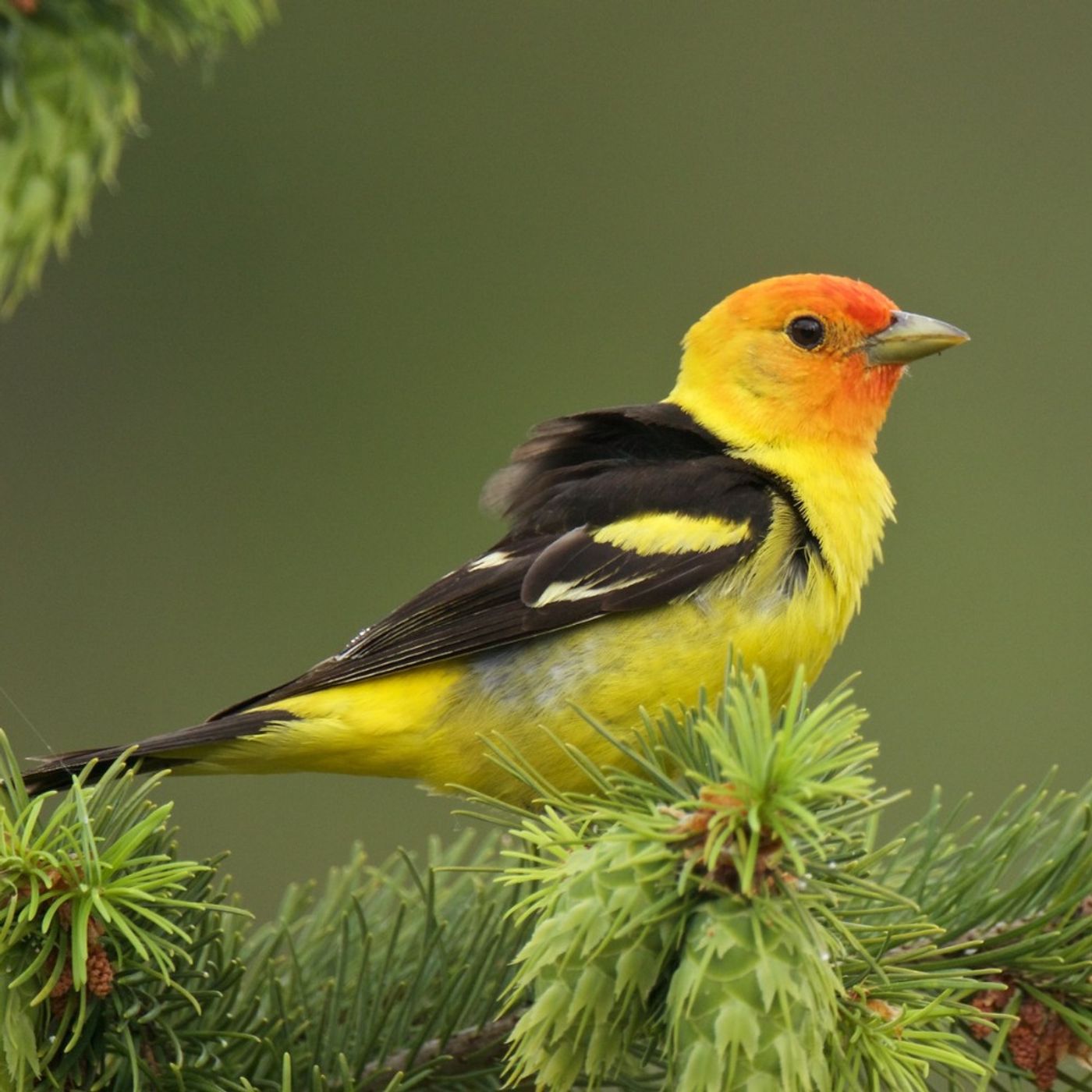
Western Tanagers dart from tree to tree, on the lookout for delicious bugs. They’ll find them by scanning the tree bark — or maybe snatching them from mid-air during flight — a tactic called hawking. Come winter, these lovely songbirds head south, where they fit right in with the other brightly colored tropical birds they’ll spend the winter with in Mexico and Central America.
More info and transcript at BirdNote.org.
Want more BirdNote? Subscribe to our weekly newsletter. Sign up for BirdNote+ to get ad-free listening and other perks.
BirdNote is a nonprofit. Your tax-deductible gift makes these shows possible.
Hosted by Simplecast, an AdsWizz company. See pcm.adswizz.com for information about our collection and use of personal data for advertising.
Get every episode summarized
Each time BirdNote Daily publishes, we email you a written briefing from the transcript — the topics, who appeared, and any specific claims, with the ad reads skipped.
Email me new episodesFree for 3 shows. No card needed.
Hosts & guests
Transcript ready
16 searchable segments. Every word is indexed and playable.
Full transcript
BirdNote Daily — Western Tanagers Are Flashes of Bright Color. Machine-transcribed; use the interactive transcript above to jump the player to any line.
This is bird note. A male western tanager chirps loudly from the branch of a Douglas fir. The tanager's tune is as sharp as his brightly colored red head. With a yellow body jacketed in black, the western tanager is a flash of bright color in the coniferous forests of the west. Sounds almost like a robin, doesn't it? Western tanagers dart from tree to tree on the lookout for delicious bugs. They find them by scanning the tree bark, or maybe snatching them from mid-air during flight, a tactic called hawking. Nuts and fruits round out this little songbird's diet. The western tanager can breed farther north than any other North American tanager, as far up as southeast Alaska and the Yukon. But come winter, these
little birds head south. The male's red head fades to yellow in the off-season. Still, the tanager's sharp colorful suits help them fit right in with the other brightly colored tropical birds they'll spend the winter with in Mexico and Central America. Head over to our website and catch more on the western tanagerbirdnote.org. I'm Mary McCann. Birdnote gives you the sounds of birds every day, and you get the sights as well when you follow us on Instagram at BirdnoteRadio.
More episodes
More from BirdNote Daily

Letter to an Olive-sided Flycatcher
BirdNote Daily

Arctic Dispatch: Sandpipers Sing at Teshekpuk Lake
BirdNote Daily

Wilson’s Warbler near Summer’s End
BirdNote Daily

Migration: Long, Short, and In-Between
BirdNote Daily