About this episode
Part I (00:14 – 13:21)
Gambling and the Corruption of Sports: We are Looking at a Moral Crisis in Sports
- Everybody Loses: The Tumultuous Rise of American Sports Gambling by Simon and Schuster (Danny Funt)
- Basketball’s Game-Fixing Scandal Now Includes 17 U.S. Colleges—and China’s Pro League by The Wall Street Journal (Jared Diamond and Louise Radnofsky)
‘This is Gambling’: The Prediction Markets Are Turning Into Just Another Form of Gambling
- All bets are on by Deseret News (Ethan Bauer)
Gambling Aims Younger and Younger: This is Intentional, and Sports Gambling is Particularly Attractive to Men and Young Men
- Super Bowl is betting bonanza. Behind the scenes apps are busting kids by USA Today (Nick Penzenstadler and Carlie Procell)
Even Secularists Know We Have a Sports Gambling Problem: Christians Cannot Continue to Ignore This Crisis
Part V (22:41 – 25:33)
Do Sports Fans Even Care About Gambling? There is a Dangerous Denial of Evil Here
Sign up to receive The Briefing in your inbox every weekday morning.
Follow Dr. Mohler:
X | Instagram | Facebook | YouTube
For more information on The Southern Baptist Theological Seminary, go to sbts.edu.
For more information on Boyce College, just go to BoyceCollege.com.
To write Dr. Mohler or submit a question for The Mailbox, go here.
Get every episode summarized
Each time The Briefing with Albert Mohler publishes, we email you a written briefing from the transcript — the topics, who appeared, and any specific claims, with the ad reads skipped.
Email me new episodesFree for 3 shows. No card needed.
Hosts & guests

Transcript ready
377 searchable segments. Every word is indexed and playable.
Full transcript
The Briefing with Albert Mohler — Wednesday, February 11, 2026. Machine-transcribed; use the interactive transcript above to jump the player to any line.
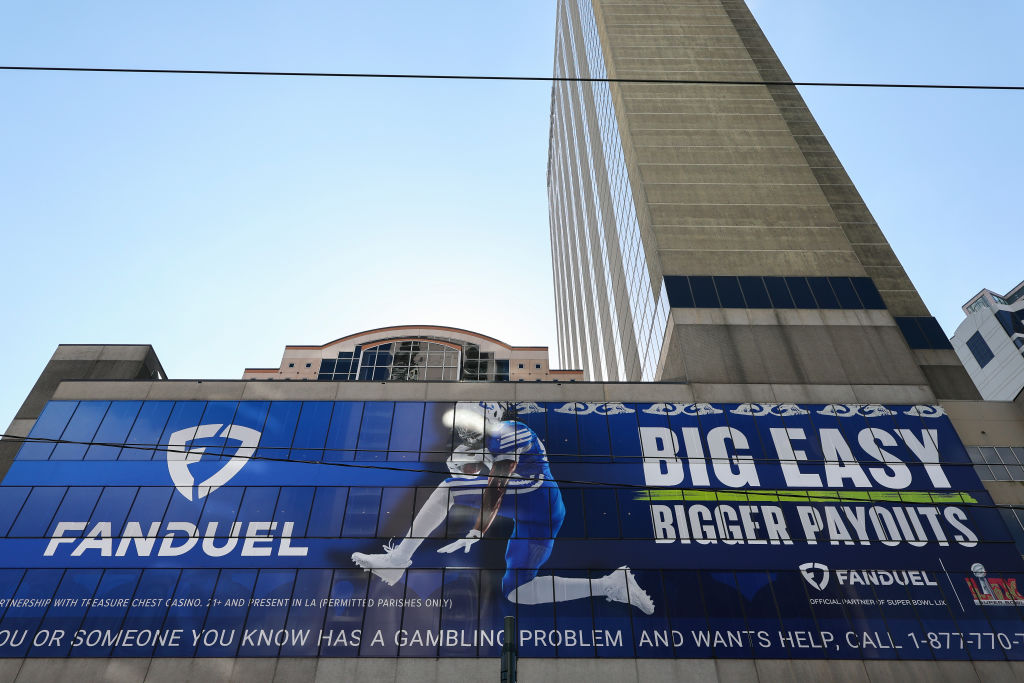
It's Wednesday, February 11, 2026. I'm Albert Mulder, and this is The Briefing, a daily analysis of news and events from a Christian world view. Well, you can pretty much bet on the fact that there was a lot of betting, a lot of gambling associated most recently with the Super Bowl. Super Bowl 60 brought an unprecedented level of gambling, but it also brought some very interesting shifts on the landscape of gambling in the United States and beyond. We're talking about big, big money, and we're talking about big, big numbers, and we're almost assuredly talking about someone you know, because what has happened since the Supreme Court decision going back to 2018 is that gambling has now spread to virtually all states in one form or another, although there are some states that still restrict many forms of gambling in their own jurisdictions. The reality is nonetheless that gambling is coming for you, and I think a lot of Christians are unaware of how this is happening.
And there are some particular vulnerabilities, and the most particular right now would be the population of teenage boys and young men. And they are right now being recruited into a world of gambling big time because that industry sees them as the possibility for big winnings in the future. So let's talk about the Super Bowl, a couple of interesting things about Super Bowl 60 for one thing it is anticipated that once it is known or at least quantified in some credible sense, how much in total was bet on the game or different aspects of the game, it's almost assuredly going to be a number that previous generations could not have ever imagined. Now you also have the reality, there's this tremendous moral shift in sports, and this means in collegiate sports, it also means in the professional sports. So you've got this enormous shift. Many of the leaks, for instance, said they would never do such a thing or now deeply involved in gambling.
Recent book by Danny Funt entitled Everybody loses the tumultuous rise of American sports gambling, and it came out just days ago. Well, Funt reminds us that there was a time when as he paraphrases here, an NFL team wouldn't even fly over Las Vegas because they didn't want to be associated with gambling. As he says here, quoting a former league attorney, quote, if a team had to fly over Las Vegas, they'd ask that that plane somehow be diverted in the quote, the integrity of sport was so much assumed to be at risk with any form of gambling that the professional leagues virtually with unanimity and consistency throughout time said they can have nothing to do it. Of course, there were huge sporting scandals, baseball going back to the early 20th century. And even more recently, there are scandals and we'll get to those, but it is really interesting. Faith Vincent, who had been the Major League Baseball Commissioner said, quote, it would make a mockery of the office I hold. There's absolutely no way Major League Baseball would ever participate in the kind of activity
that is at the heart of your question, meaning gambling. In other words, it would never happen. It can't happen. This foot goes on to say, quote, these powerful men could not have been more emphatic that their leagues would never condone sports betting. Well now they not only condone it, but they're in the business in a big way. Now, let's just talk about a couple of problems. Before we ever get to more family related problems, let's just, let's just look at criminal activities or alleged criminal activities. Here's a headline. This goes back to January, just a matter of weeks ago. The headline is basketball scandal broadens with new charges. The reporters tell us, quote, federal prosecutors on Thursday charged a pair of gamblers with allegedly conspiring with dozens of basketball players to rig games ranging from US colleges to the top professional league in China in one of the most sprawling gambling cases in the history of US sports. Let me skip down US attorney David Metcalfe for the Eastern District of Pennsylvania said,
quote, this was a massive scheme that enveloped the world of college basketball, where then told in total the government alleges that at least 39 players on 17 division one teams manipulated about 29 contests in 2024 and 25 in places such as Moon Township, Pennsylvania and Hattiesburg, Mississippi, the schools alleged to be involved include a big East stalwart DePaul and two programs that reached the NCAA tournament last March, Robert Morris and Alabama State. Before the players charged, appeared in games this week, going back to January, including one who scored 21 points for Kennesaw State as recently as Wednesday night. The Wall Street Journal then declared that these indictments, quote, offer the latest reminder of how pervasive game rigging has become in the era of legal sports gambling in the US. They get then go on to say no level of basketball is safe at the center of the indictment or a pair of gamblers. I'm not going to mention their names, prosecutors said the pair placed five and six figure bets on contest that were fixed.
Listen to this, quote, they are two of the same men who are facing charges in New York for allegedly conspiring with athletes to manipulate their performances in half a dozen NBA games in 2023 and 2024. Okay, that's interesting. And then you have sports illustrated also reporting on, quote, the Justice Department's allegations of a mafia scheme to rig illegal poker games in New York City and across the country, quote, these have generated genuine shock and awe sports illustrator. We are told reached out to three former athletes and three different sports known to play in high stakes private poker games on the condition of anonymity. They spoke about what did and did not surprise them about these explosive revelations. So we're really looking at corruption across the waterfront here. And the common key to all of this is gambling. And I think many Americans, including many American Christians really don't have a very clear view of the moral stakes that we need to face here, pun intended.
We are looking at a true moral crisis and we're looking at one that might hit closer to home than you would imagine. Let's go back to the Super Bowl. There is no final number on the amount of money that was wagered over Super Bowl 60. And it may be that we never have those figures. It is known, however, that these numbers are going up. One particular prediction market was reporting just a matter of a couple days ago that something like a half a billion dollars had been basically bet. They wouldn't use the word bet. They would say traded in the prediction markets in terms of the Super Bowl. But a matter of about 48 hours later, they're reporting this one platform is reporting that the number is actually closer to a billion dollars. So in other words, it doubled just in the reporting over the course of several hours. All right. So let's go back and look at a little bit of the history here because this is important. Why are we talking about this now and ways we wouldn't have before? Well, I went back to document the fact that there once was a time you could go back in
particular before 2018. There once was a time when there was at least in theory a pretty clear separation between sports and that included collegiate sports and professional sports and gambling. Now no one would claim that there wasn't a lot of gambling going on. But the claim would be and the reality would be that most of that was explicitly illegal and the leagues were very clear. The professional sports organizations are very clear that they had to keep this away from their sport or the sport could be accused of losing all integrity. The corruption that gambling brings has been understood early in the field of sports to be such a clear and present danger that the integrity of sport requires that gambling be kept far, far, far away. Everybody knew it was happening, but in most cases it was illegal. But the sporting authorities, the leaders of the major professional leagues and the leaders of collegiate sports, the university presidents, the coaches and beyond, they had to do everything
possible to keep the entire enterprise of gambling far, far away from their teams, their games, their leagues, their players, etc. But then all of a sudden it changed, everything changed. Now the Supreme Court is often said to have legalized this kind of betting all over the country as of 2018. Well, that's not particularly true, but it's also not false. So what happened in 2018? Some of them had entered into a challenge to a law that would privilege two states out of the 50 to be allowed to have the income that would come through organized betting and gambling. And instead they demanded that that was a violation of the basic principle of interstate commerce. And that is exactly what the Supreme Court found. The Supreme Court did not intend to legalize gambling. But it did intend was to say that the law that allowed two states, but not the other 48
states to be involved in this was unconstitutional because it violated the basic principle of federalism and equity between the states. And it was privileged legislation, which is what the government is not to do. Okay. Nonetheless, Congress did not turn around and legislate any kind of limitation upon gambling here. And so instead, basically, after the Supreme Court decision, the effect was all the states were at least presented with the opportunity to get into gambling and to profit by it. Now that's a big thing, by the way. So why are so many politicians at least unwilling to oppose gambling in various forms? Why are they, if not advocates of gambling? Why is it that they're not enemies of gambling and the issue is because there's so much money to be made and some of that money that is made is made by state governments, profiting by the cumulative billions of dollars by the forms of money they extract from the process?
So remember that this is exactly what we saw when it came to a more basic form of gambling, which is state-sponsored lottery. The very government that has the moral responsibility to protect its people instead began to prey on the state's own people and you see the predatory nature of this by where, say, the lottery tickets are sold and where the state is reaping the greatest income. In general, you have the people who can least afford it doing the most of it and the state is benefiting financially. So the state's basically praying on its own citizens and that was just with the lottery. Now you have the same kind of pattern. It's ricocheting through the entire universe of gambling and gaming and now the prediction markets, at least in terms of how this is all shaping up. Well, all right. So let's talk about the prediction markets for a moment because this is a newly explosive form. Well, I'm going to call it a gambling, but those who are in it deny that it's gambling at all, but you do, you do have to talk about it as gambling in terms of how it actually
works. The prediction markets are financial markets in which what you do is supposedly not gambling, but it's trading because it operates financially and legally as a futures market. So to speak, a prediction market. And so, you know, it could be something like you're betting on whether or not the grain harvest from Kansas this year will be bigger than last year. And so there's a sense in which that kind of futures trading, well, it involves risk. It also usually involves knowledge. I mean, after all, if you're going to enter into that, you better know something about how the wheat harvest in Kansas is experienced over time. You better have some knowledge. Otherwise, you're going to lose your shirt. OK, now you have these huge prediction markets and what they're betting on in so many cases, honestly, can't be said to center in knowledge or even intelligence. It's basically an all kind of thing. So for example, you could have this kind of prediction market that I'm just going to use the word betting.
You have betting going on in which persons know something about the teams know something about the players know something about who's been injured and who's not who's likely to play and who's not that that could at least arguably have some dimension of intelligence and knowledge behind it. But we now have the report that on one of these prediction market platforms, $23 million was bet on whether or not Mark Wahlberg would attend Super Bowl 60. So we're not talking about anything actually connected associated with athletics here. We're talking about something entirely different. And now we're talking about these prediction markets, allowing persons to trade, that's the word they use in terms of predictions on things that are absolutely ridiculous, such as, and I'm not making this up, this is a real life case, whether or not President Trump would use the word stuffing in the annual commemoration in which the President of the White House is presented with Thanksgiving turkeys. There was actually a prediction market issue over whether or not he would simply use the word stuffing.
And evidently, a lot of money was at stake, of course, for the turkey, a lot more was at stake. Ethan Bauer writing for the desert news in Salt Lake City puts it this way, quote, imagine it Sunday morning inside a church somewhere in Utah and a crisply dressed young man sits in a pew waiting for services to begin scrolling on his phone. He opens an app and it could be one I'm not going to name them. Only one of the prediction market platforms that have become available in Utah in the past six months. He's a sports fan and this Sunday happens to be the Super Bowl. He thinks Seattle is going to take it. The chances he's right are 67% according to the app. So he presses a button and purchases an event contract for $5 that if Seattle loses will be lost and if Seattle wins will pay $8. The article continues, quote, so the young man puts his phone away and prepares for services to begin without a tingle or doubt or shame because this transaction is absolutely not gambling. The article continues, or so the industry supporting it would have him believe.
The desert news report continues, quote, prediction market companies work very hard to make certain of that. They're very careful with their verbiage, investments, contracts and markets replace bets, odds and bookies. They cultivated important strategic partnerships with news outlets and politicians alike. Well, they act like they're a traditional investment form, but Timothy Fong and Addiction psychiatrist who also serves as a gambling researcher at UC LA, speaking of this, said that there are people who want to present this as an investment tool, quote, like stocks bonds and mutual funds, but they're not, he said, quote, this is gambling and, quote, and increasingly, that is what it is because even as in some cases, such as presidential elections, and of course, related to commodities and markets and all the rest, there's sometimes some real intelligence that is based upon real knowledge and real expertise. The reality is that the prediction markets are now just another form of gambling. By the way, the house in this case, which is, after all, it's a market or a market platform, it takes a percentage, so it's going to argue that unlike a gambling establishment,
such as a casino, it doesn't have a stake in this. It is skimming, basically. It's taking a percentage, and that percentage can obviously add up to unbelievable amounts of money. The bigger issue morally for Christians is just the reality of what gambling is. And gambling is not presented in scripture as something condemned in the Ten Commandments. Instead gambling comes with a host of other human enterprises that are held up, even in scripture, in their own way as examples of what falls short of a proper, well, first of all, Old Testament understanding for Israel or a Christian understanding. And the Old Testament is presented as a form of foolishness walking around with your money and a bag with holes. And of course, it violates basic biblical principles of stewardship, basic principles of the integrity of work and the right reward for labor and the proper understanding of investment and stewardship.
And it also is, in almost every culture, it's associated with vice. I mean, it's not an accident that I mentioned the mafia in one of these news stories and organized crime. And honestly, you're looking at something that now involves more and more Americans, particularly men and now increasingly young men and increasingly not only young men, but boys. So get this cover story in USA Today. Here's the headline. These delve into sports betting, and subhead, by the way, regulators are doing little to nothing analysis shows. Here's one breakout here over a third of US boys participated in gambling and spent an average of $54 in 2025. Okay. So boys covers a lot of category in terms of age here. But we are told that those who are teenage boys and even younger, a third of them have participated in some sense in gambling, well, at least in the year 2025. Okay. Now, this is massive. And it tells us that even as that Deseret news article really began with a young man in
church before a service gambling when he's told it's not gambling and has told himself it's not gambling. But the reality is this is reaching down into far more lives than most Christians understand. The most pastors understand, the most churches understand, and I think, pressingly, is most parents understand. By the way, I mentioned that this is in many ways, particularly a male problem and it shows up as a pathology that way in terms of men of all ages who gamble and sometimes find themselves very deeply involved in problem gambling. But it's affecting more and more young men and boys. And I want to point out one of the reasons why and that is that male socialization almost always requires doing something and focusing on something. And it usually involves whether explicit or not, some form of competition. When you put the opportunity of gambling out there, even at what appears to be at first an innocuous amount of money, the reality is that the way the male system works, there's
a lot of encouragement to put a little skin in the game. And at least for Christians, it's important to understand that these patterns, well, they're not only predictable, they also matter. And by the way, almost anything is now, at least in the prediction markets, the topic of betting or of gaming. And of course, some of this has played out informally in the entire illegal gambling culture. And some of this has even been incorporated into some gambling platforms. But let me tell you, it is, it is the organized gambling platforms that are, let's just say honest about what they're doing. They're a casino or they're a gambling operation. They're now losing out to the prediction markets that are the big money. And by the way, your state may have laws against gambling, but there is no law in your state, the way that the markets are set up against participation in these prediction markets. So I think you have parents and pastors who are thinking, you know, well, at least in our state, we don't have this, we don't have that. Well, you may not have that, but you do have the biggest growing energy in the entire
world of what I'm going to insist should be called gambling. That includes the prediction markets and it could include people very, very close to you in the pew or at home or living in the dorm or as I say, perhaps even a lot closer to home. I think it's also humbling for Christians to recognize that there are some in the secular world far ahead of us in raising moral concerns about what's going on here. I mentioned this book, everybody loses the tumultuous rise of American sports gambling that is published by gallery books, a secular publisher. You have Harper's magazine, you know, hardly a conservative Christian periodical cover story. America goes for broke inside the national sports betting craze. Again, I mentioned USA today, which is basically all for a whole lot of of issues related to the moral revolution, certainly the whole LGBTQ spectrum and all the rest, and it's raising the alarm, even to the fact that a third of boys, especially teenage boys in America have been involved in one way or another in gambling in just one year.
This article cover article in Harper's by Jasper Craven has some really interesting information. Let me share this with you, quote, an astonishing 15% of Nevadians meet the threshold for problem gambling, nearly double the national average. And while the state enjoys more than $15 billion in gambling revenue, did you get that? The state of Nevada, $15 billion in gambling revenue, the highest annual gross of any state in the country, it allocates immediately $2 million to addiction treatment. Some assistance comes from sports books and casinos themselves with this complicate certain priorities. Let's say that's an understatement, quote, advocates are blunt about the crisis they see coming. Kobe West, the clinical director of the Dr. Robert Hunter International Problem Gambling Center in Las Vegas, location obvious here, quote, compares the present moment in gambling addiction to the days of blissful ignorance that followed America's opioid epidemic to spiral out of control. People public health crises he argued were fueled by rampant advertising and ease of access, quote, he estimates that we will look back in several years time in horror.
I hope today to convince Christians in particular that there's a lot more at stake here than they might recognize. And even in, in say, raising some of this language, it is interesting how much of our language is gambling adjacent. And sometimes more than adjacent, in other words, it's such a big enterprise that is entered into a lot of our common conversation. It's also really chastening for us to know that the transformation of the prediction markets into something that basically amounts to a giant national gambling system. And something, by the way, that easily can be entered into by persons and without any notice by others until perhaps it's too late. The reality, all this is changing the landscape. And by the way, it's much like other issues related to social media, pornography, and social media access and all the rest because there are, in some cases, official corporate policies saying that teenagers or those under legal age can't sign on, but the reality is one way or another, they are and everybody knows it.
All right. Finally, along these lines, there's a very interesting question raised by the New York Times, a headline article, quote, when betting taint sports do fans care, what an interesting article. The assumption, I think, behind the article is that you would think fans would be utterly appalled by the involvement of betting and gambling with sport. They would see the corruption. They'd understand it. But listen to this quote, when the podcaster Van Lathen heard about the sports betting and poker indictments and ensnared to active NBA figures last fall, it didn't make him want to stop watching the NBA. In fact, just the opposite. This man, quote, who hosts shows about sports and culture on a website, quote, previously had little interest in the Portland Trailblazers, but when the team's head coach was arrested by the FBI on the second day of the NBA season and accused of working with them off here, this man, quote, wanted to know how the team would react. So he tuned in that night. The next sentence, quote, he wasn't alone.
In the days after the arrest, the NBA had his most watched opening weeks since 2017. I just want to remind Christians of at least one dimension of what's going on here and the Bible presents this very straightforwardly and it is the very dangerous allure of evil. If evil were always ugly and unattractive and uninteresting, it would be far less of a threat. But moral evil shows up even as the serpent in the garden, attractive, interesting, a matter of curiosity until you discover it's unspeakably more evil than that. It's a sad commentary on sinful humanity that the more corruption that enters into the picture of gambling in sport, the more interesting it becomes to some people and even more attractive. It becomes to some because of the gambling opportunities. That's the way sin works. At least Christians, Christian pastors, Christian parents and others need to be aware of what is going on here and at the very least be warned.
And I think faithfulness requires we do more than know about it. But one final thought related to this, you understand that governments that are now raking in all this tax money, they have every incentive not only to keep raking it in, but to rake in even more. I think understanding that is also an essential for Christians in this moment. Thanks for listening to the briefing. For more information, go to my website at AlbertMolar.com. You can follow me on x or twitter by going to x.com forward slash AlbertMolar for information on the Southern Baptist Theological Seminary, go to svts.edu for information on boys' college. Just go to boyscollege.com. I'll meet you again tomorrow for the briefing.
More episodes
More from The Briefing with Albert Mohler

Friday, September 4, 2026
The Briefing with Albert Mohler
Thursday, September 3, 2026
The Briefing with Albert Mohler

Wednesday, September 2, 2026
The Briefing with Albert Mohler
Tuesday, September 1, 2026
The Briefing with Albert Mohler