Loading...
religionspiritualitychristianity
Thursday, September 3, 2026
About this Episode
This is The Briefing, a daily analysis of news and events from a Christian worldview.
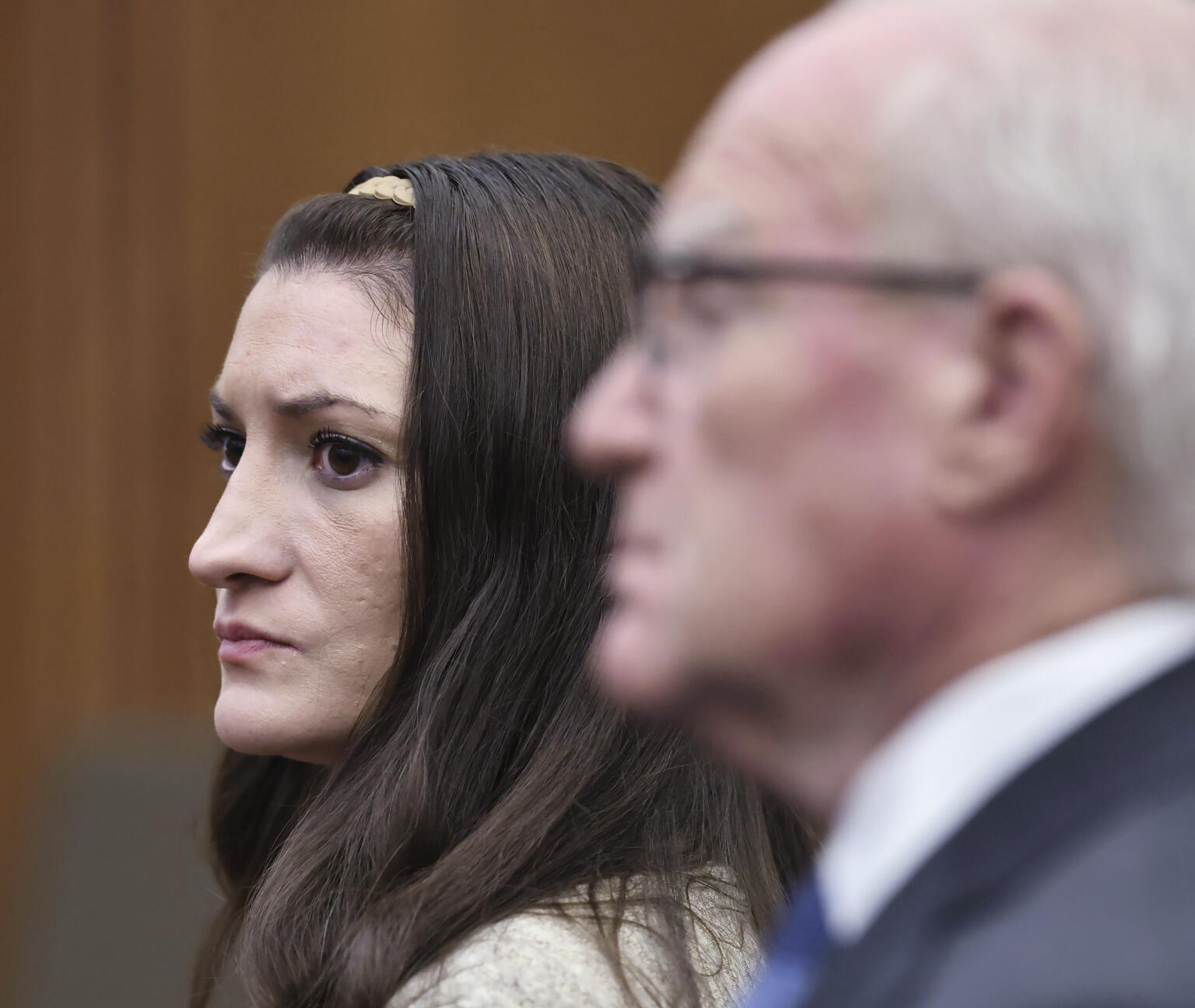
On today’s edition of The Briefing, Dr. Mohler discusses the Lindsay Clancy trial and deadlocked jury, the primary results in Massachusetts, and the recent conviction of a man for the murder of Tupac.
Part I (00:14 – 14:17)
Lindsay Clancy and a Deadlocked Jury: The Dark Case of Lindsay Clancy and the Possible Outcomes of Her Case – It is Vitally Important That Justice is Served
Part II (14:17 – 20:55)
The Primaries in Massachusetts: Progressive Markey Defeats Less Progressive Moulton in the Senate Race in Massachusetts – This is a Clarifying Moment
Part III (20:55 – 23:05)
Justice for Tupac: Man Who Thought He Was Immune to Prosecution is Now Found Guilty Tupac’s Murder After He Talked About It in Podcasts, Publicly, and in a Memoir
Follow Dr. Mohler:
X | Instagram | Facebook | YouTube
For more information on The Southern Baptist Theological Seminary, go to sbts.edu.
For more information on Boyce College, just go to BoyceCollege.com.
To write Dr. Mohler or submit a question for The Mailbox, go here.
On today’s edition of The Briefing, Dr. Mohler discusses the Lindsay Clancy trial and deadlocked jury, the primary results in Massachusetts, and the recent conviction of a man for the murder of Tupac.
Part I (00:14 – 14:17)
Lindsay Clancy and a Deadlocked Jury: The Dark Case of Lindsay Clancy and the Possible Outcomes of Her Case – It is Vitally Important That Justice is Served
Part II (14:17 – 20:55)
The Primaries in Massachusetts: Progressive Markey Defeats Less Progressive Moulton in the Senate Race in Massachusetts – This is a Clarifying Moment
Part III (20:55 – 23:05)
Justice for Tupac: Man Who Thought He Was Immune to Prosecution is Now Found Guilty Tupac’s Murder After He Talked About It in Podcasts, Publicly, and in a Memoir
- Decades After Tupac’s Murder, a Talkative Gang Member Is Convicted by The New York Times (Julia Jacobs and Anusha Bayya)
Follow Dr. Mohler:
X | Instagram | Facebook | YouTube
For more information on The Southern Baptist Theological Seminary, go to sbts.edu.
For more information on Boyce College, just go to BoyceCollege.com.
To write Dr. Mohler or submit a question for The Mailbox, go here.
Hosts & Guests

Transcript
It's Thursday, September 3, 2026.
I'm Albert Moller, and this is The Briefing, a daily analysis of news and events from a
Christian worldview.
Much of America has been fascinated not just for days and hours, but for weeks with the
Lindsey Clancy murder trial in Massachusetts.
I understand that fully.
We are talking about some of the biggest worldview issues imaginable.
In most cases like this, the right time to talk about them is after the jury has reached
a verdict.
That is an actual legal action that you can cite and count upon.
In the meantime, what you have right now is a lot of speculation.
There are some facts, and the facts are absolutely sobering.
We're talking about a mother in this case, a young mother, who has admitted to the facts
of the intentional killing of her three young children.
You just look at that without going into the details.
You just look at that.
This is a horrifying case.
But the case becomes in worldview terms much more complicated when we come to understand
that this was a mother who killed her young children and is now claiming that she is not
guilty by reason of the fact that she did so under the influence of a psychosis.
All right.
Now you're looking at a very complicated case, and frankly, it raises all kinds of worldview
issues, and we will only be able to talk about some of them when there is some closure
to this case.
But in this case and in this trial, there may be no closure close at hand.
And that is because for a matter of days, the jury has been deadlocked.
That is to say, they went into a room, and we're talking about originally 18 jurors,
and that was 12 women and six men.
There are now 12 jurors with an actual vote in terms of the verdict in this case.
They are locked in a room, but they have had engagement with both the evidence and the
judge.
And the situation became complicated because there is now a woman who was arrested for
trying to use her phone to record and gain some access to what the jurors were thinking
and doing.
That's absolutely illegal.
That's a separate legal issue now.
But largely because of that, the judge had to bring the jurors in individually to make
certain that he knew that they were about their job.
There is another fascinating development going on here.
The big worldview issue is moral responsibility for killing three young children.
I think that unquestionably that is the big thing.
The big question is moral responsibility.
How does a jury with the instructions of a judge in the context of a big murder trial
like this?
How does justice become reality?
And this is where we look at America and we see there is vast divide in this country
right now.
There are some who are trying to say her being not reason for reasons of insanity or in
this case, what you're talking about is a psychiatric incapacity.
There are those who are trying to say that.
There are many who are trying to say this woman needs to be understood in that light.
She bears no moral responsibility because of a psychiatric condition.
And there are some pieces of evidence about a psychiatric pattern here.
But another side comes back and says this is first degree intentional murder and that
comes down to the details and the forward planning, the consistency, the focus.
This is not the focus.
This is not the motive.
This is not the strategic planning.
This is not the carrying out of murder of someone who was operating simply out of some
kind of psychiatric condition.
This is cold blooded, premeditated, multiple murder of her own children.
But this is an important time for Christians to think through some of these issues as we
think about different charges of homicide or top of the state of Massachusetts here.
There's some particulars to every state.
But in the state of Massachusetts, there are five possible verdicts that this jury could
come to if this jury can come to a verdict.
So verdict number one is simply not guilty.
And not guilty means not guilty.
It means that she's found not guilty.
She just walks out of the room and that's the end of it.
I don't think that's really much of a possibility here.
She has actually admitted to killing her children.
The question is, what other verdict might be possible?
The second would be not guilty due to lack of criminal responsibility.
Now, that is the big issue the defense is talking about.
What her defense is pushing for is a verdict of not guilty.
And that is due to the fact that there was no criminal responsibility.
That means there was some psychiatric explanation.
But the result of that kind of verdict would have to mean extended psychiatric care.
But this would basically absolve her of moral responsibility in the killing of the three
children.
Another verdict would be guilty of three counts of first degree murder.
And this is where an incredible number of Americans looking at this case of come to
the conclusion that morally that's the only right thing, the only right outcome.
And that would lead in Massachusetts in this case with these three murders of these very
young children to life in prison without parole.
And so we're talking about a very major murder charge.
And that's the third.
There are at least two other possible verdicts that the jury could come to.
The fourth would be guilty of second degree murder.
So that would be a lesser count of murder.
That would be a lesser moral responsibility, a lesser legal culpability.
So murder, a second degree murder, and the result of that would be a sentence of life
with the possibility of parole.
So guilty of first degree murder, life in prison without the possibility of parole.
If there is the guilty of second degree murder that comes as the verdict, and that's again
a life sentence, but there is a possibility of parole that kind of redefines life sentence.
But you can see how this is structured in Massachusetts.
The fifth possible verdict is guilty of manslaughter, which is less legally and morally significant
than either first degree murder or second degree murder.
And the outcome of that, the verdict of that would be up to about 20 years in prison.
So you really are talking about five different verdicts, one that would mean no time in prison,
ever, no consequences.
That would be the finding of not guilty.
There is guilty of first degree murder, which would mean life in prison without the possibility
of parole.
And then there are three different verdicts in the middle, not guilty, lack of criminal
responsibility, guilty of second degree murder, guilty of manslaughter.
Okay.
Why is the jury now hung?
Why have they gone through several days of deliberation without being able to reach a
verdict?
Well, we don't know.
We're not privy to the conversation.
Frankly, we have also, just to be fair, not sat as jurors in a case in which there were
hundreds of hours of testimony.
So we don't know all that they are weighing, but it is extremely telling that on an issue
of this kind of news magnitude, of this kind of moral magnitude, you have a jury of peers
as selected by the justice system in Massachusetts, presided over by a veteran experienced criminal
court judge.
You have a situation in which this jury has been unable to reach a verdict.
There was another major development in the case yesterday.
This comes down to an instruction given by the judge to the jury.
It is known in Massachusetts as a two-way Rodriguez charge.
It is referred to sometimes in common parlance in Massachusetts as a dynamite charge.
Now the dynamite charge comes down to the fact that it is a charge given by the judge to
the jury to try to break up a log jam.
And at this point when you have a hung jury, you have a jury unable to reach a verdict.
This is one more step.
It is one last step that a judge can take.
It is really interesting.
The first of these presidents goes back in Massachusetts to 1851.
That is the two-way case.
And then there is a case in 1973.
That is the Rodriguez case.
And it actually kind of redefined these issues.
It means a judge can call in the jury and speak directly to the jury and say, we really
need a verdict.
I am going to ask you as judge to take all of the evidence into consideration and do your
very best to reach a verdict.
This entire system of justice comes down to the need for a verdict.
Now you might say, well, that's obvious.
Yes, but you know if you're a jury receiving instructions from a judge, when the judge says
I'm not going to dismiss you.
I'm not going to accept this as a hung jury yet.
I'm going to tell you that for the good of the cause of justice, for the righteousness
of our laws, for the health of the justice system in the state, the Commonwealth of Massachusetts,
I want you to go back and try again.
That is why the judge did allow the jurors to break their deliberations yesterday afternoon,
but says they have to be back at it this morning.
Now obviously we're at a critical point in this trial because the judge really doesn't
have much after the two-year-old Rodriguez charge.
In the state of Massachusetts, that is like a final instruction in order to try to encourage
jurors to think it through.
The judge went on to say that the justice system would be best served by having a verdict
in this case, just just cries out for a verdict.
On the other hand, the judge can't force the jury to come to a verdict.
And if there is a hung jury, then we're likely to know perhaps even as early as some time
today that there is a hung jury and there's not going to be a verdict in this case.
At this point, then we really are looking at a very important case with vast moral significance
and with so much public consideration, so much of it absolutely, let's just say clarifying,
but most of it very confusing and quite concerning.
We are looking at a situation in which the prosecutors are going to have to decide how they
might move forward with a different trial, with a hung jury, that they're able to come
back with another trial.
The defense is going to have to decide what they're doing, but this is where things also
get very interesting because at this point, I mentioned there are five possible verdicts
out of this.
One of those middle options might become a matter of negotiation between the prosecution
and the defense.
The defense attorney, confronted by the media yesterday, simply said it is in the prosecution's
hands.
In other words, they might consider some kind of what would amount to a plea bargain.
And he also did say that he did not think his defendant would go through another trial,
at least willingly.
So that is also something very interesting in terms of criminal justice and a criminal
justice trial.
Why, if there's a hung jury, would the defense be, in one sense, more on the defensive?
In other words, you had the prosecution more or less ensuring that if this is a hung
jury, we're going back at it.
The defense is a little less certain.
And he puts it basically in the emotional condition of Lindsey Clancy, the defendant, but
there's more to it than that.
And there's something that most people watching these kinds of criminal trials don't note.
And that is that when it comes to the actual trial and the presentation of evidence, and
as you know, that means the two sides, the prosecution and the defense get to make their
best case.
But here's the thing.
Now the prosecution knows just about everything the defense knows.
That's why the defense is in a somewhat weaker, more defensive position if there is a retrial.
It is almost, well, it's incredibly unlikely.
They're going to be able to come up with something new.
On the other hand, the prosecution can always come up with something new.
Now when there is a verdict, if there is a verdict, or if in this case, when there's
not a verdict and there may be a subsequent development, we're going to come back to this
and just talk about the not guilty by reasons of some kind of psychosis or some kind of mental
condition versus guilty when it comes to a mother killing three of her children.
The moral stakes here cannot be more massive.
And we are looking at the fact that there's a predictability in terms of how people are
looking at this case.
It is also very, very interesting that you have some cultural developments that have even
taken the left and even taken a secular media by surprise.
And that is the number of people who have just come out and said, you know, she needs
to be seen as a victim of a postpartum psychosis and talking about how common that might be
and all the rest.
All kinds of disturbing things here.
And by the way, by the way, when it comes to this, even the prosecution looking for
a conviction in three counts of first or even murder did not deny, but rather did concede
that there were psychiatric and psychological issues at stake.
But they came back to say someone suffering from that psychosis consistently over a period
of time could not have plotted with premeditation and with this kind of detail carrying out this
kind of multi phase homicidal crime.
And so as more news comes in, we're going to seek to understand this in terms of a Christian
worldview.
But you know, there is just a great deal of biblical testimony to the fact that justice,
it is something that is so important that justice is cried out from the grave.
And there are eternal consequences when it comes to this kind of issue.
And I'm going to end on that even as we may find out greater detail tomorrow, I'm going
to end on this.
One of the reality is Christians need to understand is that even the best quality criminal justice
system in something like the American constitutional order, which is a great cultural achievement.
I start to say that every verdict is right.
Every sentence is right.
It is to say it's a tremendous cultural achievement.
You do not get from ancient history to current American criminal law and to the current American
constitutional order without a tremendous amount of development much of it do to the history
of Christian civilization.
But at the same time, there are severe limitations.
And that is something Christians can handle that others can't because if others are looking
at it with a secular worldview, there's no judgment to follow.
We know there is a judgment yet to come.
The judgment of God himself, we know that at that time all things will be exposed.
And at that point, perfect justice will be executed.
Our task as Christians is to support as best we know how a human system of proximate
justice.
When it comes to the justice of God, it will be exact, perfect justice.
I'll simply close for today on this issue by saying that is our comfort.
It is the knowledge that even as the human, the American criminal justice system might
break down as much as it is possible that a wrong verdict may be handed down.
We are perhaps the only people on earth who are absolutely confident.
That will not be the last word.
All right.
Next, you know, very interesting things happening.
It is astounding.
I think to many Americans to know that some states have primaries so late, but in the state
of Massachusetts, the democratic primary, the primary system came down to Tuesday of
this week, but it was really interesting to know what happened on the democratic side.
Now, in the state of Massachusetts, that's not an unusual thing to say because it is really
a such a democratic inclined state that the democratic primary turns out in many statewide
elections to be the most important election.
So here's the big thing.
You had a veteran member of Congress, we're talking about Senator Ed Markey, a very liberal,
let me say again, very liberal Democrat, who is 80 years old.
And he was running for reelection.
We're talking about someone who began as a member of Congress about a half century ago
and has moved to the Senate and is now an institution.
And you know, he has won the democratic nomination.
He didn't win it by a little bit.
Just to round up the numbers, it was 65% and 35%.
He was running against Seth Molten, a US representative who is much younger.
He's at least a generation younger.
And he was running 47 years old, by the way, against 80 years old.
Seth Molten was running saying there needed to be in the democratic party a generational change.
Now here's what's really interesting in world view.
Let's just say the small part, then the big part.
The small part is this.
We have heard so many Democrats say we need to have nothing to do with these elderly
candidates.
And of course, on the democratic side, they've got the experience with the former president
of the United States, Joe Biden, and they have the experience of knowing how badly that
went.
And frankly, without them saying this out loud, how badly a second term would go.
I mean, we're talking about absolute disaster.
And so you also have just a lot of young progressives in the democratic party.
And that includes now democratic socialists who are saying we need a new wave.
We need a new young socialist wave.
But when it comes in this case to Senator Ed Markey, he's so far on the left.
Guess what?
Even the young socialist basically supported the 80 year old candidate.
So so much for the age concern.
It just shows you that the age concern applies where they want it to concern.
But when it comes to Ed Markey, guess what?
They overwhelmingly supported him because he is way on the left.
And they supported him over in this case, Seth Molten, who is, as I say, a generation
younger.
And it wasn't close.
65 35 is in any electoral context like this head to head.
That is a landslide.
It's absolutely massive.
So is it surprising that in Massachusetts, the very liberal candidate one, it's not
that surprising.
On the other hand, we are talking about the fact that this is a candidate at 80 years
old, who is on the very old ledger of even the democratic party, which has a real age
issue across many different offices.
Not to say Republicans don't have any, but the Democrats have a have a larger number.
And by the way, a part of that is because the volatility in their primaries has been
less in many states than the volatility on the Republican side.
But it is also interesting.
And I think in worldview terms, just really important.
We recognize that when you're talking about Ed Markey, you're talking about someone
who began his Congress career, his career as a US representative representing the seventh
district of Massachusetts, he began solidly, unquestionably pro life.
Now that's going back decades.
He was even at that time for he was a proponent of a constitutional amendment to defend unborn
human life.
Let's just say he got over it.
He got over it, perhaps in part, because he wanted to be elected statewide to the United
States Senate.
And it was about that time.
You know, it was very clear.
He is not only now, let's just say pro choice.
He's pro abortion.
He's pro abortion rights in the most extreme kind of way.
It's not just that.
One of the things that came out in this democratic primary is the fact that Seth Molten had registered
at least some concern.
The man's not a conservative, but in the democratic party, man, he's far right on this.
He came out and said, you know the transgender logic just isn't holding.
Maybe it's not right.
And he mentioned his own children, his own daughters.
Maybe it's not right that teenage girls, and he meant by that school age and high school,
they should have to face biological males in terms of athletic competition.
Maybe that's not right.
You know what?
In the state of Massachusetts, that argument lost on the democratic side, 6535.
The reason I bring that up is because I think a lot of conservative Christians do not understand
how many people on the left have really bought into the tea as much as the LDG and the
B.
As a common issue of a progressivist position, and they intend no negotiation and no backtracks.
Now what makes that really interesting, of course, it's a grave issue of concern.
But one of the issues we need to think about here is that the democratic party is now in
a position in which even as some of their own consultants are saying we need to be quiet
about this, there's no way this is going to be quiet.
Let me just give you a prediction right now.
And this is the kind of prediction that I intend to make true even if others do not.
We're going to talk about this.
We're not going to let democratic candidates who are pro-T run as if they're not.
They may say we don't really want to make this a big issue, but you know, in worldview
terms, in social terms, in moral terms, we have to make this a big issue.
We're a society that allows this, that puts biological males identified as females on
girls' teams, or we do not.
And you know, those clarifying moments are just really important in terms of our engagement
with the culture.
Clarifying moments tell us where we stand.
They also tell us where the other side stands.
And they remind us what is at stake.
Now one final word on this is going to be very interesting to see if in this case Senator
Markey and Massachusetts represent an outlier.
Because we are talking about a very liberal state.
We're talking about the state that went for George McCover, the one state that went
for George McCover in the 1972 presidential election.
So there's a long history here.
But you know, it's going to be very, very interesting to see how the democratic party
responds to this.
Let me just also say this, when you look at the resurgent left, the very powerful left
in the democratic party, you just think about the, the DSA, the democratic socialists of
America and others who are in that progressive left wing, there's no way they can compromise
on this.
They are absolutely bought into this logic.
They have bought into this worldview.
They're absolutely committed to it.
And they will see this as an absolute maker break issue.
And you know, at that point, we need to admit we see it more or less the same way as a
maker break issue.
And so important, it reveals so many other issues.
If you can be for biological males on girls teams, that says more about you than just that
position on that issue.
It reveals an entire picture of your worldview.
It's a good thing for us all to keep in mind.
Finally for today, another criminal trial situation.
This one, one in which a verdict was reached.
The New York Times has a great headline quote, talkative gang member convicted of orchestrating
murder of Tupac in 1996.
Well, we're talking about Tupac Shakur, the rapper.
And as the reporter's tell us quote, a jury in Las Vegas on Monday found a man guilty of
orchestrating the 1996 murder of Tupac Shakur delivering a conviction at least 30 years
after one of hip hop's most notorious killings.
Duane Keith Davis, age 63, was accused of obtaining the gun used in the shooting and pursuing
Mr. Shakur during the gang war.
He had become entangled with in a few between East Coast and West Coast hip hop labels.
So here's a picture.
I think a lot of Americans really weren't watching and really didn't know.
We're talking about an intersection of gang warfare and hip hop music, even hip hop labels.
And we're talking about conflict that actually reached a point that it became quite deadly.
And this was in a context of a major event there in Las Vegas.
Here's the story.
About three hours of deliberations happened and then 12 jurors or three hours.
Just think about that in contrast with the trial in Massachusetts going on for days.
In this case, the jury reached a verdict in three hours.
Their verdict was guilty of first degree murder.
Members of the rappers family that is the dead rappers family who were seated in the courtroom
and breaks and passed around tissues to wipe away tears.
We are told that the defendant was straight faced but agitated after the verdict I can imagine
that.
The judge will receive a sentence up to life in prison on October the 13th.
Okay, there is so much about this.
For one thing, it reveals the gang warfare, the intersection with hip hop music.
Yes.
And also reveals the fact that two famous hip hop artists were basically murdered in this
kind of violence within a very short amount of time going back to 1996.
There's just a lot here in moral terms.
But the one thing I want us to see just as we close today is that this particular man,
Joanne Keith Davis, was found guilty after just three hours of deliberation in a criminal
trial for first degree murder.
He was found guilty because not so much the police had put together a convincing case.
They had tried to put together a case for decades, for three decades, but they just
hadn't made it well to connect the dots.
But in this case, it's also clear, Mr. Davis had been given an immunity situation in one
legal context where he agreed to give certain testimony.
And so at that point, in terms of early some charges, he was given a grant of immunity.
He misunderstood what happened there.
And so now you're talking about a man who decided after having denied that he had anything
to do with it to write a book saying that he had a lot to do with it.
He actually wrote something of a biography.
Here's how the Times explains it.
Quote, prosecutors changed their calculation once Mr. Davis began repeatedly addressing
the shooting publicly in podcasts, a documentary, and a 2019 memoir.
In this case, the man just now convicted a murder, said, quote, I want to the only living
eyewitnesses to two bucks killing.
And he said that he basically went on and it was a part of it.
He was found guilty of obtaining the gun and being a part of this.
And now he is found guilty by a jury in just three hours of deliberation, a first degree
murder in the state of Nevada.
A crucial part of this trial is made clear in this statement.
Listen, under the mistaken belief that he was fully immune from prosecution, Mr. Davis
effectively handed prosecutors the evidence they needed to bring the case.
Okay.
Now in moral terms, this is like a Greek parable.
Number one, let's just see thankful that justice, though delayed, has been executed,
that a jury was able to reach moral clarity on full legal grounds.
Let's also be clear that this has come to us in a way that we can fully understand.
And it also tells us that there are some people who do horrifying things, including complicity
and murder, even when they know that the moral and the legal stakes could not be hired,
they still can't stop themselves from talking about it.
In this case, look at three different venues.
He talked about it in terms of podcasts, in terms of public statements, and in terms
of a book that he wrote.
He was in this trial, put in the situation of trying to say, ignore what I wrote about
my complicity and a murder.
Guess what?
The jury decided they weren't going to ignore it.
Just another piece of evidence about how even as a human system of justice, it's simply
by human fragility and limitations can't reach perfect justice.
But every once in a while, you're just reassured because justice, clear justice happens.
And let's just point out, when the murder took place three decades ago.
Thanks for listening to The Briefing.
For more information, go to my website at AlbertMuller.com.
You can follow me on extra twitter by going to x.com forward slash AlbertMuller for information
on this other map to the theological seminary, go to spts.edu.
For information on boys' collets, just go to boys' collets.com.
I'll meet you again tomorrow for The Briefing.