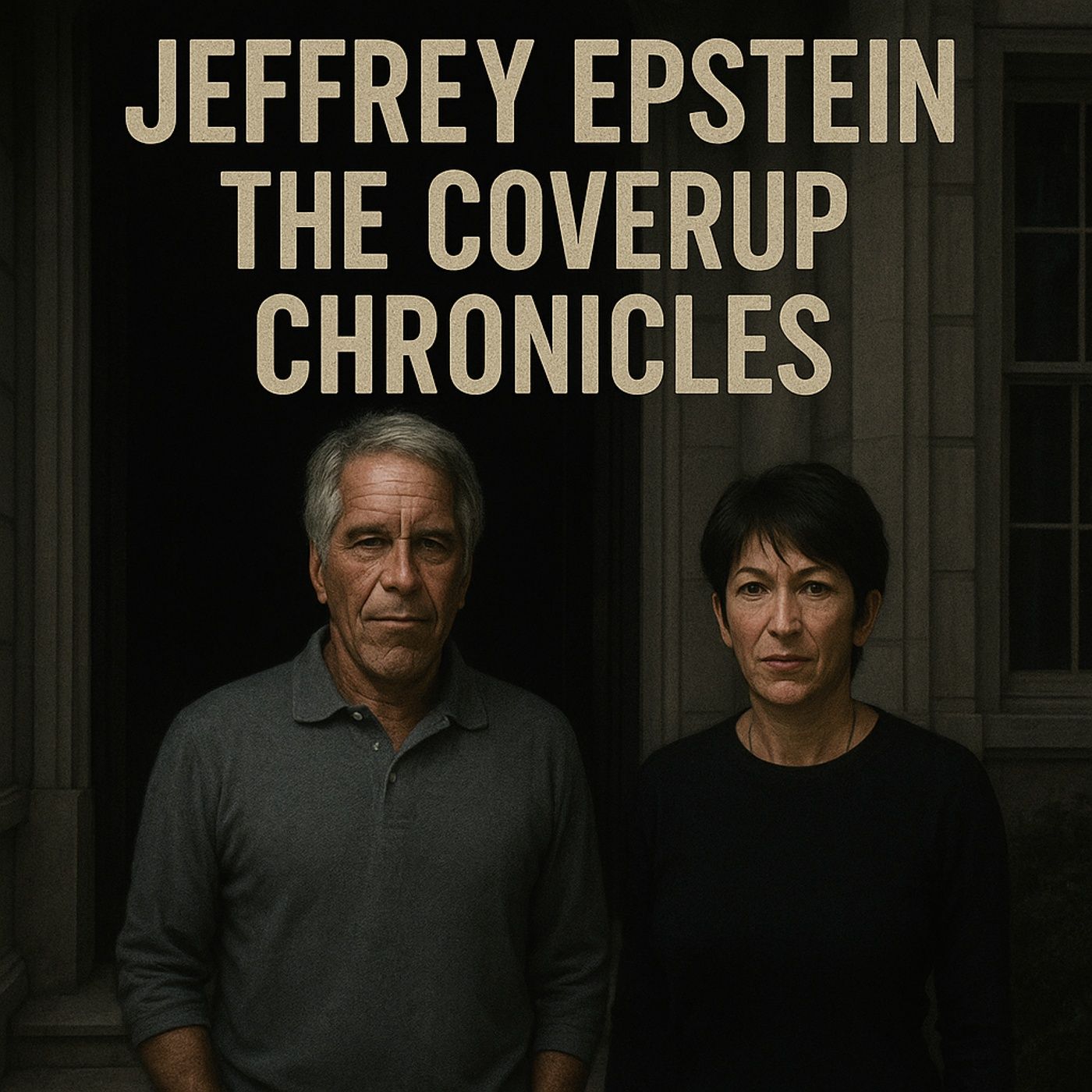
Wall Street Opened the World to Epstein—Someone Else Kept Him Safe
About this episode
The missing piece, critics argue, is the role of institutional protection—specifically the possibility that Epstein functioned as a confidential informant for the FBI, explaining his extraordinary immunity from consequences. This framework helps account for the consistent pattern of stalled investigations, lenient treatment, and prosecutorial deference that followed Epstein for decades, culminating in the unprecedented 2008 non-prosecution agreement that shielded both Epstein and unnamed co-conspirators. Rather than interrogating how Epstein escaped accountability at every turn, mainstream coverage has remained fixated on how he made his money, a safer line of inquiry that avoids scrutiny of law enforcement itself. Until journalists squarely address why Epstein was protected—not merely how he accumulated wealth—the story remains fundamentally incomplete, leaving the most consequential questions about power, complicity, and systemic failure unanswered.
to contact me:
[email protected]
Get every episode summarized
Each time Jeffrey Epstein: The Coverup Chronicles publishes, we email you a written briefing from the transcript — the topics, who appeared, and any specific claims, with the ad reads skipped.
Email me new episodesFree for 3 shows. No card needed.
Hosts & guests
Transcript ready
464 searchable segments. Every word is indexed and playable.
Full transcript
Jeffrey Epstein: The Coverup Chronicles — Wall Street Opened the World to Epstein—Someone Else Kept Him Safe. Machine-transcribed; use the interactive transcript above to jump the player to any line.
Teleredic here from 2311 Racing. Game night's fun until someone spends five minutes lining up one shot. Chalk, breathe, reach-shock, still aiming. While they figure it out, I fire up Chamba Casino. I can spin anywhere, anytime, and there's always a new social casino game every week. Spins happen way faster than that shot. Play now at chambacasino.com. Let's Chamba. Sponsored by Chamba Casino, no purchase necessary. VGW Group Voidware prohibited by law, 21 plus terms and conditions apply. I'm Lee, here to dig into conspiracies that will make you question everything. And I'm Oli, here to make sure we don't contact aliens again. Tune into the daily conspiracy podcast where we uncover the bizarre and the unexplained. And I try to make sure we don't summon anything like bathroomette or worse, like my mother-in-law. If you're ready to question reality with a grin, listen to us wherever you get your podcasts. We are the daily conspiracy podcast.
Because reptilians don't take days off. What's up everyone and welcome to another episode of the Epstein Chronicles. A lot of people like to pretend that the Epstein story just fell out of the sky, like one day everyone woke up and suddenly realized Epstein wasn't just a rich creep with a jet and a guest list, but something far darker and far more entrenched. That collective amnesia is convenient because it lets a lot of people off the hook. It lets institutions act surprised. It lets media outlets posture as later arriving heroes instead of early enablers. And it lets the same voices who mock this story for years. Now act like they discovered it on their own. What's happening right now isn't revelation, it's reputation management. The tone has changed sure, but the framing is still careful,
still polite, still boxed in. We're getting long essays about money, connections, careers, origins. We're getting safe questions with safe answers. What we're not getting is the one question that makes everyone uncomfortable. How did this man keep surviving? Things that should have destroyed him, not once, not twice, but over and over again, across decades, jurisdictions and scandals. Now some might want to call that a coincidence. Me, I see a pattern. Epstein didn't just slip through the cracks. The cracks don't work like that. He walked through doors that should have been locked, guarded and bolted shut. Every time consequences loomed, they softened. Every time exposure threatened, it dissipated. Careers ended around them, but his never did, investigation stalled, but his lifestyle never changed. That kind of consistency doesn't come from charm or luck. It comes from something structural, something systemic, something people are still afraid to name out loud.
And that's why the current wave of coverage feels both overdue and incomplete. You can write 10,000 words about where someone worked, who they knew, or how their money moved, and still miss the point entirely. Because the real story isn't how he rose, it's how he was allowed to stay standing. It's how the rules bent without breaking. It's how alarms rang without anyone responding. Until we start asking why that kept happening, we're not investigating history, we're just curating it. So enjoy the sudden interest, enjoy the glossy retrospectives and recycle timelines. Just understand this. If the conversation never crosses from how did he make it till why did he survive it, then we're still being fed a version of the story designed to protect someone. And if there's one lesson, Jeffrey Epstein taught us, it's that protection, real protection, never happens by accident. And what you're watching now is not an awakening so much as a delayed reckoning. The people who once rolled their eyes at the Epstein story are suddenly acting
like they've stumbled onto very treasure, when in reality they've arrived at a crime scene that's been taped off for decades. The shift didn't come from courage or curiosity, it came from pressure and embarrassment. When the story refused to die, when survivors kept speaking, and when documents kept leaking, legacy media finally realized silence was no longer an option. That doesn't mean they're telling the whole truth now, it means they're telling a version of it that feels safe enough to publish. And that distinction matters more than most people want to admit. Because what's being presented as new reporting is often just recycled surface level material stripped of its most dangerous implications. And the New York Times is a perfect example of this phenomenon. Suddenly, we're getting long-form features about Epstein's early career, his time around Bear Stearns, and the mystery of his money. On its face, that sounds like progress. In reality, it's an exercise in historical laundering. These are stories that could have been written years ago
when Epstein was still alive and actively abusing girls. Instead, they arrived now when the central figure is safely dead and incapable of contradicting anyone. That timing is not accidental, it's much easier to write boldly about a monster when the monster can no longer implicate anyone else. And it's even easier when the most explosive questions are politely left unasked. For years, people like you and me were told we were exaggerating. We were called conspiracy theorists for suggesting Epstein's crimes extended beyond individual depravity into institutional protection. The idea that powerful systems enabled them was dismissed as paranoid fantasy. Yet here we are, watching those same outlets, gingerly approached the edges of that very conclusion. The difference is, they still refuse to name the mechanism. They'll describe the smoke endlessly, but they won't say who lit the fire. Instead, they fixate on money trails, social connections, and career anecdotes. Those details matter, but they are not the core of the story.
And the Berestern story is a perfect case study in misdirection. Yes, Epstein's exit from Berestern's is suspicious. Yes, it raises legitimate questions about how a college dropout with no formal credentials ended up managing money for billionaires. But focusing solely on that chapter, obscure as something far more important. Plenty of shady operators wash out a wall street under clouds of misconduct and never recover. Epstein didn't just recover, he ascended. He didn't disappear into obscurity or face lasting professional consequence. He landed on his feet every single time, often in ways that defied logic and precedent. That pattern demands an explanation far beyond luck or charm. And this is where the mainstream narrative consistently collapses under its own weight. Journalists ask how Epstein made his money, but they rarely ask how he survived his scandals. They catalog a social network, but they don't interrogate why those connections never abandon him when red flags piled up.
They marvel at his resilience without questioning what force might have been cushioning his falls. That omission is not accidental or benign. In journalism, what's not asked is more revealing than what is. And in Epstein's case, the unasked questions all point to the same, uncomfortable direction. The central issue is not Epstein's financial genius because there is little evidence he had any. It's not his social brilliance either because plenty of social climbers are exposed and discarded once their utility fades. The real story is Epstein's immunity. Over and over again, he encountered situations that should have ended his freedom, his fortune, where at the very least his access to victims. Instead, consequences dissolved. Investigations stalled, charges were softened, delayed, or quietly abandoned. That kind of consistency does not happen by accident. It happens when someone is deemed more valuable protected than prosecuted.
This is where the allegation that Epstein functioned as a confidential informant becomes unavoidable, regardless of how uncomfortable it makes people. I'm not presenting this as a proven courtroom fact because that bar has never been allowed to be tested. I'm presenting it as the most coherent explanation for a decades-long pattern of inexplicable leniency. Law enforcement agencies routinely cultivate informants who are morally reprehensible because usefulness often outweighs ethics. Drug traffickers, arms dealers, money-launders, and traffickers themselves have all been protected at various times in exchange for information. That's not speculation, that's documented history. The idea that Epstein could have occupied such a role is not extraordinary, but would be extraordinary as pretending that the pattern doesn't fit. If Epstein was flipped early, many pieces suddenly fall into place. His ability to move freely across borders, despite allegations, his repeated brushes with law enforcement that never seemed to stick,
the remarkable deference shown to him by prosecutors in Florida, the reluctance of federal authorities to pursue him aggressively even when victims were begging to be heard. Informants are not treated like ordinary criminals, their assets, and assets are managed, not destroyed. When you view Epstein through that lens, the story becomes grimly coherent. And of course, this also reframes the 2008 non-prosecution agreement in a far more disturbing light. That deal wasn't just lenient, it was aboriginal. It protected unnamed co-conspirators concealed agreements from victims and short-circuited federal oversight. People often attribute this to a prosecutorial cowardice or a corruption, and those factors may have well played a role. But informant status provides a structural explanation for why so many safeguards were overridden. It explains why DOJ leadership signed off. It explains why the FBI appeared disengaged, and it explains why Epstein emerged from the scandal,
not diminished, but emboldened. After 2008, Epstein didn't retreat, he expanded. He continued abusing girls with apparent confidence that the system would not stop them. Tyler Reddick here from 2311 Racing. Victory Lane? Yeah, it's even better with Chamba by my side. Race to ChambaCasino.com. Let's Chamba. No purchase necessary, VTW Group, voidware prohibited by law, CT and C's, 21 plus sponsored by Chamba Casino. According to statistics, the average person walks past 36 murders in their lifetime. 30-year-old, oh my God, she was murdered. She was murdered. On Mike and Hollywood movies, they're not easy to spot. Where is she, buddy? Where is she? The devil made me turn her to ashes. They seamlessly blend into our everyday lives, assuming rules, as family neighbors, as helpful colleagues, or even the person lying beside you each night. I wanted to be out of jail. I couldn't wait till I got out. I was in there with someone who was clearly psychopathic. Using investigative research and primary audio, morbidology is an award-winning,
trick-rime podcast that shines a light on the darkest corners of humanity. Through our investigation, we have attained evidence, which we are not releasing at this time, which leads us to believe Jolyne is not alive. Turn into morbidology each week across all podcast platforms. They keep telling you that the Jeffrey Epstein story is finished, that it was investigated, that it was handled. But here's the part that they never explain, why the charges were so narrow, when the conduct was so broad. How does a man with multiple properties, private aircraft, international travel, and a documented pipeline of victims get treated like a lone offender? Why were logistics treated as background noise instead of evidence? Why were facilitators reduced to footnotes instead of defendants? Well, that's where we come in. The Epstein Chronicles exists because those questions were never answered. This podcast breaks down
what the public record actually shows, the deals that kept exposure, the decisions that limited scope, and the moments where prosecutors chose restraint over reach. If you ever wondered why this case feels unfinished, why accountability stopped at the perimeter, or why so many names remain officially invisible, you've come to the right place. Welcome to the Epstein Chronicles. That confidence didn't come from arrogance alone, it came from experience. He had learned repeatedly that consequences did not apply to him the same way, they applied to others. When someone behaves that brazenly, it's usually because past behavior has been rewarded not punished. That's a psychological reality, not a conspiracy theory, and it's one that journalists still struggle to confront honestly. The media's fixation on Epstein's money conveniently avoids this reality. Money-safe territory, you can trace accounts, speculate about shell companies, and analyze investments without challenging the legitimacy of federal institutions. But once you ask how Epstein survived criminal exposure,
you're forced to examine law enforcement itself. You're forced to consider whether the FBI failed catastrophically or acted deliberately. Neither possibility reflects well on the institution, so instead we get endless articles about barasturns and billionaires as if wealth alone explains immunity. It doesn't. Look, it's also important to acknowledge the role of skepticism here because skepticism was selectively applied. When survivors spoke, they were doubted. When independent researchers raised questions, they were mocked. When journalists outside elite circles connected dots, they were ignored. But when legacy outlets finally approach the story, their skepticism evaporates. Their assumptions are treated as serious inquiry, even when they trail far behind what is already known. The double standard is not accidental, that shit's structural. Authority is granted based on platform, not accuracy. And for me, what's particularly galling is that Epstein operated in their backyard.
New York was not some distant jurisdiction where oversight was difficult. He lived openly, hosted lavish gatherings and moved in elite circles. His name circulated for years alongside rumors that were treated as impolite rather than urgent. That kind of willful blindness doesn't happen without institutional permission. Journalists at access, editors at leads, the silence was a choice. And choices have consequences, especially when they enable abuse. Now that the tone has changed, we're supposed to applaud the effort without questioning the delay. We're supposed to act grateful that the story is finally being taken seriously. But gratitude is not accountability. Late coverage does not absolve earlier neglect. If anything, it demands harder questions about why that neglect occurred. Was it fear of lawsuits, fear of powerful advertisers, fear of government sources drying up? Or was it something more insidious, like why a pressure not to dig too deep?
Those questions still haven't been answered. The informant question says at the center of all of this, like a live wire. It explains why the Epstein case feels unfinished even after his death. It explains why documents remain sealed or heavily redacted. It explains why agencies speak in careful, half sentences instead of clear denials. And it explains why the narrative keeps circling the perimeter without entering the core. You don't need secret knowledge to see this. You just need pattern recognition and intellectual honesty. Unfortunately, honesty is often the first casualty when institutions protect themselves. Sometimes failure is functional. Sometimes it serves a purpose. And sometimes that purpose is invisible precisely because acknowledging it would shatter public trust. The tragedy, of course, is that survivors paid the price for this protection. Every year Epstein remained free, was another year of abuse. Every delayed investigation was another stolen childhood. These aren't abstract policy failures.
They're human costs. When media outlets dance around the real questions, they participate in minimizing that harm. Intent doesn't matter nearly as much as impact. And the impact has been decades of silence punctuated by bursts of bladed outrage. So when people ask me why they waited until now, the answer is painfully simple. They waited because they could. They waited because the risk of silence outweigh the risk of truth only recently. And they waited because confronting the full scope of Epstein's protection requires confronting institutions they still rely on. And until that changes, the story will remain incomplete, no matter how many long features get published. The real scandal isn't where Epstein started. It's how he was allowed to continue again and again with help from those sworn to stop people like him. All of the information that goes with this episode can be found in the description box. Well, some fools, men of the J.U. sold here from the WWE. When it's just me between matches, it's day one-ish.
That means it's Chumba time. With hundreds of Casino style games and new titles arriving weekly, there's always something fresh to try at Chumba Casino. The daily booze make it even more fun. And have me, bout to get them all during my downtime. Ready for a fun way to chill out and enjoy a few minutes for yourself? Let's Chumba. No purchase necessary. VGW Group Void were prohibited by law, CTs and Cs. Sponsored by Chumba Casino.
More episodes
More from Jeffrey Epstein: The Coverup Chronicles

Julia Molchanova on Escaping Jeffrey Epstein’s Cult-Like World (Part 2) (9/8/26)
Jeffrey Epstein: The Coverup Chronicles
Julia Molchanova on Escaping Jeffrey Epstein’s Cult-Like World (Part 1) (9/8/26)
Jeffrey Epstein: The Coverup Chronicles
Mega Edition: Jeffrey Epstein And The Dossiers He Kept On The Survivors (9/7/26...
Jeffrey Epstein: The Coverup Chronicles
Mega Edition: Ghislaine Maxwell And Her Descent Into "Poverty" (9/8/26)
Jeffrey Epstein: The Coverup Chronicles