Volatility's Reach in Jobs: Ways Fed Will Navigate & Protections to Consider
About this episode
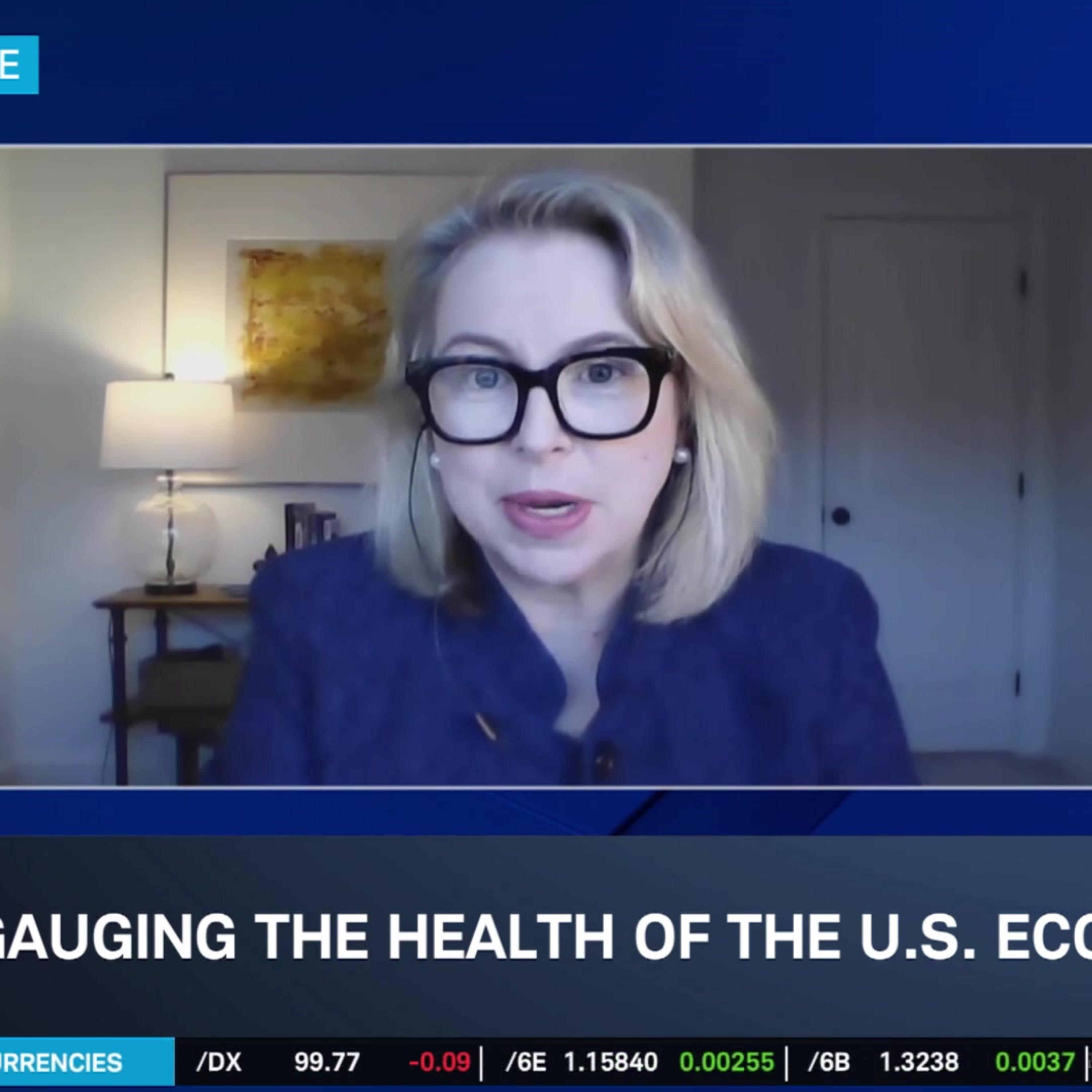
"Volatility may still be in front of us," says Erin McLaughlin when turning to the labor picture after Friday's March jobs report. The month showed a 178,000 increase but a 133,000 job loss in February's revised report. Erin paves a path she projects the FOMC to take and ways investors can add protection their portfolios.
======== Schwab Network ========
Empowering every investor and trader, every market day.
Options involve risks and are not suitable for all investors. Before trading, read the Options Disclosure Document. http://bit.ly/2v9tH6D
Subscribe to the Market Minute newsletter - https://schwabnetwork.com/subscribe
Download the iOS app - https://apps.apple.com/us/app/schwab-network/id1460719185
Download the Amazon Fire Tv App - https://www.amazon.com/TD-Ameritrade-Network/dp/B07KRD76C7
Watch on Sling - https://watch.sling.com/1/asset/191928615bd8d47686f94682aefaa007/watch
Watch on Vizio - https://www.vizio.com/en/watchfreeplus-explore
Watch on DistroTV - https://www.distro.tv/live/schwab-network/
Follow us on X – https://twitter.com/schwabnetwork
Follow us on Facebook – https://www.facebook.com/schwabnetwork
Follow us on LinkedIn - https://www.linkedin.com/company/schwab-network/
About Schwab Network - https://schwabnetwork.com/about
Get every episode summarized
Each time Schwab Network publishes, we email you a written briefing from the transcript — the topics, who appeared, and any specific claims, with the ad reads skipped.
Email me new episodesFree for 3 shows. No card needed.
Transcript ready
77 searchable segments. Every word is indexed and playable.
Full transcript
Schwab Network — Volatility's Reach in Jobs: Ways Fed Will Navigate & Protections to Consider. Machine-transcribed; use the interactive transcript above to jump the player to any line.
Let's welcome in our next guest now, Aaron McLachlan, who's the senior economist over at the conference board. Aaron, lovely to see you. So nice to speak, as always, and hope you had a nice weekend. Just walk us through your takeaways from this blowout jobs report, because on the surface, things look pretty good. It did look pretty good on the surface, didn't it? So we saw a sharp rebound of 178,000 jobs in March, and this was following a decline in previous month of 133,000. So you know, it was definitely very optimistic, higher than folks were thinking it was going to be, but we have to sort of look under under cover to see what's really going on underneath it. So we saw a couple of things that were sort of pushing that trend up. One was we saw the end of a strike of Kaiser Permanente employees, and so that made up probably for about a third of the increase, and then we saw, you know, weather and disruptions sort of come back, you know, so for construction, employment, leisure,
and hospitality, we saw that rebound as well, and we also saw, you know, exiting of the labor market due to retirements and other sort of demographic and immigration changes happening. Okay, so as we continue to sort of peel back the layers of the onion here, as you say, a lot of the numbers, obviously the headline being due start by some of that rebound, because obviously we did say a decline of 133,000 in the other direction that was now revised in February. So you're talking about sort of base effects here, weather obviously, but then labor participation, for instance, fell as well, then you've got the big question mark in the elephant in the room, and that is the Iran conflict. So just walk us through, you know, obviously what you're seeing there beneath the surface and some more of the nuance. Right. So this did not take and just took into account the first two weeks of March, and so I think there was a lot of optimism in the first couple weeks of March that the conflict may end very quickly, and so as we've seen the conflict
continue, and we're entering, you know, we're past a month, I think that sentiment with employers in the labor market, the volatility may still be in front of us, more volatility. And so these numbers do not take into effect really what we're seeing geopolitically. Right. So in a way, it could be somewhat backwards looking, we'll have to wait and see, at least for now we can maybe take some comfort, and that's perhaps what the markets are doing in that the jobs market wasn't falling off a cliff in the month prior to obviously or during the conflict starting. What do you make of the lopsidedness that continues to be so evidence in these jobs numbers, the fact that this was driven by primarily two sectors? Right. So we've seen continued growth in healthcare and social assistance kind of employment, and that sort of also fits with the demographic changes we are seeing with 10,000 baby employers retiring a day. We know older folks go to the doctors more often, we know we have an
aging population. So we definitely do not think that's going to slow down. We're going to continue to see, you know, a healthy healthcare market, but, you know, federal government employment is definitely continues to be on the decline, and professional services and other employment continues to be very, very flat. So where does this leave the Fed then? I mean, obviously, at the top of the show, we talked about how it gives it more headroom now, a little bit more wiggle room, at least as it allows it to focus on the other side of the dual mandate. But is that how you're thinking about things? Do you suspect that's what the Fed officials, you know, factoring into their calculus right now that they can kind of just park that there as they focus on other things? I think so. I think that the Fed can put their emphasis on inflation, and can look at inflation, maybe more so than the labor market, because it has proved so resilient. But I think how they approach the oil shock, if they really approach it as a one-time shock,
and that the conflict may end soon, we may not see any more changes. We may just see a very long continued pause with regards to interest rates. Got you. And as I mentioned earlier, at the top of the show, I mean, one data point that was largely overlooked on Friday was services PMI. And I know that the market doesn't give that much weight to S&P global, more so to ISM, but it was pretty alarming the fact that we actually saw it falling into contraction for the first time in a few years. I believe it was three years. And I think the economist over at S&P put it quite bluntly that this is basically a US economy that's buckling under the strain of rising prices and intensifying uncertainty. I mean, how are you thinking about some of these PMIs with the stagflation re-word coming up a lot, not just here in the US, but outside as well, as it pertains to the labor market? Well, we know that folks will continue to spend if they have
jobs. However, how they spend their money is the big consideration. If you see rising gas prices that keep going up, if we know that healthcare prices are going to keep going up, these are necessities. So folks are going to have to put more their money towards these necessities. They are not going to be spending on a lot of leisure activity or a lot of services, perhaps, than they did before. We could also see a further divergence of the K-shaped economy. And I think that's what a lot of different sectors have to look at. Yeah, no doubt about it. Also, I suppose we could take some comfort in the fact that the retail sales held up quite well. But again, the counter-argument to that being that maybe that is somewhat in the review mirror as well, given, of course, we've got this renewed energy shock now that's creeping in. What do you make of it when you sort of tile the data together? I mean, do you believe that the economy was on solid footing before this war? We should allow us to offset some of the effects of higher inflation.
Well, I think we were under continual strain because of tariffs. We're not talking about tariffs as much as we were before because the oil shock is sort of the headline of the day still. But at the conference board, we really felt that the first half of this year is when tariffs were going to be baked in. We know that tariffs are here to stay regardless of that Supreme Court decision. And so a lot of companies have had to decide, okay, I absorbed some of this cost or it was absorbed through my supply chain. But now that it's going to be here to stay, we really have to look to pass on some of these costs. And so that is another pressure point. And so there, I wouldn't say buckle, but there's definitely a slowing economy. 2026 is going to be slower than 2025. And yet we still haven't seen much of a repricing of earnings revisions or expectations. So that's going to be very interesting when it's just around the corner. Aaron always appreciate it. Thanks so much for joining us this morning. Everyone go up there. Who's the senior economist over at the conference?
More episodes
More from Schwab Network

Stock Market Today: ORCL & ADBE Earnings, AEO Plunges Near 52-Week Low
Schwab Network

Thursday's Final Takeaways: Crude Taps $103 & PPI Hotter than Expected
Schwab Network

Balancing High-Conviction AI With High-Dividend Diversification
Schwab Network

EARNINGS PANEL: ORCL, ADBE
Schwab Network