About this episode
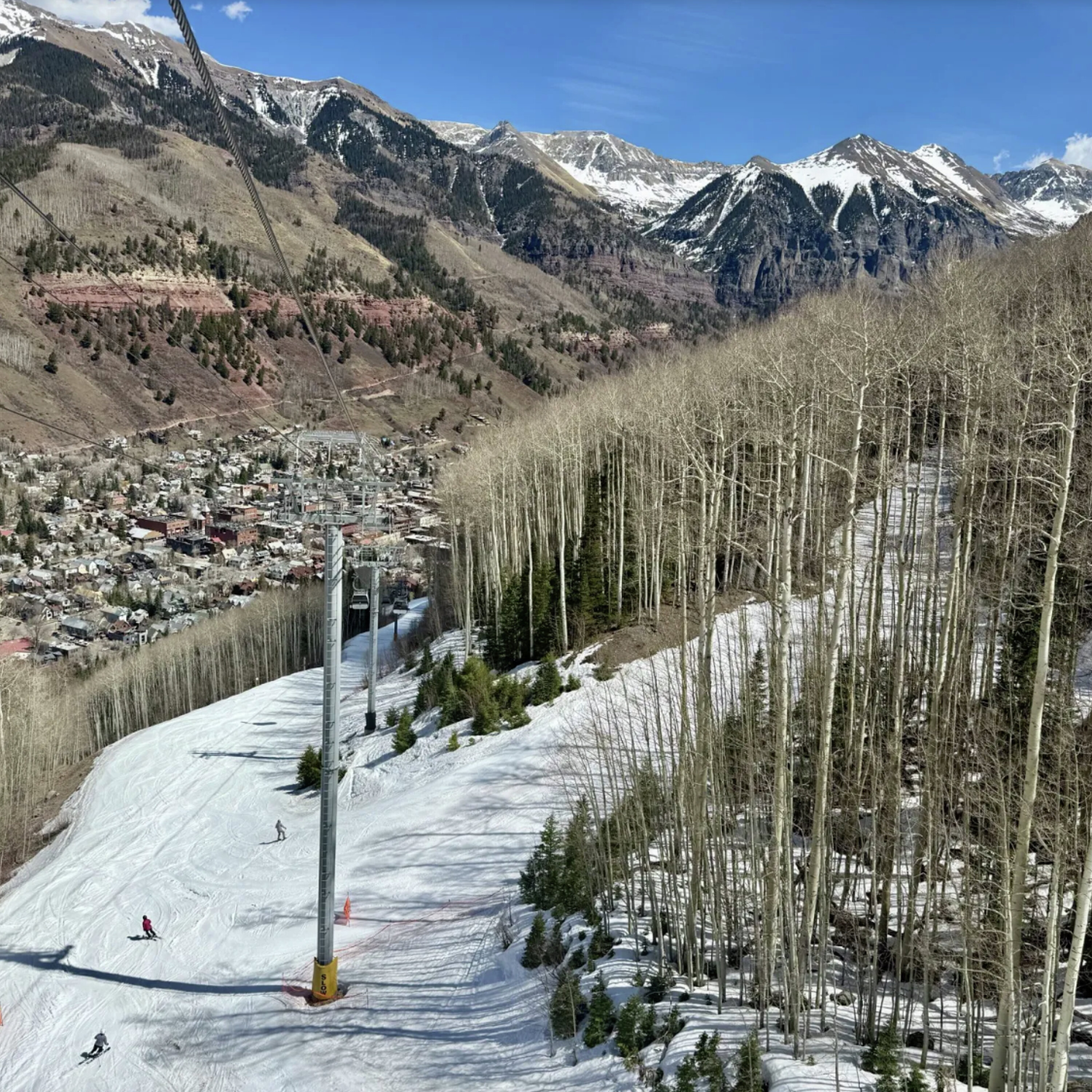
Today, Sun outdoors reporter Jason Blevins puts a bow on a challenging ski season with a check-in on the ever-changing closing dates for Colorado resorts, plus a new lawsuit challenging the Ikon and Epic mega passes.
See omnystudio.com/listener for privacy information.
Get every episode summarized
Each time The Daily Sun-Up publishes, we email you a written briefing from the transcript — the topics, who appeared, and any specific claims, with the ad reads skipped.
Email me new episodesFree for 3 shows. No card needed.
Hosts & guests

Transcript ready
170 searchable segments. Every word is indexed and playable.
Full transcript
The Daily Sun-Up — Turning the page on Colorado's ski season. Machine-transcribed; use the interactive transcript above to jump the player to any line.
Good morning Colorado. You are listening to the Daily Sun Up. It's a conversation with the Colorado Sun. I'm Team Editor David Krause. Before we jump into today's conversation, here is a quick message from our sponsor. It comes from Credit Union of Colorado. With access to over 30,000 ATMs and a seamless mobile app, they are dedicated to offering the services of a big bank with a heart. Credit Union of Colorado. Honestly good. Learn more at honestlygood.org. Join the Colorado Sun for Colorado Sunfest 2026. The day-long event will include conversations to make our great state even better. Dean Baquet, former New York Times executive editor, will kick off the day with a keynote conversation. Colorado Sun members can save $40 on tickets.
Learn more at ColoradoSun.com slash Colorado-Sunfest. Now back to the show. Happy Monday everyone and thanks for starting your week with us. This is David Krause and today, Sun Outdoors reporter Jason Levins and I are going to put a bow on this ski season as we limp into the finish line JB and also some new news last week, a lawsuit filed in Denver District Court challenging the big mega passes by Altera and Vail Resorts. JB, we've been trying to make good out of this season, but boy closings are coming hard and fast, right? Yeah, exactly. This incredible warming trend, this heat dome they call it, just unseasonable warmth here in this third week of final week of March and we are just so hot and the resorts are dropping. Just closures are moving up, left and right
as an already emaciated snow pack. It just melts off. It's been quite a challenging season and it seems fitting that the worst ski season in 50 years ends with temperatures in the 60s on the top of mountains. Jason, I was up last couple of weeks. I did a trip to Monarch, did a run over to snowmass and it was really interesting during the course of the day when I, especially in snowmass, when it was getting up to 60, 62 degrees, you could literally see brown spots starting to pop out that weren't there at the start of the day. Have you seen that as well? Oh, yeah, everywhere. We are dancing over Pepper and Crestby Mountain Resort and they just finally shut down North Face High Lift stuff. But you know, again, it's kind of been pretty fun. You know, sure we got a little slush, but that spring mashed potatoes, corn to slush like all has been quite strong, but usually we do it with a much larger base.
This year we're doing it with bases at half of what they are. Total snowfalls are less than half of what normally expects. So we're having a really crazy season in terms of heat and snowpack and it's been a sudden spring, even summer. It feels like we're skiing in July 4th and the A base and or something. JB, have you ever seen a season where patrollers and groomers have played such a role in not just keeping the places going, but being able to have terrain open that otherwise wouldn't be open? I have not. I've been talking to patrollers and skiers around the state and this, it's the one just common message across the entire state is just total amazement at what both ski patrol, snow groom and snow making crews have been have been able to do. They've taken a year which on paper looks like we should not be doing much even outside of a groomer. You know, we should be stuck on frontside groomers and somehow ski patrollers and snow farmers have been able to
really move snow around and control openings. You know, I taught folks over in winter park and they're just stringing miles of rope. You know, you go over to the jane and top to bottom, they have the trees closed. So they're like keeping people out of the trees, but they somehow have been able to open all that breakman derailer coupler. All these runs that are really thin, but the way the snow came in, it came in hot, finished cold ski and pow on top of a pretty hard base. And it's just been the way that the patrols have been able to open and close and and adjust openings and put people on snow, close them off, put them back on, you know, open them for the brief window of softness that we're getting in the afternoons right now. Nothing short of wizardry really when you look at it, skiing up here and tell you right there, riding a chair left there, loading snow onto tarps, skiing down with those tarps full of snow to spot bear spots and shoveling snow
onto bear spots. It's absolutely incredible what these guys have done with a season that is on paper says we should not be in trees. We should not be in the Alpine. We should not be skiing in these Alpine bulls, but somehow they've done it. So I say hats off and high fives to all ski patrolers everywhere in Colorado for saving this season that does not that looks like it should not have been saved. Jason, we talked about it in the past a bit, but this is really a good reminder, especially for people who haven't seen the evolution of snow making at resorts and how it really makes a difference. I think to your point on places that wouldn't shouldn't be open, but are because of farming and snow making riding over at El Dora this season and watching them basically cover corona runs, you know, with manmade snow until we got the good stuff, but had they not had that snow making there, I don't know that those places would have been open. JB remind people about how that
season of was at 76, 77 really made the industry rethink how they're making snow and what they're doing to farm snow. Yeah, 1976 there was a handful, maybe three skieries that had had snow making and by the end of that season, which ranks as the worst in Colorado history. Everyone started to focus and then another bad season in 1981 and that that really launched what is a, you know, industry-wide snow making system, well acquainted with snow making out on the East Coast and we sort of brought that technology to Colorado and the next thing, you know, pretty much every resort in Colorado, a couple of them do not have, but everybody does have snow making and they use it and that those snow guns run in in October and November are why we are able to get down to chair lifts right now in 60 degree town. So no question. The foresight of snow making and again we need to remember that water is largely recycled back into watersheds. It is not a consumptive use. They say largely that
it's about 80% of what's blown onto a mountain returns to to a skier, the rest is awesome. Just the atmosphere there and it's not unlike storage in a reservoir. It's sort of a wintertime storage of our water and highly efficient use of it in terms of being able to get us out on our public lands. And like you said, we would not be skiing right now if it wasn't for those snow guns in October and November, most definitely. JB, let's shift gears a little bit. You had a story last week about a lawsuit filed in Denver District Court that says these mega passes by Elterra and Vale, Violate Antitrust laws. Jason, let's get into that. Can you kind of explain how this lawsuit challenges that practice? Yeah, the complaint is seeking class action status and it is the five by four skiers and a trio of heavyweight law firms. And it argues that basically the
pricing scheme which pushes skiers to buy season passes and to buy early with, you know, if you walk up to a skier and you want to buy, you walk up to Vale skier and you want to buy a lift ticket, it's going to cost more than $350 in peak season. And that's obviously a lot of money. Meanwhile, the season passes a thousand dollars. And the argument in this case is that that's anti-competitive, both Alterra and Vale resorts, pushing us to the epic pass, pushing us to the icon pass are anti-competitive and violate antitrust by bundling all these different skiers, the largest skiers in the country are largely under the icon or the epic pass, either through ownership or partnership. And that is a sort of an anti-competitive position. It's an interesting case, Vale resorts and Alterra have never concealed the fact that that's part of their business strategy. They want people to buy ahead of time. That is the whole thing if they buy, you know, in July and
August and September. And we've talked about this on previous podcasts. I've written about this. This season has proven the efficiency of that of that model in that those skiers sell these passes. Vale resorts, for example, sells 2.3 million epic pass products, both season passes and advanced lift tickets. And that has made their while their visitation in the Rocky Mountains could be down as much as 20%. Their lift ticket revenue is down three and a half percent less than three and a half percent. So they're proving this model. And it's removed the ski industry from those susceptibilities and vagaries of up and down snowfall. And this is really proven that business model. But ironically, this claim, you know, sort of says that Alterra's 1 million icon passes and Vale resorts 2.3 million epic passes are antitrust because they have such a dominant hold on people. But again, like you said, we have transformed the industry with these season passes back in the
day before the epic pass debut in 2008. A very small fraction of people were using ski passes and season passes. They mostly bought lift tickets sometimes. It was seven days, some times it was one day. That model has changed. And in many ways, it has enabled the industry to have a much more solid financial footing and enabled investment unprecedented investment back into ski areas that we haven't seen in the past 10 years with these two competitors duken it out. You know, they're putting hundreds of millions of dollars if not more than a billion dollars into ski area infrastructure in the past decade that probably would not be happening if we were still dependent on lift tickets bought during snowstorms. Jason, you mentioned that the epic pass started in 2008. Can you give us a breakdown of the numbers for pass sales and the cost increases in that time? Yeah, so icon say 2021 or even when they emerged in 2018, they were around 1100 bucks.
Now, or they're around a thousand bucks. Now they're around 1400. You know, and in that same span, the epic pass when it debuted was, I think it was 800 dollars. And now it's up to around 1100 bucks. Meanwhile, lift tickets have gone from a couple hundred bucks to pushing over 350. And what's important to remember, and Bell resorts in a statement when they responded to this, to this lawsuit said that, you know, when the epic pass debuted, we were spending 18, 1900 bucks for a season pass at Bell and Beaver Creek. You know, when they bought stow in Vermont, you know, that pass was over 2400 dollars. You know, and they dropped it down by more than half. When I was skiing Bell in the early 90s, I was spending 18, 1900 bucks. You know, arguably I'm spending less for a season pass now than I did in the early 90s. But then the idea is that not everybody skis as often as we do. And you know, the casual walk-up
skier that says, let's go seeing this weekend is really pays a lot. You know, it's quite painful for them. But that is part of the business model. It's built on airlines. You know, they really want you to buy what you're going to buy ahead of time so that everybody can plan. You don't walk up to an airport and buy a ticket. And that's what, you know, the ski industry has wanted people to kind of adopt that model and plan ahead. That could be a challenge though. But it's nice, you know, they have dozens of different products between icon and epic that are, you know, a little bit of, you know, you can buy one day pass, you can buy a seven day pass, you can buy 30 days in advance, you can buy a month in advance. There's all sorts of price points on the spectrum. But they, again, do punish you if you don't plan ahead. And that's the sort of anchor of this antitrust suit is that it shouldn't be that way. And that's anti competitive, especially since so many resorts are under that icon and epic umbrella. That rolls me into my next quiz question, Jason.
The lawsuit claims that past these passes hurt the independent resorts. What's that line of thinking? Well, you know, independent resorts are being shuffled into either that icon or that independent here. And I'm gonna tell you right. And, you know, they have a 10 day, a 10 day price deal with epic pass valid resorts that gives you or seven day seven day lift tickets. And you know, a lot of independent resorts are feeling a need to partner with one of these giants. And even if they don't partner with a giant, they've got a number of in, you know, the indie pass and a number of different pass options where they can come together and in a past sharing scenario that gives access like you, you know, you ski a monarch, you probably got all sorts of deals with Silverton and Loveland and ski Cooper and some of the smaller resorts. And, and that's what we're seeing is that the independence are having to come together in their own sort of conglomerate to be able to share to compete with this, you know, the scale of efficiency that Bell and Altera offer with, you know,
70 plus resorts on that icon pass, you know, in 40 something resorts on the, on the Bell resorts pass, it's a huge transformation of the industry. And I don't know how you are going to necessarily prove that independent resorts have suffered, but, you know, you'd have to go door to door and ask them how, how their, you know, yields are doing and their profits are, but largely we've seen, you know, these mega resorts sort of driving more demand to the monarchs, to the sunlights, to the Silverton's. And you die taught to those owners all the time and they're like, we are seeing people who are maybe frustrated with that large model, you know, we wrote a story last year on ski Cooper offering, you know, a really discounted Thursday ticket. They're, they're actually maneuvering and finding financial options in the shadow of these dueling giants that is actually, you know, given them opportunities that maybe they wouldn't have had, you know, if you're lift ticket avail was a hundred bucks.
JB, always great to catch up with you on the ski season. Good or bad. Appreciate all the work you did this year trying to keep it in perspective for us. If you want to read these stories and more of Jason's coverage from the Colorado outdoors, you can always check it out on our homepage and on our free Colorado Sun app. JB, make it a good week chasing that snow. Do the safety. Okay. Thanks for listening. And finally, here are a few stories that you should know about today. Democrats behind a Colorado bill that would make it illegal to build firearms or firearm parts using a 3-D printer are tweaking the legislation to get the governor's approval. Lawmakers remove provisions in the measure that would have prohibited the distribution of digital instructions on how to make the weapons. Colorado business owners who paid tariffs that the Supreme Court has since ruled are illegal are hoping to get refunds, but it won't be anytime soon. Colorado importers paid $1.2 billion in tariffs between March 2025 and January,
with about two-thirds estimated to be related to the Trump administration tariffs. Kit Carson County in far Eastern Colorado is the center of a renewable energy boom, but it comes at a time when the Trump administration is severely cutting support for wind and solar. In our Colorado Sunday feature, we explore how this Eastern Plains County is becoming a forest of wind turbines. To read these stories and much more, visit our website, ColoradoSun.com. As an award-winning non-profit news outlet, we take our mission of credible independent journalism seriously, and you can check out our trust indicators at ColoradoSun.com slash ethics. Our music is by the Denver-based Matt Skellinger Group. A link to their music is in our show notes, and a special thanks to Swallow Hill music. I'm David Krause, see you next time.
More episodes
More from The Daily Sun-Up

Colorado's primary ballots are pretty much set
The Daily Sun-Up
Surprising jump for new Colorado business filings, and a lot more
The Daily Sun-Up

Colorado mountain town housing solutions
The Daily Sun-Up
G. Brown and Kevin Simpson put the just completed tax season to music
The Daily Sun-Up