About this episode
When Trump Couldn’t Deport, He Bombed
Tariffs blocked. Deportations sandbagged. So he reached for the B‑2s.
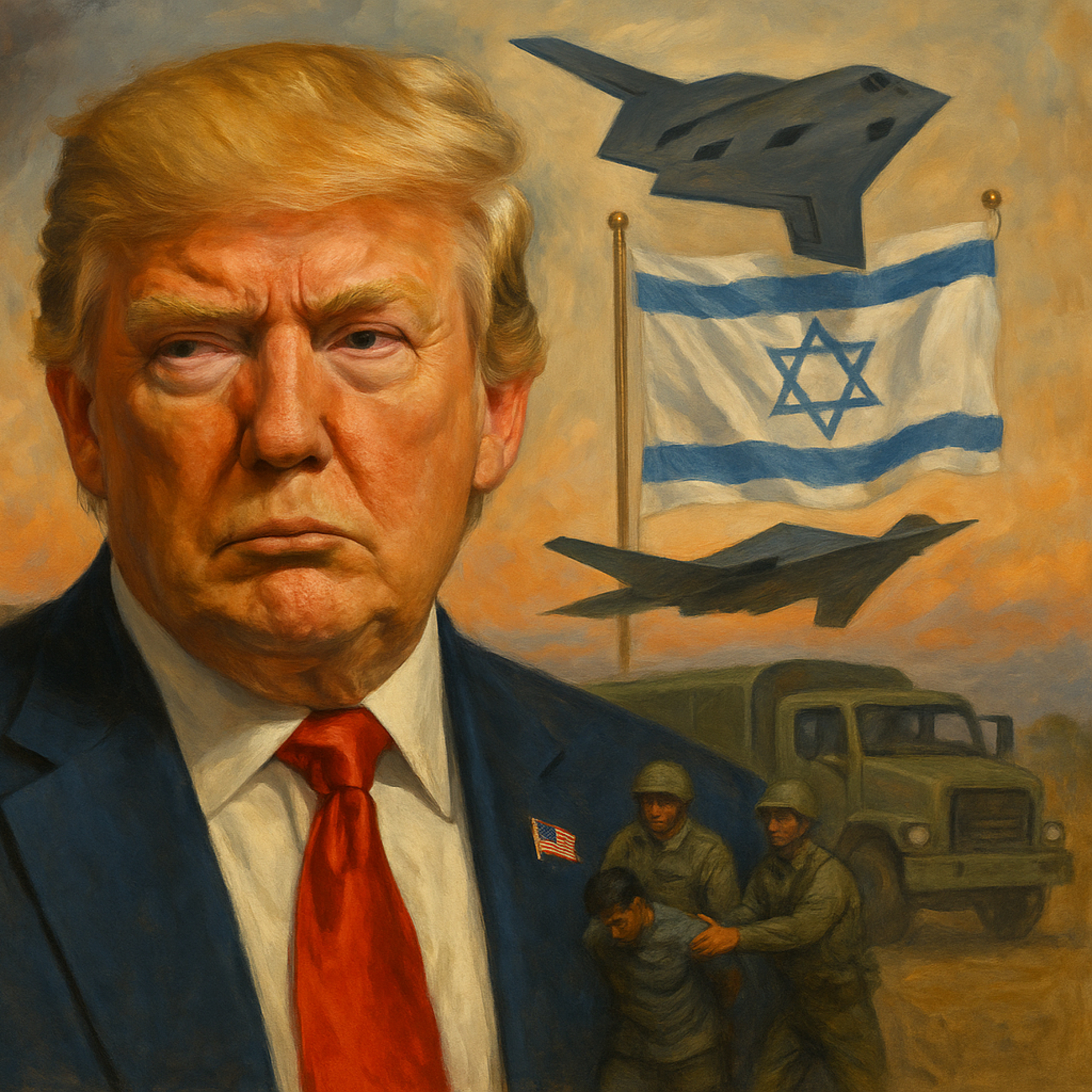
It’s easy to see Trump’s June 2025 bombing of Iranian nuclear sites as yet another episode of MAGA theater—rage, firepower, and a dramatic “message sent.” But this time, it wasn’t just for show. This was an act of geopolitical spite born from domestic paralysis. Trump, denied the ability to wage his preferred internal war—on undocumented immigrants, on tariffs, on the bureaucracy—chose instead to unleash a foreign one. If he couldn’t stimulate the economy through deportation logistics and tariff revenue, he’d do it through the defense budget.
Trump’s economic nationalism has never required foreign conquest. He intended to stimulate the economy by taxing imports, expelling millions of undocumented immigrants, and redirecting federal spending into buses, lawyers, detention centers, and federal contractors. Like the Marshall Plan or post-9/11 Homeland Security boom—but pointed inward. That vision, however controversial, was internally coherent. But it collapsed under the weight of injunctions and process lawfare.
While Obama removed over 3 million people, many via expedited removal, he was never seriously challenged by courts. But when Trump tried to expand expedited removal to cover undocumented individuals who had been in the U.S. for under two years, he was blocked by courts demanding hearings and extended due process. The same statutory tools were treated differently depending on who wielded them.
Stripped of the tools used by every prior “Deporter-in-Chief,” Trump pivoted to the one realm where injunctions have no reach: foreign policy. And in the Middle East, he still had one friend—Israel. Surrounded by adversaries at home and abroad, Trump leaned into his relationship with Netanyahu, using Iran as a stand-in for every institution that blocked him at home.
So came Operation Midnight Hammer. B-2 bombers dropped bunker-busting payloads on Fordow, Natanz, and Isfahan. These were not just tactical targets—they were symbolic, theatrical, and strategic. It was a clear message to allies and enemies: if I can’t fix the country my way, I’ll make my power felt overseas.
War is bipartisan. It doesn’t get bogged down in courtrooms or FOIA requests. Unlike mass deportation—which would have required years of hearings and billions in logistics—bombing Iran took hours, not lawsuits.
This wasn’t just a military decision—it was a political workaround. When the courts took away his buses and judges and deportation raids, Trump gave the defense contractors what they wanted instead. Foreign war became his fallback stimulus.
If America won’t allow a domestic war on illegals, maybe it’ll settle for a traditional one abroad. Either way, the spending flows.
Get every episode summarized
Each time The Chris Abraham Show publishes, we email you a written briefing from the transcript — the topics, who appeared, and any specific claims, with the ad reads skipped.
Email me new episodesFree for 3 shows. No card needed.
Hosts & guests
No transcript yet
This episode has not been transcribed. Request it and it moves to the front of the queue.
More episodes
More from The Chris Abraham Show

How I Stole 24 Months of Gameplay in 60 Seconds of Bad Decisions
The Chris Abraham Show

America Goes Abroad in Search of Monsters to Destroy—A 21-Year Warning About End...
The Chris Abraham Show

The Deportation Plan Broke So the Bombs Came Out
The Chris Abraham Show

Media Capture, Populism, and the NPR Trust Problem
The Chris Abraham Show