Trump’s Iran deadline ticks closer. Where do things stand now?
About this episode
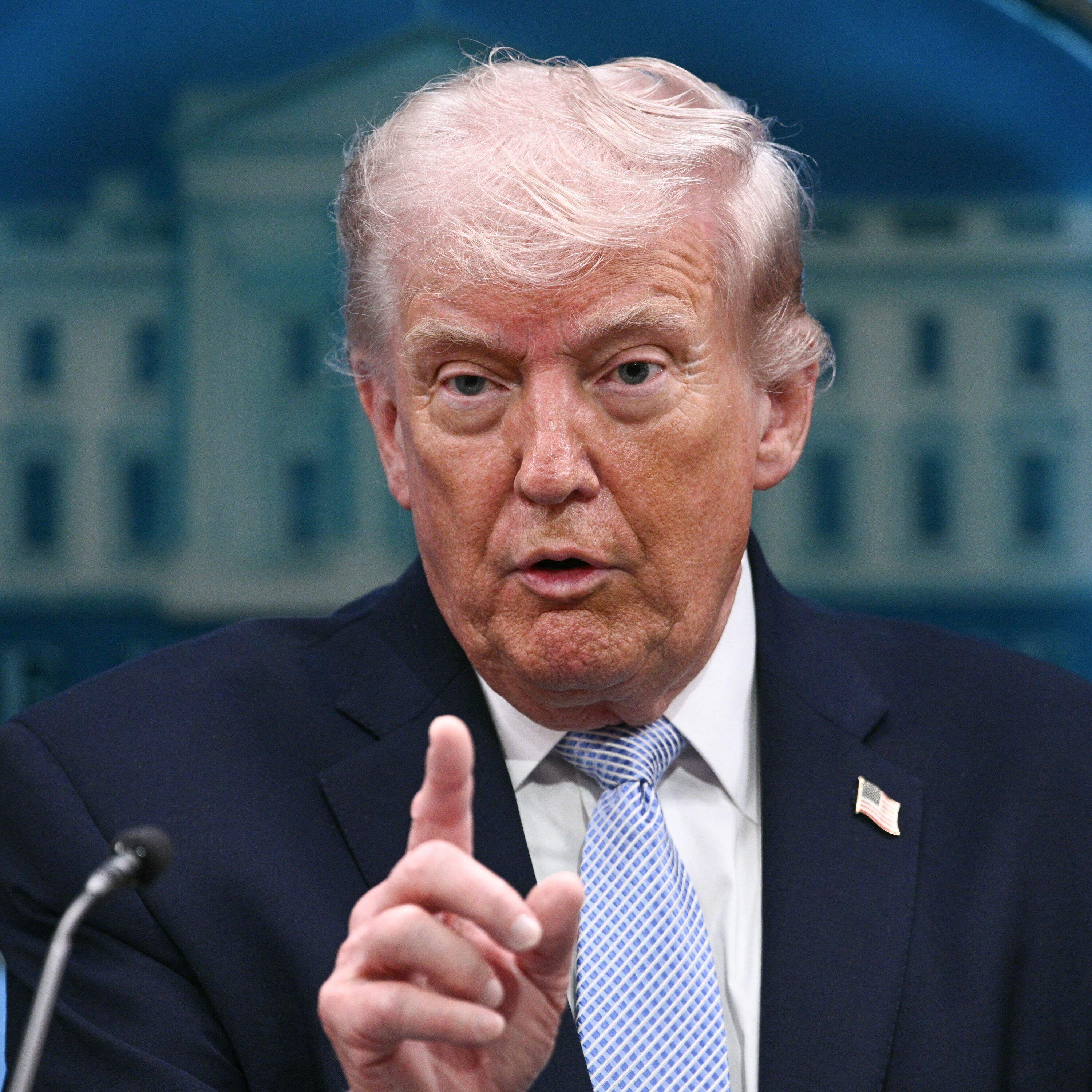
“A whole civilization will die tonight, never to be brought back again,” the president wrote on his social media platform.
“I don’t want that to happen, but it probably will.”
The U.S. and Iran are holding indirect talks on ways to pause, or end, the war. But there’s no real sign of progress.
As Trump’s latest deadline for a deal with Iran ticks closer, where do things stand now?
For sponsor-free episodes of Consider This, sign up for Consider This+ via Apple Podcasts or at plus.npr.org. Email us at [email protected].
This episode was produced by Brianna Scott and Karen Zamora.
It was edited by Rebekah Metzler, Andrew Sussman and Patrick Jarenwattananon.
Our executive producer is Sami Yenigun.
See pcm.adswizz.com for information about our collection and use of personal data for sponsorship and to manage your podcast sponsorship preferences.
NPR Privacy Policy
Get every episode summarized
Each time Consider This from NPR publishes, we email you a written briefing from the transcript — the topics, who appeared, and any specific claims, with the ad reads skipped.
Email me new episodesFree for 3 shows. No card needed.
Hosts & guests

Transcript ready
140 searchable segments. Every word is indexed and playable.
Full transcript
Consider This from NPR — Trump’s Iran deadline ticks closer. Where do things stand now?. Machine-transcribed; use the interactive transcript above to jump the player to any line.
President Trump is now threatening to destroy the nation of Iran if a deal to reopen the straight-of-war moves is not reached by 8 p.m. eastern time tonight. Just after 8 a.m. this morning, he wrote on social media, quote, �A whole civilization will die tonight, never to be brought back again. I don't want that to happen, he continued, but it probably will. Previously, the president has threatened to destroy every bridge, every power plant, every water treatment facility in Iran, if there's no agreement. We will find out tonight, he wrote, one of the most important moments in the long and complex history of the world. Having threatened to annihilate their entire civilization, he then ended his message, God bless the great people of Iran. Consider this, the president of the United States issued Iran an ultimatum. What happens now? From NPR, I'm Wana Summers. These days, it feels like the news changes every hour, while NPR has a podcast that does
that too. NPR News Now brings you a fresh 5 minute episode every hour of the day, with the latest most important headlines in episodes that are clear, fact-based, and easy to digest. Listen to NPR News Now on the NPR app or wherever you get your podcasts. It's considered this from NPR. President Trump has set an 8 p.m. deadline for launching a massive escalation in the Iran war. The U.S. and Iran are holding indirect talks on ways to pause or in the war, but there's no real sign of progress. Trump held out some hope, who knows he used on the truth social in all caps. But if not, it's worth reiterating the president's language from earlier in that post. A whole civilization will die, he wrote. We're going to discuss all of this with NPR National Security Correspondent Greg Meiery, and NPR's White House Correspondent Deepa Shiverham. Deepa, let's start with you.
We've known about President Trump's deadline. And then today, there was this very ominous social media post. What's the latest from the White House? Yeah, the president really set the table there with that very stark warning, referencing his 8 p.m. Eastern deadline for striking a deal. And he was threatening dramatic consequences here. As you mentioned, he said a quote, whole civilization will die tonight, never to be brought back. Again, later on in his post, he said that he didn't want that to happen, but it quote, probably will, and said that maybe something in terms of a deal could happen between now and that 8 p.m. deadline here at the White House Trump's day so far seems to be on the quieter side. He hasn't had any public-facing events, but press secretary Caroline Levitt said that the president has been made aware of a request from the Prime Minister of Pakistan to extend this 8 p.m. deadline for Iran for another two more weeks. Pakistan has been trying to mediate a deal between the U.S. and Iran. That request came earlier today, and Levitt says Trump will respond, but we haven't seen
that response quite yet. Greg, over to you, I know that the U.S. has already carried out an attack today on a sensitive site, Iran's Carg Island. What do we know there? Yeah, the U.S. struck military targets, including runways and bunkers on this island. This comes from a U.S. official who's not authorized to speak publicly. The official described them as re-strikes. Targets the U.S. has hit previously. The official said the U.S. did not hit oil infrastructure, which is the most important part of the island. Trump said previously that he might seize control of the island in its oil facilities. It's been a lot of speculation about a possible ground operation to take it. But none of this has happened, and still today's attack is worth noting since the President is threatening this major escalation. And Greg, just remind us if you can briefly about the significance of this island. Yeah, Carg Island is really critical to Iran's oil industry. Iran's oil comes from the mainland, but then it's sent for export to this island about
15 miles off the coast and the northern part of the Gulf. People get loaded onto tankers and then head south through the Strait of Hormuz, which Iran controls right now. The U.S. hit Carg Island back on March 13th, again hitting military sites. Trump said those sites were obliterated, and he described it as an example of what the U.S. could do to oil facilities. And Israel has also announced new military strikes, Greg, what did Israel hit? Yeah, Israel carried out strikes. It seemed directly related to what President Trump is threatening Israel's Prime Minister, Benjamin Netanyahu, said his country hit railways and bridges because they were being used to transport weapons and other military equipment. Now Iran responded, or our state media showed Iranians with flags lining up on bridges and around power plants, hoping to prevent attacks by the U.S. or Israel. And Iran's president said millions of his countrymen had volunteered to fight against the U.S.
Though we gave no indication at what they would be able to do to take part in what's essentially an air war. Deepa, President Trump has set multiple deadlines, and then he's supposed to postpone them for these attacks on Iran's power plants and bridges. Does he appear ready to act this time? Yeah, I mean, it's been weeks of this, right? Of the president making these threats to target these civilian infrastructure sites, power plants, like you mentioned, desalination plants, and then pulling back or extending that deadline for Iran. At this point, it doesn't seem like he has any intention to scale any of these threats back. But it's hard to say, given that the president has a track record in this last month of saying a lot of different things, moving the goalposts. I will say, though, earlier today, Caroline Levit, the White House Press Secretary, did say that only the president knows where things stand and what he will do. So given that statement, it's kind of unclear where things stand. Yeah, Deepa, if the president ramps up the war, can he expect full supporter perhaps see some opposition from Republicans and his political base? I mean, polling shows that the war has been really unpopular overall among Americans,
and many Americans, of course, are dealing with the uncertainty that's come with this war, right? The economic costs that have come with higher gas prices and things like that, the president's own supporters have also been feeling less enthused about Trump in these last few weeks, and that's pretty rare for that to happen. Politically, it's, you know, putting the Republican Party in a tough spot in this midterms year, and especially after Trump's threats to attack civilian infrastructure, there are some supporters who are now breaking with Trump. Tucker Carlson is one of them. He's recently been critical of the president, and over on Capitol Hill, Wisconsin Senator Ron Johnson, who has been a consistent and vocal supporter of Trump, he said on a podcast earlier today that he doesn't want to see the U.S. blowing up civilian infrastructure. Interesting, Greg, to you, there are last minute efforts now to extend Trump's deadline. What do we know about recent peace efforts? Yeah, I think in a word, confusion. We keep hearing reports that talks are on, talks are off, and the sides seem far apart. As you mentioned with this Pakistani move, that could provide a way to get through this
imminent deadline here, asking for Trump to extend his deadline for two weeks, asking Iran to open up the Strait of Hormuz for two weeks. So maybe that provides a way off or a way to pause the clock. But more broadly, the sides just don't seem anywhere near an agreement. The U.S. wants things like Iran to permanently reopen the Strait of Hormuz. It wants Iran to effectively shut down its nuclear enrichment program and to stop supporting proxy groups across the Middle East. These are all very big asked by the U.S. And then Iran, in turn, wants a permanent end to the war. Not just a ceasefire. It wants guarantees of no more U.S. attacks and it wants a lifting of all sanctions. And finally, it's worth noting Trump's change in tone over the past week. When he spoke on TV last Wednesday in his big address, he sounded like he wanted to de-escalate and wrap up the war in two to three weeks.
You know, now he's talking about this massive escalation, hoping this will lead Iran to capitulate. But Iran is remaining defiant and no sign that it's about to give up. NPR is Greg Meiery and Deepa Sheveram, thanks to both of you. Things are happening. Sure thing, Lana. This episode was produced by Breonna Scott and Karen Zamora. It was edited by Rebecca Metzler, Andrew Sussman, and Patrick Jerenwald Dunanan. Our executive producer is Sammy Edigan. It's considered this from NPR. I'm Lana Summers.
More episodes
More from Consider This from NPR

The Smithsonian's leader is stepping down. Where does the Institution go from he...
Consider This from NPR

As a new school year begins, how are students and parents feeling?
Consider This from NPR

9/11 changed America's place in the world. What did Russia and China learn?
Consider This from NPR

Unraveling the story about George Santos' insider trading on Kalshi
Consider This from NPR