About this episode
President Donald Trump says he will direct every federal agency to immediately stop using technology from AI developer Anthropic. The company behind the AI assistant Claude is mired in a row with the White House after refusing demands to give the US military unfettered access to its AI tools. Anthropic says “no amount of intimidation or punishment” will shift its opposition to its technology being used for mass domestic surveillance or fully autonomous weapons, and says it will challenge the White House decision in court.
Also: the former US President, Bill Clinton, tells a Congressional committee he did nothing wrong during his acquaintance with Jeffrey Epstein. President Trump says he's "not happy" with the outcome of the third round of nuclear negotiations with Iran, but the Omani mediator says "peace is within reach" and calls for more time to be given to diplomatic efforts. We look back at the career of the American singer-songwriter Neil Sedaka, who has died aged 86. Argentina's president Javier Milei tries to scrap laws protecting glaciers from the mining industry, promising the changes will lead to one million new jobs. And why the English Premier League is to launch its first direct-to-customer streaming platform next season.
The Global News Podcast brings you the breaking news you need to hear, as it happens. Listen for the latest headlines and current affairs from around the world. Politics, economics, climate, business, technology, health – we cover it all with expert analysis and insight.
Get the news that matters, delivered twice a day on weekdays and daily at weekends, plus special bonus episodes reacting to urgent breaking stories.
Follow or subscribe now and never miss a moment.
Get in touch: [email protected]
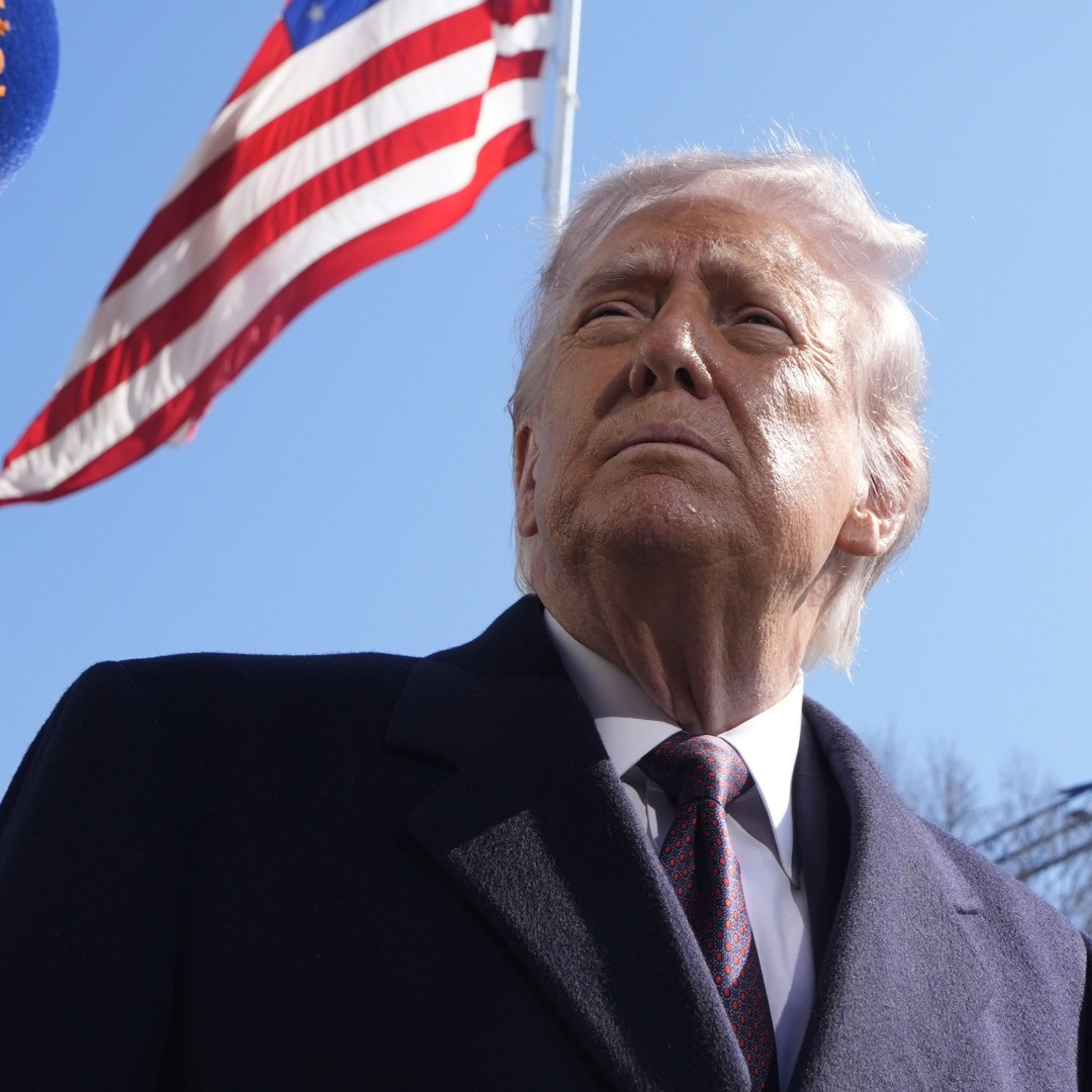
Photo: YURI GRIPAS/POOL/EPA/Shutterstock
Get every episode summarized
Each time Global News Podcast publishes, we email you a written briefing from the transcript — the topics, who appeared, and any specific claims, with the ad reads skipped.
Email me new episodesFree for 3 shows. No card needed.
Hosts & guests

Transcript ready
573 searchable segments. Every word is indexed and playable.
Full transcript
Global News Podcast — Trump blacklists Anthropic in AI battle. Machine-transcribed; use the interactive transcript above to jump the player to any line.
This BBC podcast is supported by ads outside the UK. This message comes from Schwab. At Schwab, how you invest is your choice, not theirs. That's why when it comes to managing your wealth, Schwab gives you more choices. You can invest and trade on your own. Plus, get advice and more comprehensive wealth solutions to help meet your unique needs. With award-winning service, low costs and transparent advice, you can manage your wealth, your way at Schwab. Visit Schwab.com to learn more. I'm Steve Rosenberg, the BBC's Russia Editor. In Our Man in Moscow, I'll show you what it's like being a news correspondent in Russia as the Russian authorities wage war on Ukraine and try to silence dissent. The sound of war has reverberated around Ukraine for three years. Dramatic geopolitical upheaval alongside threats of intimidation and imprisonment. Our Man in Moscow, watch with the subscription to BBC.com and the BBC app. Visit BBC.com slash docs to learn more.
You're listening to the Global News podcast from the BBC World Service. Hello, I'm Oliver Conway. This edition is published in the early hours of Saturday the 28th of February. President Trump orders US government agencies to stop doing business with anthropic. After the firm said it won't allow its AI model to be used for mastermestic surveillance or making fully autonomous weapons. The former US President Bill Clinton tells a congressional committee he did nothing wrong during his acquaintance with Jeffrey Epstein and the American singer-songwriter Niel Sedaka has died aged 86. I wrote a song, a rock-and-roll song called Mr. Moon. I played it in the school auditorium. The response from the kids was phenomenal. I realized then I liked the attention. Also in the podcast, Argentina's President Javier Mule tries to scrap laws protecting glaciers from the mining industry. And the English Premier League is to launch its first direct to customer streaming platform next season.
Should there be restrictions on how artificial intelligence is deployed on the battlefield? President Trump wants the US military to have the freedom to do what it likes with the technology Anthropic, the US firm whose Claude AI assistant was reportedly used in the Venezuela raid last month, thinks there should be some red lines. It's refused to bow down to the Pentagon's demand that it lift all its restrictions. And so the US President has now ordered the government to stop doing business with the firm. Our North America technology correspondent Lili Jamali told me how the row unfolded. What we heard on Tuesday was that Dario Amodi, the CEO of Anthropic and Pete Hegseth, the Secretary of Defense, now the Secretary of War, met and that during that meeting Hegseth gave Amodi an ultimatum saying, you must basically give us unfettered access to this technology. You can't have any say in how it gets used. Now that didn't sit well with the CEO of Anthropic because he has some red lines as to how he wants Claude
to be used. He doesn't want to see it used for mastermastic surveillance. He doesn't want to see it used in the context of making final targeting decisions without human intervention. He dug in his heels again on Thursday. And here we are on Friday at a deadline that Hegseth had given him during that meeting at the Pentagon. And now Trump is saying Anthropic is basically going to be removed from all government agency work. So this is anthropic wanting to put in guardrails for how its technology is used on the battlefield. The US government having none of it. That's exactly right. And other companies in Silicon Valley AI developers have been keeping a very close eye on this debate as it's unfolded. Before Trump's pronouncement, we heard from Sam Altman, the head of OpenAI, which is the maker of chat GPT, big competitor to Anthropic. He said that he agrees with Dario Amodi's red lines. Even though Altman has been pretty friendly with the Trump administration and has done a couple of events
with the president himself. We also heard from the alphabet workers union which represents workers at Google. There's been actually workers at a couple of Silicon Valley companies who have raised the red flag here. But the union said that they are worried that if Google were put in the same position as Anthropic has been, that they would actually capitulate. And they wanted to have some clarity from Google as to what exactly its policy is. We have contacted Google and have not heard back. Yeah, essentially this is an argument over who has the final say over how AI is used. So it could be a landmark decision this. That's exactly right. There are three other companies that have these $200 million contracts with the Pentagon like what Anthropic had. So that would be Elon Musk's XAI Google with its Gemini AI tool and OpenAI. One of the analogies that's been used here is when the Pentagon goes out and buys a plane from Boeing,
Boeing doesn't then get to say, here's how you can use the plane. They're pretty much out of the game at that point once the plane changes hands. What's different about this, why that analogy doesn't quite sit well with so many people in the AI context, is that this technology is evolving so quickly. And we're talking about life and death decisions potentially. So that's why there's been so much concern, especially from Anthropic, which has really positioned itself in the market as a safety first company. That's what they're known for in Silicon Valley. And this debate has actually been great from a public relations standpoint because it only bolsters that view of how they're regarded. Our technology correspondent, Lily Jamali and anthropic said in a statement that it will challenge the Pentagon's decision in court and that no amount of intimidation or punishment from the Department of War will change its position on mass domestic surveillance or fully autonomous weapons. Meanwhile, President Trump has said he is not happy with Iran
after a third round of talks ended without a deal on the Iranian nuclear program. When asked how close he was to making a decision on military strikes on Iran, the US president said, I'd rather not tell you. The foreign minister of Oman, which has been mediating in the talks, told CBS News that progress had been made but more time was needed. If the ultimate objective is to ensure forever that Iran cannot have a nuclear bomb, I think we have cracked that problem through these negotiations by agreeing a very important breakthrough that has never been achieved anytime before. And I think if we can capture that and build on it, I think a deal is within our reach. The third round of talks in Geneva
between the Iranians and the Americans ended with the mediator, the Oman's foreign minister, but her al-Busaydi, talking of significant progress and Iran's foreign minister, their top negotiator, Abbas Arakchi said that these had been the most serious, the longest negotiations he's ever had with the Americans. So from those two sides, you had the real sense that there had been movement, but there was silence from the two American envoys which led many of us to ask, well, was progress really made. And then suddenly, the Omani Foreign Minister racist Washington for a meeting with the US Vice President J.D. Vance, and he's given a rare interview to CBS News, to send a message, and what is it? We're making significant progress. You repeated that again, but he also gave more details interestingly about the kind of concessions he says Iran is willing to make for the very first time, for example, that it will not accumulate uranium. So no more stockpiling of enriched uranium.
He offered other details as well, but he had a caveat. He emphasized we need more time, a bit more time as he put it to make a deal. But only with the message we've been getting from President Trump is that his clock is counting down. So will the Omani Foreign Ministers meeting with the US Vice President make any difference? It's interesting why, why did he go to see J.D. Vance? J.D. Vance in recent days said there's no way that we're going to get bogged down in a war of many years. He cede as the person close to President Trump who's really close to the base, that make America great again base who don't want another war. So perhaps the Omani Foreign Minister felt he's the person I needed to make the argument to, that the way to avoid a war is to really double down and continue to focus on diplomacy. That while President Trump has a pawn shop for the short, sharp, easy, successful deals,
this deal is going to take, well, it could take a lot more time. And yet, at the same time, US personnel being told to leave the region. So the threat definitely hasn't gone away. Every week for many weeks, you get more of this drumbeat. So today, more countries, more governments urge their citizens to leave Iran as soon as possible. China, India, Canada. Another embassy temporarily withdrew its staff. At this time, it was the United Kingdom. More governments issue travel advisories. Don't travel to Israel. Don't travel to Lebanon. Don't travel to Iran. And then adding to that, President Trump's comments. President Trump continues to say that he hasn't made up his mind yet. And he is the commander in chief. Our chief international correspondent, Lee's due set. As well as Iran, the US is also negotiating with Cuba according to President Trump. The Caribbean island is suffering an economic crisis made worse by US action against Venezuela,
which had been a key supplier of oil to Cuba. President Trump has now suggested what he called a friendly US takeover of Cuba, and said the US Secretary of State Marco Rubio was holding high-level talks with Cuban officials. Our correspondent will grant us recently returned from Cuba. So how will the US President's comments go down there? The first thought really is that anything that says it's going to be a friendly takeover from Washington, I am basically anywhere in Latin America, but certainly in Cuba is unlikely to go that way. No nation wants a takeover by Washington. And it's driven into the DNA of its people to reject that, particularly true in Cuba, I should say. Really it is. So that's one thing to bear in mind. So when President Trump talks about this idea, I think in essence he's saying, look, what we could get this to is position where there's control from Washington of, you know, the basics, whether or not that's the tourism industry, which is one of the main sources of foreign income
and so on and so forth, echoing the position where Washington seems to currently have the Venezuelan oil industry. I, doing its bidding, Washington largely in control. Now making that a reality with the revolutionary government in place in Cuba is a very, very different prospect. So ultimately it's quite an easy thing to say. It's a much, much harder thing to bring to fruition. But he is certainly right that the island is hurting very, very hard under this oil blockade. I've literally just got back from Cuba last week. Those fuel shortages are very, very painful. I saw people cooking with firewood in Havana, not in the provinces, but in Havana. And those cars that can actually get fuel because the restrictions are very, very tight, are only limited to 20 liters in a single sitting, which they must pay for in US dollars. Our Central America correspondent will grant. NASA's Artemis Lunar Programme has suffered a series of delays in recent years.
Now the US Space Agency has announced a shake-up to try to ensure that Americans can return to the Moon service by 2028. It's changing its flight lineup to include an extra mission, involving a spacecraft docking test. Here's NASA Administrator Jared Isaacman. We didn't go right to Apollo 11, right? We had a whole Mercury program, Germany, Apollo, lots of Apollo missions before we ultimately landed. Right now our program is essentially set up with an Apollo 8 and then going right to the Moon. That is, again, not a pathway to success. The next launch, which is due to see the first fly-by of the Moon in more than half a century, will now not happen before April. What does all this mean for the Artemis program, though? Eric Berger is a Senior Space Editor at the Tech and Science website, R's Technica. The goal is the same, and actually the plan is to try to accelerate the Artemis program to get humans back to the Moon from the United States and its partners as quickly as possible. The reality is that the Artemis program had kind of been floundering.
Dates had been slipping year-for-year. The program costs had been going up. You know, each launch of the rocket and spacecraft as currently configured is more than four billion. So, you know, all told to date, the Artemis program has spent something on the order of $25 billion, and so the NASA and the Ministry essentially tried to take a rocket that was overpriced and sort of get it in a more affordable and useful configuration and fly it more frequently. I mean, what we were dealing with was the Space Launch System, which only launched every three or four years, and that's just not a sustainable program. You need to fly off, and because otherwise you're, you know, the people who are working to launch, you need a kind of a cadence or a rhythm. You know, imagine if you had a football team that played one game every three or four years. I mean, it would be sort of difficult to manage that. He's sent out a pretty big ask of both people at NASA and the private companies it works with, Boeing, Lockheed, SpaceX, Blue Origin, other companies.
But he's making some internal changes that give him a chance. You know, they're hoping to fly the Artemis two missions and to crew around the moon in April, and then buy another mission in low Earth orbit in 2027 and then potentially do a lunar landing in 2028. Eric Berger. The American singer-songwriter, Neil Sedaka, has died at the age of 86. His family described him as a true rock-and-roll legend who'd been in inspiration to millions. He wrote a string of hits over six decades, including O'Carol, Solitaire, and Breaking Up is hard to do. A skilled pianist, Neil Sedaka also composed songs for other musicians and was nominated for five Grammy Awards. We're prevented by rights restrictions from playing his music, but Chantal Hartle looks back at his career. Neil Sedaka wrote his first song at 15 and performed it at his school. Here he is speaking in 2014 for the BBC documentary King of Song. I wrote a song, a rock-and-roll song called Mr. Moon, and I played it in the school auditorium for a amateur show.
And the response from the kids was phenomenal. I realized then I liked the attention that I would get, rather than playing a show in A-Tude. I was the school celebrity, and immediately all the girls surrounded me. I knew then I wanted to be famous. But the teenage Neil Sedaka asked if he could have a break from the Juilliard Music School and try his hand at pop. He said to begin with, no one would sign him as a singer because of his unusual voice. They said, we'll have you audition for RCA Victor Records. Steve Shulls was the head of RCA Victor, and I played a lot of songs including the diary for Steve Shulls. And he said, yes, I like it because it's very musical. I like the melodies and your voice is very unusual. It's very androgenous. It could be a girl singing or a boy singing, and he saw the potential in that.
Within five years, he'd sold 25 million singles. The carol of O'Carol was Carole King, a fellow writer at 1650 Broadway, the pop factory where he and lyricist, how we Greenfield, channed out hit after hit. He was at the top of the music business and making around $200 a week. His mother acquired a new lover, and they were in charge of the finances. He accused them of stealing his money. By the late 60s, the hits had dried up, so too, had the cash, and he was touring Britain's working men's clubs. What turned things around was the band 10CC. Back then, they were session musicians, and they helped him create a new sound for the 70s. He was back where he belonged in the charts. It was a run of hits that began in 1958 with Stupid Cupid. Four decades later, his song Is This the Way to Amarillo was the biggest selling single of 2005. In the history of pop, Neil Sardarca had more than earned his place.
Chantel Hartle on Neil Sardarca, who's died aged 86. Still to come in the podcast? Our audiences, unlike in TV shows, are hooked by scenes they see on social media, so we need spectacular moments to snatch their attention in one stroke. Why South Korea has jumped on the latest trend in filmmaking, micro dramas. I'm Steve Rosenberg, the BBC's Russia Editor. In Our Man in Moscow, I'll show you what it's like being a news correspondent in Russia, as the Russian authorities wage war on Ukraine and try to silence dissent. The sound of war has reverberated around Ukraine for three years. Dramatic geopolitical upheaval alongside threats of intimidation and imprisonment. Our Man in Moscow. Watch with the subscription to BBC.com and the BBC app. Visit BBC.com slash docs to learn more.
How to change. As she shares true stories from Nobel laureates, authors, athletes and everyday people about why we do the things we do. And how to make better choices to help avoid costly mistakes. Each episode covers the latest research in behavioral science and dives into themes like the power of self-control, shaping your mindset for success, navigating new beginnings, and why starting over can feel so hard. Listen to choisology at Schwab.com slash podcast or wherever you listen. This is not the future we were promised. Like hell that out for a tagline for the show. From the BBC, this is the interface, the show that explores how tech is rewiring your week and your world. This isn't about quarterly earnings or about tech reviews. It's about what technology is actually doing to your work and your politics, your everyday life and all the bizarre ways people are using the internet.
Listen on BBC.com or wherever you get your podcasts. You're listening to the Global News Podcast. The former US President Bill Clinton spent six hours on Friday, testifying about his connections to the dead pedophile Jeffrey Epstein. He told the House of Representatives Oversight Committee he was unaware of Epstein's crimes and would have reported him himself if he'd known. The former president was asked about a photo from the Epstein files showing him and an unidentified person in a hot tub. He said he didn't know who the woman was and when asked, responded that he did not have sex with her. A few hours after the hearing finished, Bill Clinton released a video on X. If someone who grew up in a home with domestic violence, not only would I not have flown on his plane if I had any inkling of what he was doing, I would have turned him in myself and led the call for justice for his crimes, not the sweetheart deal we got.
But even with 2020 hindsight, I saw nothing that ever gave me real pause. We're only here today because Epstein hid it from everyone so well for so long. And for the time it came to light with his 2008 guilty plea, I had long stopped associating with it. The Democrats on the committee said the hearing set a precedent for President Trump, whose name appears repeatedly in the Epstein files, to testify as well. But what more do we learn from Bill Clinton's deposition? I spoke to our correspondent in Washington, Simmy D'olarsho. We know from the opening statement he gave the committee why he agreed to testify. He said firstly because he says no one is above the law, secondly because he wants justice and healing for the victims. We also know just a couple of the questions Bill Clinton was asked, like you mentioned, a source confirmed to the BBC that he was asked about the Jacuzzi photograph where he is seen next to an unidentified person. He said he did not know who the woman in the photograph is.
He was asked if he had sex with a woman. He said he did not. We know the former president also said he had no idea of Epstein's crimes and that he deeply regret his association with Epstein. We're also told that he was asked whether the committee should depose a current president, Donald Trump, and we're told that he said that's for you to decide. It's interesting because even though both Democrats and Republican committee members agreed that the session was productive and that Bill Clinton cooperated and gave lengthy answers, they seem not to agree on one thing, which is what Bill Clinton said about President Trump's relationship with Jeffrey Epstein. Republicans say that he said nothing that would make them think that President Trump had any knowledge of Epstein's criminal activities, but Democrats say that whatever Bill Clinton said, in fact raised more questions about Donald Trump and Jeffrey Epstein's relationship, especially with regards to the reason it ended.
So one Democrat committee member said that Bill Clinton said President Trump once told him the reason he stopped speaking to Jeffrey Epstein in the early 2000s was because the two had a falling out over a land dispute, but the White House has previously said that President Trump had kicked Epstein out of his Mar-a-Laga club for, quote, being a creep. President Trump has consistently denied any wrongdoing in relation to Jeffrey Epstein. We're still waiting for the transcript from Hillary Clinton's testimony on Thursday. When will we see the details of what she said and indeed Bill Clinton's testimony? Well, committee members have said that we will get the full video and transcript of both deposition soon. They had said 24 hours after Hillary Clinton's testimony, but that has, of course, passed. The Republican committee chair said that they will need to go through everything and get everything legaled before its release. Democrat members of the committee have said they want the full, unedited videos of both depositions to be released, so nothing is up for misinterpretation.
Argentina was the first country in the world to introduce a law to protect all glaciers and periglacial areas, particularly from the mining industry. When it came in, 15 years ago, it was hailed as a breakthrough by environmentalists, but now, having it Millay's government wants to scrap it. It seems many glacial areas in Argentina are rich in minerals, especially copper. President Millay says the changes could create a million jobs. Here's Senator Bruno Oliver Lucero from the ruling party. Water and mining are not enemies. They never were. What is wrong is good environmental practice with legal ambiguity, like we have with the current law. And this bill ends that ambiguity, so we can better protect water and enable the development of provinces that so badly need it. But environmental groups, including Greenpeace, have warned of economic interest taking precedence over water conservation. Rebecca Kesby spoke to environmental lawyer Christian Fernandez.
This plan is really awful because in Argentina glaciers are the beginning of 36 rivers. We have in Argentina 17,000 glaciers. They are really important for us, for food production, also for human consumption, and also for activities. These fresh waters that begins at the glaciers of the Kurdishera de Los Andes is the way that Argentina feeds nowadays this human right, which is the access to water, is in the insure because this water wants to be used by mining projects. These mining projects, they start exploding the mountain, and then they mix the water with cyanide. And cyanide is pollution and substance. Okay, but the Argentine Chamber of Mining companies is welcoming these reforms because they say the earlier law from 15 years ago wasn't very clear, and it meant that all glaciers were out of
bounds for mining. And as you say, that's 17,000, which meant that they were banned from any kind of mining. And as you know, there are precious metals and minerals in glacial areas. So now it's going to be that the provinces get the say over whether or not mining can go ahead. Won't that make it easier for mining companies to make headway in certain provinces without destroying all the glacial areas? No, it's not a good idea. It's not a good idea. And I believe that there are a lot of promises of works of shows that are not really true. For example, the glaciers are important for tourism. And in the last days, in the last weeks, we read a United Nations report about the bankruptcy of water in the whole world. So we are nowadays facing climate change and rivers that are drought. And so we need to preserve these rivers. We need to preserve these waters because they
are the water for the future. Environmental lawyer, Christian Fernandez, talking to Rebecca Kesby. The English Premier League says it's launching its own football streaming service, allowing subscribers to watch all 380 matches live. The one-season trial will take place in Singapore. Our business correspondent, Nick Marsh, is there. I'm sure you've probably heard about this chatter for a while. The idea that the Premier League, most watch sports league and the whole world, will it do the same as what the NBA does, the NFL, the other American sports? And basically cut out in the middle, man. So instead of tuning into your local broadcaster, you bought a sports package, like I have, like many others have, you pay for the Premier League app, you pay your subscription, and you get direct access to all of these matches. Plus like a 24-7 channel with interviews, features, that sort of thing. People are calling it prem flicks, inevitably the real name will be Premier League plus. And it's going to be launched here in Singapore as an experiment in conjunction
with StarHub, the local broadcaster. The details are still being established. I mean, I've reached out to StarHub. I've reached out to the Premier League because StarHub has a six-year contract, by the way, with the Premier League here. They say details will come out in due course. But in any case, it's an interesting experiment. It's going to give the Premier League complete control when it comes to the pricing, to the production, to the distribution. Is that good for the consumer? It's debatable, but there are lots of people who think that's a really good thing. Nick Marsh in Singapore. We end this edition with an insight into the latest trend in filmmaking, micro dramas. These are vertically shot to be watched on phones and broken into one or two-minute episodes. In 2024, they made more money than traditional films in China, where the trend began. Now, other players like South Korea are getting in on the action. Our correspondent in the South Korean capital soul, Jake Kwon, sent us this report. A stripper? She's a dancer. Secret billionaires and werewolves, lovers in Amnesia and family revenge. Welcome to the world of
micro drama. Have you lost your mind? We went to the set in Pajja City just outside of the capital soul, where South Korean filmmakers were shooting the latest episode. And they often feature dopamine raging plot lines. Like this show that we're watching being filmed today, it's about a woman who finds out her boyfriend is a secret billionaire whose rival had put him in a coma. And in one pivotal moment, the rival family shows up to a funeral and flips a table full of food. These scenes are designed to keep the viewers hooked. Our audiences, unlike in TV shows, are hooked by scenes they see on social media. So we need spectacular moments to snatch their attention in one stroke. The actors are definitely loving the ridiculous lines and exaggerated plots. This film crew is expected to make 10 movies each year and this is part of the game.
It is to make the movies as quick as possible as cheap as possible and the company is saying that they're going to get there using the AI. I arrived in Gangnam, a central business district of Seoul. This is where South Korea's number one contender in the micro-drama business, Big Lou, has its office. And now we finally get to see the edit of the episode we saw being filmed. It's very dramatic with all the music of the sound effects. And in between, there are drone shots of a seagull flying across the sea and a lineup of jet fighters and luxury cars driving across. So, I mean, none of this would be possible without an AI. I mean, the cost of making such video would be astronomical. We moved over to one corner where Big Lou is making fully AI-generated films. The actors, their voices, and the castle where they're fighting. None of it is real.
Just two workers can make the 30-minute film in a couple months using a screenplay alone. We can cut the time and cost of making shows down to 10% or less. This is Big Lou's CEO, Neil Choi, telling us that they have two films on their app that are entirely AI-generated, but nearly all of their films are using AI to varying degrees. Back at the film set, the main actress Anchehi tells us that she is of course afraid of the AI taking her job. Absolutely. I do worry. The world is advancing, so one day, if AI can replace actors, what will I do? I still hope that AI won't be able to give you that X factor that only humans can give. It makes me work harder to be a better actor.
But at least for now, she loves the chance to play the main role and laugh at the silliness of playing the lover of a secret billionaire. That report from South Korea by Jake Kwon. And that is all from us for now. If you want to get in touch, our email address is globalpodcast.bbc.co.uk and don't forget our sister podcast, the global story. Looking at one big story in depth. This edition of the global news podcast was mixed by Russell Newlove and produced by Shavon Lehi and Nikki Verico. Our editors Karen Martin, I'm all of a con way. Until next time, goodbye.
More episodes
More from Global News Podcast

The Happy Pod: The choir proud to admit they can't sing
Global News Podcast

Houthi fighters seize control of Yemen's entire Red Sea coast
Global News Podcast

Houthis tighten squeeze on crucial shipping route
Global News Podcast

Israeli military demolishes Hezbollah tunnels in Lebanon
Global News Podcast