newsAug 28, 20254:53pending
"Transforming the Federal Government: Project 2025's Sweeping Reforms"
About this episode
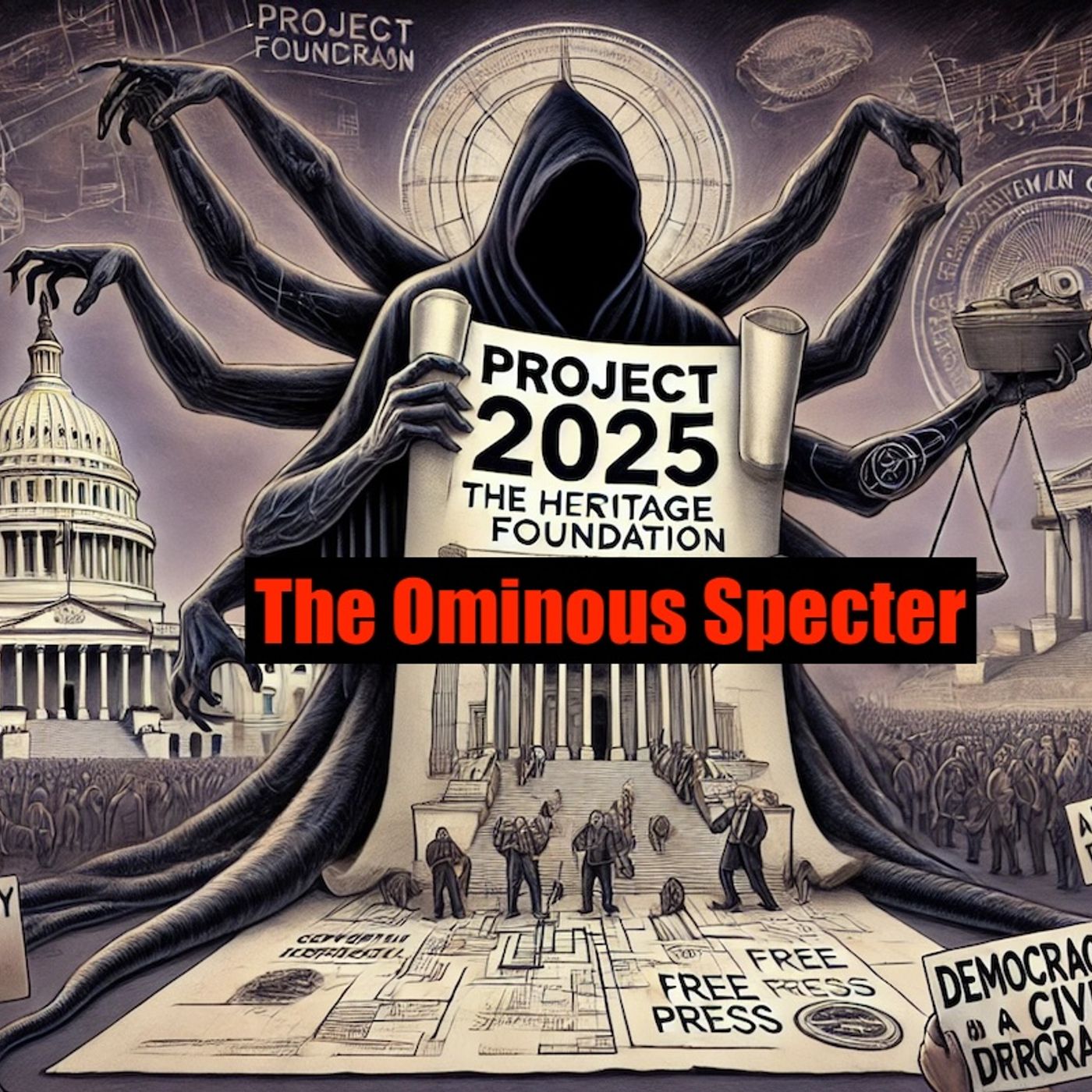
Project 2025 is reshaping the conversation about the role and reach of the federal government in ways that feel both sweeping and personal. Born from the Heritage Foundation’s “Mandate for Leadership,” this 900-plus-page policy blueprint divides nearly every federal agency and department into zones of targeted reform, all aimed at what its architects call “destroying the administrative state.” Heritage Foundation President Kevin Roberts summed up the mood behind it simply, declaring that “every federal employee should answer to the president.” That principle, experts say, guides the project’s plans to consolidate power at the top and move swiftly on a series of executive moves from day one.
The scale of intended change is hard to overstate. Project 2025 outlines an operational playbook for the first 180 days of a new Republican administration. Its centerpiece is Schedule F—a government job classification that would allow the new president to reclassify tens of thousands of career civil servants as at-will political appointees. That means federal workers, who traditionally hold their positions regardless of party, could be replaced without cause by loyalists. Kiron Skinner, who authored the State Department chapter, suggested clearing out senior career officials before January 20 and quickly installing appointees who share the president’s views, bypassing regular Senate confirmation requirements. Skinner argues such moves are necessary to ensure ideological alignment, though when pressed by CNN’s Peter Bergen, she couldn’t cite a specific past obstruction by career diplomats.
Concrete actions have followed rhetoric. When President Trump took office on January 20, he and Elon Musk’s newly minted Department of Government Efficiency hit the ground running. According to Government Executive and other outlets, entire agencies like the Consumer Financial Protection Bureau and USAID were targeted for elimination through “legally questionable means,” with the stated goal of cutting $1 trillion in spending. Executive orders soon followed, including one mandating that federal agencies may only hire one worker for every four who leave, and requiring return-to-office mandates for a federal workforce that had grown accustomed to remote work during the pandemic.
Faced with the threat of losing job protections, over a quarter-million federal workers and contractors were facing layoffs by spring 2025, with forty-seven years of collective bargaining law challenged as unions raced to court. NTEU President Doreen Greenwald put it bluntly, calling it “an attack on the law, and on public service.” Opposition isn’t limited to labor groups. The ACLU has charged that Project 2025 is a “roadmap to replace the rule of law with right-wing ideals,” warning that the proposals could undermine legal norms, civil rights, and protections for marginalized groups. Legal scholars from both political parties have raised flags about weakening the separation of powers, endangering environmental and public health safeguards, and risking consolidated, unchecked executive authority.
Proponents are equally resolute. They argue that Project 2025 is a necessary corrective to what they view as a bloated, left-leaning bureaucracy unaccountable to the people. Heritage Foundation materials frame the federal government as too large, too costly, and resistant to the priorities of conservative Americans. They cite the sheer scale—over 2.4 million civilian federal employees—and the proliferation of agencies as drivers for dramatic consolidation and workforce reductions.
Specific policy proposals go beyond personnel. The project seeks to reset environmental rules, roll back climate policies, and overhaul protections related to health, education, and civil rights. Critics, including groups like the Center for Progressive Reform, warn that these policies will lead to significant negative effects for ordinary Americans—from loss of workplace and environmental protections to sharp changes in immigration enforcement and reproductive rights.
As the summer of 2025 progresses, listeners should watch several key milestones. Court cases brought by federal employee unions and advocacy groups could set vital precedents for the separation of powers. Agency heads are evaluating which departments could be merged or eliminated entirely in accordance with new directives. Congress, too, will play an uncertain but pivotal role as many Project 2025 reforms require new legislation or appropriations. Meanwhile, a country already polarized by election-year tensions is bracing for the long-term consequences of this radical experiment in federal power.
Thank you for tuning in to this week’s deep dive into Project 2025’s ambitions and realities. Be sure to come back next week for more crucial stories shaping the nation.
Some great Deals https://amzn.to/49SJ3Qs
For more check out http://www.quietplease.ai
This content was created in partnership and with the help of Artificial Intelligence AI
The scale of intended change is hard to overstate. Project 2025 outlines an operational playbook for the first 180 days of a new Republican administration. Its centerpiece is Schedule F—a government job classification that would allow the new president to reclassify tens of thousands of career civil servants as at-will political appointees. That means federal workers, who traditionally hold their positions regardless of party, could be replaced without cause by loyalists. Kiron Skinner, who authored the State Department chapter, suggested clearing out senior career officials before January 20 and quickly installing appointees who share the president’s views, bypassing regular Senate confirmation requirements. Skinner argues such moves are necessary to ensure ideological alignment, though when pressed by CNN’s Peter Bergen, she couldn’t cite a specific past obstruction by career diplomats.
Concrete actions have followed rhetoric. When President Trump took office on January 20, he and Elon Musk’s newly minted Department of Government Efficiency hit the ground running. According to Government Executive and other outlets, entire agencies like the Consumer Financial Protection Bureau and USAID were targeted for elimination through “legally questionable means,” with the stated goal of cutting $1 trillion in spending. Executive orders soon followed, including one mandating that federal agencies may only hire one worker for every four who leave, and requiring return-to-office mandates for a federal workforce that had grown accustomed to remote work during the pandemic.
Faced with the threat of losing job protections, over a quarter-million federal workers and contractors were facing layoffs by spring 2025, with forty-seven years of collective bargaining law challenged as unions raced to court. NTEU President Doreen Greenwald put it bluntly, calling it “an attack on the law, and on public service.” Opposition isn’t limited to labor groups. The ACLU has charged that Project 2025 is a “roadmap to replace the rule of law with right-wing ideals,” warning that the proposals could undermine legal norms, civil rights, and protections for marginalized groups. Legal scholars from both political parties have raised flags about weakening the separation of powers, endangering environmental and public health safeguards, and risking consolidated, unchecked executive authority.
Proponents are equally resolute. They argue that Project 2025 is a necessary corrective to what they view as a bloated, left-leaning bureaucracy unaccountable to the people. Heritage Foundation materials frame the federal government as too large, too costly, and resistant to the priorities of conservative Americans. They cite the sheer scale—over 2.4 million civilian federal employees—and the proliferation of agencies as drivers for dramatic consolidation and workforce reductions.
Specific policy proposals go beyond personnel. The project seeks to reset environmental rules, roll back climate policies, and overhaul protections related to health, education, and civil rights. Critics, including groups like the Center for Progressive Reform, warn that these policies will lead to significant negative effects for ordinary Americans—from loss of workplace and environmental protections to sharp changes in immigration enforcement and reproductive rights.
As the summer of 2025 progresses, listeners should watch several key milestones. Court cases brought by federal employee unions and advocacy groups could set vital precedents for the separation of powers. Agency heads are evaluating which departments could be merged or eliminated entirely in accordance with new directives. Congress, too, will play an uncertain but pivotal role as many Project 2025 reforms require new legislation or appropriations. Meanwhile, a country already polarized by election-year tensions is bracing for the long-term consequences of this radical experiment in federal power.
Thank you for tuning in to this week’s deep dive into Project 2025’s ambitions and realities. Be sure to come back next week for more crucial stories shaping the nation.
Some great Deals https://amzn.to/49SJ3Qs
For more check out http://www.quietplease.ai
This content was created in partnership and with the help of Artificial Intelligence AI
Get every episode summarized
Each time Project 2025: The Ominous Specter publishes, we email you a written briefing from the transcript — the topics, who appeared, and any specific claims, with the ad reads skipped.
Email me new episodesFree for 3 shows. No card needed.
Hosts & guests
No transcript yet
This episode has not been transcribed. Request it and it moves to the front of the queue.
More episodes
More from Project 2025: The Ominous Specter

Project 2025: How Trump's Conservative Blueprint Is Reshaping Federal Government...
Project 2025: The Ominous Specter
Apr 18, 20263:01failed
Project 2025: How Conservative Overhaul Plans Are Reshaping Federal Government a...
Project 2025: The Ominous Specter
Apr 16, 20262:41failed
Project 2025: Trump Administration Implements 53 Percent of Heritage Foundation'...
Project 2025: The Ominous Specter
Apr 14, 20262:30failed
Project 2025: Trump Administration Implements Half of Heritage Foundation's Gove...
Project 2025: The Ominous Specter
Apr 11, 20262:34failed