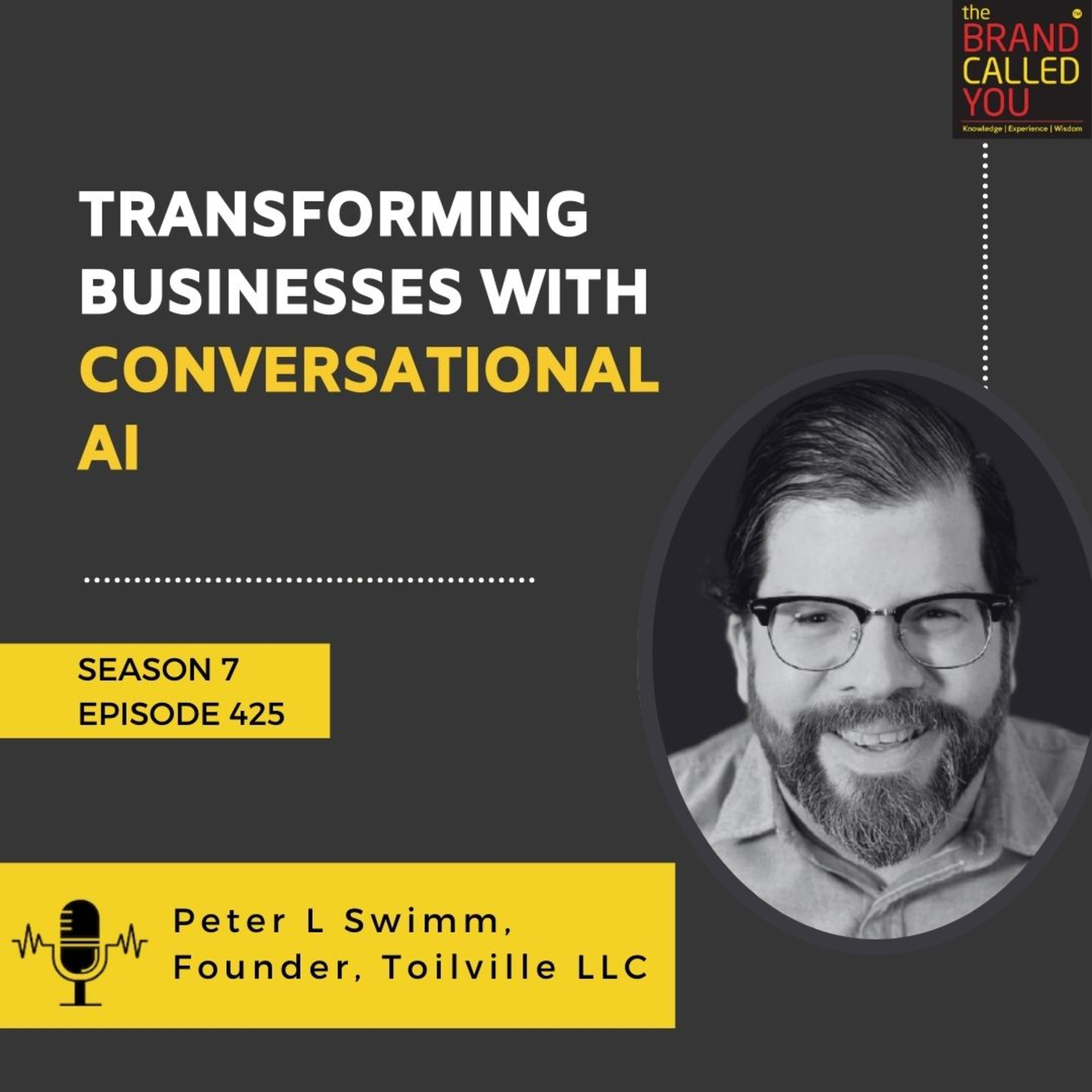
Transforming Businesses with Conversational AI: Insights from Peter L. Swimm, Founder of Toilville LLC
About this episode
In this insightful conversation, host Ashutosh Garg sits down with Peter L. Swimm, Founder of Toilville LLC, a multidisciplinary agency transforming businesses into conversational AI powerhouses.
Peter shares his unique journey through startups, global enterprises, and open communities, and offers a people-first perspective on building conversational AI. Learn why multidisciplinary teams, context, and human connection are critical for successful AI deployments, and how businesses can avoid common misconceptions.
In This Episode, You’ll Discover:
How Peter’s early passion for human-centered technology shaped his career.
What “multidisciplinary” really means in conversational AI.
Why context and institutional knowledge are often missing in enterprise AI deployments.
Real-world examples of solving AI misconceptions for clients.
How to transition from isolated AI pilots to fully embedded business solutions.
How NLU and generative AI work together in production-grade systems.
The future of AI democratization, community-driven innovation, and emerging trends.
Peter’s top three strategic questions for businesses starting their conversational AI journey.
Get every episode summarized
Each time The Brand Called You publishes, we email you a written briefing from the transcript — the topics, who appeared, and any specific claims, with the ad reads skipped.
Email me new episodesFree for 3 shows. No card needed.
Hosts & guests
Transcript ready
219 searchable segments. Every word is indexed and playable.
Full transcript
The Brand Called You — Transforming Businesses with Conversational AI: Insights from Peter L. Swimm, Founder of Toilville LLC. Machine-transcribed; use the interactive transcript above to jump the player to any line.
Welcome to another episode of the Brand Called You, what cast and podcast show that brings you leadership lessons, knowledge, experience and wisdom from thousands of successful individuals from around the world. I'm your host Ashutosh Gargant today. I'm delighted to welcome a very senior and accomplished professional with a deep understanding of artificial intelligence from Seattle, USA, Mr. Peter Swim. Peter, welcome to the show. Hey, thank you for having me. Peter is the founder of Toywheel LLC, which is a multi-decivenity agency dedicated to transforming businesses into conversational AI powerhouses. So Peter, my first question for you, your work spans open source enterprise SaaS and global commerce platforms. What first grew you to conversational interfaces long before they became mainstream? You know, I think my involvement in tech, even back to
my very early job when I was in high school, was around the intersection of people using computers and not computers being used to help people. And so coming from our people first background always may be super interested in like how do we improve the interfaces, how do we make things more understandable and relatable to the needs of the common people and conversational AI has always been like a place I found a lot of value in bringing that approach to. You have worked across startups, global enterprises and open communities, which phase of your journey most shaped your philosophy on building human centered AI? You know, I think my transition from early in career where I was a support person and helping startups grow and then going through like the dips and valleys of startup life where all of a sudden I'm employing number three and there's only two employees left. And so you were forced to wear many different hats. And I think that has always been kind of like my
kind of like, oh, I'm suddenly the person who knows the most about this subject matter in this company. And even though I don't have the bonafides of the training, I'm the best person for the job. And so kind of learning while doing and like failing and pivoting fast was really a great catalyst, you know, for expanding my technical acumen and working on projects and also having more confidence in myself, you know, being able to like, oh, you know, you don't have to like have all these bonafides to do these things. You just have to listen and be exact and do things. So I think that is also a really exciting thing in the last 20 years of tech is, you know, things are not solidified yet. There's still room for people who have the gumption to like sneak through and work up through system before it becomes, you know, patronage system or whatever, like in other industries. Well said. Well said. And if you were advising your younger self at the start of your AI journey, what would you do differently and what would you protect at all costs?
I definitely would like go back and kind of reassure junior me that a lot of the notions and submissions I had that would defer to people, especially in authority and above me because they're more senior. I should listen myself more and listen to my heart because those things have really like stood the test of time of being relevant, you know, the things I think of 20 years ago and now, I think are pretty much the same as just I'm now able to like express them without fear of being shouted down or, you know, put in my place and all that. I think that confidence is super useful, especially when you're dealing with new fields and new ventures where sometimes the loudest person gets their way. But, you know, it takes many voices to do things. So that would be the one thing I kind of press on younger me and genius who might be listening. Well said, let's not talk about your company, Toilwell LLC, I love the name. I don't know from sure there's a lot of toil that has gone into building the company.
But, Peter, Toilwell positions itself as a multi-disciplinary agency. What does multi-disciplinary mean in practice when building conversational AI for businesses? So I find that a lot of like a lot of times I get brought into the project set or have been existing multi-failing. And I think the reason why things fail is because it's the hammer and a nail scenario where, you know, when technology comes to solve a problem, they, okay, we'll just throw more compute at it, you know, or we'll do this and do that. But I find that if you have diverse people in the room who use this all problems like my head have a product is a musician by day. This is his night job, you know, and so he knows how to create from his brain an idea and see it to execution. And that's why I value him as a product person because I think you need to have a different, you need to understand how things are born and made and listen and be able to collaborate with people and all that. And so when we are multi-disciplinary, like I have an artist who does my design
who does art freehand out of without a computer and we scan it in and do all that stuff. And I find it very useful and important to have people who just like pump the brakes and don't just like when you say we're building a boat, they just start building a boat without thinking what the boat is and what it needs. And why should this boat be different? Yeah, well said. Context institutional knowledge and human connection are central to your work. Why are these often missing in enterprise AI deployments? I think, well, a lot of the problem with AI deployments is that they're built from the top and I think a lot of people at the top don't know how the work bubbles up to them. So they're automating the report structure and the end results without understanding the bloods when tears that factor into it. And so when you tell a machine to do it, it's not like we're going to cup a coffee from Starbucks, you know, there's a whole artisanal process of how things happen. And sometimes the knowledge that is required for that to happen is locking someone's head
in on a database somewhere. And so a lot of AI projects fail because one, not all the stakeholders are involved. So the person who knows the most, maybe Cindy and accounting who has everything in a book and it doesn't get automated. And so I think a lot of that is also kind of like I think a lot of my consulting contracts, we spend like a week or two just like embedded and learning how they work because I think like people come in with a plan without understanding the process is just kind of forcing their ideas on people. And tell me what is the biggest misconception business leaders have about conversational AI? That it's free work. Like you know when we talk about vibe coding and automation, it's like well the model can do it's like it's not like hiring the best employee on the market. It's like it's a hiring like a newborn baby and you have the opportunity to fill its entire brain and knowledge with the information your company, but it still
doesn't know the context of how things does things. And so I really try to encourage executives to think about when they ask me, well what's the ROI on this? This is very expensive. I'm like well, how much does work cost now? And they can't answer that question. They don't know how to measure and track work already. So how can they hope to automate with AI? So that's like the first misconception I think a lot of leaders have about the process and the products. Very interesting. But for my viewers and listeners Peter, can you give you an example without any names of a misconception that you have helped to solve? Yeah, like for example, like at one time I worked with a call center operator and the head of the call center came up to me and this was March of the year and he's like may of this year, can we have 100% contactless contact center? And you know, I'm just like, well what is your goal? Yes, you can make anyone talk to a computer only. That's a business decision with the risk and stuff that's involved. And so we said, well let's take a minute and
analyze what you have. And their problem set was they are a call center of 200 people and 200 people talk to 800 people each and each phone call takes three minutes and every first two and a half minutes is verification. You prove you who you are and that you have the right to be discussed personal information and all that. So instead of automating 100% of the contact center and doing like a pyramid job, you know, like this incredible moonshot, why don't we just automate the cheap stuff, which is the validation. So have the computer validate the person, now your phone calls 30 seconds or 45 seconds. And so you multiply that times the 200 people times 800 calls a day and there's your ROI, eight percent savings, you know, because people are able to take shorter longer calls. It's been more time with people. Right response, thank you. How do you help organizations move from isolated AI pilots to AI that is deeply embedded in their business model?
You know, I think that is kind of the most interesting potential is that a lot of times the organizations, the knowledge of the domain of the company is siloed. And you know, it may be in a spreadsheet at one department and maybe in one drive at another department and kind of unifying and expanding just the portfolio of a company's knowledge is like a very rewarding project for a lot of people because they don't realize, oh, hey, we have 17 different specs templates, you know, and we have like 18 different processes for this and we have six different processes for that. And maybe they need to be separate, but you need to understand why they need to be separate. And that is just the first step of like, oh, we can, there's tons of things we can do to optimize things and AI can work out the scenes and stuff very quickly and we can play around and experiment very frequently versus the, you know, the six to seven months that takes anything happening in enterprise. Amazing. What role should conversational AI play in revenue generation and not just cost
reduction? I think it is a very under, underappreciated retention metric. You know, it is like access as availability and it's also part of like, you know, I think it's a cost to be born, you know, just like paying for electricity and paying for people and like you can reduce it at your peril and you need to understand what the value is. It's like, okay, we're spending a lot of AI, we're spending $30 a seat for copilot, whatever, we need to understand like what that $30 gets us. And so a lot of the stuff I tell my clients to do is make sure you have analytics in place to one AB test the before state and after state because a lot of times you end up chasing like these KPIs that are just, you figuring out how AI works or proving that the vendor's product is good or bad and has nothing to do with your business plans and nothing to do with learning more about your company. Very interesting. Peter, you worked on platforms like Microsoft, go buy
a studio and life person's conversational cloud. What lessons from building platforms now influence toilville's client work? Yeah, I would say like the biggest surprise to me is the importance of access to how things are made and best practices. Like a lot of times like I'll, especially enterprise, I will make templates or documents and pseudo code that's how to and then I find my whole like two months later it's in production code and it's like as being used by 500,000 people a day and it's just like so everything you put out in the world should be treated as an artifact of utmost importance and quality and and people should understand why it's there and what it's doing and so people are empowered by the things you learn but also have the freedom to experiment and take that knowledge farther than you thought. Well said. How do natural language understanding and
generative AI complement each other in production grade conversational systems? Yeah, I've found that especially generative AI is very much like take the take the soccer ball and run with it and so it goes back if it misunderstands you or doesn't understand where you're at or where you're coming from. It will happily just burn compute figuring out solution to a problem that thinks it understands and so the better applications of NLU and you know systemic knowledge understand the place of the where this wish is coming from helps generative AI be less pro-nose nations and be more efficient and use less compute to solve the problem. Amazing. My next question is that how do future proof conversational AI solutions in a landscape that changes every six months or faster and give me an example if you can? Sure. I honestly think that the future of AI solutions looks a lot
like DNS you know like when you you have a website and it's you know a brand called u.com and it goes to ip whatever that's how knowledge is so in you know in this year my company is calling a big coffee eventate and a middle coffee at torrentate and next year we change it we should be able to flip that like DNS and right now I think information is very slow and like all audit companies and they'll say oh the president of the United States is Barack Obama or you know the CEO Microsoft is Steve Balmer and just like how's this information just lying around for years polluting the the library and I think getting to a better appreciation of like what we know and what we know is true in maritalcent organization is probably the best benefit of the AI explosions that people really like getting serious about their data warehousing and stuff. Yeah well said. You have spoken about democratizing AI and I know everyone talks about this
you know open AI and everyone else what is meaningful democratization look like for small businesses and community or community organizations. Yeah I think a big part of that is plurality on the result so when you talk to AI and it spits out an outcome am I able to escalate to someone am I able to correct information or am I able to tell it to bias into ways I want to is very important and then the other thing is that you know the if AI is going to be the landlord of knowledge they need to be able they need to take on the responsibility of curation and veritas and being truthful and accurate and you know like when I go to google.com there should be zero mis-truths on the page and all that stuff and they're not doing that you know it's in fact you know I think people if you look at the polling people less faith in search results than ever before and that really illustrates how they've kind of failed in their mandate of doing
this and so you know I think that is something that AI has really a bad reputation for that people have to overcome if they wanted to continue as a driving force in the industry. How important is community-driven innovation in the future of conversational AI? I think it's super important especially like I think especially in big enterprises it's so hard to get alignment on products that it's hard to undo the alignment once it's achieved and so you know it takes two years to get everyone on board and takes three years to get them off and in the meantime three or four different waves of ideas have passed through and so you're always going to need like small fast agile teams kind of pushing the envelope and giving new ideas up into the system and I think the challenge is how do we keep those people hydrated and employed and happy and vibrant and you know get credit for their innovations and and you know give them
opportunities to be leaders themselves I think that's the challenge there. But don't you think in you know when communities or multiple communities are innovating across the world how do you synchronize all this innovation into one meaningful usable AI document? Well that is that is such an interesting question too because it's like really we need like a system that instead of algorithms based on okay everyone's talking about Elon Musk today everyone's talking about what Trump did or whatever it's like why don't you say hey 500 people here and 300 people here are working on a cure for cancer if only they knew each other had half of each other's puzzle correct you know and I think like if we hit AI search systems this is hey you know there's people right now who are searching the same thing you are and they have the solution but they're looking for the the problem that you have and and we need to be a way to like connect and synchronize these people together. I've time for two more questions for your Peter
what emerging trends in conversational AI excite you the most over the next few years um I'm really interested in the idea of like crossing and modality boundaries right so I get a text on my phone and I pick up my phone and I order pizza and and I cross these different you know boundaries of doing things and the context travels to where I am because I have a phone I have a watch I have a laptop I'm talking you they should all be the same microphone into the same information source and being able to have that context like okay I'm going to leave my office now and go hang out with my daughter and my wife uh the work data swaps out for the life data and so I can answer all the questions about the day and all that too and I think having that kind of like work like balance as a organizational structure of my digital twin is something that's really interesting to me and be able to like you know have different rooms at the house of my brain to work on different things. But do you see this happening in the near future or is it still
more of a dream? You know I think it's going to be hard to do with the current stack but we internally we we do a lot of tooling that we work on and I am very hopeful for a very close in the near future of being able to use this technology and tooling and the funny thing about it is like people already have the equipment to do it if you have a computer that says I can run co-pilot or Apple intelligence or Samsung whatever these devices are powerful enough to run personal great AI and so that's the thing I think we're going to start seeing in the next few years and suppose you know enterprise great AI is expensive and you need a lot of compute for it but you know to manage your digital life everyone has you know the Xbox has enough power to do you know every laptop's new laptop that came out this year has power to do that so once people realize that in the tooling I think we're going to take another quantum before we're missing fascinating and the last question for you if a business wants to start conversational it's it's
conversation layer journey to date what are the first three strategic questions it should answer yeah um what do we do for our living what is our company's bread and butter what is what is the work that we do every day the deck comes to what I do who does the work what port what part do they play in each step of that journey and then finally what opportunities are we leaving on the table because we're so focused on the first two okay I think a lot because I think a lot of companies they like they get okay we're going to ship the big deliver on June 5th and we got all hands on deck and no one ever stopped to say oh wait there's a there's a conference week before where competitors going to announce a thing that makes it irrelevant you know or whatever happens so like you know the one thing everyone talks about startup mindset and really it's just you know being aware of the trends of the world and what's going on and and not being engaged in some cost fallacy and say oh you know what 80 percent into something and by the time it gets some market it
will be a waste of time so we should just pivot now you know and be able to breathe that kind of mindset scary but if you're data driven you can make it safer very interesting and on that note Peter I just want to say what a fascinating conversation this has been with you you know we covered some very interesting ground on AI conversation the AI some of the challenges the world with and organizations are facing and all the amazing work toil well is doing thank you for speaking to me and good luck to you great thanks thank you for listening to the brand called you videocast and podcast a platform that brings you knowledge experience and wisdom of hundreds of successful individuals from around the world do visit our website www.tbcy.in to watch and listen to the stories of many more individuals you can also follow us on youtube facebook instagram and twitter just search for the brand called you
More episodes
More from The Brand Called You

Who Leads When AI Thinks? | Adrian Wolfberg, Author & CEO, Organizational Insigh...
The Brand Called You

Love Your Profit: Kirsten Graham, CEO of Six Figure Business Coaching, on Financ...
The Brand Called You

Leading with Purpose: Soyini Coke, Principal at Annona Enterprises & Host of Cap...
The Brand Called You

Unlocking Human Potential: Sam Kukathas, Founder of Soul Purpose Leaders, on Tra...
The Brand Called You