Get every episode summarized
Each time It Could Happen Here publishes, we email you a written briefing from the transcript — the topics, who appeared, and any specific claims, with the ad reads skipped.
Email me new episodesFree for 3 shows. No card needed.
About this episode
“Lingo Kids That app we downloaded last week? The games, oh, this funny baby-bought character. With more than 4,000 interactive games, songs and shows little ones can't get enough of. Lingo Kids is the number one entertainment platform for young kids.”From the transcript
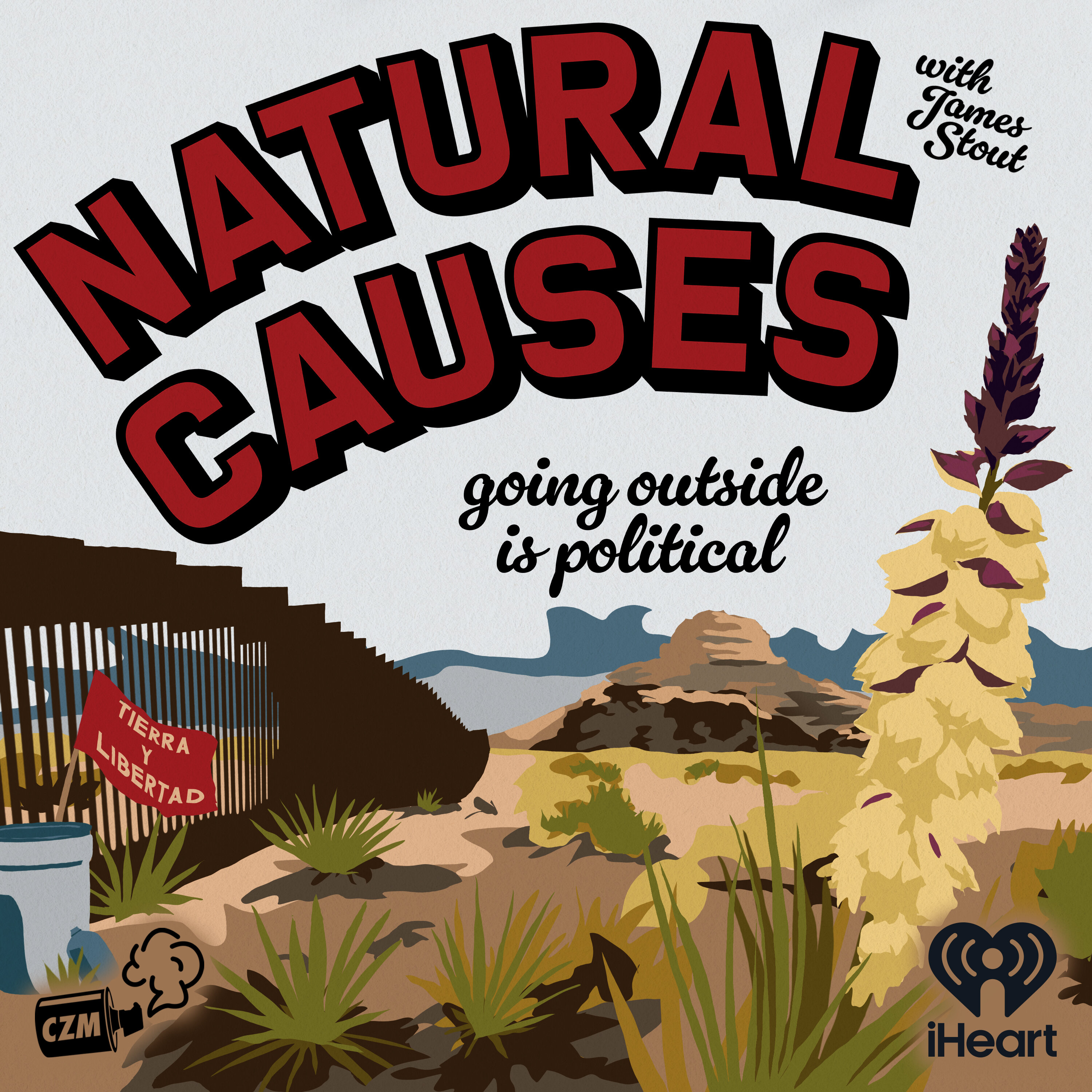
James talks about the ecological disaster that is the border wall and interviews Dr. Christina Aiello about the Peninsular Bighorn ram that was killed by razor wire in the Jacumba mountains.
Sources:
https://www.usaspending.gov/search?hash=29de9d51905bd175a701b04c24176b46
https://www-jstor-org.sdmesa.idm.oclc.org/stable/3636811?seq=5
https://www.fec.gov/data/receipts/individual-contributions/?contributor_employer=Atkore
https://tucson.com/news/local/border/article_a11265b0-17c3-5bed-b50a-72e5d17e1369.html
https://www.blm.gov/visit/jacumba-wilderness
https://www.usaspending.gov/search?hash=29de9d51905bd175a701b04c24176b46
https://www.federalregister.gov/documents/2025/04/08/2025-05992/determination-pursuant-to-section-102-of-the-illegal-immigration-reform-and-immigrant-responsibility
https://www.enr.com/articles/54215-us-settles-border-wall-suit-against-contractor-fisher-sand-gravel
https://www.atkore.com/about-us
https://desertreport.org/a-border-wall-in-the-jacumba-wilderness-area/
https://gizmodo.com/trumps-border-wall-torn-apart-by-arizona-monsoon-rains-1847535174
https://www.usaspending.gov/award/CONT_AWD_70B01C25F00001112_7014_70B01C23D00000010_7014
https://www.sec.gov/Archives/edgar/data/1666138/000166613826000010/atkr-20260429.htm
See omnystudio.com/listener for privacy information.
Get every episode summarized
Each time It Could Happen Here publishes, we email you a written briefing from the transcript — the topics, who appeared, and any specific claims, with the ad reads skipped.
Email me new episodesFree for 3 shows. No card needed.
Hosts & guests
Transcript ready
680 searchable segments. Every word is indexed and playable.
Full transcript
It Could Happen Here — The Wall and the Wilderness. Machine-transcribed; use the interactive transcript above to jump the player to any line.
This is an I Heart Podcast. Guaranteed Human Mom, are we there yet? 10 more minutes. Only 10 minutes? Can you drive slower? What's up with them today? Lingo Kids That app we downloaded last week? They love it. The games, oh, this funny baby-bought character. Kids were almost there. No! With more than 4,000 interactive games, songs and shows little ones can't get enough of. Lingo Kids is the number one entertainment platform for young kids. Why didn't we download this sooner? Lingo Kids! Everything Kids love. Download it for free. Every coded non-stick pan comes with the list of rules. No metal, no high heat, no dishwasher, no scrubbing. Basically, look at it lovingly and hope. And the second you break a rule, it starts shedding whatever that coating was made of into your eggs. Measants carbon non-stick pan has no coating to protect. It's nitrided carbon steel. Naturally non-stick out of the box. Better every time you use it. No PFA's, no PTFE, no forever chemicals, no rules.
Metal utensils, fine. Up into 1100 degrees, fine. Induction, grill, campfire, fine. And this version's deeper because you told us the old one splashed. So we fixed it. Get yours at meason.com. Meason. Clean cookware for real life. And medium ripe hassovacados are 99 cents each, with membership or applicable. Plus Kellogg cereals 8.8 to 16.1 ounces, selected varieties, or peppered farm goldfish, 5.9 to 8 ounces, are 190.9 each when you buy three. Limit three offers with membership or applicable. Visit vans or Albertsons.com for more deals and ways to save. Didn't catch the latest Roland Martin unfiltered podcast. Here's what you missed. It's real. Black farmers have been under attack. This is just the latest example of them just slapping DEI on anything. It's raw. And I'm sitting here going. They are playing y'all for foals.
Catch Roland Martin's daily commentary on the black information network. And download Roland Martin unfiltered on the IHOT radio app, Apple Podcast. Wherever you get your podcasts. In 1986, a man named Scott McLum was killed by a man named Scott McLum and broad daylight. Police quickly found their suspect. Prosecutors convicted him. But now, almost 40 years later, I'm re-examining this case. I really didn't believe any of it was real. And I was like, well, they're going to figure out this is not me. They're going to do their police job. As the wrong man been in prison this whole time. Listen to examined the backfire effect. I'm not going to be a cop. I'm not going to be a cop. Listen to examined the backfire effect. On the IHOT radio app, Apple Podcasts or wherever you get your podcasts. Calls on media. IHOT radio app.
Oh, it's boned. Yeah, oh, it's the courage to still there. OK. It's a Saturday morning in late June. The desert of few thousand feet below will hit temperatures above 110 Fahrenheit by noon. And everything from the rattlesnakes to the waters in this valley will seek shelter from the punishing sunlight. With some friends, it's scrambling up a pile of boulders. Each one the size of a truck to try to reach a valley that's surrounded on three sides by walls, formed from these giant balls of granite. The rocks are like sandpaper. With a bit of courage and good shoes, you can smear your foot against a vertical rock and gain enough traction to push your body weight up. Then you find the lip, push your fingers into it until they hurt and pull. Then you smear your foot again, tell yourself to trust it, and keep repeating until you're where you want to go.
Below us on the valley floor, the Hylcumba wilderness stretches out into the heat mirage that glends with the horizon. From here it looks barren, rocky and hostile. I've spent a lot of time in those canyons. I know where there are lush palm oasis, where the majestic peninsula big horn sheep have their lambs, and where we have searched for missing migrants and their remains, and later built the little crosses that dot the canyons now as a way of trying to show kindness for the friends we never got to make. Some have names, many just say Disconus Yul, for the people whose bodies were too quickly returned to nature for the moment to be identified. The desert wastes little, and everything that dies out here quickly becomes part of the things that live out here. That's how life thrives in a place where many assume it couldn't. After more than a decade scrambling around these rocks, and getting choreospines in places you'd never think they'd end up, I love the desert. It's magical to me, and the vastness and the sense of smolness keep bringing me out here. Just like it took me out to the ocean west of here where I liked to free dive.
These vast, wild places where I don't belong, challenge me to watch the plants and animals that do belong here, and learn from them, so I can feel a little safer in their environment and share their home. Americans haven't always loved deserts. These days we live in an area of desert chic. America's great desert cities and towns, Tucson, Las Vegas, Joshua Tree, Marfa, and Santa Fe to name just a few, offer Instagrammable vistas and the opportunity for folks who don't know which end of a cow the milk comes out from, to week cowboy boots and bolo ties. But it wasn't always this way. Europeans first entered California from the desert side, little over the horizon to the east of where I'm standing, where melt your the earth across the Colorado, quote, where he found the country very sandy, windy, and filled with large and high sandbags. Shortly thereafter, Diaz would throw his lance at a greyhound that was chasing his sheep, and up in pale on the rear of his lance and his groin,
a sustained injuries that would cause his death three weeks later. His progress from outside humor to what is now Baja California, has long been something of a source of fascination for me. The location of his grave isn't well known, but a lot of research every other old newspapers leads me to believe it's likely in the hills above the dry lagoon, so the west of San Felipe, I've crossed that lagoon on a bike, an experience of vastness of the flats, and a frustration of slogging slowly through thick sand in hot temperatures. Unfortunately, Diaz's expedition some 500 years ago was part of a colonization of the region, and not all the colonizers at that time or later managed to fatally stab themselves in the dig, more so pity. Diaz's expedition was a first of many, and it began 500 years of colonialism and genocide here. That colonial thrust continued into the 19th century, when this part of Altacolifornia became part of the United States, and a line was drawn across this beautiful desert
with scant regard for the mountains, oacies, and the big horned sheep who have been here far longer than the border. For a long time it was just a line. It didn't change much in these valleys. People still crossed to go to church or see their families. A few years ago my friends and I found some cattle that had wandered over, and the well-cheap crossed around here every year to survive the heat of the summer in Baja, and to have their lambs on the north side of what is now the border. Over time some folks staked mining claims out here, where outstanding wasn't that far from a silica deposit, and I always find cool quartz crystals out there. But they didn't really manage to develop those claims in a way that fundamentally changed these valleys. To the south of the border in Mexico, there are huge windmills, and for most of the valley, until very recently, there were really the only signs of colonialism and capitalism had made it this far. I've spent a lot of time in this area. I was camping out here when the third precinct burned in Minneapolis. I came out to the desert again six years later after CBP killed Alex Pretti the day I left Minneapolis.
Just a few miles away, my friends and I fared and sheltered and cared for thousands of people when the biodeministration corroded them in the desert without supplying food, water or shelter. I found peace here, and I've seen terrible pain and suffering here. And throughout that time, I've developed a special reverence for the desert and the challenges and the opportunities it gives me. My desert here is perhaps not the desert you think of when you think of desert. There aren't saguados here. In the popular perception of the desert, they dominate the landscape. As they do over the western horizon, in the parts of the Sonoran desert that includes the Magnificent Organ Pipe Cactus National Monument and the Torna Orthon's Land. Here we have Choya, Osateo, and Araweed, and Rocks, tons of rocks. European Americans have long associated the desert with nothingness. The desert, to the unfamiliar, seems deserted. A place to roll in the Bible and the Quran for that matter.
And it's not cast into a thriving ecosystem where the beautiful ability of life to adapt and overcome is on full display. Perhaps that's why it took longer for the United States to protect its desert landscapes. It wasn't until the 20th century, and often the latter half of it, that they gained the protections afforded by the national parks and wilderness designations that some parts of the desert now hold. Like other capital W wilderness areas in the United States, the Hukumbaw wilderness is covered by the provisions of the 1964 wilderness act. This act, and discussion around it, forms many of your perceptions of wilderness and what it means. If I had had an AI I read this, or just a lazy journalist, you'd have almost certainly heard the adjectives untouched or pristine used in front of the world wilderness. They use constantly to describe places where, according to this construct, people have not been. This isn't true of the Hukumbaw wilderness, and it isn't true anywhere in the United States. Just like every inch of this country, the Hukumbaw wilderness is native land. And in this case, it's Kumi Island.
And these canyons have seen pottery that has been there far, far longer than the United States has. This area only became the USA under Treaty of Guadalupe, Hidalgo in 1848. There are pieces of art on the rocks in some of those canyons that are as beautiful as they are ancient. And next to them are more terrors, where people sat and ground acorns. The wilderness is far from untouched. It's a place where people have lived and thrived for millennia, before changes in the climate and circumstances, or their persecution and genocide by various colonizers cause them to move their residences somewhere else. Wilderness, like all our constructs, is a socially constructed thing. People and their discussions and debates around wilderness create a concept of wilderness. They have associated it with being untouched or devoid of people, and this is never true. It's an attitude peculiar to the colonizer, who does not see indigenous people as people perhaps or indigenous history as history. This is a special place for me, because people and animals have lived side by side here
for 10 to 1000s of years. For the most part, what has been absent is capitalism in the state. And that makes it special. Only now we're fucking trashing it. Mom, are we there yet? 10 more minutes. Only 10 minutes. Can you drive slower? What's up with them today? Lingo Kids. That app we downloaded last week? They love it. The games, oh, this funny baby-bought character. Kids were almost there. No! With more than 4,000 interactive games, songs, and shows little ones can't get enough of. Lingo Kids is the number one entertainment platform for young kids. Why didn't we download this sooner? Lingo Kids. Everything Kids Love. Download it for free. My name is Josie Duffy Rice. I'm a Jewelman. I'm a journalist who covers the criminal legal system. And over my career, I've heard a count after a count of prosecutorial misconduct, story after story of injustice.
But I've never heard a story quite like this. The more I kept reading that stuff, I thought, man, there's more red flags that just kept coming up over and over. We'll hypnotize them to strengthen that memory. So, you went into a good France. I really didn't believe any of it was real. And I was like, well, they're going to figure out this is not me. They're going to do their police job. Listen to examined, the backfire effect, on the iHeartRadio app, Apple Podcasts, or wherever you get your podcasts. Didn't catch the latest Roland Martin unfiltered podcast? Here's what you missed. And the argument is, do you want to win? If you don't win, you have no power. It's real. Those are the very people who I always say vote against their own economic interests, and they complained about the very thing they were seeing. It's raw.
I knew that the issue of transgender athletes was not going well with a lot of black men. Roland Martin unfiltered. I went off. I said, this is exactly what I'm talking about. Y'all going to scream at Chanel, but you don't want to see a black luxury company in the same van. Catch Roland Martin's daily commentary on the black information network. 12 seats. Those are moving south. So if you Democrats, you don't wait to 2030, you better be hitting the ground, going to heart in the south now. And download Roland Martin unfiltered on the iHeartRadio app, Apple Podcasts. Wherever you get your podcasts. The Comba wilderness is a federal wilderness. That means that under 1964, no mechanized travellers permitted, which is why you'll so often find my friends and I out here in our hiking boots, even in the heat of summer, trudging through the rocks to leave water
so that we don't have to try to do the rocks and carry any more crosses out here. Repotentative Mike Lee who will be a recurring villain in this podcast, introduced legislation last year that would allow for the paving of roads in wilderness areas, citing the need for border security. A great many people who care about public lands were up in arms. This would forever change a character of our wilderness and destroy it for future generations, they said. They weren't wrong. Roads do change landscapes forever. What they were wrong about was thinking that this was preventable and the fact that they were not able to do it. What they were wrong about was thinking that this was preventable and that it hadn't already happened. In fact, as I looked down on the Hukumbah wilderness from the top of the Hukumbah mountains, I can see plenty of roads. These roads were built with less fanfare, with less of Mike Lee's bullshit and with less loud congressional opposition. In the first Trump administration, they cut roads through desert, wet plants, nanomoles, and eat town and existence at a difficult place through a millennia of adaption. They dragged tires across the tenacious desert plants
and they came with rollers and graders and scrapers and destroyed the places that had, thanks mostly to their remoteness, but also to legal protections, been spared the worst ravages of capitalism and the state until now. They're doing it again, right now, as you listen to this. Through canyons with a big horned sheep and kumi-ai-art and people have been able to exist without the destruction and exploitation of the state that has diminished so many of our beautiful places. Now that destruction is coming, in the form of a caterpillar, D8 Dozer. About half a dozen of them actually, perched up on the hillside, deep in the Hokumbo wilderness. They drove out there on a road. It's 40 feet wide and according to the Sierra Club, it's been surfaced with a polymer called Soil Tank to reduce dust. A plastic pipe carries water for concrete and they've cut and leveled a pad for their vehicles so large that you can see it on satellite imagery from space. All of this valley is a cultural resource. All of it holds kumi-ai belongings
and countless centuries of evidence that people lived and thrived here long before the border came. All of that is lost because some politicians who've never been here destroyed it so they could pander to their xenophobic voters, whipped up into a frenzy of hatred by the right-wing media that knows hate keeps people online longer and fills their coffers. But those talk show hosts and most of people voting for this have never been out here and never know or care about what we lost. So let's talk about what we lost. If you've ever driven east from San Diego to a central, you probably looked over your right shoulder as you passed a desert few-tower and wondered what it's like in the vast landscape to yourself. The terrain out here looks like God through bolders into plastered a sandwich through pebbles at the stucker wall of the house I grew up in to create what I'm told was a very fashionable exterior in the 1980s. To your south is a valley aptly named Valley of the Moon. I've seen horses there that run across the borders if it's not there because it isn't to them.
Valley of the Moon is a good name. The landscape looks nothing shorter for lunar. I scrambled through the rocks and cacti out there to drop water, and camped there to escape cell signals and enjoy the desert as the sun comes up. I've seen all manner of surprising animals in that valley among the granite bolders. Snakes, of course, travel the valley floor. Catalysts across from Mexico to the USA to my friends heard of them back. Turkey vultures circle on the thermals rising up from the ground, which frequently hits triple-digit temperatures in the summer. On the western edge of the valley, a pot-bellied pig called Gustava lived for months on the north side of the border wall, where Mexican National Guard soldiers fed her, standing in another country as they did, passing scraps through the border wall. Eventually, she went to live on a pig sanctuary. No really she did, like I've checked, we found a real pig sanctuary. Nothing I've seen in the valley compares to the grace and majesty of the big horn sheep, though. They're magnificent animals, who dance across the rocks with a sure-footedness that reminds me they belong there and I don't.
Percentriese sheep have crossed from what is now California, into what is now Baja California. Having their lambs in the mountains to the north, and then traveling south with them to access water all summer. This summer, some friends and I said off into the valley to drop water, and that water drop I opened to show you some audio of. Unlike the sheep we sweated, granted and squeezed our way through the rock piles, hiking for six hours and covering a little less than five miles, with a heavy packs full of water, water for us and more water for others. I've not been back that far since 2024. In 2023, it served as a major thoroughfare for migrant selfs at the end of Title 42. Since traffic has slowed, and we've been able to clean up much of the mess that comes with thousands of people, a fourth to walk across the desert. The valley is beautiful again. And with the 2023 migrant transit, just one of the many stories these rocks could tell if they talked. Undistrop, though, we're going to tell a sadder story. The story of what happens when you try to draw a line in the sand
with razor wire. That wire now stretched across the valley, not at the border but near it. It seems the wire was laid wherever the DOG thought it might be easiest, effectively seeding hundreds of yards to Mexico in some places. In the evening sun, you can see it, glinting across hillsides, down through the valley and off into the desert. And that wire, deep inside a small side canyon, we found what we'd come to see, the decayed remains of a big horn ramp. The other voice you'll hear here is my friend James Cordero, who was leading this water drop. We just walked up on the carcass. It's very dirty terrain. This is definitely a big corn sheep country. I think this is a bunch of bones. Yeah. Oh yeah, no animals really got this thing. Yeah. Nothing lasts longer than the desert, man. Nothing goes to waste. No, no. Yeah, the animal smells. No death, yeah. So I got caught and then just shaped. That's what we think here.
And then you can... Down. Yeah, the horns really got... Born down quick, hey. I may be said to be ignored on the man to get thrown out of a bone, so I'm trying to get the marrow. Well, seeing how much they're even like, bleached and dried and cracked, could have been here for a while. Oh, right when the construction of water came up. Yeah. I bet. Because do that time. Yeah. I was what, when they were putting it up here, like January February. That's the time when they moved through. Yeah, that's when they're going. Style, yeah. Yeah. As we've seen in different canyons, like outside of a... A little valley, a little gavys going south in the wintertime for sure. So yeah, definitely. He's tangled, he's really rolled around to try and get out. He's pulled a lot of that wire into like a V down here. And actually this is an area where they don't have... What they do.
I thought they didn't have a top wire, but they do. It's just, it's all fucking tangled. Yeah. Damn, dude. What a shame. It's such amazing animals. Henry David Thoreau once wrote, When I consider that the nobler animal have been exterminated here, the Cougar the Panther, Lynx, Wolverine, Wolf, Bear, Moose, Deer, the Beaver, the Turkey, and so forth, I cannot but feel as if I lived in a tamed and as it were a masculated country.
His study of the environment, he realised, was not capable of understanding it in its full extent, because those who had come before him have been so myopic as to destroy a much of nature in order to try and force it into compliance with capital. Quote, I take infinite pains to know all the phenomena of the spring, for instance, thinking that I have here the entire poem, and then to my chagrin, I hear that it is but an imperfect copy that I possess and have read. Though my ancestors have torn out many of the first leaves and the grandest pastures, and mutilated in so many places, I should not like to think that some demigod had come before me, I picked out some of the best of the stars, I wish to know an entire heaven and an entire earth. Think about that a lot, especially out here where light pollution means I can see the sky without the stars that capitalism stole from us. I think about where the future generations will get to feel small and in awe out here, like I do when I sleep in my bivvy sack under the stars,
and listen for the footsteps of desert animals in the night time. Wake up before dawn to see them enjoying the valley and the brief moments of cool at the end of the night before the day begins with baking intensity, and the valley clears and appears to the inexperi to be empty. To find out more about the lives of these sheep and what the loss of one of them meant, I spoke to Dr. Christina Ayella, who found that first big horn, and who works as a wildlife biologist. My name is Dr. Christina Ayella, I'm a wildlife biologist with a nonprofit called Wild Lands Network. First, I wanted to know just how many of these sheep there are. When we see them, it's often a handful of sheep, or a fleeting glimpse of they bounce their way through terrain, I wouldn't want to approach with that of rope and harness. So in the US, at least the number sits at about 750 individuals throughout that entire mountain range, and that's been up from their lowest point when they were listed. So I think they had dropped down to about 300 was the estimate.
So it was about a third of what they think that mountain range supported back in like the 1970s. So they saw pretty, pretty serious decline. And I mean, the good news is that they are on the rebound and a lot of the conservation efforts on the US side have increased their numbers. These efforts ironically will funded by some of the same entities that paid for the wire that killed this ram. So the state listed them first in about 1970s under the California Endangered Species Act. But then the federal government listed them under the Endangered Species Act as endangered for that particular subpopulation in the peninsula or mountain ranges. So with that came more protections to that habitat. So it slowed some of the losses that were happening, you know, increased money and resources to do some concerted conservation efforts. So a captive breeding program formed based on the Palm Springs area. There's a nonprofit group that has a captive population
and introduced a number of big corn sheep into the kind of the northern peninsula ranges. And then from that effort, kind of a population expansion happened up in the northern end of the range. As more habitat was protected. And it kind of trickled down into the southern part of their range. I want to talk about the ESA soon because that too is in danger. But let's get back to the sheep and what the wall is going to mean for them. There's a particular population that we refer to as the Hacamba subgroup and they pretty much make use of the entire Hacamba mountains and would move back and forth across the border pretty regularly. I would say that there's a pretty distinct shift with the seasons from non-summer to summer when water needs increase because there are more permanent and reliable water sources on a Mexico side. So we tend to see this group almost all of them in Mexico in the summer.
But then throughout the rest of the year, females tend to breed in the US but the males are generally going back and forth all the time. These are the sheep I've seen in desert. And for as long as there has been a border, there hasn't been one for them. They live in areas so rugged and remote, there are very few people cross there. A building is incredibly difficult. So they've been able to travel north and south despite decades of politicians pasturing us tough on the border. But now the line on the map has become aligned the desert, aligned drawn in razor wire and blood. There's so many different impacts at so many different levels. So I'm going to kind of break it down. First from an individual animal's perspective. And a big one sheep, they are extremely tied to their environment and the home range that they were born in. We call this a filipatri where they tend to not leave their natal range where they were born and their benefits to that, especially in a desert landscape. Because you learn where the resources are. You start to develop these memorized pathways that you take that are peaking you safe from predators,
getting you to the best resources efficiently. And in this extremely hot air landscape that is incredibly important. And so this is a survival strategy for them. So the individual level when you suddenly are traveling those pathways and trying to get to those resources, you've used your entire lives. And some of these animals can live 18 years or even 20 years. The females are very long lived. And you suddenly need a razor wire fence. You're either going to panic because you're suddenly blocked from like this very important resource. You're going to try and get through this barrier and get cut up and tangled, killed in some instances. Or if it's the physical wall in the barrier, you are now suddenly blocked. You now have to either turn around, go back where you came from, or you have to travel along this wall until you find an opening. And we've observed all of these reactions on the ground.
This is all happened. We've had individuals trapped in the razor wire and killed. We've had individuals come up to the border wall, kind of mill around for a while, and turn around, come back the next day, turn around, and just keep coming back until it just finally gave up. We've had individuals hit the wall and travel what is extra exposure to the elements, which is an inefficient pathway to try and get around it where right now they could get around it, but it's pretty soon they're not going to be able to. So as you can imagine, that's going to have a lot of impacts on mortality, stress levels, condition, resource access for individuals. The isolation not only prevents access to water. It can also limit the ability of the population to breed in a healthy way. Over time, you start to see a buildup of genes that actually do you more harm than good. You get inbreeding that happens if you just don't have enough individuals
and the only individuals to breed with happen to be your cousin. And that's what you're going to end up with. I mean, animals don't know their drive is to breed and they're going to breed with whatever's there. If it's a related individual, it happens. And so it creates this buildup and a reduction in genetic diversity. And that can cause diseases. It can cause mutations that decrease reproductive output. And it just makes them overall more susceptible to all the other threats that are already happening because they also don't have that genetic diversity to kind of adapt with the gradual change in the landscape to be more resilient to a new disease or to climate change and more Arab conditions. Having just seen the big corn ram in the razor wire myself, I wanted to ask Christina what it was like to find the sheep. We have been also observing the corn through radio colors, GPS colors,
that show their movements kind of at a regular interval. And I had noticed some individuals kind of showing signs that there might have been a barrier in another part of the Huckaambe Mountains that I hadn't actually been to on the ground. So I'd gone out, observed that the cornstertina wire was up, but observed that it was kind of weaving in and out of bolder piles, really creating this bad situation where if I was an animal, I might see this fence and be like, oh, I could jump over that. Or, you know, I can get around that. It didn't really look like this big, rigid barrier. And so I had kind of informed my other wildlife colleagues that this was a situation. I was like, I think this is a bad situation where I just anticipate that an animal is going to try and cross this and they're going to get caught. So that day when I was on Hiking the Valley in the Moon Trail, I was going out to this region to see if there's any evidence of animals interacting.
And sure enough, after the long hike, which is actually quite beautiful, when you start early enough in the day, it's amazing. And I actually was having a great time because it's a little cooler, it's a little higher elevation. But when I got to the section of a razor wire that I thought was concerning, I kind of scrambled up and over this rock pile because the wire is just like weaving in and out. So I was like at any point in here, there could be a big cornstuck in. So I hiked as far as I could manage to get within the constraints of the temperature creeping up in the day. And there was this ram at a low point, not even in the rocks, just so tangled up. The concertina wire was wrapped around its horns, wrapped around its neck, wrapped around its leg. I mean, it was about as tangled as you could get. And clearly the wire had cut into it at multiple points. And it had been there for a while. I mean, it was already well and decayed, desiccated and dried out.
The skin was leathery, the spoon and skull was exposed, and it just had this like horrific expression on its face, just like head up towards the sky, clearly wrapped around and had suffered. That was the, it's last moments on earth wrapped in this wire that, I had walked along it, I could have gotten over easily as a human being. I think that's what I want to end with this week. With the dead ram in the border wall wire, and the suffering the border has caused to so many people now being rolled on the wildlife that has lived here long before the border came here. Next week, we'll pick up with more on what the border is doing to our wild places, and let along what you can do to help. If you'd like to email us, you can do it at natural causes pod at proton.me. I hope you enjoyed this episode, you'll share it with someone who you think might like it. And if you've enjoyed what you've made so far, be great if you could subscribe.
Natural causes, the production of Cool Zone Media. For more podcasts from Cool Zone Media, visit our website, coolzonemedia.com, or check us out on the I Heart Radio app, Apple Podcasts, or wherever you listen to podcasts. You can find sources for natural causes listed directly in episode descriptions. Thanks for listening. This is an I Heart Podcast. Guaranteed Human.
More episodes
More from It Could Happen Here

The AI Regulation Debate
It Could Happen Here
West Bank Takeover
It Could Happen Here
CZM Book Club: Ocotillo, by Madeline ffitch
It Could Happen Here
It Could Happen Here Weekly 250
It Could Happen Here