The Truth Behind the Groyper Panic and Immigration and Iran
About this episode
Get every episode summarized
Each time The Comedy Cellar: Live from the Table publishes, we email you a written briefing from the transcript — the topics, who appeared, and any specific claims, with the ad reads skipped.
Email me new episodesFree for 3 shows. No card needed.
Transcript ready
715 searchable segments. Every word is indexed and playable.
Full transcript
The Comedy Cellar: Live from the Table — The Truth Behind the Groyper Panic and Immigration and Iran. Machine-transcribed; use the interactive transcript above to jump the player to any line.
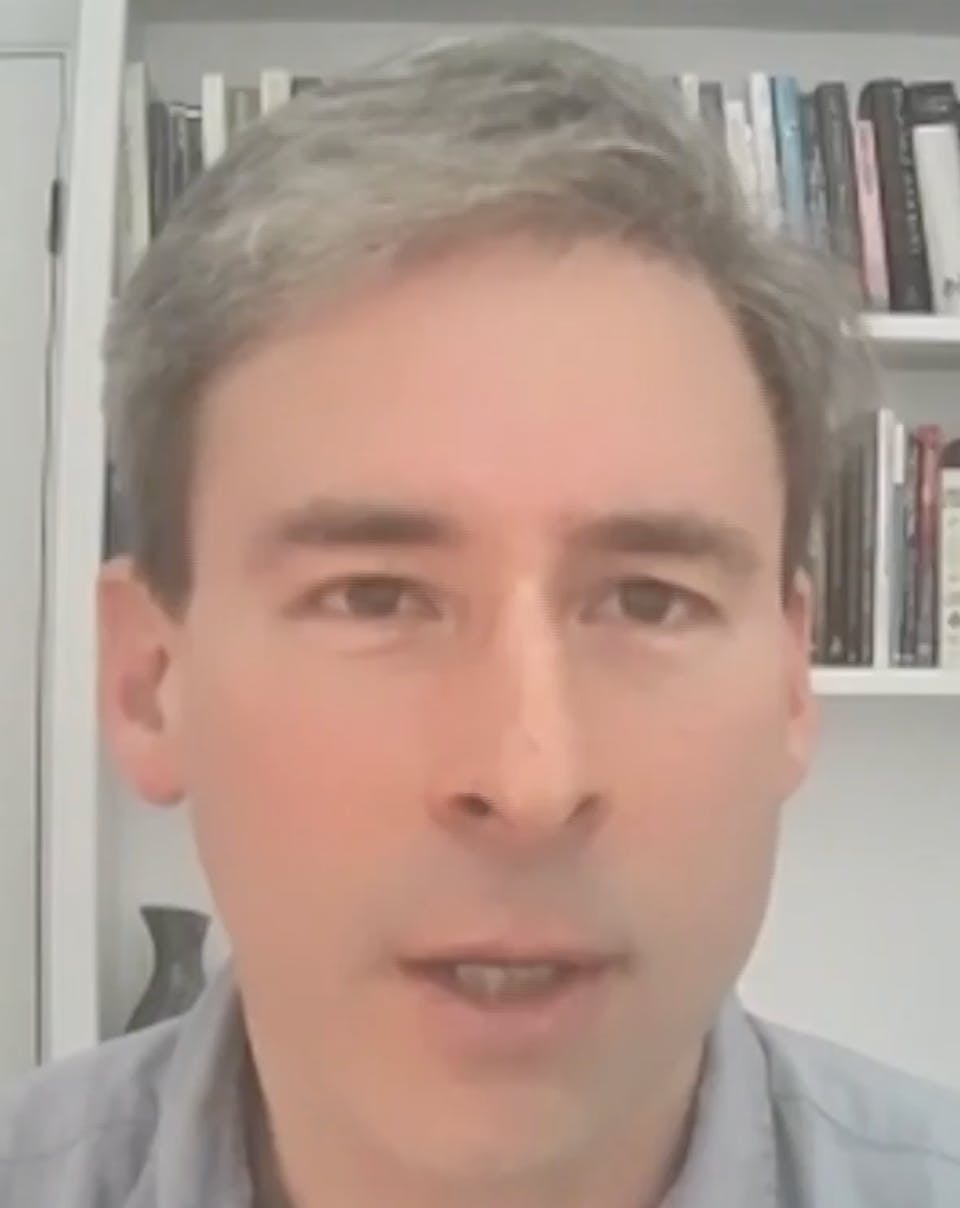
This is live from the table, the official podcast of the world famous comedy seller available wherever you get your podcast. Then Adam and here along with Noam Gorman, owner of the comedy seller and composer of the opening theme song you're listening to at this very moment. He's a musician in an addition to a businessman. We have Perry Alaschenbrand here as always and with us via Zoom or whatever Zoom or okay Zoom. We have Eric Kaufman coming all the way from London Professor of Politics at the University of Buckingham, director of the Center for Heterodox, Social Science, a prolific Arthur author with Noamers books and articles in his bibliography. We welcome him virtually to our show and thank him for joining us from London. How are you Eric? I'm doing well. Thanks.
It's good to be back on the show. Now, a couple of years since you've been on it, right? Or maybe more than that? Yeah, I think it has been a few years actually. Too long. Okay. Before we get into your most recent thing about the groipers, looking back on since that, the world has changed a lot since then. What were you wrong about it? Were you wrong about anything or is it a trajectory of the world exactly as you said it would be three, four years ago? Well, I'm trying to think when we last spoke, I mean, the sort of pandemic had various effects, including dampening national populism. You couldn't predict exactly what would happen, but clearly that's a reward back since then. On the back of very high immigration levels in many countries, so that's maybe one thing that wasn't quite evident at the time, but I can't exactly recall what predictions I
was making in the last show, but I'm never wrong, generally. Me too. I think you're kind of an immigration, it'll all work out skeptic, meaning like the people who just felt like, you know, this is magic, soil, and we can just all, we can just mix it all together. And there's really anybody who even alerts us to the fact that there's actual psychological and real human issues that we're going to have to contend with, they're racist, they're right. Is that a good way of describing your general position? Yeah, I think that's right. I just think this is a much more far-reaching change than some of the more glib accounts we're willing to admit, and it's mainly because, you know, in a population, there's a sort of, there's a range of views, a range of psychological make-ups, but there's a lot of people who would see, you know, rapid cultural changes as disorienting, and for that reason, then
going to be drawn to national populism. And I just think there's no real way of glossing that. And there's really no way, I mean, I think post-pandemic, there was a surge of immigration in a number of countries. The US is one, but Canada, Britain, Australia, Ireland, and they've all seen back lashes, and in all of them, the authorities have had to sort of quickly backpedal. And I think that sort of says a lot about the sort of elites and institutions not really understanding what's behind populism, and not taking really seriously until it really starts to drive populist voting. So it's kind of, it is amazing, given that there was the initial populist surge post 2014, and then the European migrant crisis, and I kind of thought the lesson was learned, but I guess not. I guess it just seemed to be easy, quite easy to slip back into the old ways.
So yeah, I think that's kind of an interesting development right now. So you're seeing certainly across Europe, and now even in Australia, populist parties are hitting record numbers. So yeah, I think, and it's all really about immigration. I tend to see a lot of issues, the way I'm going to describe right now, is that although everybody always talks about them like one side is all right, and the other side is all wrong, really quite often both sides have a point, and it's a matter of how you want to prioritize it. The example I always like to give about this issue is like, well, you know, I wouldn't want 20 million Hasidic Jews in the country. I wouldn't begrudge anybody for complaining about the fact that all of a sudden they were living in a Hasidic Jewish-dominated society, in regard to them as anti-Semitic. So like, as you get more and more extreme, it's perfectly reasonable for people to allow people to say, listen, I don't want this. This is too far away from my culture, and the speed of which it happens is also a natural
thing. Give people a chance to get used to things. So I see you want to say something. Go ahead. Well, yeah, yeah. I mean, I think it would be nice if we could talk about the pace of immigration and cultural change the way we talk about tax rates, you know, one side wants more tax and spend and the other side wants less. And we kind of don't have a big problem with saying, okay, we'll arrive at some kind of intermediate number. But when it comes to immigration and cultural change, it's either on the open side of the closed side, and if you're not in favor of, you know, the open side that you're a closed person, big, et cetera. There's a much more emotional, much less grown-up conversation, and it just doesn't seem possible, or it just doesn't seem like we can get to a place where we can sort of have a reasonable conversation about that issue, the way we do about tax and spend. And until that happens, you're going to get repeated backlashes because the system can't
adjust. The mainstream parties can't properly reflect public opinion and come to an accommodation the way they can on tax and spend. And this is really what's behind the crises we keep seeing. Let me add, and then I'm going to go turn over to the groupers thing, and Dan and Peril have read the article too. Let me add one ingredient to this debate, which although it was always, we were aware of it, but it's really coming to sharper focus now. And this, I think, America, the debate in America is quite different from Europe where they're having just different problems that we are. Things are not having children anymore. There is no way to turn that trend around. We are going to head, if not for immigration, as I understand it, we're going to head into population decline, which if we think we have problems now, this is a horrible problem.
We are, instead of looking, more and more, instead of considering us misfortunate that we have this huge border with Latin America that is so changing so quickly, our recipe, you know, our ratios of populations. I began to think, thank God, because without these people, where would we be? They do all the work. I have to acknowledge, I do think part of the reaction is simply because they're visually identifiable, if Mexicans look like white Europeans, some of them do, but they're not common. Yeah. But if the general Mexican that we saw looked like a white European, and we just had to react to the actual difference in their culture and their, you know, like, we would barely detect it, actually. And so given the fact that we have to deal with the world that's possible and turning
population growth around, does not seem possible, how does that issue, how should that issue temper our, you know, I wish it was this, but, you know, it's not so bad, actually, considering the alternatives. Yeah, I mean, there's a whole bunch of questions there. I mean, my first sort of response would be, it would be, it would be good to, for example, run immigration lower. Maybe lower than is optimal for a while so that people can see, oh, okay, maybe there are some economic cause here. I mean, we may want to readjust upwards. Yes, I agree with it. That would be a healthy situation instead of always running it ahead of where people want it. Let them feel the pinch, right? Let them feel the pinch. You think you wanted this? Now you see, yeah, it wasn't realistic. I agree with that. Yeah, I mean, if the issue is, and of course, the link to the economy is relatively small
and tenuous, more tenuous than people think there are all kinds of things. You have to think not just about young people coming here to work, but where they're going to be in 30, 40 years when they're not working in, they are now requiring, you know, a pension and medical care. And so you have to actually look at the full lifespan and not just when they're young and fit. And so, and actually when you do that, the benefits are much, much less and in fact, often are negative. It's depending on which house killed the immigrant is. And what you attribute to AI and productivity in the future, you know, well, yeah, I think the other, there is, you know, you certainly write that birth rates are below replacement and have been for a while in the US, not for as long, but the question I suppose is, is it not, you know, it may be better to have a smaller growth rate or even to shrink a little bit for a certain amount of time than to have large scale, you know, culture
and ethnic transformation or faster ethnic, and it's all about coming into a rate, you know, agreeing upon a rate that is what the democracy wants without taboos telling you you can only favor faster or more open. But I think you'd have people accepting whatever rate people has decided upon because there was an open discussion, right? And of course, the democrat, democracy is very complicated and immigration is not actually a solution to an aging problem, ultimately without getting a hold of the birth rate problem. Because why it's because, you know, you look at birth rates in Latin America, they are, as far as I can tell, in many countries, they're below the American birth rate or fertility rate. Well, yeah, you're, it's not just Catholicism, but around the world, we're having this birth rate collapse in all societies. It's a bit faster in the non-Abrahamic, actually, but because of that, you know, immigrants
may come in, they may feel slots in the labor market, but then they're going to age too. So then they're going to need people to pay for their health care and their pensions. So the whole thing is kind of a bit of a Ponzi scheme, as long as you're constantly bringing these immigrants into maintained and age structure, they get older, they then demand more immigrants in a rising curve. And so the thing doesn't really work. You won't, the only real way to get a hold of this is to try and figure out how to address the fertility rate problems, which I admit is very difficult. The main predictor of fertility rates in developed countries is religiosity and social bringing in a lot of hot Hispanic girls is not going to hurt that necessarily. Yeah, what are you going to scream for hotness, right? Other than ethnic makeup, what cultural changes are people worried about with heavy Latin immigration, I guess, language potentially, anything else?
Well, yeah, I could be language or I could be, now clearly the Latin American immigration is more, is closer to the host society in the United States than let's say, immigration from Middle East North Africa into Europe. So it's not as distant, culturally Catholic, so there's a lot of similarities, but I mean, it's not exactly the same. There might be differences in terms of, for example, trust levels, the degree to which people trust each other, support for freedom of speech, some of these values. Now, with assimilation, those differences really rode over over generations. But the book, Culture Transplant by Garrett Jones, he's arguing as it takes two to four generations for that assimilation to occur, so it's a question of immigration versus assimilation and getting that balance right. What worried me, and by the way, just to say so, in 2015, I think I was saying something
along the lines of what you just said, I said, you know, if they would actually build the wall and limit immigration in a meaningful way, the first people crying uncle would be the Republicans because they own businesses and they need the labor. And although you talk about economics in some sort of like an aggregate statistical way, in a much more just everyday level, who's going to do the work that needs to be done? Like whether it increases GDP or decreases, I'm building a new club and you can't help but notice that when you go there, it's not my crew, it's the contractors crew. There's not anybody, or very almost nobody, that was born in America doing that work, and they work beautifully. Is there an European and Latino? Is there an European, Latino, you know, and like you cannot say enough positive things about the way they work. I have a lot of immigrant workers for me. They are fantastic, I mean, this is really being coarse here, but in general,
the average Mexican employee is could replace three homegrown employees. I'm not exaggerating. However, the only thing that has always bothered me, and it's anecdotal, but it's, I'm pretty sure it's true because I've really been looking into it for a long time now. They don't have a positive view of America, our civilization, or America, they grew up thinking America is like the bad guy in their national story. It's not like my parents were immigrants who would literally cry at any kind of sentimental depiction of America. And despite having lived through anti-Semitism in the 40s and 50s, and I just worry about the country, and I guess that'll be, you know, it'll be a myriad diluted over time, but I just wonder if the days of a truly patriotic America that loved itself and took pride in its history and what it believed in,
even if that was not warranted, if that's just done and gone forever, and will the country not be worse off with that self assurance that that worries me? Yeah, I think those are all good points, and it takes time for immigrants to assimilate, you know, the kids are going to probably feel more attached. But I just, just, I mean, first on the first point, I just want to say that there's a real range of the immigrant experience, and there are some groups that clearly are on welfare in much larger numbers than others. So it's, I think it's probably maybe misleading to generalize from one work group, but there's also the issue of, you know, there's AI, there's robotics, there's mechanization. There are other ways of dealing with labor scarcity. There's paying higher wages, which probably will raise costs to build things, but I suppose if you say you're in a democracy and you have to do what the average voter wants,
and maybe that means opting for a higher wage, higher cost society, where maybe you can't get fast food and services at quite the same prices you do. Now, that's a loss, but maybe on the, on the plus side, you have more homegrown workers who feel more attached to the society. Maybe that helps with social cohesion of patriotism and trust. So I guess I think it would be interesting to try going for a lower migration model to see how that works out, try and work on your native human capital a bit more. It's not to say you have no immigration, but to rely on it, I think the way it's been relied on, I'm just not sure that's good for the good society. You know, it would be my, yeah. Sorry, on the issue of social cohesion, which I'm very concerned about, and this, and this would be a good jumping off point to the group, the group of thing you wrote because it's a question of like, perception versus reality, which is what your article is about. If you come to my restaurant, the olive tree, on like a Friday night,
you see group after group of mixed race, mixed sexual little preference. You see beautiful and real social cohesion across widely different groups. That is not artificial. These are people all call each other, hey, you want to go, you know, and it's heartwarming and it just, you know, I do understand that at a time of scarcity, this could really begin to become undone. But it does, I can't, at the same time, I can't say it doesn't work or that it's an impossible call because I see it, I see it in my own life, but I see it, you know, ubiquitously around the city of New York. So it just needs to be acknowledged that there can be tremendous social cohesion across groups like this. Well, I think there's a difference between people getting along, which I think can happen at, you know, at a sort of surface level or even, you know,
even in terms of friendship, that sort of thinner interaction and assimilation is one thing. So people not killing each other or having fights or, you know, I mean, deep affection. I think it's very, very described. Right, right. And now, of course, the same kind of loyalty we could also have, you know, ethnic gangs and turf wars and things in other parts of town, which could, could equally be part of the story. But in general, you know, you're going to have good interactions. But then there's, you know, the scholarly research, for example, would point to things like, do you trust somebody to return a wallet? Do you feel attached to your neighborhood? Do you trust people generally? And what they would tend to find is that in the more mixed and diverse neighborhoods, you would tend to get lower trust almost universally. I mean, many studies have been done. Attachment in neighborhood would be lower, willingness to bore, you know, lend things borrow from a neighbor would be lower. Knowing your neighbors would be
lower. So this isn't, this isn't catastrophe. This is not going to lead to killing and fighting. It's just, it's a different type of society. It's a more loose-bounded kind of weaker ties type of society. We know, for example, that interpersonal trust is now at an all-time low since records have been kept in the U.S. since 1972. I think, and if you take young people, only 8%. We might mention this with the Groyper stuff, but only 8% say people can be trusted. So we have a very low interpersonal trust in the society, which is connected to higher diversity to some degree. Do you think that's hard? No, you think that's hard. Why are this mistrust of people of other ethnic groups? Or just because it's a new thing for many people to interact with other ethnic. Can it be overridden? Can the code be overridden? Oh, yeah. I mean, look, this isn't sort of all or nothing. You know, most people get along just fine. This is just, you know, the more diverse
areas are going to have lower trust. But it doesn't mean they're going to have no trust, and the other areas are going to have complete trust. So there's a slight difference, and that trust can have effects on ability to start businesses. You know, so there've been studies, for example, of northern Italy with has a higher trust society, southern Italy, lower trust. For various historical reasons, it can affect crime. It can affect a whole bunch of things. But again, it's not like white versus black. These are all shades of gray. So I don't think this is fatal. We're not going to start killing each other. And there is mixing. That's absolutely true, but let's not forget that the rule actually is most people are still marrying and having friends within their own most. So even in a highly diverse place like New York City, if you take say to the average white New Yorker, most of their friends would be white, even in very diverse neighborhoods. So you, so actually the city is more living apart together and is more segregated socially, then would be the case in a sort of
more a small town rural area that is not as diverse, but where the typical white person may know some non-fights. And so it's just not out as out of character, because if you imagine distributing friends randomly in the population, you would expect the average white New Yorker to have, you know, two-thirds of their friends as non-white. And it's very, very much not that way. So I just don't want to overdo. There is mixing. There is positivity, but I don't think we should be kidding ourselves that it's the same kind of society as one where you have deeper social ties. And now maybe we don't want that, you know. So these are all about trade-offs. And as long as we can openly negotiate that, that's fine. So that's just recognized what we're giving up. I think you'll agree with this. What you're describing about people having more friends that are white or black if they are that the same race. I'm sure that's true. And I'm sure it, well, I would say is that, but if you, if you were to control for race, the number wouldn't be as
stark as it is. Meaning like a lot of that is because in certain professions, everybody, there are very few black people in certain professions. It's very few Asian people, other professions. So that also dictates who your friends are. What neighborhood you live in can be an ethnic neighborhood. But if you're at, if the neighborhood you were born in was quite mixed, then you'd have a different statistical profile. It's not just, it correlates with race, but it's not necessarily caused by race. That's where you want to put it. Yeah. Yeah, there are going to be other causes, you know, socio-economic. If there's any socio-economic ethnic stratification, then that'll affect it. But, but even when you control for all of that stuff, and I should also say residential choice, also even controlling for, you know, age and income, and where you start from, and a whole bunch of things. People on your ethnic and race are very important in residential choice. And it's even more important in social, familial, sorry, friendship choice. So I just think, look, it's not the only factor. There's
plenty of mixing. And, you know, in 100 years, you know, three quarters of people are going to be have some mix in them. So it's not that it's not happening. It's just, we just notice, you know, we tend to be drawn towards, oh, there's a mixed race couple. We don't tend to notice, oh, there's a same race couple or a same race friendship group. So I just think these things, we have to bear in mind the whole lot. And yet, a majority of us Jews are intermarrying. What does that say, Dan? Let's get to the, let's get to the, how many are divorcing? We can't stand each other. I cast down ourselves. Okay, which is something Nick Flint does would probably chuckle at. So, okay, so the groipers, you think we're overreacting to the groipers to put it very zoomed out. Tell us about, tell us, you've looked into it. Tell us what we should think about the groipers. Because I'm quite worried about that. Yeah. So, so I did a, a, a survey, first of all, to try, no one had done a survey that just asked people, you know, which of these new media influencers people tuned into, you know, Fuentes, Tucker Carlson, or Candace Owens, amongst some others.
So first, I was trying to just get a, a measure of, you know, how popular these people are, you know, survey, because when you're talking about listens on a podcast, I mean, that can be anyone in the world that could be bots involved, there could be, you know, so there's all kinds of factors. And what, what you saw really was like even amongst, you know, it was only a few percent that tuned into, say, a Nick Fuentes, like two or three percent and amongst even Trump voters under age 35. It was about seven percent, so it's still pretty small. The other thing was that you saw a real, there's this stereotype of the kind of person that tunes into this podcast. They're kind of a white guy in his basement who's, you know, a white nationalist who doesn't like black people, doesn't like Jews, and maybe doesn't like women. The reality is actually much, much more varied than that. So for example, what you see is there's, you know, Nick Fuentes
followers over a third are minorities, for example, you know, Candace Owens, it's over half female, her followership. The other thing too is that the, there's, there's a, you know, the number of people who actually have a very negative view of Jews is quite low. Even amongst people who tune into Owens, Tucker Carlson or Nick Fuentes. Now it's a bit lower amongst Fuentes followers, but still, even amongst followers of Nick Fuentes, the average warmth towards Jews is higher than the warmth towards Palestinians, for example. Now that's not necessarily saying much, but what I did find is that for example, there wasn't that much difference between those who tuned into Ben Shapiro and those who tuned into Tucker Carlson in their warmth level towards Jews. It was a few points difference. And in fact, many of the people who tuned into the one tuned into the other show. So there's
a lot of overlap in the right wing podcast ecosystem between people who are listening to Shapiro and Carlson and, you know, even to some degree Fuentes. So it's a lot more of a nuanced, complicated picture when you get granular on the audiences for these shows. And one thing you see is what I've argued is when it comes to the larger podcasts like Tucker Carlson or Candace Owens, there's very little effect on attitudes towards Jews. With Fuentes, there's more of an effect on attitudes towards Jews, but it's a very small audience. And therefore, the sum total of all this noise and activity in terms of public opinion is pretty modest. A good analogy might be to think about, you know, the war in Iran now, the fact that, you know, if you listen
to podcast, if you're to listen to podcasts like Tucker Carlson, you'd think that there was this massive upsurge of opposition to the war on the right. But if you look at opinion surveys, it's like 90% of Republicans are approving of this. I think that what this is telling us is there's a huge difference between what you see on X or on podcasts and what you see in public opinion. I mean, the distance is just very large. And so I think we really get the wrong end of the stick, if we focus too much on the noise on social media or in the podcast, rather than on representative or general surveys of public opinion. Dan, you want to ask something? Well, are you saying that that a lot of Shapiro's listeners don't like Jews? Because they're roughly the same. No, they had the same warmth level as as listeners to these other podcasts. Well, if we take Shapiro's listeners, you know, in my survey, they may have assigned Jews about
a 65 out of 100 on the thermometer, which is pretty, pretty good, pretty warm. If you took Tucker Carlson and Candace Owens as followers combined, it's 58. So I mean, there's a little bit of a difference, but it's not much of a difference. It's not that different from average. How do they rate other people? How do they rate blacks? How do they rate Italians? So blacks would be sort of 55 to 60 on average. So maybe slightly above Jews, depending on who we're talking about, among young Trump voters, it would 55 to 60. So it's roughly similar to ratings of Jews, not that different. Whites would be slightly higher. Ranked slightly higher. Palestinians would be late. That would have been much higher. That would have presumably been much higher in 1980, right? Not really. No, actually. And this is the thing. If you can go back, there are the American National Election Study. We can take this back to probably think when those thermometers, 1960s,
the warmth toward Jews, for example, had started to rise quite a bit in the sort of after 2008, not sure whether Obama's election might have had something to do with it. But in any case, yeah, it went from the sort of mid 60s, which is where it had been really since the 1960s, that kind of rose into the low 70s. If you were to look at, say, young Republicans, it's kind of oscillated in the 60s for a long time. Now, the latest data point we had was 2024, which showed a slight dip of, I think, two or three degrees on average. That was down in the 60s. Yeah. So it's just historically, it's a blip. It's like a nothing. And that's why I think it's very important to look at the full breadth of public opinion going back many years. Really, what we're seeing is just within the range of what we've had over the last 50, 60 years.
Okay. So it's, yeah. You went, you went, sorry. Yeah. Let me say, so I mean, of course, we're talking about Jews, where we are not going to probably, whoops, we're not going to get into the distinction between Jews and Israel and all that stuff. But, and we also have to acknowledge that many people who feel a certain way may not say it when asked because they know they're not supposed to feel that way or not supposed to admit to feeling that way. But there are certain other indicators that I see. I wonder what you think about this. So for instance, in 2008, Barack Obama did everything that he possibly could to be clear that he had no relationship with Louis Farrakhan whatsoever because to be seen as even having a photo with an anti-Semite like, and he's nothing. His anti-Semitism was much less blatant than what we're hearing from Nick Fuentes. And I would argue even Tucker Carlson, even though Tucker Carlson doesn't utter the words.
Now, polite company in both parties does not have that revulsion to people who play footsie with people. And if you take Candace Owens, for instance, Candace Owens, who actually says every year at Passover, Christian babies disappear and Jews kill them. So that's a huge change that doesn't seem to be harmonious with the fact that the temperature hasn't changed at all, right? Right. And so I guess what I sort of argue in the report is what we're seeing is a rise of conspiracism. And that conspiracism, Jews are very much going to be part of that, whether it be Epstein or whether it be Mossad or a whole bunch of theories involved Jews as a group that may be overindexes in terms of political or economic success. There's a rise, I think, in
conspiracy thinking. So for example, one of the strongest predictors of a belief in Holocaust denial is a belief that the moon landings were faked. I mean, even more than saying, I identify as an anti-Semite, like the strongest predictor. This was in the Manhattan Institute, dead. I looked at moon landings were fake 9-11 and inside job, just believing in any of these conspiracy theories predicted believing the other conspiracy theories, regardless of whether they're about the right, the left, Jews, non-Jews. So I think part of what's happening is just the conspiracy level that has really, really been cranked up and we see that in these online influencers. But what's interesting is, I think there's that sort of conspiracy dimension is relatively orthogonal detached from the hating Jews dimension, which is also quite orthogonal from the white nationalist dimension. So for example, the share of Fuentes followers that
want immigration cut to zero that say you have to be white to be an American, it's all like 20% or less, very low. Very few white nationalist beliefs or the sort of deep-seated hatreds. So I think we have to also understand that what we're dealing with is just a rise in this conspiracy. Why? Well, because it's first of all, it's a lot more titillating and it's a lot more anti-establishment. It's a lot more exciting, maybe quasi-religious and mysterious than just some sort of the real explanation, which might be just something, you know, arose COVID-19, whatever it arose out of either a lab leak or some kind of more mundane process. Those kind of mundane quotidian, incremental kind of explanations, unintended consequences. That's just unsexy, and I just think amongst a low-trust young population. And especially this is what the Manhattan
Institute data shows. It's sort of a young group that moves between parties. They'll vote Democrat, they'll vote Republican. They're disproportionately black and Hispanic. They are likely, heavily likely to believe in these conspiracy theories. This seems to just be a growing style. So I just, now of course, that doesn't mean it's not got implications for anti-Semitism. If you have then a permission structure where you can say outrageous things, you can insinuate that Israel is behind various plots, then it may embolden actors who genuinely are anti-Semitic. And so extreme left ideologues, if I were to take as true the 10 conspiracies that Tucker Carlson and Candace Owens regularly spout, I would have a lower opinion of Jews, right? Like, how could you not, if they're behind killing Kennedy and behind, you know,
and they're killing Christian babies, and they're talking, and they trick Netanyahu into war, and they purposely bombed the U.S. liberty. And I mean, they go on and on. They're not all coming to my mind, you know, and, well, you could, you know, like, I'm just not so sanguine as you are. Well, I mean, I had to that. If you believe Israelis are bad and half the world's users are Israelis, then that's going to color your interpretation, your view of Jews in general. Well, these people are not distinguished between Israelis and Jews. Yeah. Yeah, I just, well, I mean, there's different dynamics. So on the left, what you see is this intense hostility to Israel amongst younger Democrats and liberals, but with still very high warmth towards Jews. Now, we can say, okay, they're just thinking it. No, I think they are actually less anti-sense. I made this point on this show many times that, and believe me, I hate the left, and I don't want to say what I'm saying. I find myself just acknowledging certain things that I
see right in front of my eyes that the typical left-wing person who people will call an anti-Semite would have zero problem bringing a Jewish boyfriend, a girlfriend, home to their parents, marrying them. So like, so that's a unique, it's a new type of anti-Semitism. But the, this new, this, you know, recurring, what do you call this new outbreak of the old anti-Semitism on the right? These people you would imagine are much less likely to want to start a family with a Jew or to trust a Jewish person to do business with. They seem to be more hateful of actually of Jewishness. Yeah, it's, there's so many different layers here, right? So because on the right, there's less, there is anti-Israel sentiment, but young right opinion has not turned against Israel the same way young left opinion has. It's more disengaged when it detached. Well, I don't care what
happens over there. That sentiment is risen. But there's still, if people are going to pick a side, I mean, as we saw in the America fest, turning point conference, I mean, it was overwhelmingly pro-Israel, if you're going to choose between the two. I mean, but, but the ones who are very negative on Israel are on the right are going to be more negative on Jews. I just kind of want to get us back to the, to the big picture, the big public opinion picture, which is that actually the effect overall is very small, partly because people are partly consuming Owens as a kind of recreation and, and laughing at it or not taking it seriously. I think that's part of what's going on or it's not cutting very deep. It's not shaping attitudes very much according to my data. That's that's one thing that's happening. And, and of course, there's also, they're accusing each other of being conspiracies, you know, talking about conspiracy to kill Charlie Kirk and, and, and, you know, Macron and all these crazy theories. I mean, so I just don't know, I know there's obviously,
it sounds shocking. The question is how much is it really, really affecting attitudes. If we look at actual anti-Semitic incidents as recorded by ADL and others, I mean, these are heavily concentrated on university campuses, for example, to do with, yeah, encampments, protests against Israel, so it's, it's not, I mean, that right wing stuff is mainly happening online in a diffuse way. Part of the reason that the left is associated with more anti-Semitic incidents is just they're in cities, they are protesting, they're more political, so it's more concentrated. And so the sharp end of it kind of shows up more. Whereas I think with the right is just this diffuse almost entertainment. I'm not sure, yeah, I just do think there's, there's an error either in, obviously we can't dismiss it entirely, but I also think we don't want a panic because I'm not sure that's productive generally, even for the sake of, you know, Jewish well-being,
I just think to overread into this insanity, genuine antipathy towards Jews, I think I would need to see a lot more kind of right wing anti-Semitic sharp end incidents to be consensed otherwise. So, you know, you're presenting a snapshot, like I could show you a snapshot of water at a particular level, and you would have no way of knowing if that's the water on its way up, or it's water on its way down, right? And, you know, as a business person, I always imagine that I'm always in an upward trend or a downward trend, and I want to try to figure that out before it's too late, right? So, this is this thing about this anti-Semitism thing. Obviously the war is an accelerant and that can fade and the water level could go back down. But one thing I just can't help is that to switch my analogy is that, you know, we had a dam that was there to protect
us against the high water, and that dam was like social disapproval. Everything that I explained, you said before about the kind of faracan as an example, and how even people like Megan Kelly, right? Megan Kelly was outraged, and anybody would not clearly identify faracan as an anti-Semite, and now she embraces much worse canisones. So, the dam is gone, and we're just at the mercy of the weather now. And that's a big change, and hopefully everything's going to be calmer, and but we have, we lost a layer of protection, which was just, you know, societal attitudes, and it's day, I feel, it's ominous feeling to me to, I know, all us paranoid Jews probably feel the same way, but I try not to be an alarmist. I try to be accurate. I don't know what you're coming. I think, the first thing, what says, I do think that the high tide of, you know, the flintes and Tucker and others, I mean, there has been a lot of pushback on the right against these people
as being nuts and conspiracists and anti-Semitic. So, I don't agree that this, that anti-Semitism is now okay in a way, you know, even though, of course, you're going to have flintes, and you're going to have these people who are, you know, on X or on social media, and they're going to say what they're going to say, but I don't think that necessarily means this is somehow acceptable. Well, JD Vance, I would say, JD Vance seems to think that it's true, but he may be under the misapprehension that your article is designed to disobey people love, because it's weird the way he obviously doesn't want to say the wrong thing about Candace Owens and about Nick Fuentes, always merely malved about it. He's political animal. That's what I think. Well, what's, one of the interesting is, you know, you look now with the support for the Iran action on the, you know, in Republican public opinion. This is just one indicator. Another was that America-fest turning point, poll of 30,000 delegates, you know, showing pretty overwhelming
support for Israel. And I just think, I mean, we've seen a number of demonstrations now that this online right really isn't really isn't cutting through that strongly to anything like a mass audience. And I think the more that's recognized, the less concerned, I think that some of these people are going to be about what Tucker says or Nick Fuentes says. So I think, on my sense as their influence has waned in, if we take the last six months, for example, I think it's on the Wayne. Compared to where it was, there was a real full blown. I mean, I think when Rodrier was saying, you know, oh, 40% of staffers are groypers and I just think their power is actually on the decline on the right. That's my sense. I think you're right about that because they had opened road for a while. And finally, people are stepping, saying things. And this goes back even to the, I mean, the conspiracy stuff is very real. Like the whole COVID thing, you know,
stuff that was going on on the Rogan show and, and, and, you know, Nate Silver demonstrated in a way that I think was completely convincing that this got people killed. People in the red states were dying at higher rates than the blue states because of this conspiracy stuff. And yet I would also add, even though I saw reject all that stuff, I'm not immune to a more primitive Pavlovian emotional leakage that when I went to get a COVID vaccine recently, I had a little anxiety. And I had to say to myself, that's a lot of bullshit. No, what's the matter with you? You know, but it does have a little effect on you. And I'm a pretty tough mental person. And I think that similarly, with all these conspiracies, but let's focus on the Jewish, when you hear constant, horrible, repulsive things about the Jews, it does register in you in some ways. It's not
costless. Okay. I just say it as a mentally not tough person. I have no problem with the COVID vaccine. Now, what are you crazy? Oh, that's, uh, yeah. I mean, it's unpleasant. And, and, you know, I, I guess we just have to trust that, you know, we do have to trust. I suppose in the common sense of a democratic public in a free society. I mean, that's partly what free speech is about. I'm not as concerned because I'm still looking at the macro picture, where I just don't think these things are. I think they're losing influence. They had a sort of little bit of a blip. But there is a deeper question, which is even a society where trust is now so low, interpersonal trust, trust in institutions and government. How do you rebuild that? I think if you had a higher trust society, then I do think that it will, would be harder for some of these theories, perhaps to be as, as widely disseminated. And so why, I guess one of the questions is,
get rid of the Jews. What's that? Get rid of the Jews. Well, yeah, yeah, yeah. No, no, I mean, but look, yeah, I mean, it's not, it is, it is a concern, but I think, yeah, I mean, how do we, I mean, part of the problem is that the elite institutions are now very polarized or polarizing. You know, trust in media is in the basement. You know, trust in universities is collapsed. You know, the only thing people trust in the US across the partisan divide is the military. I think that those institutions really did themselves a disservice by, you know, spouting progressive slogans on BLM, for example. Yes. I think they lost a lot of credibility with conservative audiences. I would just, you know, one possible way back is for the institutions to take bipartisanship more seriously, to try not to be so disproportionately
populated by one political view, like universities. So, you know, I mean, academia, you know, you look at the Ivy League universities, it's, you know, 98 to 2 Democrats, Republican and Donation. You can't, I just think that's extremely unhealthy. And without any attempt to try and rebalance that, you know, the newspapers, I think, actually have done some, the New York Times tries to have some conservatives, okay, they're not MAGA, but at least they're trying, you know, universities aren't trying at all. I think there's a huge problem there, and you see that in government as well. So, I think that's maybe one area where you could start to rebuild some trust, which might, because I think in an atmosphere of mistrust, that's where these conspiracy theories get more, get more leg rooms. Yeah. This idea of a temperature is just a way to look at things. So, my feeling about that is that if you were to take the temperature of how the average Republican feels about universities, I think the number you'd come up with is pretty close to where I would
put it, but I think if you would take the temperature about the New York Times, I think they very much exaggerate how bad the New York Times is. The New York Times has had a few very conspicuous misses. But day to day, the New York Times is not as bad as people want to say in a cliche way. I think they're pretty good as an institution. Well, they've improved. They have improved, though, I think from the sort of Nicole Hannah Jones kind of 1619. That's one of the conspicuous things. That's what I'm saying. If you want to talk about the 1619, but that doesn't mean they're a rack reporting or they're Iran reporting is shit, you know? No, no. And you're right. And in fact, one interesting thing was that a lot of Nick Fuentes and Tucker Carlson listeners, like 40 to 50 percent consumed New York Times content, which I thought was really interesting. They've really stepped it up with the games as well, spelling B and wordle, et cetera. Well, apparently wordles how they make all their money. Yeah. The news organization is a lost leader for wordle, or I guess that's not
quite right, but you know what I mean. Okay, before you go, you want to talk about Iran? Can I just ask you? Yeah, go ahead. Just real quick about the situation in England. Is it analogous? Do they are Candace and Tucker and Nick big over there? They got their own homegrown people? Boy, that's a good question. I mean, they would undoubtedly have followers. Like all of these people have an international audience. But boy, I haven't seen any polling. Again, I would suspect the impact on, you know, opinion about Jews on the right. I think it's probably marginal. It's certainly nothing that you would pick up. I mean, pretty well, all of the threats are around, you know, essentially marches of protests on campus or in the big cities with a strong Muslim flavor, but also a far left student flavor. That is really where the sharp end of it is. Attacks, you know, so I just, I think the right wing anti-Semitism is really
just, it's on, it's diffuse and online. I'm just not sure that's, it's not a main factor that I can pick up in Britain. Now, of course, some people will disagree and they'll be alarmed at things that are said and done online. But I just think, you know, online Twitter is just not real life. I mean, it has a very small impact, I would argue, in many cases. Now, what about, do you have any opinions that, are you into foreign affairs at all? Iran? Do you have any opinions on it? Yeah, but I guess I'm, I mean, I guess I do believe in international law and international norms. So I'm not thrilled when countries kind of just act on their own. And now, on the other hand, it is a despicable regime. I have no love loss for them. I hope it winds up soon. I think, I think these, these kind of things tend to distort public opinion and politics a lot. So I guess that's sort of where I am. One thing that is
interesting though is, at least currently, is that high Republican voter support for, for the action. And, you know, you know, despite all the splits in the, you know, online, I think it seems pretty unanimous amongst the voting base. So that's, that kind of is a need illustration of how what's happening online often doesn't really bear much relationship to, to what's going on in public opinions. My, my, the issue with Iran that I can't get away from maybe because of my age is that my whole life, very sensibly, I thought, nuclear proliferation was considered to be the biggest threat to the human race. And we were ready to go to war rather than to let the Cuba, you know, Russia put missiles in Cuba with the, I tweeted about this, if you Google or chat GPT, a list of all the close calls of nuclear accidents that they've been in the world. We
more than once been down to like just luck, just pure dumb luck that we didn't have an accidental explosion. And that was between the most responsible two nations in the world at the time, the Soviet Union and America and the thought of a backward. I mean, if you watch that move, the, the miniseries Chernobyl, just about again, Soviet Union, just how backward they were in terms of their fail safe measures to prevent an accident. And you imagine Iran being 10 times worse than that. Now they, they're not going to have a nuclear football and codes and keys and fails. They're going to have, you know, as I said, they can have duct taped circuit breakers and who the hell knows. And they're jihadists and martyrdom. And then all the other countries feel now threatened. So they feel they need nuclear weapons and international law, schminton national law, like if the, if the human race actually has a catastrophic event, this is very, very likely how it's going to come about.
The accident, like I've said, probably the lab leak was the, the horrible event, the deadliest event in modern history was the lab leak, not the actual use of the biological weapons, not the, the imagined use of this gain of function research, the sloppy lab leak and the risk of the sloppy lab leak as it were of spreading enriched uranium around the Middle East to me. This is, you've got to stop it. And if you have an opportunity now where they're totally exposed, they have no defense. I know you're trying to get it. It's like, like, this to me is a no brainer. And if it doesn't work, it doesn't work, but it was worth the shot. That's why I feel about it. Yeah, I mean, I suppose the, yeah, it's very, it's very difficult to, so you could make the argument, for example, that they should have, yeah, got the support of Congress, got a coalition together or at least made some phone calls behind the scene to get some kind of at least nominal ascent. And then gone in and tried to sort of, that's another matter. Yeah, but that's, you know,
that has its own ledger. I mean, yes, I agree that it's a good thing to prevent them from getting a nuclear weapon. Yes, absolutely. Now is taking out, you know, they all were in one room is taking out that leadership structure. You know, it'll probably make, who knows? Will it make it more likely? Yeah, probably it'll set them back. I mean, we'll have to just see how much they can respawn. So certainly preventing them from getting a nuclear weapon is, is, is laudable. Can you, could you have done it in a somewhat more orderly principled way? You know, again, that's for the historians. I'm just, you know, watching Trump. Now, of course, I'm Canadian. I see Trump sort of out making claims on Greenland and Canada. And these, I know, it's just hot air, but there's sort of haphazard and unprincipled way in which he conducts himself. I think is, is not a, I just don't think that's the way to go. I think it'd be better to have, you know, a set of principles. Yes, you can deviate them from them occasionally, but at least try and
have, you know, because that sort of post war, post 1945 order has, has resulted in, you know, fewer, fewer interstate wars. There've been very few interstate wars, non-proliferation, a whole bunch of good things. And I think it's worth preserving. So I just, I'm just not as much of a fan of states just acting in a real politic kind of unilateral fashion. So that's kind of, now, having said all that, I think these institutions, the international ones, like the UN are heavily corrupted by ideology. And so again, that needs to be addressed. So I'm not an uncritical supporter of some of these institutions. It's difficult because you need to, what's hard is you need kind of pop some populist disruption of the institutional order. You absolutely needed that, but you also need to kind of retain that institutional order, normative order. And that's this tough balance. So yeah, so this, this harkens back to what I said
way earlier in the conversation that both sides are right, just matter how you prioritize. Everything you're saying is absolutely true. And you know, I don't know, especially about Trump's, you know, his manner, his vulgarity, his recklessness. I don't know if he could notify Congress and be confident that it wouldn't leak out. He doesn't know that I don't know if it's worth the risk. Certainly Thomas Jefferson didn't have to worry about word getting to England when they declared war, you know, that he could do that and still have his surprise attack most likely. So, so the, you know, the modern world makes some of these things. It's not such an easy call. But having said that, my kind of way of, I found this, this mental way of looking things to be very helpful to me, which is that every administration gets reduced to four or five bullet points
in a middle school students history textbook. And all this other stuff, the messaging, this is not going to be part of the bullet point, bullet point. The bullet point will be Trump either got rid of the Iranian nuclear threat. That was a good thing or Trump fucked up in Iran and this was a bad thing, you know, and and that's where I want to start. I think, you know, it was worth the risk. And I think it's if he could accomplish that good thing, it would definitely be a nice bullet point in the textbook. Yeah. And if he could do it without all those things that you're saying, in a micro level, I wish he would and as many other unintended consequences of him doing it, not in a more careful way. But, you know, I mean, it's a different, it's a different, different issue to me. It's planned to get a regime that we can negotiate with or is this plan just to destroy the nuclear infrastructure? My, my, just, I mean, I followed that closely. My gut is that ideally they're hoping that whatever it was that was allowing 30, 40, 50, thousand people
to risk their lives and get killed in these protests, which must represent millions of people who agreed with them that he wants to just, you know, what's the word for, what's the fancy word for cutting some of these balls off? No, not straight. No, not neuter, not castrate is a better word. Anyway, he, he, he wants to, he wants to make the Iranian regime impudent and hopefully they, they hope that they'll rise up and take over. But if they won't set in them back 15 years and scaring the shit out of them so they think three times before they're reconstitute, ain't the worst outcome either. So, you know, yeah, I mean, exactly. And so much will depend, it'll either be a genius move, but I mean, I guess, you know, there may be risks, who knows what the downstream risks are, for example, of this. Do we have norms changed around, for example, violating state sovereign to your attacking leaders? You know, is that a bad thing? I mean, it's very difficult to say in the here and now, the only no in like 10 or 15 years. It's a bit like the Iraq war. Okay,
that turned out not to be so good, although good if you recurred probably, but, but maybe not so good for others. But it's very hard. I wouldn't pretend to forecast this because I'm not a, I'm not a foreign policy specialist. And I think it's, if anyone thinks they know exactly what's going to happen, I think they're wrong. Yeah. All right. Any, any, any last hot takes on the world you want to give us before we let you go? Well, no, I mean, only just to say with regard to the whole Trump project that I do think that we need to have some kind of, I think what's missing in the Trump project really is a sort of principle critique of the previous order. Someone who can carry off a sort of moral critique of the previous dispensation, which didn't respect, you know, Americans desires or a for national sovereignty border control for freedom of speech for equal treatment and a whole bunch of other things. And, and it's just, it would have been nice,
I guess, to get that. So I think it's one thing to have the hard power and to crack down on Harvard and to throw your weight around the world. But I think without the soft power legitimation, without having a kind of moral story that you are, are also telling, I think it just weakens the effect. So that's just one thing I think to think about is, is how can we have a sort of different, a different kind of soft power, this countering woke hurry, this countering the radical progressive dispensation that exists and say prior to Trump? I just, I think even though it's been damaged, in fact, I'm just not sure whether it's been damaged morally the way it probably needed to be. And so that's perhaps a disappointment I would have with with the whole Trump project. Are you pleased with Musk's, what he's done with Twitter and making it more free? Good question. Yeah, I think it's, well, I think it's definitely better to have it free even with all of the slop that's on there. And I mean, I think there's plenty of things about Musk's Twitter. I don't like
in terms of the way it penalizes content that's that's posted from other sources. But in general, it's better to have I think a free, a freer speech rather than curation by political bias, which is really what, what Twitter was in the past, where shadow banning and other forms of speech control were exercised behind closed doors in a very sort of politically biased fashion. I think that's, that's a real negative. And so yeah, on balance, I think it's better to have it out in the open. And even with things like the slop being pushed by the flintuses of this world, well, we see who they are. We see who the people are. We see how popular they are. And in fact, it leads people to then attack them online to make fun of them. And in some ways, I think that's having an effect and it's reducing their impact organically. And that's maybe better than just going for a ban, whereas in Europe and in Canada, where I'm from the online speech regulation apparatus, which is heavily politically biased,
that's the route they're taking. I actually don't think that's going to produce a more harmonious outcome. So yeah, that's sort of where I am on that. I think where I agree that we need free speech. And I think our cultural reflexes and understanding of how to interpret what we read and see is lagging. And I think over time, we'll get better at that. I think our kids need to be taught in even in school how to analyze what they're seeing. I'm surprised already that every time we see some clip on Twitter, there isn't already instantly the context, which is available to us. So people, like we will get these things over time. So much of what we get on Twitter that is actually deceptive and pretty easily exposed if we just have the easier tools to see their context. Well, there was an interesting paper I saw, which was arguing that actually AI will return us to a more fact-based. Yes, I think that too. It is. If you use AI, it's very good.
Yeah, yeah. We'll spot, you know, in community notes and Grock and these things on Twitter, can, you know, can spuff factual errors and can bring sanity back in. So I think on the optimistic side, I suppose AI might be a force for restoring sanity and checking some of the conspiracy theorizing. So that's that's trying to make a positive take on. By the way, the word I was looking for was gilding. Gilding. Gilding is a noun. No, it's a noun. You're trying to use it as a verb or something. As I said, we want to gild. Oh, gilded verb. It's a verb. Gild can be used as a verb. Yeah, I think it's a verb. Anyway, all right. Sir, you know, I don't know. You must get to New York from time to time and never come down, but we'd love to get a few drinks with you at some point. I'd love to. When next time I'm in town, yeah, I'd be delighted. You've been on Coleman uses podcast too, right? Yeah, and that's what I was in town. And so yeah, Coleman's great. Yeah, Coleman's a regular. Yeah, I knew him when he was an undergrad. Actually, I met him.
So did we. Yeah. Oh, really? Yeah. Yeah. He comes here a lot. He plays in the band here Monday nights. It's a how long is it? How old is he 30 already? I mean, he just turned 30 last month. Wow. God, I grew up so quick. He seemed like a teenager when I first met him. He's amazing. All right, Eric, very nice to see you again. I hope to see you in person. I hope the hour was provocative and enjoyable for you. And I hope we are above the, how do you put it? We're like above the, the, the mean in terms of, I don't know. I think we've always had no better than average job. Yes. All right. So long, sir. Thank you. So long. Bye. Bye.
More episodes
More from The Comedy Cellar: Live from the Table

In Defense of Plagiarism╎ Brian L. Frye on Ross Barkan, Claudine Gay, and Writin...
The Comedy Cellar: Live from the Table

Is AI a Conscious, SUFFERING Beast of Burden? Probably Not. But Maybe!┃Researche...
The Comedy Cellar: Live from the Table
The Jason Arday Scandal and the Crisis of Trust in Elite Institutions with Musa...
The Comedy Cellar: Live from the Table

Moderate Palestinianism - An Anonymous Palestinian Pragmatist
The Comedy Cellar: Live from the Table