The Tax Lie They Tell the Middle Class_
About this episode
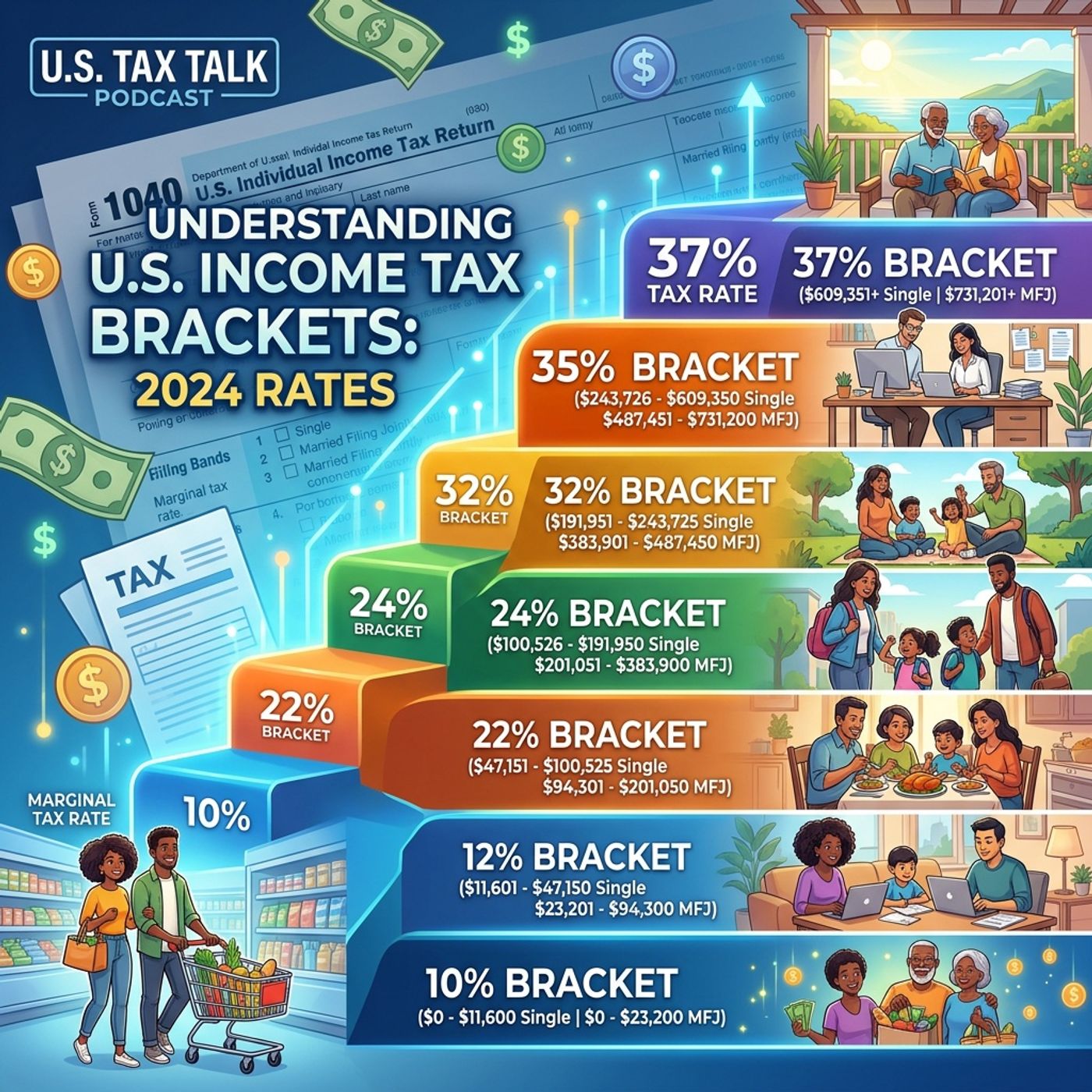
Let’s start with the basics—tax brackets. For instance, if you’re a single filer in 2026 making $75,000, you’re placed in a federal income tax bracket that averages out to about 10% after deductions. Sounds reasonable, right?
But here’s where it gets interesting. In addition to income taxes, middle-class workers are contributing about 7.65% to payroll taxes. This goes primarily towards Social Security and Medicare. Those are necessary programs, but it does mean that the total tax roadside is a bit steeper than just income tax alone
Become a supporter of this podcast: https://www.spreaker.com/podcast/conspiracy-theories-exploring-the-unseen--5194379/support.
Get every episode summarized
Each time Conspiracy Theories Exploring The Unseen publishes, we email you a written briefing from the transcript — the topics, who appeared, and any specific claims, with the ad reads skipped.
Email me new episodesFree for 3 shows. No card needed.
Hosts & guests
Transcript ready
71 searchable segments. Every word is indexed and playable.
Full transcript
Conspiracy Theories Exploring The Unseen — The Tax Lie They Tell the Middle Class_. Machine-transcribed; use the interactive transcript above to jump the player to any line.
Taxation is a hot topic, especially when we talk about how it affects the middle class. Today, we're diving into a claim that's often thrown around, that the middle class is shouldering a heavy tax burden, perhaps even unfairly. But is that really the whole truth? Let's start with the basics, tax brackets. For instance, if you're a single filer in 2026, making $75,000, you're placed in a federal income tax bracket that averages out to about 10% after deductions. Sounds reasonable, right? But here's where it gets interesting. In addition to income taxes, middle class workers are contributing about 7.65% to payroll taxes. This goes primarily towards social security and Medicare. Those are necessary programs, but it does mean that the total tax roadside is a bit steeper than just income tax alone. Now, let's shift gears and look at state and local taxes. Some states are more tax-friendly than others. Take Nevada, for example, which
doesn't have a personal income tax. This can lead to a lower overall financial burden for middle class families compared to states like California or New York, where taxes can really add up. It's a prime example of how location can play a major role in the tax narrative. But when we talk about effective tax rates, things may not be as dire for the middle class as some claim. A single filer earning that $75,000 after all deductions actually pays a federal income tax bill of about 7,670. We're still looking at that effective rate around 10%. It's important to note that tax structures can evolve based on legislative changes. For instance, the expiration of payroll tax cuts back in 2013 resulted in tax increases that hit middle class households quite hard. These tax hikes pretty much mirrored what higher earners faced back then, showing that the middle class isn't always isolated in its financial struggles.
Fast forward to 2017, when the Tax Cuts and Jobs Act made headlines, it introduced a slew of changes impacting tax brackets and deductions. While some middle class taxpayers got a break, others felt the pinch. Discussions about reform often raise the question of fairness. Do these benefits mainly favor the wealthy? Or do they provide real relief for middle class families? Listeners, it's vital to recognize that tax policies are rarely cut and dry. They can shift and bend based on individual circumstances, income levels, local tax laws, and specific policy details all play massive roles. Moreover, the real conversation here isn't just about tax rates, but also about the underlying economic impact. For example, corporate tax increases can lead to job losses or wage stagnation that directly touch middle class lives, even if they don't notice that effect in their paychecks right away. So as we dive deeper in our next episode, consider this. While the story of a middle class tax crisis is compelling,
it's essential to pull back the layers. The narrative can be complex, influenced by myriad factors. In a nutshell, the tax landscape is multifaceted and changes can have various impacts on different income brackets. Understanding these complexities will help us have informed conversations moving forward. Thanks for joining the Fortune Factor podcast.
More episodes
More from Conspiracy Theories Exploring The Unseen

The Digital Mirage_ AI and the Death of Authentic Romance
Conspiracy Theories Exploring The Unseen

The Trust Trap_ AI and the Future of Romance
Conspiracy Theories Exploring The Unseen

The Ghost in the Machine_ Navigating AI Romance
Conspiracy Theories Exploring The Unseen

The Love Recession_ Why Digital Romance is Offline for Good
Conspiracy Theories Exploring The Unseen