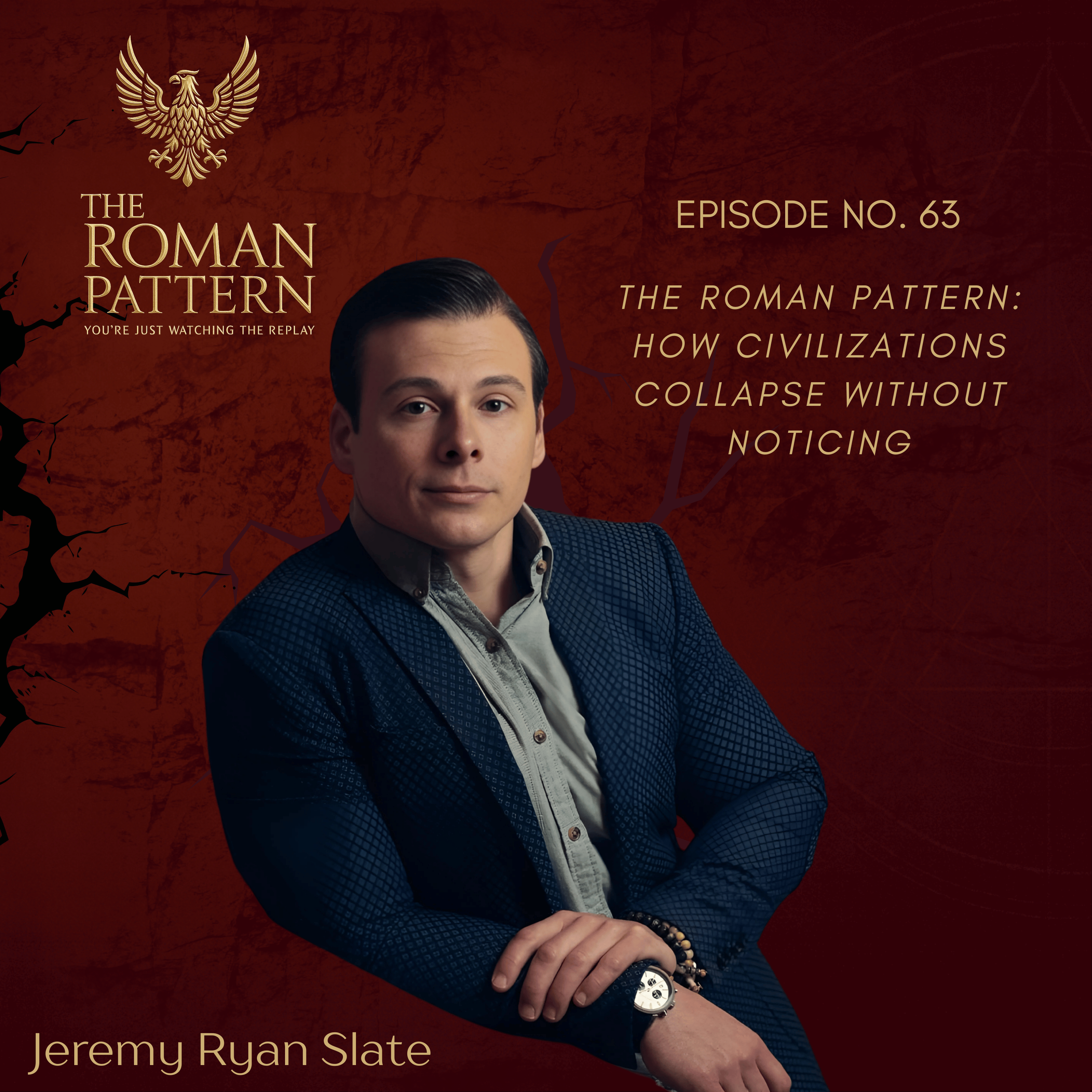
The Roman Pattern: How Civilizations Collapse Without Noticing
About this episode
Most people think collapse is an explosion.
A wall falls. A city burns. A single date on a timeline.
But that’s almost never how it happens.
Rome didn’t “fall in 476.” That’s the lie.
Rome faded — slowly — through a series of rational “fixes” that hollowed the system from the inside.
In this flagship episode, I explain what I call **The Roman Pattern**:
When a civilization gets stressed, it adapts… and those adaptations repeat in predictable ways.
Rome’s pressure points were always the same:
1) Money (debasement → inflation → trust collapse)
2) Borders & people (migration stress → deals → fragmentation)
3) Power (emergency authority → permanent rule by decree)
And here’s the twist:
Rome survived again and again — by becoming something else.
Until “Roman” stopped meaning anything real.
If you want to spot collapse signals in real-time — and understand what today is rhyming with — this is the foundation.
Subscribe for more episodes breaking down the patterns of empire decline.
👇 QUESTION FOR YOU:
Are we living in our own “Third Century”… or are we already closer to Rome in 470?
Get every episode summarized
Each time The Jeremy Ryan Slate Show publishes, we email you a written briefing from the transcript — the topics, who appeared, and any specific claims, with the ad reads skipped.
Email me new episodesFree for 3 shows. No card needed.
Hosts & guests
No transcript yet
This episode has not been transcribed. Request it and it moves to the front of the queue.
More episodes
More from The Jeremy Ryan Slate Show

The War Rome Almost Lost to Its Own Allies
The Jeremy Ryan Slate Show

What If Aurelian Never Died? The Rome That Never Fell
The Jeremy Ryan Slate Show

Marius: The Reform That Accidentally Destroyed Rome
The Jeremy Ryan Slate Show

The House of Romanov: 304 Years to a Basement in Yekaterinburg
The Jeremy Ryan Slate Show