About this episode
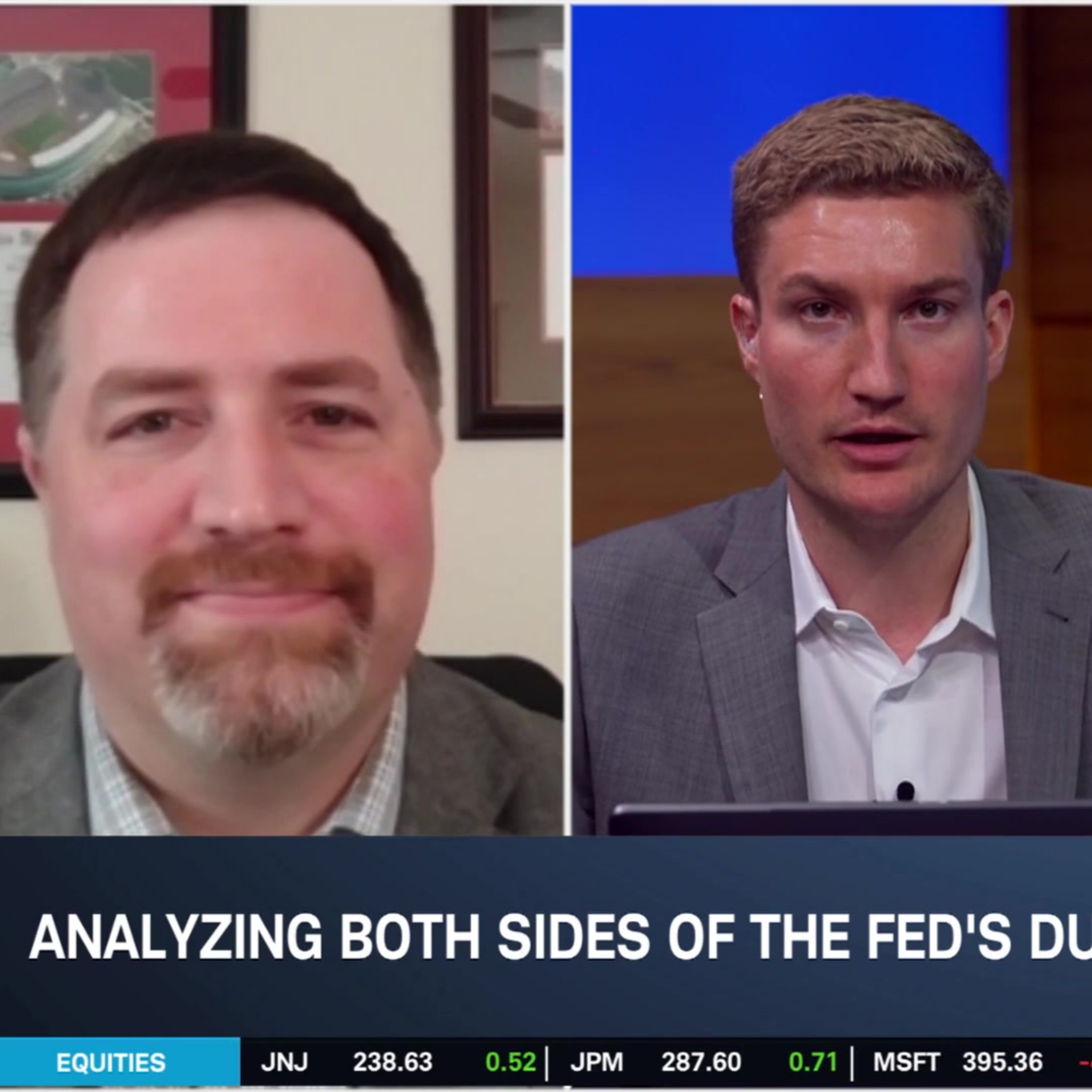
Yerbol Orynbayev and Ben Ayers preview the FOMC rate decision and Powell’s press conference. Yerbol highlights inflation on the rise and a weakening job market and says consensus is they will pause on rate moves. Ben sees conflicting signals in the economy and expects a split consensus among the Fed around a rate move. They discuss Kevin Warsh’s potential takeover of the Fed Chair position and how he might react to the economy.
======== Schwab Network ========
Empowering every investor and trader, every market day.
Options involve risks and are not suitable for all investors. Before trading, read the Options Disclosure Document. http://bit.ly/2v9tH6D
Subscribe to the Market Minute newsletter - https://schwabnetwork.com/subscribe
Download the iOS app - https://apps.apple.com/us/app/schwab-network/id1460719185
Download the Amazon Fire Tv App - https://www.amazon.com/TD-Ameritrade-Network/dp/B07KRD76C7
Watch on Sling - https://watch.sling.com/1/asset/191928615bd8d47686f94682aefaa007/watch
Watch on Vizio - https://www.vizio.com/en/watchfreeplus-explore
Watch on DistroTV - https://www.distro.tv/live/schwab-network/
Follow us on X – https://twitter.com/schwabnetwork
Follow us on Facebook – https://www.facebook.com/schwabnetwork
Follow us on LinkedIn - https://www.linkedin.com/company/schwab-network/
About Schwab Network - https://schwabnetwork.com/about
Get every episode summarized
Each time Schwab Network publishes, we email you a written briefing from the transcript — the topics, who appeared, and any specific claims, with the ad reads skipped.
Email me new episodesFree for 3 shows. No card needed.
Transcript ready
149 searchable segments. Every word is indexed and playable.
Full transcript
Schwab Network — The Pressures Facing Kevin Warsh Ahead of Fed Chairship. Machine-transcribed; use the interactive transcript above to jump the player to any line.
and it's now time for our 360 round. As we preview the expectations for the Fed today and beyond. We're joined, it's our pleasure to welcome in our guest. We're joined now by Yerbal Orinbaya, the independent financial consultant and former governor of the World Bank, as well as Ben Ayers, a senior economist for nationwide. Yerbal, I'll begin with you. Not a lot of fireworks expected in the decision today, but anytime we hear from the Fed share, we know there's potential for some market movement. How do you assess the landscape for the Fed? I know that's a difficult question. I think it's always consensus that the Fed is likely to stay on hold, at least for now. Fed is watching for three things. Inflation, unemployment and financial stability. So unfortunately, inflation is on the rise, and particularly with the rising oil prices, it's a little bit dangerous, and they understand that they have to consume it. They cannot see it right now in statistics,
but after the March, April, they will definitely will see it. Unemployment, the job market is weakening, but but still quite strong, and then financial stability out of question for time being. So there is almost consensus that the rates will be unchanged. Ben, I think that most agree with Yerbal, it is essentially consensus, and we're not going to see any change in terms of the decision, but there will be a lot of scrutiny around the changes to the statement and words from Jerome. Do you think that they're going to emphasize maybe two-sided risk, which would be a notable change from what we've heard the last several meetings? I think they will lean in that direction. We're getting some pretty conflicting signals from the economy right now. On one hand, we have inflation picking up, and potentially going higher because of the spike in oil prices, but we also have the labor market is really suffering, and we saw some pretty sizable job losses in February.
So I think they are going to lean on that, looking into what's going to happen ahead, and worried about what this means for the economy, because we're seeing a lot of pressure on households across the country, and I think we're going to be closely watching those summary of economic projections, how much do the Fed officials bring in some of their estimates for what the impact of oil prices could mean for the economy over the rest of 2026? Ben, do you have a thought on where those dots may land? You know, I don't expect a huge change from where we were back in December. At that point, there were a lot of people that were saying, let's hold off for a while, and pick up an inflation, really feeds some of the hocks that we have on the committee that we need to hold off on rates. So I expect there to be kind of a split consensus here that at some point down the road, we'll need to lower rates, but it might be farther into the future than we expect right now. Yerbal, one of the things we haven't even mentioned yet was the sort of awkward timing of all of this.
We're sort of in that moment of almost lame duck territory for the current Fed share, as he's potentially on the way out, and his replacement, which we have a name, although not confirmed, is potentially waiting to take that share. How do you feel about that potential transition and what that new Fed leadership may look like? Kevin Worsh is a great professional. He's pro-Cartreats, but his views were shaped based on the different circumstances. Now, depending on the high oil prices, we should change all landscape institutions to remember and particularly the Fed, very difficult times in 70s and 2000 when high oil prices caused very severe recession and double-digit inflation. So they all remember all these and then leadership matters, but the Fed is the institution.
Majority of their decisions are made based on majority votes. So I believe, depending on the macro situation, this independent institution will decide how to react. Ben, one of the things that the leadership of Jay Powell has really been, what has been consistent under Jay Powell's leadership has been, this desire to leave the options on the table and not really backing the Fed into any corners. So perhaps they have a little bit more of a coy conference today, but you mentioned sort of the path opening up in the second half of the year, perhaps for some cuts to kick back in. Then in that sort of base case that you guys are projecting out over at Nationwide, what do you think that first cut, if there are several, would be? As you already mentioned, the X factor here is what happens when we do get a new Fed chair, and assuming that is Kevin Worsh, he has already mentioned that he wants to lower rates and has a bias towards that over the second half of the year.
Much of this really depends on what happens with inflation and oil prices for the next couple of months. You know, our base case is still pretty soon after a new Fed chair comes in, so somewhere over the summer, maybe it's June, maybe it's not the end of July, we'll see a rate cut at that point, but a lot of that depends on what happens in the next couple of weeks. If we do see oil prices remain at or above $100 per barrel for an extended period of time, that might have to get pushed out because we're just going to see a lot more inflationary pressure coming through the economy. You're well, while I know the World Bank and the Fed are different, you are once sitting on those chairs and making decisions. If you were on the Fed right now, do you think you'd be leaning one way or another in terms of risk to the economy on one side, or risks of inflation, re-accelerating and price instability to the upside? Do you think you have a feel one way or another at the moment? I would be watching clear carefully situation with the oil prices because it's such a pervasive,
it affects every aspect of the economy. So if the conflict continues and there is disruption about more than 20% in terms of the oil supply, this is significant, it could not be substituted easily. Even when you sell an oil, I cannot substitute this such a high drop in terms of the production available to the market. So if conflict continues, let's say another one months, relatively short, probably the supply and demand will balance. If not, there is no way the prices stay very high and then the Fed should be ready to address the situation. And then your say oil prices directly correlated with the international oil prices, with the brand, Urals and others. So it will be the same effect. So I would be watching carefully what is happening with oil prices and then decide. Urbola, Warren Bayev and Ben Ayers, I appreciate both of you. Urbola, of course, an independent financial consultant and former governor of the World Bank.
And of course, Ben, a senior economist for nationwide appreciate both you taking the time and helping set up the Federal Reserve. So we get that imminent decision and just over two hours here today, that'll be two o'clock Eastern time, one o'clock Central.
More episodes
More from Schwab Network

Stock Market Today: ORCL & ADBE Earnings, AEO Plunges Near 52-Week Low
Schwab Network

Thursday's Final Takeaways: Crude Taps $103 & PPI Hotter than Expected
Schwab Network

Balancing High-Conviction AI With High-Dividend Diversification
Schwab Network

EARNINGS PANEL: ORCL, ADBE
Schwab Network