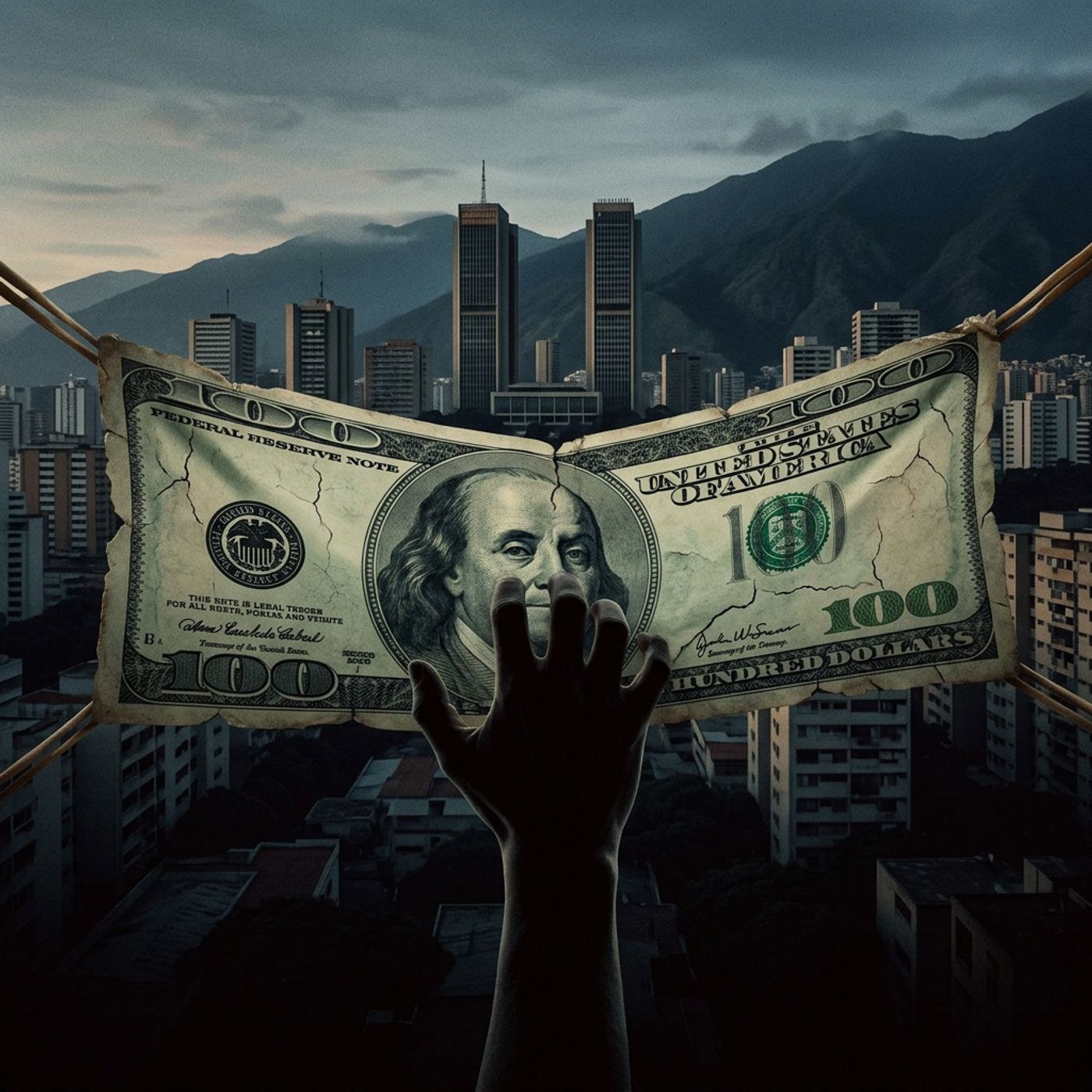
The Petro-War: How Venezuela is Fighting the U.S. Dollar
About this episode
- The Venezuelan Leverage: How the nation is using its massive oil reserves to bypass the SWIFT system and undermine the U.S. Dollar.
- The BRICS Alliance: Is Venezuela's move being backed by major Eastern powers to accelerate de-dollarization?
- The Domestic Fallout: What this "Petro-War" means for gas prices, inflation, and the strength of your savings in 2026.
Become a supporter of this podcast: https://www.spreaker.com/podcast/conspiracy-theories-exploring-the-unseen--5194379/support.
Get every episode summarized
Each time Conspiracy Theories Exploring The Unseen publishes, we email you a written briefing from the transcript — the topics, who appeared, and any specific claims, with the ad reads skipped.
Email me new episodesFree for 3 shows. No card needed.
Hosts & guests
Transcript ready
89 searchable segments. Every word is indexed and playable.
Full transcript
Conspiracy Theories Exploring The Unseen — The Petro-War: How Venezuela is Fighting the U.S. Dollar. Machine-transcribed; use the interactive transcript above to jump the player to any line.
Tyler Reddick here from 2311 Racing. The rush of racing, nothing beats it, but Chumba Casino comes close. Chumba's got fast spins, fun games, daily bonuses, and all the action you can handle. Now that's a ride. Ready to hit the throttle? Get in the driver's seat and head to chumbacasino.com. Let's Chumba. Sponsored by Chumba Casino, no purchase necessary, VGW group voidware prohibited by law, 21 plus turns and conditions apply. Hi, this is Alex Cantrowicz. I'm the host of Big Technology podcast, a long time reporter and an on-air contributor to CMBC. And if you're like me, you're trying to figure out how artificial intelligence is changing the business world and our lives. So each week on Big Technology, I bring on key actors from companies building AI tech and outsiders trying to influence it, asking where this is all going. They come from places like Nvidia, Microsoft, Amazon, and plenty more. So if you want to be smart with your wallet, your career choices, and meetings with your
colleagues and at dinner parties, listen to Big Technology podcast wherever you get your podcasts. Imagine waking up to the news. The US has just captured a sitting president overseas in a bold military operation. That's exactly what happened in January 2026 when the US launched Operation Absolute Resolve, swooping into Venezuela to capture President Nicolas Maduro and his wife, Silia Flores. This controversial move not only sent shockwaves through the political world, but also set off a series of economic ripples that could alter the landscape of global finance. So how does a military intervention lead to economic leverage? Let's break it down. Following the operation, we saw the US dollar index surge from 98.41 to 98.76 while gold prices climbed above $4,400 an ounce. Governors were clearly seeking safe havens amidst the ensuing geopolitical chaos. But what does this mean for Venezuela? A country that holds the largest proven oil reserves in the world estimated at an astonishing
$303 billion barrels? Well, it positions Venezuela as a wild card in the global economy. The US quickly imposed sanctions on Venezuela's oil industry, an essential source of income for the country, and froze assets tied to Maduro's regime. However, Venezuela responded with a bold threat. It could withhold oil exports. This isn't just a game of political chess. This could disrupt global oil markets and put significant pressure on the US economy, both of which rely heavily on Venezuelan oil. Now let's consider the perspectives at play. The US government justifies the intervention as a necessary action to restore democracy and tackle corruption in Venezuela. Meanwhile, Maduro's administration vehemently condemns the operation, viewing it as an infringement on their sovereignty. They argue that their nation deserves self-determination free from foreign meddling. And the international community, opinions are mixed. Some nations worry about the implications of unilateral military action while others
support the US, emphasizing the need to confront authoritarianism. Notably, experts like Casey Michelle, who delve into kleptocracy, remind us how authoritarian regimes can manipulate financial systems to their advantage. While market strategists Stephen Inns examines the economic fallout of this crisis, highlighting how the dollar acts as a refuge during turbulent times. Understanding these dynamics is crucial, as they illustrate the intricate web of connections between military interventions, economic power, and global trade. Drawing parallels with historical contexts can also provide insight. Consider Operation Eagle Claw back in 1980, a failed attempt to rescue hostages in Iran that ended tragically, reminding us of the complexities and risks that come with military interventions. The Iranian hostage crisis that followed profoundly altered US foreign policy and international relations. Today's situation with Venezuela resonates in those lessons from the past.
In conclusion, the US military intervention in Venezuela has ushered in a complex interplay between political maneuvers and economic strategies, bringing to light Venezuela's potential to leverage its oil exports against the US dollar's dominance. As this narrative unfolds, it's clear that the implications reach far beyond the borders of Venezuela, impacting global finance and diplomacy. In this evolving landscape, staying informed and aware is more important than ever. Thanks for joining the Fortune Factor podcast. Hey, it's Cole Swindell. After I give everything I've got to land a perfect vocal, I usually take five before jumping into the next track, and I've learned exactly how to recharge in that time. Some folks grab coffee, I hit a quick good lookspim. Next thing you know, the break is just as fun as land down the track. A better break makes for a better take. Need a break? Let's chumble. No purchase necessary, VGW Group void were prohibited by law, 21 plus TNC supply, sponsored
by Chumba Casino. Hey, I'm Josh Speagle, host of the podcast, Lunatic in the newsroom. If you enjoy journalism that drifts into mild panic, wild overthinking, and a guaranteed nervous breakdown, Lunatic in the newsroom is for you. It's news like you've never heard before. The only newsroom with a panic button, you'll laugh, you'll cry, and gasp and horror as the show spirals completely out of control. It's not just news, it's emotionally unstable. Lunatic in the newsroom, listen today.
More episodes
More from Conspiracy Theories Exploring The Unseen

The Digital Mirage_ AI and the Death of Authentic Romance
Conspiracy Theories Exploring The Unseen

The Trust Trap_ AI and the Future of Romance
Conspiracy Theories Exploring The Unseen

The Ghost in the Machine_ Navigating AI Romance
Conspiracy Theories Exploring The Unseen

The Love Recession_ Why Digital Romance is Offline for Good
Conspiracy Theories Exploring The Unseen