The Overnight Economy: Global Impacts and Hidden Truths
About this episode
Become a supporter of this podcast: https://www.spreaker.com/podcast/conspiracy-theories-exploring-the-unseen--5194379/support.
Get every episode summarized
Each time Conspiracy Theories Exploring The Unseen publishes, we email you a written briefing from the transcript — the topics, who appeared, and any specific claims, with the ad reads skipped.
Email me new episodesFree for 3 shows. No card needed.
Hosts & guests
Transcript ready
78 searchable segments. Every word is indexed and playable.
Full transcript
Conspiracy Theories Exploring The Unseen — The Overnight Economy: Global Impacts and Hidden Truths. Machine-transcribed; use the interactive transcript above to jump the player to any line.
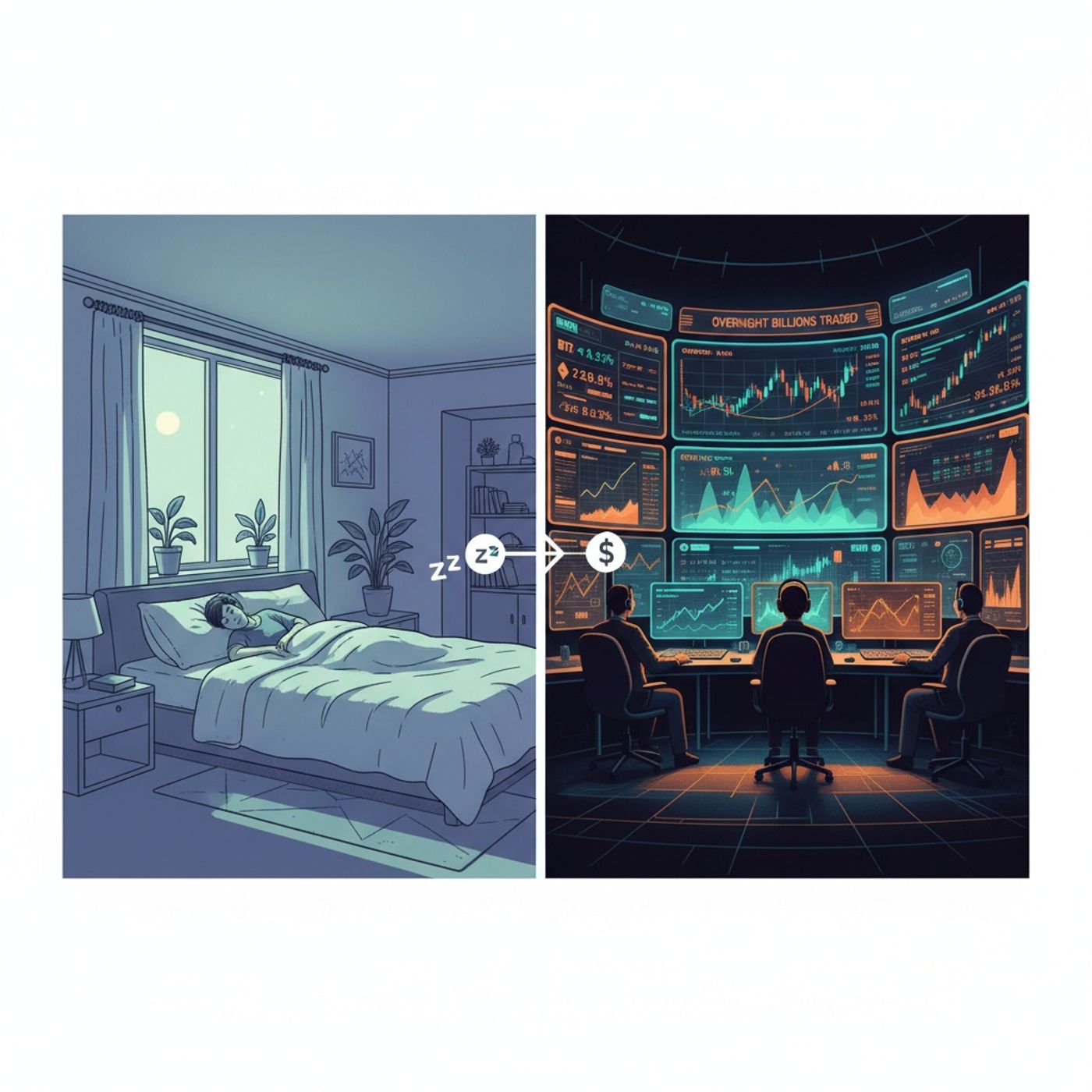
While you were sleeping last night, vast sums of money were changing hands across the globe. You might wonder, how does this happen? Let's dive into the fascinating world of overnight financial markets, where billions in transactions happen without us even noticing. First off, let's talk about the 24-5 trading environment. Unlike ordinary business hours that most of us are familiar with, the global financial landscape buzzes with activity around the clock, five days a week. Starting Monday morning in Sydney and running until Friday evening in New York, markets like Forex continue non-stop, accommodating investors in various time zones. It's a bit like an international relay race, where the financial baton keeps being passed, and the players are as engaged at night as they are during the day. Now, one big player in this round-the-clock game is the Forex market. Did you know it's the largest financial market in the world, boasting an eye-popping daily turnover
of around $7.5 trillion. That's trillion with a T. This gargantuan volume underscores just how significant and impact overnight transactions can have on the global economy, even while we snooze away at home. And here's where it gets really interesting. Retail investors are becoming a larger piece of the trading pie. In places like the US, UK, and South Korea, they make up about 20 to 35% of daily trading volume. But in countries such as India and China, this figure skyrockets to between 40% and a whopping 80%. With such a robust participation from retail traders, exchanges are considering extending trading hours to better suit an increasingly global and diverse trader community. Speaking of extended trading hours, there's a hot debate going on about whether US markets should adopt a 24-5 trading model. Proponents argue that this could boost liquidity, reduce overnight risks, and provide flexibility to investors.
Imagine being able to react in real time to global news without waiting for business hours to roll back around. It sounds beneficial, right? However, it's not all sunshine and rainbows. Critics raise some compelling points about the challenges that might accompany extended hours, such as the need for adjustments to market infrastructure and potential liquidity fragmentation. There's also a concern about volatility during the off-peak hours. What happens when fewer traders are available to manage the risk? This could lead to erratic market behaviors, and that's something no one wants. In the context of all this discussion, it's crucial to reflect on how far we've come. Traditionally, financial markets operated on set hours matched to the rhythms of major financial centers. But with the rise of electronic trading platforms and globalization, we've seen a major shift towards ongoing fluid trading timelines. This evolution is all about meeting the demands of a global investor base hungry for flexibility.
So what can we take away from today's exploration? The movement of billions during our sleep isn't just an impressive statistic. It represents the pulse of an interconnected financial world. Understanding these overnight dynamics helps us appreciate how decisions made across the globe affect our own financial environments. It reminds us that while we rest, the financial world is moving, adapting, and reacting. Thanks for joining the Fortune Factor podcast.
More episodes
More from Conspiracy Theories Exploring The Unseen

The Digital Mirage_ AI and the Death of Authentic Romance
Conspiracy Theories Exploring The Unseen

The Trust Trap_ AI and the Future of Romance
Conspiracy Theories Exploring The Unseen

The Ghost in the Machine_ Navigating AI Romance
Conspiracy Theories Exploring The Unseen

The Love Recession_ Why Digital Romance is Offline for Good
Conspiracy Theories Exploring The Unseen