About this episode
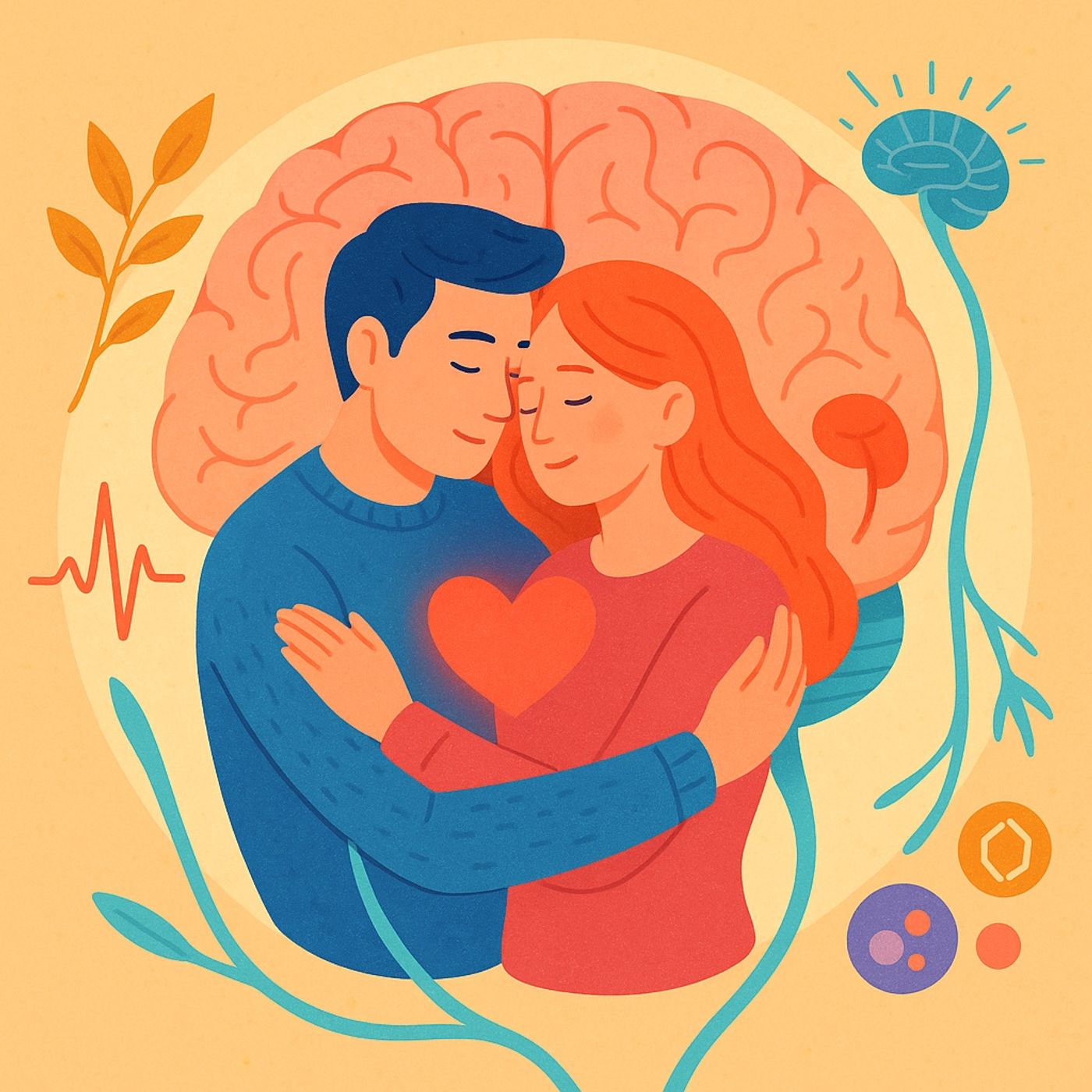
Explores the neurobiological effects of emotional intimacy, describing it as a powerful regulator of the body’s stress response. Genuine emotional connection lowers cortisol and helps calm the amygdala — the part of the brain responsible for detecting threats and triggering alarm signals.
It also explains that a sense of emotional safety activates the vagus nerve, shifting the body into a “rest and digest” state, which slows the heart rate and promotes physical relaxation.
In addition, the experience of trust and vulnerability releases natural “feel-good” chemicals such as oxytocin and dopamine, deepening feelings of comfort, bonding, and reward.
Over time, consistent emotional closeness strengthens the prefrontal cortex, improving emotional regulation, clarity, and decision-making. It also helps form more resilient neural pathways, supporting long-term trust, stability, and psychological well-being.
You can listen and download our episodes for free on more than 10 different platforms:
https://linktr.ee/life_notes
Produced by:
https://www.podcaistudio.com/
It also explains that a sense of emotional safety activates the vagus nerve, shifting the body into a “rest and digest” state, which slows the heart rate and promotes physical relaxation.
In addition, the experience of trust and vulnerability releases natural “feel-good” chemicals such as oxytocin and dopamine, deepening feelings of comfort, bonding, and reward.
Over time, consistent emotional closeness strengthens the prefrontal cortex, improving emotional regulation, clarity, and decision-making. It also helps form more resilient neural pathways, supporting long-term trust, stability, and psychological well-being.
You can listen and download our episodes for free on more than 10 different platforms:
https://linktr.ee/life_notes
Produced by:
https://www.podcaistudio.com/
Get every episode summarized
Each time Life Notes publishes, we email you a written briefing from the transcript — the topics, who appeared, and any specific claims, with the ad reads skipped.
Email me new episodesFree for 3 shows. No card needed.
Hosts & guests
No transcript yet
This episode has not been transcribed. Request it and it moves to the front of the queue.
More episodes


