The Krishna Principle: Charisma as a Yoga Business Skill
About this episode
Krishna is our go-to charismatic guy, and i think he has a lot to teach us on this front. Charisma in yoga teaching is not about ego or performance. At its best, it is about authentic presence. When a teacher is fully engaged, enthusiastic and genuine, students feel it. And when students feel something meaningful in a class, they come back.
Learn about coaching here: https://www.amymcdonald.com.au/coaching
If you value this show, please do consider supporting my work on Patreon. It’s just $5 AUD a month and it makes a big difference to me. Here is the link: https://www.patreon.com/AmyMcDonald
Get every episode summarized
Each time Abundant Yoga Teacher Podcast publishes, we email you a written briefing from the transcript — the topics, who appeared, and any specific claims, with the ad reads skipped.
Email me new episodesFree for 3 shows. No card needed.
Hosts & guests
Transcript ready
431 searchable segments. Every word is indexed and playable.
Full transcript
Abundant Yoga Teacher Podcast — The Krishna Principle: Charisma as a Yoga Business Skill. Machine-transcribed; use the interactive transcript above to jump the player to any line.
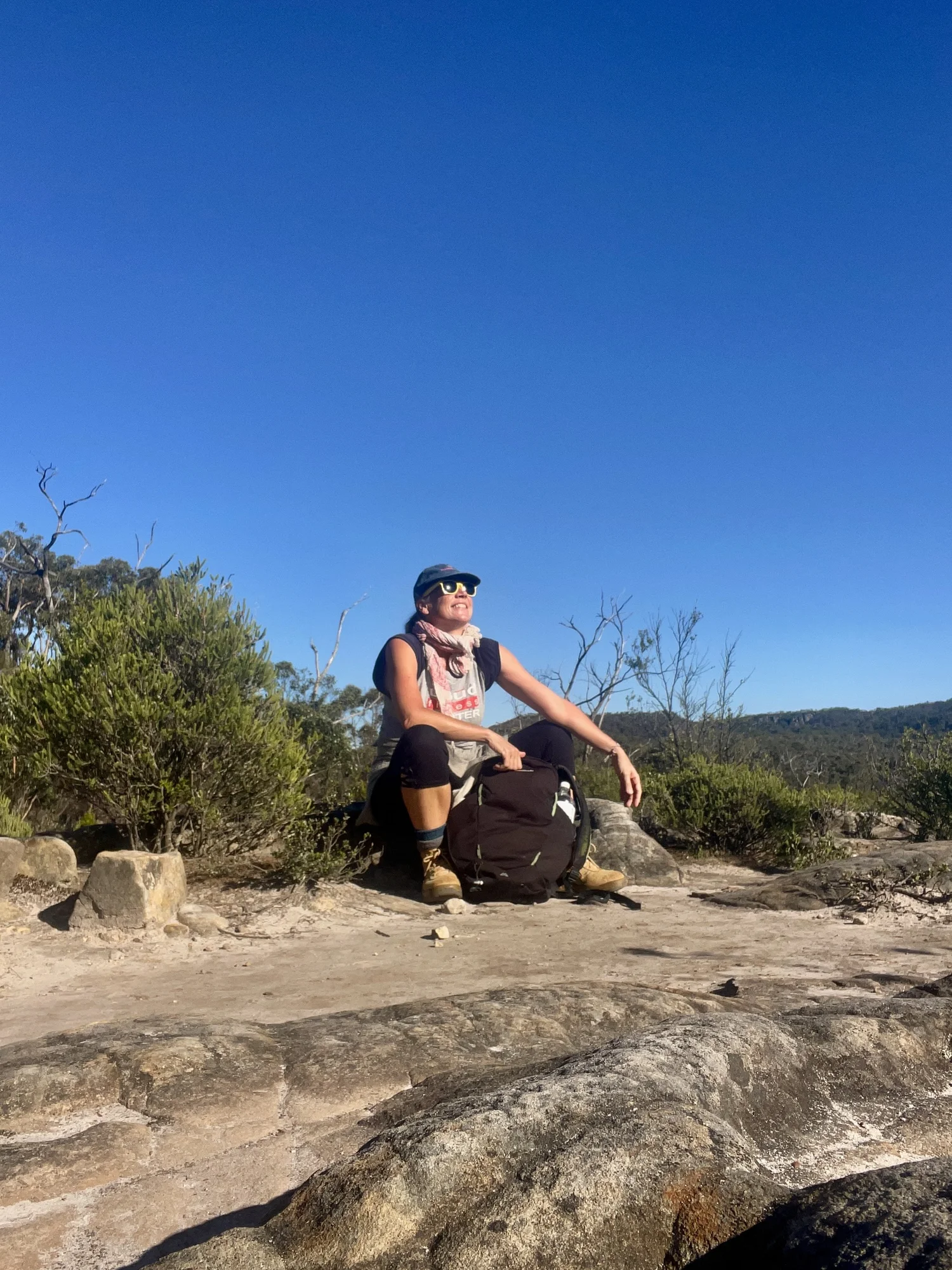
Hello and welcome to the Abundant Yoga Teacher podcast, my name is Amy McDonald, I'm at Yoga Teacher, Yoga Student and a Yoga Business Coach and I'm here to support you to share your yoga with the people in your community who really need it. So if you're an amazing yoga teacher but you sometimes struggle with the business part of what it is that you do, you're in the right place, I hope you thoroughly enjoy everything I've got in store for you and if you have any suggestions, questions or ideas for future podcasts, reach out to me on Instagram at Amy Yoga Business Coach. Hey there, welcome to the show, I hope you're doing great, I'm doing pretty great, I went for an epic hike on Tuesday and I've sent myself yet another challenge so hiking nerds, I am intending to do the entire Goldfields track this year and I'm also going to do the entire Grand Pien's Peaks Trail this year in installments, in chunks and yeah, loving it, loving it,
I hope that you're making time to do what it is that you love, whatever that might be. You know I just think, I know we talk about this semi regularly but I just think that if you're going to go to all the trouble, because let's face it, it's not easy to start and run your own successful small business, it needs to return for you in the sense of providing you with the life that you want and so whatever that may look like, you know it gets to be quite delightful to increasingly lean into it and ensure that what you're setting up for yourself actually does make sense and work for you so that there is time to do the things that bring you joy. I was talking to a client just now and we were talking about something that's happening currently in her life and how it's important to have those things that bring a bit of fizz, that create bubbles and effervescence and whatever that may be for you, making sure
that your business isn't consuming so much time that you can't find those moments and we were joking around because the thing that's causing the bubbles from my client has got technically absolutely nothing to do with her business or what she's hired me for. However, you know, there's nothing like having some zing from doing what it is that you love that makes you more magnetic when it comes to business, which is the perfect segue to talk about what is on the books for us to talk about today. So I don't normally talk about Krishna mythology and not because he's not got lots to teach us, but simply because as a consequence, I suppose, of my own yoga teacher training. So I came up fundamentally, originally, in yoga teacher training through the Anusaro method, which was founded by John Friend, who was very much influenced by Siddha yoga at the time, Guru May, but obviously formerly Muktanunda, Baba Muktanunda. And that's a, you know,
that's a shivite called it then Kashmir shivism, tantric shivism tradition. And so lots of Shiva law, lots of Shiva shakti law, not much vishnavism. And so I guess I'm a bit light on when it comes to all things Krishna. I've been reading from the trove of books, the suitcase of books that I brought home from my most recent trip to India. A bunch of stuff that, because I was, I blitzed the bookshop, I went to the spiritual, beautiful spiritual bookshop, but also went to the biggest mainstream bookshop in the Barnes and Noble version in Kolkata. And I just kind of sat there for as long as you can, but you know, there's only so much you can take in when it's like being, it's the kid in the candy store. So I picked up a bunch of stuff turns out, a number of the books that I purchased were actually from Iskon or Iskon adjacent writers authors. So, you know, Harry Krishnas, if you like,
for simplicity. And then last night, a friend of mine sent me this rather sneaky. She said, let's go to this. And it was an invitation to go to some Kirtan, but it was quite sneaky and how it was written because it made it out like it was some new emerging cool thing, but actually it was also Iskon. That's a whole other topic, fascinating book, branding, buckty. If you want to really nerd out about the marketing efforts of modern day Iskon, a mantra lounge, etc. Don't get me started. Get me started. So interesting. If you want to know, reach out if you want the details on that book, but nerdy, academic work, fascinating, fascinating. Okay. So all of this to say that between my friend, Fizz chats about magnetism through to inadvertently buying a whole bunch of books written by Harry Krishna Devotees or Krishna Devotees. Plus, my friend sent me this sneaky invite to a Kirtan that's pretending to be something else so that people don't go, I'm not going to that weirdo,
Harry Krishna thing. I thought it's about time we talked about Krishna. And why not? He's got oodles and oodles and oodles of things to teach us. So that's what we're going to be talking about today. And in particular, what I want to talk about in terms of what Krishna stands for and how that can be useful and also words of caution in business is charisma. So one of the things that Krishna is most famous for is his charisma, right? He's he had all the gopies. You know, he's he's the great lover, not just for Rudha, but for all the gopies. He has the magical flute, you know, that that transfixes people. Whatever you're doing, you forget yourself in that moment and are transfixed by the flute playing of Krishna. Even as a baby, there's so much law, there's so much mythology about the captivating nature of Krishna, the baby. And the wild
naughty, naughty things is like my foster puppies like they did some naughty stuff, but they're just so lovable. You've got to try and tell them off, but really you're just thinking, you are the cutest thing ever. Krishna, that was Krishna as a baby could do no wrong because he was just adorable, even when he was doing seriously naughty stuff. He is the embodiment of charisma. He is and and I think charisma is fundamental to marketing and student retention. And that's what I want to talk about today, charisma as a business tool and charisma done right done ethically as a business tool as modeled by Krishna. So let's take a look at a few sort of Krishna bits of mythology and then we'll circle back to talk about what they mean in terms of charisma and then how that can show up for you in business. So
two things that come to mind straight away from me. One, as I said before, this idea of the flute playing. So if you look, obviously all, you know, a kutramon of all of the deities can be interpreted in all sorts of different ways. What it all means. One of the ways that we can interpret Krishna's flute as it pertains to charisma, magnetism and Amy's long bow, student attraction and retention is the flute is an indicator of attraction as in attracting people to you, being magnetic in a way that isn't about ego. So the flute, right, it's hollow in nature. It doesn't contain anything. It's a vessel through which the sound, the beautiful sound, the music of Krishna is what I broadcast. So here the teaching is that while Krishna is incredibly magnetic and have
sex with a good squeal in ladies at the same time because he's that good. It's about, it's not charisma to pump his own tires. It's not charisma to be used for his own advantage. It's charisma to be used in a way that is magnetizing, but in a way that serves a greater purpose. And I think this is fundamental to how we can deploy charisma as a skill. Maybe you have it already. Maybe it's one you can develop. I don't think charisma is something, I mean, some people are inherently charismatic, for sure. I've dated a bunch of them. Doesn't make them, they're just charismatic. Let's just believe it that that. But it is a tool, it is a skill that you can develop. So if you think that you're not charismatic, maybe you just haven't learned how to be yet. So hold that through it. The other thing that I think is really compelling and where Krishna can, again, in a tangential way, show us how to do business well. You remember that scene where Krishna is sleeping and
so we're in the Mahabharata and Krishna hasn't decided who he knows people on both sides of the dispute, right? Because he's, he's that guy. He knows everybody. He's that guy. Everybody knows him. He knows everybody. He's a great connector, but he stays out of the drama. He's Switzerland. He doesn't get involved in the shit, but he's good at connecting. He's good at networking. Everybody knows him. He's a great guy at the party, but he's also sort of elusive in Kim's to himself. Both of, you know that guy, right? So Krishna hasn't decided who he's going to fight for, the Pandavas or the caravans. And it's the, I've always thought about this part of the story in terms of abundance, poverty consciousness, abundance, consciousness, lack thinking, abundance thinking. And it still does represent that. But I think it can also show us how to be really charismatic and also impartial in business. So back to the story. Krishna hasn't decided, is he going to fight for the Pandavas or is he going to fight for the caravans?
Remember the Pandavas for brevity are the good guys, the five brothers, shared wife, drowl body, mother, stepmother, kunti, and the caravans, the rodina, and his gusquillion brothers. And they're trying to obliterate the Pandavas so that they can keep all of the land for themselves, dispute, contested will if you will. Okay, so Krishna hasn't decided who he's going to fight for. So he says to them, he's got the rodina and he's got Arjuna there, and he's trying to decide. And he says, look, here's the thing, you can pick, you can have me, but I won't fight, or you can have all of my armies. So he gives the, these are the two options for the two, in choosing how he's going to allocate his resources to this epic war, you can choose me, but I won't fight, or you can have all of my armies. And of course, so just stepping it all back,
at this point in the story, nobody knows that Krishna is avatar of Vishnu, so he's a great guy, but not known that he's also God. So drowl owner, because he is the head of the caravans, at least in this instance, and it's a representation of lack consciousness, poverty thinking, he says, fuck it, I'll take the whole army. And Arjuna is the representation of abundance, who doesn't know yet that his best friend is God, awkward moment, fast forward, see the Bhagavad Gita, says mate, I don't care if you won't fight or not, I need you on my team, I'll take you, right? That's that. Now, here's what I, so we've always looked at this, well, I've always looked at the story, I talked about this story as a representation of abundance. But I think here we can see again that Krishna in representing charisma, being that guy, Arjuna forfeit, potentially doubling down on the size of his army, because he, sorry, that was the time I had to go turn my keema off,
keeping it real. Okay, so because he's so charismatic, like Arjuna could have taken the whole army, gone full blown on his resources, maybe won the war easily because of that. But because of the charisma of Krishna, he chose, I'll take you, dude, even if you're just driving my chariot, I'll take it. That's the thing I want. And that's where I think this gets to be a powerful teaching for as business owners, more business owners about the power of charisma. We want people to choose us because they just can't say no, because there's something about us that they just know they will be better off with us on their team. Also, what it shows is that Krishna is very attractive, magnetic, to both of these guys. But he isn't particularly invested in matching that energy. He's still somewhat removed, very charismatic, very magnetic, very attracting, but a step removed from the
intimacy of those connections. So we can be, here I think he models for us, we can be very, very charismatic, while still maintaining excellent professional boundaries, that you can be charismatic and engaging in warm and magnetic to your students to attract them initially and then to retain them without transgressing the boundary of the student teacher relationship. Okay, so let's talk about why I think charisma is important if you want to attract and retain students. I'm sure you can think of yoga teachers. In fact, I can think of a yoga teacher. We cross paths regularly from just where we were happened to be teaching. And I didn't know this until she told it to me, but she, this particular yoga teacher, she shared with me after some time
that in fact she was a regular listener of the podcast and she said to me once that she was really surprised that my classes were so well attended and hers were so under-subscribed and sometimes no one would show up at all for her classes. And she said to me she didn't know what it was because she listened to my podcast and she'd done everything I had told her, she'd even got my free, all the free stuff, and still no one was coming to her classes. And at the time I thought to myself, well maybe you're not a great teacher, you know, not as a virtue and not to be egotistical, but maybe no one's coming because the classes aren't any good, you know, that makes sense. But then I thought, you know, over the years I've been thinking, well, there's little sorts of yoga teachers who are shitty teachers who teach crap classes. I've been to a lot of them when I've sitting there thinking, what the hell are you doing this for? That's not even a, like, why do that? And then this, you know, whatever, sloppy, not trauma-informed, all sorts of, you know, saying non-suitoscientific bullshit, all sorts of reasons why classes are shit. But they're still
well attended. And like, I've been, had a great, like, long conversation with a yoga teaching buddy last week, just about, most people don't even know what good yoga is. Most people don't even know what yoga is. They just think it's a good thing. And they show up and whatever they get taught the first time they ever go is what they think yoga is. So you could be doing something completely different. And they're not going to know because they've never done it before. And they just think, what you do is what it is. Right. So the level for the average punter, the level of yoga literacy is very, very low. Last night, one of my students who's been coming for a long time, and I've got a few people in my current yoga for men who are new to me this term. So they've only had four or five classes so far. And they're still kind of finding their way and it's fantastic. I love it. And then I've got people who have been around for years. And one of the guys who's been around for years, he said to me, I love it when you tell us yoga stories. And I thought, oh, go on, I don't, you know, don't mind a bit of mythology. I thought that's what he meant. And he
said, like, I loved it when you told about, told us about how yoga comes from the Nazis, which is reductive, but not totally inaccurate. And the people who are new to me, like this look of horror, like, what? Yoga comes from the Nazis. Anyway, like my point is, people only know what you teach them. Most people don't know much about yoga, like how many of your students would know about eugenics in yoga, right? Or how many of your students would know about, I don't know, Hindu nationalism, or how many of your students would know about Madame Blavatsky being a whatever or any basant being like a kidnapper and all the rest of it. And while we shouldn't use the seven chakra system, I could go on, I won't. My point is, most people don't have a whole lot of yoga literacy. They just know what you teach them. And they love it. I keep coming back. But they're coming back for you, right? So coming back to my colleague who lamenting about how she couldn't get any people to come to her class, I thought that it was probably because she was a
shitty teacher, but I don't think that anymore. I just think that she didn't have enough charisma because people will come to your classes, whether you are a good teacher or a shitty one. Now, don't get me wrong. I'm not saying lower your standards, be sloppy, show up late, teach crap, like still pursue excellence. This is our profession. We are professional yoga teachers. We've trained hard. We practice on the regular. We are committed to ongoing learning. We want to be the best we can be for our customers, our students. Don't get sloppy and recognize that. I mean, shit, I know it. For me, people don't come to my class. Well, some people do because they have a high level of yoga literacy, but a lot of people don't come to my classes because I'm very good at teaching yoga. A lot of people come to my classes because they happen to be free on Wednesdays at 7 p.m. And they just think because I'm the only person they've been to, that what I teach them is what everybody gets everywhere. The reason that people come back
is because, yes, I know what I'm talking about. Yes, I can modify stuff because you're busted or whatever. You just don't like something, whatever. Doesn't work for your body. But also just charisma, charisma. Now, we need to decouple. I want to decouple and then re-couple. Charisma from as a virtue statement. Charisma, I want to take this, I want to for a moment with subtract any kind of layer that you may have applied to that word and just take it on its face. Coming back to the idea of Krishna's flute. When I'm talking about, and Krishna, his name even means to draw towards you, right? So I'm talking about charisma as that skill to be able to draw people towards you. I'm not talking about because it makes you a better person, a more popular person, a more attractive person. I'm not talking about charisma as manipulation or pickup artistry or
anything like that. I'm purely talking about the nature of magnetism in the sense of drawing people towards you. That's it. No virtue attributions. So that's the decoupling of the term charisma from attributing it, additional layers of meaning, right? Good. So being charismatic in the sense of being attractive to students in its simplest form, no other layers. Now, what I will add on is using charisma, magnetism, drawing people to you in an ethical way. So from this point forward, let's have those two presumptions. Anybody can generate the skills of being more charismatic, being more magnetic, being more attracting. And that doesn't say anything about your personality.
It's just a skill to learn. And we're talking about it within the context of it being done in an ethical and authentic way. We know you don't have to leave yoga land. You don't even have to look very far within yoga land to see example after example after example of yoga teachers misusing charisma to their own advantage at the expense of their students. I mean, it's just everywhere. Refer to John Friend above, right? Like, I'm going to have a weakened sex call. That's a good idea because I'm charismatic as hell. And I can get all these ladies to come do orgies with me or whatever the hell I don't know. If you want more information about that, I think it's a good love and light podcast about, so it was cool. Anyway, I'll find it. If you want to know, maybe you want to go to listen about John. He was still useful for me. Let me have fish and chips and beer and still be a good yoga teacher. Thanks, John. Okay. Moving on. So charisma done well means it is
non-manipulative. It is to the benefit of both parties. And it is authentic. It is still you. Like me being charismatic is going to be different from you being charismatic. Okay. So actually, before we get into... Let's talk just... Let's talk just quickly about the ethics of it. And then we'll get back into why I think it's useful for business and how you make it, how you make it. Okay. So let's think about some green flags for ethical charisma in your yoga teaching. All right. So we're talking about magnetism, student attraction retention. What we're not talking about is dependency. That's when you're... Like that's that cult-ish addiction kind of quality. I am very drawn to my teachers,
thinking about my primary teachers, my philosophy teacher and my arson teacher. Both of them in their very different ways are incredibly charismatic. And I am drawn to that. But they... But I'm not dependent on them, right? And there is nothing in their teachings that makes me feel like I can't go and study elsewhere. So ethical charisma is about empowering your students, not creating a dependency. I can think of a time when I was in a coaching group. And it was very much discouraged. Getting advice or support or signing up for extra trainings or additional programs with other people was very frowned upon. And we were all in a... It was a group coaching thing that I'd bought. We were all in a Facebook group and you weren't allowed to say anything negative, anything critical, anything that wasn't prosperity, gospel nonsense. And if you did,
if you said, actually, I'm having trouble today because I, I don't know, couldn't do finished the homework. Then not only was your comment deleted, but you would get an email from one of the moderators telling you off for doing the wrong thing. That, the coach, very, very charismatic. But the charisma was... It was used to empower us certainly, but it was conditional empowerment. And it was also very much used to create a sense of dependency. I still own boxes of high heels because when we all met up in person, it was like I was required, like there was an expectation that we would all dress a certain way. I've never looked straighter in my life, like seriously. I got so many stilettos that I've got one once in Maui and put back in the box, seriously. Okay, so ethical charisma, so you're empowering your students rather than creating dependency. They love
coming to you. They also are happy to go elsewhere. Ethical charisma also enables supports, encourages, critical thinking. If I'm very, very charismatic, I need to recognize that you could just take me at my word, and I need to be responsible about that. So this can show up things like people asking you questions that are outside your scope of practice, right? So maybe I want to know what. I think you're amazing. I think you're the best yoga teacher I've ever met. My life has changed since I started coming to your classes. Maybe I started coming to yoga because I'd been through a breakup or I'd lost my job, so I'm already vulnerable. There you are. I put you up on a pedestal. You're charismatic as hell. I just want more and more and more. And then I start saying things to you like, oh, so what's in your smoothie or, you know, what time do you get up in the morning or
where do you work out or whatever else? And because I've, you know, halo affecting, I want to know all the other stuff that you're about because you're charismatic and I'm vulnerable, we'd need to be aware that that is a dynamic that happens. And it's our job to make sure that our students, not only that we're, it's our job to make sure that we're staying within our scope of practice, but also making sure that it's, we also need to make sure that it's our job that our students are still thinking for themselves. They're still interrogating what we're saying. I remember being at an ayenga class. I only went the ones. I was still, I still had a hip injury from Ana Forest class, not Ana, Ana Forest, not her fault, hot room, I'm a sweaty bitch. I had a Manduka travel mat that was wearing out and I slipped and I hurt my hip. And I was still recovering from that. And, and after years of practicing like light on yoga, where you take your, in all the, you know, very addressing to whatever, you take your thigh parallel to the floor when you've
got limited external female rotation like I do. Actually, that's a very difficult thing to do. So, I was, I was at, I was sensitive because I had a hip injury and, and I was also reprogramming my practice to not go as deep on my asymmetrical standing poses because of their hip injury and also just because recognizing that it was never going to happen for me because skeleton. Anyway, I kind of remember that you know, I kind of even recall her face, but I remember being in that class and she was adamant with me that I needed to step wider and wider and wider for my Vera 2 and I said to her, no. Now, I didn't, I was doing a casual drop in. I wasn't intending on being a long term student of that practice, but what it, here's an example of because of who, because you know, she had her own type of charisma. There's something rather delightful. This probably says more about my personality, about being with that, you know, that militant Gita, as in Gita Yenga, vibe, right? Like being told what to do, being drill sergeant
to your yoga, there's something really delicious about that. Let me turn my brain off. Let me give, actually, let me give my brain to you. Tell me what to do. That can happen with a certain type of charisma and we need to be cautious there because we need to empower our students to think critically to be able to say, no, I'm not stepping my feet wider. That doesn't work for me, for example. No, I'm not going to, I hear what you're saying about nardies, but that's not for me because I actually, I don't believe in energy channels or whatever. Like they get to, they get to take or leave the teachings and we need to encourage that intentionally being increasingly charismatic and encouraging critical thinking with our students. Obviously, ethical charisma also shows up in things like being really transparent about your business and your offerings. I remember when I used to teach the abundant yoga teacher retreat in Thailand, towards the end, like the last full day, I would invite people to sign up for my mastermind program. We'd just had a great week
together. They'd learned a whole lot. They were feeling really excited. We'd just done all this planning. They were, you know, ready to go home and start implementing. It seemed logical to me while I had them all there after lunch or whatever. It was, let's have a quick chat about the mastermind and because you've all come to Thailand, that's amazing. I'll give you a discount if you wanted to buy it. It's all seemed very logical to me. It wasn't until I've been doing that for quite a few years, but it started to dawn on me that there was an ethical problem there because what I was doing was inviting people to buy something from me at a time when they were in a heightened state. And I was using my charisma to, as I do, if I'm excited about something, I'm going to really go for it in terms of telling you all the reasons why I think you should buy it. But doing it at that time, I felt wasn't ethical. Well, at first, it seemed really logical. We're all here. You're all a kid excited. I think you're all fab. I want you to do this thing with me. It's going to be great.
And because you've already invested something here, let me take it off there. That'll seem logical except actually it didn't feel ethical after a time. And I stopped doing it because of exactly that reason. Coming back to the coach that I talked about earlier, or in fact, I can think of various times when I've been in the room with big, you know, hundreds of people in a room coach, coaching sort of situation. But I remember this coach in particular, I went to Fluta Sydney, the first time I ever met her in person. I flew to Sydney to meet her. She was visiting Australia, and she actually said in that room, she said that she was selling a training. I didn't buy it that time, but I went on to buy it five times after that. Multiple thousands of dollars, worthwhile and don't regret. But interesting mirror. She said to us all in that room, that hotel ball room, that we needed to buy the training today while our filters were down. She thought that was a good thing. She was telling us that like she was doing us a fever,
I would say that is an unethical use of charisma. She walked in with her designer handbag and whatever, I kind of remember the name of they used to know all of those shoes, but whatever, remember the rock studs? What are they called? You know, whatever, those shoes, the strappy ones. All dog whistles of you want to be rich like me, right? Captivating and a great orator wildly motivating, newer shit. And she said, I want you to buy it now while your filters are down, meaning while you're in a heightened state and your critical thinking is reduced, get your credit card out. Unethical. For me, everybody gets to define their own boundaries. I call that unethical. So if you are intentionally increasing your charisma and I think you should and I'll get to why momentarily, be careful about how that translates into your sales process, that you're not being manipulative. Be transparent about your business and your offerings. And for me, that certainly showed up a lot in terms of the timing of things. Also, it can be the
more, I sort of touched on this already, but the more charismatic you are, the more aware of your boundaries you need to be. I remember I had a drop in a casual student and she came to a class and afterwards she reached out to invite me on a date, which blew my mind because I didn't I didn't see that coming. I really came out of left field. And she said to me, afterwards, she said to me, yeah, but you were so flirtatious with me in class. She thought I was flirting with her in class. I thought I was just being warm and welcoming as I am with everyone who comes to class. My job in intentionally being charismatic as a business skill is to recognize that people can perceive that in different ways. And I need to be rock solid in my boundaries
and in my professionalism. So that looks like how I show up, what I talk about about my personal life with whom, how much longer I stay back and hold space and chat with people after class, how I interact with my students when I see them outside the teaching container. When you're really charismatic, that will ping people in different ways, having your rock solid boundaries and being really professional is increasingly, I mean, it's important all the time. But if you're using charisma as I think you should, as a business strategy, you need to be right on all of that stuff all of the time. And then like Christian's flute reminds us is always about the students. It's always about the students. I am really charismatic with my new yoga for men students because I want them to come back. Yes, of course, it's good for my business, but it's good for them, man. Like I want them to come back because it's good for them. I bumped into a guy at the gym the other day. He was one of my first ever students for yoga for men way back in the way back. And he said to
me, you know, I mean, I really miss coming to yoga. I've just had a baby and I can't afford the gym and your class. And I said, just come anyway, like just come. You should be there. You've just had a baby. You need like time out. You need yoga, just come anyway. He still hasn't shown up, but I will remind him next time I see him at the gym, just come anyway. So charisma, ultimately, the reason that we want more students in our classes, particularly like I find myself in this situation now, I get this new class I'm teaching, I get paid a flat fee. There's nothing in it for me financially to have a room full of people. I am I am balls to the wall trying to get a room full of people because it's better for the people who show up more people doing yoga better planet. So just remember that your like Krishna's flute using charisma as a tool, it's about attracting
people in. Krishna was playing that music for the delight of everybody, his and everybody, not because he was trying to manipulate people into doing something and certainly not because he wanted everybody to think that he was a great flute player. Okay, so we've talked about why Krishna is a great avatar for charisma. We've talked about what charisma is and removing any unnecessary labels, right? We've talked about how to do it well in terms of ethics and professionalism. Next, I want to pivot to talk about why it's good for business and then we're going to talk about how to do it. Like how do you actually be more charismatic? So if you're sitting listening to this thinking, yeah, that's well and good for you Amy, but you're naturally charismatic. No, not naturally charismatic. I'm naturally really aloof and private. Says she who's put out about a gazillion
podcast episodes. Like after this, I'm going to go watch another episode of The Wire and not talk to anybody for an hour until my next client because you know what? Not inherently charismatic, but it's a powering useful resource for me and my students and my clients. All right, so you can develop it. Let's shall we move on? Let's move on. I just want to put it out there that I'm going to cut you off in a minute if you're not listening to this on Patreon. And if you want the whole show, you've got to pay for it because hey, I'm making a living here. All right, so let's move on to talk about, let's move on to talk about why I think it's important for business. Obviously, most broadly because it is attracting and retaining students. Charisma is, I don't know, like it's got to be up there. It's got to be on the top three things to do to attract and retain students more than being good at what you do. Honestly, don't let
that. I don't want to be a downer, but like that's just facts. All right, so let's think about, I got, I think I've got five reasons, I think I've got five, but why your, why career is most great for your yoga business? The first one is it will get, it's a point of difference. It will help you stand out. Right? The, as I said, most people have low yoga literacy. Most people thinking about yoga, they've got a vague idea of what it is in their head. They think it's probably good for me in quotes, but until they get in the room with you, they don't really have a sense of what it is. They stick because they like you. They enjoy your presence. You stand out because of that. You know, that's the thing. I just love how you teach it. You know, when you've had a student at the end who's, this used to happen to me when I used to teach at those yoga festivals, that students would come up at the end and they'd say something like, I didn't, yoga could be like that. That was great. I've never done anything like that. It happened last week, the first yoga for men class that I taught. One of the students at the end, he came up to me
and said, like, he's trying to understand what even was that because he's never done a class. It's what I don't think he's ever done an alignment based on the yoga class. But like, he's never done a class with me and I'm a different person to other yoga teachers, right? Obviously, just because it's my personality, but also because I'm leaning into it because it gives me a point of difference. I just, there's something about your, there's something about Amy's classes. There's something about John's classes. There's something about, I don't know whatever, his classes, I just love it. That's something is your charisma. That's what that is. That's you playing the flute, right? It helps you stand out. People will remember you. I can't remember that woman's face when I said I'm not going to take my viewer to any deeper. Thank you very much. I can't remember her name. I can't remember what she looked like. In my mind, she had Ayenga bloomers on, but I think that's just from doing some other workshop in Hong Kong ones. Singapore, that was a thing. I don't know. Can't remember.
Not charismatic. Can't remember. Can't remember what she even looked like. People will remember you because of your charisma. It builds stronger relationships. This is the retention piece, right? Like if people feel charisma helps to build connections, you know? And not just connections between you and the students, but connections between the students. One of the things that I love most about yoga for men, my castle man yoga for men class is that they go out after class now. Like at the end of term now in the middle of term, they'll go out and have a meal together. Not everybody, but anybody who wants to. It's an open invitation. They go down the pub and they have a meal and they shoot the shit and they send me a selfie. I don't go. Referred point earlier boundaries, but they send me a selfie and I love it. Now, part of the reason that they're all connected with each
other is because of charisma, mine, and there are a couple of other people in the class who are also charismatic, but there are a lot of people in that class who aren't. And again, I'm not, this is not it. Remember, we took off the value attribution, right? So having that charisma in the room means people are going to connect. If I crack a joke or if I say something like hearted or if I am, you know, yesterday I taught hate the name super soldier, hate the name, message me please, if you've got a Sanskrit or another bloody name for that post, so stupid, super soldier. I thought that was a soldier. Anyway, warrior, sure, soldier, what? Super, anyway. And I said to all of my students, just before I did the demo to teach it, I said, you know what, this next thing, it's a bit like, yeah. And they're like, what do you mean? It's, yeah. And I said, well, you know, it's like, yeah, you're doing, you don't do it. Who cares? It's just yoga. Have some fun. See what happens.
Like, that's me letting everybody know. That's my way of letting everybody know that, yeah, who cares if you get it or not? Like, you know, who cares? Have fun. See what happens. So that being charismatic in that way provides an environment where people are okay to have a crack at something, they don't worry. There's no failing at yoga, right? Let's have a laugh or fall over. Who cares? Yeah, let's have fun. And that sets above a mood in the class that means people can more readily connect with each other. If I'm irreverent or if I'm no frills or no fast, that's how my charisma shows up, it lets other people be more comfortable connecting with, connecting with each other. It will make you teaching memorable. Some people will hate it. That's good. I have had so many people come to my classes and never come back. I've got a new student at the moment, Tilly. I thought, I just presumed now someone rocks up to take a class for the first time. I'm like, it's nice to
meet you, but I just think I'm never going to see you again. I might see you at the supermarket, but I'm never seeing you yoga. Tilly has come back. I think we're up to four times now. Every time they turn up, I'm like, damn, you're back. Not because them, because me. I just presume, I'm not everybody's cup of tea. I'm very few people's cup of tea. But the people who love it, they love it, and they remember it, and they tell their friends, they bully their friends, into coming. Being charismatic will make your teaching memorable, telling stories, sharing things that are useful, being enthusiastic, being really enabling. You know, God gives me the shits the way that people say, yoga for everybody, and then proceed to teach shit that you can't do if you're fat. You can't do if you've got a, I don't know, hip injury like me. You can't even do it if you've got a pelvis like me. So don't, yoga for everybody, if that's not yoga for everybody. But if it is, if you're genuinely like enabling, that's awesome. That's awesome. That makes your teaching really
memorable, and that keeps people coming back. That keeps people coming back. All right, I'm going to got two more why charisma is good for business for you. And I've got a whole bunch of ways that you can intentionally foster more charisma, create more charisma to use as a business skill. It's going to be on the other side of the paywall. So if you are a regular listener to the podcast, this is where we end ways, part ways. If you want to listen to the rest of the episode, you should cost your five or on five Australian bucks, which is like nothing, point nothing in every other currency. Over on Patreon, you can listen to the whole episode. If you're still listening, it's because you're a Patreon bloody champion. And let's keep on keeping on. So there you have it, folks. Another addition to the Abundant Yoga Teacher podcast. Hey, favour to ask. If you found the content useful, I would be very grateful if you could support this podcast by giving me a five star rating. And if you've got a moment, a review would be super cool. No pressure. Of course. Like I said earlier, if you have any suggestions for podcasts,
topics in the future, I would love to be in service. DM me on Instagram at Amy Yoga Biz Coach. Take deep care.
More episodes
More from Abundant Yoga Teacher Podcast

Shakuni and 5 Ways to Check Yourself
Abundant Yoga Teacher Podcast

Patanjali and Egg on My Beard
Abundant Yoga Teacher Podcast

The Oceans of Yoga
Abundant Yoga Teacher Podcast

The Joys and Perils of Being a Sādhaka in Business
Abundant Yoga Teacher Podcast