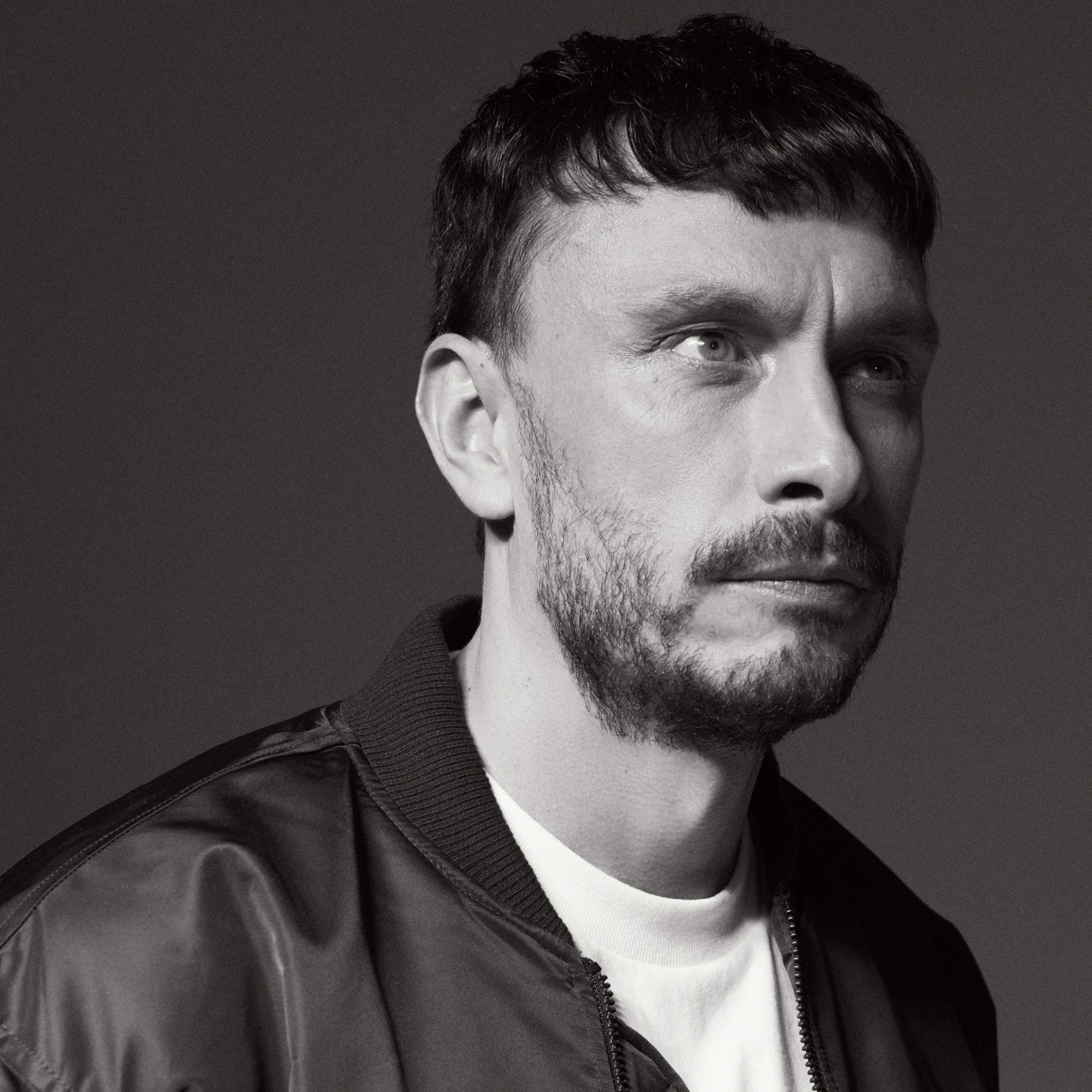
'The Interview': ‘Baby Reindeer’ Exploded Richard Gadd's Life. It Also Set Him Free.
About this episode
The writer and actor found unexpected success by sharing his trauma. Now he’s exploring male pain in a new way.
- Thoughts? Email us at [email protected]
- Watch our show on YouTube: youtube.com/@TheInterviewPodcast
- For transcripts and more, visit: nytimes.com/theinterview
Subscribe today at nytimes.com/podcasts or on Apple Podcasts and Spotify. You can also subscribe via your favorite podcast app here https://www.nytimes.com/activate-access/audio?source=podcatcher. For more podcasts and narrated articles, download The New York Times app at nytimes.com/app.
Hosted by Simplecast, an AdsWizz company. See pcm.adswizz.com for information about our collection and use of personal data for advertising.
Get every episode summarized
Each time The Daily publishes, we email you a written briefing from the transcript — the topics, who appeared, and any specific claims, with the ad reads skipped.
Email me new episodesFree for 3 shows. No card needed.
Hosts & guests

Transcript ready
519 searchable segments. Every word is indexed and playable.
Full transcript
The Daily — 'The Interview': ‘Baby Reindeer’ Exploded Richard Gadd's Life. It Also Set Him Free.. Machine-transcribed; use the interactive transcript above to jump the player to any line.
This podcast is supported by E-Trade from Morgan Stanley. Now that E-Trade is part of Morgan Stanley, there's even more to love. Get the freedom to invest on your own with zero-dollar commissions on stocks, options, ETFs, and mutual funds, plus account types for every investor. And when you're ready, speak with a pro to help guide you on your financial journey. Discover more ways to make the most of your money and get up to $1,000 when you open a brokerage account with a qualifying deposit today. Learn more at eTrade.com slash offer. Terms and other fees apply, investing in valve risks, Morgan Stanley, Smith Barney LLC, member SIPC. E-Trade is a business of Morgan Stanley. From the New York Times, this is the interview. I'm David Marquesi. In 2024, the relatively unknown writer and actor Richard Gad had the strange experience of seeing the lowest moments of his life become viral entertainment. His unsettling Netflix show, Baby Rain Deer,
which was based on his experiences as a victim of both sexual assault and stocking, unexpectedly became one of that year's biggest critical hits, and one of the streamer's most popular shows ever. A catapulted Gad, who's 36, into a heightened and uncomfortable level of personal and professional attention. His response to that discomfort has been to go deeper. His new show, Half-Man, which will air on HBO, is about the decades-long mutually destructive friendship between two Scottish men, the slight and thoughtful Nile, played by Jamie Bell, and the brutish and violent Rubin, played by Gad. Unlike Baby Rain Deer, the show is not based in fact, but what Half-Man shares with its predecessor is a brutally-unflinching exploration of sexual confusion, tortured masculinity, emotional abuse, and the impact of trauma. All of which Gad himself is still trying to understand, both in his art and in his life. Here's my conversation with Richard Gad.
Richard, thank you for taking the time to speak with me today. Thanks very much for having me. I'm excited to be here. I want to start with a question that maybe doesn't have any simple or straightforward answer. You know, you were someone who, for years, working as a performer, you know, you did stand-up comedy, but the work itself was often intentionally alienating. You know, you did a lot of anti-comedy. It's not like you've been trying for years to make some mainstream thing, and then finally, Baby Rain Deer, it was the thing. You were kind of doing your own weird thing. And so, as a result of that, I imagine that the possibility of enormous mainstream success was probably not even really on your radar, is something that was going to happen in your career. But what did achieving success show you about the reality of what success can do for you or can't do for you emotionally?
The best thing about success is that it leads to opportunity for me, because all I really ever care about is right in the next thing, or working on the next thing, I'm trying to, you know, explore more things that I want to do as an artist. Fame, on the other hand, is an interesting thing that I think I still come to terms with. You know, I think at the best times, I'm a self-conscious person. And I think, like, it's so funny, I always look back on those, as you say, those kinds of early comedy days, where I was performing this alienating sort of comedy-style to comedy class up in the other country. I used to think, why is no one getting this? This is the cusp of brilliance this right here. And so I find it so good that I can look back on that and kind of laugh at myself, because I think fame has led to a certain degree of discomfort in the way I go about my life. Now, you always have to think about what you're doing and where you're going. Like, no, not so much about, just saying, oh, I hope there's not too many people here. I worry about people coming up to me. And I know that it's ever bad when people come up to me.
They're almost like projections of my own fear. But that is also a byproduct of fame, you know, because people who come up to me, if not all the time, tend to be really, really nice. But I still, because I think I'm just wired to think in an anxious way, I always think that something is lurking that might be hard to deal with in a social situation. But I think in a lot of ways, like, I'm quite a reclusive guy in a lot of ways, which I think people kind of realize. And I didn't really change like the way I lived my life. Full of all I was ever interested in doing was taking baby reindeer and building on the success with hopefully different pieces of work and art. The new show, Half-Man, raises so many questions about masculinity, right? It's one of the central themes of the show is what does it mean to be a man? What does manhood look like? And that was also a question that comes up in baby reindeer in various ways. Do you have an answer to the question, what does it mean to be a man for yourself?
Well, that's a pretty, it's a tough one answer. I mean, it's tricky, it's tricky. I definitely, I remember like a press release going out with Half-Man saying, it will get to the bottom of the question, what it means to be a man. And I remember, you know, I was in a really busy writing process at that point of view. And then a press release comes in your desk, you're like, I don't have time for this, yeah, that's fine. And so I think I worry that quite a lot of people are heading into half-Man with me, somehow answering an almost existentially impossible question. But I, for myself, know, because I think I suppose that's why I do write these themes and these things and a lot of the characters, particularly essential characters, go in these kind of soul-searching journeys of self-discovery, because I think I've always had a sort of like, avoid within me that I can't quite explain, or like a certain sort of holding the soul or whatever that I think perhaps comes. I'm not sure about this, but perhaps comes from pressures that I felt as a man in my life. But in terms of answering questions, I think it offers questions.
I know the answer's them. What were some of the struggles or open-ended questions around manhood that you've felt like you've had to come to terms with? I certainly think like a lot of the way sort of a certain sense of broken masculinity operates in today's sort of society can be traced back to certain societal repressions, which happened years ago. You know, the 80s in this country was a very unforgiving time for people who grew up different to everyone else. And I think that leads to repression, which can lead in general to sort of broken and damaging behaviour in later life. And that was what I wanted to explore. I wanted to sort of show these sort of deeply entrenched sort of things that affect us in our childhood and how they manifest in their adulthood. I know it's this is kind of like quite heavy stuff to get into, but there's certainly things that happen in my life that I've spoken about publicly. But I found very hard to come to terms with due to draconian false ideas that this doesn't happen
to a man and this shouldn't happen to a man. And that men shouldn't be vulnerable in this way. All stuff that I've projected and in fact being, I guess, vulnerable or kind of admitting to my biggest secrets of whatever has led to the biggest freedom in my life. Yeah, I assume you're referring to the assault that happened to you. But the thing that you said was that or alluded to was that exploring the ideas or making them talking about them has been liberating. And that's related to something I wanted to ask about. Because in Half-Man, you do talk about these ideas again of manhood of people caught in mutually, I don't know if destructive is quite the right word, but sort of mutually complicated relationships. There are themes of abuse in Half-Man. And these are themes that also came up in baby reindeer. And the thing that I want to know about is how do you achieve that sort of liberation through making art about these traumatic personal ideas? Do you find it cathartic?
Is it healing? Is there some moment at which you're able to go like, okay, I've sort of moved forward in my processing of this experience? It's kind of interesting. I think I find, I think, you know, I think because of baby reindeer, people come up and they tell me things, you know, and I say I can never give advice, but try writing it down. And I often feel like when we keep something in our head or keep it inside of us, it grows to, it can grow to intolerable levels, like intolerable levels. And I think the shame and fear and guilt and all the feelings around sort of complicity are complicated, all the complicated stuff and the fact that I even feeling like an idiot was a big part of sort of like the battle that I face with everything. It built to intolerable levels where I felt like all I was doing was whipping like a billiard ball around my head over and over and over and over and over again to the point where it was just ricocheting harder and harder each time. And I got to the point where like it was intolerable and I think I really had
a choice because I couldn't keep it in any longer really. And I think what art did is the first thing I ever did before I spoke to anyone about it was I sort of wrote it down. And I think what art is always done and what is always given to me is a playground to explore things that I'm sort of struggling with. And I think that's kind of all I really wanted to do. I also wanted to sort of understand, you know, masculinity is such a talked about word. And I had such sort of gravitational pull in a way is big weighty sort of word. And I really wanted to sort of explore male camaraderie and the male connection which seems to be almost transcendental in a way and sometimes unexplained. And I really wanted to dig deep into that. And I think you know toxic masculinity which I'm sure as a word that people are probably going to synonymize with the show in a lot of ways. I think for something to be toxic, you know, like drugs or toxic, but they have to be intoxicating as well, you know, to begin with. And I think that the normalization of these things that were still casually thrown around in the 80s on TV, in society, words, slurs, all these kinds of things,
they lead to a repression in people who are scared to admit certain things. But really I just really wanted to kind of get into the whole messy complicated subject. Is there anything about yourself that you're still scared to admit? Probably, probably. You know, I think almost like the journey of life is trying to come to tones with yourself. You know, and I think almost like you can stumble through life, not knowing. I think I've always been quite confused sexually, which is something I've always kind of spoken about. Even as I sit here, you know, 36 year old, I still feel, I still sometimes feel confused. I still sort of feel like, and I've tried to take many labels in my life. You know, and the labels never brought me any sort of comfort, like, you know, comfort comes from within. It always does. No, no external answer usually exists to an internal conflict in my opinion. And so I certainly think with me, the inconsistencies, the confusing nature of life, the fact that I've
never really felt settled in any camp. That's okay. And accepting that I might never stand on solid ground is a form of acceptance that I didn't realize I might have to come to terms with. And that's kind of the way it is. I think sometimes accepting that is half the bow. I think a lot of men have had the experience, particularly in adolescence, of being either friends with or drawn to other guys who exhibit what we would call toxic masculinity, or just in general anti-social behavior. Like I know, I know that there were periods in my life where I was hanging around with guys who were kind of like not well-adjusted dudes who did kind of not well-adjusted things. But there is an attraction to that. But I just wonder if you had any particular relationships that you were thinking of or drawing on when you were creating the central
relationship of half-man, which is between Nile, played by Jamie Bell, who's sort of a more, I guess you could say, more sensitive younger man, and Ruben, played by you as an adult, who just is, you know, the word that comes to mind is anti-social, just struggling with so much more. Were there relationships that you were thinking about or drawing on in some way? I think I must have been on a sort of subconscious level, you know. I think they must have been drawn. I mean, there were certainly people in my school who were terrifying, and there were certainly people in my neighborhood who were terrifying. There were certainly people that I would pray weren't on a bus when I was getting on the bus and all these kinds of things. And I certainly think I've encountered people in my life who are prone to phenomenal violence, for sure. And almost like as a knee-jaw reaction to anything almost, and I, you know, I can't say it was drawn on anyone in particular at all. In fact, it definitely wasn't. But I certainly think I've encountered enough intimidating male behavior to be able to draw on it, you know. And I think,
really, you know, Ruben, like, it's an interesting one, because I'm keen to see what people think of Ruben in a lot of ways. And I have a feeling, or even I hope, that I have a weird feeling that people might like him more than you might expect, because I think like he runs on a river of pain. And I think there are a lot of men, and I think the people who might like him are a lot of men who act like him, because I think they might. Right, ultra-aggressive macho. Very fixated on male power. Yeah, and they might see someone like Ruben, and they might realize what they've been running from all this time. But something somewhere has happened that has made them be that defensive, that insecure in a way. And I thought that was worth exploring. I really did. I feel, you know, I don't know whether this is too empathetic, but I feel like a lot of male violence comes from a violence that they have suffered before. Half-Man is very different from Baby Ranger in many ways, but as I said at the outset, thematically, it shares a lot. But also, there are a couple
times in Half-Man. This is not a spoiler at all. A couple times in Half-Man, where the character of Ruben mockingly refers to the character of Nile as Bambi. And I thought, are you making some sort of, it's a nod to Baby Ranger, right? Actually, no. Well, you know people are going to read it that way, right? I guess so. I mean, that was the funny thing, because the script, I mean, I could've called it any animal in the world, and you picked a reindeer? Yeah. Yeah. Well, well, I think it's like reindeer, I guess. I guess maybe I have a subconscious love for them. I'm not sure, but I sort of, I think like, you know, it's funny, you say that, because I did wonder if people would think that, but if you look at the script that I wrote that was written before Baby Ranger, it had Bambi in there. It had Bambi in it. And it was only a way to sort of mock him to use a name that innately sort of patronizes Nile and mock him and, and sure that he's like a deer and ice, like he's he's, and it was only a way for Ruben to sort of, you know, like a lot of, I guess,
out for presences do they find different ways to undermine you so they assert their dominance over you. And I thought Bambi was a very, it's almost like one of those nicknames you can give someone that can't quite tell if you're insulting them or not. It's quite effective by Ruben, you know, and it's, but it is like, it is demeaning in a lot of ways, but it's hard to kind of pinpoint that. And so even in later on in the series, when it's used again, it is used provocatively. And I needed a name like that for the relationship to operate, but I don't think I'll ever be able to convince the world. No, even yourself that it isn't some baby right dear reference. So I think I'm going to, there's something floating around in your mind. But tell me about a little bit more about inhabiting Ruben because even just your physical transformation for him is quite striking. I think you gained, I don't know, I'm a 50 pounds of muscle or something like that to play him, but how did you get into that body and into that mindset? I knew it was like a huge undertaking because I think like in order to explore what people consider a sort of alpha male
character, I needed to be big in my body like I did. I needed to be big. You know, I worked out six days a week. I had nutritionists. I had the meals made for me and sent to me and I had to eat them at certain times. And I didn't stray from my diet once apart from on days where I do topless scenes where you know, you would, you would go through a process of sort of dehydration, almost like a muscle is more defined, right? To make the muscles more defined. And it's, it is incredible how it works. You know, I would be looking at myself in a mirror the day before thinking I'm just not there. I'm just not there. And then you go through a very intense. And I can't believe how intense it is. Period of sweating yourself down to make the muscles more defined as you say. And it's kind of incredible. Do you feel like you're someone who who has to be conscientious or intentional about his relationship with his own body? Yeah, I think, I think, I think I, I think I do. I think I'm always down on it. And I think I sometimes even look at sort of ruined sometimes. I wish I could have pushed a bit more. I wish I could have maybe
been a bit bigger. And I think, I think a lot of gym goers, certainly gym goers that I know speak to a certain sense. I don't want to use this word like a certain sense of body, like insecurity and I'm not being able to just kind of see the reality is I know so many, it's almost a dysmorphial, I'm asked, dysmorphia, exactly. That was the word I was reaching for. And I think I certainly haven't, I certainly would have it with my personal trend. I'd be like, let's say, I need to get bigger. What we're going to do? What we're going to do? And even like, you're fine, you're good, you're big, you're big. But you don't notice because when you're like, I didn't notice because it was incremental changes because you look at yourself in the mirror every day. You don't notice you're changing. It's other people that notice you're changing. And I think it's so an ugly human to have sort of body issues, a body insecurities for sure. Now I want to ask a little bit about something that you alluded to earlier. But there was obviously a huge shift for you in so many ways as a result of baby reindeer. And so, you know, I think for many artists, particularly artists who have been working for a long time on the margins a little bit, there might be a sense
of shooting towards having a larger success. And then sort of that recognition or sort of validation might fill some sort of hole that was there before. You know, it's like even, you know, if when I get successful, I will feel different or that kind of thing. Did you have any of those sorts of realizations or feelings? Yeah, you know, it's funny. I think baby reindeer explored this in a lot of ways. You know, I remember Donnie Dunn's monologue at the end of the show, which is always like kind of the famous bit in baby reindeer, where he kind of goes, fame, they see you as famous. They don't think of all these other things that I'm scared to think in like this guy's this and this guy's that. Now I haven't lived that out. I'm not sure that's quite the reality. I think in a lot of ways, I almost think the bad things time is times a million now because there's more people looking at me. So it's funny. I mean, I'm gesting to a certain degree, but I think there is that idea that a lot of artists, I think
I think a lot of artists chase success because I think they think answers are sort of internal problems. Yes, yes, that's what I'm getting at. Yeah, absolutely. And I do think with me, it didn't provide me answers really. It led to kind of things in my life that I liked, and it led to things in my life that I appreciate, like I said before, like opportunities, which is always just all I really want anyway. But in terms of answering sort of deep soul-driven questions, I don't think it did that in any way, shape or form. And I would caution against anyone really chasing fame for that very reason. I think chasing success can be great for motivating you and pulling you out of the trenches of deep discomfort and all these kinds of things. But I think chasing fame, the idea of idolatry and being loved will never answer the question of whether you love yourself. It really does come from within. And I'm not saying I do love myself. I love myself a lot more than I did 10 years ago, but I still have a long way to go. And it's funny, I always thought myself as a fairly sort of cultured person. But I always
remember the ending of RuPaul's Drag Race, where you go, like, if you can't love yourself, how the hell you kind of love someone else, going to get in a man, I'm like, oh, Drew, you're killing me right now. And for a reason, I would always watch that, and I'd always sit down comfortably in my chair, because it's so true, you know, it's just so true. Yeah, that's very interesting. I wonder if it connects to what you said earlier about always feeling sort of a hole in the soul. And it's interesting, because I listened to the interview that you did with Mark Marin, probably two years ago, something like that. And you used that exact same phrase, hole in the soul as something that you felt. And I wondered if you had any clarity about where that hole came from. I think the big turn of point in my life was being sexually abused, groomed, all that kind of stuff. I mean, that was no doubt where things started to, you know, like where I felt like my whole physiology, psychology, sense of self
changed dramatically overnight. And I felt sort of completely disconnected to the world, you know. You know, Jesus, I just remember like, I remember I was just in London, you know, like I was working at pub, and I sort of was so skint that like I could only ever really afford the bus, because the truth was too expensive. So I just walk everywhere, and I just walk everywhere, and I lived so far away from Camden where the pub was. And I sort of just, I just remember just feeling so disconnected from life, just wandering around these streets for no one ever really, they even look at you. And so I think like a large part of my sort of existential crisis sort of happened there. But if I look back at my life, I do think that there was always an insecurity and a kind of listlessness or a sort of like a wandering of some kind, you know, like I even think of like the time when I went to university, you know, when I left home to go to Glasgow. And I just remember this kind of cloak of self consciousness kind of coming over me, and I
just felt so lost and insecure, and like I didn't, I didn't know who to be or what to do. And I probably tried to be several different people before I tried to be myself. And I just remember that also being odd, like when I was out in the world and had to fend for myself, I didn't really know that I even had a self-defense for. It was, it was very strange feeling. So I think that hole in the soul has always been there. And I guess like in the end I always turn to R. I think a lot of the reason people create is to find sort of meaning in life where they felt none in a lot of ways, that the search for answers in a lot of ways. Yeah. And I guess that's the journey I'm on as well. What was the experience like of, you know, not only becoming sort of a publicly recognizable figure, but becoming a recognizable figure for a piece of work that was so much about a trauma
that you suffered. You know, it's like one person's bingeable show was the worst event of your life. You know, that's, that seems to me like a strange state to inhabit or like to strange experiences to be the bridge between in a way. Did you feel any strangeness around that? Yeah, it was very sort of, it was very destabilizing and very sort of interesting. I never want to add like I didn't think baby rainy was going to be a success. I really did think it was going to be a success. Like I really did think that, but did I think it would be a sort of mainstream sensation at one point in the kind of top 10 Netflix sort of most watched English speaking shows of all time. I didn't, I didn't think for a second it was going to do that. And that of course brings with it a kind of multitude of opinions and comments on your Instagram page, which can be quite like, God, they have a lot to say. And some of those opinions can be quite harsh, they can be quite hard to read and all these kinds of things, but it's kind of what you sign up for. Like,
I sort of almost like, I've read a lot of like difficult things, but I've kind of like kind of got used to it in a way. It's hard to describe. I think I found the whole process on the whole quite healing actually more than anything else, but there was difficult moments and it was difficult put in my life for people to dissect and have opinions over. I think I'm maybe trying to get at something just slightly different. It's not so much about sort of critical reaction or people just having opinions about the work, but let me try and and I promise I don't mean this in any sort of self-aggrandizing way or trying to make any sort of parallel between, you know, your experience in mind, but maybe this can help be illustrative of what I'm getting at it. In December, I did an interview with the actress, Kristen Stewart, you know, and we were talking about sort of things that maybe we don't want to know about ourselves. And she put the question back to me and I said, you know, one thing, I just mentioned that I can have some discomfort in my own body or disdain for my physical appearance. And then people after
that interview came out, it's like, oh, I really liked that interview or, you know, that was a good interview. And always in my head, everything like, oh, now this person knows like a deep insecurity I have because I said it in public, you know, and it seems to me that you have had an extreme version of that where the people who see you at the bar know sort of the darkest thing that has happened to you. Did you find that that had any effect either just on on yourself or how you related to other people or strangers? I absolutely relate to what you're saying and I totally get what you mean now. Yeah, I feel like since baby reindeer has been almost akin to sort of almost feel like I've been walking around naked to a certain degree. But I realized like every time I do feel that self-consciousness, I think back to like, you know, really what I shared in baby reindeer
wasn't something to be ashamed of. And every time I feel like a sense of shame, if we talk about the abuse stuff, I said my mind could sometimes go there. Are they thinking about that? Are they thinking about that? I realized and I think back to the young boy I was when all that kind of stuff happened. And I think that that's just like the feeling of shame that I had at the time, you know? And that really it's not worth paying too much attention to when it comes. But I think the problem with the human brain is it can sort of, the feeling can hit you before your ability to rationalize it. And I think that's such like the human if you have feelings of shame, feelings of fear, feelings of guilt, feelings of all these things, they hit you before you're like, why do I feel that way? And then your brain helps you understand it. And I think that's the kind of process with baby reindeer sometimes. Someone comes up in public, they say something. You know, but then your brain rationalizes it. You know, baby reindeer like I'm still not ashamed to put that out there in the world on the grand scheme of things. So, you know, my brain can sometimes be insecure in public, bunch of people looking over what they think and what they
say and what jokes are they making. One of the worst things I think is when you see a group of table point noran laughing, you're like, oh, who made what joke? You know, but they might not be making a joke. They might not have anything to do with you. But that's your brain creating reasons to to be sort of self-destructive in a way. But I think on the grand scheme of things, you know, the positive things I get, the messages, the letters, these heartbreaking kind of letters and heartbreaking responses. If I have to feel like a little bit more self-conscious in public, so that people feel a little more peace in their lives and the grand scheme of things, then I think it's kind of a kind of feeling worth putting up with almost in a way. And I think on the whole, in a lot of ways, it was one of the best things I did putting all that stuff out there, walks in all for the entire world to see, because I've got kind of nothing to hide anymore. And that can feel quite free and, you know, it's that old Janice joke and so isn't it? Yeah, me and Bobby McGee when you got, it's free. Man, I can't remember when you got it. It's just another word for nothing left to lose. There you go. It's kind of
it's kind of amazing. I put it all out there now and I've sort of expressed my vulnerabilities. So in a way, I also feel like people can't hurt me so much anymore. I do think that on the whole, it led to positive growth in me and hopefully in people who watched it and could relate to it. You know, I just want to say that in preparation for speaking with you, I went back and read 10 years' worth of interviews with Richard Gadden and you're in so many of them, you're so open and soul-bearing and honest about, you know, your anxieties and your darker times and I found myself really feeling almost protective of you. You know, I think this is a guy who kind of has some raw nerves there that he's willing to expose. And so it just makes me want to know, you know, answer this question however honestly you want to answer it. But how do you feel about
yourself these days? God, yeah, you're good. I don't know. I don't know. I think better than I did, you know, I think better than I used to for sure. I think I'm more settled in myself and I think like I feel like I'm starting to kind of accept and go at a pace which I used to just think I was just in a constant battle with myself and that was because I couldn't accept some parts of myself or I'd been through things I couldn't forget or I was just so self-daming like the way I would speak to myself was just like appalling, like appalling. But but I think I've gone on a journey recently of self-discovery. I think I spent a lot of time by myself, you know, I've been single for a very long time now and I've spent a lot of time myself and I've used to be by myself and it's actually a good quality. I recommend any person to spend an elongated period of time
by themselves in their life because you really learn how to be with yourself and I never could do that. I used to almost like not be able to even just spend one millisecond just looking inwards and so even just that is an improvement but there's still a long way to go. I sometimes I think like half the battle in life is thinking that there is some sort of switch where it all is okay or that you can reach a point in your life where you have an almost serene consciousness. You can almost have a sort of a click moment in life where you are at peace with yourself and a peace with everyone you can wander in a room and you won't care what people think and you can have an interaction you won't care if you've come across badly or well but you know life is challenging and life is hard and and I think a lot of a lot of it is accepting that the struggle will always mutate into different sort of struggles and it's how you manage those choppy waters that's what what kind of makes a person be well in themselves. Thank you so much for taking all the time to speak with me today and I'm very much looking forward to connecting with you again I think it's
next week. Yeah thanks very much I really enjoyed that chat so I really appreciate that. Thank you. After the break I talked to Richard again about how trauma affected his understanding of both sexuality and relationships. All I know is that I went through a period I mean this is radically honest stuff almost the feeling quite asexual and then getting very confused I suppose and then exploring that and realizing that I'm sort of finding both ways and even now I'm still sort of a little bit lost with with it all. I'm Deborah Cayman I'm an investigative reporter at The New York Times. When I say real estate I'm guessing you're thinking about things like the cost of rent, what the market looks like, whether or not mortgage rates are going to go up. What I do is I look
at what goes on beneath those numbers. The people running the industry who for so many years have been relatively invisible and the more that I look into it the more that I find there are people operating unethically and their unethical behavior affects every single American. If we only focus on the numbers it's like covering the results of an election and not looking at the politicians. To know why the system is the way it is you have to understand the people making decisions behind it. At The New York Times we don't ever tell a story at just the top level we're always looking a little bit deeper to help readers better understand not just what something is but why it is and also who's causing it to be that way. You can subscribe to The New York Times at nytimes.com slash subscribe. Richard thank you for being here with me again. Oh thank you for having me thank you.
So I want to just zoom out for a second. So both half-man and baby reindeer deal in various ways with the subject of trauma and you know there's this idea that there's almost like a template that we call the trauma plot you know where it's like a character has been traumatized and that trauma in their backstory sort of explains everything about their actions and then it usually at the end there's some sort of cathartic moment and that just is a very standard storytelling framework now and at the same time I think in the broader culture more individuals identify as having experienced trauma or as being traumatized people like I have a friend who literally said to me she thinks every person is traumatized and without giving anything away I'm like I just think what you're describing is life like I don't think that's trauma you know who am I to judge anyone else's trauma but I'm just sort of curious what you think about the the subject and how trauma is
now sort of understood so much more widely yeah I'll stop there. No I hear you know it's fine when when you said what your friend had said I sort of went oh that's interesting I agree I saw which I find quite interesting I I think everyone has a battle of some kind going on with themselves I think yeah if I think about even the most well-functioning people in my life there's still things that I observe about them when I'm like that comes from somewhere and that comes from something and I think we all have blind spots as people and I think we all have positives and negative traits and all kinds of things and I think we're shaped by our experiences and way more of the kind of belief that we we are formed by things that have happened to us like in life I mean if I I think about the shift that I went through in my life that the really horrific stuff that's happened to me in my life and I think almost like a brain chemistry before and after I almost feel like before that I had a clear pattern of thinking like I I used to think a little
more singularly whereas after I always felt like my thoughts were discombobulating in self scarring and inwards and I guess I became introverted is probably the more simple way of putting it and I think that is an impact of trauma and I think everyone has whether small or big things in life has gone through difficulty which is preoccupied their brain in a way which I would say is trauma that's how I guess I see things and you correct me if I'm wrong but this is just on the idea of the impacts of trauma but I think I read somewhere in an interview that you actually hadn't had same-sex attraction until after your assault is that right? Yeah that is that is true and I I know that that's a kind of like a controversial idea but that's I've never said it's because of that that's that's absolutely where I so I'd never say that I say that perhaps it forced me to look at myself in a way where I had to re-examine myself maybe I was strung from A to B repressing
myself in such a way that I never looked before I'm not sure what it is all I know is that I went through a period I mean this is radically honest of almost the feeling quite asexual and then getting very confused I suppose and then exploring that and realizing that I'm sort of finding both ways and even now I'm still sort of a little bit lost with with it all I I'm not I do think that that that abuse of that nature can leave you kind of very sort of in your body uncertain but I'm not saying that abuse makes you gay in any way but but I certainly but my truth which nobody can take from me is that I didn't question myself until something like that had happened you know it just seems like a hard one to wrap the head around yeah absolutely and and that's that's why like I always like my my shows to be sort of inconsistent in a way at least the characters like inconsistent like people doing and saying things that aren't necessarily
clear like like it's so easy you see coming out things on television don't you and it's like all the character needs to do is say I'm gay and everything's fine whereas in reality like I think that there is a slight mythology that can really work for people I know but I know people as well in their life who've said that thinking that the smoke would clear and actually it's not about saying it or people knowing it's about saying it to yourself and you knowing and that that I think is a sort of a fascinating part of self acceptance and and people are all all sorts of everything and I think that's important I think that's fascinating and I think I just think that's like being human yeah you know something that stuck out for me and I wondered if it was telling in a way is that earlier when I had just asked you you know how are you doing yeah and you kind of off-handed and you didn't really pursue it you you said you're single now and you know you've been single for a while and I just wondered if just if relationships are hard for you typically
hmm like why did that pop out when I when I asked because I think I think before in my life I always relationship hopped I think and particularly in the this sort of aftermath of everything that happened you know I certainly think like I I thought that I needed someone there to comfort and I think I I I sort of realized when I sort of got myself sober and I made that big change in my life that I realized that I needed to have a period of time by myself because I'm quite proud of myself for being single for that long I know that feels like like quite a mad thing to say but I think in my life I always kind of I relationship hopped to a certain degree you know and I think I I always felt like I couldn't be alone and it's what I suppose is this kind of like running from yourself running from being able to sit with myself and I suppose I think I I perhaps used to do that not that I didn't love and adore all the people that I met along the way and and I've fallen in and that I love a good few times in my life and but I think I made the
decision in my life of once things to be single and I think I learned really through through extraordinary self-discipline to kind of stand among defeat and now I sometimes worry that I'm too comfortable being sickle and I don't really want to be anyway which isn't necessarily true but I sometimes feel like oh yeah I probably should maybe get back in the day and see anything but I think that is actually a testament to how far I've come in a way and so just to connect things to your work a little bit given how much your work is about processing things and exploring ideas and feelings that you've experienced which tend to be related to sort of darker things do you think of art as something that for you could be a way to you know express joy or optimism or like could you imagine doing sort of a and I don't mean this in like a perfunctory way but doing like a lighthearted piece of work I have been thinking about doing a lighthearted piece of work
but I suppose I think like even if I was to I always have this theory and whether it's true or not is that your kind of art chooses you in a way like like I think that a lot of people when they start out they go you know like for example I start down comedy or I love the comedy stylings of this person therefore I must be like this person and I always think comedians go on a journey where they almost start by by imitation at least in terms of style and it tips them back to their voice kind of chooses them and their voice steers them and then a comedian really really becomes exemplary when they really realize what they have to say and that journey is so hard as an artist and I think because my understanding of life is contradiction and to a certain degree sort of internalized pain not to sound so goth but but but I but I I sort of I feel like that even if I did do a comedy but the characters would still have to have some sort of comedic link to some sort of like pain of some kind but but the idea excites me and you know never say never
I suppose is there work that you turn to personally for like sort of pure pleasure or pure joy or just just because you think it's funny yeah absolutely I mean Laurel and Hardy films I still watch yeah yeah I absolutely love them I don't know what it is about them they always make me so cry it's weird I sort of I don't know what it is I think I watched them when I was a kid like religiously and I don't know whether like my programming of life is as I sort of built into me when I was a young age my mom would sit at the bottom of the stairs and she would listen to me laughing at the music box and she would she listen and she said to one of the best times she ever had as a parent was just sitting listening to me laughing at the film and I I don't know when I watch it now I sort of I tend to watch stuff so different to what I do you know like I watch wrestling a lot and I watch football a lot I'd never really watch if something I I know it's going to carry quite heaviness I actually don't really really watch it strange can I ask you to this is something that
I think about in my own terms sometimes also but on the idea of we're like working through your experiences and working through it in your art is there ever any sense of like I'd actually like to transcend this and have worked through it and be on the other side and onto other things or is it just more like no this this is who I am and this is what I do and it's not about getting through it in some way God yeah I suppose I would say that one would hope that I would get to that point how close I am to that is quite far of course I suppose my place in life on my understanding of life is still full of contradiction in sort of internalization to a certain degree I would hope the one day I don't know maybe I do something it's so far removed from me that it
feels like some sort of release like it's not even a part of me or it's not it's not precious precious to it I think I think if I was to move away would have to I would have to find some sort of divine space and spirituality within myself which feels quite far at the moment but I am everything's getting better so we'll see Richard thank you so much for taking the time to speak with me and I really like your work a lot and I wish you all the best with it thank you very much thank you it's been lovely chat and thanks for great questions nothing that really appreciate that that's Richard Gad his new show Half-Man will air on HBO in April to watch this interview and many others you can subscribe to our youtube channel at youtube.com slash ad symbol the interview podcast this conversation was produced by Seth Kelly it was edited by Annabel Bacon mixing by Sophia Landman original music by Dan Powell Rowan Nemisto and Marion Luzano photography by Philip Gay the
rest of the team is pre-Mathieu Wyatt Orm Powell a new dwarf Joe Bill Munoz Eddie Costas Kathleen O'Brien and Brooke Mentors our executive producer is Allison Benedict next week Lulu talks to Neil Mohan the CEO of YouTube about what the platform's dominance means for our society our politics and our minds I'm David Marquesi and this is the interview from the New York Times life's busy don't let banking slow you down whether you're paying bills setting saving schools or just splitting the check Atlantic Union Bank makes managing your money easier with helpful people and user friendly tools we make sure banking with us fits you call visit us online or drop into an Atlantic Union bank branch today Atlantic Union Bank
anyway you bank
More episodes
More from The Daily

The A.I. Researcher Whose Rebellion Is Changing Everything
The Daily

The Good, the Bad and the Good-Bad (Movie)
The Daily

Naomi Klein and Astra Taylor Say the End of the World is Now on the Table
The Daily

The Lives That 9/11 Keeps Taking
The Daily