About this episode
The Chinatown Sting is made possible by:
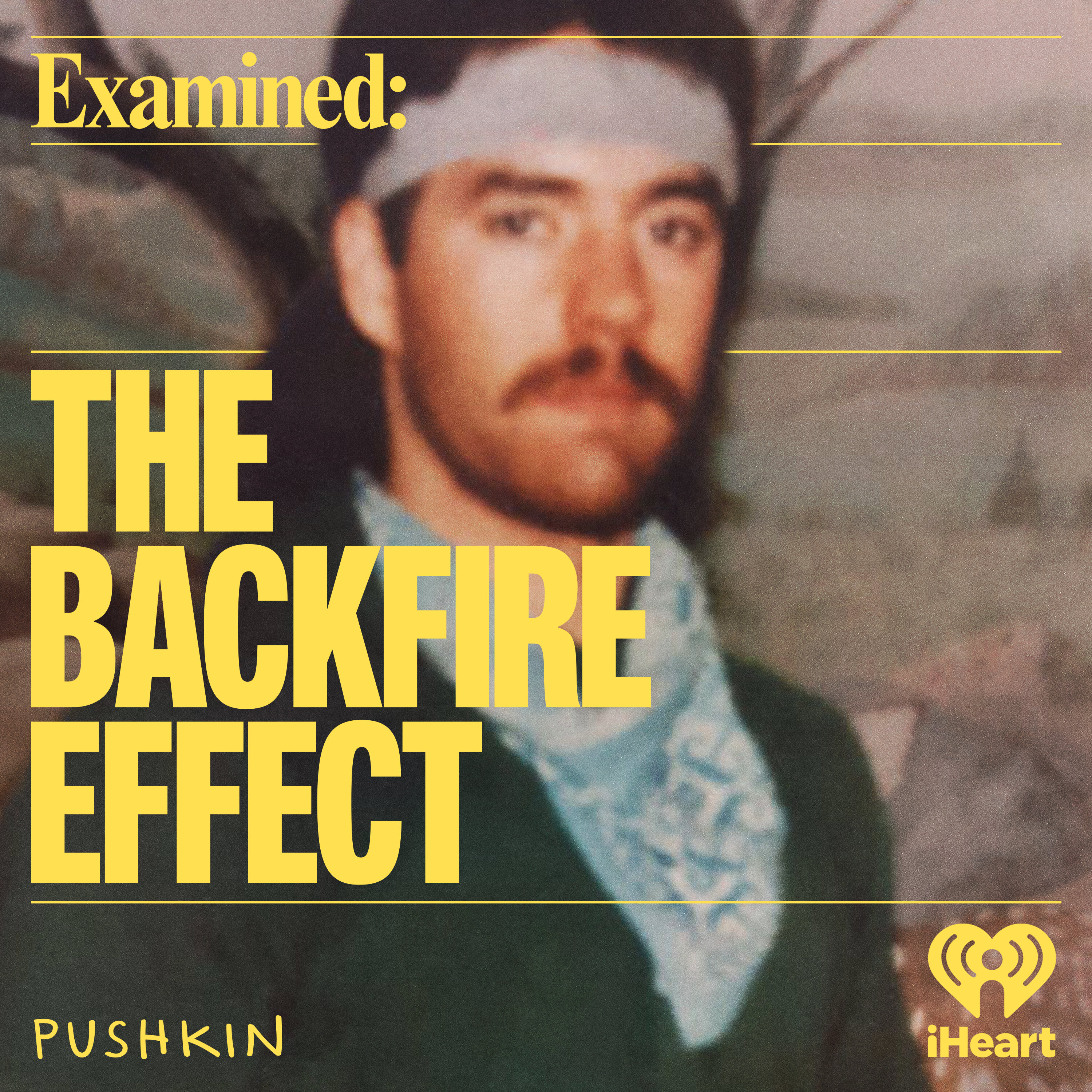
Lidia Jean's been working on a new project — Examined: The Backfire Effect. It asks what happens when a system decides it already has an answer, when admitting a mistake feels harder than living with one, and when closing a case starts to matter more than getting it right. Examined: The Backfire Effect tells the story of Scott Macklem’s death, a murder that happened nearly 40 years ago in the parking lot of a community college in Michigan. The police quickly found their suspect. There was just one problem: The man they claimed did it was nowhere near the scene of the crime, and he had the alibi to back it up. Host Josie Duffy Rice — a journalist, former lawyer, and expert in the criminal legal system — tells a story of how justice and prosecutorial misconduct works in America, and why sometimes a case is about much more than innocence versus guilt.
Find more episodes of Examined: The Backfire Effect wherever you get podcasts. Binge the full series now with a Pushkin+ subscription — sign up on the Examined Apple show page or at pushkin.fm/plus.
See omnystudio.com/listener for privacy information.
Get every episode summarized
Each time The Chinatown Sting publishes, we email you a written briefing from the transcript — the topics, who appeared, and any specific claims, with the ad reads skipped.
Email me new episodesFree for 3 shows. No card needed.
Hosts & guests
Transcript ready
827 searchable segments. Every word is indexed and playable.
Full transcript
The Chinatown Sting — The Good Cop | From Examined: The Backfire Effect. Machine-transcribed; use the interactive transcript above to jump the player to any line.
This is Jacob Goldstein from Business History. When the internet arrived, most people used it to look things up. Others saw what it could really do. The same is true with ChatGPT. ChatGPT work goes beyond answering questions. Give it a goal plus things like notes, files, feedback, data, or project plans, and it can help create a brief, analysis, deck outline, tracker, or workflow. You stay in control reviewing the work and choosing the final result. Put ChatGPT to work on your most ambitious ideas and projects. Get started at chatgpt.com by selecting Work Mode, available on Plus and Pro plans. This is Malcolm Gladwell from Medal of Honor Stories of Courage, this episode is sponsored by Navy Federal Credit Union. They offer great rates and pre-approvals that are good for 90 days. Plus, you could even get $200 when you refinance your auto loans from another lender with Navy Federal Credit Union. Learn more at navyfederal.org slash auto loans.
Navy Federal Credit Union. Navy Federal is insured by NCUA, credit and collateral subject to approval. Refinance loan must be at least $5,000 to be eligible for the $200. Terms and conditions apply. Visit navyfederal.org slash auto loans for details. Let's talk about something everyone has an opinion on, healthcare. We all know it should work better than it does. Optum believes that too, and they're trying to improve it. They're helping healthcare teams and pharmacy services work together, like bringing primary care and prescription drugs straight to your home so you can stay on top of your health. Optum's also building technology that connects the whole healthcare system so it can better take care of the whole person, you. Optum is making healthcare work as one for everyone. See what Optum's up to at Optum.com. Pushkin. It's Lidijin caught here.
I'm jumping back into the Chinatown Sting to tell you about another project that I've been working on. It's a new podcast called Examined, the Backfire Effect. And like the Chinatown Sting, it's a look at the ripple effects that one court case can have. How they extend far beyond the people directly involved at the time. Examined, the Backfire Effect starts in the fall of 1986 when a student is murdered in broad daylight and port here on Michigan. The police quickly found their suspect and prosecutors painted him as a dangerous mastermind. But there was one problem. He had been nowhere near the scene of the crime. And there were multiple eyewitnesses who could prove it. In the Backfire Effect, the host, Josie Duffy Rice, tells the story of this strange and complicated man who has now been in prison for over four decades for reasons that get more complicated, the closer you look.
Here is episode one. You can find more episodes of Examined, the Backfire Effect, wherever you listen to podcasts. And if you've got to have the whole story now, you can binge the whole series, add free, with a Pushkin Plus subscription. Sign up on the examin's show page on Apple or at pushkin.fm-plus. Depending on how old you are, maybe you've never heard the sound of a car back firing. That's what happens when a little bit of gasoline reaches the exhaust system and suddenly ignites. These days, cars don't backfire that much, but that used to happen all the time. You'd be in a parking lot somewhere, and the loud bang would startle you. That's why, on the morning of November 5, 1986, when a loud crack whipped through the cold air,
people nearby didn't think much of it. You know, we didn't even discuss it. Oh, a car back there. There was no discussion. I could have scored the eye of the back, but it felt like a car back firing. As it pulled into parking lot. You know, I remember this, the noise. Which, by the way, wasn't unusual. Those voices are some of the people who were in the area that day. Max, Kathy, and Sherry. Day and a few others were in the parking lot, the St. Clair County Community College in Port here on Michigan. Some were students, some were employees. All were unaware, but they were about to take on a new identity. Witness. This is where our story starts. In the easternmost city in Michigan, spitting distance from Ontario, Canada. Port here on lives near the intersection of Lake here on in the St. Clair River. And a few blocks from the waterfront
sits St. Clair County Community College, where SE4 as the locals call it. The St. Clair County Community College is spread over an attractive 26-acre campus in Central Port here on day and evening classes. That was a clip from a very 1980s promotional video. Downtown Port here on is pretty with a low slung brick buildings and the Christmas lights at night. But on the morning of November 5th, 1986, it was gray and chilly and dreary. A layer of clouds coating the sky. The parking lot of SE4 was full. Most students were already in class, but there were a handful of struggling kids. They were adults technically, sure. But really just kids falling and locked up with their friends a bunch of 18, 19, 20-year-olds who heard not a car, but a gunshot. You don't expect to hear a shotgun blast in downtown Port here on when you're walking through the college parking lot.
You just don't expect that. The gunshot that no one realized was a gunshot was a first thing people did not could not recognize. But there were other things too, like the scream. I'll tell you what I didn't remember. I heard the gunshot and it was so close. And then I heard the death-curdling scream of that young man. And I froze. Sharon was on her way to work at SE4 that day. In my head, I think it... I don't know what I expected. Like it couldn't be real. I proceeded and I went on into the college. There was another student to know who he was. And I just made a comment about... Oh my God, I hope someone was just screwing around out there,
but that sounded so real. All he said was, yeah, dead. This whole series of events probably has taken me longer to describe than it occurred in the moment. A couple of minutes, Max. But that one moment would still haunt these witnesses and many others in Port here on. Almost 40 years later. I'm Jesse Duffy-Race, and this is the Backfire Effect. Episode 1, The Good Cop. I'm not from Michigan.
I'm from Georgia. I'm a journalist, and I used to be a lawyer. In both careers, I focused almost exclusively on the criminal legal system. The story I'm going to tell you, the one that has been rattling around in my brain for a couple of years now, that has taken up thousands of hours of my mental real estate. The story that I've honestly wanted to shake, just to loosen its grip on me a little bit, is not the kind of story I usually tell. But it grabbed a hold of me. There's a man in prison right now who maybe shouldn't be there. And he's a complicated man, a brilliant man, a strange man, a man unlike anyone I've ever met before. But I'm getting ahead of myself. On November 5, 1986, there was the Backfire, there was the Scream. But as it turns out, the Scream didn't really set off alarm bells either. Kathy later told authorities that it did not sound like a yell
that a person would make if they were in trouble. Wanda and Jean both saw something weird after they heard it. Wanda, quote, saw a man bend over and grab himself. Then he ran between two cars. She thought he was joking, so she headed to horticulture class. Jean heard someone cry, help me. Heard him say, oh God, I'm hurt. She apparently said that she saw a man, quote, walking by his vehicle in a crouched over position, but felt in her mind that this was just one of the college students putting on some sort of act. So she too just went inside. A number of witnesses would later tell investigators about another strange thing. A person wearing a red nylon ski jacket lying next to a car. Most of them just assumed it was someone working on their vehicle, but not an 18 year old student named Max. His story would be different. I was always never late, and I was late that day, so I was in a rush.
I was surprised that there was a parking spot that close to the main buildings, you know, I mean like that being late, usually that never happens. The parking spot that Max found was right next to a plimuth to resmail. I pulled in, grabbed my books as I walked past, kind of fast walked toward class. I remember seeing legs hanging out from under the car. And I thought that was kind of strange. And so I stopped just kind of backed up and said, you know, hey, you need any help? You didn't respond. And so I kind of edged up along the side of the car and said, you hey, you okay? And then I heard kind of what I heard of mone. And so then I kind of came up to the front of the car there, and he was lying on the ground there. Max would later learn the man on the ground was a student named Scott McLem. And as Max tried to help him, he realized that Scott had been shot.
Another student sees Max trying to turn Scott's body over. I just remember looking at him and I remember saying go across the street to the fire department and get help. And this is before cell phones and, you know, all of that and everything. So he actually had to run across the street. Max tried to do what he could to keep the victim alive, using his clothes to pack the wound. But it was a losing battle. I remember taking off my jacket and stuffing it in the side, trying to keep the blood from them. I looked back and I figured I was what could the document do. Within minutes, the fire department and the paramedics arrived. By the time police officers got there, the EMTs had already loaded Scott's body under the structure. They pronounced him dead about half an hour later. But Max suspects he was the last person to see anything like life in Scott McLem. I was giving him CPR and I remember he kind of, this kind of, all of the taking the movies, you know, what somebody passes away. He kind of like, it just kind of like the body just kind of went limp.
You know what I mean? And he had kind of tilted back. It just might be, I think he was already dead by the time the police got there. This is Jacob Goldstein from Business History. Imagine Henry Ford trying to create the assembly line. He had factory plans, production schedules, supply information, research, and ideas coming from all directions. His team spent years studying how to make the process work. Now, imagine having chat GPT work. Chat GPT work can help with big projects that have lots of steps. You give it the goal along with real information like notes, files, reports, feedback and project plans. It can use approved apps, connected tools and files to help turn all of that into something useful. A plan, an analysis, a tracker, a presentation outline,
or a workflow you can keep improving. And you stay in control. You give direction, review the work, approve actions, and choose the final result. Would Henry Ford have built the assembly line faster with chat GPT? We'll never know. Ford didn't have chat GPT. You do. Put chat GPT to work on your most ambitious ideas and projects. Get started at chatgbt.com by selecting work mode available on plus and pro plans. OK, let's talk about something everyone has an opinion on, health care. Everyone can agree that something this important should work better than it does. Turns out, patients aren't the only ones who think that. Optum does too, and it's why they're working day in and day out to improve it. Never heard of Optum? Think of them as the engine of health care. They bring together clinicians, care teams, and the way you get in manager medications. And they use data and technology to help the health systems we all use work better as a whole, not as disconnected pieces.
Because they connect all these pieces, Optum can take a more whole person approach to health care, like helping patients connect in mental health support quickly, and bringing primary care and prescription deliveries straight to their home so people can stay on top of their health. Those things make a big difference. And they show that Optum really is trying to make health care better, that their clinicians, pharmacists, data scientists, engineers, everyone is putting in the work to improve it every day. See what Optum's up to at Optum.com. Running a small business means every higher matters. A bad hire can cost you time, money, and momentum. A good hire? They can help grow your business. But finding great talent isn't easy, especially when you don't have the time or resources to sift through piles of resumes to find the right fit. That's why LinkedIn built Hiring Pro. Your new hiring partner that screens candidates for you, so instead of sorting through applications, you spend your time talking to candidates who are actually a good fit.
You know what this makes me think of? My beloved Boston Celtics. Three years ago, they chose a new coach, Joe Mazula, who was like the third or fourth assistant off the bench, never had any MBA coaching experience. Everyone was expecting him to fail. And you know what? Turns out he was one of the best coaches in the game. And without him, there's no way the team would have made the playoffs this year that'll only be contenders for the finals. Sometimes the right hire makes all the difference. With Hiring Pro, you can hire it with confidence, knowing you're getting the best talent for your business. In fact, those hiring with LinkedIn are 24% less likely to need to reopen a role within 12 months compared to the leading competitor. Join the 2.7 million small businesses using LinkedIn to hire. Get started by posting your job for free at LinkedIn.com slash pushkin. Terms and conditions apply. In my field of work, if you're lucky,
or maybe unlucky depending, you feel drawn to a story. And I was drawn to this one, this series of events that started with Scott McLean's tragic death 40 years ago. Like I said, it's not the kind of story I normally tell. I've reported on juvenile asylum in Alabama, corrupt cops in Kansas, battered women serving time in Louisiana. I tend to focus most of my work in the South where I live. And as a black journalist, my stories are often about black people. In other words, usually when I do a story, I identify more with the subjects. It's not that I see myself reflected in them exactly, but that they're familiar to me in a way. At times it's been kind of strange to be so focused on this story about these white people in a small town in Michigan. One reason that this story, of the craziest ones I've heard in my career, has captivated me is because I think it says
a lot about the system, but maybe even more about us, about you, about me. I've come to an uncomfortable conclusion over the past few years that I, and I would guess you, are capable of more than I would like to believe. Scott McLean was 20 years old in 1986. In a couple of pictures I've seen of him, old snapshots from basketball games and high school yearbooks. He's tall with a nice smile and angular features, an athlete, one of two boys, the prize son of Gary and Patricia McLean. At Croswell Lexington High School, where Scott graduated in 1984, he was captain of the golf and basketball teams and was voted best dressed and most popular. Here's a former classmate of Scots. He was like maybe the homecoming king or in the parade
and he was very good looking, very attractive. Scott was from a small town about half an hour outside of Port Huron called Croswell Michigan, where his father was mayor. The teachers liked him. I think it was that he was from a well-known family, maybe in Croswell. And you could kind of tell the kids who came from Croswell, good families and the kids who didn't. And I remember him being treated as though he were, you know, like a Croswell, good family. After he graduated high school, Scott had started at SC4, where he was planning on getting his associates degree in business. He worked part-time at a men's clothing store, where he made close to minimum wage. He liked bird hunting. People said he had great manners and a kind heart. One old friend called him a goody-tooth shoes. After he died, there was quote after quote from his high school teachers and a local barber.
All American boy, they said, fantastic young man, a great kid, happy go lucky. The kind you want your daughter to bring home. Speaking of which, Scott had just gotten engaged the month before he was killed. His fiance's name was Crystal Merrill. Crystal and Scott had grown up in the same area. They've been friends for years, gone to the same schools growing up. They've known each other since kindergarten. She'd spend her childhood on a farm, three or four hundred acres, where they raised dairy cattle and beef cattle. People described Crystal as quiet, hardworking, family-oriented, kind of like the girl next door. They started dating near the end of high school and continued on and off through the beginning of college. They'd broken up in early 1986, but they'd reconciled a few months later. At the time of the murder, Crystal was pregnant, still in her first trimester. They were planning to get married that coming January.
I suspect you won't hear much in this podcast from Scott's family or crystals. I've reached out and will keep trying, because I'm interested in hearing more about who Scott was, but his family has been reticent to talk, which I get to have your child killed like that, as you're preparing for him to become a father himself, to go from planning a wedding, to lowering him into a grave, and then to be asked to rehash it all these years later. I get why they don't wanna relive all this. The End Let's return to the parking lot and the witnesses at SC4 in court here on. After Scott is shot in Mac's tries to save him and the EMTs try CPR before they realize the heart-sinking clarity that such a job requires that it was a lost cause. At the boy, and he was really just a boy, was dead. After they put Scott's body on a stretcher
and raced to the hospital, the witnesses are left shell-shocked, overwhelmed, confused. And it turns out the witnesses had witnessed very little. No one had seen Scott drive up, but he just pulled in. He'd missed his first class that morning. No one knew where he'd just been, no one knew where he was headed, as he tried to get in his car, but he just got out. But there was this one thing. Even before they realized that someone had been shot, a few witnesses said they noticed a car drive out of the parking lot quite fast. And then I do remember hearing a car racing away. It's a car going because in parking lots, cars usually don't go very fast. And then I heard a car going kind of going fast. I remember seeing a car racing out of the parking lot. I remember seeing a guy leave in the parking lot,
leave the car drive fast too quickly for parking lot, speed, and exit the parking lot. That morning, at least three witnesses described this car in generally the same way. They described the color as pinkish tan, a reddish brown or light brown. Imprecise, yes, but at least in the same color family. And they described the car in the same way, a small compact, a hatchback. Imagine a Prius, but smaller and more boxy. So a small pinkish brownish reddish hatchback and maybe a man driving it? No one got a great look at the guy, but they say he was a white male, estimates anywhere from 18 to 25 with dark hair. Some say he's wearing a ski mask and a green army fatigue jacket. Some mention facial scruff, others don't. Two people say he's wearing a knit cap, another person says he's not.
He's in the car so they can't tell how tall he is. The man is described as trying to conceal his face or glancing in his rear-view mirror to see what was going on with the victim or alternatively laughing and grinning. It's worth noting too, there isn't total agreement here, even on the basic descriptions. One witness later recalled a blue car. Another one said he thought he saw a woman driving, not a man. And more than one person mentions a woman possibly blonde, possibly wearing a red knit sweater, standing near Scott McLean after he was shot. So now you have the beginnings of a strange story. There's so much more that's weird about this murder and everything that comes after. So many lives that will be upended and not just those of Scott's family and friends.
This is Jacob Goldstein from Business History. Imagine Henry Ford trying to create the assembly line. He had factory plans, production schedules, supply information, research, and ideas coming from all directions. His team spent years studying how to make the process work. Now, imagine having chat GPT work. Chat GPT work can help with big projects that have lots of steps. You give it the goal along with real information like notes, files, reports, feedback, and project plans. It can use approved apps, connected tools and files to help turn all of that into something useful. A plan, an analysis, a tracker, a presentation outline, or a workflow you can keep improving. And you stay in control. You give direction, review the work, approve actions, and choose the final result. Would Henry Ford have built the assembly line faster with chat GPT? We'll never know. Ford didn't have chat GPT. You do. Put chat GPT to work on your most ambitious ideas and projects. Get started at chatgpt.com by selecting Work Mode,
available on plus and pro plans. OK, let's talk about something everyone has an opinion on. Healthcare. Everyone can agree that something this important should work better than it does. Turns out patients aren't the only ones who think that. Optum does too. And it's why they're working day in and day out to improve it. Never heard of Optum? Think of them as the engine of healthcare. They bring together clinicians, care teams, and the way you get in manager medications. And they use data and technology to help the health systems we all use work better as a whole, not as disconnected pieces. Because they connect all these pieces, Optum can take a more whole person approach to healthcare, like helping patients connect in mental health support quickly and bringing primary care and prescription deliveries straight to their home so people can stay on top of their health. Those things make a big difference. And they show that Optum really is trying to make healthcare better, that their clinicians, pharmacists, data scientists, engineers, everyone
is putting in the work to improve it every day. See what Optum's up to at Optum.com. Running a small business means every higher matters. A bad hire can cost you time, money, and momentum. A good hire? They can help grow your business. But finding great talent isn't easy, especially when you don't have the time or resources to sift through piles of resumes to find the right fit. That's why LinkedIn built hiring pro. Your new hiring partner that screens candidates for you, so instead of sorting through applications, you spend your time talking to candidates who are actually a good fit. You know what this makes me think of? My beloved Boston Celtics. Three years ago, they chose a new coach, Joe Mazula, who was like the third or fourth assistant off the bench, never had any MBA coaching experience. Everyone was expecting him to fail. And you know what? Turns out he was one of the best coaches in the game. And without him, there's no way the team would have made the playoffs this year that'll only be contenders for the finals.
Sometimes the right hire makes all the difference. With hiring pro, you can hire it with confidence, knowing you're getting the best talent for your business. In fact, those hiring with LinkedIn are 24% less likely to need to reopen a role within 12 months compared to the leading competitor. Join the 2.7 million small businesses using LinkedIn to hire. Get started by posting your job for free at LinkedIn.com slash pushkin. Terms and conditions apply. St. Clair Michigan is a tiny town, about four square miles, five, six thousand people, over 90% white. And on this November afternoon, the drive there is something close to beautiful. It's not as cold as I, a resident of Atlanta, expected it to be. You would not believe the one or clothes I bought for the strip, fleece line leggings, thick wool socks.
Just a few blocks after we pull off the long stretch of highway, where fallen leads have piled up along the edges. We find ourselves in farm country. Think I just couldn't act strong. I think it might be the one with the red truck. So reason I feel like he has a red truck. Yep, here's his barn. I'm with Joshua Sharp, another journalist from Georgia, who has spent plenty of his own time wrestling with this story. I'm an investigative journalist. I am based in Detroit, Michigan, where I have lived for going on for two years now. On this Tuesday afternoon, we are on our way to visit a retired police detective named Herb Wellsar. Herb's around 70 years old, and he has lived here in this buttery yellow house, essentially his whole life. It was kind of a strange thing for me
and Josh to meet Herb in person after all this time. After talking to him on the phone and reading over his research so much these past few years. I don't think I'd even seen a picture of Herb before we got there. But I knew very well and I've been reading his years of his work. But Herb on the phone, I always just he felt like this sort of gentle grandfatherly figure, and then he show up and that is exactly who we found. Hello, truck companies. I give them a treat every afternoon. So that's what they're waiting for. I see you here. Now over here, I'll show you inside the barn. They actually built the barn before they built the house, my great grandparents. Oh, wow. Priorities. In the episodes to come, you'll be hearing a fair amount about the port here on police department. It is not a large operation, not now and not back in 1986.
Back then, it had around 50 officers, mostly men, in a town of around 35,000 and shrinking. One of those officers was Herb Welser. I went here to St. Clair High School and graduated in 1973. And at that time, I still love sports. I'm really into sports and I wanted to be a gym teacher. But I could see there really wasn't any openings, you know, in gym teaching. So I had three cousins that were police officers. And I thought, well, maybe I should try law enforcement. Herb, like a lot of people in this story, graduated from SE4. And it was hired as a cadet in 1974 at the Portian Police Department. And then it was hired as an officer in 1976. I was the youngest officer. The Portian Police Department had ever hired.
Just after I was 21, I was hired. Portian was not exactly crime written back then, except, of course, for the Canadians. We had a lot of persons from Canada that came over because at that time, the drinking age was 18 here in Michigan. And so a lot of Canadians would come over and get into fights in the bars and portian. So a lot of those calls. Herb worked nearly 30 years as a portian on police officer. On the wall in his office, it's a plaque with all his badges. A sign of the years of his life he gave to the department. So as a patrol officer, I was there for about seven years. And then I was a detective for about five years. Uniform sergeant for a few years. Uniform lieutenant for a few years. And then the last three years, detective lieutenant.
I've spent my career scrutinizing law enforcement. Herb spent his and the throws of it, and he loved it. He says he believes strongly in the moral imperative of the job that his role was to keep the community safe, to behave ethically at all times. And every so often, he'd hear whispers about the Scott Maclam case. He was never assigned to it. But he remembers when the call came into the station. I remember the radio call that it came out as an injured person there in the parking lot. And then later on in the day, I heard the murder had occurred. So I was working that day. And it wasn't long before the murder was all over the news. The story kept growing bigger and bigger. And the rumors started. After Herb retired from the police force in 2005, he decided to get a private investigator's license.
He started looking into the Scott Maclam case, hoping to find something that would vindicate law enforcement. The more I kept reading that stuff, I thought, man, there's more red flags that just kept coming up over and over. Herb began to realize that something had gone terribly wrong. And even though he didn't cause the problem, he felt it was his responsibility to help fix it. So that's really why that I became involved in this is just to do the right thing. And I knew it would come at a cost. Herb was going to be investigating the work of his former colleagues, his friends. Some of the audio you'll hear during this series comes from interviews he's done. He showed us the boxes and boxes of documents that he's collected over the years, sitting in his basement. All of those files there on that rack and then all of them to the well. And this is my to-do list right there.
Oh, my gosh. Well. And Herb's prediction that this investigation would come at a cost was correct. And not just because he's been doing it on his own dime all by himself for years. He's done insane amount of work. And once I realized that all of that's there, I'm thinking, OK, maybe actually wait a second. Maybe my god, maybe Herb's already figured it out and nobody including Herb has put it all together because I mean, I couldn't tell you how many interviews he's still. In psychology, there's a term called the backfire effect. A concept coined 15 or so years ago, though the ideas that undergird it have existed for much longer. It says that correcting a false belief can sometimes strengthen it. It's kind of controversial in social psychology, actually.
But the idea survives because it points at something real and much older than the term. Rational human behavior is not the same thing as predictable human behavior. If we were purely rational, our beliefs would shift slightly in accordance with new data. Calculators are rational. Humans are not. That's one of the most beautiful things about being human, our irrationality, our hopes, our perceptions, our convictions, are the prism through which we often function. We do not hold our deepest beliefs the way I calculate our process as numbers. We hold them the way we hold the people we love in the picture we have of ourselves as things that would cost us something to give up. Another variation of the backfire effect, one that sounds prettier, more romantic, is called belief perseverance. Belief perseverance is woven throughout this case, you'll find out. This is a show about everyone for whom the cost of being wrong
had simply grown too high to pay, predictable incentives leading to monstrous outcomes. After Scott's death, everyone in Port Huron is left wondering who kills a kid like this. The people who knew him couldn't make sense of it. As a teacher at his high school put it, things like this don't happen to such nice people. And who kills someone this way? Who does it in the parking lot at 9 a.m.? I've been to this parking lot. It's big. It sits at a busy intersection surrounded by buildings and houses. To commit a crime here is so risky, so impulsive. It's frankly stupid. But it's possible that the one person who might have been feeling worried that day in the parking lot was Scott. Later, people would say that Scott had been acting nervous,
preoccupied, concerned for a while. He'd been telling people he was being followed that someone was out to get him. He allegedly told his manager at work that two men had come into the store a couple of times looking for him. One time, he said he confronted them and they left. Another time, he hid. Scott told other people too, a couple of his friends, one of his professors. Crystal, his fiance, said two men had followed them home the night after Halloween. Plus, stuff had been stolen out of his car. Someone let the air out of his tires. But for some reason, as far as I can figure, Scott never pointed the finger at anyone. He knew them, he told people. But he didn't seem to tell anyone the name of who he thought was harassing him. There were other things going on with Scott. School wasn't going great. His cumulative GPA was about a 1.5.
Already, he was in his third year at the two-year business program and nowhere near to graduating. Part of the problem it seemed was that he rarely showed up. If he wasn't at school, he was at work, Crystal would later say, but he wasn't really at school. He'd missed 21 days at his accounting class, in 18 of algebra. Something was up. The question is, was it connected to the way that he died? Scott's father, Gary McLem, was not only mayor of their town. He also ran the insurance agency where Crystal worked. That's where she was when the police called around 10 a.m. on the morning of November 5. Crystal said that she didn't think anything of it. At her job, sometimes cops would call and tell you about an accident or something. But then she heard Gary McLem say, is he hurt very bad? And knew it was about Scott. He ran out, didn't tell her what happened.
But soon after, she got a call from a friend who told her that Scott had been killed in the parking lot, the VSC4. Scott's parents in Crystal went to the hospital to wait. Soon others came Crystal's little sister. Scott's boss at the menswear store. There, they learned that the worst had happened. That Scott was dead. In the waiting room in the midst of their collective shock, they were joined by two officers from the port here on police department. They were starting their homicide investigation, and they began to ask questions. That's when the trajectory of another life was changed forever when they heard about a man who might be responsible. A drifter, an outsider, a suspect. Coming up on the backfire effect.
The policeman came up and said, why do you have blood all over you? As I'm walking down the driveway, I see there's like five cars lined up. And then I'm really freaking out. The whole house was surrounded with guys in black. And rifle. I'm like, who is this? What are you doing in my home? Tell me who this is right now. I'm calling the police. Because why I'm the police. The backfire effect is hosted and reported by me, Josie Duffy Rice, additional reporting by Joshua Sharp. It's produced by Lydia Jean Cot with additional production support from Trina Manino. Our editor is Julia Barton, our executive producers our Amy Gaines McQuade and Jacob Smith. Our music was composed by Daniel Walter, sound design and additional music by Jake Gorsky. Our fact checker is Lauren Dispoly and our show art was designed by Sean Carney. Special thanks to a few more people at Pushkin who made the backfire effect possible.
Greta Cohn, Christina Sullivan, Eric Sandler, Morgan Ratner, Kira Posey, Jordan McMillan, Jake Flanagan, Owen Miller, Sarah Bruguer, and Karen Shakurgy. One last thing before you go, you know that feeling when feedback, notes, and data are coming in from every direction, chat GPT work can make sense of it all, turning scattered inputs into ready to review work. With your permission, work in chat GPT can gather context from apps and files, summarized incoming messages, rebuild decks, and help finalize high quality documents for your team or clients. Stay in control as you move from a goal to polished work faster with chat GPT work. Download the chat GPT desktop app today and take on your most ambitious work.
Let's talk about something everyone has an opinion on, healthcare. We all know it should work better than it does. Optum believes that too, and they're trying to improve it. They're helping healthcare teams and pharmacy services work together, like bringing primary care and prescription drugs straight to your home so you can stay on top of your health. Optum's also building technology that connects the whole healthcare system so it can better take care of the whole person, you. Optum is making healthcare work as one for everyone. See what Optum's up to at Optum.com. This is Jacob Goldstein from What's Your Problem. Running a business is hard enough. Don't make it harder with a dozen apps that don't talk to each other. One for sales, another for inventory, a separate one for accounting, that's software overload. ODO is the all-in-one platform that replaces them all. CRM, accounting, inventory, e-commerce, HR, fully integrated, easy to use, and built to grow with your business. Thousands have already made the switch.
Why not you? Try ODO for free at odo.com. That's odo.com.
More episodes
More from The Chinatown Sting

Petra Mathers and Her Michael | From Death of an Artist
The Chinatown Sting

Grandson of a Paper Son
The Chinatown Sting

Life as a Flying Dragon
The Chinatown Sting

Episode 6: A Sense of Order
The Chinatown Sting