scienceJul 7, 202130:20pending
The Earth has a Cycle of Geological Activity
About this episode
The Astronomy, Technology and Space Science News Podcast.
SpaceTime Series 24 Episode 77
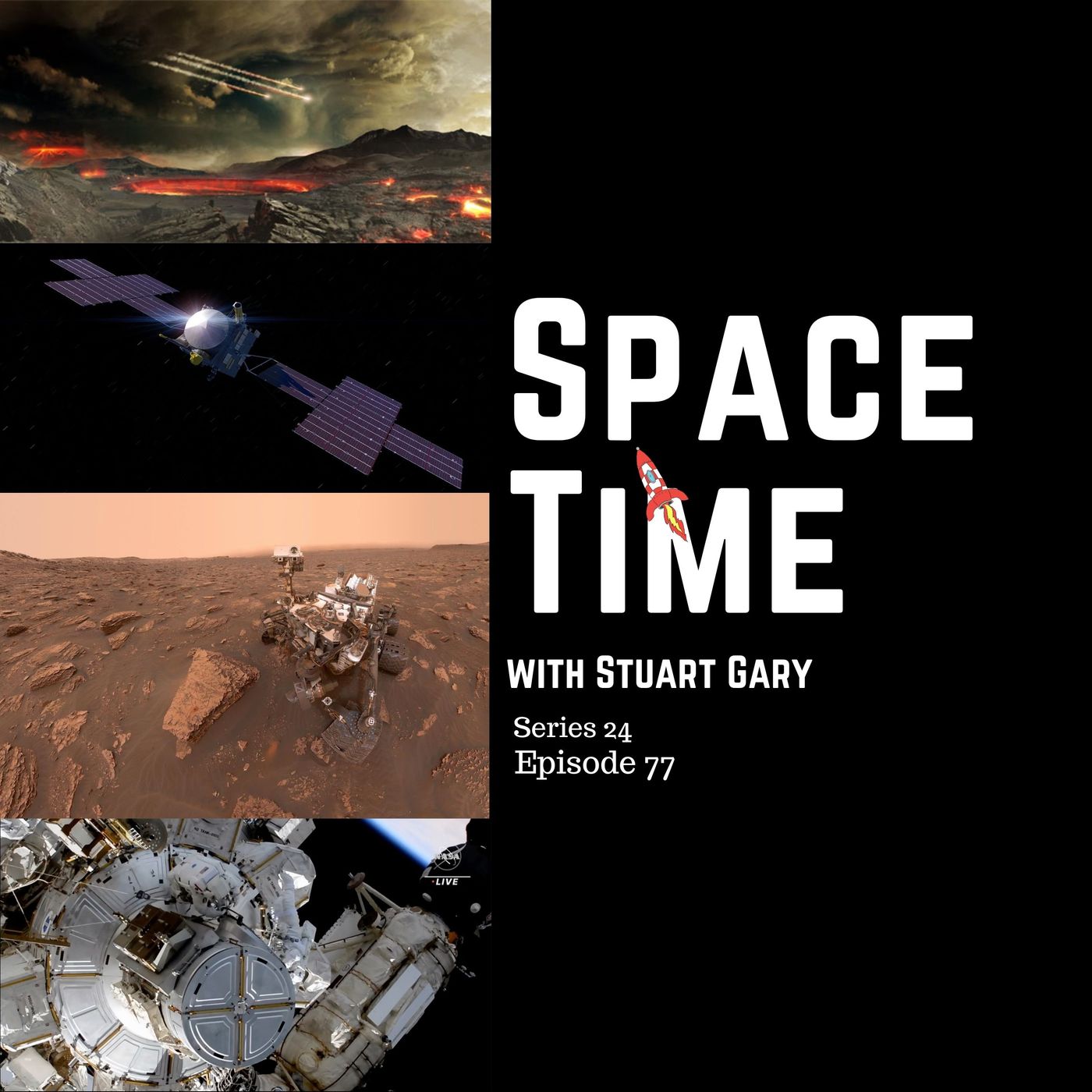
*The Earth has a cycle of geological activity
A new study claims geologic activity on Earth appears to follow a 27.5-million-year cycle, giving the planet a pulse.
*New studies suggest Asteroid Psyche isn’t what scientists are expecting
The widely studied metallic asteroid known as 16 Psyche was long thought to be the exposed iron core of a small planet that was smashed apart during the earliest days of the solar system.
*Solving one mystery of Martian methane
Why do some science instruments detect the gas on the Red Planet while others don’t?
*More power for the International Space Station
Astronauts successfully install a new pair of solar panels on the International Space Station.
*The Science Report
New computer modelling shows the COVID-19 virus is most ideally adapted to infect humans.
A new human species which could be homo sapien’s closest relative yet.
267 million people worldwide now live on land at risk from sea-level rise.
A little milk chocolate every day may actually help the body burn fat and decrease blood sugar levels.
Alex on Tech: Microsoft new Windows 11
For more SpaceTime and show links: https://linktr.ee/biteszHQ
Become a supporter of this podcast: https://www.spreaker.com/podcast/spacetime-with-stuart-gary--2458531/support.
SpaceTime Series 24 Episode 77
*The Earth has a cycle of geological activity
A new study claims geologic activity on Earth appears to follow a 27.5-million-year cycle, giving the planet a pulse.
*New studies suggest Asteroid Psyche isn’t what scientists are expecting
The widely studied metallic asteroid known as 16 Psyche was long thought to be the exposed iron core of a small planet that was smashed apart during the earliest days of the solar system.
*Solving one mystery of Martian methane
Why do some science instruments detect the gas on the Red Planet while others don’t?
*More power for the International Space Station
Astronauts successfully install a new pair of solar panels on the International Space Station.
*The Science Report
New computer modelling shows the COVID-19 virus is most ideally adapted to infect humans.
A new human species which could be homo sapien’s closest relative yet.
267 million people worldwide now live on land at risk from sea-level rise.
A little milk chocolate every day may actually help the body burn fat and decrease blood sugar levels.
Alex on Tech: Microsoft new Windows 11
For more SpaceTime and show links: https://linktr.ee/biteszHQ
Become a supporter of this podcast: https://www.spreaker.com/podcast/spacetime-with-stuart-gary--2458531/support.
Get every episode summarized
Each time SpaceTime with Stuart Gary publishes, we email you a written briefing from the transcript — the topics, who appeared, and any specific claims, with the ad reads skipped.
Email me new episodesFree for 3 shows. No card needed.
Hosts & guests
No transcript yet
This episode has not been transcribed. Request it and it moves to the front of the queue.
More episodes
More from SpaceTime with Stuart Gary

Comet Births and Neptune's Secrets
SpaceTime with Stuart Gary
Sep 11, 202622:27completed
Molten Planets and Solar Storms: Unveiling Cosmic Wonders
SpaceTime with Stuart Gary
Sep 9, 202634:16completed

Dark Matter Signals and Lunar Origins: Exploring the Universe's Mysteries
SpaceTime with Stuart Gary
Sep 8, 202625:39pending

Discovering Blazars and SpaceX's New Spaceport
SpaceTime with Stuart Gary
Sep 4, 202618:54pending