About this episode
Get every episode summarized
Each time Today in Focus publishes, we email you a written briefing from the transcript — the topics, who appeared, and any specific claims, with the ad reads skipped.
Email me new episodesFree for 3 shows. No card needed.
Hosts & guests

Transcript ready
250 searchable segments. Every word is indexed and playable.
Full transcript
Today in Focus — The brilliant students the UK doesn’t want. Machine-transcribed; use the interactive transcript above to jump the player to any line.
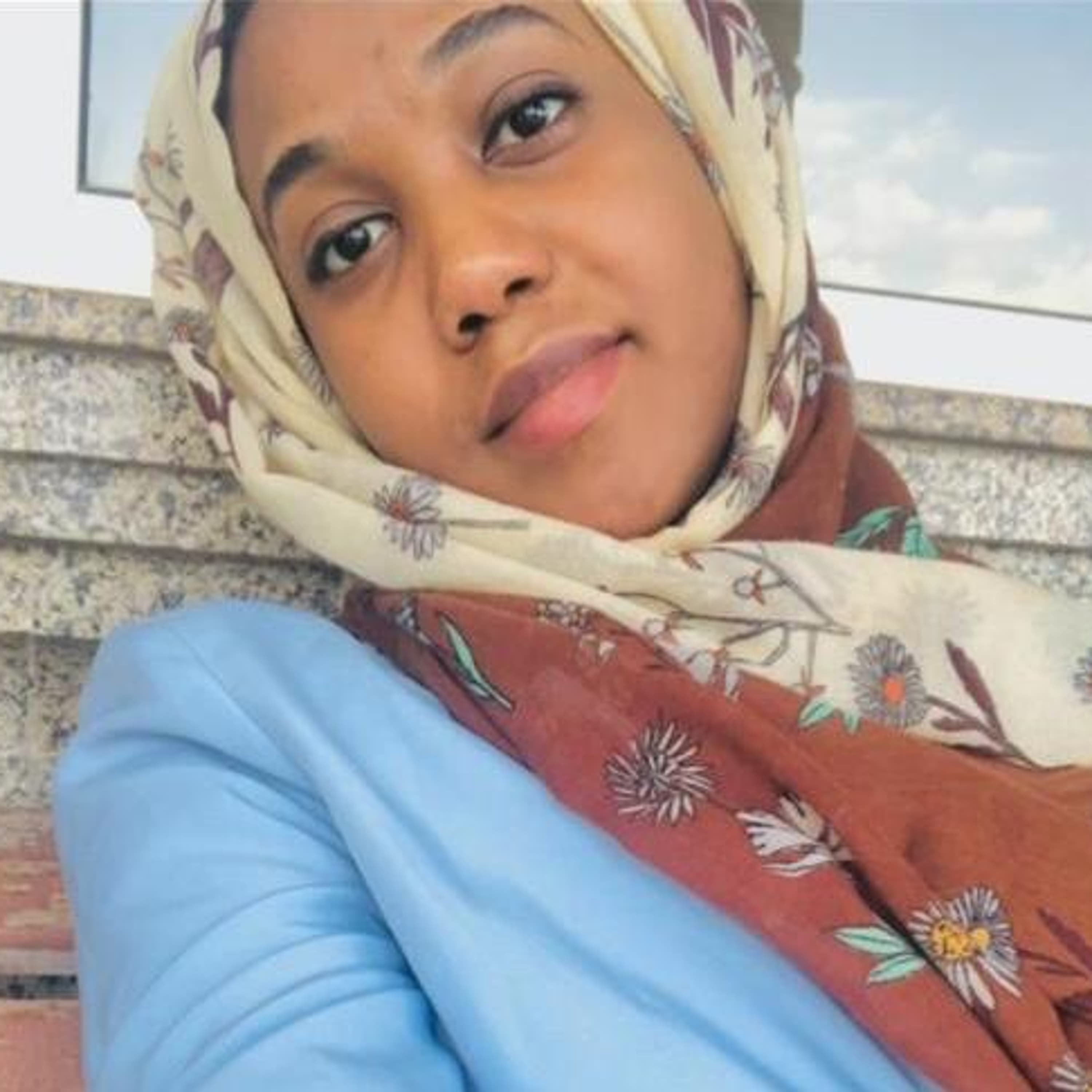
This is the Guardian. Today, the students banned from studying in Britain. I am Shahir Sadaat, a software engineer from Afghanistan. I am 26 years old and I am from Tachhor Province. Ever since she was a teenager, Shahir Sadaat was obsessed with tech. The technologies are barrier-breaking, so that's why I choose to get my degree in software engineering and computer science. She was in her final year of the degree in software engineering at Kabul University, when the Taliban took over. That was in the summer of 2021. It was my last year at university, and the day that Taliban took control of Afghanistan, I was at university's hostel.
It was really a moment that I can't forget the moment that I felt that we lost everything that we wouldn't be able to continue education or to finish and complete our degree. At that moment, I was crying, seeing each of my roommates, and I knew that I wouldn't be able to see them again. So, the moment I left the university, I was really hopeless. Against the odds, Shahir managed to complete her undergraduate degree and hope to begin a master's. But with the Taliban in charge, there was no chance. So, it's very difficult in Afghanistan, but for Afghan women to study, they cannot continue their education after the sixth grade of school, and universities are closed towards us, so it's very challenging. It's very difficult to keep ourselves motivated and to continue education.
For the last five years, she has refused to give up her dream. And last month, after applying to study AI at University College London, she got an interview for a chievening scholarship, a prestigious UK government program which offers fully funded masters to the world's future leaders. So, I applied to the chievening scholarship, and my first choice was University College London, most stars of machine learning. And I chose this because Afghanistan really needs advanced knowledge and technology, especially in artificial intelligence, because currently, we need it most. We can remove these barriers that we have on women and youth on Afghanistan. She was thrilled to get a shot at the scholarship. My interview was scheduled on 9th March, but on 4th of the March, I got the email that they have cancelled the chievening for Afghan nationals. Shahir became the latest casualty in the UK's immigration clamp down.
After the government announced an emergency break on study visas from Afghanistan and three other countries, Sudan, Myanmar and Cameroon. In the end, UCL offered Shahir at a place, but with no visa, she can't take it. But why has the government singled out these four countries? And what does it hope to achieve by barring some of the brightest students from some of the toughest backgrounds? From the Guardian, I'm Helen Pitt, today in focus. The curious logic of the Home Offices student visa ban. My name is Afra Al-Mahdi, and I'm 209 years old. Another student affected by the visa ban is Afra, who grew up in Khartoum, the capital of Sudan. Even as a toddler, she was a bit of a prodigy, starting primary school early. One of our neighbors, she was a teacher, visited us. And she suggested to my mom that I could start going to our school just as a listener, like informally.
So then exams came, and I taught my class. It was a surprise to the whole school. Afra ended up in the best secondary school in her district, and she aced her exams. I excelled in the National University of Fadi exams as well, and that just paid my way. And I was able to earn my seat at the best dental college in Sudan at the University of Khartoum. Sounds like you were child genius, and how old were you when you got into this prestigious dental school? I think it was 15 maybe, really. Afra's university years were not plain sailing. It was a time in Sudan of great unrest and protests. Because of the political activism at the university, our academic year was where interrupted like several times. However, I completed my undergraduate degree and my research project was ranked
among the top five of my guard. Five months later, I passed the first part of the Royal College of Surgeons membership. And why tell me why were you interested in dentistry? Specifically, I was just interested in the head and neck area, generally. And to be oral and ex officious surgeon, because that was my passion. This is where I want to serve my people and humanity as all. And you have to get a double qualification. You have to do a degree in medicine and departure and degree in dental surgery. But I wanted to extend my academic background in cancer specifically. Afra tells me she became interested in oncology when she did her placement year. And she saw the cost of patients of late cancer diagnoses, which she says happened far too frequently in Sudan. And so she decided to study abroad, to learn new skills, to one day take back home. And then in 2023, civil war broke out.
Afra had to flee cartoon, one of 14 million Sudanese people displaced by the war, a conflict that has killed at least 150,000 people. After 10 difficult months, she managed to move to the UAE, leaving behind some of her family, including her brother. And it was then that she decided to apply for a master's at Oxford, in applied cancer science. I think Oxford was always a childhood dream. When I received the interview in email or the shared listing email, I couldn't believe it. And I procured for that interview as if it was the most important event of my life. And truly it was. I also read papers from the African context. And I caught up with the question, what was the most important thing that I could do in my life? And I was like, what was the most important thing that I could do in my life? I also read papers from the African context. And I caught up the latest early detection clinical trials happening in Oxford.
I wanted to be ready and I was always prepared for the interview. Regarding the interview itself, I genuinely enjoyed every single hint of it. I made sure to reflect everything I had studied and everything I had witnessed in my clinical work. I felt like I was the voice of those vulnerable patients. And I took their responsibility very seriously. And when the course director or any of the journalists commenced with comments like, I think this is a very good answer or this is a great answer. I couldn't, I couldn't believe it. I felt like it was being offered the moon if you could, if you can see. I still feel very grateful, deeply grateful for that, for leading those models. So the interview went well and then was it in February that you offered a place?
Yeah, and I remember when I saw the offering meal, when it popped into my inbox, I couldn't believe it. And I still remember when I told my father, you congratulated me and then lifted me up from the air. It was a moment that took me right back to my school days. I could see the pride in my eyes very clearly. She won a place, of course she did. And then she applied for a scholarship for exceptional African students. And she was waiting to hear if she'd been successful when the visa break was announced. It's really hard to talk about this. I felt like waking up to April 15th, 2023, the first day of the war, the same unpreparedness, the same level of uncertainty, the same feeling that the ground had been from my under offer on my feet. And they was like, nothing they could do to stop it.
I was so the announcement when it popped up on my screen on Instagram. And I started the screening this sleeve. After that, I immediately started in the WhatsApp group with the other Sudanese offer holders at Oxford. As you know, the first stage of grief is denial, so some of them just kept saying they will be an exception for this year. Let's just wait for the official statement tomorrow. And when the official statement came, it was just clear, generalised blunt and just fallacy with no exceptions. I think it's important if somebody has come to study, they come to study. And once their study period is finished, they leave. The study route into this country is not the same as an asylum route into this country. And I think that when you have,
so Rajiv Seal, you are the Home Affairs Editor of the Guardian. And you've been following this so-called visa break that the Home Secretary Shabbana Mahmoud has implemented as of last week. And she's targeting particular students from four countries, Afghanistan, Cameroon, Myanmar and Sudan. And can you just explain what is this break? What has happened is the government has announced at very short notice a few weeks ago that they were going to suspend for 18 months visas, going to four specific countries. And they say that the reason they're doing this is that there's been a big increase in the numbers and the percentages of the people who apply for student visas from those countries, who then go on to apply for asylum and refugee status to remain in the UK. When you have abuse of legal routes into this country that then convert into asylum claims, you're essentially running a legal migration system that is essentially an asylum system. And I do think that it's important that we follow the rules
properly and we have separation between those two. The Home Office has put out these statements saying there's been a 330% overall increase since 2011 in two countries and more than 400% increase across the four countries over a six-year period. Those figures have been questioned by opposition groups. And there's no exceptions at all, even for the most brilliant scholars. There is no exception. No. And this is very much in the mode that Shabbana Mahmoud Home Secretary has tried to put across that the government is going to be tough. There will be no exceptions and that when they bring in rules they mean them. This is there to play to a certain section of the electorate who are particularly worried about immigration. And if when you talk to government advisers about this, what they say is that the only polling that's been done on this
issue shows that even green and labour voters are very, very supportive of the hard-line policies that labour put forward in November, which included a clamp down on abuse of the student visa system as they see it. Right, okay. And does it make sense to you if you look at the statistics why she has singled out these four countries? Opponents say the government's claim of visa exposition or a distortion given that out of a total of around 110,000 asylum claims, just 120 Sudanese students applied for asylum in the year up to September. 550 Afghan nationals, 180 people from Cameroon and 330 from Myanmar. So while the percentage increase might look huge, 330% or 400% increases as has been pushed by the government. The actual numbers are relatively
tiny and should we really be surprised that in places such as Sudan and Afghanistan, actually those countries will see changes in the rate of people applying for asylum given the incredibly difficult position for people, particularly people who are educated, who come from those countries, who have been at times targeted by militias and by the government as it is now in Afghanistan. Yeah, and these might be people who came here perfectly legitimately, the situation back home changes because of their background or their gender, perhaps in the case of Afghanistan, they simply feel that it's not safe. Exactly. Right, and let's talk about some numbers because while the government has been clamping down on scholars from Afghanistan, Myanmar, Cameroon and Sudan, those four countries are actually not at the top of the list are they for students who go on to claim asylum when I was preparing for
this interview. I was looking up the home office's latest statistics and top of the list is Pakistan followed by Bangladesh, India and Nigeria. So the four countries the home office is targeting on nowhere near the top of the list. They're not on the list. That's been a point that's been made by some of the claimants who have been told they can't come here, have launched the case, and they are planning on taking the UK government's call over this, pointing out the fact that Pakistan, for example, has so many thousands more people who come to the UK apparently to study but then do apply for asylum. Yeah, so I'm interested to hear what is your theory about why the home office has chosen these four countries in particular. I think there's a concern, particularly over Afghanistan and Sudan, that there has been a rise in claims in general from those countries. Unsurprising can with the Taliban take over in this sort of bloody civil war. But the government
has pledged to clamp down on the number of claims that they allow through. They are very conscious of the fact they want to control the numbers of people coming from countries which are associated with illegal or unauthorized migration, small boats. Two of the countries that do provide large numbers of unauthorized migrants on small boats are Sudan and Afghanistan. But then why target the students? The tiny number of exceptional scholars who have received places at UK universities. The anger that you talked about at the start of our conversation from the public, from Labour voters and even Green voters, feeling that the immigration system doesn't work, that it's unfair that people are cheating the system. Does that really apply to these potential master students? No, but politicians end up playing a kind of numbers game where it's just about the general figures. Really what this government wants to do is come a general election
be able to say we have driven the numbers of people coming to the UK down and they want to be able to do that in every means possible. We have learned, I mean through the years of the war, even when we are victims, we cannot afford victimizing ourselves. So that's why we started challenging this policy. As Rajiv mentioned, some students are taking the home office to court, including Shahira, the Afghan software engineer we heard from at the start. An Afra, the Sudanese dentist and aspiring surgeon, while she's lobbying anyone who she thinks could help. I called for a meeting of the other affected students with the Sudanese offer holders at Oxford and there was another group of Sudanese diaspora that they are residents in the UK and they offered to write a petition to the UK parliament and they did start reaching out to the UK press
with it. A couple of interviews with some journals and media journals and I wrote a draft to send it to some of the new carry embis. Oh really? Did you write to Shabana Mahmoud, the home secretary, this is her policy? Actually the Oxford University Sudanese society did that, they submitted a legal letter to the home office but we contacted the embis Annalise. She is the MB for Oxford East and I received an email from her office and it was a positive one. Okay and do you feel optimistic that the decision might be reversed? Actually I don't know how to say it but I always prefer to hope for the best while getting prepared for the worst. It's a very hard life lesson but I have learned it.
And you know the government is just to find this visa break by saying you know listen there has been a real spike in study visa applications from these four countries including Sudan and they're suggesting that there has been abuse of those visas because they say a disproportionate number of students from those countries come to the UK to study and then they claim asylum. But Rajeev Saal, our home affairs editor, has pointed out that the actual numbers of these students are incredibly small. So why do you think that they are picking on you guys? I'm not quite sure about reason but I think maybe because the increase in the overall of the Sudanese students that claim asylum increased recently but that's the direct consequence of Sudan's war and it's worth mentioning that now this war is described by United Nations as the world's largest displacement crisis with over 13 million people forced to flee their homes. Yeah it's shocking statistics isn't it? So in some ways it's not surprising that
a small number of the students would think do you know what I can't go back home? I maybe they don't have a home anymore it's simply unsafe and that's why people are putting an asylum applications it's not maybe not something that they planned in advance but the situations change perhaps since they started their study in the UK. Exactly exactly and I think there was no change in claiming asylum rights arriving or after surviving a war and this is just easy human right and recognized by all international humanitarian law. Those people that have not system abusers they are just war survivors and they are seeking safer option. Coming up, why blocking students won't stop the boats? Chicago 2011 a cop is murdered police and prosecutors swear they have the trigger man.
He swears he didn't do it how far will each side go to prove their right? Like it's just one bombshell after another you know where you're like what what the story of a playstation a brain eating amoeba and the relentless pursuit of justice. Off duty out now listen wherever you get your podcasts. What do you think the UK will lose by not having students like you study in the UK? Well I'll answer this question I would prefer to start with the fact that in the official statement the the government wants to the cost of asylum accommodation but this argument conflates asylum seekers already in the system with prospective students who have not yet arrived the international students are paying 40,000 sterling pound tuition fees contributing to 37.4 billion net gain that international students bring to the UK economy. So they are not
accused they are actually an investment. Another thing that was worth mentioning is the fact that someone with the potential and ambition that actually led government to secure an offer or to have a place in the UK reading universities would not be okay with relaying government subsidies those people they would definitely be well positioned to convert to a skilled worker visa or global talent visa becoming taxpayers themselves. I have to mention something specifically related to the Sudanese people because when we look at the Sudanese context specifically this policy does not simply block students it actively blocks Sudanese leaders in their fields because the majority of Sudanese students are not self-funding they secure funding after meeting the criteria of how the competitive scholarships often with a contract that clearly sets a condition to return to their home countries and contribute its rebuilding. I think it's also worth mentioning that when
it comes to the statistics of the home of itself it shows that 87% of Sudanese asylum claimants arrived with small boats not student visa. Looking the student's mood will not stop the boats it will only ensure the Sudanese professionals place to rebuild their country and address the conditions that drive a 7% of Sudanese asylum seekers to take those dangerous journeys are kept out of the United Kingdom leaving the root causes of the in league in the integration and punch and completely under it just. It's sort of insulting isn't it treating you all as if your only goal is to kind of hoodwink the home office to come on a false pretence of wanting to study just so that you can then claim asylum. To be clear there is absolutely no change in claiming asylum after a surviving war that's just a basic human right but we are clinicians we are researchers and we do have our own contributions to science and to education we have maintained our will to develop
and to learn develop personally and professionally and to serve through the worst humanitarian crisis for our time and in fact we carry our Sudanese and African identities with pride with honor and steep commitment. Afra it has been such a privilege to talk to you I wish you all the very best we'll be crossing our fingers for you. Actually I'm the honored one and really thankful. That was Afra El Mardi my thanks to her and also to Shahira Sadat both of them were originally interviewed by my colleague Diane Taylor who does fantastic work on the UK's asylum and refugee system thanks to to Rajiv Seyal our home affairs editor and that is all for today this episode was produced by Slanders Abdi, Eleanor Biggs and Hannah Adden and presented by me Helen Pitt. Sound Design was by Brian McNamara and the executive producer was Sami Kent. We'll be back in your feeds later today with the latest.
This is the Guardian.
More episodes
More from Today in Focus

Gloria Steinem’s revolutionary life
Today in Focus

‘Thuggish’ far-right protesters descend on Dover and Portsmouth – The Latest
Today in Focus

Why Meta started losing in court
Today in Focus

Black Box: The Chatbots | Spirals | Ep 1
Today in Focus