About this episode
Coffee House Shots is made possible by:
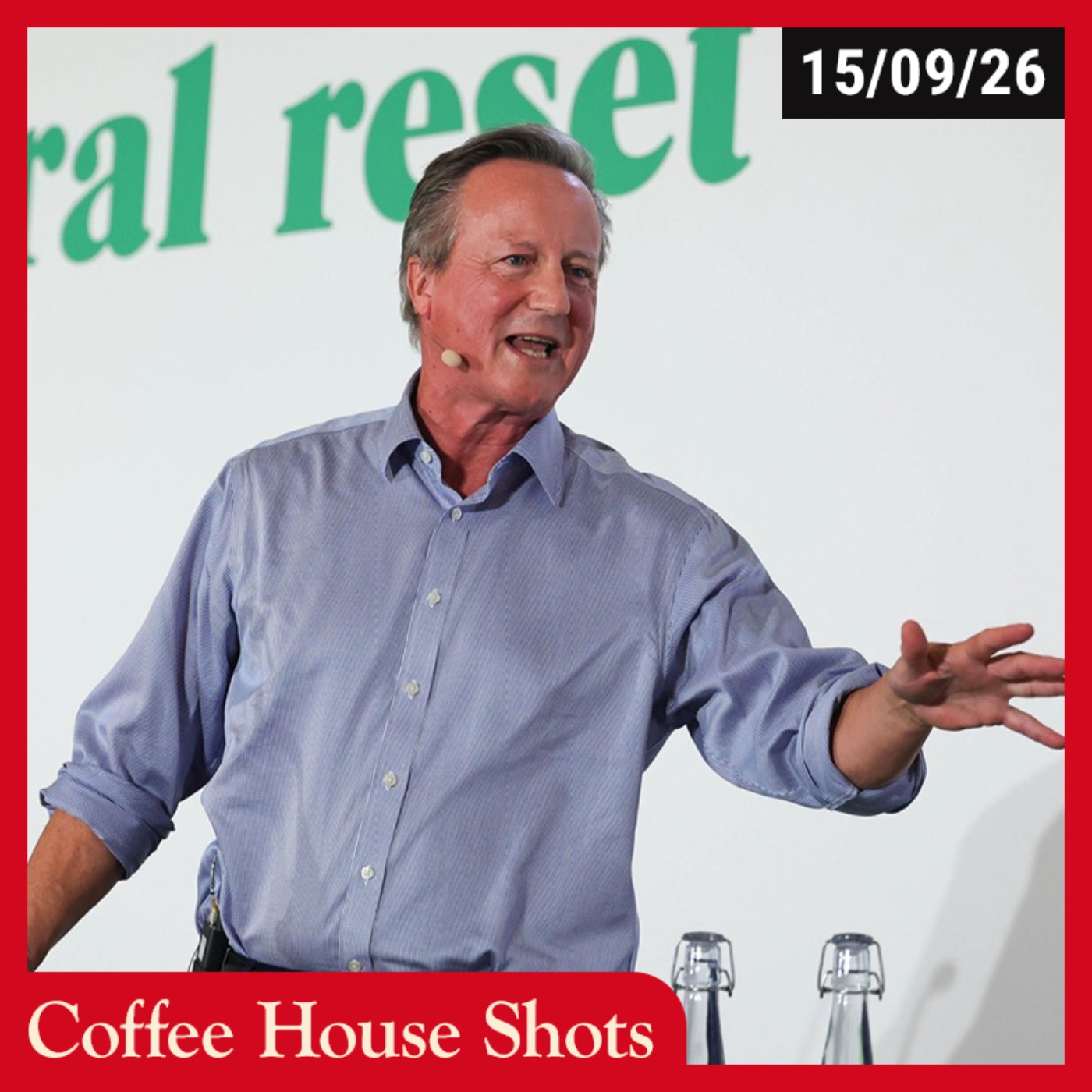
Labour is facing growing criticism from rural Britain, with the Countryside Alliance calling for a ‘rural reset’ between the government and the countryside.
Noa Hoffman and James Heale are joined by Tory peer and Countryside Alliance chairman Nick Herbert to discuss why Labour has lost the trust of rural communities - from the family farm tax and trail hunting to plans to licence game shooting.
They ask whether Labour’s new approach under Andy Burnham can repair the relationship, and examine why politicians need to stop treating rural Britain as the enemy.
Produced by Abigail Brierley.
Become a Spectator subscriber today to access this podcast without adverts. Go to spectator.co.uk/adfree to find out more.
For more Spectator podcasts, go to spectator.co.uk/podcasts.
Contact us: [email protected]
Hosted on Acast. See acast.com/privacy for more information.
Get every episode summarized
Each time Coffee House Shots publishes, we email you a written briefing from the transcript — the topics, who appeared, and any specific claims, with the ad reads skipped.
Email me new episodesFree for 3 shows. No card needed.
Hosts & guests

Transcript ready
189 searchable segments. Every word is indexed and playable.
Full transcript
Coffee House Shots — The battle for (rural) Britain. Machine-transcribed; use the interactive transcript above to jump the player to any line.
500 orders a month was manageable. 5,000 is madness. Embrace intelligent order fulfillment with ShipStation. The only platform combining order management, warehouse workflows, inventory, returns, and analytics in one place. What used to take five separate tools, ShipStation does in one. Automate fulfillment and rate shopping to ship up to 15 times more with up to 90% savings. Go to ShipStation.com and use code Audio to try ShipStation free for 60 days. Hello and welcome to Coffee House Shots. I'm Noah Huffman and today I'm very pleased to be joined by James Hill and Nick Herbert who is a Tory peer and chair of the Countryside Alliance. Now yesterday the Countryside Alliance launched a new campaign talking about time for a rural reset between the Labour government and the Countryside. I was there at the campaign launch and what was particularly special about it
was that it was very non-partisan and it bought two big beasts of the major political parties together and united in a message that Labour has not been listening to the Countryside. So we had David Cameron speak and we had David Blunkett speak and they were both very much on board with the Countryside Alliance call. For number 10 to really consider what the needs, desires and wants of rural communities are and to not punish them in some sort of wider culture war by focusing on issues like trail hunting when arguably there are far bigger problems facing the country. So Nick can I start with your reflections on the launch yesterday and could you tell our listeners why this reset is so needed? I think the event was very successful and it was the launch of the campaign for the Countryside which I think comes at an important and significant time. We were calling on the Prime Minister for a rural reset
because there have over the last two years been a whole series of government policies. I think some of them are level and some of them just unwitting which have frankly attacked the rural community and there is an opportunity now with the new Prime Minister who's engaged in a new form of politics, you know, who wants to talk about issues who wants to have a more consensual style of politics. There is an opportunity to say to him, look, none of this benefited you any more than it benefited the Countryside. In fact, we have the polling evidence to show that it was very damaging to you. The Countryside doesn't want to be treated as though your enemy. We don't want to be going to battle on issues like the family farm tax or trail hunting or now an attack on shooting as well, which I think is a really ill-advised thing for them to do. So let's reset the relations. And I think that applies on both sides. I think we need to be constructive in the offer that we're making from rural Britain as well
about how we can help the governments agenda of growth in every post-code. One in four post-codes as we pointed out are rural. You can't deliver growth in every post-code unless you're thinking about rural Britain as well. And James, at the 2024 general election, Labour suddenly saw itself in charge of suades of rural seats. I think over 100. Can you take us briefly through the history of the relationship between the Labour Party and rural communities? Because traditionally, Labour's viewed as a very urban-centred party. How has the relationship developed over time? Sure. So obviously, the first question is what is the rural seat? And I think that a stricter definition would maybe get the number down to around 40 to 50 or so. Nick will obviously have the figures. But I think that there has been in recent times a fairly fraught relationship between Labour and the countryside. Obviously, the Labour Party grew out 125 years or so ago from the emancipation of the working man, the trade union movement. And by that point, you'd had the liberals and the conservatives largely resolve the story around the aristocracy and the squire-arcing with things like the 1911 Parliament Act, the First War.
They have the 20s and 30s, but Labour was not particularly seen as an anti-rural party up until you had the 1990s. I would argue. And you then had the Blair government, and that was the area of Coulbert-Tanya. And I think the metropolitan elite, if you want to call it that, is more of a sort of middle-class party of graduates. And the flip side of that was a focus on some of those countryside sports, traditional countryside sports, and particularly hunting, which obviously had been something that traditionally enraged much to the Labour Left, particularly the post-new Left of the 1960s. And what you ended up doing was this massive seven-year long battle over the 2004 countryside, the Hunting Act. I think it was one of the handful of times the Parliament Act has been used over the past 120 years or so. It was the last time the Parliament Act was used, and it ran through this measure. And what we saw was a counter-protest from the livelihood and liberty marches, which the countryside lines helped form. It came out of a number of different groups. And what you saw was Labour having a real split with the rural votes. And I think that was marked at different elections going down from 2001 when the lines died 2005 to 2010. And Labour had a real rural problem. And in the run-up to the 2024 election, I think people that put a Mandelson and Kierstarmag
Big speeches talking about their attempts to invent the rural vote. And having won these seats in 2024, I think the problem for the Labour and the rural communities is twofold, one of which is in terms of the vote share. And it goes back to the Sandcastle and the analogy that James Kanagasoriam has made, which is that Labour's majority is like a sandcastle. It's wide but narrow. It's a very thin majority. And so there's a lot of Labour rural MPs who are fearing for their seats next time. And second of all, the policy decisions they made. I think they came into the Treasury, the top of the Labour Party, the cabinet was very urban because of course those are the Labour heartlands between 2010 and 2024. And they did not consider that agricultural relief was going to impact farmers the way it did. What we've seen since 2026 is Andy Burnham having a reset coming in. I think it was quite striking. He appointed Jenny Riddle Carpenter from the Labour Rural Research Group as a junior minister. That's a very clever thing that governments do. You look back at the Boris Johnson government and what happened was Steve Baker was one of the rebels. So we've just seen that gots to push through the winter framework. What does he do? He makes Steve Baker, the ERG, Mastermind and all the Nile Minister. Jenny Riddle Carp coming in as the head of the Labour Rural Research Group will help, I think, in the death-ra brief.
And what you've seen is Andy Burnham pledging £65 million for drought relief. You've seen Andy Burnham talking of a need to reset relations. And I think that's very much what the Council of Lancers was trying to do. You're staying having David Cameron and David Blunkey at the two Davids, if you will. Blunkey of course is seen as Andy Burnham's mentor. So there's a very fraught relationship here. And I think between 2024 and 2026 in the Kierst armler, Labour was allowing opponents and sometimes themselves to pay themselves as being an anti-farm, your party, an anti-rural party, famously the anti-economist rule. Never go to war with a profession that can be depicted in a children's picture book. And they did that with the farmers. And I think that in terms of the trail hunting, for me, this speaks to a wide problem in the kind of modern politics, which is that often politicians go, something must be done. Therefore, this is something they're supposed to be done. And a sense of trying to tackle smaller political priorities rather than the big macro issues facing this country, which include an ageing population, a stagnant economy, Britain's place in the world. And so trail hunting, there are a few breaches sometimes of the recent years of where the law is not being enforced properly, rather than looking at as an enforcement issue, they think the law needs to be changing.
Trail hunting was introduced to the results of the 2004 hunting act as a way of getting hounds to go after a cent rather than life animals. And so I think the number of people in the countryside who are actually these areas would feel it is using a hammer to crack a nut. On the point about shooting which Nick brings up, I think obviously there was a tragedy I believe a couple years ago in Plymouth. I think there are danger here's overreacting in this. And how do you get a proportionate response? Britain does not particularly have a problem with shotguns and my involvement in understanding of the shooting communities, that they are very self-policing, they come down hard, anyone who breaks the rules on that, because they know the dangers you can get legislation. So I wonder if given Andy Burns made such a big thing of a reset, we're going to see that actually enacted in these measures, as I say, the two specific ones, trail hunting and shooting. And of course, we've already seen them backing away from the agricultural relief policy from the last two years. Yeah, and with shooting it's not just the issue of shotgun ownership. By the way, there are hundreds of thousands of people who enjoy game shooting. And so they need to be very careful about this. It's also a proposal that came out of the blue to license game shooting and rearing.
And to first, if you want to license something, the state wants to license it, it first has to make it illegal. So you're suddenly out of the blue without a manifesto commitment saying we're going to make this activity illegal and then only allow it through state license. And that crosses the rubrican. And I think they will see a very strong reaction against this. And I think it's a classic example of a measure which is in part clumsy, like a family farm tax that they're pushed into, in this case, probably by pressure groups and so on, where there's no real justification. They don't have any kind of evidence that there's harm or anything to justify this. And it's politically unwise. And exactly as you say, James, on trail hunting, the whole thing looks disproportionate. And a really weird attempt to rerun a battle that was fought 20 years ago on an incredibly divisive issue. One that Tony Blair said it was the domestic measure that he most regretted. It caused the government then immense trouble. And saying that because you say that there have been some breaches of the law, the whole activity of chasing a smelly rag has to be abolished,
is like saying that if somebody speeds, you're going to abolish cars. It's just holy disproportionate. And so I think that the more they press this, the more they will find difficulty with the arguments and they risk losing control to their own back benches and pressure group driven amendments as they found last time. So it all looks very unwise. But I think you touched on something also, James, that's really important, which isn't just about how the rural community is viewing labor, which is now clearly immensely problematic. Although I posted there was also an opportunity to reset that. And there's a glimmer of light for them there if they do that. It's also about how the public at large regards the preoccupation with these issues. What does it say about a government's priorities? If, you know, when people are saying, fix healthcare, I want a decent local school. I'm worried about the standard of living, my job, etc. And you have parliament saying sorry, sorry, we're far too busy having another swing at hunting or trying to attack people having a flutter on the ground national because they've also opened up another front against racing.
And racing is the second most popular spectator sport in the country. And it was because we had this whole range of policies that we said, you know, we've got to say enough is enough. Not benefiting anyone. It's certainly not benefiting the countryside. All of this has been immensely damaging, but it's been very damaging to the reputation of the government too. And it's a gift, by the way, to reform an absolute gift. I just make two points quickly. First of all, I think the rule in stage theatre is never worked with animals or children. And maybe there's an element of that in policy making as well. I remember the conservative government of 21 and 22 having real issues over the animal welfare and more sentience bill. And I think it's been introduced, which would have been a gift to nimbis everywhere in the sense of, you know, you're potentially trying to balance the life of a hedgehog versus the collectivities you gained from a new motorway. So I think there's a rule there about trying to cater for issues around animal welfare to bear in mind. And the second point I would just make is I think it's a point I made when I've interviewed you before Nick, which is about the balance of power shifting in terms of parliament we've discussed.
The commons and labour traditionally not having much for commons, voice for the rural countryside and that reflected at the top of the party still, although people are Jenny Riddle Carpet were coming through. But also in the lords, you know, because the lords, of course, were the ones who put up a huge fight in 2004 over hunting. And the point Nick made to me was that actually now the composition of the lords is very different. It's a much more urban house than it was than the whole territorial setup it used to be when there was still the hereditary's or the surviving hereditary's. So I think that is reflected in the political discussion now. I would also just say finally say it was quite ironic, I think that David Cameron came in as a great modernizer, no ties, metropolitan, super smooth, happy with modern Britain. So it's good to see him now out of office embracing is in a backwardsman. And Nick, very quickly, there was a lot of discussion at the campaign launch about whether politicians really understand the countryside. Would you say that the new deferessecratry Angela Eagle either understands or is on her way to really knowing the people who live there and what they want and what the farming communities want and need.
I know the farming minister Stephen Morgan fainted at the site of me in a factory. So I don't know what that sort of says about the current deferate team, but how have your interactions with them been so far. So Angela was a minister of state for farming for and so she's not inexperienced in this brief and they've been mixed early signs. So she went and visited a farm and was clearly wanting to engage just last week. And that's that's a really good thing. And I think if that's going to be the kind of tone and a very deliberate attempt to try and reset. Then I think that's great. But on the other hand, the government pressed on publishing its proposals to license game shooting and rearing. And I do think here there is a kind of lack of understanding at the root of it, which is why I think talk is so important. Also something about being good politicians isn't there about actually just being able to go out and speak to people and listen. And that's something of course that Andy Burnham is extremely good at.
And that's why I have some optimism that they will try and reset here. And that's why I think our campaign and this event was timely. And what I think they must avoid is the kind of reflex action of seeing the countryside as the enemy, you know, not ours, not our place, not our people and so on. And being tempted down the line of wanting to fight culture war that I think they must avoid. And that's actually what David Blunkett was warning against yesterday. And that's why I thought it was so powerful. And he said actually, you know, the cities and the towns need the country and vice versa. We should not be in conflict. And I thought that was a sort of statesmen like thing to say for the former MP for Sheffield leader of Sheffield City Council. And so on and just his article in the Sunday telegraph was I felt quite moving in places in which talked about the importance and value of the countryside. Now that's something that labor figures used to understand in the post war era, you had the great farming minister Tom Williams, he really understood that those figures in the in the 1970s, they wouldn't have drunk to setting town against country.
In the way that I think politicians found themselves maybe not waiting it may have been because they simply had the wrong instincts, but doing in more recent years. And frankly, we've got to stop it because the countryside is not a small thing. It is a national asset. It is part of our heritage. It provides our food and our water. We all need it. And it is populated with people who want to do the right thing, get on with their lives. They're good people not bad people. And I think any government has got to stop treating them as though they're the enemy and start realizing that they're actually important and farming in particular is a vital national industry. And it shouldn't be sidelined ridiculed, the department shouldn't be ridiculed candidly. And that's why I think this is a moment, a moment where rural Britain says, enough is enough. We need to be treated with respect. We deserve it and you need to treat us with respect too. Well, we shall be keeping a close eye on how relations between the countryside and the Labour government develop. Thank you so much, Nick. Thank you, James. And thank you for listening to Coffee House shots.
Hi, it's Brooke DeVard, host of Naked Beauty. And I want to talk about how I upgrade my hosting experience. There's a moment just before guests arrive when my home stops feeling like a series of rooms and it becomes an atmosphere. The light settles the air shifts, and then the beautiful scent of Jasmine, Rosenfig, fill the air. It feels warm and considered. That's what Pura does. It turns fragrance into environment. A collection of beautiful clean fragrances all controlled from your phone. Choose your sense of place at Pura.com.
More episodes
More from Coffee House Shots

Reform's £72m donation – how will they spend it?
Coffee House Shots

Isabel Hardman's Sunday Roundup - 13/09/2026
Coffee House Shots

Holy Smoke: Catholic Burnham barred – should the law change?
Coffee House Shots

Laura Trott: 'Labour are kowtowing to the unions'
Coffee House Shots