About this episode
Canadians have been keeping their elbows up for well over a year, but after logging on to Google Maps or Apple Maps and seeing 'Lake America' while in Canada, the feeling of despair doesn't seem too far fetched.
Beit Facebook, Instagram, Google, X, Amazon, US tech giants take up lots of retail space within our digital presence, and sometimes they seem unescapable.
Host Maria Kestane is speaking with Vass Bednar, Managing Director at the the Canadian Shield Institute, about how the U.S. government can have global reach through control of the tech giants, something Bednar calls 'digital imperialism'.
We love feedback at The Big Story, as well as suggestions for future episodes. You can find us:
Through email at [email protected]
Or @thebigstory.bsky.social on Bluesky
Hosted by Simplecast, an AdsWizz company. See pcm.adswizz.com for information about our collection and use of personal data for advertising.
Get every episode summarized
Each time The Big Story publishes, we email you a written briefing from the transcript — the topics, who appeared, and any specific claims, with the ad reads skipped.
Email me new episodesFree for 3 shows. No card needed.
Transcript ready
353 searchable segments. Every word is indexed and playable.
Full transcript
The Big Story — The age of technological imperialism. Machine-transcribed; use the interactive transcript above to jump the player to any line.
Frequency podcast network. Stories that matter, podcast that resonate. It was a move that had all of us turning to an app we thought we said goodbye to a long time ago. Map quest. After they decided Lake America wasn't going to be displayed for users on their system any time soon. Unlike Google Maps or Apple Maps, who after US President Trump signs an executive order changing Lake Ontario to Lake America, had changed the lake's name for users in America. And to add insult to injury, some Canadian companies that relied on US tech apps through third party agreements also had the words Lake America displayed for users in Canada. That was the case for Hydro One for example. Ontario's largest electricity transmission and distribution service provider, even the LCBO. Now the companies have since apologized and corrected their sites, but it's hard to
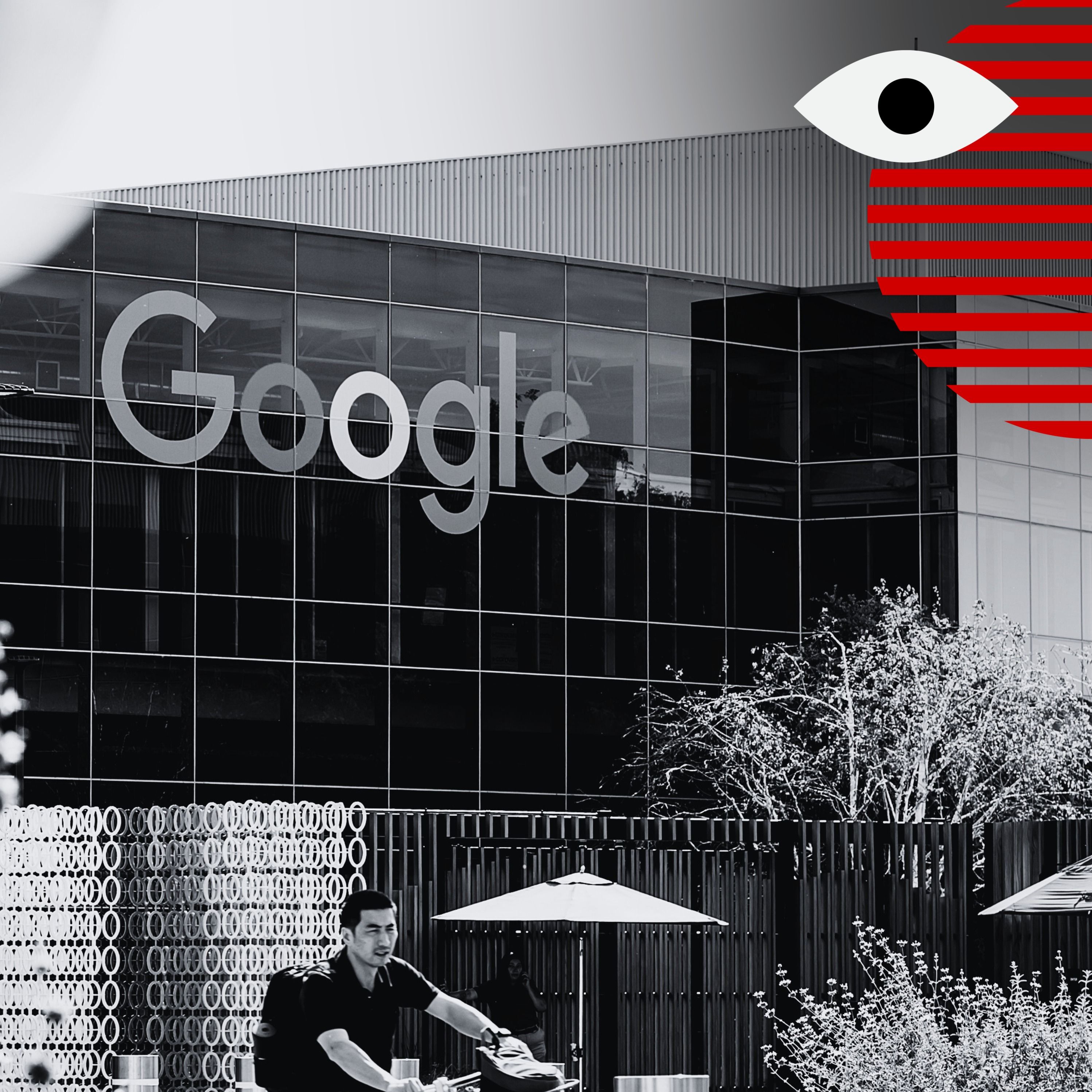
keep your elbows up when the companies we use and rely on here in Canada use and rely on tech companies in the US that are ultimately governed by the White House. And to think this all started with what was displayed on a map, a tool that helps us get from point A to point B. But the reality is online navigation systems like Google or Apple Maps do way more, both overtly and covertly, than just direct us on where to go. And while their products are regulated by policy set out from the US government, who's to say influence begins and ends with just a name change. I'm Maria Castane and today on a big story, I'm talking to Vass Bednar, the managing director of the Canadian Shield Institute. She recently wrote a piece that called Google Maps a tool of digital imperialism. And today we're digging into just that digital imperialism.
Vass, thank you so much for coming on the big story. Appreciate having you on. Thank you for having me. One of the sites that I remember the most among all of them from last January's US presidential inauguration was the Sea of Tech Giants. Just lined up right after the other, taking over one of the first few rows at the president's inauguration, Elon Musk there, Mark Zuckerberg, Jeff Bezos, among others, all there supporting this man that their companies had been, you know, courting, leading up into the election. I'm curious to know though, was Donald Trump's relationship with media companies and tech executives this cozy during his first term? It doesn't seem as if it was so overtly cozy. Again, that image is jarring and his popularity has changed now in the US. So one wonders, you know, whether that kind of friendship or alignment has also been minimized.
But again, these technology leaders have all donated to his weird little ballroom scheme. We're seeing some evidence of the Trump administration kind of, I'll say, going to bat for the companies in a geopolitical context, Trump has promised a section 301 investigation, which is a particular kind of trade, trade-related investigation into the EU in response to the EU seeking to levier large fine on Google. So again, you know, there's the photo op and there's the alignment, kind of intellectual alignment or industrial policy alignment with these tech leaders. And then they're in that visual. But then, you know, how does it play out in practice? I think that's really interesting to think about. Yeah, I mean, during his first term, you had, you know, Trump coming out and saying that a lot of social companies and social media, you know, forums were promoting fake news. He was, he was off Twitter for a while. I mean, and now you have, you know, you have such a drastic 180 from what his first term
looked like in the relationship he had overtly with media and with these tech executives, compared to where he's at now. I just think, you know, seeing that imagery at the inauguration was very telling us to what could be during, you know, the next four years at that. Now it's the next two years, but at the time, the next four years, you know? It's certainly an alignment with a very particular kind of power. I think what's also interesting is where public, the public's attitude is when it comes to capital B, big technology right now. People seem really fed up, right? With the lack of quality of information, the missing disinformation, the AI slop, the noise online, it's getting harder even just to shop. Recent research just came out and demonstrates that if you're shopping in Google AI mode, which again is a is an agentic way to shop that promises more ease and convenience, you tend to see prices that are 21% higher than somebody who's not shopping in that mode. You know, that is market manipulation.
That is a form of consumer deception. Why would you want to align with that? I think people expect the state to have the right guardrails, right, to kind of promote transparency, not to sort of visually or intellectually align with firms just because they are powerful. And it's that kind of inherent power that scenes intoxicating are very seductive for the character or caricature of President Trump. Yeah. Why do you think these firms and companies were recording him so hard leading into the election? Like, what do you think they were in it for? I think that, I mean, public policy is a very important kind of power. Democracy is a very important form of power, a form of power that people, you know, retain and uphold. And you could say that public policy is kind of the software of the state. So in terms of determining the operating conditions, both here and away for firms, no matter how
wealthy you are, our democratic structures exist in purses to keep checks on those forms of power. And it does seem like, again, the Trump administration or certain actors, there's a recent book by an American journalist, Gild Iran, called the Nerd Reich. And he tracks the growth or rise of far-right thinking amongst particular tech elite. And one of those core characters, not just Elon Musk, but Peter Teal. I don't believe Peter is in that photo at the inauguration, but it's easy to imagine him. The US also has a very different structure in terms of how you can use, how you can finance political campaigns. So Peter Teal, one of the kind of OG PayPal Mafia currently growing the Palantir company, again, as somebody who was aligned with Trump, who also funded JD Vance, his campaigns, who aligned with him on some of his investments.
It's been fascinating and sort of intriguing to see how those actors can also have also sought to support particular politicians who are now also in powerful positions. Yeah. I want to get into a recent article that you wrote where you claimed that Google Maps had become a tool of digital imperialism. What did you mean by that? Let's get into that. Oh, man. Well, I did get to open that article with a deep cut on the SNL digital short. So I felt like I was really getting away with something there. But when it comes to digital imperialism, you know, the fact that Google moved so quickly to echo or reflect President Trump's executive order, I read the executive order too. It's very short. I do hear it made me a little bit dumber afterwards. But all President Trump has the ability to do is to instruct US federal agencies to
change that name. And in that instance, Lake Ontario to Lake America. Last time I checked, Google is not a US agency. And the fact that Google rushed to then reflect three different renderings of reality, one for us in Canada, retaining the name Lake Ontario, one for people in the US, saying Lake America. And for quote unquote, everyone else highlighting the exact tension, which is, you know, that jagged line cutting across the lake showing both names and that duality. I really think everybody should have just seen both those, both those names. The executive order also instructed sort of 30 days to speak to other groups and actors and sort of start to figure this out. This is like a three hours, a few hours later response. And it was really a reminder of the power of a company like Google to again reflect reality back to us.
Oh, also just for a moment, if you'll permit me to take issue with us, even calling that platform Google Maps. Like I understand that's the name. I understand what a map is. I understand the letters MAP spell map. Google Maps is a surveillance technology used to sell advertising. Google Maps wants to know where you are all the time. So it can infer where you live, where you work, the places you go, the kind of person you are, where you spend money, what restaurant you've been to, what kind of lifestyle you have, so that it can serve you better at. That's not what paper maps used to do. So I think we're just in this also interesting moment again of tech lash, but also people finding analog technologies more seductive. And I guess I'm counting on younger people who can be cool. I'm not particularly cool. I never have been. I accept that. Bring back those physical map books. Learn the geography that you're in. Miss that turn.
Ask a stranger. But even our reliance on Google Maps or the trust that we have in the technology is kind of charming and almost unbelievable. Vassa, what point do you think MAP stopped becoming purely navigational tools and started becoming, you know, as you put like platforms and infrastructure that kind of shaped reality and how we make sense of what's around us? I mean, even its power to root technology, the acquisition of ways, right? Sorry to root physical cars and to, you could argue manipulate traffic or, you know, ware zones are busy is a very interesting form of power. Where did it switch to kind of being digital infrastructure? I'm not sure. There are still competitors and there have been and it's sometimes a people problem to sort of switch away.
There are interesting open source map tools. People have been looking for Canadian examples. I think that as we seek to reduce our dependency on big tech, it's not, doesn't necessarily need to be a private Canadian company that we're switching to, though, of course, there are many reasons that's optimal. And I also think it's really confusing to use the word infrastructure. When most of the time infrastructure is something that's publicly provided and maintained and increasingly with our digital economy, digital infrastructure is something that's privately provided, privately controlled. And we see a lot of challenges and issues with that. So again, on its face, maps, any kind of map, a very neutral tool, I'm here. I want to go there. How am I going to do that? How long is it going to take? It's great to know. But again, what is the exchange? What is the cost? What is the price of using a tool like that? I doubt Prime Minister Karni's security detail is using Google Maps to always kind of determine where the Prime Minister is going.
And if they are, that would be extremely weird to me. And not privacy preserving, right? And we sort of laugh saying it, but then it's like, okay, what would be at play or why would we care about that? Yeah. Something I found so interesting was how certain Canadian sites, like the LCBO Ontario's controlled liquor border, Hyde 1 or some other government websites were. We're actually caught through third party agreements using tech that displayed it as Lake America. Yeah. And the outrage was there, right? Falee So, it all just speaks to how dependent Canada is on US tech. Our elbows could go up. We could buy Canadian. We could shop with all the Maple Leafs at grocery stores. But the reality is we still fall very vulnerable to US tech, whether we like it or not. Yeah, I don't think our elbows can get any higher at this point. You know what I mean? My shoulder is killing me. But those agencies and those organizations, in a way they did everything right, they
did something that's easy and cheap, which is use Google's APIs. And that kind of freemium element of any kind of technology firm has kind of been the playbook for quite some time. And it can be a way where it can be a deliberate strategy not just to grow your market share, but also to extinguish your competition. If the alternative is to pay for, say, that physical map or pay a subscription fee so that you have a kind of privacy preserving map. And people are used to receiving something for free. It's very difficult. So I don't know the terms of, say, the LCBO's agreement with Google if they were paying. My hunch is that it was something that was free to do that then starts to embed, again, that infrastructure with the LCBO. Or, you know, hey, here's the benefit. It's going to now, all the LCBOs are going to automatically be accurately mapped on Google Maps and isn't that great so that people can find you and buy Canadian alcohol.
Yeah, there are positives to that. That is good. That's kind of interesting. We can do things fast. But again, those kind of directives we sometimes have to do something as cheaply as possible. Sometimes becomes very expensive down the line. What happens if Google Maps wants to arbitrarily throttle or punish the LCBO for taking US booze off the shelf and remove them from maps so that they have their bottom line or sort of their commerce as hurt. It seems silly and I never mean to be a kind of Cassandra-like character, you know, from Greek mythology kind of predicting a future no one would listen to her, but it came true. I like to root digital sovereignty conversations in the actual stories that give them texture because they're real and they're kind of all around us. But yeah, a map, an online map is, there's just more at play. There's more happening there than we probably appreciate. Yeah, I mean, MapQuest is definitely having its moment, you know, as Canadians move
us. Google Maps and Apple Maps. My question is vast, like, how long does a protest like that actually last, you know, like at the end of the day, like Canadians have their routines, they like the apps that they use, they like the websites that they are used to going to and have routine on MapQuest again, it's having its moment. But how long does that kind of protest last? How long does Canadian resistance and us putting up a fight last and how much does it matter, really, in the end? There is research and it mostly pertains to social media companies, but sort of it speaks to that inertia where users, again, everyone hates that term, users, but are cognizant of the downsides of a platform and yet they stick with it. So we see with social media, even though people may still have meta-related accounts on Facebook or Instagram, engagement is down, you know, they're participating less, maybe it's a more passive role, you're bit, I think the term is lurker, something like that. So even how we use these technologies, I think, is changing and speaks to people's kind of boredom or annoyance with them.
I think this could be the hinge moment that we need with a lot of these technologies, you know, in about a week's time, Prime Minister Karni is going to head off to the EU right after the investment summit that's taking place here in Toronto. I'm in Toronto when we're speaking and going to be part of his address, the EU is doing a whole lot and has been doing a whole lot for quite some time now when it comes to digital sovereignty and reducing that dependence. Canada has spoken about reducing our dependence when it comes to energy and oil, but not yet technology. That's got to happen at some point and I'm hoping it happens soon, not just with maps, but with other kind of everyday tools that we rely on for communication and for the governance of this country. Yeah, I mean, you have countries like France, Brazil, Denmark, ditching Microsoft, other US tech companies and creating their own systems for, you know, government work and other stuff like that. Is this something Canada could actually do to create meaningful change? Like, could do we have the infrastructure? Do we have domestic software that we could use to do something like that?
We do and we could also build it. We can use these open source alternatives. We can learn from the EU's experiments with, say, Libra office. I think when it comes to movements, it's funny to talk about maps. It's funny, you know, no one had map quests kind of surging to the top of the app store on their bingo card and it feels sort of surreal to think, okay, could the move to get off Microsoft and Microsoft Teams be this kind of rally cry for this moment on digital sovereignty? Yeah, it could be because of what that represents. When we talk about procurement, federal procurement and dollars flowing and what we buy, even purchasing, I think, as a frame is completely misleading because most of the time when it comes to these softwares or services, we're renting them in perpetuity and the price is going up and up and up. So, you know, we may quote unquote buy Microsoft Teams for government communications, but we don't own it and we could save money and reallocate those funds in the long run and become
more resilient and have more secure communications. That sounds good to me. That's like tip of the iceberg, basic catch up stuff, but again, Canada could do it. What Canadian sector do you think bass could is most vulnerable to US tech powers like health Canada, the IRCC, the CRA, like where do you think Canada should maybe prioritize its move away from American tech companies? Oh my God, prioritizing is tricky. I mean, health data is subject to its own kind of privacy, supplementary privacy laws. So I think that is helpful. We're seeing new cyber security law proposed in Canada. I think I mean tax information, government information already has some layers in terms of data security and kind of propriety, but I mean, I think about how we communicate with each other, not just formal governments. I think about how it's a federal offense for somebody to tamper with my mail and kind
of open up an envelope. And that seems so kind of tried and provincial in this digital age because nobody made it a federal offense for Gmail to scan every message that I send and receive or Microsoft to do the same arguably to offer me what a better experience or, you know, again, train their algorithmic proprietary algorithmic system is ridiculous. And yet again, for whatever reason, we didn't we didn't pour it over those values. So having the right kind of public policy structures in place, having the ability to regulate the digital economy, which by the way, most of the time we don't because of Kusma 1.0, forget kind of just building. We need to both build sovereign and resilient alternatives. We need to support Canadian companies, but we also need to fight back. We need to view Kusma 1.0 as not a floor, but a ceiling. That digital chapter sucks. It can't continue. We should be focusing on improving it and making sure that we have the ability again to
regulate our digital economy. I find that very intoxicating. I hope that can be the legacy of this moment. I hope we'll look back and we won't that we'll have to conjure the memories of what a kind of extractive, surveillance, digital experience we kind of had every day and that we accepted it as being normal. It's being normal for too long. It can't continue to be normal. Yeah. Vaz, how do you think everyday people could become more aware of the powers that digital platforms like maps or other apps hold covertly? Well, I've been noticing, I mean, anytime we've published research on Canadian alternatives or technological sovereignty, tech dominance, there seems to be a big appetite for it. And Canadians were powerful people and were powerful when we worked together. We've seen that when it comes to switching up the alcohol we buy, making different decisions of the grocery store or choosing to abstain from going to the US for our vacation.
It might have seemed like, oh, in Detroit war, like really, this is how we're going to participate. Yeah. There were meaningful consequences with that. And I think my read is that there's a lot of appetite for building alternatives, but also learning about what we can switch to. And that's a big conversation. There's lots of modest but meaningful incremental shifts we can start to make. I'm hopeful that something like ad tech is going to be the next big part of our cultural sovereignty conversation. There's another duopoly. There's another form of control. You know, that layer, like those intermediaries that help you and I maybe find something we want to buy or find a podcast we want to listen to or news like that's such a source of extreme power. And we've focused on discoverability but not always the economics and mechanics behind that. And what a great opportunity to kind of click the reset button there as well. Vass, I'm going to leave it on that note. Thank you so much for joining me today.
I really appreciate the conversation. Thanks for having me. And that was the big story. If you have episode ideas, be sure to send those our way. Reach out on Instagram at the big story or at frequency pods. We'll respond to you there. If you like this conversation, share it with someone you think might like it too. I'm Maria Costeine. Thank you for tuning in. We'll talk to you tomorrow.
More episodes
More from The Big Story

Big Headlines: Canada and the U.S. mourn 9/11 on the 25th anniversary of the ter...
The Big Story

What happened to our attention spans?
The Big Story

Big Headlines: Carney convenes his cabinet in Alberta and Trump vows American ad...
The Big Story

Big Headlines: Trump signs new executive order banning Canadian products
The Big Story