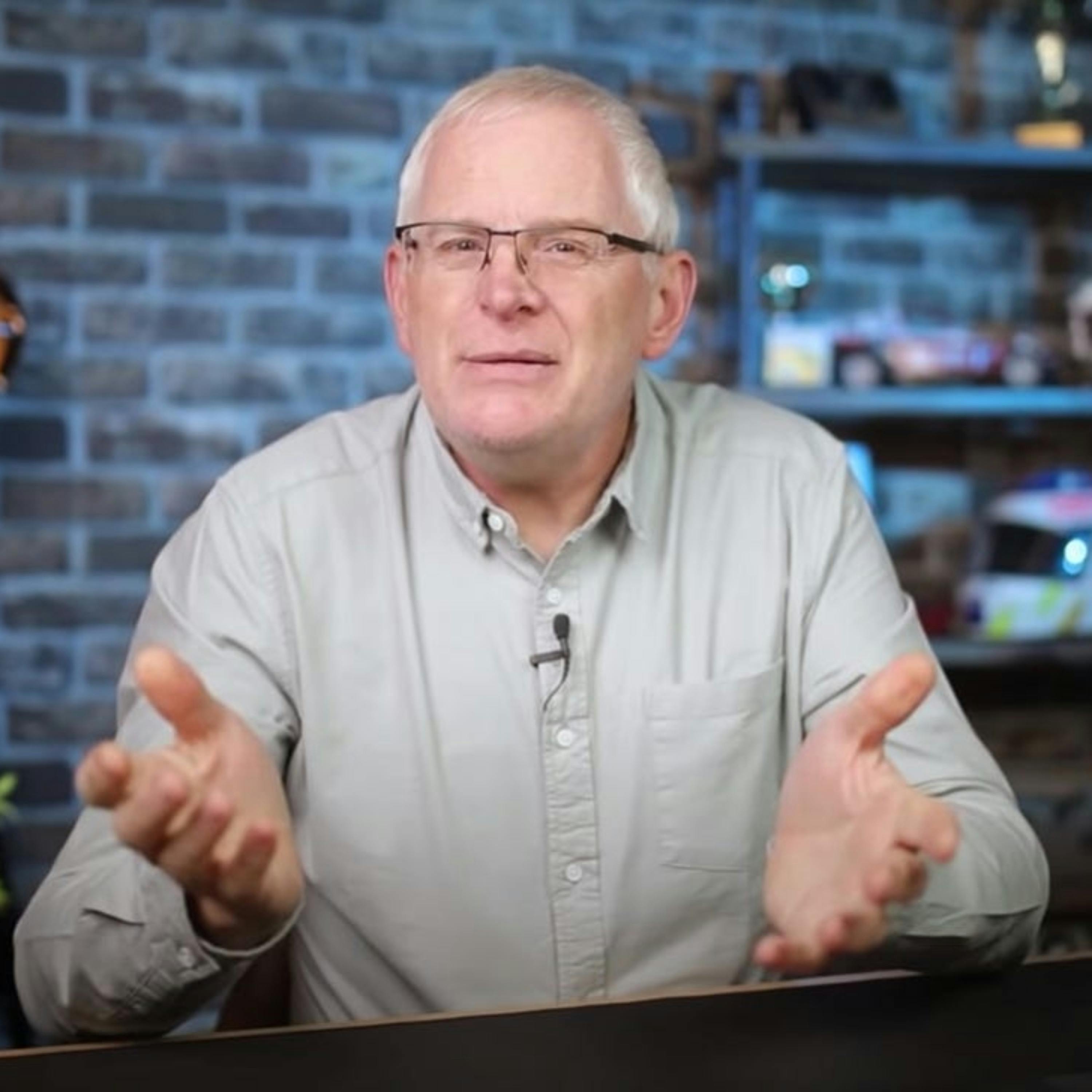
About this episode
Get every episode summarized
Each time Mark Tilbury publishes, we email you a written briefing from the transcript — the topics, who appeared, and any specific claims, with the ad reads skipped.
Email me new episodesFree for 3 shows. No card needed.
Hosts & guests
Transcript ready
123 searchable segments. Every word is indexed and playable.
Full transcript
Mark Tilbury — The 7 BEST Index Funds That Will Make You RICH. Machine-transcribed; use the interactive transcript above to jump the player to any line.
I make $17,000 per week mostly from this little thing called index fund investing, and I'm not the only one. You need to know what's going on when it comes to index fund investing. Think of it like a basket of stocks. This is the simplest way to build wealth for probably 99% of investors. If you aren't investing, you're literally costing yourselves thousands, if not tens of thousands of dollars. But how do you know which index funds to invest in when there are so many to choose from? Well, these are my favourite 7 and coming in at number 7 is the iShares Automation and Robotics ETF. AI is the biggest thing to happen to the world since the internet. It's got the whole creative industry scared and it's only going to get bigger. As investors, this is very exciting. As with funds like this one, we can hopefully benefit from that boom together. Look, I'm not a financial advisor and of course there's no guarantees. I'm just somebody that's been there and done it before with the dawn of the internet and I'm noticing the same signs again. I mean, I was at a convention in Texas the other week and all everyone kept banging on about was
AI this and AI that. On top of this, I also manufacture products all over the world. And during the last couple of years, the advancements in robotics has offered huge cost savings to my companies. To be specific, the industry's forecast to have a compound annual growth rate of 14.7% for the next 10 years. Interesting, AI stocks also surged at the start of 2023, especially given the rise of chat GPD. Now for the specific, the index fund tracks 157 companies in robotics, automation and artificial intelligence. Its expense ratio is 0.4%. That means every $10,000 invested cost $40 annually. An expense ratio is how much the ETF charges annually for portfolio management and other admin costs. Here are some similar options if this fund isn't available in your region. AI might be popular right now, but it's nowhere near as famous as number six, the Vanguard S&P 500 ETF.
This is the index fund you hear me bang on about all the time as it allows you to invest in the 505 biggest public companies in the USA with a single click. This means that if you haven't invested in any index funds before, then this is the perfect starting point. As it allows you to invest in all the major sectors of the economy, you'll have all the big dogs covered with this one from tech to consumer goods. These 505 companies have it all and actually are collectively worth about 80% of the US stocks total value. The Vanguard S&P 500 ETF is about the cheapest you'll find. Its expense ratio is 0.07%, meaning you'd annually pay just 70 cents for every $1,000 you invest. Because the investment fee is so low, your returns are virtually identical to the performance of the S&P 500, which as year-to-date return 9%. There's also no minimum investment amount. So you can start investing with as little as $1. Here are some similar options if this fund
isn't available in your region. The Vanguard S&P 500 is great, but it does have one major issue that number five tries to address. This is the Investco S&P 500 equal weight ETF. You see, remember before I mentioned that the Vanguard S&P 500 was made up of 505 different companies. Well, these companies aren't invested in equally, meaning if you imagine them like apples in a basket, some are a lot bigger than others. In fact, some of the size of giant pumpkins in comparison. The magnificent seven companies, which include Elphabet, Apple, Amazon, Meta, Microsoft, NVIDIA, Antesla, brought in an average return of 92%. This just shows that most of the growth was actually due to these companies and not the other 498. You may think this is great news, but their dominance may also be a sign that the current bull run isn't as sustainable as it looks. The Investco S&P 500
equal weight ETF invest in the same 505 stocks, but waits all the stocks equally. So each one is around 0.2% of the fund, meaning all your apples are the same size. I don't currently have a lot of money invested in this fund, but I am keeping an eye on those magnificent seven stocks as they're getting a little bit too powerful for my liking. Here are some similar options if this fund isn't available in your region. But if you want a less bumpy ride, the number four could be your best bet. The SPDR S&P dividend ETF. All of these titles are a bit of a mouthful, but don't worry, I'll listen them all in the description so you don't have to remember them all right now. The companies we've been talking about so far have been all about growth, but that's not the only way to invest. Lots of people want an easier life. Invest in in less volatile stocks that instead pay a predictable dividend every quarter. This is like a cash reward investors are paid for holding the stock. The SPDR S&P dividend ETF tracks 121 of the stocks in the S&P composite
1500 index with the highest dividend payouts. All the companies owned by the ETF have increased their dividend payouts annually for the last 25 consecutive years. Look, I'm going to be upfront with you because these companies are paying a dividend, it does mean they're going to be less exciting, a bit boring if you like. If they were looking to grow, they know would take that cash and put it back into their businesses. That's why there are very few tech stocks in this fund as they don't tend to pay generous dividends. Here are some similar options if this fund isn't available in your region. Whoa, whoa, whoa, slow down mark. I don't even know how to invest in any of these funds. Can you give me a guide of what to look for in an investing platform? The first thing is that the platform you choose is regulated by a respected body like the financial conduct authority. These have different names depending on where you live. If you're in the UK then you can check out if a platform has this regulation on the FCA website. Another vital feature to look for is accessibility. An excellent platform should be used as a friendly and offer an easy to use
interface, making it suitable for traders of all levels. I mean, you shouldn't need a degree in finance to navigate your investments. I know I have. You also want to make sure you find a platform that offers zero commission investing. This means you can invest without worrying about extra fees eating into your profits. This is a game changer. I've personally been using XDB to invest in all these index funds. It excels in all the aspects I've just discussed, including zero commission stocks, a user-friendly platform, robust educational resources and it is regulated by the FCA. Full disclosure, they do sponsor me. However, my experience has been outstanding. So if you want to give it a go, then I'll leave a link in the description below. So you can invest in both stocks and ETFs commission free. Number three, hold a special place in my portfolio. It allows me to invest in smaller companies. It's called the SPDR Russell 2000 US Small Cap ETF. But why would you
want to invest in smaller companies? Well, there are two main reasons. The first is their growth potential. It's much higher than larger businesses. Think of it this way. It'd be far more difficult for Tesla to double in size than it would be for a new tech company with a $500 million market cap. So while their price swings tend to be a bit more dramatic, Small Cap stocks tend to outperform large caps over long periods. The second is diversification. This ETF contains 2000 different companies and is far less dependent on a handful of big stocks like the S&P 500. But whatever company grows too big and it's no longer classed as a small cap. Very good question. It's re-adjusted every year to make sure that doesn't happen. As a real-world example, in the 2021 re-adjustment, GameStop was removed from a Russell 2000 after its price sawed in the meme stop craze. As of making this video, the index funds largest concentrations are in industrials,
healthcare and financials. The funds expense ratio is 0.3%, which is relatively low, especially for one that offers exposure to the companies with the most potential growth. Here are some similar options if this fund isn't available in your region. But number two has even more potential. The extractors MSCI emerging markets ETF. Emerging markets are predicted by some experts to be on the rise. And whether I agree with this or not, I think it's important for me to have a little bit of skin in the game. It's all well and good buying the S&P 500. But then, what about if China or another emerging country has some great gains? You've just missed out. That's why diversification is so important. This is definitely the most risky index fund that we discuss, but in moderation, I think it can be great. Taking a look at a list of the largest economies in the world, a lot of them are emerging markets. So it just makes sense for me to throw a little bit of money in for diversification. Considering that about 85% of the world's
population lives in developing countries, investors with a long-term focus who are comfortable with volatility may want to seriously consider investing in this fund. Airs holdings in countries such as China, India, Taiwan, Brazil and Saudi Arabia amongst others with a total of 1,437 different stocks. Plus, the good news is that it comes with a low expense ratio of just 0.18%. Here are some similar options if this fund isn't available in your region. But number one on my list is even more exciting. The ICHES NASDAQ 100 UCITS. This ETF aims to track the performance of the largest non-financial companies in the NASDAQ 100 index. I owe a lot of my success down to technology. My businesses produce state-of-the-art radio control models in factories all over the world, and my investments have been pretty tech-heavy. Apart from big names like Apple, Google and Amazon,
the NASDAQ 100 also features companies like Meta Platforms, formerly known as Facebook and Starbucks who make overpriced coffees. If you've seen how much a Java chip mock a Frappuccino costs, got to buy a house for that. In simple terms, the NASDAQ 100 includes almost all the famous and forward-thinking companies known worldwide. So far, this ETF hasn't let me down with a year-to-date return of 35%. The expense ratio is also only 0.33%. That means for every $10,000 invested, it costs $33 annually. If you believe in these companies, then it might be worth investing in this ETF, as it's an easy way to buy all of them at the same time. If you want to know seven passive income ideas I use to make $67,000 per week, then I'm going to leave that video right up there. But don't click on it just yet. Make sure to subscribe if you want to grow your wealth. Okay, I'll see you over there.
More episodes
More from Mark Tilbury

Passive Income: I Started A Side Hustle Using A.I, here’s how
Mark Tilbury
2025: The 7 BEST Side Hustles To Start for Students
Mark Tilbury
How Quickly Can You Spend A Trillion Dollars? | Mark Tilbury
Mark Tilbury
Passive Income: How I Started Dropshipping From Scratch (STEP BY STEP)
Mark Tilbury