The 17-Page Blueprint: Federalizing the Ballot"
About this episode
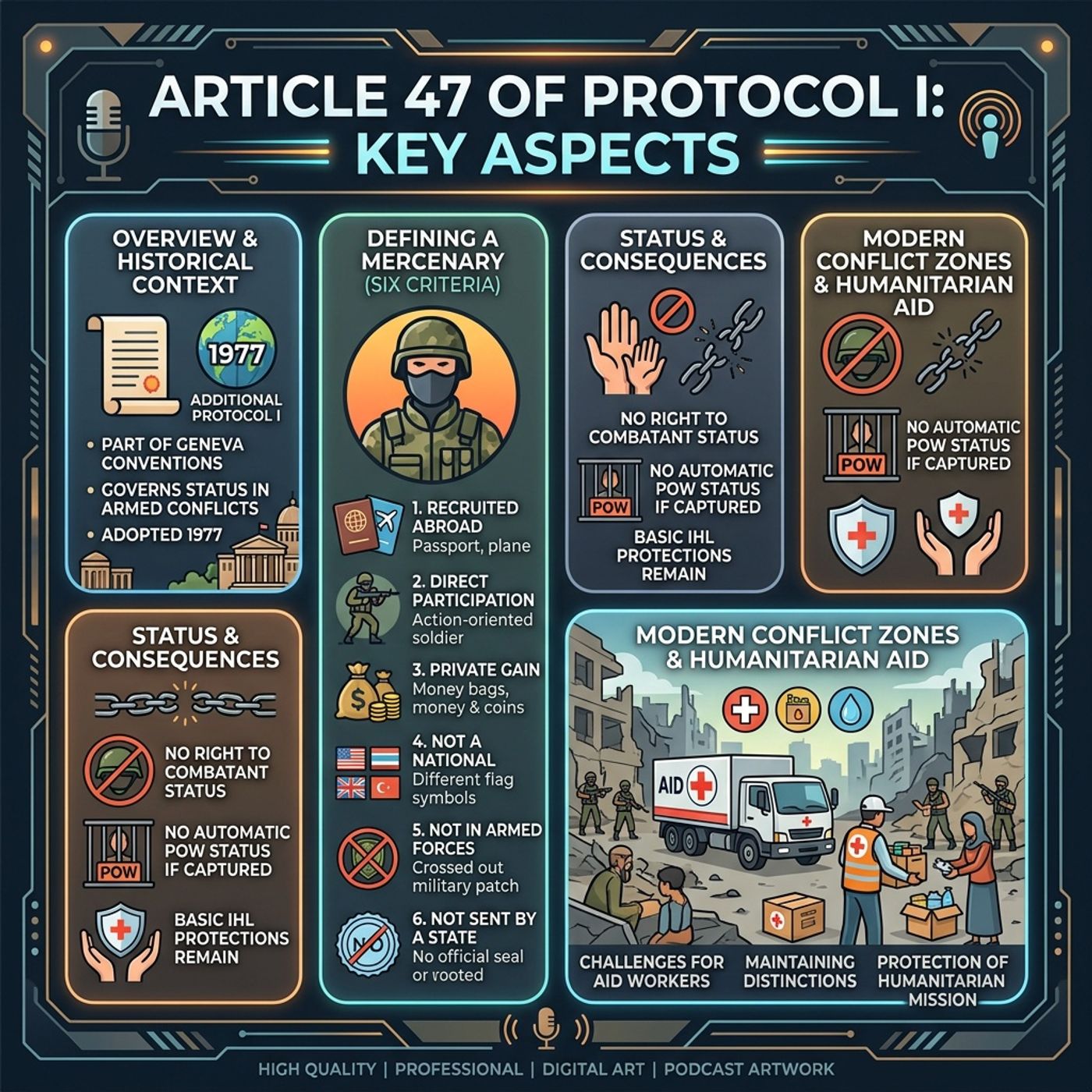
Protocol I is essentially an update to the original Geneva Conventions of 1949, designed to acknowledge the changing nature of warfare. With rising non-state actors and increased civilian casualties, it became imperative to have robust frameworks that ensure the safeguarding of all individuals impacted by armed conflict. So, what does Protocol I actually do? It outlines specific provisions aimed at protecting civilians, combatants, and civilian objects during hostilities. In short, it’s a way of holding warfare to a moral standard, even when tensions run high.
Become a supporter of this podcast: https://www.spreaker.com/podcast/conspiracy-theories-exploring-the-unseen--5194379/support.
Get every episode summarized
Each time Conspiracy Theories Exploring The Unseen publishes, we email you a written briefing from the transcript — the topics, who appeared, and any specific claims, with the ad reads skipped.
Email me new episodesFree for 3 shows. No card needed.
Hosts & guests
Transcript ready
46 searchable segments. Every word is indexed and playable.
Full transcript
Conspiracy Theories Exploring The Unseen — The 17-Page Blueprint: Federalizing the Ballot". Machine-transcribed; use the interactive transcript above to jump the player to any line.
Imagine a world where the rules of war protect the most vulnerable among us, civilians caught in the crossfire or those who are injured while fighting. In our first episode of the takeover under Protocol 47, we dive into a critical piece of international law, specifically looking at Protocol 1 of the Geneva Conventions adopted back in 1977. This protocol set out to enhance the protection of victims during international armed conflicts, recognizing the brutal realities of war and the need for clearer guidelines that prioritize humanity. Protocol 1 is essentially an update to the original Geneva Conventions of 1949 designed to acknowledge the changing nature of warfare. With rising non-state actors and increased civilian casualties, it became imperative to have robust frameworks that ensure the safeguarding of all individuals impacted by armed conflict. So what does Protocol 1 actually do? It outlined specific provisions aimed at protecting civilians, combatants, and civilian
objects during hostilities. In short, it's a way of holding warfare to a moral standard even when tensions run high. A key aspect worth focusing on is Article 47, which deals with mercenaries. This article defines who qualifies as a mercenary, and importantly, it explicitly denies these individuals the rights and protections typically granted to combatants or prisoners of war. Now, why was this put in place? By addressing mercenaries, the aim is to combat exploitation and conflicts, ensuring that only legitimate combatants, those participating in the conflict for a recognized cause, receive protections under international law. As we examine the impact of Protocol 1 today, it's impressive to note that as of March 2026, 174 countries have ratified this protocol. This widespread acceptance demonstrates a global consensus on the need for stronger protections in warfare. Many nations have even incorporated the principles of Protocol 1 into their own legal systems,
further solidifying support for victims of armed conflicts. However, it hasn't all been smooth sailing. There are challenges to consider as some countries express reservations about specific provisions of Protocol 1, especially relating to definitions of combatants and the overall balance between military necessity and humanitarian concerns. These ongoing debates reflect the complexity of modern conflicts, showing that our understanding of law and humanity must constantly evolve. Prominent figures like Philippe Sands have scrutinized these international laws, offering valuable insights into how they shape our current landscape. Things like the International Committee of the Red Cross play a vital role in promoting adherence to these laws, actively monitoring compliance and advocating for victims' rights. As we wrap up this first episode, it's clear that Protocol 1 stands as a foundational component in the ongoing development of international humanitarian law.
It represents a crucial effort to safeguard human dignity amidst the chaos of war. In our next episode, we'll dive deeper into specific cases and recent applications of Protocol 1 in international legal proceedings. Stay tuned as we continue to explore this critical subject in our three-part series. Thanks for joining the Fortune Factor Podcast.
More episodes
More from Conspiracy Theories Exploring The Unseen

The Digital Mirage_ AI and the Death of Authentic Romance
Conspiracy Theories Exploring The Unseen

The Trust Trap_ AI and the Future of Romance
Conspiracy Theories Exploring The Unseen

The Ghost in the Machine_ Navigating AI Romance
Conspiracy Theories Exploring The Unseen

The Love Recession_ Why Digital Romance is Offline for Good
Conspiracy Theories Exploring The Unseen