Ted Weisberg on Doing "Nothing" Amid Volatility & "Short Oil" Airline Trade
About this episode
Sometimes, "the best thing you can do is do nothing," says Ted Weisberg. He sees continuing volatility from the U.S.-Iran War creating an uncertain trading environment, making the case that it's best to keep your portfolios steady for now. Ted also sticks by what he considers the "rail and garbage" trade, pointing out stocks and industries that will stay strong against AI uncertainty. He later makes the "short oil" case trade by investing in airlines.
======== Schwab Network ========
Empowering every investor and trader, every market day.
Options involve risks and are not suitable for all investors. Before trading, read the Options Disclosure Document. http://bit.ly/2v9tH6D
Subscribe to the Market Minute newsletter - https://schwabnetwork.com/subscribe
Download the iOS app - https://apps.apple.com/us/app/schwab-network/id1460719185
Download the Amazon Fire Tv App - https://www.amazon.com/TD-Ameritrade-Network/dp/B07KRD76C7
Watch on Sling - https://watch.sling.com/1/asset/191928615bd8d47686f94682aefaa007/watch
Watch on Vizio - https://www.vizio.com/en/watchfreeplus-explore
Watch on DistroTV - https://www.distro.tv/live/schwab-network/
Follow us on X – https://twitter.com/schwabnetwork
Follow us on Facebook – https://www.facebook.com/schwabnetwork
Follow us on LinkedIn - https://www.linkedin.com/company/schwab-network/
About Schwab Network - https://schwabnetwork.com/about
Get every episode summarized
Each time Schwab Network publishes, we email you a written briefing from the transcript — the topics, who appeared, and any specific claims, with the ad reads skipped.
Email me new episodesFree for 3 shows. No card needed.
Transcript ready
110 searchable segments. Every word is indexed and playable.
Full transcript
Schwab Network — Ted Weisberg on Doing "Nothing" Amid Volatility & "Short Oil" Airline Trade. Machine-transcribed; use the interactive transcript above to jump the player to any line.
Welcome back to opening bell. We're getting the very latest from the floor from somebody who is great perspective because we're going to look back in this conversation too to the tech bubble of yesterday year. You remember it maybe Ted Weisberg founder, president, seaport securities is here with me at the desk and we've been here together for decades. But just for right now, how are you feeling about this market between now and the end of the year? Now in the end of the year. Yeah, I mean, do you think we're going to have a higher year? Is this all noise or are you worried about a big sell-off? How about just getting from now to the end of the day? Yeah, I think you're going to say the month. Okay, the day, Ted Weisberg speaks and you're not wrong because you're a trader. Well, you know, there are times in the markets when it probably pays to do nothing and this is one of those times because there is the markets don't like uncertainty. We know that. We've known that forever. You know, the market can deal with bad news, good news, what have you. But uncertainty creates a big vacuum for the markets and sometimes when you don't know what to do in the cold, the best thing, the very best
thing you can do is simply do nothing. Right. Now that could mean just hang on to what you have. That could mean don't commit any new money, but it's awful tough to put money to work, new money to work in this kind of environment. And look, if you sold last week and you were nervous about the market, you lost out. Last week was the best week of the year. Right. Well, doing nothing sometimes is doing nothing. Just hanging on to what you got. It's kind of, you know, you just put, wrap your on, wrap your fingers around the rail and just white knuckle it for a little while to we get through this period and we will get through it. And and the sun will come up again. The glass is in fact helpful. It's not half empty. But it's there were just periods of time when the smart thing to do is simply to do nothing. So tell me about some of the strategies now for, you know, between now and the end of the year then. If we're doing nothing here, I know some of the things that you like are rails or things that you can count on more. You can see them. You can touch them. The railroads are not being trumpeted by AI or
things like that, right? Well, it's exactly. I think, you know, listen, everybody has a different approach. Our approach is more conservative. Obviously long term, we've owned some of these names for 10 and 20 years and we still like the names. The fact is there's a lot of similarities today when you look at the techs and the issue of AI and how it's negatively impacting a lot of these high profile tech companies. And you go all the way back to 1999 and 2000 when the issue was the internet. And I remember our thinking then was we one of the own stocks that were not going to be impacted by the internet. So we ended up buying Union Pacific and Northwark and Southern and we ended up, you know, garbage. We're not going to run out of garbage. We bought some waste management. Right, right. Here we are 25 years later. And the now the threat, aside from what's going on in geopolitics, is AI. So we want to own stocks that aren't going to
be affected necessarily by AI. So where do you come down to? The rails, garbage, 25 years later, nothing has changed. And I mean, there are other sectors too. And in fact, if you look at the performance, our performance, anyway, seaports performance with our clients for the first quarter, most of our portfolios are up for the quarter. And the reason is because we own a lot of these very boring names, you know, that a lot of folks have abandoned years ago because they want all the exposure to tech. And tech clearly is where the growth and the earnings are. But our portfolios are up. The portfolios that have a lot of tech names in them have not done so well. And it's we're right back to where we work 25 years ago. But here's the thing. You think there's going to be a bust like there was 25 years ago. Like, you know, we had the tech boom and bust. That's what it was called. Is there a bust coming in tech? Well, I think the tech stocks as
a sector are dramatically overgrown, dramatically overgrown because it's been the great trade for certainly the last four or five years. It's made it's made a lot of people very happy. Trees don't grow to the sky. Will it go on forever? I don't have. Well, Meta's been a name you always liked. You kept Meta, right? Why is Meta sort of the outlier? Well, Meta's not the outlier because now Meta has some issues too. You know, it lost these two cases. Not a lot of money involved. But the question that would Meta and social media in general are the courts going to start to favor class action lawsuits that will negatively impact stocks like Meta. So all of a sudden Meta has its own cloud. It's not AI, but it has a cloud too. And it's lost 200 bucks. I know you know that. What are you doing now with Meta? I feel like it's an active topical conversation. Oh, yeah, deport securities. They're talking about this one because it's it's incredible. I mean, that cell office is no joke. Great. I
mean, that's a big deal. I know in terms of percentages, it's not terrible, right? But you don't love it. Well, let's let's say that the stock is trading below 20 times earnings at its current price level. So on a relative basis, it's terrific value. The question is the unknowns. What's going to have nobody knows what's going to happen going down the road? Clearly they'll appeal these suits. Will they prevail? Who knows? We don't know. But it creates a question mark, at least for Meta and some other social media names. I had Stephen O'ora on a short time ago. He was shorting oil. He thought oil goes back down to 75, 80 bucks because you have the ceasefire efforts underway. And he thinks that in a month or two, we go back down with oil. What do you think? Well, we've talked about the airline's energy trade in the past. It is the best paired trade out there. It's it's almost a layup. Now, I'm not short shorting oil or buying oil. It's the right way to play the trade, but it's energy versus the airlines.
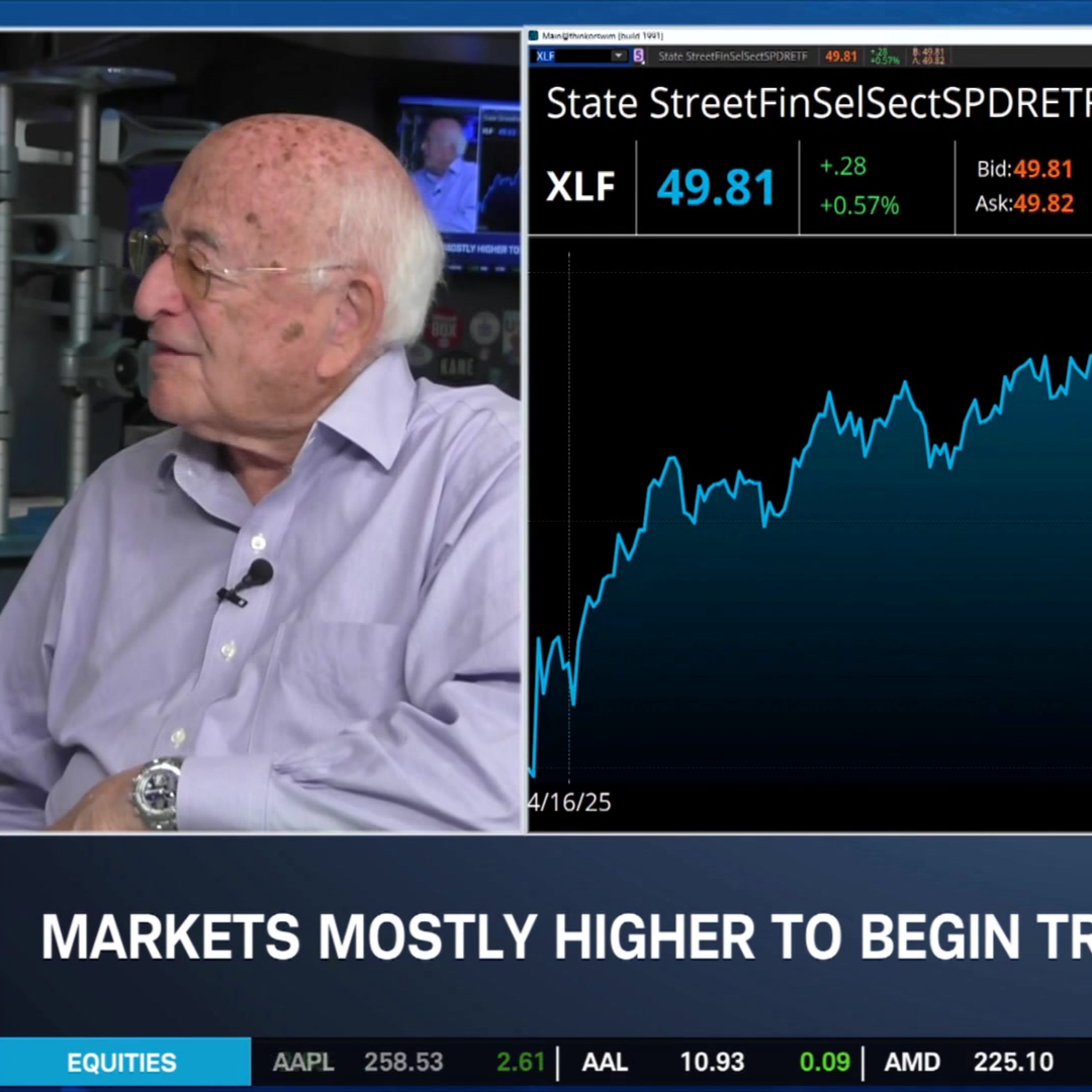
But if you're going to short oil, if you're going to short oil, and that might be a good trade, then you want to get along the airlines. Right. Because that's that sector more than any other sector is mostly impacted by the price of energy and the price of Jeff Fuel. So I think it's a great paired trade. The question is, which way do you want to play it? Now, we're long the energy and we're long airlines. We're long them both. Right. But we're more we're inclined to take a little money off the table with energy and add money to the airline. Right. I understand. I'm not disagreeing with with the other side. Right. I understand. Tell me a little bit about financials. That was an area that you always liked. Where do we stand on the financials these days? Well, we own some financials. We've always owned them. And today Goldman Sachs upgraded a bunch of the financials. So I was happy to see that. But, you know, we stay long city. We stay long JP Morgan. The more interesting trade for us is the big farmer trade where
we're long crystal and Pfizer and Merck. And this is kind of an amazing event last week for the first time. And I don't know how many months maybe years Pfizer actually made a new 12 month high two days in a row. It's some sort of financial miracle. I'm not quite sure what how to categorize it. But what it shows us is it shows us that money is flowing away from, let's say, the tech sector into these more boring sectors, good balance sheets, good dividends. You know, it's a place for people to hide. If you feel you need to put money to work in difficult times where there are a lot of unknowns. Must have been because of Artemis going to the moon or something, right? You're saying it's so unusual to see that. Well, yeah, I tell you what, we have been long that stock. Talk about dead money. I mean, that has been one disappointing start. Yeah, but you know what? 13 and a half percent.
So that's a big move here for one year. Not bad. We'll take it, right? All right. Nice to see you. Thank you. Ted Weisberg. Always glad to have you here of Seaport Securities.
More episodes
More from Schwab Network

Stock Market Today: ORCL & ADBE Earnings, AEO Plunges Near 52-Week Low
Schwab Network

Thursday's Final Takeaways: Crude Taps $103 & PPI Hotter than Expected
Schwab Network

Balancing High-Conviction AI With High-Dividend Diversification
Schwab Network

EARNINGS PANEL: ORCL, ADBE
Schwab Network